I’ve said it before – initially back in 2016, just after Trump was elected to the Presidency for the first time – and I’ll say it again – by reposting now, very lightly edited, what I wrote back then.
Because I continue to stand by what I said I believed nine years ago.
*****
“Nearly 3000 years ago King Uzziah died, and the future seemed uncertain for the people of Isaiah’s day. Isaiah, however, saw beyond the immediate political uncertainty.
‘In the year that King Uzziah died I saw the Lord sitting upon a throne, high and lifted up; and the train of his robe filled the temple.’ [Isaiah 6:1]
There is an image of one who is utterly in command. Uzziah may have died, but God was still on the throne and in absolute control.
As I believe he still is today.
Many are those who are longing for a leader who is wise enough, good enough, and powerful enough to bring about real positive change. And the good news is that there is such a ruler – for that is the type of ruler God is.
And just like many a politician, he too has made promises. Like the one where he says that a day is coming when he ‘will wipe away every tear from [our] eyes, and death shall be no more, neither shall there be mourning, nor crying, nor pain anymore, for the former things [will] have passed away.’ [Revelation 21:3-4]
Trump is currently promising to make everything great again, but this is a ludicrous claim – as it would be if it were made by any other politician too. Because the truth is that neither Trump, nor anyone else, is up to the job of delivering such a satisfactory outcome, no matter how earnestly they promise to do so.
Nobody, that is, except God – who through the life, death and resurrection of Jesus Christ has already, not only demonstrated how deeply committed he is to keeping his word, but also proven his ample ability to do so.
So then, we can be sure that the promises God makes, are ones that he will surely keep.
Now I know that there will be some who ask how I can be so confident that God will deliver all that he has promised when there remains so much suffering in the world – some of which will have been experienced first hand by those who are reading this.
Well there is, of course, no easy answer to the problem of pain. Even so, I continue to trust in the God that I believe entered into our suffering so that he could redeem us from it by experiencing it himself. Which, though it might not be the way that we’d have gone about it, is nonetheless the only way that I could ever have been dealt with.
Because we are not God – and his thoughts are not your our thoughts, just as his ways are not our ways. [Isaiah 55:8]. Rather than any world leader, therefore, believing that God is wiser than me, I will continue to trust my future to the one who reliably promises me that ‘though weeping may tarry for the nighttime, joy will still come with the morning. [Psalm 30:5].
Some will have been foolish enough to believe that for the world to prosper, Trump had to be president, whilst others will have have been equally mistaken in believing that for everything to be OK, America had to be led by anyone other than him.
But the truth is that, when compared with God, no human being is that important, or that powerful, that it all depends on them.
So if you are dismayed by Trump, remember, in universal terms, he is just a leader of a local council in some unimportant backwater. This is not meant to suggest that politics and voting and pressing for change aren’t important, on the contrary we must continue to do all of these things, but putting our hope in people has always resulted in disappointment – and ultimately it always will.
So instead of hoping in weak men and women who cannot deliver what they claim to be able to, we need to hope in God, and bank on the fact that his promises are ones that he will most certainly keep.
And for all my atheist friends, please don’t think I’m referring to the god who is pulled out by those who want him to endorse their own questionable point of view. My God is not an American – neither he is not on their side or on the side of anyone else as a puppet deity bound to support whatever their proud and arrogant leaders want him to.
Not at all. Because he himself is the one who is sovereign. And he alone is in control.
Furthermore, my God is for those who know their weakness – he blesses the poor in spirit and comforts those who mourn. [Matthew 5:3].
My God will not break a bruised reed, nor will he quench a faintly burning wick. Rather he will faithfully bring forth justice. [Isaiah 42:3]
And my God is gentle and lowly in heart and gives rest to all those who labour and are heavy laden.[Matthew 11:28-29]
So then, we can be sure that the judge of all the earth will do what is just? [Genesis 28:25] And knowing that is what will enable me to sleep tonight despite all the uncertainties the world currently is facing, not to mention those that I am facing myself.
Today sees the start of this year’s domestic cricket season and Somerset will have to go some if they are going to exceed the enjoyment that they provided the Taunton faithful with last summer. But ever hopeful, I have prepared a list of a dozen things to look out for over the coming six months which, as a Somerset supporter, I’d love to see happen, things that, once they have all been noted and ticked off, will indicate that the club’s 150th anniversary year really has been the greatest in its history.
1. In a desperate attempt to relaunch his range of electric auto-motives, Elon Musk approaches Somerset in the hope of having the CACG renamed the ‘Tesla County Ground’. The request is turned down in favour of a considerably more lucrative offer from Tom Lammonby, the upshot being that his 9/15 Cafe becomes the nation’s favourite chain of coffee shop.
2. Lord Bath offers everyone’s favourite feline the use of his luxury ancestral home as a winter residence. Tourists are soon flocking to his estate hoping to catch a glimpse of the big hearted cat who soon adopts the epithet ‘The Br-ion of Longleat’.
3. Stumpy is made chair of the ECB and secures the future of county cricket by bringing in sweeping changes that lead to all forms of the domestic game being broadcast live on Channel 4. Meanwhile, the Hundred is picked up by U&Yesterday and is watched by nobody in what consequently proves to be its final season.
4. The Somerset Livestream Commentary Team win a BAFTA for their coverage of this year’s gala performance by Somerset’s most well known supporter at the Royal Albert Hall. The show, ‘Tractor sings the Wurzels’, is itself nominated for a Grammy, but narrowly misses out to ‘Louis G and First XI’ after their recording of ‘Blackbird’ tops the UK Charts for a record breaking 26 weeks.
5. Trusted to bring the necessary gravitas to such occasions, Pete Trego, Vic Marks, and Sophie Luff are signed up by the BBC and commissioned to provide commentary on all future events of national significance – commencing with Somerset’s triumphant tour of Taunton (and Nempnett Thrubwell) in an open top bus following their winning of all three domestic competitions.
6. The Somerset Cricket Museum becomes the new custodian of ‘The Ashes’ after being recognised as housing the finest collection of cricketing memorabilia in the known universe. One or two visitors do give the miniature urn a cursory glance before getting down to the far more important business of venerating a bat once wielded by Marcus Trescothick.
7. Opening the attack in the Blast Final, Archie Vaughan and Jack Leach match Brian Langford’s legendary bowling figures when together they bowl eight consecutive maiden overs. The wily pair of spinners also share a total of eight wickets between them, thereby leaving Hampshire with no chance of reaching the 433 required to deprive Somerset of the T20 trophy.
8. With the women’s team matching the success of the men’s, Somerset CCC draws the attention of Donald Trump who, determined to exploit the rich vein of cricketing talent that lies within the county, announces his intention to make Taunton the 83rd U.S. state – the list of territories he claims sovereignty over having grown considerably since the beginning of the season. However, following a snap General Election which saw him made Prime Minister, James Rew meets with the American president and, demonstrating that his hands are just as safe a pair when it comes to running a country as they are when donning the wicket keeping gloves, persuades the erstwhile leader of the so called free world to resign. Millions of people from across the globe, pleased by the republican’s dismissal, celebrate by taking out associate membership for Somerset’s 2026 season and so secure the clubs finances for the next fifty years.
9. As a result of their performances over the summer, Tom Abell and Craig Overton are both awarded the freedom of the city of Taunton, the former county town being granted that status by King Charles who, it emerges, loves Somerset CCC almost as much as a pint of cider and one of the reduced price sausage rolls customarily made available during the final session of a day’s play. A cathedral is subsequently constructed to cope with the influx of pilgrims who come to the ground, on the rapidly revised route of the Camino de Santiago, in order to sit a while in the James Hildreth stand and gaze in ecstasy towards Gimblett’s Hill – a truly transcendent experience in anyone’s book.
10. The ‘Win Predictor’ is added to the ground’s electronic scoreboards which, true to form, subsequently suffer a technical glitch. However, nobody notices because, having got stuck whilst indicating that the chances of a Somerset win was 100%, it turns out that the fans are provided with a highly accurately forecast of the outcome of every game played.
11. Somerset’s infamous detractors on their own social media platforms fall silent, their only complaint being that they have nothing to complain about. One critic does attempt to poor scorn on Sean Dickson’s poor strike rate after he allows the opening ball of the season to pass harmlessly past his off stump, but the keyboard warrior ends up with egg on his face when the aforementioned opening batsman completes a double century in the penultimate over of the morning session.
12. Tom Banton suffers a nasty injury whilst warming up before the second day of a county championship game. He is left temporarily blind, unable to use his left arm, and in urgent need of surgical repair for his fractured neck of femur. Undaunted, he returns the next day, a guide dog acting as his runner, to score a triple century against Surrey, and Somerset end the game with maximum points. The result also makes it mathematically impossible for the uncharacteristically out of form Londoners to avoid relegation.
No prizes for any Somerset fan who spots all twelve, as to do so will, I’m sure you’ll agree, be more than sufficient reward.
So, irrespective of your personal allegiance, here’s wishing everyone a great summer of cricket – be you a player, a member of the support staff, or just a supporter who, like me, dares to believe that this year might just be the one that Somerset fans the world over have all so longed for.
I love a pre-season friendly, a warm up game all the more necessary on a sunny, but nonetheless chilly March morning, as the Somerset players emerge from hibernation in what is still only early spring. Suitably attired with a scarf and woolly hat, the latter similarly adorning the Gloucestershire slip cordon, I pull out my binoculars and see what I can see from my vantage point high up in the Marcus Trescothick hide.
Glimpsed first is a young Vaughan. Having flown the nest last year, he’s enjoying time at the crease away from his parent’s watchful eye though, if they are looking proudly on, they’ll be pleased by how he strikes the ball effortlessly to the boundary three times in a single over.
A more seasoned Dickson is also foraging for runs. though less hurriedly than his companion in the middle, playing perhaps a more nurturing role for the youngster who is still in a formative stage of his development.
But what’s this I spy, lurking undercover in the shadows of the Andrew Caddick stand? It’s a couple of Toms, indigenous to this part of Somerset – a lesser spotted Banton and a great crested Abel, neither seemingly keen to venture out just yet, wary no doubt of the threat still posed by the predatory new ball that may yet pose a problem were it to come too close to the outside edge of an unwary fledgling.
Suddenly the danger is proven to be real as there’s a commotion out in the grassy field that forms the principal habitat of these largely diurnal creatures. And then a startled look appears on the face of the Vaughan who turns and briskly heads for shelter, dragging his now lifeless bat behind him.
Next a Lammonby appears, gambolling playfully in the bright morning sunshine having spent the winter surviving on a selection of cakes, pastries and other reasonably priced comestibles he’d stored up for himself over the proceeding months at 9/15.
Yet to develop the bright plumage that becomes more apparent later in the season, both he and the Dickson put on a colourful display of cover drives, a courtship ritual no doubt designed to draw the attention of those responsible for team selection over the coming weeks and months.
A little later, I hear the characteristic call of an umpire. indicating that it’s time for me to stop for a bite to eat. And as the batsmen return instinctively to their burrows, the scoreboard is indicating that, at 133-1, their prospects of survival are looking good this year
This week I read of a 23-year study, published last autumn in the Journal of Psychology and Aging, which concluded that, when it comes to longevity, it is more important to have a purpose in life than it is to be simply satisfied with one’s existence. As one commentator said, ‘Having worthwhile goals is a source of vitality. It’s nice to feel happy today – but it’s important to have something to strive for tomorrow.’
The researchers were not blind to the fact that there is, of course, a significant correlation between the two parameters that were under consideration as predictors of a long life – that to some extent at least, to have a reason for getting out of bed in the morning is what it takes to make life satisfying. But it was nonetheless interesting to note which of the two is more important, suggesting as it does, that it is healthier to pursue purpose than mere pleasure.
All of which got me thinking, particularly in regard to how the study’s conclusion would suggest that it is healthier to have a purpose that seeks to benefit others, rather than one that seeks only to benefit oneself and that, notwithstanding the satisfaction that we experience by helping somebody else, it is better to pursue the happiness of others, rather than that of ourselves.
Which is something that, if it needed any confirmation, was made tragically apparent by an item on the 10 o’clock news on Wednesday evening. The story was that of Nicholas Prosper, the 19-year-old who, last September, murdered his mother, sister and brother before being arrested as he made his way to a local primary school where he had planned to shoot, who knows how many children, in the hope of becoming the Britain’s most notorious mass murderer.
Now don’t get me wrong, despite it apparently being the dream of many today, none of you who are reading this are, I’m sure, capable of crimes as awful as those that Prosper aspired to – but it is surely a warning to us all of the terrible things that, if left unchecked, the human heart is capable of craving, and how, if as we are so often encouraged to, we follow that frequently hot-blooded seat of our desires, our ensuing pursuit of instant gratification may be detrimental, not only to us, but to others too.
It is then better to give rather than receive, to consider others more highly than ourselves, and look, not only to our own interests, but also to the interests of others. None of which should be of any surprise since such wisdom is far older than a scientific journal that was published just six months ago. [see Acts 20:35, Philippians 2:3,4]
But if our hearts are not, as that same ancient wisdom suggests [Jeremiah 17:9], as dependable a guide to what we should or should not do, how then can we decide what our life’s purpose should be?
Well, here’s the thing. Before we can determine the part that we have to play in what seems sometimes to be an increasingly uncertain world, we need to know whose story we want to be a part of. And the choice is a straightforward one. We can either seek to be the hero of our own story, seeking our own glory whilst not worrying too much about those around us, or we can content ourselves with a minor role in the greatest story ever told, in his-story, the one that God has written, the end of which he already knows [Isaiah 46:10]. Chose the former and we may find a degree of happiness, but it will only be fleeting [Hebrews 11:25] – choose the latter and, as well as experiencing far greater satisfaction in our current lives, we will also be able to look forward to the one that will follow, characterised, as it will be, by both infinite joy and an extreme longevity that will last, at the very least, forever! [Psalm 16:11]
For the time being, of course, I cannot speak personally of the reality of everlasting life – but I can vouch for the joy that comes from being a part of God’s perfect and purposeful plan. Because, whilst my hope of a never ending existence is based on compelling evidence for the historicity of the empty tomb, credible eye witness testimony of those who saw Jesus after he was raised from the dead, and the authoritative word of the one who, as well as speaking the universe into existence, promised eternal life to all those who put their trust in him, the satisfaction of being used by God to bring joy to others is something that I have experienced for myself.
Most recently this has been through my work with the Slavic Gospel Association. It really has been a pleasure to have been used, albeit in an exceedingly small way, to take the gospel to some of those who are so desperately in need of some good news. Seeing the delight on the faces of those in far of places who have just received, for the very first time, a copy of the Bible in their own language, is something that I’ll long remember and more than matches the satisfaction I previously gained from working as a GP, a job, it should be noted, that, for the most part, I very much enjoyed and genuinely considered a means by which God brought a great deal of comfort to many.
Being a part of SGA really has given me a reason to get out of bed in the morning, a purpose which promises to deliver so much more than pills and potions ever could, and a cause that, now being a part of, I can’t help but be genuinely excited about.
So, if you’re interested, why not follow the link below to take a look at SGA’s website and discover some of the many ways that, despite their immense ongoing difficulty, God is giving people hope – not just for today, but for all of eternity too.
Last week I visited Stonehenge together with, not only a couple of overseas friends, but thousands of others who had travelled there seemingly from countries the world over. And as we made our way from the carpark to the ancient monument itself, I found myself pondering why so many people had chosen to make the long journey to see what, in reality, amounts to little more than a few, admittedly large, boulders in an otherwise unremarkable field.
The reasons are, no doubt, many and varied, but as I strolled around the perimeter of the stones, I wondered if, for me at least, the appeal was similar to that of going outside late at night to gaze at the stars, or finding a rocky coastline from which to look out over a vast expanse of ocean.
Because just as it is healthy, when up close to something enormous, to recognise one’s own inherent smallness, so too is it beneficial, when alongside something that has outlasted countless generations, to realise one’s own inherent transience.
More than that, it is ultimately reassuring too.
It is estimated that Stonehenge has stood on Salisbury plain for 4,500 years – which one has to admit is an impressively long time when compared to the seventy or eighty years most of us will manage.
And so the Bible is right to liken us to ‘a mist that appears for a little time and then vanishes’ [James 4:14]. Elsewhere the scriptures describes us as those whose days are but ‘a few hand-breadths’, those who ‘go about as a shadow’, a ‘mere breath’, whose length of life is as ‘nothing’ before the LORD. [Psalm 39:5-6] Unlike God who, we’re told, is ‘from everlasting to everlasting’, our days are like the grass which, when the wind passes over it, is gone and ‘its place knows it no more’ [Psalm 103:5-6]
Interestingly though, rather than sticking his head in the sand and trying to forget that he will one day die, the psalmist seems to want to fully come to terms with how fleetingly short is his life [Psalm 39:4].
So why might that be? And how might knowing the answer help us further understand why so many want to visit Stonehenge?
Well the clue is given in verse seven of that same psalm where, having recognised his own limitations, it’s writer says that his hope is in God.
We are then, not only small and therefore relatively weak, we are also short lived and therefore relatively inconsequential. And so it comes as no surprise that we are not the answer to our problems. On the contrary, all too often we are the cause of them. Little wonder then, that we sometimes find ourselves ‘in turmoil’ [Psalm 39:6]
But if as a result of recognising both our weakness and our transience, we put our hope in the eternal and all powerful God who is, therefore, of infinite significance and worthy of our praise, we will discover what it is to be secure. Because if we are not so foolish as to deny the sinfulness that is all too obviously a part of who we are [Psalm 39:8-9] and, in our weakness, humble enough to ask to be forgiven [Psalm 39:10], as well as being delivered from all our transgressions [Psalm 39:8] as a result of Christ death for us on the cross, we will also come to understand that we are only sojourners in the land [Psalm 39:12] – that this world is not our home and we are, as the old song put it, ‘just a-passing through’.
And so when our three score years and ten or, by virtue of strength, four score years are over, and our time of toil comes to an end, we will ‘fly away’ [Psalm 90:10] to continue a blissful and sinless existence in the presence of our Heavenly Father who, even as he saves us, adopts us into his family as his much loved children.
And unlike Stonehenge, which will then have become just one more relic of the past, the lives we’ll enjoy in our new resurrection bodies really will last forever. Furthermore, we will dwell in a heavenly home that is similarly eternal – as everlasting in fact, as both God himself and the steadfast love he has for all those who cry out to him for help.
For everyone who calls on the name of the Lord will be saved. [Romans 10:13]
Related posts:
To read ‘When our joy will be complete’, click here
To read ‘Longing for the pavilion, whilst enjoying a good innings’, click here
It’s one I’m never quite sure how to answer. And perhaps you have felt similarly uncertain how to respond, when you have come across it yourself, in the course of completing a job application perhaps, or when seeking to take out health insurance.
The question I’m referring to goes something like this: ‘Would you currently consider yourself to be fit and well?’ And the reason I hesitate before responding is that, whilst I do generally feel well, it’s been a long time since I could honestly say I was fit.
Looking back over my life, I am grateful that I have enjoyed good health. It is now eleven years since I last had an episode of illness that left me unable to work and that particular bout was the first time in my career that I’d ever taken a day off because I was unwell.
That said, that particularly spell of sickness was a significant one, landing me in hospital for seven weeks with a midline in place and the need for four hourly infusions of antibiotics such that I would have struggled to carry out the duties of a doctor. At least, that is, for my own patients, though, had I been motivated to do so, I suppose I might have been of some use in the care of those of my ward based colleagues.
That time of relative incapacity was an interesting one, not least because, in the early days of being bedridden, when a diagnosis had not yet been made, I genuinely thought I might die and I remember experiencing, if not a dark night of the soul, periods of dimly lit sleeplessness when I pondered questions like, ‘Is this illness God’s way of punishing me for something I have done wrong?’, and, ‘If I do die, will I go to heaven?’
These are questions to which, as a Christian, I believed I knew the answers, but I nonetheless found that I needed to be reassured of them. And so, I reminded myself how Jesus bore on the cross the punishment for all of my many sins and that, as a result of his dying in my place, it was simply impossible that God was now punishing me for those things that had already been atoned for.
And that I would indeed go to heaven if I died, not because of any merit of my own but because, having already been forgiven for all my wrongdoing, I had also been credited with Christ’s own righteousness thereby making me wholly acceptable in God’s eyes.
But why am I telling you all this now?
Well, it’s not, I hope you will be relieved to hear, because I have recently received a terminal diagnosis, and this is now my clumsy and characteristically prolonged way of letting you all know! Rather, it is, perhaps, because this week marks the anniversary of that time when I was laid low with bacterial endocarditis, that I have been considering my inevitable mortality again.
But this is not me being morbid or melancholic.
Rather it is simply me recognising that, at 58 years of age, I have now missed my opportunity to have a midlife crises and, with my healthiest years behind me, if the grim reaper does not seek make my acquaintance beforehand, I can now look forward to the inevitable physical decline that will accompany my headlong rush into my impending senility.
Today though, I find myself not so averse to the idea of dying as I was eleven years ago. Whilst the process may be one that is painful, and though I still enjoy the life I have, death now seems a less unpleasant path to take than it did back then. Perhaps there will be those who might say that this just a consequence of how the world now is, and that my acceptance of an early exit, should that be my future, is no more than a desire to lazily cop out of all the cruelty, bitterness and unkindness that is now so prevalent.
But that is simply not the case. Because, whilst there are a number of reasons why I would not wish to accelerate the day of my death – reasons that include that life is far too precious a gift for that, I like to think there is still useful work for me to do, and the fact that I don’t believe it’s for me to chose the moment of my demise – the reason for me not being afraid of dying is far more positive than that.
Two bishops were talking one day. One told the other that he’d just been told he had cancer. And by way of a reply, was congratulated for his good fortune!
Now it’s no doubt an apocryphal story, but it makes the point that, notwithstanding the suffering that might follow such a diagnosis, for Christians at least, death is not the end but is, in fact, just the beginning, the gateway into a better, more fulfilling existence in the presence of God. As such it need not be feared in the way that, generally at least, it is by those who do not share the believers sure and certain hope of the resurrection.
That is why the apostle Paul could write that for him, ‘to live is Christ, and to die is gain’, that, whilst he was pleased to serve God for as long as there was fruitful work for him to do, his desire was to depart and be with Jesus, because that, for him, was ‘better by far’ [Philippians 1:21-23].
This week I have spent time with two men who I believe would say the same thing as Paul wrote to those first century believers in Philippi, two seasoned saints from overseas who have lived the Christian life, not only longer than I have, but with far greater authenticity as well. As has been the case with so many others of my brothers and sisters in Christ that I have had the joy of meeting since starting working with SGA, the sincerity of their faith oozes out of them such that it is an encouragement to simply spend time with them.
It has not only been a great privilege to partner with them in the gospel, but a wonderful blessing too, one that has served to strengthen my own faith by confirming, as it has, that what I already know to be true from God’s word, is born out in the life of those who live according to it.
Which is that the gospel of the Lord Jesus Christ who came into the world to save sinners, is the gospel that is the power of God for salvation to all who believe, and the gospel that can save even the likes of me.
All of which means that, just as the healthy can, at the same time be terribly unfit, so too can the unhealthiest, even those who are dying, be simultaneously fit for heaven.
Which is already wonderfully good news for all of us – and will be all the more so as we each inevitably draw nearer to death ourselves.
Related posts:
To read ‘On death – my first and last’, click here
You can’t help but admire President Zelenskyy who, unlike some world leaders, who seem perfectly happy to pander to Trump’s oversized ego, is prepared to speak his mind and tell the one occupying a ‘disinformation space’ how things really are.
As in all good circuses, the one currently taking place at the White House, orchestrated as it is to try and make the President of the United States look good despite his trying to profit from war, has both a strong man and a clown.
And I think we all know which one is which.
Volodymyr Zelenskyy has, on numerous previous occasions, expressed gratitude to America for helping Ukraine in the war against Russia.
So then, Donald Trump’s insistence yesterday that the Ukrainian President should now publicly and personally thank him – presumably for calling him a dictator, accusing him of starting the war, and rewarding his Russian aggression by opening negotiations with Putin, whilst at the same time offering to relieve his country of a sizeable chunk of its mineral wealth – reveals the so called leader of the free world to be someone motivated by his own self interest rather than any genuine desire to do what is right.
Furthermore, his desperate need to be admired by all and sundry explains the appalling disrespect he himself showed the office of the U.S. Presidency when he called his predecessor ‘stupid’.
But what Trump doesn’t appear to understand is that people are admired for their kindness, honesty and integrity, and not for their greed, unreliability and opportunism.
Or that those who are genuinely strong, far from throwing the weight around in order to gain more of what they already have, give of themselves for the benefit of those in need.
Yesterday then, was a bad day at the Oval Office. More than that it was undoubtedly a sad day for the world, and most especially Ukraine who meanwhile continued to suffer in the face of yet more Russian missile strikes.
But it was sad day too for the United States of America, revealing as it did just what that once great nation has now become.
I know it sounds obvious but it’s something that these days sometimes gets forgotten.
Because you can conceal the truth, suppress the truth, or deny the truth. But you cannot create the truth.
Neither can you change it.
The truth is not dependent on what we think. Neither is it what is necessarily popular, or convenient.
Because the truth is what it is.
Never varying, the truth remains stubbornly the same.
Even so, there are those who are blind to the truth.
There are those, including some in power, who wouldn’t recognise the truth if it was stood there right in front of them.
Like Pontius Pilate for example.
Who asked ‘What is truth?’ of the one who was, and is the truth [John 18:38], and discovered that those who try to kill the truth, find that it refuses to stay dead.
Because the truth can’t be silenced.
The truth is forever.
Contend then for the truth – the glorious truth, that Christ Jesus came into the world to save sinners [1 Timothy 1:15].
That He is the way, and the truth and the life. And that no one comes to the Father except through him John 14:6].
Related posts:
To read ‘In loving memory of the truth’, click here.
So if I may, and without getting too political, I’d like to say a word about Donald Trump.
Because if you’re one of those people, and there are some, who is putting their hope in him, you need to stop. Because he’s only a man.
And if you are one of those people, and there are some, who despair that he’s the President of the United States, you need to stop. Because he’s only a man.
It is God who is in control – not Donald Trump.
And God will use him, as he does all world leaders, as a means of grace, or a means of judgment, as he, and he alone, sees fit.
Hope then in Almighty God – and not in a mere man.
‘The king’s heart is a stream of water in the hand of the LORD; he turns it wherever he will.’ [Proverbs 21:1]
‘Some trust in chariots and some in horses, but we trust in the name of the LORD our God’ [Psalm 20:7]
Related posts:
To read “Hope comes from believing the promises of God”, click here
For some, February 14th isn’t the easiest day of the year.
But whether you’re happily married, sadly still single or stuck in a relationship that you wish you weren’t, whether you’re enjoying life on your own, ’just good friends’ with someone you hope one day to enjoy something more, or grieving the loss of the person you’ve spent a lifetime with, whatever your current ‘status’, I hope that this Valentine’s Day you’ll know what true love is.
That is to say, I hope you’ll experience the love of the God who is the God of love.
For in this is love, not that we have loved God, but that he loved us and sent his Son to be the justice satisfying, wrath absorbing, sin atoning, sacrifice for our sins. [1 John 4:10]
For God’s love is longer lasting than time itself – and stronger even than death. His love is not dependent on how lovely we might be – rather it is a reflection of how infinitely loving He is. And whilst His love keeps no record of wrongs, it does not ignore our faults. For God’s love deals with our shortcomings, making us the people we were always meant to be so that, unspoilt by sin, we can look forward to enjoying perfect and everlasting fellowship with Him.
So then, I for one am grateful that God’s love is patient and kind, that his love does not envy or boast and that his love bears all things, believes all things and hopes all things.
Furthermore I am grateful that, undeserving of it as I am, his love also endures all things – even death on a cross. For that is the extent of the love he has for me, giving his life for mine as he bore there the punishment that I deserved.
Which is why I will forever now rejoice, that God’s love never ends.
And I hope very much that you’ll join me.
Related posts:
To read ‘A good heart these days is hard to find’, click here
This week I heard on the news of how two couples went though with abortions having mistakenly been told that their unborn babies had serious genetic conditions.
Described by the BBC as an NHS scandal, it is indeed a tragic story and one can’t help but feel for those affected by it.
But, whilst sympathetic to those who find themselves in seemingly impossible situations, can anyone explain to me why, when two healthy babies, believed to have a serious prenatal diagnosis, are aborted as a result of a clinical error, it’s considered a scandal, but when, in the UK alone, more than 500 babies, known to be healthy, are aborted every day, it’s not.
Or why, having contacted me about a pregnant patient of mine who was using drugs, the social worker who was minded to put the unborn baby on the child protection register, on hearing that the mother had chosen to have a termination felt no further action was therefore necessary.
Because to me it makes absolutely no sense at all.
Unlike the case I was involved with in my early years as a doctor when a young mother, on finding out that she had cervical cancer at the same time she discovered she was pregnant, deferred the urgent hysterectomy she required until her child was born.
A decision that saved her baby’s life, even as it cost her her own.
‘When the right hand doesn’t know what the left hand is doing’
That was the expression that came to my mind as this week I watched an episode of the Apple TV+ drama ‘Severance’. The story revolves around employees of a mysterious corporation who can opt to undergo a procedure that results in them, when at work, having no recollection of their home life and, when at home, having no idea of what they do at work. The result is that their one life is lived, in effect, by two separate individuals who, in turns, occupy the same body, with each ‘innie’, in the workplace, not knowing what their ‘outie’ does in the outside world. And vice versa.
To chose to think in such a severed way, is, of course, an inherently bad idea, as becomes evident as the imagined benefits, for the outies, of an existence unencumbered by the burden of having to work, is seen to come at a very high price for the ‘innies’, who are condemned to live lives that are no longer valued by those who control them and who restrict what, even at work, they can and cannot do.
It’s all very bizarre and not a little sinister.
But it wasn’t only whilst watching ‘Severance’ that the aforementioned expression came to mind. It did so again when I learnt of how Newton House in Bath was being threatened with closure. The five bedded unit is the only respite care facility for adults with complex care needs in the area, and an absolute lifeline for those who spend their lives caring for their highly dependent, but nonetheless much loved, grown up children.
If the closure does go ahead, it will be yet another example of how our society seems unable to provide adequate support for those who need it most, and of a healthcare system that, on the one hand is seeking to keep people alive into advanced old age, whilst, on the other, can’t care for the number of frail elderly that already exist. This is not to suggest that attempts to preserve life are not entirely laudable, far from it, but is it really a good idea to medicalise normality, and make patients of those who are healthy, in order to exponentially increase the number of those experiencing extreme longevity who, not only will one day still die, but will also require, before they do so, years of care that it just won’t be possible to give them?
Because it seems to me that the imagined benefit for the young, of being able to look forward to an exceptionally long life, comes at a very high price for those same individuals who, when old, may one day find themselves no longer valued by the system that has created a problem, with which it cannot possibly hope to cope.
So whilst in no way suggesting that it isn’t worth investing in healthier lives, might it not be better to pause our relentless attempt to extend life until we have the capacity to care for the increasing numbers that our well intentioned endeavours will inevitably produce? Rather than spending ever more time and money on the healthy, might it not be better to seek first to properly fund the needs of those who are already sick? And rather than constantly worrying the well and, in so doing, potentially condemning them to more of the suffering that they desperately want to avoid, might it not be better to value more highly the vulnerable in our society, both the elderly and those with complex care needs, who, far from being considered a burden, ought to be provided with all the support that they oh so desperately require.
Because to continue as we are, to continue with such severed thinking, would not only be very bizarre but also, perhaps, with the assisted dying bill coming up for discussion again soon, not a little sinister too.
Related posts:
To read ‘The Abolition of General Practice’, click here
To read ‘Paddington and the Ailing Elderly Relative’ click here
To read ‘Health – it’ll be the death of us. Is there institutional arrogance in the NHS’, click here
Last night I went to see the new big-screen biopic of Bob Dylan. Timothée Chalamet puts in a tremendous performance as the complex individual who, despite being one of the most famous people in the world, remains, in many ways, a complete unknown.
Because whilst we see much of what we know for sure of Dylan’s life, his visiting in hospital of his childhood hero, the musician Woody Guthrie who was suffering with Huntington’s Disease at the time, his rise to prominence in the New York folk scene of the early sixties, and his relationships with both Suze Rotolo, his one time girlfriend who features on the album sleeve of ‘The Freewheelin’ Bob Dylan’, and Joan Baez, a fellow singer-songwriter with whom he not infrequently duetted, we also hear, to the incredulous ears of those who hear it, Dylan own account of how he grew up in a carnival.
And this without any attempt being made to explain why he should feel the need to come up with such an undoubtedly apocryphal account of his youth. And neither are we given any insight into why he was, and indeed remains, on occasions at least, such a contrarian, or what it is that drives the man who, 65 years on, having produced 40 studio albums, is still touring extensively all around the world
But to say as much is not in any way to criticise, far from it, because this is nothing short of a terrific film, one in which it is Dylan’s songs – their words and how they are performed – that clearly matter most. This is something that I suspect the determinedly enigmatic octogenarian approves of, and all the more so given how, significantly involved in the development of the script, Dylan, apparently insisted, some might say typically, that there be at least one totally inaccurate episode depicted within the film.
Chalamet’s performance is, ironically perhaps, pitch perfect. Without ever descending into parody, he brilliantly reproduces not only Dylan’s voice, but his mannerisms as well – both on and off stage. Which is my it is of no surprise that, alongside the seven other Oscar nominations the film has received, Chalamet himself has been nominated for that of Best Actor, something that, to my mind at least, is very much deserved.
The film concludes at the 1965 Newport Folk Festival where Dylan, it’s headline act, controversially laid aside his acoustic guitar in favour of a sunburst Fender Stratocaster, and performed his first electric set as a professional musician – all to the apparent dismay of many in the crowd who seemingly wanted more of the traditional style of music to which they were accustomed. Though the comment was actually made in the Free Trade Hall in Manchester, at a concert held there a year later, someone in the audience, considering Dylan to have betrayed folk music purists, is then famously heard to cry out ‘Judas’, to which Dylan responds, ‘I don’t believe you – you’re a liar’ before proceeding to play ‘real…loud’ what later proved to be one of his all time greatest hits, ‘Like a Rolling Stone’.
But while the audience at the 1965 Newport Folk Festival may have been divided by Dylan’s performance, it’s unlikely that those who go to see “A Complete Unknown’ will be similar at odds with one another. For, if my cinema going companion is anything to go by, even those who usually claim not to be able to tolerate Dylan’s music will find much to enjoy in this highly entertaining celebration of the first five years of the Nobel prizewinning troubadour’s exceptionally long career.
And so I hope that there will be those who, currently unappreciative of Dylan’s genius, will one day become true fans of the man who once described himself as nothing more than a ‘song and dance man’.
One can but hope. After all, a believing spouse…it can’t be a complete unknown!
This week I’ve been thinking a bit about prayer, partly because of a certain prayer service that took place in Washington this week and was attended by a world leader who isn’t as powerful as it seems he imagines he is, and partly because of a question I was asked recently relating to whether or not it was selfish to pray.
The question was was one that it was reasonable to pose, given how it was phrased in the context of someone praying to get a specific job. For in the event of that person subsequently being gainfully employed, wouldn’t it mean that there would be others who would necessarily be left out of work and, therefore, terribly disappointed as a result?
But before reflecting on that particular dilemma, it is perhaps worth noting that prayer ought not be primarily about requests for our physical needs. For if the Lord’s Prayer is anything to go by, and surely it should be, only about ten percent of what we pray about should relate to such things as our need for daily bread [Matthew 6:9-13].
So unless we ignore Jesus’ teaching on the subject, and foolishly embrace a health, wealth, and prosperity gospel, the bulk of our prayer life should instead be concerned with the needs of others whilst we ourselves respond to God’s holiness by recognising our own need for forgiveness, seeking an increasing righteousness for ourselves, and submitting more fully to his perfect, and all wise, sovereign rule.
Having said that, however, it’s not wrong for us to petition the one from whom all good things come [James 1:17], indeed the scriptures encourage us to do just that when they exhort us to ‘not be anxious about anything, but in everything, by prayer and supplication, with thanksgiving, let [our] requests be made known to God.’ [Philippians 4:6]
And so we must return to the question that I was originally posed. Because whilst most of what I might ask God for would not, if granted by him, have a negative outcome on others, some of my requests, on the face of it at least, most certainly could. Is it then selfish to pray for these things?
I don’t think so – and here’s why.
Far from it being selfish to pray such prayers, it would, if anything, be arrogant not to, since to fail to pray would be to foolishly imagine that we are in control of the universe when it is patently obvious that that is not the case. Because it is God who is in ultimate control.
Prayer then is humbling. Because in so doing we are acknowledging that, in and of ourselves, we are weak and in need of help. We pray asking not that our will be done but the will of Him who, because his wisdom is infinitely greater than ours, knows so much better than we do what’s best and will, therefore, bring about things which, though sometimes contrary to what we want, are always exactly what we need.
So whilst when we pray it’s right that we bring our concerns to our loving Heavenly Father, we do so whilst at the same time gladly submitting to his good and perfect will even, that is, when it involves suffering.
Because let’s face it, bad things happen – and not just to those without faith. They happen to Christians too. What’s more, when those bad things do happen, we will sometimes have been calling on God to prevent them from ever taking place.
Perhaps we will have been praying for someone’s healing, for hostilities to come to an end, or for the life circumstances of someone we love to dramatically change.
But for reasons that we currently can not comprehend, rather than answering our petitions in the way we would like, God not infrequently choses to act differently to how we would have chosen.
And so, when the death occurs, the war carries relentlessly on, or our loved one’s problems continue unabated, there are, in the words of the song, ‘a million candles burning for the help that never came.’
But, as Leonard Cohen continued,
‘There’s a lover in the story But the story’s still the same There’s a lullaby for suffering And a paradox to blame But it’s written in the scriptures And it’s not some idol claim’
He may be known as the godfather of gloom, but Leonard Cohen is right! Because scripture does indeed reassure us that, though our sorrow remains, we can, by faith, know that God’s actions are always loving.
Christians will sometimes talk about how God has a wonderful plan for their lives. Which is true. But some will then spend their whole lives trying to determine what that plan might be.
But to do so is a tragic mistake because, whilst He will no doubt have a hidden purpose for each and every one of us, one that will only become apparent over time, God’s revealed plan for our lives is to make us all more like Jesus.
Which I hope you’ll agree is a pretty fantastic one and all the more so given how he has promised to one day bring it to fruition. [Philippians 1:6]
Those who recognise God’s love, will therefore ask him to make them more loving. Those who recognise God’s mercy, will ask him to make them more merciful, and those that recognise God’s sovereignty will recognise just how relatively unimportant they are.
Far then from being the prayers and attitudes of those who are proud and arrogant, those who, somewhat alarmingly, don’t feel the need to be reminded of such things and who, we’re told, God opposes, [1 Peter 5:5], these are the prayers and attitudes of the humble, those who consider others as more significant than they are themselves, and those who, knowing they haven’t a prayer, know that prayer is all that they have.
Prayer then, when fuelled by faith at least, is not selfish – rather it’s a confident leaning on God as we learn to recognise that, rather than we ourselves, it is God who is God, and that He can be trusted in ever circumstance, no matter how desperate it may currently appear.
Some books aren’t written to simply amuse, but that doesn’t mean they can’t be benefitted from. Because books that reflect the sadness that is the experience of many are important and, what’s more, well worth the time spent reading them.
This is just such a book – one that gives an extremely honest account of one couple’s struggle with infertility, written at a time when the tears prompted by that condition continued to flow. As such it is a book that is not always easy to read, especially for those who may be tempted to believe in a health, wealth and prosperity gospel that promises only happy outcomes for those who profess faith in Christ. For the author is Sarah Fuller, a faithful Christian who, together with her pastor husband Nick, has prayed countless, earnest prayers that have not been answered in the way they both would have liked. As indeed have those of many others – like those, whose requests for a dear friends healing have seen them only get more ill and die, and those whose pleas for a family member’s circumstances to alter have seen them stubbornly remain unchanged.
Which is why it is a book that, whilst most beneficial to other believers who have also battled infertility, would nonetheless be hugely helpful to Christians experiencing prolonged sadness for any number of other reasons.
It begins with a factual account of how, for many years, Sarah and Nick sought to have a baby and tells of the hopes and subsequent disappointments that they experienced along the way. It is an emotional read and one that, on more than one occasion, moved me to tears. The book then proceeds to describe some of the associated difficulties that Sarah in particular encountered in regards to her spiritual struggles, emotional trauma and social anxiety.
There then follows a useful chapter covering some of the unhelpful responses to their condition that were made by some of their acquaintances, including those within the church. Because to be told to ‘Smile, Jesus loves you’ is rarely helpful to the one suffering, no matter how well meant the words may have been. For, as I suspect the ‘sorrowful yet always rejoicing’ apostle Paul also knew [2 Corinthians 6:10], it’s possible to be happy and sad at the same time, and it’s no more wrong to be sad about things that distress us, when there are things that also make us happy, than it is to be happy about things that bring us joy, when there are things that also make us sad.
And though it is gloriously true that ‘all things work together for good for those who love God and are called according to his purpose [Romans 2:28], it’s nonetheless appropriate to feel emotionally crushed by the unbearable lightness, and perpetually ‘momentary’ suffering that is, sometimes, the means that God lovingly uses to bring about that incomparably good outcome that awaits all those that are his – that is to say the eternal weight of glory that will, when it is eventually realised, prove worth every ounce of pain encountered along the way [2 Corinthians 4:17].
But whilst it is evident that the pain associated with remaining childless has been extreme, this book is not simply one woman’s tale of woe. Because despite what the author has gone through, half the book is given over to offering help to those who suffer similarly. Furthermore, the longest chapter in the book is, by some way, the one on finding specific help in God’s word. This is of considerable significance for, when we suffer in ways we do not understand, if we are to find any comfort, if we are to be revived that we might once again rejoice in God [Psalm 85:6], our words and our thoughts will not suffice. Instead we will need a word that transcends our sadness, a word that comes from outside of ourselves, a word from God that can speak truth into our situation and, in so doing, bring us hope.
And this is where the book may also be helpful to unbelievers, those who are seeking a reason for the hope that believers like Sarah and her husband continue to have in God [1 Peter 3:15] For many are the reasons that are highlighted, not least the assurance that God is in complete control of our lives, that he is both perfectly good and infinitely powerful, and that, as the judge of the whole earth, he always does what is right [Genesis 18:25]. And perhaps most wonderfully of all, we are also assured that God is our Heavenly Father, that we are his much loved children, and that he only wants what is for our best.
The book also tackles some of those Biblical passages that, if not fully understood, might lead one to believe that our suffering is a punishment from the Lord. But with a reminder of the gospel, that Christ suffered the penalty for all our sin, comes a realisation that such thoughts can be confidently dismissed. Rather trials are sent our way to develop in us the character of Jesus, which is, surely, God’s wonderful plan for all our lives – one that is so much more precious than simply our transient earthly happiness.
None of which is meant to suggest that a simple realisation of these things lessons the pain that we still experience in our trials. The book never descends into triteness or formulaic platitudes, – on the contrary, the fact that faith is often a battle is more than apparent, but it is good to be reminded that our suffering is not without purpose, our sorrow is not incompatible with joy and even the darkest night can be followed by the brightest day.
There are of course, no easy answers to our suffering, irrespective of its nature. And the author recognises that the reason for our sadness may never be fully ours to know. Even so, this is a book that will be helpful to many who find life a struggle, those who may be comforted by knowing that they are not alone and are prepared to find in scripture good reason to continue to hope in one who is sovereign over all, the one who really does know what is best, and the one who can be trusted in even the most desperate of situations.
Biting the hand, even those that might feed me, Following not where my master might lead me, Never retrieving the ball that he flings, These are a few of my favourite things.
Lying on sofas that I’m not supposed to, Destroying all plant life that I’ve been exposed to, Rolling in fox poo – it’s scent to me clings, These are a few of my favourite things.
Spending all day having my tummy tickled, Consuming food, if it’s not yet been pickled, Barking whenever the doorbell it rings, These are a few of my favourite things.
My dirty paw prints all over the kitchen, Using my hind leg to scratch what is itchin’, Being attended to as should all kings, These are a few of my favourite things.
Zooming round gardens as if I’m delirious, Staring at folk with a look supercilious, Making a mess of what the postman brings, These are a few of my favourite things,
Whining when ignored, when I won’t be muted, Eating what’s smelly, what’s rotten and putrid, Crazily jumping as if I’m on springs, These are a few of my favourite things,
When I’m all wet, Or at the vet, And the days are tough, I simply remember my favourite things, And then I don’t feel so ruff!
Some more songs inspired by the ‘Sound of Music’, firstly on a medical them:
Yesterday, several people wished me a Happy New Year. And it was kind of those who did so. But as 2025 begins I’m not.
I’m not happy that a war continues to be fought in Ukraine and men, women and children are still dying needlessly. I’m not happy that virtually the whole of Gaza looks like a bomb has hit it as a result of a bomb having hit virtually the whole of Gaza. And I’m not happy that, just this week, a jet plane has crashed landed in South Korea killing 179 of its passengers.
Furthermore, I’m not happy that 2024 saw me attending far more funerals than weddings and had me welcoming far fewer into this world than those to whom I said a last goodbye,
I could go on, but suffice to say that it’ll take more than a new series of ‘Blue Lights’, our eventually finishing the Christmas turkey, and my dog Hector always coming when he’s called, to make the year ahead a truly happy one.
Even so, I do still want to wish all those I know, and all those I don’t, a very Happy New Year – irrespective of whether you are eagerly anticipating the next twelve months, or are genuinely terrified of all that they might contain.
Because I believe that ‘in Christ’ we can be happy despite there being much that still makes us sad. I believe that it is possible to be content no matter our circumstances [Philippians 4:11] and that, though sorrowful, we can nonetheless be always rejoicing [2 Corinthians 6:10]. Because irrespective of whether it arrives this year or not until long after we have all died, I believe there is a day coming when Jesus is coming back and when he does he will ensure that, just as has been promised, every tear will be wiped away and death will be no more [Revelation 21:4].
And that will mark the beginning of an all new happy ever after.
Other seasonal blogs relating to Christmas and the New Year
To read ‘The Repair Shop at the end of the year’, click here
Here are a selection of Christmas stories, poems and articles that I’ve written over the past few years. Please feel free to follow the links of any that take your fancy.
MEDICALLY THEMED
To read ‘A PRIMARY CARE CHRISTMAS CAROL’, the story of how Dr Scrooge changes from a grumpy old GP trainer to someone you might just want to work with, click here.
To read ‘SCROOGE IN THE TIME OF CORONAVIRUS’, which tells of Dr Scrooge’s experiences during the pandemic and includes two Christmas stories, the latter of which has a shocking conclusion, click here.
To read ‘THE DR MUNGO CHRONICLES’, stories not related to Christmas but included here because they relate to a parallel set of stories to those above, click here.
To read ‘PADDINGTON AND THE AILING ELDERLY RELATIVE’, a Christmas story that combines and concludes both the stories relating to Dr Scrooge and Dr Mungo, click here
To read ‘HOW THE GRINCH, AND COVID STOLE GENERAL PRACTICE’S CHRISTMAS’, a poem written during the pandemic, click here
To read ‘TWAS THE NHS WEEK BEFORE CHRISTMAS – 2022’ a poem from the point of view of a GP practice, click here
To read, and listen to ‘WORKING IN A HEALTHCARE HINTERLAND’, click here
CRICKET THEMED ARTICLES
To read ‘A CRICKETING CHRISTMAS CAROL – A GHOST STORY’, a curiously similar tale to one made available above, only this one is, surprisingly enough, about cricket, click here.
To read ‘HOW THE GRINCH STOLE FROM COUNTY CRICKET – OR AT LEAST TRIED TO’, click here
To read ‘HOW COVID-19 STOLE THE CRICKET SEASON’, click here.
ONE ABOUT HECTOR
To read ‘HECTOR’S RUN UP TO CHRISTMAS AND THE NEW YEAR’ click here
ARTICLES RELATED TO MY CHRISTIAN FAITH:
To read ‘AN ADVENT CALENDAR COMPLETE’ – which includes 24 reflections on the Christmas Story, click here
To read ‘A CHRISTMAS COUNTDOWN – 2024 – COMPLETE’ – which includes 24 reflections on why Jesus came to Earth on that first Christmas Day’, click here.
To read ‘TWENTY-FOUR REASON FOR ALL HOPE THIS CHRISTMAS’, click here
To read ‘ A MERRY AND RESILIENT CHRISTMAS – A PERSONAL VIEW’, click here
Question: Why did Jesus come to earth on that first Christmas Day? Answer: Because God loved the world enough to send him.
For that’s what we’re told in the first half of what is, perhaps, the most famous verse in the Bible, John 3.16. ‘God so loved the world that he gave his only son…’
‘Where-ere-ere-ere-ere is Love?’
So sang the titular character in ‘Oliver!’, the archetypal Christmas Day film of my youth. But leaving aside, for the time being at least, the unseasonal yet overwhelming desire that arises within me, to poke that poor whimpering orphan in the eye, the moment he starts to sing that particular song, one has to admit that it is a good question?
Though a better one would be, ‘Who is love?’ – to which the answer is, of course, God [1 John 4:8] – the one from whom all love ultimately flows.
That the love of God is at the heart of Christmas is important for us to realise. Because, unlike all the best detective dramas, where the villain eventually cracks under interrogation by a good cop, bad cop combination, all three members of the godhead are all equally good – and all equally loving too.
As such we must not imagine that an ultra nice Jesus had to twist the arm of his ultra vengeful Father in order to persuade him to save those he wouldn’t otherwise have been inclined to.
Because that would be a huge error on our part.
All three members or the godhead, God the Father, God the Son and God the Holy Spirit, who, each fully God, together make up the one true God, in a way that our finite minds cannot even begin to understand – are all equally loving.
And with that bit of heavy trinitarian theology rattling around your brain, you may find yourself wanting to lie down in a darkened room. But even as you do so remember this – God the Son came to earth on that first Christmas Day, because God the Father loved the world enough to send him.
DAY TWO:
Question: Why did Jesus come to earth on that first Christmas Day? Answer: In order to seek and save the lost.
For that’s what we’re told in Luke 19:10 after Jesus invites himself to the home of the diminutive Zacchaeus. And it’s there that the newly found tax collector, in a move unlikely to be copied by the Inland Revenue, not only returns all the money that he’d previously fraudulently obtained, but also compensates those affected to the tune of four times the amount that he’d taken from them in the first place.
It’s worth noting here that, whilst Zacchaeus appears to have been curious about who Jesus was, it wasn’t Zacchaeus who found Jesus. Rather, what Zacchaeus discovered was that he’d been found by Jesus.
Which brings me to the time when, after an extensive search, I once found my passport in the cupboard under the kitchen sink. Whether I should be concerned by such an occurrence, I will-leave it for you to judge, along with whether I should still be permitted to drive, but suffice to say, I was mightily relieved that, not only could I still recall the name of the Prime Minister, but also, having somehow secreted itself in amongst the dog food and fairy liquid, my most important of personal documents was as spotlessly clean as it was, for the time at least, uneaten.
All of which is to make the point that when something, or someone, is found, it’s not just the rescued that rejoice. There is huge satisfaction for the seeker too.
In Luke 15, Jesus tells three parables in which the finding of something that was lost prompts seemingly excessive rejoicing in the one who was doing the searching. In one of the parables it is a coin that goes missing – and one can’t help wondering if the cost of the ensuing celebration was more than the value of the coin that had been originally mislaid.
If so, the joy expressed could be considered as somewhat over the top. But that’s the point I think Jesus is making in the parables he is telling, all of which are meant to teach us something about him.
Namely that to seek and save the lost is something that Jesus himself absolutely delights to do. What’s more, Luke 15:10 tells us that there is joy before the angels of God over one sinner who, like Zacchaeus, repents. And so we can say that it makes God happy too when sinners are saved. And when I say happy, I mean really happy – exuberantly, extravagantly, abundantly happy.
For such is the love that he has for the lost. And such is the love that he has for me…and you.
DAY THREE:
Question: Why did Jesus come to earth on that first Christmas Day? Answer: In order to save sinners.
As we’re told both succinctly and reliably in 1 Timothy 1:15 where we read that ‘this saying is trustworthy and deserving of full acceptance – that Christ Jesus came into the world to save sinners’.
Has there ever been a plainer statement of what Christianity is all about? Has it ever been made clearer hatt being a Christian ISN’T first and foremost about keeping a set of rules?
I doubt it. And yet far too many people still erroneously believe that you get to heaven by being good.
So let me try to tell you the truth in words of one…sound!
You do not get to…hmmm, let me think…the nice place where God is that we all like to think we will go to when we die…by works – that is to say, we do not earn our way in by the good things we might do in our lives. No – not at all! If we get to… that place I just said… it will be due to grace and by grace…that does not need one thing more..
So what do I mean by that last bit? Well let me tell you, but as I do, I trust that you’ll forgive me for now resuming the use of polysyllabic words in order not to sound any weirder than, as a Christian, I no doubt, already do!
When Christians say that they are saved by ‘grace alone’, what they mean is that their salvation is undeserved – dependent wholly on the unmerited kindness of God. They themselves contribute nothing to their salvation – nothing that is, except the sin that made it necessary.
As such Christians do not consider themselves to be good. On the contrary. Though, as a result of the love that God has shown them, they now seek to be obedient to his commands, Christians know that they remain sinners who will forever be dependent on God’s amazing grace – a grace that is sufficient to guarantee their forgiveness, no matter how great their wrongdoing may be.
And that is the message that the apostle Paul preached. Because he knew that God’s grace was sufficient even for ‘the chief of sinners’, a title he gave himself in recognition, at least in part no doubt, of his involvement in the persecution of the early church which saw him standing by and watching as Steven, the first Christian martyr, was stoned to death.
No wonder then that Paul was not ashamed of the gospel. For he knew that the good news of what was achieved through the life, death, and resurrection of Jesus was the power of God for salvation, and not only his own but that of all those who put their trust in Christ.
And that’s why, no matter what you’ve done wrong, you, like me, can take comfort from the fact that our hope of heaven depends, not on sufficiently cleaning up our act such that God is impressed with us, but rather on the rock solid assurance that on that first Christmas Day, Christ Jesus came into the world to save sinners.
DAY FOUR:
Question: why did Jesus come to earth on that first Christmas Day? Answer: In order to call sinners to repentance
For that’s what we are told in Luke 5:32, just after Jesus, having been criticised by the religious types of his day for hanging out with ne’er-do-wells and scallywags, explains that, just as it is the sick who need a doctor, so it is sinners who need a saviour.
Two groups of people – who both need to get better.
Some people confuse how much God loves us with how wonderful God thinks we are. They imagine that, because Jesus was sent to die for us, it indicates just how terrific he considers us to be.
But it was whilst we were still sinners that Christ died for us. [Romans 5:8] He loves us, therefore, not because of our awesomeness but despite our wickedness – not because we are lovely, but because he is loving.
And so, whilst it is true that God, in sending his son to suffer and die for us, does indeed reveal his deep deep love for us, we need to also realise that the sacrifice made is an indicator of how horrible our sins actually are
And to imagine that it was because he considered us worthy of the sacrifice that was made for our salvation, would be a bit like Al Capone bragging that the $1 million reward being offered for his capture was evidence, not of the seriousness of his crimes, but of how highly he was esteemed by the Chicago law enforcement agencies.
And so we must recognise that, whilst it is true that, as we considered yesterday, Christ Jesus came into the world to save sinners, he didn’t come to leave us that way. Rather, he came to call us to repentance, to a better way of life, a life lived according to his good and perfect law.
And for that, there will need to be a change of heart on our part, a turning both away from the life that we have long felt appropriate for us to live, and toward the life that we now see as the one we really always ought to have aspired to.
And that is the meaning of the word ‘repentance’ – a word that conveys, not only a sense of sorrow for how we have been living in the past, but also an acceptance that we need to change our ways such that we try to live better lives in the future.
That’s not to say that we will be fully successful in our endeavours – but the desire to do better should nonetheless be there. Because it is impossible to appreciate how much we have been forgiven by Jesus, and not to love him more as a result. And it is impossible to love Jesus more, and not desire to keep his commands. [John 14:15]
As such, if we find we are content to go on living our lives with no regard for his law, then we must conclude that we have no real love for God. And if we do not have any love for God, then we must conclude that we have yet to know his forgiveness and remain, therefore, unrepentant sinners who are still dead in our sin.
But there is yet hope. For Jesus came to earth that first Christmas Day to call sinners to repentance.
I wonder, can you hear him calling you?
DAY FIVE
Question: Why did Jesus come to earth on that first Christmas Day? Answer: Because that was when the set time had fully come?
For that is what we’re told in Galatians 4:4.
There is a true story that I love to tell from when I worked as a GP. It concerns the time I made a passing comment to a health care assistant who for reasons I won’t go in to, was grimacing at me like some latter day pirate.
‘Who do you think you are?’ I asked her, loudly enough for the whole waiting room to hear, ‘Long John Silver?’ – just as the patient I’d called moments before arrived at my side…complete with his wooden leg!
And so the question arises, was I just unlucky with the timing of my words, or was the whole incident somehow determined by God’s sovereign will?
Well, as one who believes that nothing happens outside of God’s absolute control, I have to conclude that it was the latter. Quite why he should have ordained things the way he did, I do not, of course, know – though I like to think it might be because God has a sense of humour and thought it’d make me, my healthcare assistant and the patient laugh. Which I’m glad to say it did.
But be that as it may, I believe that all things happen when they do for a reason – including the birth of Jesus which, as the verse above suggests, happened exactly when God ordained that it should.
But there is another incident in Jesus’s life that we’re told happened at just the right time too. And that was his death.
Jesus died during the feast of Passover, when the Jewish people sacrificed lambs in remembrance of the time they had to do just that to avoid God’s judgement falling on them in Old Testament times.
And, because what took place in Exodus Chapter 12 was only ever meant to point us to Jesus, the Lamb of God that takes away the sins of the world, it was fitting that he too should die at Passover.
Which is exactly what happened – despite the fact that the feast of Passover was the one time that those plotting Jesus’ death didn’t want him to die. [Mark 14:2].
All of which goes to prove that, whilst he was crucified and killed by the hands of lawless men, Jesus was ultimately delivered up according to the definite plan and foreknowledge of God. [Acts 2:23]
And that, in part at least, is why Paul could write in Romans 5:6 that ‘at just the right time, while we were still powerless, Christ died for the ungodly.’
And it’s also why we can be sure that Jesus came to earth on that first Christmas Day, because that was when the set time had fully come.
DAY SIX
Question: Why did Jesus come to earth on that first Christmas Day? Answer: In order, not to be served, but to serve.
For that is what we’re told in Mark 10:45, just after Jesus tells his disciples that, whoever wanted to be great amongst them would have to be a servant, and whoever wanted to be first amongst them would have to be the slave of all.
The Bible then, gives us a way of behaving that is the complete opposite of how our society encourages us to act. Far from it being determined by how much we have accumulated for ourselves, success is ultimately measured by how much we have been able to give away; it’s not how hard others have to work for us that counts, but how hard we’re prepared to work for the good of those who need our help; and it’s not pride in ourselves that we should be looking to achieve – instead we should be striving to act with genuine humility, considering others more significant than ourselves. [Philippians 2:3]
These are of course fine words, ones that, over the years, many have given lip service to. But has there ever been anyone who acted in this way?
Because I for sure haven’t.
Even so, there was one person – someone who really did show how great he was by behaving exactly like this for the whole of his earthly life.
And I’m thinking, of course, about
‘…Christ Jesus, who, though he was in the form of God, did not count equality with God a thing to be grasped, but emptied himself, by taking the form of a servant, being born in the likeness of men. And being found in human form, he humbled himself by becoming obedient to the point of death, even death on the cross’ [Philippians 2:5-8].
Jesus then was the one who, not only talked the talk, but walked the walk – the one who came to earth that first Christmas Day in order, not to be served, but to serve.
DAY SEVEN
Question: Why did Jesus come to earth on that first Christmas Day? Answer: In order to give his life as a ransom for many.
For that’s what we’re told in the second half of the verse we considered yesterday, namely that of Mark 10:45.
When we think about a ransom, we tend to think about a sum of money that is paid to secure the release of one who has been kidnapped by somebody who, in the event of the payment not being made, threatens to do all kinds of harm to the person who’s been taken captive.
Which is pretty much what we mean here too, save that, instead of money, it was the death of the son of God that secured the release of we who, bound up by our sin, had only eternal punishment to look forward to.
Now I am fully aware that any talk of hell is unlikely to be popular these days, But then I don’t suppose it was in Jesus’ either, when he spoke about it at length.
Because whilst to speak of God in terms of his infinite love is likely to offend only the most fundamental of materialists who cannot conceive of affection other than in terms of a conditioned response to a previously randomly experienced stimulus, to speak of God in terms of his righteous anger at our all too obvious wrong doing, will generally illicit an altogether more visceral reaction.
But before we get too upset at God for being the holy and righteous deity that, deep down, we know and need him to be, let’s remember that, unlike those of pagan religions, the God of the Bible is not some capricious despot with a problem with anger management, one who demands sacrifices be offered to him in order that, with his anger appeased, he might just be minded to act benevolently towards those who have offered them.
On the contrary – the God of the Bible is one who, though his holiness demands justice, lovingly provides a way of escape for those who, because of their actions, have deservedly earned his displeasure. And whilst the salvation he offers does indeed involve sacrifice, it is not a sacrifice that we have to make ourselves – rather it is one that he himself makes, at great personal cost, in the form of his own dear Son, who then willingly dies in our place to pay the price for all that we have done wrong.
He is not, therefore, a God we should despise for his righteous anger – rather he is one we should bow down before, in humble adoration of his amazing grace.
Because Jesus came that first Christmas Day in order to give his life as a ransom for many.
DAY EIGHT
Question: Why did Jesus come to earth on that first Christmas Day? Answer: In order to take away sin.
For that is what we’re told in 1 John 3:5 where it says that Jesus ‘appeared in order to take away sins.’
Wouldn’t it be lovely though to have our sins taken away? Especially THAT one, the one we’ve spent years trying to justify but haven’t been able to, knowing full well that what we did was not only wrong, but entirely our fault.
Some years ago I went on a speed awareness course and was asked, along with my fellow miscreants, to come up with a list of reasons why we might sometimes drive faster than we should. Between us we produced an impressive list. But having then been asked to listen to a recording of a Dad describing how his daughter had been killed by a speeding motorist, all our seemingly justifiable reasons looked instead like so many lame excuses.
Because the truth is we’re not the people we ought to be, each and every one of us is capable, at least on occasions, of doing bad things – some of us, perhaps, more so than others. But if we like to think of ourselves as better than most, we might do well to recognise that those who fail an important exam aren’t rewarded for merely not coming last.
What’s more, our sin has consequences – consequences that, like the driver of the car that killed that young girl, we all have to live with. Because the guilt is a guilt that, seemingly, we have always to carry with us.
If only there was forgiveness.
And that’s why I say, wouldn’t it be lovely to have our sins taken away.
But the good news is that there is forgiveness because through his death and subsequent resurrection, that is exactly what Jesus came to do. And not only does he take our sins away, he takes them as far away as it’s possible for them to be taken.
For ‘as far as the east is from the west, so far does he remove our transgressions from us.’ [Psalm 103:12]
And there isn’t any place further away than that.
DAY NINE
Question: Why did Jesus come to earth on that first Christmas Day? Answer: To become sin for us so that we might become the righteousness of God.
Those of a similar age to me might remember wasting countless Saturday mornings watching Swap Shop. Back then, whilst the cool kids were laughing themselves silly at the antics of Bob Carolgees and Spit the Dog on ITV’s Tiswaz, I was unaccountably drawn to the nonexistent drama that was being played out as Mike from Minchinhampton offered a first edition etch-a-sketch in return for a 1976 Blue Peter Annual.
But not all swaps are as insignificant as those that, in the early 1980’s, the BBC passed off as cutting edge children’s entertainment.
For the swap that Jesus offers us is far more intriguing, offering us his righteousness for our sin. That’s what it means when we read in 2 Corinthians 5:21 that ‘he who knew no sin became sin for us, so that we might become the righteousness of God.’
By accepting this great exchange, not only does it mean that, when he was crucified, Jesus was bearing the punishment for our sin, but also that, dressed in Christ’s righteousness, we can stand confidently before God. This is not because we have been good, but because Christ has been good on our behalf. And so, as well as being counted as if we’d never sinned, we’re treated as if we had always done what was right.
As a result then, there is therefore now no condemnation for those who are in Christ Jesus. [Romans 8:1].
My sin for Christ’s righteousness is a swap that I’m very happy to make – one that makes me very glad that, to make it possible, Jesus came to earth on that first Christmas Day.
DAY TEN
Question: Why did Jesus come to earth on that first Christmas Day? Answer: In order to preach – Part 1
Really? Yes, really! For that’s what we’re told in Luke 4:43.
But I do understand your incredulity. Because, whereas his turning water into wine marks him out as somebody worth inviting to a party, and his miraculous healings suggest he’s somebody who it would be worth travelling some distance to meet, that Jesus should come in order to preach is something that sounds…well… really rather boring actually.
I mean we’ve all been there – sat listening to the guy in the pulpit who, having droned on for 35 minutes, offers us some hope by uttering the words ‘And finally’, only to commence a seven point conclusion which means that, when at last you at last reach the sanctuary of your own home, your roast potatoes have long since passed the point of recognition.
More troubling still, some of us have been the monotoned menace who has caused us to want to stick pins in our eyes, if only to relieve the tedium.
But we should not let such negative experiences get in the way of the truth that God’s word has power – and that when God speaks, things happen.
It’s sometimes said that God creates what he commands – that what he says comes into existence as a result of him he decreeing it. Which sounds a bit weird until we realise that, in a limited sense at least, that can be true for us as well. But whereas my yelling ‘Wake up!’ at sufficient volume may once have proved effective in rousing my teenage daughter from sleep, that, sadly, is pretty much the limit of what my words can bring about.
Even so, whereas my utterances can’t even guarantee that my now semiconscious offspring would actually get out of bed, Jesus’ words are powerful enough to get a response even from those who are dead – as was the case when he commanded Lazarus to come out from the tomb wherein he’d lain for the previous four days.
Similarly, it was by a word of command that God created the world. ‘Let there be light’, says God in Genesis 1:3. ‘And there was light’. And, we’re told in Romans 10:17, ‘faith comes from hearing, and hearing through the word of Christ.’
All of which suggests that, if we’re going to have faith, we’re going to have to hear authoritative words from the one who, by virtue of his authority over all that there is to have authority over, is one in whom we can rationally place our faith.
Which, when you think about it, is not really boring at all. On the contrary, when God speaks, exciting things happen. Perhaps then, rather than shutting him out of the conversation, we should listen instead to what Jesus came into the world that first Christmas Day to preach.
DAY ELEVEN:
Question: Why did Jesus come to earth on that first Christmas Day? Answer: In order to preach – Part 2
For as we’re told in Ephesians 2: 16-17, Christ came to preach peace to those who were far off in order that they might be reconciled to God
I know this won’t be hard for some of you to believe but, were you to catch my much better half in an uncharacteristically ungracious moment, she might just reveal to you that, on occasions at least, I can be a tad irritating to live with – by which I mean ‘utterly insufferable’. Indeed, there are times that I am guilty of crimes so heinous that they make even the flagrantly improper folding of a tea towel seem like some minor misdemeanour!
Seriously though, when I have done something that genuinely spoils the relationship I enjoy with my nearest and dearest, my desire to be forgiven is not just so I no longer have to experience any unpleasant feelings of guilt – rather what I desire most is that our relationship be restored to how it had been before my foolish act.
That is to say, I long for us to be reconciled.
And reconciliation is what Jesus came to bring about too. Because through his substitutionary death on the cross, more than merely securing our forgiveness, Jesus reconciled us to God. That’s what Paul tells us in his letter to the Romans: ‘while we were still sinners Christ died for us’ [Romans 5:8], and ‘while we were his enemies, we were reconciled to God’ [Romans 5:10]
With our sins pardoned, we are at peace with God and our warfare with him is therefore over. [Isaiah 40:2].
No longer then his enemies, God is now for us. And if God is for us, who can be against us? Furthermore, ‘he who did not spare his own Son but gave him up for us all, how will he not also with him graciously give us all things?’ [Romans 8:31-32]
All of which is very good news – which is exactly what Jesus came to preach when he came to earth on that first Christmas Day.
DAY TWELVE:
Question: Why did Jesus come to earth on that first Christmas Day? Answer: In order to preach – Part 3
For, as we’re told in Luke 4:19, Jesus came to proclaim the year of the Lord’s favour.
It was on August 1st 1991, twelve days after our wedding and with the honeymoon over, that I began work as a junior doctor. My first job was as the House Surgeon to a Urologist in Bristol’s Southmead Hospital. It was the beginning of what was, at times, a stressful year, but one that was made considerably easier as the result of the leniency shown me by the consultant I was working for.
This was not, however, because of anything in me. Rather it was because a world renowned surgeon who was a distant relative of mine, had written the textbook of surgery that my consultant had himself studied from. And though, having died some years before I was even born, I never met Professor Ian Aird, my boss liked the idea that he might be nurturing another Aird – one who, under his tutelage might eventually become similarly famous. And it was this wishful thought that made him more accepting of my all too obvious surgical incompetence than he might otherwise have been.
So then, despite my no doubt being a huge disappointment to him, I still enjoyed, if not a year, several months of that consultant’s favour.
But his kindness towards me pales into insignificance when compared to the kindness that, similarly undeserved, we are all offered during the year of the Lord’s favour – a period of time which, contrary to how it sounds, extends longer than a mere twelve months.
The year of the Lord’s favour refers to a period of time promised in the Old Testament when God would look favourably on those that had been exiled and held in Babylonian captivity – those for whom he would cancel their debt and act to bring them safely back home.
Astonishingly though, Jesus claimed that this prophecy, found in Isaiah 61 and previously fulfilled in the pages of the Old Testament, fully referred to his life in first century Palestine.
For at the start of his earthly ministry we find Jesus standing up in the synagogue and saying:
‘The Spirit of the Lord is upon me, because he has anointed me to proclaim good news to the poor, he has sent me to proclaim liberty to the captives and recovering of sight to the blind, to set at liberty those who are oppressed, to proclaim the year of the Lord’s favour.’
And then, having read these words from Isaiah prophecy, he then sits down and, with everyone looking at him, adds, ‘Today this Scripture has been fulfilled in your hearing.’ [Luke 4:18-21]
Jesus then was claiming to be the one who will free us from the slavery of sin, pay the debt we owe because of all our wrongdoing, and welcome us into the family of God as his adopted sons and daughters.
And the good news is that today we are still in the Year of the Lord’s favour – because, as the apostle Paul writes, ‘now is the favourable time and…now is the day of salvation.’ [2 Corinthians 6:2]
And that is the gospel that Jesus came to preach when he came to earth on that first Christmas Day.
DAY THIRTEEN:
Question: Why did Jesus come to earth on that first Christmas Day? Answer: In order that the blind might see.
Jesus gives this as the reason he came to earth more than once with one such instance being John 9:39. But more than merely restoring sight to those who are physically blind, Jesus is all about opening the eyes of those who are spiritually blind. And on one particularly interesting occasion, he restores the sight of a blind man in a way that acts as a parable to explain the far more serious nature of spiritual blindness.
The incident, recorded for us in Mark Chapter 8, takes place at Bethesda where Jesus appears at first glance to make a bit of a hash of the miracle in that he has to have two attempts at it before the individual in question is able to see properly.
Firstly, in verse 23, Jesus spits on the man’s eyes in a way that is likely to upset even the most relaxed public health consultant, and then, having laid hands on him, he asks if the man can see.
Which he can – but only partially! Because though the man says that he is able to see, all he can discern are men that look more like trees! Make no mistake, what Jesus has done is undoubtedly impressive, but it’s not what we might have expected from the one who is God, the sovereign Lord of the universe.
So Jesus has another go, and lays hands on the man a second time. And this time, normal service is resumed, and the man is not only able to see, but is able to do so perfectly.
So why the two stage healing?
Well the reason is made apparent when this event is considered alongside the one that takes place immediately after it. For it is then that Peter makes his first declaration that Jesus is indeed the Christ.
But when Jesus then begins to explain to the disciples that he must suffer and die, Peter isn’t having any of it, going even as far as rebuking Jesus for speaking in such a way.
Peter then, like the blind man after part one of his healing, is only partially seeing who Jesus is. He’s recognised him to be God’s chosen King, but not as the suffering servant that the King was always meant to be. As such, Peter will need to be able to see more of who Jesus is before he can be considered to fully know him.
So then, true spiritual sight involves seeing not only that Jesus is God, but also that he is the one who, by allowing himself to be nailed to a cross, would bring about our salvation.
That the Messiah should have to suffer is a stumbling block to some and foolishness to others, [1 Corinthians 1:23] but to those who have had their eyes opened, to those who are able to see clearly, it is both the power of God and the wisdom of God. [1 Corinthians 1:23-24]
And so I wonder, can you see who Jesus is?
Because it was to give sight to the spiritually blind that he came to earth on that first Christmas Day.
DAY FOURTEEN:
Question: Why did Jesus come to earth on that first Christmas Day? Answer: In order to be a light.
Because in John 12:46 Jesus tells us that he came as a light in order that all who believe in him may not remain in darkness.
You’ve probably heard it before – the thought experiment that seeks to suggest that all religions are but complimentary ways to understand the same God. It goes something like this
Imagine four blind men, who having never before heard of about elephants, find themselves alongside one in a pitch black room.
Each man stretches out his arms to feel this thing they’re encountering, hoping to understand it better.
One takes hold of the trunk, and concludes it is a snake. Another wraps his arms around a foot, and imagines it to be a tree. The third man feels the elephants tail, and declares that it’s a rope. And the last man slaps his hands against the elephants body, and announces that it is a wall.
Some people say that, just as all four men are describing the same thing in different ways, so too different religions offer different perspectives of the same God
Which all sounds very wise until we notice the very obvious limitations of the analogy that encourages us to think in ways that are wrong and which subsequently lead us to draw conclusions that are false.
Because what we need to recognise is that all four of the men in the thought experiment are wrong. It wasn’t a snake, a tree, a rope or a wall that they were feeling – it was an elephant!
Furthermore, the thought experiment doesn’t recognise any form of special revelation. That is to say the elephant doesn’t speak.
But we have a God who does speak – through creation, through the pages of scripture and through a person – the historical man who was, and is, Jesus Christ.
And so to extend the thought experiment a little, imagine that as the blind men flounder around in the dark, the elephant starts to talk and declares himself to be an elephant!
Such a declaration would have absolute authority. Why? Because the elephant knows what it is. And, because it knows exactly what it is talking about, its testimony would be one that is totally trustworthy.
But when it comes to our understanding of who God is, it gets even better than that. Because as well as declaring himself to be God, Jesus not only restores our sight but, by being the light of the world [John 8:12] switches on the light in order that we need not remain in darkness as to who he really is.
The nature of God does not depend on what people think about him. He is not the subjective product of our own imaginations, but an objective reality – the one who is who he is, and the one who, in Christ, he reveals himself to be.
There is then such a thing as absolute truth – and that absolute truth is God. And, because of Jesus, who, as well as being the light, said he was also the way and the truth [John 14:6], that God is one that, through Jesus, can be known.
We therefore need not ever be in darkness, because of the light that Jesus came to be, when he came to earth on that first Christmas Day.
DAY FIFTEEN:
Question: Why did Jesus come to earth on that first Christmas Day? Answer: In order to reveal what God is like.
Some people say that they would believe in God if he would only make himself known to them. This is a comment that sometimes draws a rather sniffy response from religious types who consider such words as indicative of a lack of faith in the person who utters them.
But to be fair to those who want some kind of sign to prove the existence of God, it should be noted that God cannot be known unless he reveals himself. The mistake of the one who doesn’t yet believe, is not their making unreasonable demands for evidence, but rather a failure to recognise the evidence that God has already provided.
Which includes the universe itself – by which God has been clearly revealing his eternal power and divine nature ever since it was created. [Romans 1:20] Furthermore, as the writer of the letter to the Hebrews tells us, God has long since revealed himself through the Old Testament prophets. But more recently, and more fully, God has ‘in these last days’ revealed himself through his son Jesus who, we’re told, ‘is the radiance of the glory of God and the exact imprint of his nature’ [Hebrews 1:3]
No wonder then that Jesus himself said ‘I and the Father are one’ [John 10:30] and ‘Whoever has seen me has seen the Father’ [John 14:9]
Jesus then, is claiming to be God – something that John affirms when he describes how, in the beginning, the word who was both with God and was God, became flesh and dwelt amongst us. [John 1:1-2,14]
All of which means that if we want to know what God is like, we need only to look at Jesus ‘in whom the whole fullness of deity dwells bodily.’ [Colossians 2:9]
And if we do, we will see him to be one who, as well as giving sight to the blind, heals the sick and brings the dead back to life; we will know him to be one who weeps with those who weep, and laments for those who hate him and therefore want nothing of what he would still gladly give them; and we will marvel at the one who, even as he humbles himself and allows himself to be crucified, prays for those who nail him to the cross,
And if all that wasn’t enough for us to appreciate what God is like, we will also be drawn to worship the one who loves us enough to free us from the sting of death by living a sinless life, suffering that substitutionary death on our behalf, and subsequently being raised gloriously back to life.
For that is how God is revealed to be when he came to earth in human form on that first Christmas Day.
DAY SIXTEEN
Question: Why did Jesus come to earth on that first Christmas Day? Answer: In order to fulfil both the Law and the Prophets – Part One
God’s law is good – and when I say good, I mean perfect, in the same way that everything that God does is perfect. And so, when Jesus came to earth, there was no way he was going to abolish it. On the contrary, as he himself said during his sermon on the mount, Jesus came to fulfill the law. [Matthew 5:17]
Which in part at least means that Jesus came to keep God’s law.
And it’s a good job he did. Because I don’t.
I make mistakes – as anyone who has ever had me perform a minor op on them will tell you. Quite what they thought when I not infrequently, and somewhat disconcertingly, would utter the word ‘Oops’ as I went about my business, I’ll never know!
But whilst the mistakes I make due to my ignorance or weakness are a concern to me, far more serious are the things that, on occasions, I deliberately do wrong and which thereby reveal the state of my oh so desperately sick heart.
So before considering why it was so important for Jesus to keep God’s law, let’s think about what it would have actually taken for him to do so. Because it would not only mean avoiding all those things that we might think of as obviously sinful, but also all those things that, to us at least, might not seem so bad.
And so for example, for Jesus to keep God’s law, it would mean that he never harboured a jealous thought, never uttered an unkind word and never allowed himself to wallow, even for a moment, in sullen ungratefulness.
I on the other hand am somebody who can’t go two minutes without doing something wrong. Whilst, perhaps, less obviously than some, I nonetheless remain someone who commits all of the above sins, and many more besides. Because the truth is that I still sin – in thought, word and deed, through ignorance, through weakness, and most depressingly of all, through my own deliberate fault.
That’s why I need a saviour who can be a perfect sacrifice for me – one who, having never sinned himself, can die for mine instead.
And that’s why it’s so important to me that Jesus fulfilled God’s law. For had he failed to do so, had he sinned even just the once, he could no more have died in my place than he could have died in yours.
But having lived a sinless life, that’s exactly what he was able to do.
And so it was that Jesus came to earth on that first Christmas Day to keep the law in order that he might then be the perfect sacrifice necessary to atone for our sin.
DAY SEVENTEEN:
Question: Why did Jesus come to earth on that first Christmas Day? Answer: In order to fulfil both the Law and the Prophets – Part Two.
I said yesterday that Jesus fulfilling the law and the prophets meant, at least in part, that he came to keep God’s law. But it means more than just that because ‘The Law and the Prophets’ is a phrase that the Bible uses to refer to the whole of the Old Testament.
As such Jesus came to fulfil all that had been written about him before he was born. Which is why it must have been quite an eye opening Bible study for the disciples on the road to Emmaus when, beginning with Moses and all the Prophets, Jesus interpreted to them in all the Scriptures the things concerning himself. [Luke 24:27].
Things like Abraham being asked to sacrifice his son Isaac, only for Isaac to be subsequently reprieved three days later when a lamb was provided as a substitute. Which is surely a picture of God sacrificing his own son Jesus – the Lamb of God who died in our place, as our substitute, before being raised to life three days later.[Genesis 22]
Things like the Ark, which provided a place for Noah and his family to be carried safely through the flood of God’s judgment. Which is surely a picture of how those ‘in Christ’ are similarly carried safely through death, thereby being spared the consequences of God’s righteous anger at their sin. [Genesis 6-9]
And things like David who, representing Israel, defeated the giant Goliath who in turn represented the Philistines, the enemies of God’s people. This he did with a stone that crushed Goliath’s head. Which is surely a picture of how Jesus, representing God’s people, fulfils the prophecy of Genesis 3:15 and defeats Satan, the one who represents all that is evil. [1 Samuel 17]
More than that Jesus is revealed through the pages of the New Testament as the second Adam [1 Corinthians 15:45], a better Moses [Hebrews 3:3-4], and the true Israel of God. [Hosea 11:1, Matthew 2:13-15]
And he is also the fulfilment of the Old Treatment temple. For the place where people met with God has now become a person – Jesus – something that is abundantly apparent when he, in a clear reference to his own death and subsequent resurrection said, ‘Destroy this temple, and in three days I will raise it up.’ [John 2:19]
I could go on, and say how many other individuals and incidents in the Old Testament point us to Jesus and what he has done – but what I’ve said above does I think give at least a glimpse of how he came to earth on that first Christmas Day to fulfil both the law and the prophets.
DAY EIGHTEEN:
Question: Why did Jesus come to earth on that first Christmas Day? Answer: In order to fulfil both the Law and the Prophets – Part Three.
Things don’t always go as planned – not in my life at least. And these days, the principle reason for this is a certain black Labrador. Because whether it’s the result of him stealing my footwear, destroying our garden, or urgently requiring veterinary attention having gleefully gobbled up an undisclosed amount of rat poison, Hector will not infrequently cause things to happen that had not anticipated.
But what is true for me, isn’t true for the one who sovereignly controls all that daily takes place.
Which brings me to consider further how Jesus fulfilled both the Law and the Prophets. Because having seen how he kept the Law, and realised what had previously been hinted at in so many Old Testament stories, it’s now only appropriate that we see how Jesus fulfilled the many specific prophecies that were made about him in the Hebrew Scriptures, all of which we know were carefully written down hundreds of years before his birth.
But with some suggesting that there are as many as 570 such prophecies, it is not going to be possible to mention them all. Even so, we’ll begin with one of the most important, the one by which God promised that a Messiah would eventually come and reverse the effects of the fall. It’s the first prophecy that was made, and can be found way back in the third chapter of the very first book in the Bible.
There in Genesis 3:15, we read of one who, born of a woman, would one day crush Satan’s head, even as he himself has his heal bruised. Which is what Jesus, born of the Virgin Mary, did as he suffered and died on the cross.
Elsewhere in the Old Testament it is further predicted that the Messiah would be born of a virgin [Isaiah 7:14] in the town of Bethlehem [Micah 5:2], and that he’d be rejected by the people [Isaiah 53:3] and betrayed by a friend [Psalm 41:9] for thirty pieces of silver [Zechariah 11:12].
All of these things took place, as did the many prophecies detailing how he would die. The Old Testament predicts that Jesus would be silent when accused [Isaiah 53:7], that he would be struck and spat upon [Isaiah 50:6], have his hands and feet pierced [Zechariah 22:16] and ultimately be crucified with sinners. [Isaiah 53:12]
Furthermore, not only was it foretold that he would pray for those who accused him [Isaiah 53:12] and that lots would be cast for his clothes [Psalm 22:8], having died without a bone being broken [Psalm 34:20], it was predicted that he would be buried in a rich man’s tomb [Isaiah 53:9] and then be raised back to life [Psalm 16:10].
It’s quite a list – one that strongly suggests that Jesus’ life, not to mention his death and subsequent resurrection, far from being the result of mere earthly happenstance, occurred in accordance with God’s sovereign will and the plan of redemption that he had put in place before the creation of the world. [Acts 2:23, Ephesians 1:4]
All of which means that it really was to fulfil the Law and the Prophets that Jesus came to earth on that first Christmas Day.
DAY NINETEEN:
Question: Why did Jesus come to earth on that first Christmas Day? Answer: In order to fulfil both the Law and the Prophets – Part Four.
Having already said something about the vast number of Old Testament prophecies that were so reliably fulfilled by Jesus in his lifetime, it is important to say that Jesus also came to guarantee that those prophecies that haven’t yet been fulfilled will one day surely come about. Or, to put it another way, all the many promises of God will find their ‘Yes and Amen’ in Jesus. For that is how the Bible puts it in 2 Corinthians 1:20.
That God keeps his promises is the rock solid foundation for our sure and certain hope that all the ongoing difficulties in the world will one day come to an end.
Furthermore, that his word is guaranteed is something that can, and does, change how we feel in the here and now, as suffering continues to be reported daily on the news and remains an ever present reality in both our own lives and the lives of those we love. Let me explain with an illustration.
Suppose, back when I worked as a GP, a patient comes to see me with a really nasty chest infection. They feel horribly unwell and are seriously worried that they will never recover.
And then I give them a prescription for some antibiotics, and promise them that, if they take them, they will soon be restored to health.
Immediately they feel better – even though they aren’t. How could they be, they’ve not even picked up the prescription yet.
But they nonetheless begin to feel better because they have believed my promise that better is what they will one day be.
Well God has made promises too, one’s that can be depended upon far more reliably than any promise made by any doctor ever. And each one, by assuring us of a brighter tomorrow, brightens our today.
Here are just a few:
Though the grief remains, there is a day coming when the Lord himself will descend from heaven with a cry of command, with the voice of an archangel, and with the sound of the trumpet of God. And the dead in Christ will rise. [1 Thessalonians 4:16]
There is a day coming when what is sown perishable, will be raised imperishable, what is sown in dishonour, will be raised in glory, and what is sown in weakness will be raised in power [1 Corinthians 15:42-43].
And there is a day coming when God will wipe away every tear from our eyes and death shall be no more, neither shall there be mourning, nor crying, nor pain anymore for the former things will have passed away [Revelation 21:4].
Add to these promises those that assure us that all wars will eventually come to an end [Isaiah 2:4], all injustice will cease [Isaiah 11:2-5] and the poor and the hungry will no longer want for anything [Psalm 72:6, 12-13] and you can see why it’s such good news that Jesus came to earth that first Christmas Day to fulfil both the Law and the Prophets.
DAY TWENTY:
Question: Why did Jesus come to earth on that first Christmas Day? Answer: In order to do the will of him who sent him.
For that’s what we’re told in John 6:38.
Back when I was a GP, I’m not sure that I always consulted as professionally as I ought to have.
Some years ago, having completed an assessment of a patient, I silently intimated to him to crawl under the couch on which I’d been examining him. Once he was hunched uncomfortably beneath it, I proceeded to drape a towel over its side in order to conceal the man more fully. Then, from behind the curtain that had shielded his 7 year old daughter from all that had been taking place within, I announced to her that I would now make her Dad disappear.
With a cry of ‘Abracadabra’, I pulled back the curtain revealing the empty couch. At at which point, a less than astonished little girl, who hadn’t even been fooled for a second, pointed to where her father had been earlier encouraged to hide.
Well I found it funny!
All of which goes to show that, as well as my having a childish sense of humour, some people will do what ever they’re asked to do, even when what they’re asked to do, isn’t something that they would normally.
Far more significantly however, there was one who always did what he was asked to do – even when what he was asked to do cost him his life.
Jesus said, ‘I have come down from heaven, not to do my own will but the will of him who sent me.’
And the will of the one who sent him was that he would lose none of the men women and children that God had given him to save. Or, put another way: Jesus came with a job to do – and that was to ensure that all those who put their trust in him, would, on the last day, be raised from the dead and given eternal life. [Jahn 6:38-48]
But in order to do this, Jesus would first have to pay the penalty that was rightfully theirs by being nailed to a cross and left to die.
The Roman orator Cicero described crucifixion as ‘a most cruel and disgusting punishment’ and suggested that ‘the very mention of the cross should be far removed not only from a Roman citizen’s body, but from his mind, his eyes, his ears.’
Crucifixion then, was a particularly unpleasant way to die – which was something that Jesus himself knew well.
On the night proceeding his execution, Jesus spent some time in the Garden of Gethsemane where, all too well aware of what would take place the following day, he sweated blood – a medical phenomenon known as hematohidrosis that can occur in individuals experiencing extreme stress.
No wonder then that Jesus prayed as he did:
‘Father, if you are willing, remove this cup from me,’ he said. Nevertheless, not my will, but yours, be done.’ [Luke 22:42]
The cup here is a reference to the cup of God’s wrath that Jesus would drink so that we would not have to drink It ourselves. It was a truly terrifying prospect but, in keeping with the reason he had come to earth in the first place, Jesus continued to do the will of him who sent him.
And so it was that ‘for the joy that was set before him, [Jesus] endured the cross’ [Hebrews 12:2].
And what was the joy that motivated Jesus to suffer in the way that he did? Surely both the salvation of those he died for – and the glory of the one whose will he came to do when he came to Earth on that first Christmas Day.
DAY TWENTY-ONE
Question: Why did Jesus come to earth on that first Christmas Day? Answer: In order to destroy the works of the devil.
For that is what we’re told in 1 John 3:8.
I know what you’re thinking – all this talk of God and Jesus is one thing, but to bring the devil into the conversation is surely to take us back to the dark ages and, what’s more, make plain something that many have for a long time suspected – that I am completely off my religious rocker!
But I have to confess that I do believe in the devil. That is not to say that I think he is responsible for all the evil acts that we are forever hearing hear about on the news – for both fallen human nature and the way society organises itself contribute considerably towards the net total of all that’s wrong with this world as well – but to paraphrase C.S. Lewis, to disbelieve in the devil’s existence is every bit a mistake as to have an excessive and unhealthy interest in him.
Jesus himself spoke about the devil. [John 8:44] And if the Son of God considers him to exist, then it seems to me that it would be foolishness on our part to consider him to be no more than a figment of a more ignorant generation’s imagination. Even so, whilst acknowledging his reality, we should also remember that, having been defeated by Jesus through his death on the cross, the devil is no longer someone we need to be unduly scared of.
For whilst we are told to be watchful, conscious of how he prowls around like a roaring lion looking for someone to devour [1 Peter 5:8], we should also remember that, as Martin Luther once said, ‘the devil is God’s devil’, and as such his influence over us is only as great as God allows. Those with faith in Christ can,therefore, rest confident that, irrespective of what unpleasantness he might like to inflict on us, the devil can ultimately do us no real harm – not in any eternal sense at least.
So what are the works of the devil?
Known as the deceiver of the whole world, [Revelation 9:12], the devil’s principal work is, perhaps, to pervert the truth and prevent us from enjoying the relationship we were always meant to have with God.
Back in the Garden of Eden, it was the devil’s misleading of Adam and Eve that led to man’s rebellion against God. And ever since man was subsequently forced to leave that wonderful place of safety, the devil has sought to prevent the reconciliation that God has been working to bring about through his sending of the Messiah.
Many attempts were made by the devil to stop Jesus from completing the work of salvation – including the one we remember at Christmas. For it was surely the devil’s voice that whispered in the ear of King Herod and prompted him to order the murder of all male infants under the age of two who were in or around Bethlehem at the time of the visit of those wise men from the East. [Matthew 2:16]. Because had Jesus been one of those killed in that horrific slaughter, as both the devil and King Herod had hoped, then he would not have been able to go on and die on the cross for us in the way that he did.
But now, with Jesus having completed all that he came to do, the devil seeks to blind men and women to the truth of the gospel. [2 Corinthians 4:4]
But despite him doing his worst, the truth of the good news remains. And so, in the words of one of my favourite hymns:
‘When Satan tempts me to despair And tells me of the guilt within, Upward I look and see Him there Who made an end to all my sin. Because the sinless Saviour died, My sinful soul is counted free, For God the Just is satisfied To look on Him and pardon me’
By dealing with our sin problem, Jesus has rendered the devil harmless. Though he can, and does accuse us day and night, with our sins now forgiven, death has now lost its sting, [1 Corinthians 15:55] and not even that last great enemy can separate us from the love of God that is ours Christ Jesus. [Romans 8:38-39]
What’s more, death itself has been redeemed. Far then from it being the end, for those who put their trust in Christ, death is now a new beginning, a door that leads us straight into the presence of the God who is our loving Heavenly Father. Which is why the Christian can say, along with the apostle Paul, that ‘to die is gain’. [Philippians 1:21]
Furthermore, though he continues to cause significant trouble in our world today, there is a day coming when the devil will be gone for good – after which there will be no more tears, no more suffering and no more death.
Because on that day, as a result of what Jesus achieved when he came to earth on that first Christmas Day, the works of the devil will have been totally destroyed.
DAY TWENTY-TWO
Question: Why did Jesus come to earth on that first Christmas Day?
Answer: In order that we might have life and have it abundantly
Because that is what Jesus tells us in John 10:10. His statement forms part of a conversation that he is having with the religious leaders of his day. In it Jesus speaks of being both a door through which we can enter into salvation, and a good shepherd who lays down his life for his sheep.
So first of all, what does Jesus mean when he says he has come that we might have life? I only ask because, despite my words being dull enough to cause some to lose the will to continue with it, most of those reading this will consider that life is something that they already have.
Jesus, therefore, when he refers to someone having life, must have more in mind than that person merely having a beating heart and a correspondingly palpable pulse. Rather then than physical life, what Jesus is here referring to is spiritual life, or eternal life, which, he says, is to know the one true God which he says, involves knowing himself as well. [John 17:3]
Now some of us might be thinking that that sounds a bit, well boring – nowhere near as exciting as a day watching Somerset play cricket at the county ground in Taunton for example. And for others, far from epitomising the truly abundant life, it will sound far too religious to be something that any sane individual would ever want to do.
But if that is the case, then we have believed the lie that God is a boring killjoy who wants to stop us having fun, rather than the truth that ‘in [his] presence there is fullness of joy [and] at [his] right hand their are pleasures for evermore’, [Psalm 16:11] – words that could perhaps be paraphrased as ‘with God there is both infinite and eternal happiness’.
But having described how great it is to know God, and acknowledged that it will be immeasurably better once we have the resurrection bodies that will better enable us to appreciate his glory once we’ve been raised from the dead, we need to look again at the context in which Jesus spoke of his giving us this abundant life.
You’ll remember that Jesus said what he said whilst speaking of himself as being, not only a door, but also a good shepherd who lays down his life for his sheep. Which suggests to me that it is his giving up his life that makes him the door through which we can pass into the abundant life that he offers.
Because it is through his substitutionary and sacrificial death that we are forgiven and rendered fit to enter God’s presence.
Which means we must ask ourselves whether we are sheep! Are we those who recognise the voice of Jesus the Good Shepherd? And are we those who are prepared to gladly follow him wherever he leads?
Because if we are, then we will surely know the abundant life that Jesus offers as a result of his coming to earth on that first Christmas Day.
DAY TWENTY-THREE
Question: Why did Jesus come to earth on that first Christmas Day? Answer: To be the propitiation for our sins and the saviour of the world.
For those are the reasons that we’re told he was sent by the Father in 1 John 4:10 and 1 John 4:14.
I forget which footballer it was whose name was used when, as a lad in my primary school playground, I used to hear the refrain: ‘Jesus saves, but ‘the 1970’s equivalent of Messi’ scores from the rebound’.
Whilst this is not, perhaps, the greatest example of schoolboy humour, it does nonetheless serve to raise the question of what it is that Jesus saves us from. And the rather uncomfortable answer to that question is, I’m afraid, God’s wrath.
Because whilst God is undoubtedly a God of love, he is at the same time one who, because he is holy and righteous, is justly angry at sin. As I’m sure you’ll agree he should be when it comes to child abuse, violent crime and the horrible atrocities of war – which suggests that we only feel uncomfortable with the idea of God’s judgement when that judgement threatens to fall on us.
But if we make the cut off for what is and isn’t acceptable behaviour at a level that we ourselves manage to achieve, then we will have no right to object if others make it at a different level, one that allows behaviours that we might consider to be beyond the pale. For who are we to say that our subjective assessment of what is right and wrong is any better than anyone else’s?
And so the only logical solution is to accept that God, being holy, is the only one who gets to define what is right and wrong. And having done so we need to trust that, as the judge of the whole earth, he will always do what is just. [Genesis 18:25]
And this is where, as I may have mentioned before, the good news comes in. Because, despite all of us having sinned and, therefore, fallen short of God’s glory [Romans 3:23], rather than punishing us in the way his justice demands, God has acted so that he can forgive our sin and declare us not guilty. And this is not because we have somehow earned his mercy – because we haven’t. Rather it is because of his grace, his unmerited kindness, that led him to lovingly send Jesus to bare the punishment that we all so rightly deserved.
Because 1 John 4:10 tells us that Jesus was sent by God to be the propitiation for our sin. And what that big Bible word ‘propitiation’ means is that Jesus, when he died on the cross, did so in our place. And, in so doing, he absorbed all of God’s entirely appropriate anger at what we ourselves have done wrong. And that is how the God who justifies the ungodly [Romans 4:5], remains just and righteous even as he spares us from the wrath that would otherwise have rightly fallen on us.
God’s wrath, therefore, has not then been merely restrained by Jesus, or deflected by him, only for it to rear us and be poured out on us again at some later date. Rather, for we who believe, God’s wrath at our sin has been spent, satisfying God’s need for justice by being completely poured out on Jesus instead. As such, it cannot ever fall on us in the future because it would be unjust for God to punish us for something that Christ has already received the punishment for himself. And that’s why, in his letter to the Romans, the apostle Paul can confidently assert that ‘there is, therefore, now no condemnation for those who are in Christ Jesus’ [Romans 8:1].
And it is this amazingly good news, the result of a frankly astonishing act of love, that stands at the centre of all that scripture teaches. And it is this ‘gospel’ that is summarised in what some have suggested are the most important verses in the Bible, Romans 3:21-26 – verses which conclude with words that declare God to be both just, and the justifier, of the one who has faith in Jesus.
But it’s not just those who put their trust in Christ who are saved. As the saviour of the world, Jesus is also all about restoring the whole of the created order. It too ‘will be set free from its bondage to corruption and obtain the freedom of the glory of the children of God. [Romans 8:21]
Because, just as we are given a new start, so too will creation will be rebooted as well. Because, appropriately discontent with a world that is broken and spiralling into decay, we who believe are invited to be part of the new heaven and new earth that will one day be revealed – a new creation that, as I may also have mentioned before, ‘every tear will be wiped away and death will be no more…for the former things will have passed away’. [Revelation 21:4]
That’s what it means for Jesus to be the saviour of the world. And as the propitiation for our sins, that’s what he guaranteed when he came to earth on that first Christmas Day.
DAY TWENTY-FOUR
Question: Why did Jesus come to earth on that first Christmas Day? Answer: So that we might be adopted into God’s family.
We started this year’s Christmas countdown by referencing ‘Oliver!’, and suggesting that the titular orphan might have been better advised to ask ‘who’ rather than ‘where’ is love, since it is the God who is love who, on that first Christmas Day, sent Jesus, his only son, into the world in order that whoever believes in him should not perish but have eternal life. [John 3:16]
And now, on this the last day of Advent, we return to the musical, that for those of a certain age, was once as much a part of Christmas as were overcooked Brussel sprouts, to recall how an all singing, all dancing, Artful Dodger tunefully urges the aforementioned orphan to ‘consider himself one of the family’.
Because by happy coincidence, that is what God, having adopted us into his family, now urges us to do – for, as we’re told in Galatians 4:4-5 ‘God sent forth his Son…so that we might receive adoption as sons.’
So how can I say again what, let’s face it, I’ve said in pretty much every post I’ve posted so far this month. Not that I’m ashamed to have attempted to daily share with you the gospel, since the good news of Jesus Christ really is the power of God for salvation to everyone who believes. [Romans 1:16]
Well seeing that tomorrow is Christmas Day, let’s remind ourselves that the reason we give each other presents is to reflect the amazing gift that God has given us.
God is holy and his law is good. We, on the other hand are not good and have broken all of God’s commands. Regrettably we have fallen short of God’s glorious perfection and, since the wages of sin is death, it follows that we all deserve to die.
But…
‘…the free gift of God is eternal life in Christ Jesus our Lord.’ [Romans 6:23].
And what an inexpressible gift it is [2 Corinthians 9:15]. Because, as a direct result of the forgiveness that is ours as a result of Jesus death on the cross, not only do we receive everlasting life, we get to enjoy it as God’s adopted children who, as co-heirs with Christ [Romans 8:17], have an inheritance, kept for us in heaven, that is ‘imperishable, undefined and unfading’ [1 Peter 1:4].
And it’s all because of the great love with which God loved us – the love by which, whilst we were still sinners, Christ died for us [Romans 5:8], the love by which God showed us the immeasurable riches of his grace, [Ephesians 2:7], and the love by which we now get to call the creator of the universe, Dad. [Romans 8:15]
Our salvation and subsequent adoption, therefore, does not come to us by our keeping the law, irrespective of how great our efforts to do so might be. On the contrary, we are saved by grace alone – the unmerited kindness of God shown to his much loved children.
Which is why the angels who appeared over the Bethlehem hillside on that first Christmas night, rather than giving the shepherds instructions on how to live better lives, proclaimed to them instead the gloriously good news of the birth of a Saviour.
Because before it is anything else, Christianity is all about receiving the free gift of salvation. Whilst it’s true that our behaviour will undoubtedly need to change, as we seek to reflect the values of our new new family, it is nonetheless the gospel of Jesus Christ that we must first hear and believe.
Inevitably, over the coming weeks, months and years, we will hear more bad news, be it reported through the media or brought to us by those who we are close to – and for some of us that news will be particularly heavy to bear. Even so, we must not forget the good news of what God has already done for us through the life, death and resurrection of Jesus.
Because, ‘when the cares of our hearts are many’, it is knowing God’s love for us ‘that will cheer our souls’. It is in knowing that ‘in Christ, God was reconciling the world to himself [2 Corinthians 5:19] that will allow us to ‘rejoice in our sufferings’. And it is knowing the good news of the gospel that will sustain us through even the most difficult times that may yet come our way.
Come what may, as God’s children we have an eternal future to look forward to, one that is far better than we could ever ask for or imagine – because that is what Jesus came to guarantee when he came to earth on that first Christmas Day.
So if you’re not yet a part of God’s family, perhaps it’s time for you to be ‘reviewing the situation’ and receiving the spirit of adoption by which we can know that we are God’s children. [Romans 8:15].
Because if you do you’ll discover another reason why Jesus came to earth on that first Christmas Day – and that reason is you!
And with that I’ll finish this years countdown – save, that is, for thanking all of you who have read this far for taking the time to do so, and wishing you all, irrespective of how much or how little you’ve agreed with what I’ve said, a very merry Christmas.
CHRISTMAS DAY
And so this is Christmas’ began John Lennon in his Christmas song – and like him I hope you have fun today.
But rather than asking as he did, ‘What have you done?’, I’d rather ask ‘What have you heard?’
Because whilst the former Beatle was right to announce that ‘war is over’ if we want it to be, the reason we can know peace with God is not because of what we have done, but rather because of what He has done in and through Jesus Christ.
So lest you missed it in my previous posts, here again, in the words of the Bible, is the gospel so that you might have another chance to hear the good news of what Jesus Christ did after coming to Earth on that first Christmas Day.
And so ‘a very Merry Christmas, and a Happy New Year’ to you all – ‘I hope it’s a good one’ that, trusting in Christ, is ‘without any fear.’
*****
The Lord God said to the serpent…”I will put enmity between you and the woman, and between your offspring and her offspring; he shall bruise your head, and you shall bruise his heel.”
Genesis 3:15
Therefore the Lord himself will give you a sign: The virgin will conceive and give birth to a son, and will call him Immanuel
Isaiah 7:14
For to us a child is born, to us a son is given; and the government shall be upon his shoulder, and his name shall be called Wonderful Counselor, Mighty God, Everlasting Father, Prince of Peace.
Isaiah 9:6
In those days a decree went out from Caesar Augustus that all the world should be registered. This was the first registration before Quirinius was governor of Syria. And all went to be registered, each to his own town. And Joseph also went up from Galilee, from the town of Nazareth, to Judea, to the city of David, which is called Bethlehem, because he was of the house and lineage of David, to be registered with Mary, his betrothed, who was with child. And while they were there, the time came for her to give birth. And she gave birth to her firstborn son and wrapped him in swaddling cloths and laid him in a manger, because there was no place for them in the inn.
And in the same region there were shepherds out in the field, keeping watch over their flock by night. And an angel of the Lord appeared to them, and the glory of the Lord shone around them, and they were filled with great fear. And the angel said to them, “Fear not, for behold, I bring you good news of great joy that will be for all the people. For unto you is born this day in the city of David a Savior, who is Christ the Lord. And this will be a sign for you: you will find a baby wrapped in swaddling cloths and lying in a manger.” And suddenly there was with the angel a multitude of the heavenly host praising God and saying,
“Glory to God in the highest, and on earth peace among those with whom he is pleased!”
When the angels went away from them into heaven, the shepherds said to one another, “Let us go over to Bethlehem and see this thing that has happened, which the Lord has made known to us.” And they went with haste and found Mary and Joseph, and the baby lying in a manger. And when they saw it, they made known the saying that had been told them concerning this child. And all who heard it wondered at what the shepherds told them. But Mary treasured up all these things, pondering them in her heart. And the shepherds returned, glorifying and praising God for all they had heard and seen, as it had been told them
Luke 2:1-20
Christ Jesus…though he was in the form of God, did not count equality with God a thing to be grasped, but emptied himself, by taking the form of a servant, being born in the likeness of men. And being found in human form, he humbled himself by becoming obedient to the point of death, even death on a cross.
Philippians 2:5-8
And when the sixth hour had come, there was darkness over the whole land until the ninth hour. And at the ninth hour Jesus cried with a loud voice, “Eloi, Eloi, lema sabachthani?” which means, “My God, my God, why have you forsaken me?” And some of the bystanders hearing it said, “Behold, he is calling Elijah.” And someone ran and filled a sponge with sour wine, put it on a reed and gave it to him to drink, saying, “Wait, let us see whether Elijah will come to take him down.” And Jesus uttered a loud cry and breathed his last. And the curtain of the temple was torn in two, from top to bottom. And when the centurion, who stood facing him, saw that in this way he breathed his last, he said, “Truly this man was the Son of God!”
Mark 15:33-39
Surely he has borne our griefs and carried our sorrows; yet we esteemed him stricken, smitten by God, and afflicted. But he was pierced for our transgressions; he was crushed for our iniquities; upon him was the chastisement that brought us peace, and with his wounds we are healed. All we like sheep have gone astray; we have turned—every one—to his own way; and the Lord has laid on him the iniquity of us all.
Isaiah 53:4-6
For our sake he made him to be sin who knew no sin, so that in him we might become the righteousness of God.
2 Corinthians 5:21
God raised him up, loosing the pangs of death, because it was not possible for him to be held by it.
Acts 2:24
Therefore God has highly exalted him and bestowed on him the name that is above every name, so that at the name of Jesus every knee should bow, in heaven and on earth and under the earth, and every tongue confess that Jesus Christ is Lord, to the glory of God the Father.
Philippians 2:9-11
For I delivered to you as of first importance what I also received: that Christ died for our sins in accordance with the Scriptures, that he was buried, that he was raised on the third day in accordance with the Scriptures, and that he appeared to Cephas, then to the twelve. Then he appeared to more than five hundred brothers at one time, most of whom are still alive, though some have fallen asleep.
1 Corinthians 15:3-6
For the wages of sin is death, but the free gift of God is eternal life in Christ Jesus our Lord.
Romans 6:23
In this is love, not that we have loved God but that he loved us and sent his Son to be the propitiation for our sins.
1 John 4:10
But now the righteousness of God has been manifested apart from the law, although the Law and the Prophets bear witness to it— the righteousness of God through faith in Jesus Christ for all who believe. For there is no distinction: for all have sinned and fall short of the glory of God, and are justified by his grace as a gift, through the redemption that is in Christ Jesus, whom God put forward as a propitiation by his blood, to be received by faith. This was to show God’s righteousness, because in his divine forbearance he had passed over former sins. It was to show his righteousness at the present time, so that he might be just and the justifier of the one who has faith in Jesus.
Romans 3:21-26
All this is from God, who through Christ reconciled us to himself and gave us the ministry of reconciliation; that is, in Christ God was reconciling the world to himself, not counting their trespasses against them, and entrusting to us the message of reconciliation. Therefore, we are ambassadors for Christ, God making his appeal through us. We implore you on behalf of Christ, be reconciled to God.
2 Corinthians 5:18-20
For “everyone who calls on the name of the Lord will be saved.”
Romans 10:13
And you, who were dead in your trespasses …God made alive together with him, having forgiven us all our trespasses, by canceling the record of debt that stood against us with its legal demands. This he set aside, nailing it to the cross.
Colossians 2:13-14
There is therefore now no condemnation for those who are in Christ Jesus.
Romans 8:1
For I am sure that neither death nor life, nor angels nor rulers, nor things present nor things to come, nor powers, nor height nor depth, nor anything else in all creation, will be able to separate us from the love of God in Christ Jesus our Lord.
Romans 8:38-39
But when the fullness of time had come, God sent forth his Son, born of woman, born under the law, to redeem those who were under the law, so that we might receive adoption as sons.
Galatians 4:4-5
For you did not receive the spirit of slavery to fall back into fear, but you have received the Spirit of adoption as sons, by whom we cry, “Abba! Father!”
Romans 8:15
Then I saw a new heaven and a new earth, for the first heaven and the first earth had passed away, and the sea was no more. And I saw the holy city, new Jerusalem, coming down out of heaven from God, prepared as a bride adorned for her husband. And I heard a loud voice from the throne saying, “Behold, the dwelling place of God is with man. He will dwell with them, and they will be his people, and God himself will be with them as their God. He will wipe away every tear from their eyes, and death shall be no more, neither shall there be mourning, nor crying, nor pain anymore, for the former things have passed away.
Revelation 21:1-4
He who testifies to these things says, “Surely I am coming soon.” Amen. Come, Lord Jesus!.
Question: Why did Jesus come to earth on that first Christmas Day? Answer: So that we might be adopted into God’s family.
We started this year’s Christmas countdown by referencing ‘Oliver!’, and suggesting that the titular orphan might have been better advised to ask ‘who’ rather than ‘where’ is love, since it is the God who is love who, on that first Christmas Day, sent Jesus, his only son, into the world in order that whoever believes in him should not perish but have eternal life. [John 3:16]
And now, on this the last day of Advent, we return to the musical, that for those of a certain age, was once as much a part of Christmas as were overcooked Brussel sprouts, to recall how an all singing, all dancing, Artful Dodger tunefully urges the aforementioned orphan to ‘consider himself one of the family’.
Because by happy coincidence, that is what God, having adopted us into his family, now urges us to do – for, as we’re told in Galatians 4:4-5 ‘God sent forth his Son…so that we might receive adoption as sons.’
So how can I say again what, let’s face it, I’ve said in pretty much every post I’ve posted so far this month. Not that I’m ashamed to have attempted to daily share with you the gospel, since the good news of Jesus Christ really is the power of God for salvation to everyone who believes. [Romans 1:16]
Well seeing that tomorrow is Christmas Day, let’s remind ourselves that the reason we give each other presents is to reflect the amazing gift that God has given us.
God is holy and his law is good. We, on the other hand are not good and have broken all of God’s commands. Regrettably we have fallen short of God’s glorious perfection and, since the wages of sin is death, it follows that we all deserve to die.
But…
‘…the free gift of God is eternal life in Christ Jesus our Lord.’ [Romans 6:23].
And what an inexpressible gift it is [2 Corinthians 9:15]. Because, as a direct result of the forgiveness that is ours as a result of Jesus death on the cross, not only do we receive everlasting life, we get to enjoy it as God’s adopted children who, as co-heirs with Christ [Romans 8:17], have an inheritance, kept for us in heaven, that is ‘imperishable, undefined and unfading’ [1 Peter 1:4].
And it’s all because of the great love with which God loved us – the love by which, whilst we were still sinners, Christ died for us [Romans 5:8], the love by which God showed us the immeasurable riches of his grace, [Ephesians 2:7], and the love by which we now get to call the creator of the universe, Dad. [Romans 8:15]
Our salvation and subsequent adoption, therefore, does not come to us by our keeping the law, irrespective of how great our efforts to do so might be. On the contrary, we are saved by grace alone – the unmerited kindness of God shown to his much loved children.
Which is why the angels who appeared over the Bethlehem hillside on that first Christmas night, rather than giving the shepherds instructions on how to live better lives, proclaimed to them instead the gloriously good news of the birth of a Saviour.
Because before it is anything else, Christianity is all about receiving the free gift of salvation. Whilst it’s true that our behaviour will undoubtedly need to change, as we seek to reflect the values of our new new family, it is nonetheless the gospel of Jesus Christ that we must first hear and believe.
Inevitably, over the coming weeks, months and years, we will hear more bad news, be it reported through the media or brought to us by those who we are close to – and for some of us that news will be particularly heavy to bear. Even so, we must not forget the good news of what God has already done for us through the life, death and resurrection of Jesus.
Because, ‘when the cares of our hearts are many’, it is knowing God’s love for us ‘that will cheer our souls’. It is in knowing that ‘in Christ, God was reconciling the world to himself [2 Corinthians 5:19] that will allow us to ‘rejoice in our sufferings’. And it is knowing the good news of the gospel that will sustain us through even the most difficult times that may yet come our way.
Come what may, as God’s children we have an eternal future to look forward to, one that is far better than we could ever ask for or imagine – because that is what Jesus came to guarantee when he came to earth on that first Christmas Day.
So if you’re not yet a part of God’s family, perhaps it’s time for you to be ‘reviewing the situation’ and receiving the spirit of adoption by which we can know that we are God’s children. [Romans 8:15].
Because if you do you’ll discover another reason why Jesus came to earth on that first Christmas Day – and that reason is you!
And with that I’ll finish this years countdown – save, that is, for thanking all of you who have read this far for taking the time to do so, and wishing you all, irrespective of how much or how little you’ve agreed with what I’ve said, a very merry Christmas.
To reveal the secrets concealed behind door 24 of last year’s Christmas Countdown, click here.
Question: Why did Jesus come to earth on that first Christmas Day? Answer: To be the propitiation for our sins and the saviour of the world.
For those are the reasons that we’re told he was sent by the Father in 1 John 4:10 and 1 John 4:14.
I forget which footballer it was whose name was used when, as a lad in my primary school playground, I used to hear the refrain: ‘Jesus saves, but ‘the 1970’s equivalent of Messi’ scores from the rebound’.
Whilst this is not, perhaps, the greatest example of schoolboy humour, it does nonetheless serve to raise the question of what it is that Jesus saves us from. And the rather uncomfortable answer to that question is, I’m afraid, God’s wrath.
Because whilst God is undoubtedly a God of love, he is at the same time one who, because he is holy and righteous, is justly angry at sin. As I’m sure you’ll agree he should be when it comes to child abuse, violent crime and the horrible atrocities of war – which suggests that we only feel uncomfortable with the idea of God’s judgement when that judgement threatens to fall on us.
But if we make the cut off for what is and isn’t acceptable behaviour at a level that we ourselves manage to achieve, then we will have no right to object if others make it at a different level, one that allows behaviours that we might consider to be beyond the pale. For who are we to say that our subjective assessment of what is right and wrong is any better than anyone else’s?
And so the only logical solution is to accept that God, being holy, is the only one who gets to define what is right and wrong. And having done so we need to trust that, as the judge of the whole earth, he will always do what is just. [Genesis 18:25]
And this is where, as I may have mentioned before, the good news comes in. Because, despite all of us having sinned and, therefore, fallen short of God’s glory [Romans 3:23], rather than punishing us in the way his justice demands, God has acted so that he can forgive our sin and declare us not guilty. And this is not because we have somehow earned his mercy – because we haven’t. Rather it is because of his grace, his unmerited kindness, that led him to lovingly send Jesus to bare the punishment that we all so rightly deserved.
Because 1 John 4:10 tells us that Jesus was sent by God to be the propitiation for our sin. And what that big Bible word ‘propitiation’ means is that Jesus, when he died on the cross, did so in our place. And, in so doing, he absorbed all of God’s entirely appropriate anger at what we ourselves have done wrong. And that is how the God who justifies the ungodly [Romans 4:5], remains just and righteous even as he spares us from the wrath that would otherwise have rightly fallen on us.
God’s wrath, therefore, has not then been merely restrained by Jesus, or deflected by him, only for it to rear us and be poured out on us again at some later date. Rather, for we who believe, God’s wrath at our sin has been spent, satisfying God’s need for justice by being completely poured out on Jesus instead. As such, it cannot ever fall on us in the future because it would be unjust for God to punish us for something that Christ has already received the punishment for himself. And that’s why, in his letter to the Romans, the apostle Paul can confidently assert that ‘there is, therefore, now no condemnation for those who are in Christ Jesus’ [Romans 8:1].
And it is this amazingly good news, the result of a frankly astonishing act of love, that stands at the centre of all that scripture teaches. And it is this ‘gospel’ that is summarised in what some have suggested are the most important verses in the Bible, Romans 3:21-26 – verses which conclude with words that declare God to be both just, and the justifier, of the one who has faith in Jesus.
But it’s not just those who put their trust in Christ who are saved. As the saviour of the world, Jesus is also all about restoring the whole of the created order. It too ‘will be set free from its bondage to corruption and obtain the freedom of the glory of the children of God. [Romans 8:21]
Because, just as we are given a new start, so too will creation will be rebooted as well. Because, appropriately discontent with a world that is broken and spiralling into decay, we who believe are invited to be part of the new heaven and new earth that will one day be revealed – a new creation that, as I may also have mentioned before, ‘every tear will be wiped away and death will be no more…for the former things will have passed away’. [Revelation 21:4]
That’s what it means for Jesus to be the saviour of the world. And as the propitiation for our sins, that’s what he guaranteed when he came to earth on that first Christmas Day.
To reveal the secrets concealed behind door 23 of last year’s Christmas Countdown, click here.
Question: Why did Jesus come to earth on that first Christmas Day? Answer: In order that we might have life and have it abundantly
Because that is what Jesus tells us in John 10:10. His statement forms part of a conversation that he is having with the religious leaders of his day. In it Jesus speaks of being both a door through which we can enter into salvation, and a good shepherd who lays down his life for his sheep.
So first of all, what does Jesus mean when he says he has come that we might have life? I only ask because, despite my words being dull enough to cause some to lose the will to continue with it, most of those reading this will consider that life is something that they already have.
Jesus, therefore, when he refers to someone having life, must have more in mind than that person merely having a beating heart and a correspondingly palpable pulse. Rather then than physical life, what Jesus is here referring to is spiritual life, or eternal life, which, he says, is to know the one true God which he says, involves knowing himself as well. [John 17:3]
Now some of us might be thinking that that sounds a bit, well boring – nowhere near as exciting as a day watching Somerset play cricket at the county ground in Taunton for example. And for others, far from epitomising the truly abundant life, it will sound far too religious to be something that any sane individual would ever want to do.
But if that is the case, then we have believed the lie that God is a boring killjoy who wants to stop us having fun, rather than the truth that ‘in [his] presence there is fullness of joy [and] at [his] right hand their are pleasures for evermore’, [Psalm 16:11] – words that could perhaps be paraphrased as ‘with God there is both infinite and eternal happiness’.
But having described how great it is to know God, and acknowledged that it will be immeasurably better once we have the resurrection bodies that will better enable us to appreciate his glory once we’ve been raised from the dead, we need to look again at the context in which Jesus spoke of his giving us this abundant life.
You’ll remember that Jesus said what he said whilst speaking of himself as being, not only a door, but also a good shepherd who lays down his life for his sheep. Which suggests to me that it is his giving up his life that makes him the door through which we can pass into the abundant life that he offers.
Because it is through his substitutionary and sacrificial death that we are forgiven and rendered fit to enter God’s presence.
Which means we must ask ourselves whether we are sheep! Are we those who recognise the voice of Jesus the Good Shepherd? And are we those who are prepared to gladly follow him wherever he leads?
Because if we are, then we will surely know the abundant life that Jesus offers as a result of his coming to earth on that first Christmas Day.
To reveal the secrets concealed behind door 22 of last year’s Christmas Countdown, click here
Question: Why did Jesus come to earth on that first Christmas Day? Answer: In order to destroy the works of the devil
For that is what we’re told in 1 John 3:8.
I know what you’re thinking – all this talk of God and Jesus is one thing, but to bring the devil into the conversation is surely to take us back to the dark ages and, what’s more, make plain something that many have for a long time suspected – that I am completely off my religious rocker!
But I have to confess that I do believe in the devil. That is not to say that I think he is responsible for all the evil acts that we are forever hearing hear about on the news – for both fallen human nature and the way society organises itself contribute considerably towards the net total of all that’s wrong with this world as well – but to paraphrase C.S. Lewis, to disbelieve in the devil’s existence is every bit a mistake as to have an excessive and unhealthy interest in him.
Jesus himself spoke about the devil. [John 8:44] And if the Son of God considers him to exist, then it seems to me that it would be foolishness on our part to consider him to be no more than a figment of a more ignorant generation’s imagination. Even so, whilst acknowledging his reality, we should also remember that, having been defeated by Jesus through his death on the cross, the devil is no longer someone we need to be unduly scared of.
For whilst we are told to be watchful, conscious of how he prowls around like a roaring lion looking for someone to devour [1 Peter 5:8], we should also remember that, as Martin Luther once said, ‘the devil is God’s devil’, and as such his influence over us is only as great as God allows. Those with faith in Christ can,therefore, rest confident that, irrespective of what unpleasantness he might like to inflict on us, the devil can ultimately do us no real harm – not in any eternal sense at least.
So what are the works of the devil?
Known as the deceiver of the whole world, [Revelation 9:12], the devil’s principal work is, perhaps, to pervert the truth and prevent us from enjoying the relationship we were always meant to have with God.
Back in the Garden of Eden, it was the devil’s misleading of Adam and Eve that led to man’s rebellion against God. And ever since man was subsequently forced to leave that wonderful place of safety, the devil has sought to prevent the reconciliation that God has been working to bring about through his sending of the Messiah.
Many attempts were made by the devil to stop Jesus from completing the work of salvation – including the one we remember at Christmas. For it was surely the devil’s voice that whispered in the ear of King Herod and prompted him to order the murder of all male infants under the age of two who were in or around Bethlehem at the time of the visit of those wise men from the East. [Matthew 2:16]. Because had Jesus been one of those killed in that horrific slaughter, as both the devil and King Herod had hoped, then he would not have been able to go on and die on the cross for us in the way that he did.
But now, with Jesus having completed all that he came to do, the devil seeks to blind men and women to the truth of the gospel. [2 Corinthians 4:4]
But despite him doing his worst, the truth of the good news remains. And so, in the words of one of my favourite hymns:
‘When Satan tempts me to despair And tells me of the guilt within, Upward I look and see Him there Who made an end to all my sin. Because the sinless Saviour died, My sinful soul is counted free, For God the Just is satisfied To look on Him and pardon me’
By dealing with our sin problem, Jesus has rendered the devil harmless. Though he can, and does accuse us day and night, with our sins now forgiven, death has now lost its sting, [1 Corinthians 15:55] and not even that last great enemy can separate us from the love of God that is ours Christ Jesus. [Romans 8:38-39]
What’s more, death itself has been redeemed. Far then from it being the end, for those who put their trust in Christ, death is now a new beginning, a door that leads us straight into the presence of the God who is our loving Heavenly Father. Which is why the Christian can say, along with the apostle Paul, that ‘to die is gain’. [Philippians 1:21]
Furthermore, though he continues to cause significant trouble in our world today, there is a day coming when the devil will be gone for good – after which there will be no more tears, no more suffering and no more death.
Because on that day, as a result of what Jesus achieved when he came to earth on that first Christmas Day, the works of the devil will have been totally destroyed.
To reveal the secrets concealed behind door 21 of last year’s Christmas Countdown, click here.
Question: Why did Jesus come to earth on that first Christmas Day? Answer: In order to do the will of him who sent him.
For that’s what we’re told in John 6:38.
Back when I was a GP, I’m not sure that I always consulted as professionally as I ought to have.
Some years ago, having completed an assessment of a patient, I silently intimated to him to crawl under the couch on which I’d been examining him. Once he was hunched uncomfortably beneath it, I proceeded to drape a towel over its side in order to conceal the man more fully. Then, from behind the curtain that had shielded his 7 year old daughter from all that had been taking place within, I announced to her that I would now make her Dad disappear.
With a cry of ‘Abracadabra’, I pulled back the curtain revealing the empty couch. At at which point, a less than astonished little girl, who hadn’t even been fooled for a second, pointed to where her father had been earlier encouraged to hide.
Well I found it funny!
All of which goes to show that, as well as my having a childish sense of humour, some people will do what ever they’re asked to do, even when what they’re asked to do, isn’t something that they would normally.
Far more significantly however, there was one who always did what he was asked to do – even when what he was asked to do cost him his life.
Jesus said, ‘I have come down from heaven, not to do my own will but the will of him who sent me.’
And the will of the one who sent him was that he would lose none of the men women and children that God had given him to save. Or, put another way: Jesus came with a job to do – and that was to ensure that all those who put their trust in him, would, on the last day, be raised from the dead and given eternal life. [Jahn 6:38-48]
But in order to do this, Jesus would first have to pay the penalty that was rightfully theirs by being nailed to a cross and left to die.
The Roman orator Cicero described crucifixion as ‘a most cruel and disgusting punishment’ and suggested that ‘the very mention of the cross should be far removed not only from a Roman citizen’s body, but from his mind, his eyes, his ears.’
Crucifixion then, was a particularly unpleasant way to die – which was something that Jesus himself knew well.
On the night proceeding his execution, Jesus spent some time in the Garden of Gethsemane where, all too well aware of what would take place the following day, he sweated blood – a medical phenomenon known as hematohidrosis that can occur in individuals experiencing extreme stress.
No wonder then that Jesus prayed as he did:
‘Father, if you are willing, remove this cup from me,’ he said. Nevertheless, not my will, but yours, be done.’ [Luke 22:42]
The cup here is a reference to the cup of God’s wrath that Jesus would drink so that we would not have to drink It ourselves. It was a truly terrifying prospect but, in keeping with the reason he had come to earth in the first place, Jesus continued to do the will of him who sent him.
And so it was that ‘for the joy that was set before him, [Jesus] endured the cross’ [Hebrews 12:2].
And what was the joy that motivated Jesus to suffer in the way that he did? Surely both the salvation of those he died for – and the glory of the one whose will he came to do when he came to Earth on that first Christmas Day.
To reveal the secrets concealed behind door 20 of last year’s Christmas Countdown, click here










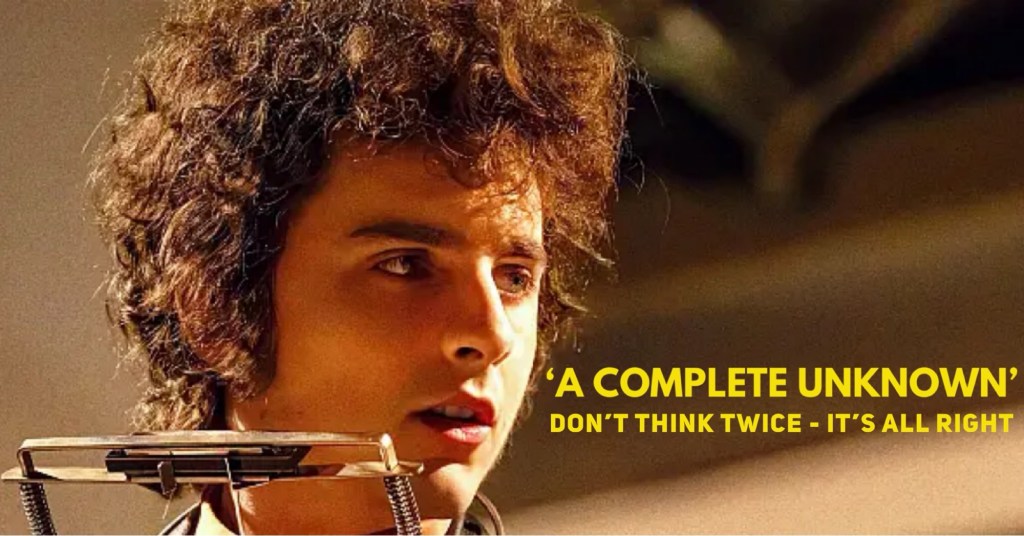










 Some musings