
The further a society drifts from the truth, the more it will hate those that speak it.”
George Orwell
Irrespective of what you think of the U.S. President, the news, if you can believe it, that the BBC has this week been exposed as having edited a speech made by Donald Trump, so as to suggest he said something that he didn’t, is deeply concerning. Because his being misrepresented by an organisation that prides itself on its so-called impartiality helps nobody, serving instead only to make us all even more uncertain as to what we can and cannot, believe.
Today we live in an increasingly postmodern world, one in which there are those who insist that no absolute truth exists. And so, with some truths more convenient to hold than others, certainty seems ever harder to define.
Truth, it seems, is terminally ill, languishing on an outlying ward while a ‘Do Not Resuscitate’ form is hastily filled in by those who benefit most from its death. Yet truth doesn’t need assisted suicide – on the contrary, it is in urgent need of intensive care.
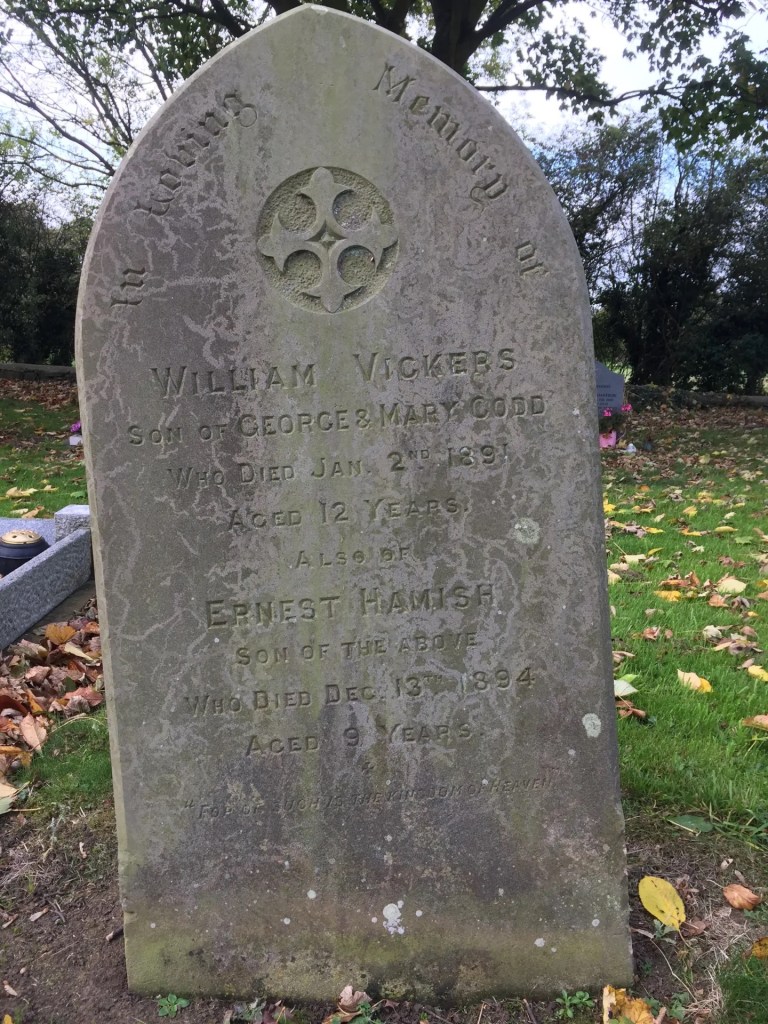
On January 2nd 1891 a 12-year-old boy called William died. A little under four years later, on December 13th 1894, his brother Ernest followed suit. He was just 9 years old.
You won’t have heard of either of them – indeed I wonder if anyone alive today remembers that one or other of them ever even existed. Yet a gravestone in a Lincolnshire churchyard testifies that they did, standing as it does in memory of the fact that they both were once very much alive. The monument reminded me that those I have no knowledge of were no less real for my ignorance of them, and I am, therefore, glad that it was there for me to read.
It’s good to visit graveyards from time to time – and not just to visit the graves of those we have known and loved. It’s helpful to be reminded of the countless generations who have gone before us, and to remember that those who have died did so having lived, not so very differently to us. To forget them does not alter the reality of their once vibrant lives but, by ignoring their former existence, we ourselves are diminished.
Because we make a mistake if we think we are more important than those who have gone before us. We make a mistake if we arrogantly imagine that how we see things today is inevitably so much more sophisticated than how our predecessors saw things in the past.
And we make a mistake if we forget that one day we too will die and lie forgotten by those who come after us.
Furthermore, what we reckon today, will be considered of little importance by the strangers who tomorrow will walk amongst the gravestones that mark our passing.
A few miles away from that village churchyard is Lincoln Cathedral, where the invitation again goes out to remember those who are no longer with us, the heavy stone slabs confirming that death is no respecter of persons. For even the great and the good, those rich enough or important enough to have their lives commemorated in such grand surroundings, know what it is to die tragically young too.

Selina Newcomen died on 15th January 1725, aged 29. Just six weeks later, on 25th February, her eight-month-old son, John, joined her in the grave.
A third graveyard lies within a few hundred yards of the cathedral, in the castle which, in the 19th century, housed a Victorian prison.
Here the gravestones are less auspicious. Rising no more than a few inches above ground level, they are engraved with just the initials of the person whose grave they mark – along with the date on which they were executed.
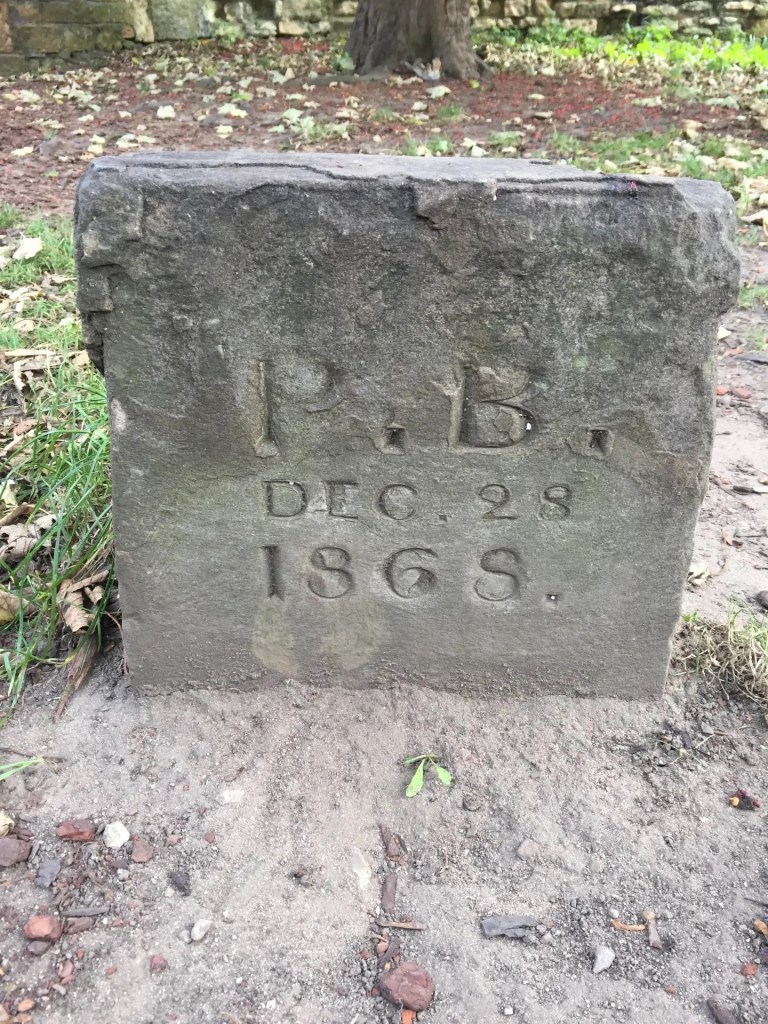
Priscilla Biggadike was hung at 9am on December 28th 1868 for the murder, three months earlier, of her husband, Richard who had been poisoned with arsenic. P.B. maintained her innocence right up to the point of her execution, which took place fourteen years before Thomas Proctor, a lodger of the Biggadike’s at the time of her husband death, confessed, on his deathbed, to having committed the murder himself.
Ironically, just a stone’s throw away, back in Lincoln Castle, is displayed a copy of the Magna Carta of 1215, which promises to deny or delay right of justice to no one. On this occasion, however, a misrepresentation of what was true ended in an awful injustice, proof, if proof were needed, that when truth is absent, something important dies.
Discerning the truth is, therefore, fundamental if right decisions are to be made, if justice is to prevail, and if sensible actions are to be taken.
In his book ‘The Book of Laughter and Forgetting’ the Czech writer, and Nobel Laureate, Milan Kundera wrote:
‘The struggle of man against power is the struggle of memory against forgetting’.
His point was that we need to fight to keep remembering what is true because there are those who would have us forget the truth – if indeed we were ever allowed to know it in the first place. Because controlling what is believed to be true, controls all those who subsequently believe it.
Throughout history, the rich and powerful have always wanted to control what is remembered, so as to paint a version of events favourable to themselves. Some have used their wealth to buy the silence of those who know the truth, others have used their power to threaten and intimidate those who they do not want to speak. And it is no different today. All too often society is once again shocked by news of how the rich and powerful have taken advantage of the weak and vulnerable and sought to silence them with wholly inadequate sums of money..
And neither are such terminological inexactitudes confined to those who live a life of celebrity. So too, for example, are pharmaceutical companies sometimes guilty of similar misrepresentations of the truth. Not only do they encourage medics to interpret normality as disease, they would also have them, and us, believe that their drugs are more effective in producing satisfactory endpoints than they really are, imaginatively misrepresenting data and applying gagging clauses to those who undertake their research lest results of that research be unfavourable for the drug’s marketability.
And so it goes on.
If something is not said, it isn’t long before it’s forgotten – and what is not remembered is soon no longer believed. And so, eventually, truth not only dies, but ceases to be important.
But is not only a version of history that powerful people want to manipulate. Because the notion of truth itself is something that some would like to see die – and be left with no memorial stone to mark its passing. For the truth, for some, is inconvenient, getting in the way of allowing them to do what they want.
This wish to see truth unceremoniously disposed of is not, of course, a new desire – it’s been around for millennia. Nearly 2000 years ago, for example, Pontius Pilate, perhaps drawing on Plato, asked ‘What is truth?’ of the one who claimed, not only to bear witness to the truth, but be the personification of truth itself.
In the 19th century Friedrich Nietzsche coined the term ‘Perspectivism’ and, presumably failing to notice his own internal inconsistency, asserted that
‘There are no facts, only interpretations.’
And likewise today, we have ‘fake news’, made up of so called ‘alternative facts’, which, despite having no objective evidence to support them, some claim to have just as much validity as those that are objectively verifiable.
Meanwhile there are others who just shout down, vilify, and ridicule any opinion contrary to their own – ad hominem arguments being preferred over any attempt at reasoned argument.
And so it seems, that the only thing that is true is that there is no truth.
In ‘The Eighteenth Brumaire of Louis Bonaparte’, Karl Marx wrote:
‘Men make their own history; but they do not make it just as they please; they do not make it under circumstances chosen by themselves, but under circumstances directly found, given, and transmitted from the past. The tradition of all the dead generations weighs like a nightmare on the brain of the living.’
Marx’s point was that nobody stands outside of history – everyone, even the most progressive of thinkers, is influenced by the particular historical context in which they find themselves.
The thinking of those in the past was, without doubt, not without error, but we are foolish if we think it was therefore completely false. Furthermore, if we try to think in new ways, without drawing on the wisdom of the past, we too will find ourselves making mistakes, influenced as we are by the time in history that we now find ourselves. Those errors will, no doubt, be different from the ones made by those who have gone before, but the conclusions that we draw will, as a result, be no less fallible than those made by them.
Novel ideas of the nature of reality are unlikely to be reliable. And because truth matters, it is best discerned by standing on the shoulders of those who have thought carefully about important matters before us, and not by dismissing that body of understanding as irrelevant and out of date simply because it is made up of ancient wisdom.
Which is why C.S. Lewis advised that at least every fourth book one reads should be from an era prior to our own.
“Every age has its own outlook’, he wrote, ‘It is especially good at seeing certain truths and especially liable to make certain mistakes. We all, therefore, need the books that will correct the characteristic mistakes of our own period. And that means old books.’
And it means old ideas too.
That’s why we need to remember those who have gone before us – and learn from them. Perhaps they are wiser than we would like to think. Perhaps we should listen more attentively to the advice that they have given.
But still there are those who want to redefine truth for us, and make it fit modern sensibilities. And so we must not uncritically buy into the spirit of the age, uncritically believing all that we hear, especially when, as has been made clear this week, even the most reliable of news channels sometimes lie to us.
Instead we must not lose sight of the notion of truth. Because to do so will spell disaster.
Because truth matters.
When everybody decides on their own version of what is true, based solely on what they themselves think about any particular subject, no opinion can be challenged as wrong, and we all make ourselves out to be gods. It is inherently self-centred and, sooner or later, we will insist on others dancing to our tune.
When we reject the notion that truth is discovered or revealed, society inevitably becomes fractured and directionless, as no common values are held to be true by all, and no distinction exists between the trivial and the important.
The result is that those who are rich and powerful, those who can impose their version of reality on others most effectively, become tyrants with no means of being restrained.
The struggle today is then to remember that some things are true and some things are not – no matter what the wisdom of the world tries to bully us into believing.
But there’s more to it than that –because truth doesn’t just need to be remembered, it’s needs to be upheld.
The notion that there is no such thing as truth, has survived infancy, made it to adulthood, and is now enjoying comfortable middle age. Nonetheless, whilst we can’t perhaps know everything fully, there are some things that we can fully know – certainly more fully than is sometimes claimed.
Because the truth really is out there.
It was Aeschylus who wrote, ‘In war, truth is the first casualty’. So then, living in a day when truth is under fire, when contrary opinion is ridiculed, and reasoned argument is silenced with a raising of an angry voice and a dismissive wave of the hand, truth is something that needs to be fought for.
Because truth must not die and become something that only once existed – an idea that is fondly remembered. We need to take care of truth, seek it out, and visit it often. We need to nurture it and allow it to flourish.
And what’s more, we need to speak truth too.
Because the truth, like a young life, is precious. And precious things are worth holding on to.
I sat in another churchyard – on a bench placed there a decade or so ago in memory of a girl in her early teens who had died. She had been killed when a driver, his judgement impaired by alcohol, had recklessly raced his car at excessive speeds and hit her whilst she walked home from the park one Sunday afternoon.
It was a criminally stupid act with tragic consequences.
In front of me was her grave. On it were some fresh flowers. I’m glad somebody remembers her – but I wish she’d never died at all.


