Why have so many of us become so dissatisfied with our working lives?
And why have so many of us become dissatisfied with our lives in general?
Hannah Arendt (1906-1975) was a German born philosopher best known for ‘The Human Condition’ (1958). In it, if I understand her correctly, she explains her view that the way out of living a meaningless life is to bring about change through our ability to act and thus create something new.
Arendt distinguishes our ‘actions’ from our ‘labour’ and our ‘work’. ‘Labour’, she explains is simply those activities of daily living by which we meet our biological needs whereas ‘work’ she defines as that which we do within the world that imparts a ‘measure of permanence and durability upon the futility of mortal life and the fleeting character of human time’. ‘Work’ produces something abiding and is of a higher level than ‘labour’ which merely perpetuates. To Arendt, however, our ‘actions’, are what really count. It is not so much ‘what’ we are that matters but rather ‘who‘ we are – and who we are, she says, is best revealed through our words and deeds, when we go beyond our inherent selfish survival instincts and ‘act’ to bring something new and unexpected into existence.
Two key behaviours that Arendt identifies as bringing about this change are those of forgiveness and the making and keeping of promises. Forgiveness is the behaviour by which it is possible to nullify past actions, releasing others from what they have done and enabling them to change their minds and start again. ‘Forgiveness‘, she writes, ‘is the key to action and freedom‘ and ‘the only way to reverse the irreversible flow of history‘. In contrast, our ability to make and keep promises marks us out as being able to make the future different from the past. ‘Promises are the uniquely human way of ordering the future, making it predictable and reliable to the extent that this is humanly possible‘.
Arendt believes that, in order to be fulfilled, we need to be able to act in ways that advance or better society as a whole. And herein lies the clue as to why some of us may have lost satisfaction in our working lives and, perhaps, our lives as a whole.
Though we continue to seek happiness, so restricted have we become in public life, by the guidelines that we have to adhere to and the hoops through which we have to jump, that we have become like slaves who have no prospect of having genuine influence. In Arendt’s terms, we can ‘labour’ and ‘work’ – but we can not ‘act’. Furthermore, having given up the prospect of doing something that might bring about real change and thereby produce genuine benefit, we have retreated from the public sphere and been reduced to consumers who are content to amuse ourselves in private – with yet another bottle of prosecco, perhaps, and an evening spent bingeing on the latest must watch series on Netflix.
Arendt suggests that ‘under conditions of tyranny, it is far easier to act than to think‘. Such then is the consequence of a too heavy, top down, approach to medicine when conformity to guidelines is all. In such circumstances, we seek only to unquestioningly comply with what we are told we must do and, because of the fear fear of reprisal, we anxiously seek to do so perfectly. But, says Arendt, ‘In order to go on living one must try to escape the death involved in perfectionism‘. By giving up the hope of genuine autonomous action we have given up our hope of fulfilment and, with it, our hope of happiness.
Thoughtlessly striving for perfect compliance, we therefore die.
This links into another idea of Arendt – that whilst we can know much about the objective world, we fail to understand what lies beneath the surface – that which is most important. ‘What’ we are is our body, but ‘who’ we are is disclosed by our words and deeds. As doctors we may know a lot about ‘what’ our patients are – the details of their individual biological parameters – but we struggle to know ‘who’ they are – their true nature as revealed by what they say and what they do. We can only know ‘who’ our patients are by devoting more time to watching them, listening to them and learning what makes them who they are. We need to spend more time with people, both our patients and those friends and relations whom we love the most, not only for the emotional and material support they provide but also, Arendt believes, for the joy of seeing them reveal their true character.
Failure to know our patients therefore diminishes our working lives. We all risk burning out if we are concerned only about ‘what’ our patients are rather than ‘who’ they are and who they may become. But this has become ever harder as our workload has escalated, remote consulting has increased, and, as personal lists have become ever more fractured, the doctor-patient relationship has ceased to be what it once was. These, and a million other concerns, press in on us daily and thus prevent us from taking the necessary time required for us to properly get to know our patients.
Finally, then, what of ourselves. Arendt suggests that we may never fully know who we are ourselves because that is something that can only be properly observed by others, those who see us act in ways that we can not see ourselves. This is most true when we love – for love, she says, reveals ‘who’ we are like nothing else simply because it is unconcerned with the ‘what’ of the one we love. ‘Love, by reason of its passion, destroys the in-between which relates us to, and separates us from, others’
To regain our satisfaction with work, therefore, we need to change. We need to stop behaving in the way that we have been encouraged to practice, stop seeing the ‘what’ of patients and notice instead the ‘who’ that they really are. In short we need to care for our patients.
We need to stop judging them for their past mistakes and instead, by ‘forgiving’ their unhealthy habits, give them the opportunity to start again. We need to give them the hope they need in order to begin again and thus create something new in their lives. Furthermore we need to believe that patients really can change and promise them the help and support they need to avoid remaining stuck as they are.
If we act in these considered, creative and unexpected ways we really will make a difference – a difference that will also restore our own satisfaction in practicing. We must be more than simply service providers, performing our jobs according to protocol. We need to tackle head on the problems of life and think for ourselves. Because to live is not to merely survive, mindlessly comply and contentedly be entertained. The provision of ‘bread and circuses‘ is not enough for us to be happy. Rather, to truly live is to be somebody who acts and brings about the change, the new start, we all so hope for and so very much need if we are to have any chance of keeping on ‘keeping on’.
Eleanor Oliphant, the eponymous hero in Gail Honeyman’s novel captures the sense of this well.
“I suppose one of the reasons we’re all able to exist for our allotted span in this green and blue vale of tears is that there is always, however remote it seems, the possibility of change”.
Related blogs, starting with one on the dangers of perfectionism:
To read ‘Professor Ian Aird’ – A Time to Die?’, clickhere
Next a trilogy which, to my mind at least, form a trilogy on the subject of burnout:
And now some other related posts beginning with two offering more on how promises change our future:
To read ‘Hoping to maintain resilience’, click here and, for a theological take on this same question, click here to read ‘Hope comes from believing the promises of God’,
‘For all our days that tear the heart Leave us nowhere For all the years we left untold Hurt, we couldn’t hold much longer’
Jessie Buckley and Bernard Butler
I don’t know if it’s because of my ever greying hair or simply the result of wishful thinking on the part of those who are posing the question, but currently a day hardly seems to go by without one of my patients asking me how long I think I’ll remain a GP. Admittedly the idea of retirement is one that is increasingly appealing given how recently, just when you thought the job couldn’t get any busier, it went and got a whole lot busier!
When I think about how many times in my career I have considered giving up medicine, it is in some ways remarkable that I have lasted as long as I have! The first time was about a month into my A Levels. Back then I was hating Physics so much that I decided to give up sciences and study History and Economics with a view to following my big brother into the bank. Thankfully, after a few wise words from my Dad, I dropped Physics and took Biology in its place. After which things got better.
And so I clambered aboard the conveyor belt of medical education and got a place at Bristol. After a wobbly first couple of terms during which time I again considered ending my medical career before it had begun and was briefly prescribed ‘Prothiaden’ which was then a fancy new antidepressant, I eventually settled into university life. But after failing to enjoy the third year and my first experience of clinical medicine, I intercalated, unconventionally late, in Psychology with the specific intention of leaving university with a degree that would offer me the possibility of a job outside of medicine. For a while I flirted with the idea of accepting the offer I was made to do a PhD in Psychology but chose instead to return to Medicine and I eventually graduated in 1991.
My year as a houseman wasn’t a happy one and my wife will tell you how low I was during what was also, purely coincidentally you understand, our first year of marriage. She sometimes had to literally feed me breakfast in the morning, and put my shoes on to get me ready to leave for work. So convinced was I that I would not remain a doctor for long, I even temporarily opted out of the NHS pension scheme. But in time things got better again and I somehow survived my first year as a doctor.
GP training was also an initially miserable time, so much so that, before completing my training, I lined up a job in Psychiatry thinking I might follow this as an alternative career path. Six months of that though was enough and so, with my MRCGP now under my belt, I became a GP locum. One practice I spent three months at asked me to apply for the partnership that they were advertising and, having done so, I was fortunate enough to get the post. And so, in January 1997, I began what thus far have been 26 largely happy years at the practice at which I still work. Initially I hated it though. Not only was I genuinely convinced I was useless, I also was totally convinced that everybody regretted taking me on a partner. But then things got better once again proving that, at least on occasions, things can and do improve over time.
That said, I’m not sure that medicine is getting better. On the contrary, I am concerned that the world of medicine has lost it’s way. I’ve been writing about this for well over a decade now but the situation only seems to be getting worse with every passing year. With the medicalisation of normal life and the overemphasis on clinical parameters rather than the individual to whom those parameters refer, modern medicine has diminished what it is to be human and diminished too what it is to be a doctor. What’s more medicine has for too long arrogantly acted as if it had the power to bring about eternal life and never ending happiness. It spends far too long trying to do what it can’t and too many of those charged with that Sisyphean task have killed themselves and made themselves unhappy in the attempt.
And, perhaps as a consequence, whereas once doctors were their patients advocate, it seems that patients now are too often perceived as the enemy, made up of those who have to be managed rather than those who need to be cared for. And as doctors are driven further away from their patients, as they become more remote from them, so I believe they will find themselves caring for patients less – even as their patients care less about them.
It also seems to me that medicine has priced itself out of the market. With all that medicine can potentially do, it is now simply too expensive, not only in terms of the burden it imposes on the tax payer but also in terms of the personal cost paid by those who work in healthcare. The toll is too high and something really does need to be done about it.
I’ve been writing on a regular basis now for a little over four years. I find it helpful – so much so that this website is far too cluttered with posts. In his essay ‘Why I write’, George Orwell gave four reasons, suggesting that, to a greater or lesser extent, each one is present as motivating factors in all those who put pen to paper.
The first reason he gave, was SHEER EGOISM. I don’t deny it. I enjoy writing for writing’s sake but if occasionally someone likes what I write, if perhaps I manage to raise a smile or somebody finds something I’ve written helpful, I find that that brings with it a little extra satisfaction.
Next came AESTHETIC ENTHUSIASM. And once again I put my hand up to that one. I enjoy writing because I enjoy writing, even when no one else enjoys reading what I write! I like playing with words, finding an arrangement of sounds that rolls off the tongue and which is pleasing to at least my ear.
Thirdly on Orwell’s list, was HISTORICAL IMPULSE – the simple desire to write about how things are, to record for others what the truth is. Again mea culpa! I feel it’s important to write about the state of the world, or at least the medical world that I inhabit. And writing helps me think about what is going on around me, it helps me understand the realm in which I operate.
And the last reason Orwell gave for why writers write was POLITICAL PURPOSE, by which he meant a desire to influence others, to move others to think in ways that the writer thinks themself. And I suppose that’s true of me too, at least to some extent. Indeed I suspect it would be a bit odd if it were not the case.
But there is, I think a fifth reason for why I write, one which is at least slightly different to those given by Orwell. And it’s this. The NEED TO BE HEARD.
There are some things that are so important to us, that we need them to be important to others. And for that to happen our concerns have to be heard, and felt, by others.
In an indifferent world it’s important that we listen to those we care about, to make a real effort to hear what they are saying. We may not be able to do much about what is spoken about, not in any practical sense at least, but caring enough to recognise it matters to the one who is saying it, is, at least, a start. Because to share a little in the experience of others, perhaps even shedding a tear ourselves as others express their sadness, draws us a little closer to the one who suffers, and makes a connection with the one who grieves, a connection that, too often in this frequently contactless world, we fail to make.
And so I write about the things that matter to me most.
I write about cricket – is there anything more important than the domestic cricket season and the violence being done to it by the introduction of franchise cricket? I doubt it, but even so, now is not the time for me to get on that particular soap box again.
I write about medicine – of how the NHS is broken and breaking the people who work within it. I write of how it bothers me immensely that patients aren’t getting the treatment they need, not, at least, in a timely fashion. And I write about how it bothers me immensely that people who I care about, people with whom I work, are too often close to tears because of what the job now demands of them.
And I write about other, more general, concerns that trouble me because it’s not only in relation to the world of medicine that people suffer. And irrespective of the reasons for that suffering, and especially when, rather than getting better things seem to be getting progressively worse, I find it helpful to express in what I write some of the sadness I am sometimes prone to feel.
And I also write about my faith – because if it’s everlasting life and infinite joy we want, I believe we will need to look for it somewhere other than medicine. Without the faith which sustains me in difficult times, without the sure and certain hope of a better tomorrow, I really don’t know how I’d be able to cope with all that life sometimes entails. Like the psalmist I believe that, though weeping may tarry for the nighttime, joy comes with the morning – and I hold this to be true irrespective of how long and dark the night may be, or how far off the day still seems.
So as working in the NHS becomes evermore difficult, will my recurrent thoughts of wanting to leave medicine finally be realised? Will I retire a year or two earlier than 59 which is, I believe, the average age that GPs now hang up their stethoscopes? I don’t know. But if I do it won’t be for the reason that I have considered giving up so many times in the past. Back then my thoughts of quitting were largely linked to my feelings of inadequacy, of not being good enough as a doctor. Now, however, though still inadequate to meet the needs of all that is demanded of me, I have become resigned to my inadequacy. In his 2014 Reith Lectures, American surgeon Atul Gawande spoke of our ‘necessary fallibility’ – that now we all inevitably make mistakes because it is simply not possible for us to know all that there is to know or be able to do all that we are asked to do.
So then, if I do leave early, the reason will be, not just because there is something else I’d rather do, but also because of what medicine has become, an often arrogant and frequently cruel taskmaster, one that I have lost faith in. I don’t want to work in an environment which forces employees to be more concerned for their own welfare than the welfare of others. There’s a lot of talk these days about how we need to be kind, generally accompanied with the caveat that our kindness should extend to ourselves. There is undoubtedly much truth in such talk but it remains the case that if we’re to be kind to those we interact with, it is inevitably going to mean that sometimes we will need to be unkind to ourselves, to sometimes make sacrifices for the sake of others. But here’s the thing – when we do, I believe that, rather than suffering, we are enriched by our actions. Sometimes real success comes as a result of our losing everything. There is, I believe, historical precedent for such a view.
Some years ago, on my day off, a parent phoned the practice regarding their 8 year old son who had been experiencing diarrhoea and vomiting. He was given wholly appropriate advice for home management and advised to call again in the event of any deterioration. The next day the father did indeed call back but proceeded to inform me that all his son’s symptoms were improving. But there was something about the fathers tone of voice that unsettled me and so, at around 6.30 that evening, I called him back and learnt how the child had subsequently significantly deteriorated. Though I was not on call, I offered to do a home visit, an offer that was gladly accepted. When I eventually arrived, the lad had the most obvious meningism I have ever encountered and I duly gave him a stat dose of iv benzyl penicillin and called for an ambulance which, as they did in those days, duly arrived and whisked him off to hospital in good time.
Now as it happened, that evening I had been invited to a party of a friend who was celebrating her 80th birthday. Inevitably I was very late. When I arrived, several guests expressed their concern for me, imagining, given my tardiness, that I must have had a bad day. I hadn’t. Though entailing an interruption to my plans, being where I was genuinely needed was hugely rewarding, it was a joy to have been able to help that evening. And today the lad is a young man, one who is still my patient, and always thanks me every time he sees me, foolishly imagining that it was me who saved his life rather than the clever souls at the hospital who did all the hard work.
I’m not sure though that modern general practice is conducive to that sort of doctor-patient relationship anymore. Not only is this a great shame, it also makes losers of us all, both doctors and patients alike. Sadly the way General Practice used to be is over and those who work in primary care can no longer be expected to work in the way they once did. For whilst there is much that is rewarding about going the extra mile for patients, constantly being required to give more than you have to give is simply unsustainable. And whilst I would like to think we could abandon medicine by rote and return to a simpler and more thoughtful way of working, I fear that now there is no going back. The horse has bolted and the stable door has been left flapping in the wind.
And so at 56, assuming the colorectal screening that I’ve just had the dubious pleasure of undertaking doesn’t result in a spanner being thrown in the works, I am of an age when I may yet be able to give 10 years to something else. As such I am open to moving on in a way that I’ve never been before. I would of course miss my patients but I already find the job makes me less connected to them than I once was. And I would of course miss my colleagues who really are some of my very best friends.
Even so, whilst recognising that I am nothing special and that in times past I could easily have been replaced, the fact is that recruiting GPs is currently almost impossible. As such, were I to retire prematurely, I would struggle if my leaving destabilised the practice which has been such a large part of my life, the practice that provides care for the many patients of whom I have become so very fond, and the practice which, as I’ve already said, is made up of colleagues who are also my friends.
So what am I saying? How long do I think I’ll remain a GP.? Well if there were half a dozen excellent doctor’s hammering on the doors of the practice, each one of them desperate to join the partnership, I think that, in the event of some alternative opportunity being presented to me, I would almost certainly consider moving on. But as thing’s stand, I really don’t know. Just now though it’d be hard to leave.
Time will tell if things will one day get better again. I for one am sure they will, in ways better than we can possibly imagine, when every tear will have been wiped away, death will be no more and doctors simply won’t be required.
And then we can all retire. Personally I can’t wait!
‘For all our days that tear the heart Leading us somewhere Somewhere else to start’
Before an option to read a whole load more words, for those who would rather hear them sung beautifully instead, here is a link to the title track of Jessie Buckley and Bernard Butler recently released album. My advice though is to listen to the whole album – it really is superb.
Aristotle had it right when he wrote in his ‘Metaphysics’ that ‘Those who wish to succeed must ask the right preliminary question’. More than 2000 years later, doctors would do well to listen to his advice.
Before adopting each and every new advance that claims to be good for our patients, we should ask what we are hoping to achieve by following such recommendations. And we ought to consider whether the answer we come up with tallies with what I would propose might, in Aristotle’s eyes, be a good preliminary question to ask.
What do good doctors do?’
In ‘The Abolition of Man’, C.S. Lewis had some interesting things to say about how the focus of what science seeks to do has changed over time. Whereas once ‘wise men of old’ sought knowledge in order to understand how humankind conformed to reality, Lewis suggested that for science the problem had become ‘how to subdue reality to the wishes of men’.
But, for Lewis, there were dangers inherent in such an ambition. He realised that it would be those with power who would impose their wishes on the weak and maintained that any attempt to subdue reality to the wishes of the powerful, would require nature to be conquered in order that it conformed to their desires.
And that, he said, would require a reducing of all of nature to nothing but its component parts, denying anything beyond the merely physical and quantifying everything only in terms of what we can measure. Lewis believed that, since humanity is itself a part of nature, this diminishing of the whole would. ultimately, diminish humanity and bring about what he called the ‘abolition of man’.
So what of medicine today? Does it also seek to go beyond trying to help patients face what nature throws at them and seek to conform nature to what is deemed desirable for its’ patients? And if so, is the result a diminishing of what it means to be human – are people reduced to being defined merely in terms of their medical parameters? Is medicine undermining what it is to be alive?
If the answers to any of these questions is ‘Yes’, the route cause may be that we doctors have lost sight of what our purpose really is. We have forgotten to ask ourselves the right preliminary question.
The NHS came into existence in 1948 based on William Beveridge’s 1942 report urging universal access to health care. This was accompanied by a belief that the state should provide social security ‘from the cradle to the grave’. Inherent then, at the inception of the NHS, was a belief that, though every effort should be made to fight disease and promote health, the grave awaited us all and death was an inevitable reality. In the early days of the NHS therefore, alongside social reformers who developed polices to reduce the risk of disease, the wise doctors of old practised medicine for a population of people with disease whilst never forgetting that death remained a reality that could not be ignored.
That was what wise doctors did. But having forgotten this we have moved beyond this worthy endeavour and foolishly sought to employ medicine to subdue reality to mankind’s wishes. A moment’s thought will bring to mind a number of ways in which medicine has tried to do this – and it will be all too apparent that this has often required the reducing of humans to nothing more than their component parts.
Take for example, perhaps man greatest desire, the wish to live happily forever after. Even though for medicine to deliver this is the stuff of fairy tales, medicine has, nonetheless, attempted to subdue the reality of death and unhappiness.
No longer content to busy ourselves caring for the sick, we now, in the name of promoting immortality, label the healthy ill. Those we consult with may never have felt so well but we insist on telling them, often remotely, that they have borderline hypertension, that their cholesterol is too high and to top it all that they have pre diabetes.
No wonder we have the worried well when we tell the well to worry!
Defining them in terms of unfavourable health indices, we then exhort them to take our medications with all their side effects and demand that they behave in ways they would not otherwise choose.
And if they fail to be happy, if they become anxious or sad, we try to convince them that their feelings are not really their own – that rather than experiencing a genuine emotion, they have instead had just a conditioned response to the levels of serotonin floating around their biological system.
And for that, they are told, there is a pill as well.
Slowly but surely, people become patients who, rather than being enabled to live well, are reduced to little more than automaton whose only concern is nothing more than to avoid death and feel pleasure. They are made to worry over what is normal and become dependent on medicine to solve the problems that they do not have. Their lives are diminished by the pursuit of what we have told them they should desire most.
Lewis, I believe, was right. But it’s not just our patients who are at risk. If we in primary care forget what it is we do and capitulate to those in power who seek to impose their ideas on how we practise medicine, if we buy in to their vision and are reduced to only being interested in what can be measured, and if we spend our time frantically generating the data they demand, then we will no longer be the doctors we once were, the doctors we always wanted to be.
‘What do good doctors do?’ It’s a question we must urgently ask ourselves lest the answer becomes that we silently watch over the abolition of general practice.
To read ‘The Abolition of County Cricket’, click here
Related blogs regarding the difficulties with the NHS:
To read ‘General Practice – is time running out?’, click here
To the tune of ‘With God on our side’ by Bob Dylan.
For twenty six years now A GP I’ve been And many’s the number Of patients I’ve seen They’ve come with their sickness In times of distress But where will they go when There’s no NHS?
Way back when I started I always did know To those who required one An ambulance would go But now it’s uncertain And its anyone’s guess How the sick they will fare when There’s no NHS
And those who are ailing Two things they should dread For hospital treatment Will there be a bed? And those caring for them Will they cope with the stress? Of not enough nurses In the NHS
In primary care too The future looks dire Cos there’s not the doctors That we now require And so I must tell you I sadly confess That I fear for the future Of the NHS
At A&E centres The waits they’re so long That patients are dying Which has to be wrong And now as the talk turns To deaths in excess I wonder how long ‘till There’s no NHS.
Now some say the future’s In private healthcare Though few can afford it As you’ll be aware And those without money They’ll never the less Still pay a high price when There’s no NHS.
With apologies to Bob Dylan.
For those who wish to, you can hear his 1964 recording of ‘With God on our side’, by following the link below.
For other medically themed songs for which I take full responsibility, follow the links below. Audio versions are available for those marked with an asterisk.
Two photos taken nearly 50 years apart, the second snapped shortly before Christmas at a family gathering to celebrate my parents diamond wedding anniversary, delayed by two and half years due to a certain attention grabbing virus that’s been prevalent of late.
circa 19752022
Things to note:
My Mum’s expertise at cutting hair. So adept was she with the scissors that she could create that ‘pudding basin’ look that was so sort after in the 70s without ever having to make use of a pudding basin!
How cute I was when I was 8…and how undeniably cute I still remain! Admittedly there were times in between when I tried to throw off my cutesy demeanour and endeavoured instead to convey an air of smouldering sensuality something I like to think I managed with more than a modicum of success [as if!] Today, however, I find myself once again having to settle for being, at best, no more than merely cute!
Given I was as trendy then as I am now, the fact that I’m wearing socks and sandals surely indicates just how unbelievably fashionable such attire once was!
Discerning observers will also notice that I am the second born son and have an elder brother who is balding prematurely. As such I was considering writing a book about my childhood experiences but I can’t imagine anyone being remotely interested!
Related autobiographical blogs, some more tongue in cheek than others:
A while ago I came across Hugh McLeave’s biography of Professor Ian Aird entitled ‘A Time to Heal’. In it Aird is described as having been ‘a brilliant surgeon, an inspired teacher and one of the great medical personalities of his generation’. He was also, if I have my family tree correct, my grandfather’s cousin.
Born in 1905 in Edinburgh he attended George Watson’s College where school certificates record he never achieved anything less than ‘Excellent’ and where contemporaries described him as one who ‘could not help himself, being a perfectionist’. He subsequent studied medicine at Edinburgh University and embarked on a career which, in time, saw him rise to become Professor of Surgery at the Hammersmith Postgraduate Medical School. Here he became best known for separating Siamese twins, most notably the Nigerian pair of Boko and Tomu. Dying in 1962, five years before I was born, I never met him but photographs of him are strangely familiar as, in appearance, he bore a striking similarity to my Uncle John.
Few, despite his pioneering work, remember him today and I have only once in my own career come across anybody for whom his name meant anything. My first house job was in Bristol, working as part of a urological firm in Southmead Hospital. The consultant under whom I worked, Mr Roger Feneley, had himself studied from Aird’s Textbook of Surgery, and he took some delight in imagining he was nurturing ‘the young Aird’ on the way to becoming a fine surgeon in his own right. Disappointingly, I suspect, for Mr Feneley, I was in no way cut out for surgery and chose instead to become ‘just a GP’, a decision that led to an equally satisfying career.
That textbook of surgery was not the last thing that Ian Aird wrote. His final words were found in a notebook alongside a Bible opened in the page where the following words can be found:
‘To everything there is a season, and a time to every purpose under the heaven: a time to be born and a time to die’. [Ecclesiastes 3:1-2]
Having read them, Aird had proceeded to write, in a ‘bold and unequivocal hand’, a short statement.
‘To the Hammersmith Coroner: I have taken a fairly substantial dose of barbiturates. I have never taken a drug before in my life. I have passed my apogee. My skill is going and I am in deep despair. I find myself in unmitigated gloom. Although I am a sincere and practising Christian, I cannot continue. I have burnt myself out. There is too much to do. I cannot write my book again. My department has produced the electronic control of patients in operating theatres, done the first intra-cardiac operations, transplanted the first kidney homografts in Britain, shown the connection between blood groups and disease – and there has been no distinction given to us…Ian Aird’
McLeave, who knew Aird well, interpreted that final comment, not as an embittered comment at the lack of personal recognition, such was not his nature, but rather as a reflection of the struggles he’d long had in attracting funding for his work and the active discouragement he’d experienced from within the medical profession. The frustration that he was not achieving all that he could, together with his own excessively high standards that fuelled that frustration, culminated in producing the emotional distress with which he no longer felt able to cope.
The conclusion McLeave then drew was that ‘Had [Aird] taken a holiday, sought medical advice or resigned himself to living at a slower tempo, he might have lived – but he demanded nothing less than perfection in himself’.
Though I never knew Professor Aird, I recognise, both inside and outside of medicine, that same perfectionism that demands of individuals more than they are able to give and renders them both guilt ridden and unhappy. As expectations increase both from within and without, what Atul Gawande describes as our ‘inevitable fallibility’ leaves us imagining we are moral failures simply because of our inherent ordinariness.
We, and those with whom we live alongside, need to be kinder to one another, acknowledge our humanness, and stop insisting that we are more than we could ever become.
There are many factors that drive individuals to take their own life, and none but those who follow this drastic course can fully understand those reasons, if indeed they can ever understand them themselves, but amongst those factors lie the unhelpful and unrealistic demands and expectations put upon individuals by both themselves and others. Hannah Arendt had it right when she said ‘In order to go on living one must try to escape the death involved in perfectionism’
In life, Ian Aird was fond of quoting Shakespeare’s words spoken by Cardinal Wolsey in Henry VIII:
‘And, when I am forgotten, as I shall be, and sleep in dull cold marble, where no mention of me more must be heard of, say, I taught thee’
A fitting memorial for my long forgotten relative would be that he did indeed teach, and that we learnt, that perfectionism, and the demand for it, kills, just as it surely, at least partly, killed him.
And now three blogs which, in my mind at least, make up a trilogy on the subject of burnout:
It’s no fun to be lonely. It’s no fun to live by yourself and spend each evening trying to keep yourself busy in the hope that you can somehow forget how alone you really are. Sometimes though, you just can’t forget and it’s a job then to do anything at all. The weekends don’t help. Rather than being something to look forward to, they serve only to heighten the sense of isolation that you feel as the long hours drag by with you seeing nobody from the end of one working week to the beginning of another.
Hopes of ever meeting somebody and settling down seem like an unattainable dream. And so, as the loneliness continues, the unhappiness grows. The more unhappy you become, the greater the anxiety you feel at what it would take for the sadness to end until you find, in time, that the more you long for the loneliness to end, the more you long to be alone. You wonder what the point of it all might be and conclude that there is no point at all.
Alone in your room, imagining the happiness of others, it’s easy to sing silently along to The Velvet Underground,
‘All the people are dancing
And they’re having such fun
I wish it could happen to me
But if you close the door
I’d never have to see the day again’
Antidepressants may be offered to you but they never really help. No substitute for friends, they’re not the answer – too often they just make you feel worse. Conceivably, talking therapy could help a little but, rather than the simple steps towards a better tomorrow that it was suggested they would be, each session becomes just one more thing to survive, just one more hurdle to overcome. It’s hard to know what to do in such circumstances, not because you lack intelligence, on the contrary you have learnt well what the world has too readily taught, that isolation is good and that we all have to make it on our own.
And so, as I talk to such people, I sense them whispering, ‘I don’t know what to do’. And too often, like them, I find myself stuck, not knowing how to answer. When we eventually part, as I too abandon them to their solitude, their sadness surrounds me and increasingly it becomes my own.
‘All the lonely people – where do they all come from?’
Loneliness, and the accompanying anxiety that is so often both its’ cause and effect, is a common problem and, to those who experience it, it is both crippling and overwhelming. And the problem is getting worse and will, I suspect, continue to do so for as long as society persists in fragmenting and we carry on being encouraged to live too much of our lives online. Because a life lived virtually is a life that isn’t quite complete – and a life that isn’t quite complete will feel, to many, like a life that is no longer worth holding on to.
So run the opening lines of Johnny Flynn’s theme song to the TV comedy series ‘Detectorists’. If you haven’t seen it then do yourself a favour and give it a go. It’s about two friends, Andy and Lance, who spend all their spare time metal detecting. To be honest, not a lot happens. But as what doesn’t happen unfolds, a wonderful friendship between two people is portrayed, one which one can’t help feeling is something that is precious beyond words. Something to be envied.
In one scene Lance is talking to another character about his years of metal detecting. He says,
‘This was our escape from the rude world, the madding crowd…Do you know how often we find gold? Never. We never find it. And that’s what we’re looking for. We don’t say that. We don’t say that we’re looking for gold. We pretend we’re happy finding buckles and buttons and crap, but what we’re hoping for is gold.’
But what Lance is forgetting is the gold he has already found in the friendship he shares with Andy. The truth is that, because of that friendship, he really can be happy ‘finding buckles and buttons and crap’. Likewise, we too all need to sometimes stop our searching for things that don’t really matter and see what of value lies right in front of us but which we so easily overlook. Good relationships are the basis for happiness – if we have them, we are fortunate indeed. We should not underestimate their worth.
Despite having no interest in angling, another program that I have enjoyed immensely is ‘Gone Fishing’. Like ‘Detectorists’, whilst precious little takes place, we see a genuine friendship in action, this time a real one, between Paul Whitehouse and Bob Mortimer. They are long standing friends who have known what it is to support one another through the difficulties they have each known in their lives. And again, it’s genuinely heart warming to watch. Good relationships enable us to carry on when life seems to be falling apart around us – if we have them, we need to be careful that we nurture them well.
I have often thought that it is less important what we do in life than who we do it with.
Friendships can and do make all the difference but they need time to develop, time that is spent together, time that our frenetic lifestyles too often don’t afford.
Given that humans are meant to live in community, it is no surprise to learn that loneliness is bad for us. It is of no surprise to anybody that individuals who experience prolonged loneliness are liable to suffer low mood and anxious thoughts but it is not solely in terms of our emotional wellbeing that loneliness has adverse effects. Less appreciated is the fact that loneliness is also bad for our physical health with those experiencing it having higher rates of cardiovascular and cerebrovascular disease as well as poorer cancer outcomes. It has even been suggested that loneliness is as bad for us as smoking 15 cigarettes a day. The truth is that loneliness is deadly.
And what’s true for our patients is also true for us – being a GP can be a lonely experience too. The early years of being a doctor generally consist of a series of jobs each lasting just a few months before it’s all change and new acquaintances need to be made. It’s hard to establish good working relationships with colleagues in such circumstances and, even when settled in a job, work can be just too busy to allow time for real friendships to develop. What is more, the constant demands of the job can too easily play havoc with our relationships outside of work.
To have friends, both inside and outside of work, is vital – it is simply too important to leave to chance. In work, therefore, we must find time to support each another. We need to genuinely care for one another as friends rather than simply existing alongside each other as colleagues. It is not without good reason that GP partnerships have often been likened to marriages. Healthy partnerships, whether formalised as such or not, are grounded in the commitment that is inherent in those partnerships. They grow as a result of individual members of the team spending time alongside those with whom they go through life and with whom they can honestly acknowledge their weaknesses and struggles. They will not develop where individuals stay chained all day to their desk, constantly battling their own problems, all the while oblivious to those being experienced by others. Keeping doors open when not consulting, regularly taking time for informal chat and not neglecting the all-important daily gathering around the coffee machine all serve to build the working friendships that go a long way towards protecting those within medical teams from falling by the wayside. Informal practice meetings over dinner, annual away days and regular social events, all characteristic of healthy partnerships, will go still further. I consider myself fortunate indeed to be in such a practice.
And maintaining our home life, protecting it from the ever present threat of our work encroaching there, must also be a priority if our relationships outside of medicine are to have any chance of thriving and becoming another source of much needed support.
But to finish, let’s consider again those whom we come into contact with who are lonely. Because there are a lot of them about. Loneliness in the UK is at epidemic levels with, according to the Office of National Statistics, 2.4 million adult British citizens knowing what it is to be lonely. So if there are so many lonely people, and if loneliness is so bad for our health, why don’t we give it the same attention that we give to such things as blood pressure, smoking and cholesterol levels? Part of the answer, perhaps, lies in the fact that, with no pill available that can take away the isolation, there is no money to be made from these individuals who live on the edge of society. And where there is no money to be made, there is no incentive for those who decide what our priorities should be to make loneliness one of things that is considered important enough to tackle.
But there is another reason.
And that is that lonely go unnoticed – unless we are forced to see, they are so easily overlooked.
‘Eleanor Rigby
Died in the church and was buried along with her name
Nobody came’
And so the lonely remain, and the sadness continues. For me at least, far more than the physical consequences of isolation, it is this, the enduring sadness that inevitably accompanies loneliness, that concerns me most. The problem of loneliness is not, of course, ours alone to solve, it is all of society’s responsibility, but even though most of those affected will never dare to ask us for our help, we should, I think, be conscious of both the problem and it’s invasive and malignant consequences. And so we must always keep asking the question,
‘All the lonely people – where do they all belong?’
Because, somehow a place for them has to be found. But how? Personally, faced with someone who is desperately lonely, I admit to sometimes hearing again the words. ‘I don’t know what to do’. Only this time it is me who is whispering them quietly to myself.
It isn’t easy to find ourselves not knowing what to do, it is part of what makes it difficult for us to break bad news to our patients, it’s part of what makes it hard for us to tell them that there is nothing more that medicine can offer. But telling someone that we can’t do anything more for them as doctors doesn’t mean that we can’t do more for them as individuals – we don’t have to leave them alone just because we can’t solve their problem.
In ‘Out of Solitude’, Henri Nouwen wrote,
‘When we honestly ask ourselves which persons in our lives mean the most to us, we often find that it is those who, instead of giving advice, solutions, or cures, have chosen rather to share our pain and touch our wounds with a warm and tender hand. The friend who can be silent with us in a moment of despair or confusion, who can stay with us in an hour of grief and bereavement, who can tolerate not knowing, not curing, not healing and face with us the reality of our powerlessness, that is a friend who cares.’
‘All the lonely people, where do they all belong?’ The answer, surely, is with friends.
Though it may be the case that sometimes we can do no more than be a friend who cares, a friend who cares may be all that we are needed to be. Because, when we do what may seem to be nothing very much, that is when we may actually be doing a very great deal indeed. Sometimes we need to stop being the doctors who disappear when they cannot help and become instead the individuals who, when they don’t know what to do, know how much it can help to simply stick around.
For as long as it takes for the one who is lonely to become, perhaps, somebody’s ’very special one’, to become, perhaps, somebody’s treasure.
Dr Creosote enters the room. Worn down by the years that he has been taking on the burdens of others, he has obviously failed to look after his own health. Looked down on by those who can barely conceal their disgust for what he has become, he struggles to make it to his table but, having somehow managed to do so, he sits down and is attended to by the maitre d’
MAITRE D: Ah, good afternoon, sir, and how are we today?
DR. CREOSOTE: Better.
MAITRE D: Better?
DR. CREOSOTE: Better open another ward, we’re going to need the extra beds.
MAITRE D: Uh, Gaston! Another ward for le bon docteur!
Gaston hurries off and seeks permission to open a previous decommissioned ward but his request is refused with those holding the purse strings insisting that Dr Creosote be forced to work within the restrictive budget he has been set. Back at the coalface, the maitre d’ is updating Dr Creosote on what he is likely to have to manage during his working day.
MAITRE D: Now, zis morning, we have tous vos favoris: ze young man with a community acquired pneumonia who is experiencing acute respiratory failure, ze unresponsive elderly gentleman who has suffered a catastrophic subarachnoid haemorrhage and who now has a GCS score of just 3, and ze infant who has a rapidly spreading non blanching rash consistent with a diagnosis of meningococcal septicaemia. Oh and we have ze middle aged woman who is experiencing abdominal pain – her aorta appears to be dissecting, and, given her extreme tachycardia and alarming hypotension, it would appear you need to act immediately if her prognosis is to be anything other than extremely poor.
DR. CREOSOTE: We really are going to need those extra beds, and a good number of additional staff too.
MAITRE D: Je regrette docteur, ce n’est pas possible. But allow me to tell you what else is on ze menu for today.
DR. CREOSOTE: Well please do hurry up, I need to get on!
MAITRE D: Of course monsieur. Let me begin. For appetizers, we have a smorgasbord of viral illnesses, gastrointestinal upsets, and urinary tract infections. Then we can offer you numerous folk who are suffering from poor mental health, ranging form those who are severely anxious to those expressing suicidal thoughts. In addition we have a plethora of those who might be considered ze ‘worried well’ but do nonetheless come with a generous helping of symptoms that might suggest more sinister pathology. And then we have a few who seem to be entirely well but have a presenting complaint that is so subtle that only those with exceptional discernment will be able to appreciate how they have the merest hint of malignant disease.
DR. CREOSOTE: Well it would appear that there’s a lot on my plate today. Given there’s nothing on your list that I can ignore, it seems I must endeavour to manage all that you have to offer me.
MAITRE D: A wise choice, monsieur. And how would you like it served?
DR. CREOSOTE: Served?
MAITRE D: Would monsieur prefer the standard and outdated IT or perhaps the more modern computer software which is guaranteed to crash throughout the day and always at the least convenient of moments.
DR. CREOSOTE: Put like that, the choice seems an impossible one.
MAITRE D: Oh, monsieur, I assure you, just because neither option is a satisfactory one, we would not dream of demanding anything less than far more than you could ever possibly achieve. In fact, I will personally make sure that you have a double helping. Mais maintenant, quelque chose dont tu dois t’inquiéter? What would you like to worry about?
DR CREOSOTE: We’ll, I’d like to be intensely anxious about whether I’ll be sued.
MAITRE D: ‘Whether you’ll be sued’, very good monsieur.
DR. CREOSOTE: …and whether it means I’m not up to my job when one of the hundreds of patients I’ve treated expresses some unhappiness with the care I’ve shown them.
MAITRE D: Naturally, sir, I’ll see to it right away.
DR. CREOSOTE: And could you perhaps ensure that I’m consistently undervalued by those who run the health service at a national level?
MAITRE D: Of course monsieur, that comes as standard.
Dr Creosote starts to work his way through the overwhelming numbers of sick and suffering individuals who are brought to him in their need. Periodically he calls for more hospital beds and additional staff, but his cries for help fall on deaf ears. Still the patients keep coming until finally it seems that there is no one else for him to see. And then the maitre d’ returns. Dr Creosote is groaning in obvious distress, the inevitable response to all that he has had to endure.
MAITRE D: And finally Dr Creosote, one last patient with an incy wincy problem.
DR. CREOSOTE: Nah.
MAITRE D: Oh, sir, it’s only a tiny, little, problem.
DR. CREOSOTE: No. Go away. I can’t manage anymore.
MAITRE D: (disappointedly) Oh, sir.
DR. CREOSOTE: (groaning)
MAITRE D: It’s a mere trifle of a problem
MR. CREOSOTE: Look. I can’t cope with any more, I’m absolutely shattered. Clear off.
MAITRE D: (pleadingly) Oh, sir, just one insy winsy one?
MR. CREOSOTE: (groaning) Oh all right. Just one though.
MAITRE D: Just the one it us, monsieur. Voila. My seborrhoeic wart!
MR. CREOSOTE: (groaning)
MAITRE D: Is it serious doc?
MR. CREOSOTE: (groaning)
Suspenseful music builds as Dr Creosote begins to slowly expand, moaning and groaning as he does so. Eventually the music reaches a crescendo and with an ear shattering climax comes to an abrupt end as Dr Creosote implodes, rendering himself incapable of ever seeing another patient ever again.
MAITRE D: How pathetic. Fancy not to be able to cope with such a trivial concern. I’ve a good mind to complain.
[With apologies to Monty Python]
Other unlikely tales – beginning with four more inspired by Monty Python:
Recently I came into possession of the following, a transcript of a recent conversation that took place at a Somerset GP practice. The shouted interchange was between the Secretary of State for Health [SSH] and the senior partner [SP], the latter calling down his responses from the roof of the building, through an open velux window, out of which he was poking his head.
As well as revealing the willingness of general practitioners to embrace their regional dialect, it gives some credence to the long held belief that there are those within government who want to see the introduction of a private healthcare system.
SSH: Hello!…Hello!
SP: Alright me’luvver? Who be you?
SSH: It is I, the Secretary of State for Health and Social Care, and these are the members of the cabinet. We are on a sacred mission. Will you ask the one who leads your practice to join us in promoting a new healthcare system for this country?
SP: Well, I’ll ask ‘ee, but I don’t think ee’ll loike it. Uh, ‘ee’s already got one, you see?
SSH: What? You say you’ve already got one? Are you sure?
SP: Oh, yes, it’s gurt lush!
SSH: Oh you mean the NHS. Well, um, will you join us in developing an alternative private healthcare system?
SP: Of course not! Coz we ain’t heartless Westminster types with no interest in the health and well-being of ordinary members of the public.
SSH: Well, what are you then?
SP: Ooo aah! We be everyday Zummerset healthcare providers. Why do you think we have this outrageous West Country accent, you silly Secretary of State person!
SSH: If you will not accept this new private way of delivering medical interventions we will systematically cut services within the NHS. Furthermore we will so underfund the provision of healthcare such that in time the whole system will inevitably collapse. Thus it is our expectation and hope that soon, when patients are needlessly dying for want of timely treatment, they will lose faith in an NHS that has provided for them these past 75 years and, rather than receiving it free at the point of need, welcome instead the opportunity to pay for their care. (He gives an evil laugh)
SP: Ark at ‘ee! You don’t frighten us, you grockle you! G’woam and boil your briefing papers, son of a silly person. I spill my Thatchers on you, you so-called Health Sec, you and all your silly cabinet collaborate-tors Thppppt!
FELLOW MEMBER OF CABINET: (to Secretary of State for Health) What a peasant!
SSH: Now look here, my good man!
SP: I don’t want to talk to you no more, you empty headed private policy maker!…… I toss my stethoscope in your general direction! Your mother was a CQC inspector and your father smelt of anaerobes!
SSH: Is there someone else up there we could talk to?
SP: No, now go away or I shall taunt you a second time!
SSH: Now, this is your last chance. I’ve been more than reasonable.
SP: (to fellow practice member) Fetch the venerable Practice Manager!
The practice manager is summoned to the roof space of the medical centre and unceremoniously hurled down on the gathered members of the cabinet who, though chastened, remain undaunted. They return to London to continue to work out their nefarious plans for the dismantling of the NHS.
With yet more apologies to Monty Python
Other unlikely tales – beginning with four more inspired by Monty Python:
Monty Python performing ‘The Four Yorkshiremen’ Sketch
(It’s approaching 8pm and four tired looking clinicians are preparing to go home at the end of what has been another busy day. The only refreshment they have access to is that provided by the decrepit looking machine that is positioned in the corner of the room in which they are sitting)
C1: This coffee, it’s pretty disgusting isn’t it?
C2: Not great. The milk being off doesn’t help!
C3: You’re not wrong there.
C4: Who’d have thought thirty years ago we’d all be sitting here drinking vending machine coffee out of white plastic cups.
C1: Whilst staring at a machine that’s supposed to dispense chocolate bars and packets of crisps but which hasn’t worked for months.
C2: Aye. 30 years ago, I’d have been able to get something to eat in the staff canteen.
C3: Aye, in them days, it would have been a proper meal, and a hot one at that.
C4: Well I’d have been provided with a selection of seasonal vegetables.
C1: Was that all you had. I’d have had a pudding too! Complete with custard!
C2: It was even better than that for me. I’d have eaten my food from a warm plate and would have had a knife and fork at my disposal. And they’d have been clean!
C3: Ah yes, when I was a junior doctor, a little time in the canteen would have been a fixture of my working day, ones which, though undeniably busy, were nonetheless always rewarding. And, what’s more, they were days when all the patients I saw were ones who genuinely needed my help.
C4: Well, in my day I’d have had the time to not only treat my patients properly but also explain to them what it was that I was doing.
C1: Me, I’d have been able to speak to their concerned relatives as well.
C2: Far better than that, I’d have had all the drugs I needed readily available for me to use.
C3: Back when I started, I never have had to turn patients away because there wasn’t any capacity to provide care for them.
C4: Well back when I started out, folk who had cardiac sounding chest pain wouldn’t have been on hold for 15 minutes before their 999 call was even answered. And as soon as they described their symptoms to the call handler, an ambulance would have been dispatched. Everything then was done immediately. There were no life threatening delays back then for my patients.
C1: Even better than that! My patients didn’t have to wait outside A&E for countless hours in the back of an ambulance, and then countless more on a trolly inside the department waiting for me to have half a chance to get round to seeing them.
C2: You had it hard. When I started out, we didn’t have 500 excess deaths every week due to delays in patients receiving care.
C3: When I first started looking for jobs there were plenty of doctors who wanted to work in the NHS. When I was applying for GP posts the competition was fierce. Not like now when there are thousands of vacancies across the country, with few if any individuals applying for even the most attractive jobs.
C4: Well when I was working on the wards, they were adequately staffed, with sufficient numbers of nurses to ensure that all the patients who needed to be cared for could be looked after safely.
C1: Better than that, my nurse colleagues were properly paid.
C2: Well how about this – I never once experienced a patient being verbally or physically abusive.
C3: (determined to describe the most idyllic of working environments possible) Right, all of that sounds terrible. In my day I started work at a reasonable hour, worked hard alongside others who enjoyed their work as much as I did, and, for the most part, found my days wonderfully satisfying. I was treated decently by those who employed me and was appreciated by those I was trying to help. Everybody worked together to deliver healthcare that was the envy of the world. Not only was it provided in a timely fashion, it was of a very high standard and offered free at the point of need.
C4: Ah, but if you try and tell all that to the young people today…they won’t believe you!
(All four nod the heads sagely and agree with this final remark)
[With apologies once again to Monty Python]
Other unlikely tales – beginning with four more inspired by Monty Python:
A healthcare provider [HP] enters a government shop. Behind the counter is the Secretary of State for Health [SSH]
HP: Hello, I wish to register a complaint.
SSH: We’re closin’ for lunch.
HP: Never mind that, my lad. I wish to complain about this health system what I’ve been trying to work in these last thirty years and for which you are responsible.
SSH: Oh yes, the, uh, the National Health Service…What’s, uh…What’s wrong with it?
HP: I’ll tell you what’s wrong with it, my lad. It’s dead, that’s what’s wrong with it!
SSH: No, no, it’s uh,…it’s coping extremely well under what are admittedly difficult circumstances.
HP: Look, matey, I know a dead health service when I see one, and I’m looking at one right now.
SSH: No no it’s not dead, it’s, it’s coping extremely well! Remarkable health service, the NHS, isn’t it? Beautifully designed hospitals!
HP: The architectural style of it’s hospitals doesn’t enter into it. It’s stone dead.
SSH: No no no no, no, no! It’s coping!
HP: All right then, if it’s coping, why are A&E departments turning people away due to their lack of capacity to treat them, why can’t you get an ambulance to attend life threatening emergencies in a timely fashion, and why are patients dying unnecessarily every week because of delays in their receiving treatment? That is what I call a dead health service.
SSP: No, no…..No, it’s stunned!
HP: STUNNED?!?
SSH: Yeah! It’s just stunned. The NHS stuns easily.
HP: Um…now look…now look, mate, I’ve definitely had enough of this. This health service is definitely deceased, and when I suggested as much to you previously, you assured me that its total lack of movement was due to it being tired and shagged out following a prolonged pandemic.
SSH: Well, it’s…it’s ah…probably pining for the wards.
HP: PINING for the WARDS?!?!?!? Pining more like for some adequate funding and an end to all the cuts it’s been forced to endure in recent years. Answer me this. Why is the NHS constantly either down on its knees or flat on it’s back?
SSH: That’s how we like to see the NHS these days. On its knees or flat on its back! Remarkable health service, isn’t it, squire? Lovely designed hospitals!
HP: Look, I have taken the liberty of examining this health service and I have discovered the only reason that it has been sitting on its perch for as long as it has is because of those employed within it who are killing themselves trying to keep it upright.
(pause)
SSH: Well, of course! Given how poorly it’s funded, if it wasn’t for staff daily trying to keep the thing from spiralling out of control, the NHS would be gone for good. It’d be out of sight. That’s the thing with the NHS – It’s very vigorous!
HP: VIGOROUS!? Mate, this health service wouldn’t be vigorous it you put four million volts through it! It’s demised!
SSH: No no! It’s pining!
HP: It’s not pining! It’s passed on! This health service is no more! It has ceased to be! It’s expired and gone to meet it’s maker! It’s a stiff! Bereft of life, it rests in peace! If it wasn’t for hardworking staff it’d be pushing up the daisies! Its metabolic processes are now history! Its off the twig! It’s kicked the bucket, It’s shuffled off its mortal coil, run down the curtain and joined the bleedin’ choir invisible!! THIS IS AN EX-HEALTH SERVICE!!
(pause)
SSH: Well, I’d better replace it, then. (He takes a quick peek behind the counter) Sorry squire, I’ve had a look ’round the back of the shop, and uh, we’re right out of national health services.
(pause)
HP: (Incredulous) I see. I see, I get the picture.
SSH: (pause) I got a private one?.
(pause)
HP: (Mocking) Pray, does it provide care free at the point of need?
SSP: Nnn- not really.
HP: WELL IT’S HARDLY A SATISFACTORY REPLACEMENT, IS IT?!!???!!?
(He storms out and joins the increasing number of healthcare providers who are leaving the NHS. After all, he only ever wanted to be a lumberjack]
With apologies to Monty Python.
Other unlikely tales beginning with four more inspired by Monty Python
Once upon a time there was a little girl and her name was Little Red Riding Hood. One morning she felt ill and therefore decided to go and visit her Grandma who, for almost 75 years had been providing health care to anyone who required it.
‘Should I take a hamper of food for her?’ Little Red Riding Hood asked her mother
‘Whilst that would be kind of you, it’s really not necessary’, her mother replied. ‘Grandma treats everyone free at the point of need. But do be careful on the way. If you should meet anyone, please remember that not everyone values Grandma as much as we do. There’s a wolf, one of the big and bad variety, who sometimes visits these parts from his home in Westminster. If you stop and talk to him he’s liable to tell you lies about what Grandma does.’
And with that Little Red Riding Hood set off. Ordinarily she’d have skipped her way through the forest that lay between her home and Grandma’s but, as she wasn’t feeling so well, she walked along rather slowly. She hadn’t gone far when she met a hairy creature with a long black nose and a bushy tail.
‘Hello, Little Red Riding Hood’, said the creature, bowing low before her in an attempt to ingratiate himself with someone he recognised as a potential member of the voting public. ‘And where are you heading so early in the morning?’
Little Red Riding Hood recognised immediately that this was the wolf that her mother had warned her about but, not appreciating what a malicious creature he was, saw no harm in stopping to talk to him for a while.
‘I’m off to see Grandma. I’m not feeling well and I’m hoping she will be able to make me feel better’.
‘Oh you don’t want to do that’, said the wolf. ‘She’s way past her best. These days you’d be better off paying to see someone privately. That way you’d be sure to get the treatment you really need!’
With that the wolf continued on his way leaving Little Red Riding Hood wondering if he might have a point. She felt sad though because she didn’t have any money with which to pay and she was feeling far too ill to look for a better paid job. She thought for a moment about whether she should try to sell a treasured family possession to raise the necessary funds but then, remembering that she did not possess anything that would raise the sufficient capital, decided instead to continue on her way and see what Grandma could do for her.
Whilst she had been pondering these things, the wolf, unbeknownst to Little Red Riding Hood, had made his way back through the forest and broken into the house that Grandma called home. The lupine fiend had then proceeded to steal from Grandma much of what she needed to continue to offer her customary high level of care. As a result, when Little Red Riding Hood eventually arrived, and though better off people were walking straight into a neighbouring building offering medical treatment at a cost, there was a very long queue outside Grandma’s door. Many hours later, when Little Red Riding Hood eventually finally made it inside Grandma’s house, Grandma herself wasn’t anywhere to be seen. She was in another part of the building where, despite being exhausted by both the heavy workload and the long hours she was required to work, she continued to do her very best for those who were the most severely unwell.
And so it was that Little Red Riding Hood found herself consulting, not with Grandma herself but rather one who, with his long black nose and bushy tail, was but a poor imitation of the benevolent caregiver that had served those in need for so many years. Though initially taken in, it didn’t take long for Little Red Riding Hood to realise that there was something very odd about the bed-bound figure to whom she was talking.
‘Grandma, what long waiting lists you have!’ Little Red Riding Hood began.
‘All the better to make patients disillusioned with the timelinesses of the care that actually is provided them’, replied the wolf.
‘Grandma, what understaffed wards you have!’, Little Miss Riding Hood continued
‘All the better to lower staff morale and make it nigh on impossible to provide good care to those who need it most’, said the wolf.
‘Grandma, what woefully few hospital beds you have’, said Little Red Riding Hood.
‘All the better to ensure the dissatisfaction of those who thus have to wait for hours on trolleys in casualty’ said the wolf.
‘Grandma, what a long line of ambulances queuing up outside your house you have’, said Little Red Riding Hood.
‘All the better to ensure that there are none available to attend those who are acutely unwell in the community’, said the wolf.
‘Grandma, what a shortage of GPs and Practice Nurses you have’, said Little Red Riding Hood.
‘All the better to exacerbate the dissatisfaction felt by so many with regards the country’s current level of health provision’, said the wolf.
‘And Grandma, what a catastrophic decline brought about in the NHS you have.’ said Little Red Riding Hood, sounding now a little like Yoda as she finally realised to whom she was speaking,
‘All the better’, replied the wolf, removing his disguise ‘to ensure the success of my ultimate plan to replace the NHS with a private healthcare system’
And with that the wolf leapt from the bed he himself had been blocking and set about the systematic dismantling of the health service that he’d begun some years previously such that soon it was no longer fit for purpose. And, abandoning her without the care she needed, the very big and very bad wolf left Little Red Riding Hood for dead.
And as for everyone else…they all lived unhappily ever after.
Today is January 1st and at the start of a new year you may be hoping that 2023 will be better than 2022. But if the last few years are anything to go by, simply hoping that next year will be better because it couldn’t possibly be worse, is no guarantee of anything. Even so, many of us want things to be better than they currently are, we want someone to change our future because our present is not to our liking.
We all need hope. Hope keeps us going in the face of problems which seem insurmountable. Without it we become resigned to never ending difficulty and tend towards depression and passivity.
Theologian Jurgen Moltmann writes: ‘present and future, experience and hope, stand in contradiction to each other’. He suggests that ‘hope is directed to what is not yet visible… and brands the visible realm of present experience…as a transient reality that is to be left behind’.
But some are uncomfortable with our constantly living in the hope of a better tomorrow. ‘Mindfulness’, the psychological process of bringing ones attention to experiences occurring in the present, is increasingly advocated as the answer to all our problems. But whilst mindfulness may have its place when we are overwhelmed by unnecessary anxiety concerning the future, grounding us, as it does, in the here and now and helping us appreciate what we have and can currently enjoy, if we imagine we can sort out our very real problems by considering the intricacies of a tree, then surely we are mistaken.
T.S.Eliot penned, ‘The knowledge derived from experience…imposes a pattern, and falsifies’. I think he is saying that what we know from what we encounter is not enough to understand fully. We need to draw from outside of ourselves if we are not to be misled. The present requires the context given it by the past and is tempered by what is expected in the future. A powerful illustration of this is provided by John Piper. He asks us to imagine that, whilst walking through a hospital, we hear the screams of somebody in pain. He suggests that how we feel about what we hear will differ greatly depending on whether we are on an oncology ward or a labour ward. The future matters – it changes our present.
As a doctor, there is a sense in which I am in the business of changing the future for my patients – offering a promise of a better tomorrow for those with whom I consult. I seek to envisage what currently can’t be seen and then endeavour to bring it into reality for them. Moltmann again:
“Hope’s statements of promise…stand in contradiction to the reality which can at present be experienced. They do not result from experiences, but are the condition for the possibility of new experiences. They do not seek to illuminate the reality which exists, but the reality that is coming.”
So, for example, when I issue a prescription for an antibiotic, it is the proffering of a hope, that the infection will come to an end. It’s a promise that what is not true now, will shortly be so.
But controlling the future in such a way that a change for the better can be guaranteed is something beyond mere mortals, including those who can wield a pen and a prescription pad. Whilst doctors may be able to help us overcome an irritating chest infection, we need more pressing matters resolved. In particular, we can strive all we like to live in the moment but, as temporal creatures, we cannot escape the future. Not least, we cannot deny that we are cognisant of our own mortality. Death is a problem we all have to face and one which medicine, despite its best efforts, will never solve.
To quote Moltmann once more, ‘The pain of despair surely lies in the fact that a hope is there – but no way opens up towards its fulfilment’. That is, we all want to avoid death, but it would seem that the best we can hope for is to merely postpone it. Perhaps it is little wonder then that Friedrich Nietzche’s asserted that ‘Hope in reality is the worst of all evils because it prolongs the torments of man.’
What then can we do when faced with the problem of death. Must we, if we are to carry on at all, agree with L.M. Montgomery that ‘life is a perfect graveyard of buried hopes’? Should we, with Dylan Thomas, ‘rage, rage against the dying of the light’, or comfort ourselves with mere mindfulness as we ‘go gentle into that good night’.
Of course death is not the only future problem we face that medicine cannot solve. Many people have lost hope of things ever being better – the future is something only to be feared. We live in an increasingly anxiety ridden society. Henry Thoreau wrote ‘The mass of men lead lives of quiet desperation, and go to the grave with the song still in them.’ But Thoreau was wrong – the desperation is deafening.
Many of us will know what it is to have a difficulty which appears beyond us, which wears us down and threatens both our present happiness and the happiness we desire for tomorrow. If then we are to solve the problem of the future, we must either limit its’ importance and be content to be satisfied by the short lived joy we can muster in the present or struggle to find an antidote to despair by hoping in something that really can guarantee a genuinely better future.
For Nietzsche there was no hope, for him there was no end to our torment, because, whilst there is much that medicine and politics and social action can do, the reality remains that these things can not bring about the changes we want most and need. Ultimately then, our hope needs to be in something else, because hoping in what can’t deliver is a hope misplaced, a misplaced hope is a false hope, and a false hope is no hope at all.
We need to be directed towards a real hope that can lift us above the suffering of the here and now, something we can look forward to and which, despite everything, will keep us going; something which, even if it can’t immediately get us to the top of the mountain we face, manages to draw us up a little higher and puts us in a place where we are able to at least imagine what the view from the top might look like.
When life is hard, we all want things to be better – it’s then, more than ever, that we need a hope for the future to keep us keeping on. And for that we need someone who can make, and keep, bigger promises than can be made by mere doctors, politicians and social media influencers.
Hannah Arendt (1906-1975) was a German born philosopher best known for ‘The Human Condition’ (1958) She identified two key behaviours for bringing about change – those of forgiveness and the making and keeping of promises.
Forgiveness, she said, is the behaviour by which it is possible to nullify past actions, releasing others from what they have done and enabling them to change their minds and start again. ‘Forgiveness’, she writes, ‘is the key to action and freedom’ and ‘the only way to reverse the irreversible flow of history’. In contrast, the ability to make and keep promises is the key to make the future different from the past. ‘Promises are the…way of ordering the future, making it predictable and reliable’.
I think Arendt was right but, though she would have felt that these behaviours were possible for humans, the truth is that even our best efforts are often insufficient. We need a God, one who truly forgives, who nullifies our past and releases us to start again. We need a God who can make and keep promises big enough to change our future in ways in which we can not. Promises that can assure us that our biggest problems really can be solved.
And that is exactly the kind of God we do have. Nietzsche belief that we consigned to a life of perpetual torment was a direct consequence of his belief in a godless reality, the inevitable result of his denying the existence of the only one who can give us hope. But Nietzche was wrong – God is not dead, on the contrary, he is very much alive.
God is a God who makes promises, promises he keeps. He’s been making them from the early chapters of Genesis. Amazing promises – all of which he kept. And he has made amazing promises to us too, namely that, in Christ we are forgiven and our future is with him. And he will keep those promises too. Believe that and we will not lose hope, no matter our current circumstances.
Promises of forgiveness – change our past. Promises believed – change our present. Promises of a brighter tomorrow – change our future.
Because Nietzche’s view of reality was one in which there was no God, his assertion that hoping in reality prolongs our torment was wrong. The truth is that we live surrounded by promises made by a faithful God who will not renege on what he has said. Hoping in this reality, rather than prolonging our torments, sustains us through them, until such time as those promises are fulfilled and all our tears are washed away and death is gone forever.
Promises like these change things – at the start of a new year they give us hope, a certain hope, the hope we all need. Therefore
May the God of hope fill you with all joy and peace in believing, so that by the power of the Holy Spirit you may abound in hope. Romans 15:13
‘For God alone, O my soul, wait in silence, for my hope is from him’ Psalm 62:5
Happy New Year.
Related posts:
To read ‘A Merry and Resilient Christmas’ click here
To read “Why do bad things happen to good people – a tentative suggestion”, click here
To read “Luther and the global pandemic – on becoming a theologian of the cross”, click here
To read ‘Covid -19. Does it suggest we really did have the experience but miss the meaning?’, click here. This is a slightly adapted version of “T.S. Eliot, Jesus and the Paradox of the Christian Life’.
To read ‘I’ll miss this when I’m gone’, click here
Though there can’t be many men whose wives have likened them to a pregnant kangaroo, this is an experience that, in recent days, I have had to suffer on more than one occasion.
As such, it was perhaps inevitable that whilst watching this years ‘Top Gun’ film, I found myself thinking that she who sat alongside me and who surely knows me best, could not help but notice the obvious similarities between myself and Tom Cruise.
To begin with, the aforementioned movie star and I are of a similar age and are both of a somewhat diminutive height. Furthermore, each of us has managed to remain devilishly handsome whilst being equally successful in maintaining our bodies in great physical shape.
In fact, as far as I can see, the only thing that distinguishes the two of us is that, having been on a speed awareness course this week, I’m now going to have to give up my maverick image such that the next time I find myself in the cockpit of a jet fighter like the F-14 Tomcat I’ll be sticking strictly to the speed limit.
Related blogs:
To read ‘We went to the animal fair, the diary of novice grandparents’, click here
Steve Barclay, are you listening Have you heard, something’s missing A lack of GPs Means they’re down on their knees Working in a healthcare hinterland
Nurses too, they’re unhappy ‘Taint enough, that you clap, the Ones you applaud They still can’t afford Working in a healthcare hinterland
In a little while there will be no one Wanting to work in the NHS I’m not sure that even now I know one Colleague who is coping with the stress
Hospitals, overflowing Waiting lists, ever growing It ain’t any fun For those who’ve begun Working in a healthcare hinterland
Those who fall and find their hip needs mending Hope an ambulance will soon arrive But it’s likely one won’t be attending Not at least while they are still alive
So this year, please remember In this month of December Those you’ve employed They’re not overjoyed Working in a healthcare hinterland Working in a healthcare hinterland Working in a healthcare hinterland
Other posts related to Christmas:
To read ‘Twas The NHS Week Befor3 Christmas – 2022’, click here
To read ‘How the Grinch and Covid stole General Practices Christmas’, click here
Some posts are liable to divide opinion – this post may well be one of them. Not because I’m going to discuss the merits of Marmite, not because I’m about to express a political opinion, not even because I’m on the verge of venturing a view as to whether GPs should cap the number of patients they see on any individual day. No, far more contentious than any of these things, this post is about Christmas.
Well the wait is almost over, with the last doors now being opened on a million ‘Sleeps ‘till Santa’ calendars. The choice this year has been huge. Believe it or not, today you could be opening a drawer or pulling back a cardboard square to reveal nail varnish, Play-doh, or the components to build an FM radio. My favourite though has to be the ‘Drinks by the Dram’ Calendar, sold on Amazon for six shillings short of £10,500. Who wouldn’t want to start the day with a 60 year old Glenfarclas to accompany their Coco Pops? But don’t worry if you’re a traditionalist, there have still been plenty of calendars out there that retain the true meaning of the holiday season and counting down the days with chocolate impressions of characters from Star Wars has remained an option this year. There’s no doubt about it, it’s beginning to look a lot like Winterval.
As the year draws to an end it’s inevitable perhaps that one looks back at what that year has brought. Without doubt it’s not just been me, my friends and colleagues, and my patients who have known sadness and difficulty these past twelve months – it’s been your patients too, those you know and work alongside and, quite possibly, you yourself. For many the suffering continues still. But, regardless of whether or not it’s a bad time for you right now, I’d like, if I may, to take a moment and wish you all, as I do my patients, a very Merry Christmas.
When life is characterised by sorrow and despair, the forced jollity of Christmas is frequently unwelcome, few of us are up for a party in such circumstances, regardless of how many amusing Christmas jumpers are on display. It has been suggested by some that we should no longer wish others a ‘Merry Christmas’ since to do so risks being insensitive to those who are experiencing difficult times. But to suggest as much is to misunderstand Christmas, to consider it nothing more than an excuse for overindulgence as we try to deny the vicissitudes of life. One of my favourite carols is ‘God rest ye merry, gentleman’ – note the position of the comma. For many years I misunderstood this carol, imagining that the words were expressing the hope that God would give a bunch of already merry gentlemen a well earned rest! This is not the point at all, as the position of the comma makes clear. Whilst rest would undoubtedly be welcome, what is being hoped for here is not that God would organise a couple of days off work for these men of gentle disposition but as yet undisclosed happiness, but rather that he would render them merry.
Whether you are a person of faith or not, and regardless of what that faith might look like, my wish for you is that you will rest merry this Christmas, that you will know some happiness this coming week, even if it has to be experienced alongside enduring sadness.
For many though, Christmas is just too busy to be enjoyable. Even without the current prevalence of winter illnesses making on call days busier than I can recall them ever having been before, at Christmas there is simply too much that has to be done. Some of us, perhaps, long for the Christmases of our childhood, fondly remembered as magical times when we believed in a red suited figure who insisted on bestowing upon us one kindness after another without us doing anything whatsoever to deserve it. Now though, as adults, we have lost sight of any transcendence that Christmas once held and, rather than resting in the generosity of one greater than ourselves, find ourselves burdened with a list of a thousand things we must do if we are to be deemed acceptable celebrants of what a consumerist society has made of Christmas. Wouldn’t it be lovely if we could experience Christmas, indeed experience life as a whole, as we did when we were little, with that childlike faith that someone other than ourselves would be kind to us and see to it that everything worked out just fine in the end.
Perhaps that sounds like heaven, something that appears too good to be true, especially at a time when workload seems to be increasing year on year and many have little faith in those in authority who seem to see the NHS as a political football rather than something that needs to be protected and supported. In addition to the current turmoil within the NHS, the world has also seen its share of difficulty this year. As well as the ongoing war in Eastern Europe, there have been numerous natural disasters, too many headline grabbing tragedies, and evidence of ever worsening climate change. Closer to home, with the economic downturn and the relentless breakdown of public services, we have all looked on as many of our patients have suffered and some have died. Add to all of this our own difficulties and one can understand why some see little cause for merriment this Christmas.
Of course it can be tempting to try to distance ourselves from all the pain, and hold on to the lie that it couldn’t happen to us – until of course it does. For many it already has. In the week before Christmas, do we simply pay lip service to how dreadful it all is before pushing it all to the back of our mind, and continuing on our merry way – unchanged, unmoved, unaffected. After all – what’s suffering got to do with Christmas?
And therein lies the problem with Christmas, or rather the problem with the Christmas that we have created. As with life, we struggle to conceive that the realities of hate, pain and suffering sit alongside those of love, joy and peace, that these things, to a greater or lesser extent, are present in all our lives, present indeed, even in ourselves. We have marginalised the horror of the Christmas story, preferring the sanitised version that fits better with our over optimistic outlook on life and the over optimistic view we have of who we really are. ‘It’s all good’ we try to tell ourselves but the truth is rather different – we exist in a world of good and evil.
Life can be filled with overwhelming joy.
And yet, life can be hard, very hard. For some, impossibly hard.
And for many the sadness is just too much.
Regardless of whether or not you are somebody who believes the Christmas story, it none the less reflects the reality that this life is a mix of the good and the bad. The joy of the birth of Jesus, and the hope that his arrival brought, is mixed with the abject poverty into which he was born, the rejection experienced by his parents and the murder of the innocents at the hands of Herod. And, of course, what began in ‘O little town of Bethlehem’ continued to ‘a green hill far away’ where the baby whose birth we celebrate at Christmas, having grown up, suffered the horror of crucifixion. The Roman orator Cicero described crucifixion as ‘a most cruel and disgusting punishment’ and suggested that ‘the very mention of the cross should be far removed not only from a Roman citizen’s body, but from his mind, his eyes, his ears.’ That is the world we live in, joy and sadness, pleasure and pain – we cannot have one without the other. Indeed for me the two are inextricably linked to each other. The existence of suffering is, I believe, why we need a redeemer, one who, through the suffering he endured, ensures the suffering that we all still share in will one day come to an end.
‘Sorrowful yet always rejoicing’. These are words, written by the apostle Paul, that I find helpful to reflect upon. We cannot expect to live trouble free lives. Hardships and calamities will befall us all and when they do they will bring with them great sorrow. Yet despite those hardships, despite the awful suffering, there is, I believe, still hope in Christ and, therefore, a cause for rejoicing. Leonard Cohen said it well:
‘There’s a lover in the story but the story’s still the same
There’s a lullaby for suffering and a paradox to blame
But it’s written in the scriptures, and it’s not some idle claim’
We live in the tension of ‘the already and the not yet’. For those who believe these things, Jesus’ life, death and resurrection, and the redemption that he thereby achieved, has secured the future – a future so certain that we can count on it as if it were ‘already’ here. We can live rejoicing in the confidence of its inevitability whilst, at the same time, honestly acknowledging that it is still ‘not yet’. We, and our patients, live in the very real pain of today, the heart breaking awfulness of now. Even as we rejoice in the joy of Christmas, and the hope that still remains, we dare not tell ourselves differently. To do so is to delude ourselves, and ensure disillusionment and despair when eventually the truth can no longer be denied. Joy then is not the absence of sadness just as sadness is not the absence of joy. Though a paradox, we can be happy and sad at the same time.
Some years ago, at our daily get together over coffee, I announced to my partners how I was rather enjoying Justin Bieber’s Christmas album. There followed an embarrassed silence, one that I did not fully understand until that evening, when I realised my mistake. I had confused my Justin Bieber’s with my Michael Bublé’s! That was an embarrassing Christmas mistake, one I was quick to put right, but not as big as the one some might think I’m making here. Some may be asking what place do matters of faith have on an online forum encouraging GPs to be strong. For me, the answer to that is simple and lies in the the fact that, in and of myself, ‘strong’ is exactly what I’m not. Not infrequently the job is beyond me. The demand is too great, the need too vast, the expectation too much. Furthermore, rather than always being hard done by as a consequence of the actions of others, too often I am the problem, it is my actions that burden others with the additional work I create.
Of course I endeavour to carry on, to do my very best, but faith brings with it the realisation that, when I’m overwhelmed it’s not all down to me. It gives me the encouragement I need to keep on keeping on in the face of ongoing difficulty, and reminds me that hardships really are to be expected. And when life itself is just too sad, it gives me the assurance that even as we suffer and are sorrowful we can still hope and rejoice in the better future that I believe is surely coming. This, if I have any at all, is where my resilience comes from. Furthermore it gives me something to sometimes offer my patients when it is all too clear that it’s not just me who’s reached the limit of what I can offer, when it’s all too clear that medicine has reached its limit too.
So I’m going to embarrass myself some more by saying that I really do believe the message that those angels brought to the shepherds that first Christmas night. So often at this time of the year I hear that ‘Christmas is for the children’ and yet, as the angels said, the birth of a Saviour is good news ‘for all the people’, even for those of us who are worn out and exhausted from having worked all year in general practice. Indeed it is, perhaps, when life is at its hardest, when sadness and suffering are all around, that our need for Christmas and the hope it brings is most evident. Because Christmas really can cheer the broken-hearted, and rest merry even the most downcast.
I said this post may divide opinion and so it might. But if it has, and you find yourself feeling uncomfortable with what is written here, please know that it is sincerely written, with goodwill intended, in the hope that it might offer encouragement and hope to some who have known what it is have struggled this year. It is, after all, Christmas. But regardless of whether you have found it helpful or simply consider me to be a naive fool, whether you share my faith or follow another, my hope for you remains the same, that this year, no matter what your current circumstances may be, yours will still be a Merry Christmas.
Now, where’s today’s shot of Pappy Van Winkle’s 23 Year Old Family Reserve.
To read “Why do bad things happen to good people – a tentative suggestion”, click here
To read “Luther and the global pandemic – on becoming a theologian of the cross”, click here
To read ‘Covid -19. Does it suggest we really did have the experience but miss the meaning?’, click here. This is a slightly adapted version of “T.S. Eliot, Jesus and the Paradox of the Christian Life’.
To read ‘The “Already” and the “Not Yet”’, click here
To read ‘On being confronted by the law’, click here
Stave One – in which Scrooge reveals how burnt out he is
Old Dr Marley was dead. As dead as the NHS would be within a couple of years if things didn’t start to improve soon. And, as far as Dr Ebenezer Scrooge was concerned, Jacob Marley was better off out of it. Scrooge and Marley had been long term partners and Scrooge greatly missed his former colleague who had died several years earlier. This was not the result of any affection he had had for the man, that was not in Scrooge’s nature, but rather on account of the fact that, due to the national shortage of GPs, he had been unable to find a replacement, and his workload had consequently increased beyond the point of being manageable.
It was Christmas Eve and Scrooge was sat at the desk in his consulting room. It was nearly three in the afternoon. Morning surgery had only just finished and this was now what was laughably called his ‘lunch break’. An email flashed up on his computer screen. It was from the CCG wishing him a merry Christmas.
‘Bah!’ muttered Scrooge to himself. ‘Humbug! If they really wanted my Christmas to be merry, then perhaps they and NHS England could have agreed that I didn’t have to make up the Advanced Access hours, lost from not opening the surgery on Christmas Day, later in the week. Every idiot’, he continued, ‘who goes about with ‘Merry Christmas’ on his lips should be submitted to unnecessary colonoscopic examination and be forced to reflect on the experience for the purposes of revalidation.’
Dr Scrooge was not one to enjoy Christmas, and being encouraged to be merry served only to darken his already black mood still further. The situation was not helped by the arrival of a receptionist who announced her presence with a knock on his already open door.
‘Sorry to trouble you Dr Scrooge, but the Salvation Army band are playing Christmas carols in the car park and are asking if you would like to make a donation.’ She handed him a leaflet informing him that this Christmas many people would not have anywhere to sleep due to the lack of hospital beds resulting from years of chronic NHS underfunding. Scrooge sighed – this was nothing he didn’t already know. Only that morning he had been asked to arrange a review over the holiday period of a patient that was about to be discharged, a little earlier than was ideal, from the local, desperately overworked, hospital. Though he regretted being unable to promise that level of care, his refusal then had been unequivocal and he was no more minded now, at his own personal expense, to start financially propping up a system left destitute by the establishment. As far as he was concerned, he was already paying quite enough tax and, given that he had just learnt that the security of his pension was now somewhat precarious, he felt it was unlikely that he would change his mind on the matter. He stood up and slammed the door in his informant’s face. Sensibly, the receptionist interpreted that as a ‘No’ and scuttled back to where her colleagues were celebrating Christmas with a box of mince pies and a tube of Prosecco and pink peppercorn Pringles – the latter, notwithstanding the alliteration, surely an ill advised flavour choice, regardless of the season.
Scrooge had been invited to share in the festivities but he had no desire to do so. Nor did he have time. Instead he returned to his computer screen and started the never ending task of clearing his inbox of lab results, hospital letters, and prescription requests. He’d barely started when there was another knock at the door. Scrooge barked out a ‘What is it?’ and the door swung open to reveal the ST3 who had been with the practice since August. Dr Robert Cratchit was a highly capable doctor though one who lacked confidence in his own ability. To Scooge’s dismay he was wearing a Christmas jumper.
‘What do you want? Can’t you see I’m busy?
These words were not unfamiliar to Dr Cratchit, who, over the previous five months, had heard them frequently from the man who purported to be his trainer. In fact, so frequently had he heard them that, for a time, he had used them to start all consultations with patients, imagining them to be the profession’s approved opening words for all doctor/patient interactions. A failed attempt at the CSA and the associated considerable expense of applying to sit the exam again had indeed taught him much. Familiarity however did not make it any easier for Dr Cratchit to approach a man who never offered advice without showing contempt for the one who asked for it. For although Scrooge had received training on giving feedback, he had, much to the dismay of his appraiser, consistently failed to demonstrate any change in his behaviour as a result of such practice improving activity.
‘I was j-just wondering if it would be convenient if I were to g-go’ Cratchit stammered. ‘I’m only supposed to do one clinical session today and, though the planned patch t-tutorial for this afternoon has been cancelled, I thought that, since you allocated me all the visits, you m-might let me skip off a little early this afternoon. It is Christmas after all and I would so appreciate having the extra time to be with m-my family.’
Scrooge glowered. ‘Of course it’s not convenient. And I don’t suppose you’ll be offering to work a couple of extra Saturday mornings in lieu of the day you’ll no doubt be taking off tomorrow. That’s the trouble with young doctors these days. No commitment’
The ST3 smiled faintly and waited nervously. ‘Go on then, leave’ Scrooge eventually conceded, ‘But if anything goes amiss this afternoon and I’m compelled to reflect on some significant event or another, I know where my reflections will lay the blame. Just make sure you’re in early on Thursday.’ Cratchit thanked Scrooge and slipped away, leaving the burnt out old clinician alone with his thoughts and the prospect of a three hour afternoon surgery.
As things turned out the rest of the day was mercifully quiet with Christmas Eve being the one afternoon of the year which provided the general population with something more interesting to do than seek medical advice regarding their minor health concerns. As a result, Scrooge locked up the practice early and arrived home before nine. He’d stopped on the way to pick up a bite to eat but, having consumed it en route, the only thing he had to look forward to on arriving back was, as most evenings, the prospect of going to bed.
As he got out of his car, a fog hung about the driveway of the old house, that he’d bought some years before. Scrooge approached the front door, the fog seeming to cling to him as he walked. It was then that he noticed, in place of the ancient door knocker, what was clearly the face of his old partner, Dr Marley. The apparition lasted but a moment before Scrooge, unsettled by the sighting, hurried on, unlocking the door and subsequently forcing a pile of unsolicited medical periodicals to one side as he entered the house. He locked the door behind him and climbed the stairs to his bedroom.
Scrooge undressed and put on his night attire. As he sat gazing into the middle distance, contemplating once more the strange appearance of the door knocker, there came an unexpected ringing sound that filled him with inexplicable dread. Scrooge scrambled in his pocket for his phone. However, as the caller’s number was withheld, he, as was his custom, ignored what was almost certainly a nuisance call and continued his preparations for bed. And then he saw it. A sight that caused him to be more horrified than he’d ever been before – even more horrified than that morning when his appointments had included seven heart sink patients and three more complaining of being ‘Tired all the time’. Before him, as unwelcome as critical emails from the head of Medicines Management, stood the ghost of Dr Jacob Marley.
Scrooge, nothing if not a man of reason, rose up and spoke to the spectre in an accusatory tone.
‘I don’t believe in you’ he said.
‘You don’t believe in most NICE guidelines and yet they exist’ countered the phantom.
‘That’s true’, Scrooge was forced to concede and with that he sat back down in his chair. He paused a moment then, looking the ghost full in the face and acknowledging his existence, asked the reason for his visit.
‘I have come to warn you Ebenezer. There is yet a chance that you may escape what has become my fate. I am condemned to walk the earth for all eternity burdened by these chains – chains composed of nonsensical bureaucratic demands imposed on me by those who understand nothing of medicine and seek to use the profession for their own political ends. You have forgotten, Ebenezer, what being a doctor is really all about. You have forgotten the joy that your work once brought you and now you practice as a mere shadow of the clinician you once longed to be. You’re burnt out Ebenezer. Something needs to change.’
‘Blimey!’ said Scrooge, ‘like that’s going to happen’.
‘You will be haunted by three spirits,’ continued the ghost, ignoring Scrooge’s cynicism. ‘They will teach you all that you need to know. Without them you cannot hope to shun the path I now tread. Expect the first when the clock strikes one’.
And with that the ghost of Jacob Marley departed, groaning incoherent sounds of lamentation and dragging the weight of his chains behind him. Scrooge stood motionless for he knew not how long. Then, mindful of his need for rest, he climbed into bed. Picking up a copy of the BJGP, he fell asleep upon an instant.
Stave Two – in which Scrooge fondly remembers
Dr Scrooge woke in a cold sweat and sat bolt upright in his bed. This was not unusual for, in recent weeks, the stress associated with an impending visit by the CQC had frequently disturbed his sleep. Moments later, however, his thoughts were diverted from the need to get on and write those mandatory protocols on the secure overnight storage of hand towels and the safe use of the stairs, when, at one o’clock precisely, his bedroom door creaked open and a strange looking fellow crept into the room. Over a woollen cardigan he wore a tweed jacket complete with leather patches on the elbows; on the end of his nose was perched a pair of pince nez glasses; and in his hand he carried a battered black Gladstone bag.
‘Are you the spirit, sir, whose coming was foretold me?” asked Scrooge.
‘Indeed I am’ the apparition replied. ‘I am the Ghost of General Practice Past. I’ve come straight from a meeting of my celestial Balint Group. And my, what catharsis we enjoyed there this evening. Your former partner, Jacob, was in attendance. He’s a good chap, a jolly fine fellow. But enough of that. Come along with me – he has sent me to show you what General Practice once was.’
The spirit held out his hand and Scrooge instinctively took it. As he did so, Scrooge felt himself being lifted, as if weightless, from his bed. The spirit led him to, and then through, the wall of the bedroom and out into the night air. They journeyed until they found themselves in the oak panelled surroundings of what appeared to be a gentleman’s club. A number of elderly men sat together in high backed leather chairs. All were doctors, enjoying a glass of port after a drug sponsored Christmas meal. With them was a medical student who was attached to one of their number.
‘Listen to these chaps’, the spirit said to Ebenezer, ‘Each and every one is a fine fellow – a jolly good chap. You could learn a thing or two from what decent sorts like these have to say.’
The men were taking it in turns in regaling the medical student with tales of their working life.
‘Of course, these days, the youngsters have it easy. They only work a mere seventy two hours a week you know. In my day it was eighty one’
‘Eighty one hours? You had it easy. It was all internal cover when I did my house jobs. In real terms, I did a hundred hours a week’
‘Only a hundred hours a week? Luxury. I was running a GP practice single handedly by the time I was 23.. On call every hour of every day.’
‘That’s right. We had it tough as GPs. One hundred and sixty eight hours a week we worked – and, of course, we had to provide all the obstetric care – home deliveries every day’
‘And most of those were C.Sections – we had do the operations with only kitchen utensils for surgical instruments and a bottle of brandy for an anaesthetic’
‘Aye – and if you tell that to the medical students of today, they’ll not believe you.’
The spirit indicated that it was time to move on and Ebenezer readily agreed. He’d heard it all before. The walls of the room blurred and faded and gradually, as things came back into focus, Scrooge realised that they were now high above rolling hills. Passing over snow covered fields and lanes, they travelled until they came at last to a small town and stopped by a house that Scrooge recognised as his childhood home. Outside the dwelling, a car pulled up. The familiar figure of his family GP clambered out of the vehicle and made her way up the garden path to the front door. A woman was waiting anxiously for her arrival. They exchanged a warm greeting after which the woman led the doctor up the stairs to a room in which a boy lay, pale and in obvious distress.
‘Thank you for coming doctor, I know you’re busy but I didn’t know what to do. Ebenezer’s usually such a healthy child but he seems now to be struggling with his breathing.’
‘It’s no trouble Mrs Scrooge – let’s take a look at him.’
The doctor knelt down by the bedside and smiled at the boy who managed to smile weakly back. Ebenezer liked the doctor. He’d visited her a number of times over the years but this was the first time she’d ever visited him. The doctor asked a few questions and then carefully examined the boy, paying particularly careful attention to his chest. When she was done, she turned back to his mother and gave her the diagnosis.
‘I’m afraid it looks like we’ve a case of pneumonia on our hands. He’s really quite poorly and will be needing the help of my colleagues at the hospital. We best get him there as soon as possible.’
Scrooge looked on and wondered how she could say such a thing without a computer and a pulse oximeter to enable her to assess the risk of sepsis. She hadn’t appeared to even consider a CURB-65 score. None the less, a few phone calls were made and the doctor, placing her hand on Mrs Scrooge’s shoulder as if to say that everything would be alright, made her goodbyes,having given an assurance that an ambulance would soon arrive, an expectation Scrooge thought fanciful in the extreme,
‘Do you remember that day Ebenezer?’ asked the Ghost of General Practice Past.
‘I do,’ Ebenezer whispered, taken aback at how emotional he was now feeling. The spirit smiled to himself as he sensed that Scrooge was close to tears. He loved catharsis – catharsis was good. ‘She was such a lovely doctor’, Scrooge continued. ‘Always so kind and reassuring. She’d become almost a part of the family having visited so frequently during the last days of my father’ final illness. She always seemed to have time. It was because of her that I decided to become a doctor. The way she practiced medicine caused me to realised that being a doctor was a wonderful job to have. She seemed to me to be a fortunate woman.”
‘A fortunate woman indeed’ agreed the spirit. ‘A fortunate women and…’ he paused, thrown for a moment, ‘…a good chap’. The spirit hesitated again and then added, as if to try and reassure himself, ‘She was a jolly fine fellow.’
With that the ghost again took Scrooge’s hand and soon they were once more travelling through the night sky. On and on they flew, until they came to a village hall decorated brightly with all manner of coloured lights. A Christmas tree strewn with tinsel and still more lights stood by the entrance. Inside, Scrooge recognised the staff of his GP training practice. Some talked, others laughed and a number danced enthusiastically to music provided by a band. All were clearly enjoying the opportunity to relax and have fun together. A portly man then stood up and called for a bit of hush. It was Dr Fezziwig, the senior partner of the practice and Ebenezer’s one time trainer.
‘A moment’s silence if you please everybody. If I might say a few words, thank you all so much for coming this evening. I hope you’re having a good time.’ He paused a moment and then, with a feigned suggestion of doubt in his voice, questioned the crowd, ‘You are having a good time, aren’t you?’ Those gathered gave the desired response with cheers and roars that left nobody in any doubt that indeed they were. Fezziwig continued. ‘I want to thank you all for your help this past year. The partners appreciate your hard work, doing what can be a very difficult job. We couldn’t manage without you.’ More cheers followed together with a few calls for a pay rise. Fezziwig then concluded by wishing everyone a very Merry Christmas and insisting that everyone took advantage of the free bar that he and the partners were glad to provide. ‘Only keep an eye on young Dr Scrooge. He’s a fine young doctor but Ebenezer’s not as experienced as we older GPs and I’m not sure he can take his drink! We don’t want a repeat of last months incident when he woke up naked on the delicatessen counter at Sainsbury’s!’
‘Now he does seem like a good chap – a jolly fine fellow’ declared the spirit, beaming as if the natural order had been restored to where chaos had once threatened to reign. ‘He’s a good, fine, decent, jolly chap of a fellowy sort if ever I saw one.’
The Ghost of General Practice Past turned to Scrooge and looked him straight in the eye. ‘But what of him?’ the spirit asked drawing his companion’s attention to a young man who was accepting the gentle ribbing at the hands of the senior colleague he respected so highly. He was sat laughing alongside various members of staff with whom he was sharing a table.
‘I was so happy then’ Scrooge told the ghost. ‘He was such a wise man and so willing to share what he had learnt. And we were such a great team, all so eager to support one another. Back then, there seemed to be so much more time. Why did everything change? And how did I become so resentful of the job I used to love?’
‘Something certainly changed – something that shouldn’t have’ replied the ghost. ‘At least, not in the way it has. Perhaps something needs to change again. Perhaps something needs to be recovered. But it is for you to decide what and how. As for me, my time is up. We must return. You have other guests to welcome tonight.’
And in less time than it takes for EMIS to crash on a busy Monday morning, Scrooge was back in his room, alone with his thoughts. It was nearly two in the morning.
Stave Three – in which our tale takes (trigger warning) a darker turn
In the few minutes he had to think before the next ghostly visitor was due to arrive, Scrooge reflected on the events of the evening so far and wondered if he should try to claim a few hours of CPD. However, anxious as to how his appraiser might respond to such revelations and fearful that his reflections may be used against him, he concluded, as many before him, that it would be best not to put his thoughts down in writing.
He then realised that it was almost half past two. Was he not to be visited again tonight after all? But within a moment of his beginning to wonder this, he was woken from his reverie by the sound of his bedroom door bursting open and the arrival of a rather flustered looking figure entering the room. She was carrying a pile of papers in one hand whilst tapping into the mobile phone she held with the other.
‘I’m sorry to keep you waiting’, the spectre began. ‘I’ve been so busy tonight and the last chap I visited had several issues that he wanted me to provide spiritual insight on. Blow me if he didn’t have a list! Now what seems to be the problem? I am the Ghost of General Practice Present. Did you have any ideas, concerns or expectations as to how I might haunt you?’
Scrooge looked back at the apparition somewhat non-plussed. He hadn’t asked for the visit and, other than his previous encounters that night, had no experience of consulting with individuals from beyond the grave. Though highly concerned by the present turn of events and expecting to find the whole thing highly disagreeable, he had very little idea as to quite how the encounter should progress. Consequently, Scrooge said nothing.
‘Oh dear,’ said the ghost, unnerved by Scrooge’s silence, ‘This is awkward. I told Marley that there was little point in my visiting you without you being willing to see me. You see it’s so hard to help somebody unless they realise they have a problem and want to be helped.’ Still Scrooge found himself lost for words.
Rather than using the silence as a technique for therapeutic communication, the ghost laid the papers that she had been carrying down upon Scrooge’s bed and started flipping through the pages. ‘I’m sure there is a guideline for this situation somewhere. Give me a minute and I’ll be with you as soon as I find it. I don’t want to get this wrong.’ A few minutes passed, at the end of which the ghost seemed to have found what it was that she was looking for. ‘Ah yes, that’s it – come with me. I’m to show you how Christmas is being spent by others this year. Only I’m running short of time so we’ll have to make it quick’.
Once again, Scrooge was taken by the hand but, somewhat to his disappointment, she led him down the stairs in the conventional fashion before continuing through the front door and out into the night. ‘I’m afraid that these days we don’t employ the use of magic flight’, the spirit explained, ‘There’s no evidence for it, you see. It’s all evidence based hauntings these days’.
The fog had thickened making it difficult to see where they were going but the ghost still had hold of her phone and had entered the post code of their destination into Google maps. Before long they reached a block of flats and proceeded to climb the communal stairs. On the second floor, they passed through the wall into the home of a young family, the spirit assuring Scrooge as they did so, that the Celestial Institute for Ethereal Excellence had approved, in highly selected cases, what was known in the profession as quantum tunnelling, provided said cases met stringent eligibility criteria.
The flat bore witness to the fact that it was Christmas Day. The mantelpiece and sideboard were covered with Christmas cards and coloured paper chains were hanging from the ceiling. In the corner was a Christmas tree under which a three year old boy was happily making good use of the colouring set he had recently unwrapped. He stood up and walked into the kitchen where his parents were preparing dinner. They turned to him and noticed that he was covered in red spots. Immediately his mother emptied the pint glass of Prosecco she was drinking and used it to perform the ‘tumbler test’, her anxiety being heightened all the more when the rash failed to disappear. She pressed the speed dial button on her phone and called ‘111’.
‘I’m worried about my son – he’s covered in spots’ she exclaimed to the call handler. ‘No – he seems well in himself…No – no vomiting or fever…No – no headache or tummy pain…No – no catastrophic loss of blood and No – he has just the one head’. The list of negatives continued until the questioner focused in on the rash. ‘Well it’s almost as if he’s been marking himself with a red felt tip pen!’ The women listened to the call handler for a few moments longer before ending the call.
‘What did they say?’ her partner asked.
‘Something about a non-blanching rash being possible meningitis and that it’s better to be safe than sorry. They’re sending an ambulance.’
‘Bloomin’ right too. Now let me refill your glass, we can’t have you sober when it arrives!’
The Ghost of Christmas Present indicated to Scrooge that it was time to move on. Their next stop was just across the stairwell. Passing once more through the walls of the property, Scrooge recognised Mrs Gray, the frail elderly lady who lived there, as one of his patients. She was nearing the end of her life due to her having advanced metastatic disease. A single Christmas card lay face down on the dining room table, alongside of which was a box of chocolates she had bought for herself in an attempt to make Christmas Day, the fifth she’d have spent alone since the death of her husband, at least a little special. She knew it would probably be her last. As Scrooge looked on, the woman picked up the chocolates and shuffled slowly across the room and then, for want of anyone else to give them to, placed them in the kitchen bin.
‘What’s she doing?’ Scrooge asked the spirit.
‘She doesn’t think you’d approve if she ate them’ replied the ghost, who then proceeded to point to a letter held to the fridge door by a magnet commemorating the Queen’s Silver Jubilee. It was from Scrooge’s medical practice informing her that her recent routine blood tests had revealed that she had a slightly elevated HBA1c and that she was therefore classified as ‘pre diabetic’. Included with the letter was a leaflet giving helpful advice on healthy eating.
Scrooge stood staring at the woman. He realised that, though if asked to relay the ins and outs of all her most recent blood tests he would have been up to the task, in recent years at least, he’d not really known her at all.
The spirit had left the flat and Scrooge hurried to catch her up. They walked together without talking until they came to a house that Scrooge had never visited before. Here they stopped and stood outside the window of a dimly lit room. Peering in through the poorly drawn curtains they could see the figure of Bob Cratchit. He was sat, his head in his hands, surrounded by various medical text books. To his left was a half empty bottle of scotch and a packet of antidepressants. He was writing a note.
Scrooge turned to the Ghost of General Practice. ‘What’s he doing?’ he asked.
‘Struggling’ she replied.
‘But why? He’s such a good doctor’.
‘He is indeed. But he doesn’t know it. He has come to believe that he has to be perfect – that every guideline must be followed and a failure to do so will result in legal action being taken against him. He’s taken on the burden that comes from believing that medicine has the answer to every problem experienced by a broken society. He thinks it’s all down to him. He has been worn down by the constant demand from both society and the profession that he must perform better – that good enough is not good enough. He’s exhausted by the never ending assessment of his performance and crushed by the weight of the responsibility he feels. He lives in the constant fear that it’ll all be his fault if anything bad ever happens. He too feels all alone this Christmas.’
‘But this afternoon? He asked to leave early to spend some time with his family’
‘Indeed he did but the truth is that he hasn’t much in the way of a family – just a couple of friends he thinks of as family. In reality he had hoped to meet those friends for a drink but things didn’t quite work out the way they were planned. When he left the surgery late yesterday he went back to check on one of the patients he’d visited. Their condition had deteriorated and he arranged an admission but he was left feeling guilty and anxious. As a result he didn’t think he’d make very good company. And besides, he was worried about his CSA exam and thought the time would be better spent preparing for that.’
‘But he’ll pass the exam easily’ Scrooge exclaimed. ‘He’s come on leaps and bounds since that unfortunate misunderstanding the first time round. The patients love him – and the staff. He’ll make a great GP’.
‘Have you ever told him that?’
Scrooge fell silent. Perhaps he could have been a bit more supportive, encouraged a little more. Perhaps he could have helped him steer a course through the mass of expectation and enabled him to distinguish between what was genuinely important and what could appropriately be ignored. Perhaps he could have been the kind of trainer Fezziwig had been to him – one who, despite the changes enforced on the profession, could still see the joy of working in general practice and convey a little of that to the next generation – one who would fight for what was worth fighting for rather than retreating into cynicism, bitterness, and resentment.
‘I never knew he felt so alone. I never knew he was finding it so hard.’
‘Did you ever ask?’
Scrooge’s head fell. ‘Can I speak to him now?’
‘I’m afraid not. He won’t be able hear you, and what’s more our time is up. We must go.’
‘But I must do something’
‘That’s as maybe – but you have another appointment to keep. You must meet the Ghost of General Practice Yet To Come.’
The ghost started back towards Scrooge’s home. Scrooge himself lingered a little longer at the window in the hope that Cratchit would see him and appreciate his concern. Finally he turned his back on the scene and trudged slowly after the ghost who was now some yards ahead of him. Behind him, Cratchit slipped silently into the deepest of deep sleeps.
The spirit accompanied Scrooge back to his room but, before she left, she had one small request.
‘I’d be most grateful if you could fill in this form by way of giving feedback on my performance this evening. And it would be very helpful if you could indicate whether you’d feel able to recommend me to your friends and family…’
Regretting the choice of words even as she spoke them, an awkward silence arose between them. The spirit looked at Scrooge – Scrooge looked back
‘…or perhaps just an acquaintance…a passer by even?’
Sensing that now was clearly not the time, the Spirit said a hurried goodbye and left, leaving Scrooge alone with his thoughts. He couldn’t stop thinking about what he’d seen. He tried to convince himself it was all a dream, that none of it was real. Had things really become this bad? And could the future be worse? He had a feeling he was about to find out.
Stave Four – in which the future appears far from bright.
Alone again, Scrooge, out of force of habit, checked his phone for notifications. No red circle had appeared in the corner of the Facebook icon to indicate that someone, somewhere cared about what was on his mind. This was not unexpected as it had been a long time since anyone had ‘liked’ him – still longer since he’d been loved. It was a surprise to him, therefore, when the phone vibrated alerting him to the arrival of a text message.
‘This is to remind you that your appointment with the Ghost of General Practice Yet To Come is scheduled for now. Please access your Babylon Wealth account and prepare to speak to somebody with no soul’
Scrooge noticed a new app had appeared on his phone’s home screen. It glowed menacingly, demanding to be tapped. Scrooge couldn’t help thinking that ‘Babylon’ was a curious name for a company to chose to call itself, recalling, as he did from his days in Sunday School, how Babylon represented all that was evil, ‘the mother of earth’s abominations’ and a ‘dwelling place for demons’. Perhaps, he concluded, it was strangely fitting after all.
Against his better judgement, Scrooge opened the application and was greeted by a disclaimer making it clear that any advice given was only valid for minor, self limiting medical conditions and any harm that resulted from Babylon clinicians failing to appreciate a more serious underlying problem was not their responsibility. Those experiencing more complex health concerns were directed to approach less forward thinking health providers. Scrooge was requested to indicate his acceptance of these conditions and, having complied, the screen gave out a burst of light and there then appeared what looked for all the world to be a businessman dressed in an executive suit.
‘Welcome to Babylon Wealth,’ the man announced. ‘where your health needs are our business opportunity’. He smiled a self-satisfied smile, which Scrooge did not find reassuring.
‘Are you the Spirit of General Practice Yet To Come?’ Scrooge enquired.
The spirit’s smile wavered a little. ‘Is that what The Ghost of Christmas Present called me? She is so yesterday. I’ve been rebranded and, from now on, I am to be known simply as ‘The Future’. Exciting isn’t it? Now, how can I profit from you?’
‘I believe you’re supposed to show me my future’
‘Yes of course, but I don’t have time to talk to you about that in any depth. So, in the interests of efficiency, I’d like to request that you utilise this corporate video feed. If you’ve any further questions you’ll be required to make a further appointment. You will receive an invoice for the services I have provided today and your account will be automatically debited the requisite amount. Thank you for using Babylon Wealth. Have a nice day.’
Lost for words, Scrooge tapped the link that had appeared on his phone and continued to gaze at the screen at what seemed to be, if such a thing was possible, a broadcast from the future. It began with an aerial view of a huge featureless building over which an audio commentary played. “Welcome to the world’s first fast health outlet. – Where health is cheap and time is short”. A notice board at the entrance of the building came into focus revealing that ‘The National Wellbeing Centre’ was open 24 hours a day, 365 days of the year. Two enormous panels straddled the entrance bearing images of the Secretary of State for Health and the President of the National Pharmaceutical Board. They were pictured smiling benignly down upon the multitude who were milling around a large reception area.
As the camera roamed around, the audio commentary explained how no appointment was necessary but that, on arrival, patients were required to utilise electronic panels positioned in the foyer to answer a series of questions by way of ‘Yes’ or ‘No’ answers only. As a result of the responses that were given, each individual would then be assigned to a wellbeing advisor. If, and only if, it was deemed necessary that face to face contact should ensue, they would then wait outside one of the 666 consulting rooms housed within the complex until their allocated interaction was scheduled. Patients were advised that only objective quantifiable, symptoms could be dealt with and that treatment options would be determined solely on the basis of the medico-economic considerations pertinent to each individual case. Reassurances were offered that a number of payment options were available.
Around the foyer, electronic panels displayed information for consumers alongside a number of company disclaimers:
“Due to many drugs now being of limited availability, if medication is advised, the sourcing of that medication is entirely the responsibility of the customer.”
“Please be assured that we respect your anonymity and consider it of paramount importance to maintain the highest levels of confidentiality. In order to guarantee this, no wellbeing advisor will consult with the same client on more than one occasion and no personal communication is permitted between clinicians. At all times, to minimise any humanising of the clinical interaction, a mask must be worn over the face.”
“The National Wellbeing Centre cannot accept responsibility”
“Strict quality control measures are in place to guarantee the optimal outcome of each clinical interaction. Each consultation is electronically monitored and any deviation from company protocols will result in disciplinary action being taken against the clinician concerned.”
The announcements seemed endless, each, it appeared to Scrooge, alienating the individual in need still further from the connection they craved with somebody who just might care enough to show a little concern. Patients were managed without any warmth or compassion – processed by a system that existed solely for the benefit the state that had created it.
As Scrooge continued to watch, the announcements kept flashing across the screens, hypnotising those whose eyes were drawn lifelessly to their incessant messages. Dehumanised, everyone became the same – And that same was nothing more than a reservoir of data.
“Please be aware that displays of emotion are not encouraged in consultations and tissues are therefore not provided in the consultation rooms.”
“Customers will not be permitted to leave the centre until the requisite post interaction forms are completed. Not only does the filling of these forms provide the essential feedback necessary to identify suboptimal clinician performance, the personal data requested allows us to identify those agencies from whom we will profit most by our facilitating their communication with you.”
“Everybody here at the National Welfare Centre wishes you, and your purchases, a very merry Consumertide.”
And then, finally, before the cycle of messages started once more, one last announcement:
“Turmeric is available from the kiosk in the foyer”
The camera returned to a view of the outside of the building and Scrooge caught a glimpse of a small panel attached to the wall next to the main entrance. He paused the video and expanded the image to take a closer look. He could just make out the words that were inscribed on the ill maintained copper plate.
‘This facility was erected on the derelict site of what was once known as a GP medical centre. Drs J. Marley and E. Scrooge worked here for many years providing a form of medical provision which today is only of historical interest. The medical centre operated with the quaint intent to provide medical care that was responsive to patient needs. Dr Marley’s untimely death left Dr Scrooge struggling as he found it impossible to replace his former partner. He continued for a time supported by a series of doctors in training, but, after a personal tragedy struck the medical centre, it was no longer considered fit to remain a training practice. Dr Scrooge continued alone for a brief time, but the pressure of working in such an inefficient manner soon proved too much and he himself succumbed to a stress related illness. Happily, his demise proved the catalyst for the development of the progressive wellbeing centre that we benefit from today.’
Scrooge could not believe what he had witnessed. It struck him that there had at no point been any mention of there being any doctors present in the running of the well-being centre. It was almost as if there was now nobody providing a professional opinion, nobody making a judgement, nobody applying a bit of wisdom and that clinical algorithms were being used to make each and every decision. Were there, he wondered, any doctors still in existence at all? Perhaps, in the future, nobody wanted to be one. The questions kept coming. Was this really the future of the health service that once, years previously, he had been so proud to be a part? What about Cratchit? What did the ‘personal tragedy’ refer to? And what of his own future? Could any of this be changed?
Scrooge tapped frantically on his phone seeking a further appointment with the Ghost of General Practice Yet To Come. Fortunately, for all the faults of Babylon Wealth, having made the appropriate additional payment, an appointment was easy to come by, and soon, the business-like figure of the spectre, who had been so brusque with him earlier, appeared on the screen once more.
‘Good Spirit’ Scrooge implored, ‘Assure me that I may yet change these shadows you have shown me by an altered life’
The spirit laughed. ‘It’ll take more than one doctor changing to alter the future of the health service. That’s the trouble with you people. Too often you think it’s all down to you’. The spirit made a poor attempt at a Clint Eastwood impersonation, ‘A doctor’s got to know his limitations.’
‘And besides, what’s your problem? What we’re doing merely reflects the ideology of the nation – that everything comes down to money. We measure and record data because data sells. What we understand at Babylon Wealth is that people are commodities. For example, we record an elevated cholesterol solely because we know there is somebody out there who is selling a product to reduce lipid levels and is willing to pay for the information we collect. We don’t care about people, only the wealth that they generate for us.’
‘But it’s not all about money’, Scrooge insisted.
‘Isn’t it?’ countered the spirit. ‘It seems to me that everyone has a price Dr Scrooge. Are you really the exception?’
‘Well maybe I do have a price, but if I have, it’s at least partly because, in recent years, with so much of the joy having been sucked out of the job, the only way that I’ve been in any way rewarded for my efforts is financially. There’s no appreciation from those who call the tune, no recognition of how difficult the job has become and nothing but constant demands that I must do better. Take appraisal – if a requirement to show year on year improvement doesn’t amount to saying that we’re not good enough as we are, I don’t know what is. Something has to change’.
‘Well good luck to you with that, Scrooge. I concede that, as a profession, challenging the status quo rather than capitulating to the spirit of the age whilst all the while laudably endeavouring to deliver its impossible demands would be a step in the right direction. But I can’t see it ever happening – you’re all too busy just trying to keep your head above water to organise a concerted campaign for change.’
‘But let me try, spirit. Let us try. I have learned my lesson well this night. Perhaps things need not turn out the way you have shown me”.
And with that, Scrooge deleted the Babylon Wealth app from his phone, never to be installed again. He got back into bed. He’d seen and heard quite enough.
Stave Five – in which we are given cause for hope
It was early morning when Scrooge woke. He sat up in bed and looked around the room. Everything appeared as normal and yet, within himself, he felt changed. Perhaps he was being naive but he felt a sense of optimism that he hadn’t known for years, daring to hope that things could get better.
It was then he remembered it was Christmas Day. ‘At least I think it is,’ he said to himself excitedly, ‘assuming that all three Spirits did indeed visit me last night and that I haven’t missed the great day completely’. He ran to the window and looked out. A light layer of snow coated the ground which heightened his excitement still further. And yes, a young lad was trying out a brand new bicycle, no doubt a freshly unwrapped Christmas present. Add to that the fact that one or two folk were making their way towards a church whose bells were ringing joyfully in the distance, it was, with the utmost certainty, Christmas morning.
But there was no time to lose. He had to check on Bob Cratchit. He dressed hurriedly and ran down the stairs and out into the crisp morning sunlight which reflected off the snow-covered ground. Scrooge got into his car and within a few minutes he was outside the house of his trainee. He knocked loudly on the door but there was no answer. He knocked again and, when there was no response, shouted through the letter box. Still there was only silence. Scrooge moved round to the side of the house and looked through the same window he had the previous evening, its curtains still only partly drawn. Cratchit was sat there, just as he had been when Scrooge and the Ghost of Christmas Present had left him earlier. Scrooge hammered on the window until, at last, he saw movement and a wave of relief surged through him. Slowly Cratchit stood up.
‘Open up Bob. Open up this instant. Do you hear?’ Scrooge shouted at him though the glass. ‘Open up. It’s Christmas Day!’
Cratchit, clearly half asleep and still the worse for the half bottle of whisky he’d drunk the night before, gradually stood up and made his way to the front door. Scrooge had never been one for outward displays of affection, but now, as Cratchit opened the door, Scrooge greeted him with a hug that was as welcome as it was unexpected.
‘How are you Bob? Are you alright?’
‘I’ve a bit of a headache if I’m honest. And not one that’s improved any by all your hollering. But why are you here? Has something happened? Have I done something wrong?’
‘On the contrary. If anyone is at fault it’s me, for not appreciating you more. And to show you that I mean it, what do you say to a partnership come August when you’ve completed your training? I’d be proud to call you my partner’
‘You must be desperate!’
‘Desperate? Of course I’m desperate! Have you seen the state of the health service? But that’s not the reason for my offering you a partnership. I would like you to help me change the way we do General Practice. It’s a conditional offer of course – conditional that is on you seeing some change. There’s no way I’d want you to commit to a lifetime of working the way we have of late.’
‘Well I guess I’ll have to think about it. But thank you. I didn’t realise that you thought I was up to the job’.
‘Of courses you’re up to the job. We all worry sometimes that we’re not though, so don’t be surprised if you find yourself questioning the fact – that’s normal! The trouble is that we’re all so anxious imagining that we have to be perfect. We’re not God you know – even though both the government and our patients sometimes expect us to act as though we were.’
‘Well I guess you’re right there’
‘Of course I’m right, I’m your trainer! Now, what’s with the whisky and the packet of antidepressants?’
Cratchit looked down at the ground. ‘I didn’t take any, just thought about it. I guess I was just feeling a little overwhelmed. I was being stupid”
‘It’s not stupid to feel overwhelmed. There’s no shame in being asked to do more than you can cope with. The only foolish thing is to not realise you need to say ‘No’ sometimes – that sometimes you need help and have to ask for it. I’ll try and make that easier for you from now on. Promise me though that you’ll not let your thoughts travel in such a dark direction again without letting me know.’
‘I’ll try not to – I promise.’
‘Excellent. Remember, we’re in this together.
Cratchit couldn’t quite believe what he was hearing and couldn’t stop himself voicing the question that was on his mind.’
‘Dr Scrooge,’ Cratchit began
‘It’s Ebenezer. Call me Ebenezer’.
Cratchit hesitated and then tried again. ‘Ebenezer.’ It seemed strange to hear the name spoken aloud, ‘I hope you don’t mind me saying this, but something seems different about you today. Has something happened?’
‘I rather think it has,’ said Scrooge. ‘As a profession we’re convinced everything’s wrong. A lot is of course, but I see now that if we can see what the problems are, then surely we stand a chance of making changes.’
‘But how?’
‘To be honest, I’m not quite sure. One thing would be our need to challenge the idea that medicine has all the answers. We need to say ‘No’ to the over medicalisation of life and be honest with both ourselves and our patients as to what we can and can’t do. Another thing would be that we have to be allowed to behave as the professionals we were trained to be. Once we were seen as people who could be trusted to make judgments in the best interests of patients. Now it seems we are seen as mere service providers, required to unquestionably follow guidelines regardless of how appropriate or otherwise that might be. It’s as if we’re not considered competent to try to decide what is best for our own individual patients.
But one size doesn’t fit all. And so we need to fight to retain the doctor patient relationship that underpins good general practice and not allow it to be lost in the rush to conveyer belt medicine. We have to take back control over our work, make our own decisions as to how to apply medical knowledge to each individual situation and have the courage to resist the inappropriate demand to behave in ways that are imposed on us by government, pharmaceutical companies and society as a whole. That would mean better health for our patients and happier working lives for ourselves. That’s something I can aspire too, and knowing what it is I’m aiming for might just give me a chance of fathoming out how I might go about working towards it. At least, that’s my hope.”
Scrooge, in his excitement, had been pacing around the room. Now, pausing for breath, he sat down.
‘But that’s enough of all that for now. We can get together tomorrow and plan then just how exactly we’re going to do things differently. We’ll call it a practice away day. Just think of all the CPD hours we can claim! So, what are your plans for today?’
‘Well I had planned on a spot of revising for the CSA.’
‘Revising for the CSA. What nonsense – you’d pass that tomorrow with your eyes closed. Like it or not, you’re spending the day with me! We’ll have dinner at my house. I ordered a lorry load of food from Waitrose last week and there’s no way I can manage it all on my own. In fact there’s more than enough for two. Quick, go and get yourself sorted out. I’ve got an idea – one that might, for the first time in my career, satisfy my appraiser that my reflections have altered my practice!”
It wasn’t long before Cratchit was sat in the passenger seat of Scrooge’s car wondering where Scrooge might be taking him. A few minutes later they pulled up outside a block of flats and Scrooge led the way up the steps to the second floor. He knocked on a door.
“Who lives here?” asked Cratchit.
“Mrs Gray. She’s lived here alone since her husband, Timothy, died a few years ago. He was a short man. He had some kind of growth hormone deficiency I believe.’
Eventually, the door opened, and Mrs Gray stood there, evidently astonished to see her GP.
‘Good morning Mrs Gray. And a very merry Christmas to you.’
‘Well a very merry Christmas to you too Dr Scrooge. But what brings you here? Is it about the chocolates? I knew I shouldn’t have retrieved them from the bin.’
‘Certainly not. We, that’s Dr Cratchit and I, have come to pick you up and take you off to my house for Christmas Day. What do you say? Will you come?’ Mrs Gray hesitated, uncertain if she should.
‘Please come, Mrs Gray. It would mean a lot to me’
‘But I’ve nothing to bring’.
Scrooge looked over her shoulder and saw the box of chocolates on the kitchen table. ‘What about those?’ Scrooge asked, ‘You don’t have to bring anything, but if you’d like to make a contribution…’
‘But I’m pre diabetic Dr Scrooge, I need to be careful what I eat’
‘Who told you that?’ said Scrooge, a broad grin forming on his face. ‘Not a doctor I hope. Believe me Mrs Gray, you shouldn’t believe everything we doctors tell you!’
With that, Mrs Gray tottered to the kitchen, picked up the chocolates and made her way back to the front door. Then, together with Scrooge and Cratchit, she made her way slowly down the stairs. Half way down, Scrooge stopped.
‘You go on Bob, I’ll catch you up in a moment. It’s just that I have a feeling that, as a GP, I am, for once, ideally positioned to reduce hospital admissions’
He ran back up the stairs and knocked on the door of the flat opposite that of Mrs Gray. A man opened the door.
‘I don’t want to appear interfering,’ Scrooge began, ‘but your son will develop a rash later this morning. When he does, try wiping it off with a damp cloth. Trust me, I’m a doctor!’
With that Scrooge turned and headed off back down the stairs leaving the man speechless behind him.
…………………………………
A couple of hours later, the two doctors and their elderly patient sat around a dining table enjoying Waitrose’s finest. As the meal drew to a close, Cratchit turned to Scrooge
‘I think I’ve made my decision’ he said.
‘What decision is that?’
‘I’d like to accept your offer of a partnership, if I pass the CSA that is’
‘That’s wonderful Bob, simply wonderful!’ Scrooge stood up and shook Crachit warmly by the hand and then, for the second time in the day, embraced him warmly. ‘This is excellent news – for me and for the practice. We should organise a party!’
Scrooge dashed out of the room and returned with a sheet of paper on which were listed all the practice staff, their names and telephone numbers.
‘And a party we shall have,’ declared Scrooge handing the list to Cratchit. ‘Start ringing round and invite anyone who’s free to join us here this evening. Perhaps someone will bring some of those Prosecco and pink peppercorn Pringles – are they really a thing? Only don’t let me drink too much. The last time I did that there was an incident at a local supermarket, the details of which you don’t want to know!’
‘Can I say something Dr Scrooge?’ Scrooge turned around and saw that Mrs Gray had got to her feet. With one hand she steadied herself by holding onto the table and with the other she was holding a glass of wine. ‘I’ve had a lovely time today and I want to thank you for all your kindness. I’d like to propose a toast, to both of you, the practice, and the NHS as a whole. It’s something my late husband used to say.’ She raised her glass higher. ‘God bless us, every one’, she said.
‘God bless us, every one’, repeated Scrooge and Cratchit, smiling as they raised and carefully tapped their glasses together.
…………………………………
In time, Cratchit passed his CSA and joined Scrooge in partnership. And for a while the practice prospered. Though their processes and procedures didn’t always meet with the full approval of the CQC, Scrooge and Cratchit always enjoyed the strong support of their patients. Scrooge’s experiences that night may not have changed the state of the NHS as a whole, but they did change how the NHS was manifested in one small corner of that great organisation. Scrooge became known as a doctor who cared for his patients more than he cared how he was thought of by those in power. He knew how to support others and recognised too how he himself needed the support of others. May that be truly said of us all.
And so, as Mr Gray observed, ‘God bless us, Every One!’
BOOK TWO – SCROOGE IN THE TIME OF CORONAVIRUS
PART ONE: A TALE OF TWO PATIENTS
In which Dr Ebenezer Scrooge finds some meaning in the seemingly meaningless and determines to keep on keeping on – at least for a little longer yet.
Almost three years have passed since Scrooge was visited by the three spirits and the world is in the grip of a global pandemic.
It was a little after eight in the morning and Dr Ebenezer Scrooge was sitting at his desk, looking at his computer screen. He watched as, with every passing minute, the list of patients he had to call lengthened. He was the only doctor in the practice that morning as his partner, Dr Robert Cratchit, had phoned in earlier to report that, since his six month old son had developed a fever overnight, he’d have to self isolate and work from home pending the result of the Covid swab that he’d organise to have taken later that day. Though frustrated, Scrooge didn’t blame Bob. He knew his colleague wasn’t one to avoid work and understood that the practice had to be seen to comply with government guidance on limiting the potential spread of the coronavirus, even if the actual risk from his partner coming in to work was small and, perhaps, less than that posed to patients as a result of their care being compromised by his not being at work.
Scrooge reflected on how he’d never been so dissatisfied with his working life as he was now, more dissatisfied even than he had been, three years previously, when the spirits of General Practice Past, Present and Yet to Come had made their life changing nocturnal visits to him. A lot had happened since then. Bob, who had been a registrar at the time, had completed his training, joined the practice as a partner and even found time to marry one of the admin staff and have a child. But then Covid-19 had arrived on the scene and, as well as all the suffering and death it had caused, it had also had a significant effect on the provision of primary care.
Scrooge was alarmed by how fast the vision brought to him by the Ghost of General Practice Yet to Come was becoming a reality. More and more consultations were being undertaken remotely, a trend that, though undoubtedly necessary for a time, had been welcomed by much of the profession and was one that now seemed destined to continue. Scrooge though, a man so old fashioned he’d yet to switch to a height adjustable desk, was less enthusiastic. Though, to some, this contactless life might be considered ‘the new normal’, in Scrooge’s eyes at least, whilst new, it was in no way normal.
Furthermore Scrooge also found himself constantly worrying about the long term harm the response to the coronavirus might have. He understood, of course, that steps had needed to be taken to control the spread of the virus and a tricky balance had to be struck.
In the early days of the pandemic he had been informed that, as a GP, he’d be responsible for providing end of life care to patients with the coronavirus. He’d been told it was likely he would have to explain to many of them that, due to a lack of ventilators, it would not be possible for them all to be admitted to hospital and that a good number would, instead, have no option but to take their chances at home.
Scrooge had found all this deeply concerning, but when he started being asked to contact all his vulnerable patients and discuss with them their end of life preferences he sensed something wasn’t quite right. This feeling grew when he did a few calculations and realised that, were there to be 50,000 deaths in the country, a figure the government had initially suggested was the worse case scenario, he himself could expect to lose just one or possibly two of the 1800 patients on his own list. Was it really appropriate then, he wondered, to have hundreds of inevitably distressing discussions with his patients on such a sensitive subject when the actual numbers of those likely to die was so small?
What Scrooge did know though was that nearly six months into the pandemic not one of his patients had actually died, and only a couple had been hospitalised. He knew that elsewhere in the country the experience of other GPs would, no doubt, have been very different but nonetheless Scrooge remained worried about the consequences of the measures that were being taken to tackle the pandemic: the tens of thousands of non-Covid related deaths due to patients not receiving sufficiently timely treatment for their conditions, the hundreds of thousands of additional deaths that were likely to occur over time as a consequence of the lockdown having so badly damaged the economy, and the millions of people who would find themselves joining the queue for NHS treatment.
Scrooge sighed. It just seemed impossible to know what was genuinely for the best. It was, he thought, the worst of times – an age of foolishness and an epoch of incredulity – with absolutely no positive side to it. Still, his was not to reason why, his was but to do and, hopefully not die. And with that Scrooge realised that he’d better stop wondering how long he could continue working as a doctor and start instead phoning the numerous patients who’d already requested urgent contact with him that morning.
He quickly dealt with the first couple of calls which involved patients seeking advice about minor upper respiratory tract infections. He hated himself both for prescribing antibiotics (‘just in case’ due to his not being able to see and assess them properly) to patients who almost certainly didn’t need them, and for then going on to advise them that the whole household would now have to self isolate pending the symptomatic family member having a Covid swab. He knew that the former went against all he had tried to teach patients regarding how antibiotics were unnecessary for self limiting viral infections and that the latter would threaten the livelihoods of families but was nonetheless deemed essential even though, ever since patients with possible Covid symptoms could have a swab taken, not one had come back showing a positive result.
The morning continued in similar fashion though soon, amongst the physical problems that were being presented, a number of cases relating to the mental health of patients required triaging. The isolation of lockdown was now getting a lot of people down and many more were experiencing high levels of anxiety. For many the concern was about catching the coronavirus, even amongst those for whom there was very little risk of their coming to any harm were they to do so – for others it was the threat to their livelihood that was causing them to lose sleep. Scrooge tried to support them as best he could but knew he’d be able to do it so much better if he could see a few of these folk face to face. Even then, however, the requisite plastic apron, latex gloves and face mask would make meaningful conversation on sensitive matters difficult.
At mid morning there was a knock on the door announcing the arrival of one of the reception staff with a cup of coffee and a selection of biscuits. Scrooge accepted them gratefully and munched on a custard cream whilst signing the prescription handed to him by the receptionist. It had been requested urgently by a patient who was currently waiting for it in reception.
Brushing the crumbs from his lips, Scrooge looked back at his computer screen and noticed another call had come in from an elderly man who’s problem had been flagged simply as ‘back pain’. Pleased to have such a straight forward call to deal with, Scrooge picked up the phone and dialled the patients number. Within a few rings the patient answered.
‘Hello, is that Mr Carton? It’s Dr Scrooge, how can I help?’
‘That was quick doctor, I hadn’t expected you to ring back so quickly, I know how busy you all are, what with this virus and all. But don’t worry about that with me, it’s just my back that’s the problem. It’s kept me awake all night it has – I’ve never before experienced anything like it.’
Scrooge asked a few more questions and didn’t sense that anything particularly concerning was going on other than the fact that Mr Carton, a man not prone to call for help unnecessarily, seemed quite agitated by the pain and that he’d not had any relief from even his wife’s reasonably strong painkillers. Scrooge decided that he had perhaps better see his elderly patient after all. He felt guilty for doing so since the guidance was so insistent that all patients should be managed remotely wherever possible.
‘I’d like to see you Mr Carton, but before I do I need to ask a few more questions. Have you developed a new persistent cough lately?’
‘No doctor, it’s just my back, it’s like …”
‘Or a fever?’
‘No doctor, as I was…’
‘And have you lost your sense of smell at all’
There was a pause on the end of the line as Mr Carton clearly struggled to understand the relevance of such a question to his clearly stated problem of back pain. Eventually he answered in the negative and Scrooge asked him to come down to the surgery but to wait in the car park until he was ready to see him. He’d ring in 15 minutes and say when it was safe for him to enter the building.
Whilst he was waiting Scrooge dealt with a few more telephone calls including one from Enid Gray. Mrs Gray was terminally ill and had been so for some while. She had survived longer than had been expected despite, on Scrooge’s advice, repeatedly ignoring the letters sent out under his name inviting her to have a repeat blood test to determine if she were still pre-diabetic. But now she was undoubtedly losing her battle with cancer and was very definitely going rapidly downhill. He picked up the phone and was soon speaking to the patient he’d become very fond of ever since he’d invited her to share Christmas Day with Cratchit and himself a few years previously.
‘Hello Mrs Gray, how are you? How can I help?’
‘Oh I am sorry to bother you Dr Scrooge. It’s just that I feel so tired at the moment. Since I came out of hospital I’ve simply no energy at all’.
Mrs Gray had been admitted the week before having taken a fall at home. She had been discharged precipitously under the guise of it being too dangerous for her to stay in hospital in the middle of a global pandemic. Little thought seemed to have been given, however, to the risk of her living alone without an adequate package of care. Mrs Gray did not have a smart phone so there was no possibility of Scrooge doing a video consultation with her. Despite this, and though he hated himself for even thinking it, were Mrs Gray to die, since she’d been seen so recently in hospital, Scrooge knew he wouldn’t have the unnecessary nuisance of having to liaise with the coroner about her death, not under the new guidance that had come out on the issuing of death certificates during the pandemic. Even so, Scrooge looked up the results of the tests taken during Mrs Gray’s hospital stay. He noticed that she’d been found to be a little anaemic and so Scrooge suggested that he write Mrs Gray a prescription for some iron tablets and arrange for the district nurses to check a further blood test later in the week. Mrs Gray seemed happy enough with this plan but Scrooge nonetheless stressed that, should she feel any worse, she could call him again at any time.
By the time he’d done this he noticed that it was time to see if Mr Carton had arrived. He called him on his mobile and learnt that he was indeed waiting in the carpark. Scrooge invited him in saying he’d meet him in the waiting room. He then donned his PPE being careful to tie the plastic apron about his waist before putting on his gloves, experience having taught him that with gloves on it was nigh on impossible to tie the apron effectively. Mask applied Scrooge then went to the empty waiting room pending Mr Carton’s arrival. As he sat there, perched on the radiator, he surveyed the carefully spaced seats that so few people these days sat on. It saddened him that this was no longer a place where people gathered waiting to be seen, somewhere one might bump into an old acquaintance that one hadn’t seen for years and with whom one might catch up on each other’s news.
A few minutes later Mr Carton arrived accompanied by an obviously very anxious Mrs Carton. It was becoming something of a trend now but once again Scrooge found himself hating what he was doing as he asked Mrs Carton if she wouldn’t mind waiting outside. ‘Because of the Coronavirus’, he added by way of explanation. Walking together toward his consulting room Scrooge paused by the waste bin in the corner of the waiting area and, by holding his apron close to the container, indicated to Mr Carton how that which was now supposedly protecting him from a deadly virus, was made of the the exact same material as that which now lined the bin. It always amused Scrooge to point this out to patients even if by doing so it served only to make him feel even more rubbish about himself.
Back in his consulting room, and having run over the symptoms again, Scrooge asked Mr Carton to pop up on the couch. Scrooge had noticed that the agitation that he had sensed in his patient on the phone was apparent speaking to him in the flesh, Mr Carton was finding it difficult to stay still. Up on the couch Scrooge noticed something else – a pulsatile mass in his abdomen which could be nothing other than an abdominal aortic aneurysm.
After explaining the seriousness of the situation and calling for an ambulance, it wasn’t long before Mr Carton was being led away by two paramedics to the emergency vehicle that was now parked outside the front doors of the medical centre. Scrooge walked out with them and caught site of his patient’s increasing worried wife. Stepping over towards her, Scrooge explained what was happening to the man she’d been married to for more than fifty years.
‘I’m afraid you won’t be allowed to go with him, Mrs Carton. The hospital aren’t allowing any visitors at the moment you see.’
‘But he will be OK?’, she asked, ‘I will see him again won’t I?
Scrooge wanted to look her the eye but found himself unable to meet her gaze. ‘I’m sure he’ll be fine’ he said, trying to sound confident before adding, more honestly, ‘At least, I hope he will’. With that Scrooge went back inside, removed his PPE and placed it in the bin. Along with all that was being used both by him and the rest of the practice staff, he pondered how long it would take for all of it to biodegrade. He thought how insignificant his previous use of the odd plastic straw now seemed in comparison to environmental impact of all this discarded PPE.
The day continued in similar vein and when he eventually finished the days work shortly after 7.30 he noted that he’d completed 86 individual patient contacts made up of telephone calls and face to face consultations. In addition there had been the day’s post to read and act on, blood results to deal with and many, many repeat prescriptions, requests for sick notes and sundry other administrative jobs. It hadn’t been the busiest of days but it was somewhere close to it. And yet he thought to himself, if the posts he had seen on social media were anything to go by, many people out there felt that GPs had reneged on their duty throughout the coronavirus crisis.
As he logged off from his computer he noticed the four cold cups of coffee sitting undrunk on his desk, together testifying to how busy his day had been. What he couldn’t understand however was why there was never an accompanying pile of uneaten biscuits! ‘Another medical mystery’ he said to himself as he stood up, ‘but one that will have to remain unsolved for the time being. I’m off home.’
Scrooge locked up the building, got into his car, and set off for home. He tried to turn his thoughts away from the day, but as he drove the radio was playing Solomon Burke’s ‘Cry to me’. Hearing of how loneliness was such a waste of time, of how it made you want to cry, Scrooge couldn’t help but think again of Mrs Gray and so, having deviated from his usual route home, he soon found himself parked up outside her home instead.
Walking to the door to the stairwell of the block of flats in which she lived, Scrooge noticed a now faded rainbow that someone had painted on the adjacent wall. Underneath were written the ubiquitous words ‘Thank you NHS’. Scrooge averted his eyes, uneasy at what seemed to him as yet another shrine erected to an organisation that, whilst wonderful, was being deified in ways that weren’t helpful, by a population that was putting all its hope in an NHS that could not possibly deliver all that was being asked of it. He didn’t consider himself a hero of the pandemic, that particular label he felt, would surely be better applied to those who would lose their jobs and livelihood over all of this.
Scrooge pulled opened the door and climbed the steps to Mrs Gray’s flat. As he donned yet more PPE he noticed the piles of bottles filling the recycling box of the flat opposite that of Mrs Gray. Somebody was clearly doing their bit to support the local off-licence in these difficult times. Scrooge wondered if the young Mum who lived there, and who had called him several times this week regarding various minor problems, might be better served by a face to face consultation. Perhaps she’d feel freer to talk when she wasn’t being overheard by her partner, given how he was known to have problems ‘managing his anger’. He made a mental note to call her in the morning before turning back to Mrs Gray’s flat and ringing her doorbell.
Nobody came to the door and so Scrooge rang it again. Again there was no response. Trying the door and finding it unlocked, he gently pushed it open and entered the flat.
‘Hello? Mrs Gray? It’s Dr Scrooge – is anybody here?’
Scrooge made his way in the direction of the feeble voice that called out from the back room and found there Mrs Gray, laid uncomfortably on her bed, desperately pale, weak and laboured in her breathing.
‘Dr Scrooge, what are you doing here?’ Mrs Gray asked, barely able to voice the words. ‘I wasn’t expecting you to call round, I know how busy you all are at the moment. And aren’t you supposed to avoid visiting people like me?’
Scrooge looked down at his feet and felt ashamed at the thoughts he’d had when he’d spoken to her earlier that day.
‘Some would say so, Mrs Gray, some would say so’, he replied and, realising that Mrs Gray’s time was near, Scrooge did something else that he wasn’t supposed to do. He pulled off his mask and apron and, after slipping off his gloves, took Mrs Gray’s hand as he sat down next to her on the chair that stood by her bed
‘Enid’, he added, thinking to himself how nobody should be allowed to die without a friend present, no matter what anyone says, ‘I suspect that what I am now doing is a far far better thing than I have ever done. Of course I should be visiting you.’
Mrs Gray smiled at Scrooge, and Scrooge smiled gently back.
Thirty five minutes later, after a call to the local funeral director, Scrooge was back in his car. Picking up his phone he dialed the number for the hospital and was informed that Mr Carton had had his aneurysm repaired and, all being well, would be allowed home the following day. The vascular team had apparently had little else to do and so had wasted no time in dealing with what was the most interesting case they had had in weeks.
Scrooge smiled again, this time to himself. Perhaps his actions today hadn’t changed the world, but they had made a world of difference to at least one or two people he’d had the privilege of helping. Perhaps he thought, he would continue in General Practice, at least for a little while longer. And that, he decided, was cause for celebration. After all, as one whose income had not been threatened by the events of the last six months, he had much to be grateful for, not to mention a civic duty to support the local economy.
And besides, he’d had nothing to drink all day.
PART TWO: IT’S A WONDERFUL GP LIFE
in which Dr Scrooge has another Christmas encounter.
It was a little after 6.30pm on Christmas Eve and Dr Ebenezer Scrooge had just finished the final telephone consultation of the day. A receptionist appeared at his open door holding a plate on which sat two sorry looking mince pies. Careful to keep her distance, she placed it carefully on the end of the examination couch that was positioned just inside Dr Scrooge’s room.
‘Is there anything else you need Dr Scrooge?’, she asked from behind her mask. ‘Only, if it’s OK with you, I’d like to get off promptly this evening. Will you be all right to lock up?’
‘Yes of course Alice, you head off’, Scrooge replied, ‘Thanks for all your help today. And have a very Merry Christmas.’
But Scrooge himself was in no mood for merriment. It had been a long hard year which had seen the job he loved change beyond all recognition. So great had those changes been that at times he felt as if he was working in a glorified call centre. And he wasn’t enjoying it. The work had remained just as difficult with on call days being busier than ever but, disappointingly, there had been little recognition of this from some quarters, with many seeming to think that GPs had shirked their responsibility during the pandemic, imagining perhaps that they’d spent the whole of the summer on the golf course.
This was certainly not the case for Dr Scrooge who, apart from that incident involving a lemon, a stained glass window and the irate members of the parochial church council, hadn’t picked up a golf club for many years. But still the profession had been on the wrong end of much criticism and had even, on at least one occasion, been branded a national disgrace in the papers. Though he knew it wasn’t true, such allegations hurt.
‘Sometimes’, Scrooge muttered to himself, ‘I don’t know why I bother.’
At least now he had a few days off work but, with no family of his own, spending that time alone wasn’t something he was particularly looking forward to. Furthermore a letter of complaint had arrived that morning that had only served to dampen his spirits still further. He’d been expecting it for a while and, as one who in recent years had found it easy to be overly self critical, he couldn’t help feeling the claims made against him were wholly justified.
‘I could have managed things better’ he thought to himself. ‘If only I was a better doctor. It just wouldn’t have happened if I’d done my job properly.’
Slowly he stood up from his desk and, ignoring the mince pies, made his way out of his consulting room. He stopped as he passed the waiting area, empty now as it had been most of the year. He missed interacting with a full waiting room. He liked to greet those he knew and, on occasions, in the hope of lightening the mood a little, sharing a joke with those anxiously waiting their turn to be seen. It must have been at least nine months now since he’d bent down low to look under the chairs when the person he was calling hadn’t been present, as if somehow they might be hiding from him there. He must have done this hundreds of times over the years but it always seemed to make someone smile, even if that someone was only Scrooge himself.
There were now only two chairs left in the waiting room. Scrooge walked over to one of them and sat down. He starred at the screen mounted on the wall. Used to convey information to those gathered, he mused to himself that, like the current TV schedules, it only ever showed repeats. Still in a melancholy mood, Scrooge sat down and considered the past year.
It had been one in which he had been urged, not without good reason, to distance himself from those who had sought to come to him for help. But, he feared, this had, as a consequence, resulted in his seeing the needs of his patients in isolation and that the care he offered them had inevitably become less personal as a result. This he felt had been as detrimental for him as it undoubtedly had been for his patients. Understandably focused on the coronavirus the world had sometimes failed to see the bigger picture. Lost in the woods that could could no longer be seen, and confused by the trees that had crowded its view, the world had, he sensed, in its desperation to keep on living, forgotten the meaning of what it was to be alive.
And it wasn’t only at work that things had changed.
Last week he’d been shopping. First he’d parked in a multi-storey car park where, ‘due to Covid restrictions’, the top three storeys had been closed off. But to his mind at least, such action had only succeeded in forcing people to crowd into the two remaining lower levels. Then, outside a department store, he’d heard a father reassuring his little boy that his mother wasn’t dead but had simply popped into a shop. It’d have been funny if it hadn’t been so sad, evidence of the crippling and excessive anxiety some, including children, were experiencing. And then, to top it all, he’d visited his local branch of Waitrose and bought fennel, dill and some apparently ‘essential’ orzo, three items that a few years previously he’d never heard of let alone considered buying. What, he wondered, was the world, and he, coming to.
‘What’s the point? I’m a failing doctor, in a failing system in a failing world. Time for me to call it a day. If I write a letter of resignation and give in my notice now, by the summer I’ll be free of all of this. And the practice and the local community will be all the better for that!’
His mind made up, Scrooge started back to his room in search of some headed paper. But as he did so the TV screen burst into life and the figure of an elderly man appeared surrounded in swirling mist. He was dressed in a old duffel coat and he was sporting a trilby hat. From within its confines, he tapped on the TV screen and called Scrooge’s name.
Scrooge turned back to address the figure, less startled perhaps than some might have expected him to be on account of his previous experiences with ghostly yuletide apparitions.
‘Oh for goodness sake. Not again!’ he started. ‘Must I be haunted every Christmas? Who are you this time? The Ghost of The Christmas We Never Expected?’
The elderly figure seemed a little taken aback but nonetheless began to make his way awkwardly out of the TV. Before long he was standing in front of Scrooge, smiling broadly.
‘Well a good evening to you too, Dr Scrooge’, he replied. ‘As it happens I’m not a ghost. Far from it. My name’s Clarence, and I’m your guardian angel – allocated to you now that George has no further need of me.’
Scrooge was, momentarily, lost for words.
‘Clarence? What kind of a name is that for an angel. And who’s George when he’s a home?’
By now Clarence was removing his coat and carefully placing it on the back of a chair in that rather irritating way that patients sometimes do at the start of consultations. He was clearly planning on staying a while.
‘I’m a little surprised you don’t recognise me’, Clarence replied, ‘but then you’ve probably only ever seen me in black and white. But surely you must remember George. His was a wonderful life.’
‘Well bully for George is all I can say. I hope he’s happy’
‘Indeed he is. Very happy. But from what I’ve been hearing, that can’t be said of you. Have you thought about chatting it over with your appraiser?’
‘Not likely! I know they’re supposed to be supportive but I prefer to pretend that everything’s fine with my appraiser. Fortunately they’re not generally hard to fool. Like long haired sheep it’s easy to pull the wool over their eyes!’
‘Then perhaps I can help a little – I do have some experience in the area’.
‘How do you mean? You’re not going to suggest CBT or mindfulness are you? Only, if you are I’m not interested’.
‘Not as such. It’s just that…well it seems to me that you are questioning just how useful your life as a GP has been. You think you haven’t made a difference. But that’s not true. You’ve made a huge difference, in innumerable ways, often without you ever having realised it’.
Scrooge remained silent, though on this occasion it was not by way of employing a therapeutic tool. The truth was that he was eager to hear what Clarence had to say but was reluctant to appear as such. The angel, sensing Scrooge’s predicament, continued.
‘Well let’s start with the obvious shall we? Take Mr Carton. Surely you remember how, after your telephone consultation with him you agreed to review him face to face and were thus able to diagnose that his back pain was due to an abdominal aortic aneurysm. He’s alive this Christmas because of your actions. And then there was the kindness you showed to Mrs Gray as she lay dying. That mattered too you know? Enormously’.
Scrooge grudgingly indicated his agreement. ‘But it’s no more than any GP would have done’.
‘Perhaps, but that’s not the point. The fact of the matter is that what you did made a difference. If only ‘The Ghost of General Practice Present’ were here we could have taken you and shown you how happy so many people are this evening because of your actions over the years. I’d WhatsApp her but I know that right now she’s very busy haunting a Covid vaccination centre. It’s been a tough year for the members of BASIL too you know.’
‘BASIL?’, Scrooge interrupted, ‘I’ve heard of SAGE, but who the heck are BASIL?’
‘“Beings and Spirits in Limbo”’, Clarence replied. ‘We’ve all been meeting on Zoom this year. It’s been awful. The Ghost of General Practice Past still hasn’t learnt how to unmute himself and the oh so smug Ghost of General Practice Yet To Come can’t stop telling everyone how he correctly predicted the increase in remote consulting and the wearing of face masks during face to face reviews.’
‘Enough of that though, back to what I was saying. In addition to those positive outcomes that you know about, there are so many small actions that you have taken that, unbeknown to you have had similar wonderful consequences. Take that occasion when you reassured a couple who were worried that their child’s rash was meningitis. Because of you they didn’t call the ambulance that they had been planning to and, as a result, a man who was suffering a MI at the time was attended to promptly when he called 999. Wonderfully he was stented within an hour of the onset of his chest pain. And then there’s Dr Cratchit of course.’
‘Bob? What about him?’
‘He really was desperate that Christmas a couple of years ago you know. He didn’t tell you the half of it at the time but, back then, he really was close to the edge. It was your support that pulled him through. And don’t forget that it was you who gave a job to the young lady that is now his wife, not to mention the mother of their child. You gave Emily a chance when many wouldn’t have, not with her previous poor employment record. If you hadn’t taken her on, she and Bob would never have met. Indirectly the happiness of that young family is down to you. And I could tell you a thousand other similar stories of how you’ve influenced individual lives for good.’
‘Even so, that complaint I received today. It’s completely justified you know. I made a mistake. A big one. And people are suffering because of the error I made’.
‘So you slipped up. And that is both regrettable and so very hard to live with. But did you really ever imagine that you would go through your whole career as a doctor without ever making a mistake? Surely not even you are that stupid. Working as a doctor is a bit like pushing people out of the way of speeding trains. On occasions you’ll not be able to push someone out of harms way in time. And sometimes you might just get hit yourself. Even so, you must still try to remember all those folk you have been able to help, all those who have avoided pain and distress because of what you were able to do for them.’
As Clarence had been talking, Scrooge had been gazing at the ground but now he lifted his head and, addressing his companion, looked him in the eye.
‘But it’d be nice to be appreciated a little.’
‘Well of course it would and the truth is many people do appreciate your efforts. But be that as it may, the value of an action remains irrespective of whether any appreciation is shown for it. Pleasant though it undoubtedly is, is it really so important to be lauded for what you do? Surely happiness comes more from performing an act of kindness than from the appreciation that might follow it. Besides if you really want to be appreciated, post an amusing video of a cat on Facebook. Only don’t expect that to satisfy you for very long.’
‘If Covid has taught us anything Ebenezer, surely it’s this. That it is possible to be content with less and that, rather than striving constantly to gain more in life, we would do well to be content with and enjoy the gift of life we already have. Life is uncertain, it always has been. We are not the sole masters of our fate, nor that of those we love or those for whom we care. There is much that we do not know, much indeed that we cannot know. As such we need to learn some humility and acknowledge just how little we truly understand. We need to stop arrogantly pretending we invariably know best. Everyone makes mistakes sometimes. Even you GPs!’
Scrooge smiled and took a step towards Clarence who had got to his feet and was now putting his hat and coat back on. Scrooge hesitated as he once again became mindful of social distancing guidelines. Clarence didn’t seem too bothered though as he too was taking a step forwards. The two men exchanged a firm handshake.
‘Thank you, Clarence’ said Scrooge. ‘It was good of you to come this evening’.
‘‘Not at all, Ebenezer, not at all. It was a pleasure. And thank you for all your hard work this year. You, and all your staff, are doing a grand job in difficult circumstances. Don’t think that it’s not appreciated. And trust me, it isn’t going unnoticed, not by those who count, not by those you’ve actually cared for. Now, you’ll forgive me if I don’t stand and applaud you, and since I can’t give you a voucher entitling you to a free coffee or a discount bar of chocolate, I’m afraid this will have to do!’
And with that, and before he could undertake a detailed risk assessment regarding the merits of such behaviour, Scrooge was experiencing something he’d never experienced before. He was being hugged by an angel.
‘Don’t worry about Covid-19, Dr Scrooge,’ said Clarence, laughing as he sensed Scrooge’s unease. ‘This duffel coat and trilby hat offer complete protection. Or at least as much as those flimsy plastic aprons you’ve all been wearing these past few months. And besides, what’s the worst that could happen. Only that you die and discover what has long been joyfully known by many, that there aren’t varying degrees of danger in the place where I come from.’
As they separated, Scrooge looked somewhat bemused by the strange comment of his unexpected visitor.
‘Haven’t you heard, Ebenezer?’, said Clarence, continuing to chuckle to himself. ‘There are no tiers in heaven!’
And with that a warm glow surrounded Ebenezer. As it did so a bright light filled the waiting room. In a moment though it was gone, as indeed was Clarence. Scrooge, alone once more, stood motionless for a few seconds, trying to collect his thought. Perhaps he’d need to rethink that letter of resignation.
He walked out of the waiting room and made his way to the back entrance. He switched off all the lights and set the alarm before finally leaving the building and locking the door behind him. As he walked to his car he felt a vibration in his pocket. Pulling out his phone he noticed that he’d received a text message. It was from Bob Cratchit.
‘Where are you? We’ve been waiting for you. I trust you’ve not forgotten you’re bubbling with us over the next few days. Get over here quick or you’ll miss all the fun of putting the little one to bed. Remember we’re expecting you to do the full Father Christmas routine for us. See you soon.’
As he gazed at its screen, the phone vibrated again and another message appeared.
‘And we’re a little short of mince pies. Do you know where you could lay a hand on a couple?’
Scrooge looked back at the surgery. ‘I rather think I do!’ he said to himself smiling. Perhaps, he thought, this might be a Merry Christmas after all.
PART THREE: BLEAK PRACTICE
in which Scrooge considers calling it a day.
Dr Scrooge was tired. All the time tired. He was more tired than a myxoedematous narcoleptic with sleep apnoea who’d just completed a week of nights. He was tired of Covid, he was tired of work, and increasingly he was tired of life.
It was just gone eight and he was alone in the practice catching up on paperwork at the end of a long day on call. Only it wasn’t the end as he was still left with a home visit to do. And to make matters worse he was supposed to be gathering with Dr Cratchit and a few other friends that evening to celebrate a friends eightieth birthday. ‘Looks like I’m going to be late for another social event’ he sighed to himself as he picked up his bag and the printout of the patient’s details that had been bought to him, along with a consolatory custard cream by the receptionist just before she’d left an hour or so previously.
As he left the building it was beginning to rain and the last light of the day was beginning to fade. Scrooge got into his car and drove out of the car park at the back of the surgery premises and began to make his way to the nursing home where the patient he was visiting lived. The staff there had insisted the man be seen on account of him just not seeming himself and Scrooge had been too worn down by the busyness of the day to do anything but agree to the visit even though he’d felt there would be little point in visiting somebody who he couldn’t help thinking, from his cursory scanning of the notes, was just a demented old man who’s life meant nothing now that all he did all day was sit in a chair.
Scrooge’s frustration increased still further as, barely having started out on his journey he was held up by traffic lights. The red light reflecting on the wet road seemed to goad him into thinking what he’d been considering for some little while. ‘Perhaps it really is now time for me to just stop’, he muttered to himself. ‘After all I could always make ends meet by exploiting the black market in blood sample bottles’.
The year had been a hard one. Though positive swab results of Covid tests continued to appear daily in his inbox, Scrooge hadn’t seen anyone ill with the disease for several months. Even so workload was higher than he’d ever known it to be and he no longer felt he was doing a good job. There just wasn’t the necessary time to give to patients. Earlier in the year he’d worked sessions at the local vaccination centre and had derived great pleasure from doing so, but now he found no satisfaction in rushing headlong through the seemingly endless list of patients that daily presented themselves to him only to later hear in the media how GPs were hiding away from their patients, supposedly behind locked doors. And it looked like it was all about to get a lot worse now that a neighbouring practice had collapsed and he and Bob had been forced to accept several hundred additional patients onto their practice list, including the man he was now on his way to see. With no additional staff to deal with what amounted to an overnight increase of 10% to the practice list, Scrooge wondered how he and all his clinical and non clinical colleagues would cope with the inevitable additional work. No wonder that even his excellent practice manager was now beginning to feel the strain.
It was the worst of times, it really was the worst of times.
As the car idled Scrooge realised that he had long since given up any hope of his turning out to be the hero of his own life and remembered instead something he’d once read about how everybody eventually experiences the defeat of their lives. Perhaps that was what he was now recognising to be the case for himself. His appraisal was coming up soon and, rather than discussing with his appraiser how he might look to improve over the coming year, Scrooge thought that perhaps it was time to get real and instead take the opportunity to discuss how he might best manage his now inevitable decline.
As the traffic lights changed Scrooge continued on his way and within ten minutes he was pulling up outside the nursing home. The rain continued to fall as he climbed out of the car and hurried to the front door. He pressed the doorbell and, as he waited to be let in, he donned the mask, ridiculous plastic apron and blue surgical gloves that purported to be PPE but only managed to make him look like some sinister Smurf with a burgeoning interest in basic butchery.
Eventually he was let in and led to a small room on the second floor of the old building that, over the years he had visited countless times. The room was a barren affair, sparsely furnished with the only decoration being a few framed verses of scripture urging the reader to remember that there was always reasons for hope in even the darkest of days. ‘If only’ thought Scrooge as he turned his eyes towards the frail elderly man he had come to see who sat hunched in a chair with his eyes closed and his mouth wide open. He saw and said nothing. Scrooge walked over to him and, crouching by his side, attempted to make conversation though, even as he did so, he knew there was little prospect of any meaningful communication. Scrooge examined the man but found no specific cause to account for his increasingly frail condition other than the all too apparent dementia that had brought him to the home some years previously. The man was clearly coming to the end of his life.
Stepping back outside of the room, Scrooge explained his findings to the young nurse who had been accompanying him. She passed him the patients treatment escalation plan on which was stated that hospital transfer should be considered in the event of his becoming unwell.
‘Shall I get his things together whilst you call the ambulance?’ the nurse asked. ‘How long do you think it will be?’
Scrooge’s heart sank. He’d been in this situation before, where what was written on the TEP form seemed inappropriate and, rather than helping to make decisions, only succeeded in making things harder. Surely admission wasn’t in the man’s best interests and yet to go against what was clearly written down made Scrooge feel uncomfortable.
The pair walked back along the carpeted corridors to the office where he recognised the familiar face of one of the senior members of the nursing staff who had worked at the home for as long as Scrooge could remember.
‘What do you think Clare?’ he asked her, ‘It can’t be right that we admit the poor chap can it?’
Clare looked up from the desk where she was sat. ‘All I can say’, she replied, ‘is that I’ve known Harry for a very long time, ever since he arrived here I forget how many years ago. And I’d be sad if he died in hospital’.
That was enough for Scrooge. Even so he thought he would try to speak to a member of the elderly man’s family, just to make sure they felt the same way that he did.
‘Do you know who his next of kin is?’ Scrooge asked Clare. ‘Is there anybody at all I can talk to’.
‘There aren’t any children, Harry never married. But there is a younger brother who visits him regularly’. Clare flipped her way through Harry’s file and found the number and, passing it to Scrooge. added ‘Just press ‘9’ for an outside line’.
Scrooge picked up the phone and made the call. After a few rings it was answered and Scrooge introduced himself to somebody whose gentle elderly voice confirmed he was indeed Harry’s brother.
‘I’m sorry to bother you at this time in the evening’, Scrooge began, ‘but it’s about your brother. I’ve been called to see him and I’m afraid he’s not at all well.’
‘He’s not been well for a long time Doctor. It’s his age you see. That and the dementia. It’s been years since he was the man I once knew.’
Scrooge smiled to himself realising already that this conversation was not going to be as difficult as he had feared.
‘I understand’, Scrooge continued, ‘but Harry’s deteriorated rather a lot of late and if I’m honest I think he’s only likely to get worse over the next day or two. I thought you ought to know, just in case you wanted to pop over and see him. Unless of course you thought he ought to be admitted to hospital. The thing is I have a bit of paper here which suggests that some discussions were had previously and that it was felt then that, if he were he to become more unwell, Harry would want to be admitted. But I really don’t think the hospital would be able to do a great deal for Harry and I’m not sure that sending him in now would really be the best thing for your brother’.
‘Please don’t send him to hospital doctor – he wouldn’t want it. It’s like this you see. When you’re old, eventually it happens that the only thing you’re left with is your memories, and Harry, well he hasn’t even got those anymore. They’ll look after him well in the home. Leave him with those who know him best.’
The line went silent for a few seconds and then Harry’s brother spoke again, this time his voice wavering a little as he tried to control the tears.
‘Can I tell you something Doctor? You might look at Harry and think he’s just a demented old man, but I want you to know that that demented old man is still my hero. Always has been – always will be. When I was a boy he looked after me when there wasn’t anybody else who could. He was a good man. And he still is. Even now that his time has come’.
The two men chatted on a little longer before Scrooge eventually put down the phone. He relayed the nature of the conversation to Clare and it was agreed that Harry would stay where he was and the staff would continue to care for him just as they had for many years already. Scrooge updated the TEP form and, though he didn’t imagine they’d be necessary, wrote up some ‘just in case’ medications before saying his goodbyes.
Back in his car Scrooge thought about what had just happened. He remembered those words on the wall of Harry’s room, words that his brother had said both he and Harry still believed. Maybe there was cause for hope in dark days after all, even at that moment of apparent defeat. And perhaps, as was the case with Harry, even in the years of one’s inevitable decline, you could remain someone of worth, someone who was still both loved and valued. Scrooge’s mind went back to those sessions he’d worked in the vaccination clinic when the frail and elderly had been wheeled in by those who still loved them irrespective of how dependent they had become on others. It had been a joy to give them their vaccinations, vaccinations that had seemed at the time to be nothing less than a shot of love.
And he thought too of something else he’d recently heard, something about how ‘shiny and new’ was all very well but that things with no past somehow lacked any soul. Perhaps that was true of people too. Although in physical terms Harry and his brother were both past their best, they undoubtedly had soul, their experiences of brokenness producing in them a depth that only age can bring, the wisdom of experience allowing them to accept others despite their imperfections.
*******
It was gone 10 by the time Scrooge arrived at the party and people were already beginning to make their way home. Dr Bob Cratchit was still there though. He was on a weeks leave and had clearly been taking full advantage of the fact by enjoying the liquid refreshment that had been freely on offer. He was a little worse for wear as he handed Scrooge a glass containing what little remained of the celebratory bottles of champagne that had been opened over the course of the evening.
‘What the dickens are you doing turning up so late?’ Cratchit asked Scrooge before adding in a more concerned tone of voice, ‘Are you alright. Looks like it must have been a bad day for you today Ebenezer’. Cratchit felt the need to look out for the man who had once been his trainer but was now his senior partner at work.
‘Yes and no, Bob. Yes and no. The day was certainly busy, made busier still by a late visit request. But you know what? I wouldn’t have missed that visit for the world. And I’ll tell you something else. What with the influx of new patients, we’re going to need to try and recruit a new partner. But don’t get any ideas of you lording it over them as senior partner. I’m afraid you’re stuck with me for a little while longer yet.’
And with that Scrooge raised a half full, rather than half empty, glass of warm, flat champagne and drank to all that was good about General Practice.
PART FOUR: GRAVEEXPECTATIONS
in which Scrooge meets a red faced portly gentleman and finally calls for help.
It was Christmas Eve and Dr Scrooge was writing up the notes of his final consultation of the day. He looked up at the clock on the wall and noted that it was just before 7pm. It had been a long day. Through his open door he could hear Dr Cratchit singing a medley of Christmas songs. Clearly his colleague was looking forward to Christmas with his young family and his excitement had undoubtedly been heightened by the fact that during the afternoon it had begun to snow.
‘So here it is merry Christmas everybody’s having fun’, sang Dr Cratchit poking his head around the corner of Scrooge’s door. ‘Look to the future now it’s only just begun!’
‘Christmas it may be Bob, but I’m not sure that everyone is having fun,’ countered Scrooge suppressing a cough. ‘And I’m not so sure the future has just begun either. It rather seems to me that the future is on hold’.
Dr Cratchit however was not going to allow his spirits to be dampened. ‘I hope you’re not reverting to being a Christmas grump, Ebenezer. Why don’t you come round to our place for Christmas? You really would be most welcome’.
‘Thanks Bob, but I’d rather not. Maybe next year. You head off home. And do tell the receptionists that they can go home too. I’m nearly done – I won’t be here much longer.’
‘Well OK. As long as you’re sure. Have a good few days Ebenezer and I’ll see you on the other side!’. And with that Dr Cratchit left and a minute or two later Scrooge could hear him laughing with the receptionists as they braved the icy car park just outside his window. Soon all was quiet and Scrooge knew he was all alone in the building.
Scrooge had enjoyed spending last Christmas with Bob but this year his heart simply wasn’t it. It had been a hard year with his workload spiralling out of control. The weight of expectation on GPs had taken its toll with everybody seemingly wanting more and more from a profession that was already on its knees. Furthermore the constant criticism that had come from both the media and government had only made matters worse and the end result was that his mood had sunk lower and lower.
‘Right now,’ thought Scrooge to himself, ‘Christmas is the last thing I need. The days off, of course, are welcome, especially after the last couple of weeks but Christmas isn’t like it was when I was a child. Back then Christmas was a magical time, a time you could really enjoy. But now? Now it’s seems it’s just another opportunity to burden oneself with the thousands of things we are expected to do if we are to be deemed acceptable celebrants of what our consumerist society has made Christmas now to be. I’ve had enough. I just want it all to stop.’
Even Scrooge’s Facebook feed seemed now to be asking more of him. All those memes which appeared to be simply offering winsome advice were, to Scrooge’s mind at least, just more examples of others exhorting him to do more. Urging him to ‘Be kind’ was all very well, he thought, but they might as well simply have insisted he ‘Do better’. Nonetheless Scrooge had made every effort to be kind, but no matter how hard he had tried there always seemed to be someone whispering in his ear, telling him that he still wasn’t good enough. Even that frequently offered advice that he be kind to himself felt to Scrooge like one more demand that he’d not been able to fulfil.
For over and above all others, there was another reason why Scrooge had not wanted to spend Christmas with the Cratchit’s. All week he’d been feeling unwell. He’d been coughing too. A PCR test the previous weekend had come back negative so, despite not really feeling well up to it, he’d continued to work, unwilling as he was to leave Cratchit to manage the escalating workload by himself. That afternoon though he’d taken a significant turn for the worse. At one point he had been rigoring with a temperature of 38.7 and only by taking a couple of paracetamols had he been able to bring his fever down such that he felt sufficiently better to keep on seeing patients.
Feeling so unwell meant it took Scrooge rather longer than he had expected to complete his paperwork and it was nearly 8pm before he finished all that he needed to do. Sensing his temperature was once more on the climb Scrooge rummaged through his desk drawers till he found some doxycycline that a patient had handed back to him earlier in the week. Then, for reasons he wasn’t quite sure of, he stuffed his pulse oximetry into his pocket before finally leaving his room and making his way out of the building. Outside it was bitterly cold and the snow was falling more heavily such that it was now beginning to settle. Scrooge got into his car and tried to start the engine only to hear the ominous clicking sound that could mean nothing other than the battery was completely flat.
Scrooge allowed his head to slump forward and rest on the steering wheel. ‘Great’, he said to himself. ‘That’s all I need!’ With it being Christmas Eve and not wanting to risk spoiling somebody’s family celebrations, Scrooge couldn’t bring himself to call anybody out and and so he decided to walk home instead. ‘It seems that this year I won’t be driving home for Christmas’ he muttered to himself as he began to cough once more, this time rather more forcefully.
Once he’d stopped coughing Scrooge got back out of his car and started to make his way home. Initially he trudged along main roads but it wasn’t long before he came to where his route took a sharp right turn. Scrooge pushed open the iron gates of the cemetery and, passing through them, continued a few paces on before stopping to gaze upon the gravestone that was clearly illuminated by the nearby street lights. The inscription read ‘In loving memory of Enid Gray who fell asleep August 6th 2020’. Scrooge remembered the elderly lady who had once been his patient, one with whom he’d spent Christmas with only three years previously and whose hand he’d held as she had taken her final breath. The inscription on her headstone ended with the words ‘Now at rest’. Scrooge couldn’t help feeling momentarily envious of Mrs Gray. How he could do with a little rest too.
On the other side of the path was another grave. This one was freshly dug and had yet to have been dignified with a headstone. Scrooge though didn’t need informing just who it was that lay beneath the still raised turf. Mark Ashley had died just three weeks previously, having presented to Scrooge only a month earlier already in the advanced stages of a malignant disease. He left behind him a grieving wife and two teenage children. Like Mrs Gray, he had been overcome by a disease that had been far more effective than Covid 19 in removing individuals from Scrooge’s patient list.
Scrooge continued along the cobbled path that ran straight across the centre of the cemetery. The night closed in on him as he ventured ever further from the streetlights that lined the road he had now left behind. About a hundred yards ahead a solitary lamp was shining brightly, driving back the darkness that surrounded it. Beneath was a bench upon which sat a portly gentleman who appeared to be wearing a red suit and whose face, itself somewhat rosy, was endowed with a long white beard. As Scrooge approached him, the figure stood up and greeted Scrooge with a broad smile and a cheery wave.
‘Good evening Dr Scrooge.’ said the man who clearly knew who Scrooge was.
‘Good evening’, replied Scrooge. ‘But I’m afraid you have me at a disadvantage. I don’t recognise you in your costume’.
‘You don’t recognise me?’ questioned the man, clearly amused by Scrooge’s failure to know who it was that had addressed him. ‘That’s most unusual. I tend to get recognised by most people. So much so that’s it difficult sometimes to have a few quiet minutes to myself!’
‘I know the feeling’, Scrooge interrupted the man who then went on to explain that he had a number of names but that he was most commonly referred to as either Father Christmas or Santa Claus.
‘Very amusing I’m sure’, said Scrooge, but who are you really. ‘Are you one of my patients perhaps?’
‘No no,’ said the man, ‘I’m not local. I’m just passing through. But I’ll be sure to register as a temporary resident at your practice should I need any medical assistance. I do sometimes suffer with a touch of gout. I suspect it’s a consequence of all the port that I’m proffered at this time of year’
‘Oh come of it’ said Scrooge. ‘Father Christmas doesn’t exist’
‘Are you sure?’ the man replied. ‘I mean – haven’t you seen “Miracle on 34th Street?”’
‘Of course I’m sure. And some sentimental Christmas film isn’t going to persuade me otherwise. I’m a bit old to believe in Father Christmas!’
‘Nobody’s too old to believe in me. Next you’ll be saying that Christmas is for the children!’
‘Well isn’t it?’
‘Well yes – but it’s for adults too. However old we are, we all still need Christmas. What would life be without something as fantastic as Christmas to look forward to, something to lift our spirits and give us hope in even the hardest of hard times?. Don’t you believe the Christmas story?’
‘Of course I don’t. The Christmas story is no more true than your beard is real!’, Scrooge snapped back.
‘Well I’d have to agree with you there’, said the man in the red suit pulling on his beard firmly and surprising Scrooge somewhat when it failed to come off in his hand. ‘What about peace and goodwill to all men? Especially in these days of pandemic, couldn’t we all do with a little more of such things?’
‘Peace and goodwill – bah humbug!’ said Scrooge who was somewhat taken aback by hearing himself using an expression he’d not used for years. ‘Say what you like! I don’t believe in you or the Christmas story. The idea of there being someone so good and kind as to dispense gifts on everyone is ridiculous. The world is a tough place.’
‘Indeed it is – but there’s always hope.’
‘Not for the dead there isn’t’ said Scrooge indicating to the stranger as he did so the graves that lay scattered around them. The man in the red suit appeared to want to challenge Scrooge’s assertion but Scrooge wasn’t about to let a man he had decided was one bauble short of a fully decorated Christmas tree interrupt him now. ‘The truth is’, Scrooge continued, ‘that in the end the world defeats us all. And just now that most certainly includes me. That said, the idea of their being someone who is as kind as the person you’re claiming to be is, undoubtedly, quite appealing. Wouldn’t it just be heaven if there really was somebody who could bring some genuine joy into this miserable world, who could give us some hope for the future, who could put an end to all this death and disease?’
‘That’s quite a Christmas list you have there Dr Scrooge and you may have to look to someone other than myself for all that it contains. Nonetheless the less, I’ll see what I can do. In the meantime how about a yo-yo, a penny whistle and this half eaten satsuma that Rudolph mistook for a carrot?’
‘That’s very kind of you Santa’, smiled Scrooge resigning himself now to playing along with the peculiar man who was clearly set on staying in role. ‘I don’t suppose you could sort out the crises in General Practice too could you?’.
‘I’m not sure that I can I’m afraid, not this Christmas at least. But I’ll say this. When you have 55,000 GPs, all of whom are doing their best and it still isn’t good enough, then the problem isn’t with GPs. And here’s another thing. You are aware aren’t you that I know who’s been good and who’s been bad this year? Well you GPs, and all those who work alongside you, are most certainly not on my naughty list!’
And with that the man gave a whistle and from out of nowhere a sleigh appeared. It was laden down with presents and was pulled by eight reindeer one of whom had a particularly shiny nose. The man stepped on to the sleigh and took hold of the reigns. Then, with a hearty ‘Ho, ho, ho’, he gave them a sharp tug and a second later he had disappeared from sight leaving a bewildered Scrooge alone once more.
Scrooge stood motionless for a few minutes not knowing quite what to make of what had just happened. What was it about Christmas Eve that in recent years had resulted him repeatedly having such strange encounters? Soon though his thoughts turned to more pressing concerns when he suddenly developed a sharp pain in the side of his chest. He started coughing again and brought up some mucky green sputum which this time, Scrooge noticed, was flecked with blood. Keen to get home, he tried to quicken his pace but it was another twenty five minutes before he eventually found himself outside his house. As he turned the key in the lock and pushed open the front door Scrooge was really rather breathless from his exertions.
Inside it was dark and Scrooge stumbled his way to the lounge where he collapsed into his favourite armchair. He switched on the small lamp that stood on the table next to him and noticed the advent calendar that one of his patients had given him at the beginning of December. The last door was still closed as Scrooge hadn’t had time that morning to open it. He peeled it back now revealing a picture of a new born baby lying in a manger but Scrooge paid no attention to the scripture verse that was written on the inside of the door. Instead, conscious that his breathing had deteriorated still further, Scrooge reached into his pocket and pulled out the pulse oximeter that he’d placed there earlier and applied it to the index finger of his left hand.
Seeing it record a pulse rate of 128 and an oxygen concentration of just 86%, Scrooge realised that, Christmas Eve or not, now was the time to call for help. He took hold of his phone and tapped out 999 only to hear a message explaining that due to the volume of calls that were currently being received there was nobody immediately available to take his call but that it would be answered as soon as somebody was free. Several minutes went by before somebody eventually responded. After determining what the problem was the call handler assured Scrooge that an ambulance would be dispatched as soon as possible but cautioned him that, due to the unprecedented demand that they were currently experiencing, they may be some delay.
Scrooge sat quietly in the chair feeling himself becoming more and more tired. He looked down at the advent calendar and now noticed the words that were printed on the inside of the door he’d just opened. ‘The light shines in the darkness, and the darkness has not overcome it’. They were the last words Scrooge saw. He found them strangely comforting and, believing them to be true, he managed a smile even as his eyes grew ever more heavy until he eventually fell into a deep, and dreamless sleep.
Outside, up in the sky, the silent stars went by.
*********
Early in the new year the local newspaper reported Scrooge’s death and described how he’d been found by the ambulance crew when they eventually arrived at his home in the early hours of Christmas Day. It had been several hours after Scrooge had made his initial call for help.
His funeral was well attended and many there spoke of how much they had appreciated all that he had done for them. Had he been there it would have cheered Scrooge’s heart. But, of course, he wasn’t. Scrooge was somewhere far better, somewhere where he would spend his days resting a while with Mrs Gray or learning the art of encouragement by spiritual visitation from Clarence, the angel he’d met the Christmas before and with whom he had became firm friends.
In time Scrooge took on the role of ‘The Ghost of General Practice at it’s Best’. There was nothing he loved more than visiting GPs and reminding them that, however great their struggle, there was always something good to enjoy about their work, that there was always some light to be found in the darkness.
And so this Christmas, if something unaccountable happens, if perhaps a mince pie appears on your desk whilst you’ve been called away to a colleague’s consulting room as a result of their panic button going off for seemingly no reason whatsoever, ask yourself if you too may have been visited by Dr Scrooge, someone who now really is having fun and whose future, like yours, has ‘only just begun’.
THE END
‘The Dr Mungo Chronicles’ is a parallel set of stories which can be read by clicking here. And ‘Paddington and the ailing elderly relative’, which combines and concludes the Dr Scrooge and Dr Mungo tales, can be read here.
To read ‘A Cricketing Christmas Carol’, an unrelated yet strangely similar tale, click here
Other medically related Christmas themed blogs:
To read ‘How the Grinch and Covid stole General Practices Christmas’, click here
To read ‘Twas the night before Christmas – 2020’, click here
To read ‘A Merry, and Resilient, Christmas’, click here
Amidst continuing denials of a national shortage of antibiotics, it was announced today that Milk Tray Man had been recruited in a bid to improve the supply of penicillin to pharmacies.
Asked why it was that the former special forces operative, one renowned for his ability to deliver irrespective of how challenging the circumstances, was now required, Steve Barclay reiterated what was recently made clear by his predecessor, Thérèse Coffey, that current government policy was that antimicrobial agents should be dished out like smarties. As such, the Secretary of State for Health said, Milk Tray Man’s experience in delivering essential confectionery would prove invaluable.
In related news, it was revealed today that, whereas in previous years parents had gone to any lengths to get hold of a model of Tracey Island, a Tamigotcha or a Cabbage Patch Doll, this year’s most wanted children’s gift is a bottle of phenoxymethylpenicillin sugar free suspension. Long queues have been forming outside GP surgeries, made up of parents who do not want their children to be disappointed by their not having a bottle of the sought after strawberry flavoured liquid to crack open on Christmas morning. One hard pressed primary care employee said of the current demand, ‘We’ve never seen anything like it.’
The increased popularity this year of pharmaceuticals as stocking fillers has not been good news for the producers of more traditional Christmas gifts. The CEO of Laplands leading toy manufacturer announced that he had been forced to lay off 30% of his permanent workforce with those remaining being employed only on seasonal, zero-hour contracts. Conceding that this wasn’t good for anybody’s elf, Mr Kris Kringle claimed he had no option. Casting further doubt on the long term viability of his business model, the red faced figure went on to say that, in light of rising energy bills he was now struggling to heat the workshops he had established, perhaps unwisely, in one of the coldest regions of the world. As a result he was being forced to further reduce staffing levels amongst those whose job it was to deliver his products. It was with regret, he said, that he would not, therefore, be replacing Donner and Blitzen, two of his longest serving employees, when they finally came to retire in the new year.
Mr Kringle refused to be drawn as to whether it was inevitable that he would soon be no longer able to provide gifts to the world’s children free at the point of desire, conceding only that, like everybody else, he was having to tighten his belt around what is, in his case, an exceedingly large waistline.
Other tales of The Secretary of State for Health:
To read ‘I’m a government minister, hold me accountable for my actions’, click here
To read ‘I’m a GP…get me out of here!’, click here
To read ‘GPs are responsible – it’s time they went’, lick here
PART ONE: IN WHICH SCROOGE PLANS THE DEMISE OF COUNTY CRICKET
Old Marley was dead. As dead as Old Father Time’s great grandfather and, if Ebenezer Scrooge had anything to do with it, as dead as county cricket would be in just a few short years.
It was late afternoon on Christmas Eve and Scrooge was sat at his desk in a large office, one of many in the building that housed the ECB. Ordinarily he was not one to find any pleasure from the festive season but a smile was now beginning to spread across his face as he typed the concluding sentence to his manifesto for the future of domestic game. His work finished for the afternoon, he printed the completed document and placed it in his brief case.
Scrooge was the one who had been responsible for introducing ‘The Hundred’, the pernicious competition that had sickened so many genuine cricket supporters. It had been injurious to the health of many county cricket clubs too and Scrooge hoped that his latest suggestions would be the final nail in their coffin. For a brief moment he thought about his predecessor who had died several years previously. Jacob Marley had been someone who had always delighted in the longer formats of the game and Scrooge knew that, if it was possible for one already dead to be described as such, Marley would be mortified by what he was now proposing.
At that moment there was a knock on the door and Scrooge looked up to see Mr Robert Cratchit, his personal assistant, standing in the open doorway. He was wearing a novelty Christmas jumper which only served to darken Scrooge’s already black mood.
‘What is it Cratchit?’, Scrooge snapped. ‘Can’t you see I’m busy?’
‘It was just that I noticed that you didn’t join us for a drink to celebrate the festive season so I brought you a little of what was left over’, Cratchit replied, offering Scrooge as he did so what he had been holding in his hands, namely a box of mince pies and a tube of Prosecco and pink peppercorn Pringles – the latter, notwithstanding the impressive alliteration, surely an ill advised flavour choice regardless of the time of year. ‘Merry Christmas, Mr Scrooge!’
‘Bah, humbug!’ muttered Scrooge to himself as he got to his feet. ‘Every idiot’, he continued, ‘who goes about with ‘Merry Christmas’ on his lips should be forced to explain the Duckworth Lewis Method to a group of disgruntled Yorkshire fans who can’t understand how they have just lost to Lancashire despite having scored more runs than them in less overs!’.
And with that Scrooge grabbed his coat and brief case and, without so much as a by your leave, strode past Cratchit and out of the office.
***
Scrooge made his way to the car park and from there drove the few miles to his home, an old house that he’d bought some years before. Enveloped by fog, Scrooge approached the front door. And then, as he fumbled in his pocket for his key, Scrooge watched as the door knocker, usually a golden yellow colour not dissimilar to that of a Wisden Cricketer’s Almanack, transformed into a garish mix of pink and green, a colour combination so unpleasant that Scrooge was compelled to look away. After a few moments, the nausea he had felt having abated, Scrooge managed to summon the courage to gaze once more upon the marred entrance to his home and was relieved to find that the door knocker had reverted to its normal hue. Scrooge thought he must have imagined the whole affair, reasoning that nobody in their right mind would come up with such an atrocious colour mix.
Scrooge entered the house and made his way to the kitchen. Never one to spend longer on something than was strictly necessary, Scrooge took a minute or two to heat up the ready meal he had bought for his evening repast. Once cooked he took it with him to the lounge and got ready to eat it in front of the television. He briefly considered watching a film but, recognising the shortness of his attention span, chose instead to flip through the TV channels, until he eventually came across a festive edition of ‘Pointless’ and thus found himself trying to think of the name of any England batsmen who had scored an Ashes century in a Boxing Day test.
And it was then that Scrooge heard something the like of which he’d never heard before, a strange ethereal voice that seemed to Scrooge to be emanating from a world that was not the one to which he was accustomed.
‘Well, for a start’, the voice was saying, ‘there’s Chris Broad’s 112 at the MCG in 1986’.
Scrooge turned his head and froze in fear as he noticed the ghostly yet unmistakable figure of Jacob Marley.
‘Though why anyone should think such essential information ‘pointless’ is simply beyond me!’ the spirit continued, moving slowly out of the shadowy corner of Scrooge’s lounge dragging behind him as he did so, what appeared to be cumbersome segments of boundary rope.
As Marley drew closer to Scrooge he noticed a look of utter bewilderment on Scrooge’s face and explained how, whilst it was more traditional for those in the afterlife to be burdened with heavy metal chains, an exception had been made in Marley’s case in view of his lifetime commitment to the game of cricket. Marley paused a moment and took on an air of contemplation. ‘Death would be so much easier’, he remarked wistfully, ‘if only they could be replaced with those triangular foam wedges they use today.’
Scrooge, nothing if not a man of reason, rose up from his chair and spoke to the spectre in an accusatory tone.
‘I don’t believe in you!’, he said, refusing to accept what his senses were making all too plain.
‘Well as you should well know, Mr Scrooge, truth isn’t determined by what you believe, as is all too apparent given your seeming lack of belief in that most fundamental of realities – specifically the importance of cherishing those long observed cricket traditions that you hold in contempt. But the importance of such things is real, as I am too. And to convince you of this you will be haunted by three spirits that will teach you all you need to know to save the game of cricket. Expect the first when the clock strikes one.’
And with that the ghost of Jacob Markey departed, groaning incoherent sounds of lamentation and dragging the boundary ropes with him. For a few minutes Scrooge stood motionless not knowing what to make of what he’d just experienced but eventually concluded that the only possible explanation was that he’d been suffering from a severe case of indigestion on account of the ready meal he’d eaten being past its sell by date.
And so, convinced that the night would pass uneventfully, Scrooge changed into his pyjamas, slipped under his duvet and drifted off to sleep.
PART TWO: IN WHICH SCROOGE TAKES A TRIP DOWN MEMORY LANE
Scrooge woke in a cold sweat and sat bolt upright in his bed. This was not unusual for, in recent weeks, the intense criticism that had been consistently levelled at him for his insensitive attempts to reorganise county cricket had frequently disturbed his sleep. However, his thoughts of how he might best silence his critics, were soon diverted when, at one o’clock precisely, the door to his bedchamber creaked open and a strange looking fellow crept into the room. He was wearing white flannel trousers and a bright white shirt, over which he sported a cream coloured, hand knitted, Arran sweater complete with coloured stripes around the cuffs and V- shaped neck. On his head was a floppy sun hat and In his hand he held a willow bat that had clearly seen many years of heavy use.
‘Are you the spirit, sir, whose coming was foretold me?’ asked Scrooge.
‘Indeed I am,’ the apparition replied. ‘I am the Ghost of Cricket Past and I am here to show you what cricket once was. But we must fly, we haven’t got long’
The spirit held out his hand and Scrooge took it instinctively.
‘I warn you though Ebenezer,’ the spirit began, his eyes twinkling as he spoke. ‘generally I’m asked to field down at Third Man on account of my propensity to drop things. So please, do make sure you take a good hold of me!’
The spirit chuckled to himself and Scrooge was left unsure as to whether or not his new acquaintance was joking. Even so, Scrooge tightened his grip and, as he did so, felt himself being lifted, as if weightless, from his bed. The spirit led him to, and then through, the wall of the bedroom and out into the night air. As they flew over hills and dales the sky grew gradually lighter and the air temperature became steadily warmer until eventually they arrived at a cricket ground situated in the park of a seaside town.
‘Where are we?’ Scrooge asked the spirit as they landed and sat down on two of the many deckchairs that were scattered around much of the boundary edge.
‘This is Clarence Park in Weston-super-Mare.’ said the spirit, ‘and that, Ebenezer, is none other than Mr David Steele’.
The Spirit was pointing to a grey haired man who was patrolling the cover boundary just in front of where they were sitting. The hero of the previous year’s Test matches against the West Indies turned to smile at Scrooge before focusing intently on his Northamptonshire team mate Sarfraz Nawaz who, even now, was running in to bowl to the Somerset captain Brian Rose.
And suddenly Scrooge remembered. This was the first game of cricket he’d ever attended. It had been played back in 1977 and the day of his attendance had been particularly notable as it had been the one in which Rose had made his highest first class score, a magnificent 205. But the day had been special for so much more than a single players personal achievement. Scrooge remembered how excited he’d been to see so many international players, back in the days when they played for their counties between Test matches, even turning out on the day after such an international match had concluded. Other Test players that had been on show the day that Scrooge had first experienced the joys of county cricket included Peter Wiley, Wayne Larkins and Brian Close, not to mention, of course, Viv Richards and Ian Botham.
‘That was a wonderful introduction to cricket,’ Scrooge said wistfully to the Spirit who was now indicating to him that it was time they moved on. ‘Those were such happy times’.
The Spirit took hold of Scrooge’s hand again and before long they were flying through the sky once more. Soon though they touched back down again, this time on the outfield of the county ground in Taunton. It was during the tea interval and sat on a chair that had been placed in the middle of the pitch was a man for whom scores of people were queuing to meet, each hoping to exchange a few words or, by proffering before him their autograph books, becoming the proud owner of his much prized autograph.
As Scrooge looked on he thought they was something familiar about one of the children who was waiting in line. In his hand the boy held a book authored by the man who was sitting in the chair. Scrooge then recognised that the boy he was looking at was himself and he remembered how he had been a little embarrassed when, having been asked by Mike Brearley if he’d enjoyed the book, the young Scrooge had said that his favourite chapter was the only one in the book not actually to have been written by the then England captain.
‘Those were the days’, said Scrooge. ‘Back then you felt so much more connected to the England team than you do now. It was such a privilege to be able to see the likes of David Gower, Bob Willis and Derrick Randall play for their counties. It’s such a shame the youngsters don’t get those same opportunities today’.
Yet again Scrooge felt his hand being taken by the Spirit and soon the scene of his idyllic childhood was fading from sight. Moments later Scrooge became aware that he had been transported back to his home and was once again confined within the four walls of his dreary bedroom.
The time had come for Ghost of Cricket Past to leave. The spirit tried to explain to Scrooge that he’d soon be visited by a second spirit but Scrooge was too excited to pay him any attention. Instead he was busy looking for the autograph book he had had as a child and which he was sure was now gathering dust under his bed. Eventually he found it, hidden in a box along with old Playfair Annuals and an A4 file of cricketing photographs culled from the sports pages of newspapers back when they used to have full reports of every county game. Many of the faded photographs had equally faded autographs scrawled upon them. Re-emerging from beneath his bed, Scrooge stood back up and brushed the dust off his pyjama bottoms. He turned round hoping to show off his signature of Graham Gooch and only then realised that the Ghost of Cricket Past had left. Scrooge was alone again, save that is for his memories. But oh what marvellous memories they were.
Scrooge slipped happily back into bed and fell swiftly asleep hoping to dream of summers long past. But he was to be disappointed, for soon he would have to experience a less pleasant but much more present reality.
PART THREE: IN WHICH SCROOGE FACES A PRESENT REALITY
Scrooge had not been asleep long before he was woken once more. The old Grandfather clock that stood on the landing struck two and as it did so, his bedroom door opened once again and a woman entered. Like the Ghost of Cricket Past, she too was carrying a cricket bat but, unlike her predecessor, she was dressed in brightly coloured clothing and was sporting a cricket helmet.
‘Well hello there!’ the spectre said cheerfully ‘You must be Mr Scrooge!’
‘And you, I presume, must be the Ghost of Cricket Present’, replied Scrooge,
‘I am indeed’ the Ghost confirmed before proceeding to explain to Scrooge that she didn’t have a great deal of time to spend haunting as she was keen to get back home to watch the cricket highlights which were being shown that evening on terrestrial television although not until three o’clock in the morning. ‘But beggars can’t be choosers’ she continued, ‘what with the spiralling cost of dying, a Ghost’s wages, especially one of the female persuasion, are no longer sufficient to justify a subscription to that satellite sports channel which has a virtual monopoly on the broadcast rights for live test cricket. So chop, chop let’s get going!‘
Scrooge had been looking forward to more spectral flight and was a little disappointed when the Ghost of Cricket Present pointed out that such activity was something she was no longer able to offer.
‘As with much of modern life, there is no time now for such romantic notions. It’s all too expensive you see and one must always have an eye on the bottom line’.
And with that the Ghost of Cricket Present pulled out a mobile phone and called for an Uber. It was though, no ordinary Uber, for not only did it arrive immediately it was also able to transport them instantly to a cricket ground where a T20 game was being played.
Scrooge and the spirit got out of the car and made their way to a pair of seats that had been reserved for them at the back of a packed stand. Sat next to them was a family made up of Mum, Dad and a couple of young children. In the row in front were six or seven lads all of whom had clearly been drinking heavily for some time. And the more they drank the more fruity their language became. Soon the parents of the young family, who had paid a not inconsiderable sum of money to be there, felt they could no longer stay seated where they were.
On the other side of where Scrooge and his ghostly companion were sat, a couple were discussing the match and commenting on how the game, though entertaining enough, was like almost every game in the shortest format, characterised as it was by a relentless pursuit for runs from the very first ball of the innings.
‘It’s ironic when you think of it’ said one of the pair, ‘in trying to make the game more exciting, they have succeeded in making it only more boring.’
The man who was speaking was interrupted when a T-shirt, emblazoned with the name of one of the match sponsors, struck him smack in the face. After taking a moment to recover, the man continued. ‘And is it because of an inherent lack of confidence in the format itself that the organisers of these games feel they have to try and maintain our interest by blasting out loud music, sticking a camera in our faces in the hope we’ll want to perform, or imagining we are somehow excited at the prospect of wearing a T-shirt promoting a company we’ve never heard of?’ Unrolling the t-shirt which had fallen into his lap, the spectator held it up for his companion to see. ‘I mean, who on earth wants to walk around advertising ‘KP Lavatorial Cleaning Services?’
As the game proceeded in a way that few would recall with any clarity in years to come, Scrooge and his spirit guide made their way back to the Uber and were transported to another game. This time the crowd, that was healthy but far from packed, was gathered to watch a match played over 50 overs. As he took his seat Scrooge noticed the same young family he’d seen at the T20 game and noticed now that the Father was none other than his personal assistant Bob Cratchit. The children were asking where all their favourite players were and Bob and his wife were having to explain that none of them were playing as they’d all been picked to play for other made up teams that nobody really cared about in a competition that no one really wanted.
Scrooge enjoyed watching a few overs of the game before the Ghost of Cricket Present ushered Scrooge back to the car and the driver sped them away to yet another game. This time the crowd was smaller but, as the four day game that was being played proceeded, Scrooge noticed how spectators who had previously been strangers struck up conversations with one another and expressed both real interest and real knowledge in the game. The home team players were held in high affection by the crowd but those on the opposing team were greatly appreciated too. Everyone watching seemed content to let the game evolve over time and, though to the casual observer the game may sometimes have appeared slow, Scrooge recognised that as the game ebbed and flowed, it did so in ways that made it infinitely more interesting than anything else he’d seen during his time with the spirit who was herself also watching the match intently by his side.
It was almost time the Ghost of Cricket Present to draw stumps on her time with Scrooge but before she did so, there was something else that she wanted to show him.
‘Follow me’, she said and headed away from the boundary edge towards a building situated behind all the stands. Scrooge followed her as she made her way through the glass doors of what was clearly a cricket museum. ‘You see, Mr Scrooge, I may be the Ghost of Cricket Present, but who I am is made up of those who have gone before. Cricket has a history, a history that is important and needs to be preserved, in part by preserving the traditions of the past.’
Scrooge looked around him and saw bats and balls employed by former cricketing stars, scorecards of famous victories the club had enjoyed in years gone by and no end of cricketing memorabilia that made the past almost tangible. Scrooge went to pick up a framed shirt once worn by one of his own heroes, back in the days when he was at school, but as he did so his surroundings began to blur and he found himself back in his bedroom once more.
Too caught up in thinking about what he’d seen thus far and not a little anxious about what still might befall him before the night was through, Scrooge sat on his bed and waited for the final visitor of the night. He hoped the Ghost of Cricket Present had made it home in time for the highlight package she’d wanted to watch and imagined that it would be more enjoyable than what he would soon have to endure. He wouldn’t have long to wait for it was nearly 3 am.
PART FOUR: IN WHICH SCROOGE GLIMPSES THE FUTURE.
Scrooge sat motionless on his bed. At 3am the silence was briefly broken by the chiming of the the grandfather clock. It’s three chimes reminded Scrooge of the bell that is rung prior to the umpires walking out at the start of a session of play and, like on those occasions, Scrooge felt similarly now, something momentous was undoubtedly about to happen. Unnervingly though for Scrooge, the silence returned and as it did so the black night seemed to grow even more dark. Scrooge waited, expecting to be greeted by another spirit, one that he imagined would be dressed in some futuristic cricketing garb, and he was curious as to what he might look like.
Minutes ticked past with nobody arriving and Scrooge began to wonder if all he had experienced thus far had been merely a dream. Perhaps, he thought, he would be best served by trying at last to get some sleep. But as he laid his head on his pillow Scrooge realised that the gentle breathing he could hear was not his own but that of someone who was sat on the bed alongside him, someone dressed, not in whites or coloured clothing, but in a dark black suit.
‘Good evening Mr Scrooge’, said the new arrival. ‘I am the Ghost of Cricket Yet To Come’ and I have a business proposal for you.’
Scrooge could not remember ever hearing words that sounded so sinister
‘Cricket’, the spirit spat the word out as if he found the mere sound of it distasteful, ‘is a fine way to make money. Provided of course you’re prepared to say goodbye to everything that makes it the game it is.’
The Spirit of Cricket Yet To Come smiled to himself as he reached into the inside pocket of his suit jacket and pulled out a sheet of paper. The spirit began to pour over what Scrooge immediately recognised as a spreadsheet, the contents of which Scrooge was unable to discern.
The Spirit looked up and sneered at Scrooge. ‘I suppose you’d like to hear how cricket will be structured in years to come’.
‘I’m not sure that I would’, replied Scrooge, ‘but I fear you’re going to tell me anyway. So do what you must Spirit, take me where you will, show me what you must’.
The Spirit of Cricket Yet To Come stood up.
‘I’ll not take you anywhere Mr Scrooge, for I have no interest in where the games are played, just so long as the stadiums are big enough to house large crowds made up of those foolish enough to pay large sums of money for shortened matches, all of which are essentially the same. Furthermore, what would be the point of taking you to all six of grounds where matches will be played when they all look exactly the same, all designed so as to comply with the ‘exciting’ new format that is ‘The Fifty’.
‘The Fifty?’ questioned Scrooge, wondering what had become of ‘The Hundred’, the format that he himself had introduced and worked so hard to promote.
‘That’s right, Mr Scrooge – ‘The Fifty’ Or as some tedious individuals are calling it, ‘The 8+2’. Well they can laugh all they like but what they need to appreciate is that the format was developed after extensive market research concluded that the time taken to play a game consisting of a total of just 100 deliveries is not only short enough to prevent even the least attentive individual from becoming bored, but also guarantees the greatest financial return in terms of alcohol, food and merchandising sales. And, as we all know, in the end it’s the bottom line that counts!’
Scrooge was horrified by what he was hearing but forced himself to ask more. ‘Six teams you say?’
‘You sound surprised? Perhaps, Mr Scrooge, you had expected one less? Well we did consider ditching yet another team concerned, as presumably you were when you pioneered a reduced number of balls in an over, that the modern cricket spectator might not be able to count to six. But the extra team will bring in additional revenue. Each team will play every other team four times, games being played throughout June, July and August to the exclusion of all other cricketing formats. And the names of those teams? Well there’s the Birmingham Bankrollers, The Manchester Moneymakers and the The London Lucratives to name but three. I’ll leave you to guess the names of the others but you can be sure that there’s isn’t one called the West Country Worzels!‘
Clearly of the opinion that his latest remark had been funny, the ghastly ghoul chuckled merrily to himself, a chuckle that became louder and more sinister when he saw the revulsion on Scrooge’s face.
‘I don’t know what you’re looking so upset about Mr Scrooge’, the spirit went on. ‘After all, isn’t all this just the inevitable consequence of the changes you yourself have suggested in your recent report. We’re two of a kind you and I, Mr Scrooge. Two of a kind’.
And with that The Spirit of Cricket Yet to Come laughed so loudly that the windows of Scrooge’s bedroom rattled and Scrooge became so unsettled that he couldn’t stop himself from hiding himself under the duvet of his bed. He lay there for a few minutes, shaking uncontrollably until, eventually, Scrooge managed to stop his quivering and poke his head back out.
‘And the national team. How are England performing in the future?’
‘Have no fear Mr Scrooge. They have been ranked as the number one team in ‘The Fifty’ ever since the format was introduced. Admittedly England are the only country that plays the format but, even so, that’s quite some achievement I’m sure you’ll agree. And when you’re as good as England are in ‘The Fifty’, you can understand why interest in any other format has waned’.
‘And what about county cricket? How is that looking in the future?’
‘I’m sorry Mr Scrooge’, replied the Ghost of Cricket Yet To Come. ‘I’m not sure I know what you’re talking about. What is this ‘county cricket’ of which you speak. I’ve never heard of such a thing’
Scrooge could bear it no longer and once again covered himself with the bed clothes. As he hid there Scrooge pondered whether the future that had been described to him was one that was fixed or whether there was anything at all that he could do that would help avert such a disastrous outcome. Eventually, overcome by all that had taken place, Scrooge fell into a restless sleep. Any change he could make would have to wait till morning.
PART FIVE: IN WHICH ALL IS NOT LOST
Scrooge woke up with light pouring in through his bedroom window. The room seemed particularly bright and looking outside Scrooge realised that the reason for this was that the morning sunshine was reflecting off the snow that had fallen overnight and now blanked the ground as far as Scrooge could see.
In the distance bells were ringing and Scrooge noticed that several people were dressed in their Sunday best and were making their way to church. This, together with a number of children who were doing their best to push what looked like new bicycles through the icy streets, convinced Scrooge that today was Christmas Day. To confirm though that this was indeed the case, he shouted down to a lad in the street and asked him what the score was between Australia and South Africa.
‘Are you daft or something mister?’ replied the stereotypical urchin like youngster, ‘the Boxing Day test don’t start ‘till tomorrow! Today’s Christmas Day!’
Thrilled by the lad’s response, Scrooge thanked him and threw him a £20 note, urging him to put it towards junior membership of a county cricket club of his choice. Delighted though Scrooge was that he hadn’t missed Christmas Day, he was even more pleased that it seemed clear that test cricket continued to exist. And if the game of cricket was still being played over five days, thought Scrooge, then all was not lost. Filled with an inexpressible joy as a result of this wonderful realisation Scrooge ran downstairs and looked frantically for his brief case. He found it by his front door, just where he’d left it when he’d got home the previous evening.
Opening it, he took out the report he spent so long preparing and hurried back to the lounge where he immediately put it to good use, starting the fire that would keep him warm for the rest of the day. Never before had a fire made his heart glow the way the fire did that day. Next he found his phone and found the number for Bob Cratchit. He hesitated a moment not sure whether his personal assistant would appreciate a call from his boss on Christmas Day but, too excited not to convey the news, he decided to go ahead and make the call anyway.
After a few rings Bob’s familiar voice came on the line. He was clearly somewhat taken aback to hear Scrooge’s voice and more taken aback still to hear him begin by cheerfully wishing him a very happy Christmas.
‘I just wanted to tell you the good news Bob. That I’m resigning my position at the ECB and will be urging the committee to make you my successor. What’s needed now is someone who loves cricket for what it is, somebody who knows what makes the game special. And that somebody is you. The truth is Bob that I couldn’t organise the fair distribution of cakes in the Test Match Special commentary box, let alone a domestic cricket season. I might know how to make cricket bring in a little cash, but you Bob, you know how to make it flourish.’
The call over, Scrooge went onto the internet and, by way of a Christmas present to himself, took out a subscription to ‘County Cricket Matters’. And then, having contemplated the year’s worth of cricketing articles he could now look forward to, he decided to go out for a stroll before getting down to the important business of preparing his Christmas dinner. As he made his way around the snow covered streets he came across a group of carol singers and Scrooge stopped a while to listen. Standing there watching, he found himself humming merrily along to the familiar tunes. After a few minutes Scrooge continued on his way and, as he did so, amused himself by trying to come up with some alternative versions to the carols that he had heard being sung. Eventually he came up with a choice of words that he felt scanned just about well enough to have a go at singing himself, even though, by doing so, he drew some very peculiar looks from those he passed by.
God rest ye merry, cricket fans let nothing you dismay For Andrew Strauss’ HPR won’t see the light of day So saving us from summers when in August there’s no play Oh tidings of comfort and joy Comfort and Joy Oh tidings of comfort and joy.
As he walked on a broad smile came over Scrooge’s face and he thought how there had never been a Christmas Day on which he’d felt more happy than he did on this particular Christmas morning. For this Christmas he’d received a gift like no other, he’d been given back his love for real cricket and, what’s more, secured its future so that others would be able to enjoy it for many years to come.
Heading back home he noticed ahead of him the Cratchit family who were themselves enjoying a walk in the snow. Creeping up behind them he surprised Bob with a snowball that he threw at him with the accuracy of Mike Hendrick and the speed of Shoaib Akhtar. As one might have imagined would be the case, the result of such a penetrating delivery was that Bob went reeling, just like the middle stump of a tail ender facing the likes of Joel Garner.
But no sooner had Bob hit the ground, than his son, Timothy, a lad of no great height but one who none the less possessed a fine sense of humour, signalled ‘T’ with his arms and called for a review of his father’s dismissal. DRS swung into action and subsequently revealed that the snowball that Scrooge had delivered had reached Bob without pitching and was well above waist height and was thus deemed an unfair dismissal. The ‘No ball’ signal was given by Mrs Cratchit as she made her way over to help her husband recover his upright position.
Back on his feet, Bob gathered his family around Scrooge and they all wished each other a very Merry Christmas and a Happy New Year. Bob pulled out a tube of savoury snacks and shouted, ‘Anyone for a Prosecco and pink peppercorn Pringle!’. Everyone took one and then, as you might have expected given his name and aforementioned short stature, Bob’s young son raised his ludicrously flavoured potato snack and uttered the only words fitting to end such a tale as this.
‘God bless us’, he said. ‘God bless us every one!’
THE END
To read, ‘The Dr Scrooge Chronicles’, something completely different and yet strangely similar, click here
Other Cricket related posts:
To read ‘Scooby Doo and the Mystery of the Deseted Cricket Ground’, click here
To read ‘Brian and Stumpy visit The Repair Shop’, click here
Scrooge woke up with light pouring in through his bedroom window. The room seemed particularly bright and looking outside Scrooge realised that the reason for this was that the morning sunshine was reflecting off the snow that had fallen overnight and now blanketed the ground as far as Scrooge could see.
In the distance bells were ringing and Scrooge noticed that several people were dressed in their Sunday best and were making their way to church. This, together with a number of children who were doing their best to push what looked like new bicycles through the icy streets, convinced Scrooge that today was Christmas Day. To confirm though that this was indeed the case, he shouted down to a lad in the street and asked him what the score was between Australia and South Africa.
‘Are you daft or something mister?’ replied the stereotypical urchin like youngster, ‘the Boxing Day test don’t start ‘till tomorrow! Today’s Christmas Day!’
Thrilled by the lad’s response, Scrooge thanked him and threw him a £20 note, urging him to put it towards junior membership of a county cricket club of his choice. Delighted though Scrooge was that he hadn’t missed Christmas Day, he was more even more pleased that it seemed clear that test cricket continued to exist. And if the game of cricket was still being played over five days, thought Scrooge, then all was not lost. Filled with an inexpressible joy as a result of this wonderful realisation Scrooge ran downstairs and looked frantically for his brief case. He found it by his front door, just where he’d left it when he’d got home the previous evening.
Opening it, he took out the report he spent so long preparing and hurried back to the lounge where he immediately put it to good use, starting the fire that would keep him warm for the rest of the day. Never before had a fire made his heart glow the way that fire did that day. Next he found his phone and found the number for Bob Cratchit. He hesitated a moment not sure whether his personal assistant would appreciate a call from his boss on Christmas Day but, too excited not to convey the news, he decided to go ahead and make the call anyway.
After a few rings Bob’s familiar voice came on the line. He was clearly somewhat taken aback to hear Scrooge’s voice and more taken aback still to hear him begin by cheerfully wishing him a very happy Christmas.
‘I just wanted to tell you the good news Bob. That I’m resigning my position at the ECB and will be urging the committee to make you my successor. What’s needed now is someone who loves cricket for what it is, somebody who knows what makes the game special. And that somebody is you. The truth is Bob that I couldn’t organise the fair distribution of cakes in the Test Match Special commentary box, let alone a domestic cricket season. I might know how to make cricket bring in a little cash, but you Bob, you know how to make it flourish.’
The call over, Scrooge went onto the internet and, by way of a Christmas present to himself, took out a subscription to ‘County Cricket Matters’. And then, having contemplated the year’s worth of cricketing articles he could now look forward to, he decided to go out for a stroll before getting down to the important business of preparing his Christmas dinner. As he made his way around the snow covered streets he came across a group of carol singers and Scrooge stopped a while to listen. Standing there watching, he found himself humming merrily along to the familiar tunes. After a few minutes Scrooge continued on his way and, as he did so, amused himself by trying to come up with some alternative versions to one of the carols that he had heard being sung. Eventually he came up with a choice of words that he felt scanned just about well enough to have a go at singing himself, even though, by doing so, he drew some very peculiar looks from those he passed by.
God rest ye merry, cricket fans let nothing you dismay For Andrew Strauss’ HPR won’t see the light of day So saving us from summers when in August there’s no play Oh tidings of comfort and joy Comfort and Joy Oh tidings of comfort and joy.
As he walked on a broad smile came over Scrooge’s face and he thought how there had never been a Christmas Day on which he’d felt more happy than he did on this particular Christmas morning. For this Christmas he’d received a gift like no other, he’d been given back his love for real cricket and, what’s more, secured its future so that others would be able to enjoy it for many years to come.
Heading back home he noticed ahead of him the Cratchit family who were themselves enjoying a walk in the snow. Creeping up behind them he surprised Bob with a snowball that he threw at him with the accuracy of Mike Hendrick and the speed of Shoaib Akhtar. As one might have imagined would be the case, the result of such a penetrating delivery was that Bob went reeling, just like the middle stump of a tail ender facing the likes of Joel Garner. But no sooner had Bob hit the ground, than his son, Timothy, a lad of no great height but one who none the less possessed a fine sense of humour, signalled ‘T’ with his arms and called for a review of his father’s dismissal. DRS swung into action and subsequently revealed that the snowball that Scrooge had delivered had reached Bob without pitching and was well above waist height and was thus deemed an unfair dismissal. The ‘No ball’ signal was given by Mrs Cratchit as she made her way over to help her husband recover his upright position.
Back on his feet, Bob gathered his family around Scrooge and they all wished each other a very Merry Christmas and a Happy New Year. Bob pulled out a tube of savoury snacks and shouted, ‘Anyone for a Prosecco and pink peppercorn Pringle!’. Everyone took one and then, as you might have expected given his name and aforementioned short stature, Bob’s young son raised his ludicrously flavoured potato snack and uttered the only words fitting to end such a tale as this.
‘God bless us’, he said. ‘God bless us every one!’
THE END
To read ‘A Cricket Christmas Carol: Part One’, click here
To read ‘A Cricket Christmas Carol: Part Two’, click here
To read ‘A Cricket Christmas Carol: Part Three’, click here
To read ‘A Cricket Christmas Carol – Part Four’, click here
Steve Barclay, are you listening Have you heard, something’s missing A lack of GPs Means they’re down on their knees Working in a healthcare hinterland
Nurses too, they’re unhappy ‘Taint enough, that you clap, the Ones you applaud They still can’t afford Working in a healthcare hinterland
In a little while there will be no one Wanting to work in the NHS I’m not sure that even now I know one Colleague who is coping with the stress
Hospitals, overflowing Waiting lists, ever growing It ain’t any fun For those who’ve begun Working in a healthcare hinterland
Those who fall and find their hip needs mending Hope an ambulance will soon arrive But it’s likely one won’t be attending Not at least while they are still alive
So this year, please remember In this month of December Those you’ve employed They’re not overjoyed Working in a healthcare hinterland Working in a healthcare hinterland Working in a healthcare hinterland
Other posts related to Christmas:
To read ‘Twas The NHS Week Befor3 Christmas – 2022’, click here
To read ‘How the Grinch and Covid stole General Practices Christmas’, click here
Scrooge sat motionless on his bed. At 3am the silence was briefly broken by the chiming of the the grandfather clock. It’s three chimes reminded Scrooge of the bell that is rung prior to the umpires walking out at the start of a session of play and, like on those occasions, Scrooge felt similarly now, something momentous was undoubtedly about to happen. Unnervingly though for Scrooge, the silence returned and as it did so the black night seemed to grow even more dark. Scrooge waited, expecting to be greeted by another spirit dressed, he imagined would be in some futuristic cricketing garb and he was curious as to what that might look like.
Minutes ticked past with nobody arriving and Scrooge began to wonder if all he had experienced thus far had been merely a dream. Perhaps, he thought, he would be best served by trying at last to get some sleep. But as he laid his head on his pillow Scrooge realised that the gentle breathing he could hear was not his own but that of someone who was sat on the bed alongside him, someone dressed, not in whites or coloured clothing, but in a dark black suit.
‘Good evening Mr Scrooge’, said the new arrival. ‘I am the Ghost of Cricket Yet To Come’ and I have a business proposal for you.’
Scrooge could not remember ever hearing words that sounded so sinister
‘Cricket’, the spirit spat the word out as if he found the mere sound of it distasteful, ‘is a fine way to make money. Provided of course you’re prepared to say goodbye to everything that makes it the game it is at heart’
The Spirit of Cricket Yet To Come smiled to himself as he reached into the inside pocket of his suit jacket and pulled out a sheet of paper. The spirit began to pour over what Scrooge immediately recognised as a spreadsheet, the contents of which, though, Scrooge was unable to discern.
The Spirit looked up and sneered at Scrooge. ‘I suppose you’d like to hear how cricket will be structured in years to come’.
‘I’m not sure that I would’, replied Scrooge, ‘but I fear you’re going to tell me anyway. So do what you must Spirit, take me where you will, show me what you must’.
The Spirit of Cricket Yet To Come stood up.
‘I’ll not take you anywhere Mr Scrooge, for I have no interest in where the games are played, just so long as the stadiums are big enough to house large crowds made up of those foolish enough to pay large sums of money for shortened matches, all of which are essentially the same. Furthermore, what would be the point of taking you to all six of grounds where matches will be played when they all look exactly the same, all designed so as to comply with the ‘exciting’ new format that is ‘The Fifty’.
‘The Fifty?’ questioned Scrooge, wondering what had become of ‘The Hundred’, the format that he himself had introduced and worked so hard to promote.
‘That’s right, Mr Scrooge – ‘The Fifty’ Or as some tedious individuals are calling it, ‘The 8+2’. Well they can laugh all they like but what they need to appreciate is that the format was developed after extensive market research concluded that the time taken to play a game consisting of a total of just 100 deliveries is not only short enough to prevent even the least attentive individual from becoming bored, but also guarantees the greatest financial return in terms of alcohol, food and merchandising sales. And, as we all know, in the end it’s the bottom line that counts!’
Scrooge was horrified by what he was hearing but forced himself to ask more. ‘Six teams you say?’
‘You sound surprised? Perhaps, Mr Scrooge, you had expected one less? Well we did consider ditching yet another team concerned, as presumably you were when you pioneering a reduced number of balls in an over, that the modern cricket spectator might not be able to count to six but the extra team will bring in additional revenue. Each team will play every other team four times, games being played throughout June, July and August to the exclusion of all other cricketing formats. And the names of those teams? Well there’s the Birmingham Bankrollers, The Manchester Moneymakers and the The London Lucratives to name but three. I’ll leave you to guess the names of the others but you can be sure that there’s isn’t one called the West Country Worzels!‘
Clearly of the opinion that his latest remark had been funny, the ghastly ghoul chuckled merrily to himself, a chuckle that became louder and more sinister when he saw the revulsion on Scrooge’s face.
‘I don’t know what you’re looking so upset about Mr Scrooge’, the spirit went on. ‘After all, isn’t all this just the inevitable consequence of the changes you yourself have suggested in your recent report. We’re two of a kind you and I, Mr Scrooge. Two of a kind’.
And with that The Spirit of Cricket Yet to Come laughed so loudly that the windows of Scrooge’s bedroom rattled and Scrooge became so unsettled that he couldn’t stop himself from hiding himself under the duvet of his bed under which, for a few minutes, he could be seen shaking uncontrollably. Eventually Scrooge stopped his quivering and poked his head back out.
‘And the national team. How are England performing in the future?’
‘Have no fear Mr Scrooge. They have been ranked as the number one team in ‘The Fifty’ ever since the format was introduced. Admittedly England are the only country that plays the format but, even so, that’s quite some achievement I’m sure you’ll agree. And when you’re as good as England are in ‘The Fifty’, you can understand why interest in any other format has waned’.
‘And what about county cricket? How is that looking in the future?’
‘I’m sorry Mr Scrooge’, replied the Ghost of Cricket Yet To Come. ‘I’m not sure I know what you’re talking about. What is this ‘county cricket’ of which you speak. I’ve never heard of such a thing’
Scrooge could bear it no longer and once again covered himself with the bed clothes. As he hid there Scrooge pondered whether the future that had been described to him was one that was fixed or whether there was anything at all that he could do that would help avert such a disastrous outcome. Eventually, overcome by all that had taken place, Scrooge fell into a restless sleep. Any change he could make would have to wait till morning.
To be continued…
To read ‘A Cricket Christmas Carol: Part One’, click here
To read ‘A Cricket Christmas Carol: Part Two’, click here
To read ‘A Cricket Christmas Carol: Part Three’, click here
Well the wait is almost over, and I don’t mean either the end of the World Cup or the completion of this series of blogs. On the contrary, what with this being the last Sunday of Advent, it won’t be long before the last doors will be opened on a million ‘Sleeps ‘till Santa’ calendars. The choice this year has been huge. Believe it or not, today you could be opening drawers or pulling back cardboard squares to reveal nail varnish, Play-doh, or the components to build an FM radio. My favourite though has to be the ‘Drinks by the Dram’ Calendar, sold on Amazon for six shillings short of £10,500. Who wouldn’t want to start the day with a 60 year old Glenfarclas to accompany their Coco Pops? But don’t worry if you’re a traditionalist, there have still been plenty of calendars out there that retain the true meaning of the holiday season and counting down the days with chocolate impressions of characters from Star Wars has remained an option. There’s no doubt about it, it’s beginning to look a lot like Winterval.
As the year draws to an end it’s inevitable perhaps that one looks back at what that year has brought. Without doubt it’s not just been me, my friends, colleagues, and patients who have known sadness and difficulty these past twelve months. For many the suffering continues still. But, regardless of whether or not it’s a bad time for you right now, I’d like to wish you all, as I do a very Merry Christmas.
Today is the fourth Sunday in Advent and depending on which order you take these things, for some the focus is joy. When life is characterised by sorrow and despair, however, the forced jollity of Christmas is frequently unwelcome and few of us are up for a party in such circumstances, regardless of how many amusing Christmas jumpers are on display. It has been suggested by some that we should no longer wish others a ‘Merry Christmas’ since to do so risks being insensitive to those who are experiencing difficult times. But to suggest as much is to misunderstand Christmas, to consider it nothing more than an excuse for overindulgence as we try to deny the vicissitudes of life.
One of my favourite carols is ‘God rest ye merry, gentleman’ – note the position of the comma. For many years I misunderstood this carol, imagining that the words were expressing the hope that God would give a bunch of already merry gentlemen a well earned rest! This is not the point at all, as the position of the comma makes clear. Whilst rest would undoubtedly be welcome, what is being hoped for here is not that God would organise a couple of days off work for these men of gentle disposition but as yet undisclosed happiness, but rather that he would render them merry.
Whether you are a person of faith or not, and regardless of what that faith might look like, my wish for you is that you will rest merry this Christmas, that you will know some happiness this coming week, even if it has to be experienced alongside enduring sadness.
For many though, Christmas is just too busy to be enjoyable. Some of us, perhaps, long for the Christmases of our childhood, fondly remembered as magical times when we believed in a red suited figure who insisted on bestowing upon us one kindness after another without us doing anything whatsoever to deserve it. Now though, as adults, we have lost sight of any transcendence that Christmas once held and, rather than resting in the generosity of one greater than ourselves, find ourselves burdened with a list of a thousand things we must do if we are to be deemed acceptable celebrants of what a consumerist society has made of Christmas.
Wouldn’t it be lovely if we could experience Christmas, indeed experience life as a whole, as we did when we were little, with that childlike faith that someone other than ourselves would be kind to us and see to it that everything worked out just fine in the end.
Perhaps that sounds like heaven, something that appears too good to be true, especially at a time when, as well as our own personal problems the world too has seen seemingly insurmountable difficulty too, more than enough to understand why some see little cause for merriment this Christmas.
Of course it can be tempting to try to distance ourselves from all the pain, and hold on to the lie that it couldn’t happen to us – until of course it does. For many it already has. In the week before Christmas, do we simply pay lip service to how dreadful it all is before pushing it all to the back of our mind, and continuing on our merry way – unchanged, unmoved, unaffected. After all – what’s suffering got to do with Christmas?
And therein lies the problem with Christmas, or rather the problem with the Christmas that we have created. As with life, we struggle to conceive that the realities of hate, pain and suffering sit alongside those of love, joy and peace, that these things, to a greater or lesser extent, are present in all our lives, present indeed, even in ourselves. We have marginalised the horror of the Christmas story, preferring the sanitised version that fits better with our over optimistic outlook on life and the over optimistic view we have of who we really are. ‘It’s all good’ we try to tell ourselves but the truth is rather different – we exist in a world of good and evil.
Life can be filled with overwhelming joy. And yet, life can be hard, very hard. For some, impossibly hard. And for many the sadness is just too much.
Regardless of whether or not you are somebody who believes the Christmas story, it none the less reflects the reality that this life is a mix of the good and the bad. The joy of the birth of Jesus, and the hope that his arrival brought, is mixed with the abject poverty into which he was born, the rejection experienced by his parents and the murder of the innocents at the hands of Herod. And, of course, what began in ‘O little town of Bethlehem’ continued to ‘a green hill far away’ where the baby whose birth we celebrate at Christmas, having grown up, suffered the horror of crucifixion.
The Roman orator Cicero described crucifixion as ‘a most cruel and disgusting punishment’ and suggested that ‘the very mention of the cross should be far removed, not only from a Roman citizen’s body, but from his mind, his eyes, his ears.’ That is the world we live in, joy and sadness, pleasure and pain – we cannot have one without the other. Indeed for me the two are inextricably linked to each other. The existence of suffering is, I believe, why we need a redeemer, one who, through the suffering he endured, ensures the suffering that we all still share in will one day come to an end.
‘Sorrowful yet always rejoicing’. These are words, written by the apostle Paul, that I find helpful to reflect upon. We cannot expect to live trouble free lives. Hardships and calamities will befall us all and when they do they will bring with them great sorrow. Yet despite those hardships, despite the awful suffering, there is, I believe, still hope in Christ and, therefore, a cause for rejoicing. Leonard Cohen said it well:
‘There’s a lover in the story but the story’s still the same There’s a lullaby for suffering and a paradox to blame But it’s written in the scriptures, and it’s not some idle claim’
We live in the tension of ‘the already and the not yet’. For those who believe these things, Jesus’ life, death and resurrection, and the redemption that he thereby achieved, has secured the future – a future so certain that we can count on it as if it were ‘already’ here. We can live rejoicing in the confidence of its inevitability whilst, at the same time, honestly acknowledging that it is still ‘not yet’. We live in the very real pain of today, the heart breaking awfulness of now. Even as we rejoice in the joy of Christmas, and the hope that still remains, we dare not tell ourselves differently. To do so is to delude ourselves, and ensure disillusionment and despair when eventually the truth can no longer be denied.
Joy then is not the absence of sadness just as sadness is not the absence of joy. Though a paradox, we can be happy and sad at the same time.
Faith brings with it the realisation that, when I’m overwhelmed it’s not all down to me. It gives me the encouragement I need to keep on going in the face of ongoing difficulty, and reminds me that hardships really are to be expected. And when life itself is just too sad, it gives me the assurance that even as we suffer and are sorrowful we can still hope and rejoice in the better future that I believe is surely coming.
And so I’m not embarrassed to say that I really do believe the message that the angel brought to the shepherds that first Christmas night.
Luke 2:10-12
‘Fear not, for behold, I bring you good news of great joy that will be for all the people. For unto you is born this day in the city of David a Saviour, who is Christ the Lord.’ [Luke 2:10-11]
So often at this time of the year I hear that ‘Christmas is for the children’ and yet, as the angel said, the birth of a Saviour is good news ‘for all the people’, even for those of us who are worn out and exhausted. Indeed it is, perhaps, when life is at its hardest, when sadness and suffering are all around, that our need for Christmas and the hope it brings is most evident.
Because Christmas really can cheer the broken-hearted, and rest merry even the most downcast. And I pray that this year it will for you.
Now, where’s today’s shot of Pappy Van Winkle’s 23 Year Old Family Reserve.
To read “Why do bad things happen to good people – a tentative suggestion”, click here
To read “Luther and the global pandemic – on becoming a theologian of the cross”, click here
To read ‘Covid -19. Does it suggest we really did have the experience but miss the meaning?’, click here. This is a slightly adapted version of “T.S. Eliot, Jesus and the Paradox of the Christian Life’.
To read ‘The “Already” and the “Not Yet”’, click here
To read ‘The Sacrifice of Isaac – Law or Gospel?’, click here
To read ‘on being confronted by the law’, click here
To read, ‘The Resurrection – is it Rhubarb?’, click here
To read “Waiting patiently for the Lord”, click here
It was Christmas Eve and Dr Mungo was writing up what he hoped would be the last consultation of the day. As he did so he reflected on what had been an eventful twelve months. A year previously he’d been a partner at Portside Medical Centre but when several doctors left and nobody could be found to replace them, the practice had eventually collapsed. And so, when Bob Cratchit had got in touch and asked whether he would like to join his practice, filling the vacancy created by the untimely death of Dr Ebenezer Scrooge exactly one year ago, Dr Mungo had jumped at the chance.
The last few weeks though had been incredibly difficult. The demand for appointments had never been so high with duty doctors regularly being asked to manage more than a hundred requests for urgent medical attention a day. No wonder he was looking forward to a few days off over Christmas.
But then the phone rang. Dr Mungo picked up the receiver and heard the familiar voice of one of his receptionist.
‘I’m sorry to bother you Dr Mungo but we’ve just had a ‘walk in’ who says he’s worried about his Aunt. He says he tried to phone but, what with us taking so many calls this afternoon, he couldn’t get through. I should add, Dr Mungo, that the person with me in reception…well…he’s not a person at all. He is in fact…a bear!’
‘A bear you say?’
‘That’s right. And he says he knows you’.
‘Does he now?’ said Dr Mungo beginning to smile. ‘Is he by chance wearing a blue duffel coat and sporting a red hat?’
‘As a matter of fact he is. How did you know that?’
‘Because one doesn’t get to meet too many bears, not, at least, in this part of the world. It can only be Paddington. And yes I do know him well. What’s more I will be forever indebted to him as a result of his coming to my rescue when the CQC paid a particularly stressful visit to my old practice. Please, show him through’.
And so a minute or two later Paddington was stood in the doorway of Dr Mungo’s room.
‘Good evening Dr Mungo’ he said, lifting his hat as he did so. ‘It’s very kind of you to see me so late in the day. And on Christmas Eve too’
‘Not at all Paddington, it’s my very great pleasure. Now, how can I help?’
‘It’s my Aunt Lucy, Dr Mungo. She’s not been in the best of health for a while and has been in residential care for some years, living in a home for retired bears in deepest, darkest Peru. But she’s always wanted to visit London and the Brown’s very kindly said she could come and stay for Christmas. But this week she become more unwell with her breathing getting steadily worse. She didn’t want me to bother anyone but today I’m very worried about her. Could you possibly come and see her?’
‘Of course Paddington’, said Dr Mungo noticing the clock was showing that it was now past six thirty. ‘I’ll come straight away. Have you got your car?’
‘Sadly not. I had to stop driving a couple of months ago following an episode when Mr Brown panicked and took me to casualty because he sought I’d had some kind of absence attack. It was eventually put down as an unprovoked syncopal episode though in reality it was merely that I was experiencing a moment of ecstasy after tasting Mrs Bird’s steamed marmalade pudding’.
‘Oh I am sorry Paddington. But never mind that now, we’ll go together in my car. Follow me’
Dr Mungo grabbed his medical bag and exited the building, pursued by a bear. Paddington’s home was a few minutes drive away and so Dr Mungo took the opportunity to ask Paddington what he’d been up to since last they’d met.
‘Oh nothing much’, Paddington said, ‘though, having said that, there was that one occasion when I had tea at Buckingham Palace. I met the Queen there, a lovely lady and, do you know Dr Mungo, she told me she once did a parachute jump?’
‘I did hear something about that’ replied Dr Mungo, pulling up outside 32 Windsor Gardens as he did so.
They got out of the car and headed into the house whereupon Paddington led the way to the downstairs room where his ailing aunt was lying in bed. The room was in darkness and the only sound that could be heard was the obviously laboured breathing of an elderly omnivore. It was immediately clear to Dr Mungo that Paddington’s Aunt Lucy was in urgent need of medical attention and wasted no time in pulling his phone from out of his pocket and dialling 999.
The phone rang…and rang…and rang. But nobody answered. Eventually, when nearly ten minutes had past, Dr Mungo, knew he could wait no longer. Lately he had had patients experience long delays for ambulances and he was, therefore, all too well aware of how stretched the emergency services were. And so he decided he and Paddington would have to try and get Aunt Lucy to the hospital themselves.
Kneeling down next to her bed, he asked if she thought she could try to make it to the car. Aunt Lucy indicated her willingness to try with an almost imperceptible nod of her head and so began the painful process of sitting her up in her bed, easing her legs over the edge of the bed and then, with all her weight supported upon Dr Mungo’s shoulders, slowly walking her out of the room, across the hall and out onto the street. Finally, having manoeuvred Aunt Lucy into the backseat of his car and strapped Paddington safely in beside her, Dr Mungo got into the driver’s seat and set off for the hospital. As they arrived it was beginning to snow. Dr Mungo found a wheelchair that they could make use of and before long he was wheeling his ever more breathless patient through the doors of the A&E department.
Inside, the waiting room was packed. Patients were sat on every available chair and many more were sitting on the floor. A television screen attached to the wall indicated that the average waiting time was seven hours. Dr Mungo said that he’d stay with Aunt Lucy and suggested that Paddington should join the queue to tell the receptionist of their arrival.
In front of him was a man he recognised as his perpetually complaining neighbour, Mr Curry. Eventually he made it to the front of the queue and glared at the young woman who was doing her very best to enter everybody’s details on the hospital computer system.
‘Call this the National Health?’ Mr Curry began. ‘More like the national disgrace. You should all be ashamed of yourselves’
The receptionist tried to ignore his unpleasantness and enquired how she might help.
‘I want to see a doctor and I want to see one now’
‘Well as you can see sir, we are very busy. But if you could tell me what the problem is we’ll do all we can to help you just as soon as we possibly can’
‘I’m not telling someone who isn’t medically trained my problems. Get me a doctor this minute’
As he said this he felt a tug on his sleeve and turned to see Paddington looking at him intently. Suddenly he felt somewhat hot about the collar.
‘Why are you looking at me like that…is it me or is it hot in here… why am I feeling so uncomfortable…so flushed…so queasy?’
‘It’s a hard stare Mr Curry’ replied Paddington. ‘My aunt taught me to do them when people had forgotten their manners’
Suddenly Mr Curry forgot what aspect of his health had been concerning him and he wandered away from the reception desk leaving Paddington at the front of the queue. The receptionist smiled at him and thanked him for his patience.
‘That’s totally OK’ Paddington said, ‘I can see that you are busy, it must be very hard for you’
‘It is a little – especially when not everyone is as understanding as you are’
‘Aunt Lucy always says that if you look for the good in people, you’ll find it.’
The receptionist, unaccustomed to being spoken to so kindly, looked for a moment that she might cry.
‘Your aunt sounds like a very wise and exceptionally kind lady’ she said. ‘Perhaps she should write a book containing all the beautiful things that life has taught her’
‘That’s a lovely idea’ said Paddington, ‘but first I think she might need to see a doctor. She’s over there in the wheelchair. She’s very weak and she can hardly breathe’.
The receptionist looked across to where Paddington was indicating and saw immediately that Aunt Lucy needed urgent attention. She promised Paddington that she would get her seen as soon as possible and hurried off to find a nurse. Moments later one appeared and Paddington and Dr Mungo watched as she wheeled Aunt Lucy off to a separate room, explaining as she did so, that she’d be back as soon as she had any news.
It was now nearly 8pm and Paddington told Dr Mungo to go home explaining that he’d be fine now by himself. He explained the Browns would all be home by now and they would be able to collect him when the time came. Dr Mungo conceded that there was no more that he could do at present and so said his goodbyes but not before making Paddington promise that he would call if there was anything he could do to help.
Once alone, Paddington realised he was thirsty and he noticed that there was a machine that dispensed hot drinks standing in the corner of the waiting room. He briefly considered making use of it but, with the memory of an encounter he once had with a defibrillator still fresh in his mind, he dismissed the notion, recognising how, whenever he tried to make use of any electrical appliance, disaster seemed to inevitably ensue. On this occasion however he needn’t have worried for the machine was out of order and had been for some while.
Paddington then went for a walk around the emergency department. Amongst those waiting for treatment it seemed to Paddington that there were a great many who didn’t really need to be there at all and he wondered how the doctors and nurses coped in the face of such demand. Wandering further he passed through some double doors and found himself in a room where a doctor was sat at a desk with his head in his hands. And Paddington suddenly realised that not all doctors and nurses were coping.
‘What’s the matter?’ he asked the doctor who looked like he might have been crying.
‘Oh nothing’ the medic replied. ‘It’s just that sometimes it all feels too much and that I’m just not good enough’
‘My Aunt Lucy says that we should never blame ourselves for what isn’t our fault.’ said Paddington. ‘She’d say that you were undoubtedly doing your best in sometimes impossible circumstances and that’s all anyone could ever ask of you’.
And with that Paddington lifted up his hat and pulled out a marmalade sandwich. ‘Before he died, my Uncle Pastuzo used to say ‘A wise bear always keeps a marmalade sandwich in his hat in case if emergency’. Well it seems to me that this is just such an emergency.’
Paddington held out the sandwich. ‘Take it’ he said. ‘It’ll do you good. You know, one marmalade sandwich contains all the minerals and vitamins a bear needs for a whole day!’
The doctor took a bite and as he did so he felt instantly better. It wasn’t that he was suffering from any nutritional deficiency, nor was it that he liked marmalade, on the contrary he found the taste particularly unpleasant. But the kindness with which the snack had been offered was sufficient to lift his spirits’.
‘Thank you’ the doctor said, putting what was left of the sandwich on the desk. ‘I guess I had better see another patient. It’s just such a shame that we sometimes have to see so many that don’t really need to be seen at all’.
And it was then that Paddington had an idea. He made his way back to the middle of the waiting room and then, having taken a big breath in, gave the biggest ursine growl of his young life. And then, as the sound of his exhalation rattled the windows of the waiting room, something remarkable happened as dozens and dozens of patients whose medical needs were not worthy of their attendance in an A&E department decided they would rather not wait any longer and simply left, leaving only those who were truly in need of medical attention.
The medical staff were delighted at the effect of Paddington’s intervention and set about their work with renewed vigour. But even as they did so, Paddington noticed that his efforts hadn’t been sufficient to encourage Mr Curry to leave.
‘Are you aware there’s a bear in your department’ he said to the receptionist before turning towards Paddington and approaching him with such a frown on his face that it was all too apparent that he’d found yet another thing he could complain about.
‘Well I wouldn’t exactly call that benevolent, roaring so loudly and scaring so many needy people away. I’d say it was rather hypocritical coming from bear who is always insisting that we should always be kind. What would your precious Aunt Lucy say about that I wonder!’
Paddington paused a moment to consider his response. ‘I think, Mr Curry, that she’d say that kindness isn’t simply a matter of being nice, that sometimes it’s also about being fair, and that what’s fair isn’t always what everyone wants’. And then Paddington gave another of his hard stares, one that was so hard that even Mr Curry couldn’t help but turn tail and head out of the casualty department and into the cold night air.
Exhausted by his endeavours, Paddington sat down in one of the now numerous empty seats. He watched as all around him the NHS did what it does best, namely providing care that is free at the point of need to those who required it. And he wondered how Aunt Lucy was getting on and whether or not she’d be all right.
Half an hour had passed when Paddington heard a familiar voice. Looking up he saw it was his good friend Mr Gruber, who, he remembered, had taken a job as a hospital porter to supplement his income now that, as a result of the economic downturn, his antique shop was no longer an establishment that made a profit sufficient to live on.
‘Master Brown’, he said ‘I have been twisting my knickers looking for you. Aunt Lucy has been moved to a side room in a ward elsewhere in the hospital. The doctors are saying you can see her now. Follow me’.
Mr Gruber led Paddington down a long empty corridor till they came to the ward where Aunt Lucy had been taken. On the left there was a side room, the door of which Mr Gruber opened and ushered Paddington in. Aunt Lucy was lying in a bed, her breathing less laboured. She appeared to be asleep
‘The doctors, they soon will be here’ said Mr Gruber quietly. ‘When they arrive be careful not to be forgetting your queues and peas’. He smiled at his friend and then slipped out of the room.
Paddington sat down on the chair next to the bed and waited. After a few minutes the door opened and in walked two women both with stethoscopes draped around their necks. The taller of the two approached Paddington and introduced herself.
‘Hello Paddington, my name is…’
‘The same as mine’. The voice was barely audible but unmistakably that of Aunt Lucy. ‘I can see it written on your badge’
‘That’s right’, said the woman, turning to Aunt Lucy. ‘I’m a consultant who specialises in elderly care. And this is a medical student who’s working with me this evening. Her name’s…’
‘Judy’, exclaimed Paddington excitedly, suddenly recognising Mr and Mrs Brown’s daughter who was, he remembered, nearing the end of her medical training. ‘It’s so good to see you!’ He slipped off the chair and gave her a big hug.
The consultant smiled at them as she watched them greet each other. She sat down on the edge of Aunt Lucy’s bed and waited for small bear as he climbed back onto his chair. As he did so, Paddington watched the consultant intently and wondered what it was that she would have to say.
‘How is she Doctor?’ he asked.
‘Well Paddington, I’m afraid your Aunt is very old now. As you know she’s been becoming frailer of late. And now she’s really quite poorly’ The consultant turned to Aunt Lucy and placed her hand on her paw. ‘We’ve done some tests, an X-ray and some scans, and we’ve found that there is a growth on her lungs. The kind of growth that is going to get bigger, the kind of growth that we can’t do a great deal about’. The consultant paused a moment, allowing Paddington to take in the enormity of her words. ‘Do you understand what I’m saying?’ she asked gently.
‘Are you saying, she’s got…’ Paddington paused, not wanting to add the word he knew he must. ‘Cancer?’
‘I’m afraid I do’
All was quiet for a few moments. Nobody spoke. Eventually Aunt Lucy broke the silence.
‘It’s all right Paddington’, she whispered. ‘It’s all right. It’s my time’.
Paddington slipped back down from his chair and climbed up onto Aunt Lucy bed and kissed her, a solitary tear rolling down his cheek. He looked back at the consultant.
‘Is there nothing you can do?’ he asked quietly.
‘Oh yes, there’s a lot we can do…but we can’t cure her.’
Again the consultant paused and Paddington looked down at Aunty Lucy again
‘We can’t cure her Paddington, but we can care for her’
Paddington looked up again as another tear began it’s long journey down his cheek and along his nose before falling silently to the floor. He wasn’t sure what to say.
The consultant turned again to her patient. ‘What’s important to you Aunt Lucy’ she asked.
‘Being with Paddington’, Lucy replied, taking her nephew’s paw in hers as she did so. ‘And marmalade of course!’ she added, managing a slight chuckle.
The consultant smiled again. ‘Would you like to go home?’
‘I rather think I would. You’ve been very kind, but I’m not sure I like being in a hospital.’
‘Then that’s what we’ll do. We’ll get everything organised for you to go home where you’ll be more comfortable. We’ll speak to Dr Mungo and make sure everything is properly in place. I’m sure that he and the district nurses will be able to provide all the support you’ll need’.
The consultant stood up and checking that nobody had anything else they wanted to ask made to leave. At the door she turned and asked Paddington whether perhaps she could ask him a question.
‘Of course!’, he replied
‘That time you met the Queen – did she really have a sandwich in her handbag?’
Paddington smiled. ‘Oh yes!’ he said earnestly. ‘And she used to make her own marmalade too. I’m sure that is the reason she lived to such a ripe old age. Is that a possibility?’
‘Well,’ replied the consultant, ‘I couldn’t say for sure, but I understand that marmalade is a good source of vitamins and minerals so it certainly won’t have done her any harm. Perhaps I should start carrying a marmalade sandwich in my medical bag – just in case of emergencies!’
And with that the consultant left the room, indicating to Judy as she did so that she should stay with Paddington and Aunt Lucy.
For a while none of them said anything, choosing instead to hold each other and share the preciousness of those few moments in each another’s company
‘Judy’ began Paddington eventually, ‘the consultant you’re working with, she is a good doctor isn’t she?’
‘Oh yes Paddington. She’s one of the very best. Like your Aunty Lucy she is very wise and exceptionally kind. She always knows what’s best – sometimes I think she must know everything that there is to know.’
‘Perhaps she should write a book’
‘Perhaps she already has!‘
Paddington’s eyes widened.
‘That’s right Paddington. And a very good book it is too. In fact it’s the book about getting older. You should read it one day!’
‘Perhaps I will’ said Paddington, ‘but first I think we should ring your parents. They’ll be wondering where I am. It’ll soon be Christmas Day and I wouldn’t want them to worry about me! And besides, I have a question I need to ask them’, he added, looking at his dear Aunt Lucy. ‘Would they please look after this bear!’
*****
Far, far away, yet somewhere unimaginably close, Dr Ebenezer Scrooge is walking across beautifully green fields. Alongside him is Mrs Gray, his former patient, who had died only a year or two before the former GP. They are laughing together
Up ahead is a wood – a vast unexplored wilderness. There they meet a bear whose name is Pastuzo. He tells them how a new room has been built on the tree house where he lives and that recently a huge preserving pan has been delivered full to overflowing with perfectly ripe Seville oranges. He says that it’s almost as though a place is being prepared for a new arrival with everything that they could ever possibly want being made ready for them.
Pastuzo wonders who it might be. He says he thinks he knows. And now he can barely contain his delight.
THE END
The above story serves to complete both ‘The Scrooge Chronicles’ and ‘The Dr Mungo Chronicles’, the latter being made up of ‘Mr Benn – the GP’, ‘A GP called Paddington’ and ‘Scooby Doo and the Deserted Medical Centre’. Links to all these stories can be found below together with a review of ‘The Book About Getting Older’ written by Dr Lucy Pollock. You’ll also find links to a number of other GP related tales and some attempts at Christmas Comic Verse.
‘Twas the week before Christmas, and all through the land, People got poorly in ways they’d not planned, With hospital doctors and GPs not liking, How sharply their rates of consulting were spiking.
An ambulance called for? – it might not attend, Cos sometimes there wasn’t one free they could send, So frustrated managers tore out their hair, Trying to manage what’s no longer there.
The folk sick in casualty, now had to face, Long waits, as wards, tried to find them a space, Cos ‘bed-blocking’ patients could not go home yet, Said services social, ‘Their needs can’t be met!’
To find penicillin, the pharmacies tried, (As those in high places a shortage denied), And those referred urgently often weren’t seen, In two week wait windows they once would have been.
And nobody working in the NHS, Could ever remember a time of such stress, No wonder then many said, shedding a tear, ‘I’m a health care provider – get me out of here’
Still medical centres were all hard at work, And phones in reception were going berserk, With calls to be taken from those indicating, The hue of what they had been expectorating.
With seasonal sickness at an all time high, No wonder some duty docs started to cry, As calls kept on coming, they looked with alarm, And wondered just how they would cope with demand.
As EVERYONE contacted their health care providers, Knowing that they were the licensed prescribers, To getting appointments they showed dedication, ‘Twas simply a must to have right medication.
The clinical leads, they checked protocols twice, (Ensuring compliance with guidance from NICE) Relaying their learning to practice clinicians, On management options for Christmas conditions.
There’s a tablet for when you’re deficient in joy, A tablet for when you’re not given that toy, A tablet to counter the courage that’s Dutch, A tablet for when you have eaten too much,
A tablet to keep you awake for the King, A tablet that makes you believe you can sing, A tablet for all of the stress of the crackers, A tablet to give to the washing up slackers,
Whilst sitting on sofas and watching TV, And longing for chocolates that hang on the tree, By taking these tablets, nobody need fear, You’re sure to stay healthy right through to New Year,
On Codeine, on Senna, on Brufen, on Zantac On Statin, on Zoton, on Calpol, on Prozac, And so that the cooking, guilt free you can shirk, There’s a note can be given, to say you can’t work.
The Medicine Management Advisor’s away, I don’t think he’s working on this Christmas Day, But I heard him exclaim, ‘ere he drove out of sight, HAPPY CHRISTMAS TO ALL AND TO ALL A GOODNIGHT.




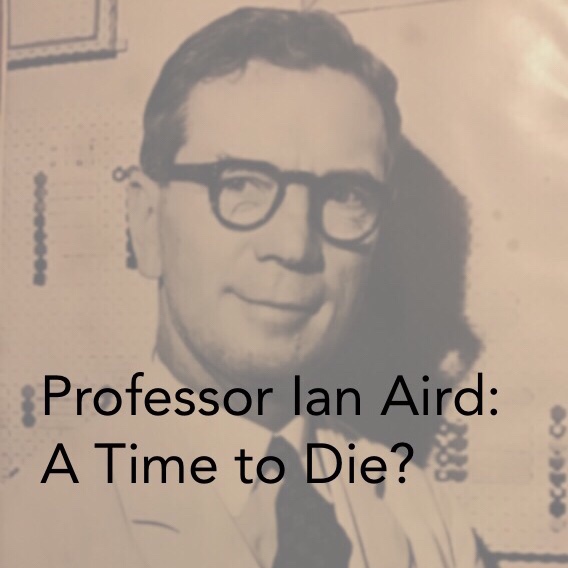
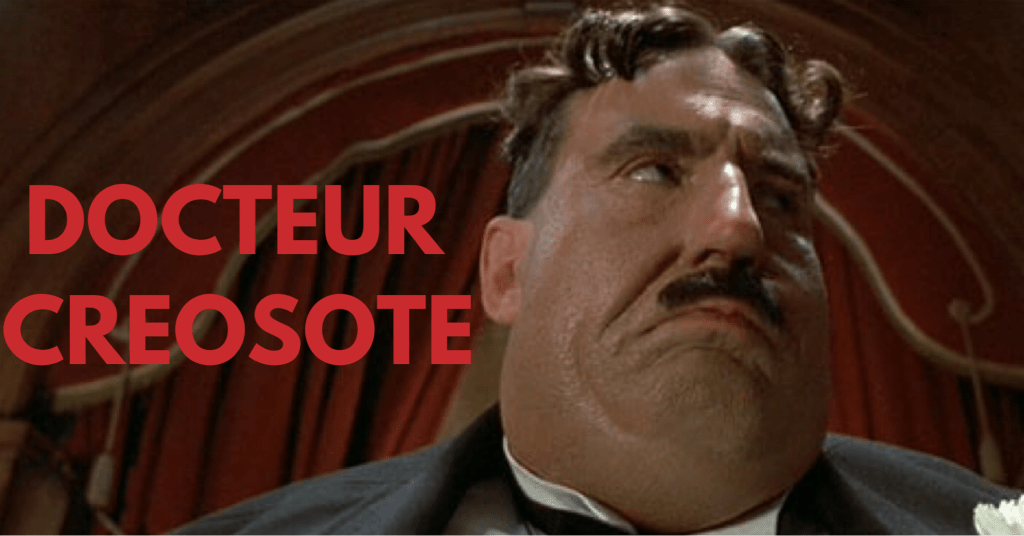




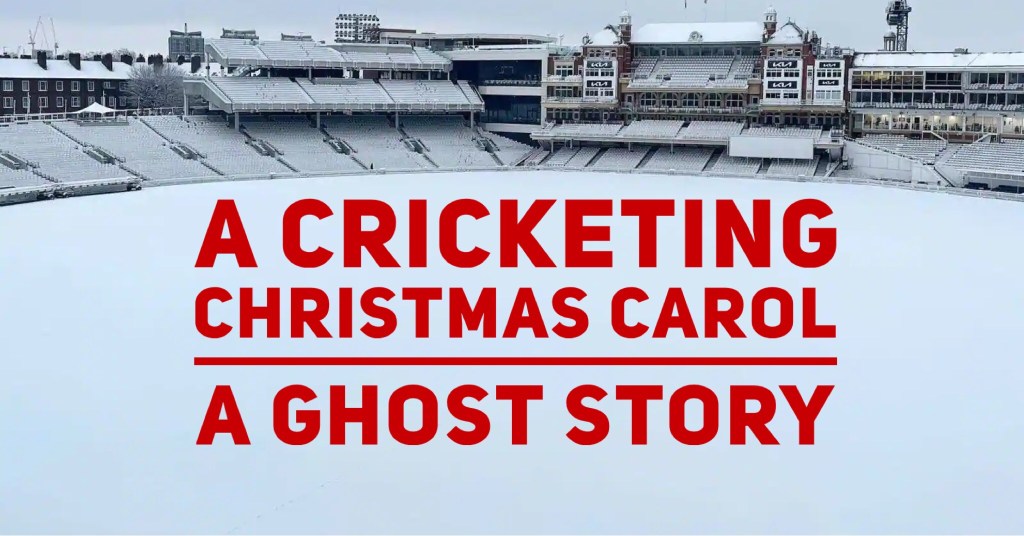


 Some musings