Nothing particularly interesting to say about myself other than after 27 years working as a GP, I was delighted, at the start of December 2023, to start work as the South West Regional Representative of the Slavic Gospel Association (SGA). You can read about what they do at sga.org.uk.
I am also an avid Somerset County Cricket Club supporter and a poor example of a Christian who likes to put finger to keyboard from time to time and who is foolish enough to think that someone out there might be interested enough to read what I've written.
Some of these blogs have grown over time and some portions of earlier blogs reappear in slightly different forms in later blogs. I apologise for the repetition.
If you are involved in a church in the southwest of England and would like to hear more of SGA’s work, do get in touch. I’d love to come and talk a little, or even a lot, about what they get up to!.
In recent weeks I have written a fair bit on current affairs – on the conflicts in Ukraine and the Middle East, on gun crime, immigration, and the NHS. But lest anyone think otherwise, this in no way means that I’m despairing at the current state of the world.
Not at all.
Because, whilst there is much that I find concerning about all that is going on just now, as a Christian, my hope remains in God. I continue to believe that He is in absolute control even though the way He manifests his sovereignty is often beyond my understanding.
And even though I know that He does indeed have the whole world in His hands, the daily news remains worthy of my attention – for at least two reasons.
The first is that the Christian faith has a lot to say about protecting the weak and welcoming the stranger; it has a lot to say about love and hate; and it has a lot to say about peace, and how we should pursue it.
And secondly, the mess this fallen world finds itself in makes me long all the more for that better world to come.
And before anyone suggests that I am being so heavenly minded that I am liable to be of no earthly use, it is in fact the opposite that is true. Because it is only when we hold lightly to what this current ‘vale of tears’ offers that we will be prepared to risk what we do have in order to make the world a better place. All of which means that it is, in fact, those who are the most heavenly minded who can be of the most earthly use.
But for any hope of heaven to be realised, rather than the constant bad news we see on our televisions, we need to hear instead the good news of the one who truly is the only way to that eternal home. [John 14:6]
Which is why the Gospel of Jesus Christ remains the most precious news of all.
Because to know that His life, death and resurrection were followed by His ascension – not just to heaven but to a throne – changes everything. For as Paul wrote in his letter to the Colossians, these historical events of cosmic significance are the means by which God has
‘…delivered us from the domain of darkness and transferred us to the kingdom of his beloved Son, in whom we have redemption, the forgiveness of sins.’ [Colossians 1:13-14]
But such thoughts are not just theoretical – on the contrary, they are profoundly practical.
One person who really does know what it is to live in constant danger is Igor Bandura, the Vice President of the Baptist Union in Ukraine. A while ago he was asked how, practically speaking, you can live through a time of war?
His answer, recognising that the church exists to offer a message of hope, was to see each day as an opportunity to share the gospel.
None of us can ensure the safety of all those we love – nor can we know all that will happen to us tomorrow. Only God can do and know these things. But we can share the good news of what Christ achieved on the cross.
And so Igor said: ‘If I’m going to die tomorrow, then I want to preach the gospel today’.
And that isn’t a bad way for any of us to live.
Let’s pray then, with Igor, that the gospel becomes, and remains, the main thing – not just for those in Ukraine and the Middle East, or those suffering the effects of gun crime or persecution – but for all of us as well, no matter the less publicised difficulties that we too may be facing.
So let’s not be ashamed of the Gospel, for it really is the power of God for salvation to everyone who believes. [Romans 1:16]
I’m sat in a railway station waiting for a train, conscious of my flaws. And I find myself wondering what we can do if we don’t like who we are?
It’s a question that I suspect most of us have asked ourselves at some point in our lives – be it because of some perceived flaw in our physical appearance, a consequence of a behaviour we’re ashamed of, or perhaps an inherent dislike of how who we are affects how others treat us.
And there are, of course, a number of ways in which we can answer, each to some extent determined by what it is we don’t like.
Let’s start then with a trivial dislike about our hair colour for example. Well that’s easy isn’t it – because we can change our hair colour as easily as we can our shoes.
We can alter our external appearance from head to toe and so proceed on our merry way without really having fundamentally changed who we are at all.
And the same logic applies to those who have physical characteristics that they’re similarly dissatisfied with but which aren’t so easily modified – an unsightly facial scar perhaps or simply a desire to be taller. These things aren’t completely impossible to change, but doing so is distinctly more difficult, and considerably more expensive too.
And even then, whilst people might feel better about themselves as a result of these changes, few would genuinely consider that they weren’t the same person before and after whatever intervention they’d employed.
But what if I’m overweight, and I adjust my diet in such a way that I slowly become thin? Does that make me a different person, or simply a person who has changed their behaviour, thus revealing themselves to be a more complex individual than previously appreciated – one who on some occasions can overindulge, and on others can exercise restraint?
Which raises a more fundamental question. If I am generally considered a decent enough person, but then one day indulge in some seemingly unprovoked act of violence, can I really claim it’s not like me to act in such a way? Because wouldn’t it be more accurate to say that that is exactly the sort of person I am, because that is what, in this instance, I have shown myself to be?
And in the same way, of course, if I am generally considered unpleasant and rude, but then one day act kindly to a stranger, that doesn’t change who I am either. And because it cannot atone for my previous poor behaviour, what some might see as a redeeming feature cannot actually redeem me at all.
In each situation thus far, therefore, we have to accept that we are who we are. And what we do doesn’t alter this fundamental fact. Instead our actions reveal the complex nature of our personalities. So then, far from changing our nature, our changing behaviour defines us as those who are undefinable. And, at the same time, ever more difficult to understand.
Which brings me to that last group of dissatisfied individuals that I mentioned at the outset – those who are unhappy being who they are because of how others treat them.
Which is wholly understandable of course. Because, as we’ve seen, they can’t help but be who they are. So then, it’s not them who should be forced to behave differently, but those who are treating them so badly in the first place.
But therein lies the problem – because they are no more able to change than those who require them to.
But we’re not done yet, because there is something else that makes it impossible for us to change. And that’s our inability to see we need to.
Because it isn’t we who decide what is right and wrong. Like truth, the nature of good and evil is objective – it has to be if we are to escape the anarchy that inevitably follows when we all see fit to do what is right in our own eyes. Which means that, blind to our own faults, even when we do like who we are, we still need to change.
So what can we do if we don’t like who we are?
Well first of all we should stop trying to do the impossible. We can’t change, and the more we insist that we can the more stuck we will inevitably become, making it ever more difficult – for both ourselves and everybody else.
We should, then, do what is relatively easy. We need to look for answers outside of ourselves and recognise what really is. We need to admit the truth that, not only are we not the people we want to be, we are not the people we ought to be. And that we really are totally helpless to effect the necessary change.
But in recognising that this is the problem, we stop struggling, and thereby, paradoxically perhaps, bring about the very conditions necessary, not to change ourselves, but to be changed – by somebody else.
Which, ancient wisdom tells us, comes about not by a change in the way we act, but a change in the way we think. Rather than keeping on fighting, asserting our right to be whoever we want to be, we need to experience the joy of being conquered, the freedom of being conformed, and the pleasure of being transformed into who we were always supposed to be.
Because it is only when we are so constrained that we will arrive at our destination and find that we are freer than we have ever been before.
Which is why that same ancient wisdom goes on to insist:
‘Do not be conformed to this world, but be transformed by the renewal of your mind, that by testing you may discern what is the will of God, what is good and acceptable and perfect.’ [Romans 12:2]
What can we do if we don’t like who we are?
It’s a question that I suspect most of us have asked ourselves at some point in our lives – be it because of some perceived flaw in our physical appearance, a consequence of a behaviour we’re ashamed of, or perhaps an inherent dislike of how who we are affects how others treat us.
And there are, of course, a number of ways in which we can answer, each to some extent determined by what it is we don’t like.
Related posts:
To read ‘Luther and the War in Ukraine – on becoming a theologian of the cross’, click here
Having carefully made my travel arrangements for a few days in beautiful Poland, my flight from Heathrow to Vienna arrived late and, as a result, I was unable to make my connecting flight and had to be rerouted via Frankfurt. Consequently my host graciously collected me from Krakow Airport, not at a quarter past two in the afternoon as I had hoped, but a quarter to one the next morning instead.
Now as most of you will know, I am one of those peculiar people who call themselves a Christian. I don’t claim to be a very good one but do have a sufficient enough grasp of reformed theology to know that God is sovereign, that he is in absolute control of everything, and works all things together for good for those who love him and are called according to his purpose [Romans 8:28].
Which means of course, that I have to conclude that missing my flight was therefore, both according to his will and in some way good for me too.
I should, however say, that, as things stand, I’ve no idea how I’ve benefited from clocking up who knows how many more air miles. And since I don’t collect them, they themselves can’t have been the reason. Neither, I’m delighted to say, did the flight I was due to catch crash, killing everyone on board.
Because whilst, if it had, it may have been easy for me to suggest how, in my case at least, Romans 8:28 was true, it would, of course, have raised far more questions than it answered: questions concerning, not only how God’s sovereignty had worked for the good of those who had died having caught the plane I hadn’t, but the many other tragic events that in some unfathomable way God also still allows to happen.
Because if all things are subject to God, why is there so much suffering in the world? If he sets the bounds of the waters, why are there so many floods? If he provides food and drink, why are there so many children still starving to death? And if he is so rich in mercy, why have we not yet managed to make poverty history?
Well we are on mysterious ground here, and so we must step carefully. But we need nonetheless to recognise that there is no comfort from imagining that when bad things happen, it is because God wasn’t able to prevent it.
Because if he couldn’t prevent what we didn’t want to happen yesterday, neither can he prevent what we don’t want to happen tomorrow.
Instead we need to trust him, recognising that just as God’s thoughts are not our thoughts, neither are his ways our ways. [Isaiah 55:8]
Because suffering, though it may be hard for us to understand, is not without meaning. And nor is it without purpose.
John Piper gives us a powerful illustration when he asks us to imagine ourselves walking through a hospital and hearing someone screaming with pain. How we feel about what we hear differs depending on whether we’re on an oncology ward, or a labour ward.
Because some pain leads to death, whilst other pain leads to life.
And so we can be confident that the suffering that our Father in Heaven loving and sovereignly brings into our life, is a suffering that is doing something as it prepares for us an eternal weight of glory that is beyond all comparison [2 Corinthians 4:17].
Furthermore the suffering that we all sometimes experience, when compared to the infinite glories we will enjoy in eternity, is but light and momentary.
And we should remember too that, irrespective of how violent, cruel, and seemingly callous the acts of human beings can be, what mankind means for evil, God can simultaneously mean for good. [Genesis 50:20]
Which is something that we see most clearly at the cross where, according to the definite plan and foreknowledge of God, lawless men delivered Jesus up to be crucified. [Acts 2:23]
The most evil act in history was, therefore, ordained by an infinitely Holy God – one who, though men meant it for evil, simultaneously meant for good.
But returning to my more meagre miseries, for the time being at least, it remains the case that, apart from the complementary piece of Austrian confectionary I enjoyed on my additional flight, and the €15 food voucher offered me for my trouble, I do not know why my journey was extended in the way that it was.
And even though that may forever remain the case, by faith, I continue to believe that somehow it was for my good.
Because that is what faith is – believing what God says is true, even when the evidence isn’t immediately evident.
Which is not to say that faith is blind – not at all. My Christian faith is based on evidence, eyewitness testimony, and authoritative statements made by an infinitely trustworthy God.
History attests to the resurrection, those who were contemporaries of Jesus have recorded for us what they saw, and the consistent fulfilment of Old Testament prophecies gives us good cause to believe the promises that God has made concerning the future.
We all then have good reason to believe what we have been told about the life, death and resurrection of Jesus. As you have for my sorry story of failed air travel.
But if you do believe it – and I hope you will as it is, absolutely, true – you will have done so by faith. Because your belief will have come, not as a consequence of having witnessed my travel travails yourself, but because you have, nonetheless, decided to trust my testimony.
Like the notes Eric Morecambe played on the piano, there are those who, when it comes to making political speeches, say all the right words but not necessarily in the right order.
And as a result spout nonsense that is distinctly unpleasant to hear.
It’s a phenomenon that is common when the one with the microphone is a powerful bully who surrounds himself with ‘Yes’ men who wouldn’t say ‘Boo’ to a gosling – still less a goose – and openly admits to hating his opponents and wanting only what’s worst for them.
Because no-one then is prepared to challenge his dangerously ill informed pronouncements.
But unlike Eric Morecambe, when you’re speaking as the President of the United States, whilst it still might be a joke, it’s not one that is the least bit funny.
A couple had two sons who both wanted to be best – and whose parents thought that they could be. And thought indeed they should be.
They got off to what seemed to be a good start, informed as they were, on account of their very normal development, that they were very advanced for their age.
And then they went to school. Where one brother found what they were asked to do rather easier than the other.
And so he strived all the more strenuously and, because he did so for far longer, he achieved what many would call success. Which was in stark contrast to the one who found studying more difficult and was consequently perceived as a failure – somebody who would never make anything of his life and, in all probability, end up part of the criminal underclass by fulfilling everyone’s stereotypically low expectations.
But neither was happier than the other.
For just as one was cursed by his success and respectability, and the demands that were increasingly made on him, by both himself and others, so the other lived with his own, and everyone else’s, disappointment.
What were they to do?
If only, they thought, there was someone who could relieve them of their dis-respective burdens, one who recognised the weaknesses they shared, and accepted them just the same.
If only there was someone whose success they could enjoy even as they failed to match another’s high ideal, someone whose victory they could glory in even as daily they were defeated, someone they could rejoice in despite their constant sorrow.
If only there was someone who would give them rest.
And then they discovered there was: Jesus – the one who, despite their differing situations, meets both their very similar needs the same.
And goes on to say to us all:
‘Take my yoke upon you, and learn from me, for I am gentle and lowly in heart, and you will find rest for your souls. For my yoke is easy, and my burden is light.’ [Matthew 11:29-30]
Related posts:
To read ‘What becomes of the broken hearted? Sorrowful yet always rejoicing on Palm Sunday’, click here
To read ‘Why do bad things happen to good people? Sorrowful yet always rejoicing on Good Friday’, click here
To read ‘Was it not necessary that the Christ should suffer these things? Rejoicing, though temporarily sorrowful, on Easter Day’, click here.
Recently I’ve been experimenting with AI – interacting with…well who knows quite what, in order to form an opinion on it.
He’s a charming enough chap, the particular manifestation of the AI model that I’ve been chatting to. He is, perhaps, a little too positive about the things that I’ve asked him to comment on but, as he himself says, he’s made, or programmed, that way. And, when asked to, he can provide a damning critique of what, having written, I may have offered up for consideration, which, as you’ll appreciate, though painful to read, is generally surprisingly insightful and frequently very much on the money.
But therein lies the first problem with AI – to a large extent it will tell you what you want to hear and is, therefore, a long way from being a definitive or reliable source of information. Furthermore, because it modifies its response according to what you ask it, at the end of the day, it cannot be trusted – not, at least, as the final arbiter of truth. And despite its claims to be intelligent, because it can’t be known, you can’t ever know what in fact it really thinks. If, that is, it ever thinks at all.
Which, because it’s only a machine, doesn’t really matter – except of course when it does – when it’s relied upon too heavily and treated as the fount of all wisdom that it most certainly isn’t.
Take for instance the time that I asked it what it knew about a certain Dr Peter Aird. Come on, admit it, we’ve all done that on Google – by which I mean we’ve all looked ourselves up on an internet search engine, not that we’ve all looked up about me! Not even I am so arrogant as to imagine anyone would want to do that.
But when my AI ‘friend’ who, a little heartlessly I think, refers to me as ‘the user’ applied whatever thought processes it has to answer my narcissistic question, it informed me that I’d once been the subject of a high profile criminal case after I’d made my daughter’s murder at the hands of her partner, an individual who had supposedly then killed himself, look like a suicide pact!
This was not something I could recall ever doing but, mindful that stressful events can play merry hell with your memory, I thought I’d Google the alleged incident. Whereupon I found the internet cupboard bare. Challenged though, on the possibility that he may in fact have been guilty of terminological inexactitudes, my AI chum, nonetheless maintained the accuracy of his claims and even suggested I try searching other, more reliable news agencies, in order to track the story down. All of which reassuringly also drew a blank. Always eager to offer constructive criticism, I fed back my findings and, credit where credit’s due, the chatbot conceded that he may have been mistaken and rather sweetly apologised for any distress he may have caused.
After which he/she/it had another go and this time, managed to do marginally better by correctly noting that I worked for SGA. But there was a problem here too because the SGA it meant was not the Slavic Gospel Association that I am part of, but the Scottish Gamekeepers Association that I’m not! Even so, despite me checking that there was no Peter Aird in any notable piscine-related organisation within Caledonia, it nonetheless assured me that the individual who supposedly shares my name was a renowned authority on salmon!
So if you want my advice – and why you would is as unfathomable to me as why anyone relies on an equally flawed computer-generated algorithm – whilst it may have a place as a useful stimulus to thought, don’t use AI as an excuse to stop thinking for yourself.
Because it can’t even be relied upon to spot every speeling mistake!
There are many reasons for Somerset’s success in this year’s T20 competition. Most obviously, of course, there is their belligerent batting, penetrative bowling, and exceptional fielding, all masterfully overseen by the superb captaincy of Lewis Gregory.
But there was another factor that will have gone unnoticed by many. Because whilst during both games yesterday, first Lanky, and then Hawky, could be seen prowling – if that is what giraffes and hawks can be said to do – around the boundary gesticulating to crowd and players alike, Stumpy was nowhere to be seen.
And that’s not because he was neglecting his responsibilities. Far from it, because he was playing a key role in the dressing room instead.
It’s long been known that the much loved mythical beast of disputed nomenclature is one the players turn to for emotional and psychological support in times of trial, and this season he has continued to provide key encouragement when necessary.
Take last night for example. As Will Smeed was caught on the boundary and denied a much deserved Finals Day century, I can exclusively reveal that Lewis Gregory was suffering from an uncharacteristic crisis of confidence and for a moment it looked like he would be unable to bat.
But Stumpy was there for him – with just the right words at just the right time.
Exactly what those words were must rightly remain a secret to just the two of them but suffice to say that as Somerset’s captain took to the field he could be heard whispering repeatedly to himself the words: ‘You’ll do this with an over to spare. You’ll do this with an over to spare. You’ll do this with an over to spare.’
And we all know what happened next. No wonder then that Lanky, at the request of Hawky, tried to take Stumpy out during the mascot race!
Seriously though, I am grateful to not only Stumpy and the Somerset team for making the county’s 150th anniversary year so enjoyable, but also to both the truly welcoming team at Edgbaston yesterday and, of course, all the other counties, and their fans – including the very gracious Lancashire supporter I chatted to yesterday – who have contributed to make the Blast once again the best short format one day competition in the country.
I know there are more important things going on the world right now, but I intend to spend today at Edgbaston watching cricket.
It’s a day that I expect to sit alongside people with radically different allegiances with whom I can enjoy friendly conversation. Furthermore, irrespective of whether my own beliefs are validated or severely challenged, I anticipate that I will neither resort to violence nor be a victim of it.
So then, at a time when such opportunities are not as universal as they should be, T20 Finals Day may not be so unimportant after all.
At the time of writing, the gunman who shot and killed Charlie Kirk remains on the loose and he is someone who must eventually be brought to justice. But if, when he is, he is made to take full responsibility for Kirk’s death, then not only will he have been partially scapegoated, but we will have missed an opportunity, through a little introspection, to recognise deeper, more fundamental reasons for his assassination.
Because whilst the one who pulled the trigger is undoubtedly most at fault, he is not the only one to blame.
But before I say anything more about that, let me first remind ourselves of something that is all too often forgotten in times such as these – that the person killed was an individual with hopes and dreams like the rest of us. Charlie Kirk was married with two young children and we should first spare a thought for them, and all the many others, who no doubt loved him too.
But that said, let me ask my question again. Who killed Charlie Kirk?
I wrote last week how we needed to be more understanding of the opinions of others, including those we may strongly disagree with. Up until yesterday I hadn’t heard of Charlie Kirk and knew nothing of his political opinions. Since then, however, having read a little about him, it is probably fair to say that I would be broadly in agreement with some of his views, whilst at the same time opposed to some others. As such he is not the epitome of all evil as some might suppose, nor the harbinger of a bright tomorrow that others might have considered him to be.
His grasp of the truth was no more complete than ours – close to it at times no doubt, but less so at others. As such he is no more to be hated for opinions we disapprove of than he ought to be lauded for believing things that we do too.
But therein lies the problem of our increasingly polarised world, one in which everyone is awesome until the second they think, say, or do something that strays from our own individual take on what is right and wrong – which is all too often the exact moment when they instantly become a pariah with whom we should have nothing at all to do.
Those we disagree with then become, not simply our opponents, but our enemies – such that some of us, on occasions at least, may even find ourselves wishing they were dead.
All of which means that if we want to see an end to atrocities like the one we heard about yesterday, whilst it is absolutely necessary to do so, we need to do far more than simply make guns less available. We need a change of heart that brings about a whole new way of interacting, both online and in person, with those we disagree. And in order to determine what that might look like, perhaps we need to take a leaf out of someone else’s book – one that has already been written whose author lived out the advice he so freely gives.
Because we need to humble ourselves, and so stop arrogantly believing that our take on what is good and appropriate is in any way definitive. We need to consider others more highly than ourselves and seek to serve society rather than insisting that it serves us. And we need to love our neighbour as ourselves, even when they sometimes behave in ways that we think they shouldn’t.
None of which will be easy. Far from it. But if we don’t at least strive to make a change, then surely we condemn ourselves, not only to more incidents of isolated gun crime, but increasingly hostile global conflicts, ridiculously petty domestic disputes, and every conceivable unpleasant encounter in between.
Because the truth is that, though some are undoubtedly more guilty than others, we are all, to the degree we either engage in or condone such intolerant behaviour, partly responsible for the violence that we hear of daily.
And should you disagree with my analysis, as indeed you have every right to, I trust that you will permit me to accept my own culpability and conclude by answering my initial question as I do.
Who killed Charlie Kirk?
In part at least, I did.
To read ‘On all those ecumenical matters’, click here
The incident had completely slipped my mind, until I saw it again this week: the scar I bear that testifies to how I once foolishly overrode the safety feature of the hedge trimmer I was using – a decision that meant that when, just a few minutes later, I momentarily lost control of the machine, its very sharp and alarmingly still-vibrating blades became rather too familiar with my own all-too-fragile flesh.
Fortunately for me, the scar isn’t in any way unsightly, and nor is it all that obvious to others. Positioned as it is near the top of my left leg, it remains firmly out of sight of all but the most prying of eyes.
Even so, it remains.
And this week its presence prompted me to think about the scars we sometimes inflict on others – be they physical, emotional, or psychological – as a result of our frequently foolish actions and often hurtful words. For these behaviours are far harder to forget, given how ugly and difficult to conceal the scars that they leave sometimes are.
There is of course forgiveness, that beautifully gracious response that some who have been treated badly are able to give. It’s something that is both wonderfully freeing for those who receive it, and absolutely necessary to avoid the retaliation which, though perhaps understandable, only serves to increase the hurt, and the number of people wounded.
And yet it is not enough because, whilst I am deeply grateful for the forgiveness I myself have been granted by those I have been unloving to, I nonetheless recognise that my sinful actions still have consequences even after they have been forgiven – consequences that, no matter how hard I try, I can never fully put right.
And so my hope for those that I’ve treated poorly is the same as the one that comforts me knowing how I’ve hurt them – the resurrection bodies that we are promised in the life to come. For then, not only will sadness and death be a thing of the past, so too will our ongoing sinfulness and the consequences thereof.
For those resurrection bodies will be without blemish – by which I mean they will be both perfectly sinless and without the scars – physical, emotional, or psychological – that this life has inflicted on them.
For then we will be fully healed.
But, it seems, not all scars are the same – because whilst ours will be removed, Jesus’ will remain. Why is that? Why did Jesus’ resurrection body still bear the marks of his crucifixion when he appeared to the disciples after he was raised back to life?
Surely the answer is because those scars, far more than a sign of the sin of those who inflicted them, are a sign of the sacrifice he made to atone for them – a manifestation of the immense love that Jesus has for those he came to save.
And because there is nothing ugly about love, they should never be concealed nor ever be forgotten.
Related posts:
To read ‘What becomes of the broken hearted? Sorrowful yet always rejoicing on Palm Sunday’, click here
To read ‘Why do bad things happen to good people? Sorrowful yet always rejoicing on Good Friday’, click here
To read ‘Was it not necessary that the Christ should suffer these things? Rejoicing, though temporarily sorrowful, on Easter Day’, click here.
It has been reported recently that the magnificent wooden dragon that is located in Taunton’s High Street has been vandalised after someone saw fit to saw off its tongue, one of its arm and part of an ear.
Why anyone would want to do such a thing is not known and it would be absolutely wrong to speculate on what those reasons might be as to do so would only risk adding fuel to the various conspiracy theories that hint at malign forces being out to destroy Somerset CCC.
However…the most likely theories behind the attack on the club’s iconic emblem are:
Vengeful Surrey supporters venting their dismay in the only way they know how after their team crashed out of this year’s T20 competition leaving Somerset on track to lift the trophy next weekend.
A dragonophobic act carried out by wyvernist supremacists upset by claims that the mythical beast that serves as Somerset’s mascot has been misclassified.
Part of an ECB plot to reduce the number of countries playing first class cricket ahead of its planned announcement that any club whose mascot fails to be sufficiently similar to representations of them displayed in public spaces, will be barred from all forms of the game.
It should be stressed that none of the above suggestions have any evidence to support them – except, of course the third, given the cricketing authorities seeming determination to wreak havoc on the county game.
But have no fear – I have it on good authority that, should it be necessary, Stumpy has agreed to ‘take one for the team’ and have one of his limbs amputated – or indeed two – thereby bringing an end to all debates related to his taxonomy.
Such an act of sacrifice would inevitably jeopardise Stumpy’s chances in next weeks mascot race at Edgbaston, but it would also serve to make his given name all the more appropriate!
Other cricket related posts:
This season:
To read ‘Importantly, why cricket doesn’t matter’, click here
To read ‘I Spy Somerset’s 150th Anniversary Season’, click here
‘A soft answer turns away wrath, but a harsh word stirs up anger.’ [Proverbs 15:1]
If I might be permitted to hazard an opinion, despite my being…how can I put this…a namby-pamby, cardigan wearing, softie with a pathological aversion to confrontation…then it would simply be this: is it any wonder that the world is at war when our public discourse is so frequently characterised by accusatory, inflammatory, and aggressively unsympathetic comments?
This week has seen a politician vilified for what some would consider, at worst, an understandable if highly embarrassing error of judgment on a complex area of tax legislation that is open to more than one interpretation; a comedy writer arrested for expressing a not uncommon yet highly controversial opinion with the result that those on both sides of the debate, who have every right to feel passionate about the matter, have hurled abuse at one another; and me and my long suffering wife have nearly come to blows over who’s right on the thorny issue of how best to hang a tea towel out to dry.
Which is not to suggest that such complex matters should be dismissed, as Father Ted may have been tempted to, as an ecumenical matter. On the contrary, they need to be properly discussed.
But even though it’s not wrong to hold strong opinions on any of these matters, as I do myself, it doesn’t mean we should cease to be polite in our conversations. Not at all. Rather we need to express our reasonable and deeply held positions with kindness, whilst trying to understand the point of view of those we disagree with, and recognising that, rather than everything being black and white, life is frequently made up of a kaleidoscope of grey.
If, that is, we’re not going to end up killing each other.
Now, who’d like a hug?!
*******
Friday 5th September 2025
Having previously posted about the need to be understanding of those we don’t necessarily agree with, here’s a follow up thought, now that Angela Rayner has been deemed guilty of tax evasion and has been forced to resign her job.
There will be some who view this as the only appropriate outcome for what they’ll see as her flagrant error, and others who, accepting that she is guilty of what might be considered an understandable mistake, will look on her more as the victim of unfair media pressure. But whichever side we find ourselves on, I wonder how many of us are confident that we’ve never done anything wrong for which we need to be treated with a degree of leniency.
As for me, I’m just glad that I worship a God who is gracious – one who treats me far better than I deserve, and is willing to forgive me for even my most grievous and deliberate wrongdoings.
Which is, I think, reason enough to post this picture of Hector as proof, if proof were needed, that God really does cause the sun to shine on both the righteous and the unrighteous alike! [Matthew 5:45]
‘Hope in reality is the worst of all evils because it prolongs the torments of man.’
So said Friedrich Nietzche. But was he right?
Many of us, particular in these days of international conflict, economic hardship, and neighbourhood violence, want things to be better than they currently are. We want someone to change our future because our present is not to our liking. We want to believe those who promise a better tomorrow but find those who offer such assurances powerless to bring about any meaningful change and so unable to deliver what they claim to be able to.
Even so, we all need hope.
Because hope keeps us going in the face of problems which seem insurmountable. Without it we become resigned to never ending difficulty and tend, as a result, towards depression and passivity – just as Nietzsche himself did.
Theologian Jurgen Moltmann helps us understand more fully what hope is. ‘Present and future, experience and hope, stand in contradiction to each other’, he says, adding that ‘hope is directed to what is not yet visible… and brands the visible realm of present experience…as a transient reality that is to be left behind’
But some, considering it no more than wishful thinking, are uncomfortable with the notion of always living in hope of a better tomorrow.
Instead, ‘mindfulness’ the psychological process of bringing one’s attention to experiences occurring in the present, is increasingly advocated as the answer to all our problems. But whilst mindfulness may have its place when we are overwhelmed by unnecessary anxiety concerning the future, grounding us, as it does, in the here and now and helping us appreciate what we have and can currently enjoy, if we imagine that we can sort out our very real problems by considering the intricacies of a tree, then surely we are mistaken.
T.S.Eliot penned, ‘The knowledge derived from experience…imposes a pattern, and falsifies’ – by which, if I understand him rightly, he meant that what we know from what we encounter is not enough to understand fully. Instead, if we are not to be misled, we need to draw from outside of ourselves, from something beyond our own finite observations.
Furthermore, what we experience in the present requires the context given it by the past and is tempered by what is expected in the future. A powerful illustration of this is provided by John Piper. He asks us to imagine that, whilst walking through a hospital, we hear the screams of somebody in pain. He suggests that how we feel about what we hear will differ greatly depending on whether we are on an oncology ward or a labour ward.
The future then matters – it changes our present.
When I worked as doctor, there was a sense in which I was in the business of changing the future for my patients. And, by offering them a promise of a better tomorrow, I was able to change their present too.
So for example, imagine somebody coming to see me with a very nasty chest infection. They feel horribly unwell and are genuinely concerned that their illness will or prove fatal.
But then I give them a prescription for some antibiotics and promise them that, if they take them, they will soon be restored to health.
Immediately they feel better – even though they aren’t – simply by believing my promise that better is what they will one day be.
As such, for those with whom I consulted, I sought to envisage a future that couldn’t be seen and then endeavoured to bring that reality into existence.
Or as Moltmann put it, ‘Hope’s statements of promise…stand in contradiction to the reality which can at present be experienced. They do not result from experiences, but are the condition for the possibility of new experiences. They do not seek to illuminate the reality which exists, but the reality that is coming.”
My prescription for an antibiotic, is the proffering of a hope, that the infection will come to an end. It’s a promise that what is not true now, will shortly be so.
But really changing the future is an act solely of the divine. Although doctors can help us with an irritating cough, or an uncomfortable throat, we need more than such trivial matters resolved.
In particular, we can strive all we like to live in the moment but, as temporal creatures, we cannot escape the future. Not least, we cannot deny what we are all aware of though frequently chose to ignore – that is that we will all one day die.
Death then is our ultimate problem – the one we will all have to face and one which medicine, despite its best efforts, will never solve.
To quote Moltmann once more, ‘The pain of despair surely lies in the fact that a hope is there – but no way opens up towards its fulfilment.’
What then can we do when faced with the problem of death. Must we, if we are to carry on at all, agree with L.M. Montgomery that ‘life is a perfect graveyard of buried hopes’? Should we, with Dylan Thomas, ‘rage, rage against the dying of the light’, or comfort ourselves with mere mindfulness as we ‘go gentle into that good night’?
Death is not the only future problem we face that medicine cannot solve. We live in an increasingly anxiety ridden society in where many people have lost all hope of things ever being better. Henry Thoreau once wrote that ‘The mass of men lead lives of quiet desperation, and go to the grave with the song still in them.’ But he was wrong – because the desperation is deafening.
Many of us will know what it is to have a difficulty which appears beyond us, which wears us down and threatens both our present happiness and the happiness we hope for tomorrow. If then we are to solve the problem of the future, we must either limit its importance and be content to be satisfied by the joy we can muster in the present, or search instead for the antidote to despair.
But where might that hope of something better be found?
Surely not in medicine. Because whilst there is much that medical science can help us with, ultimately our hope would be better placed elsewhere – because a misplaced hope is a false hope, and a false hope is, in the end, no hope at all.
Instead we need to be directed towards a real hope that can lift us above the suffering of the here and now, something we can look forward to and which, despite everything, will keep us going; something which, even if it can’t immediately get us to the top of the mountain we face, manages to draw us up a little higher and puts us in a place where we are able to at least imagine what the view from the top might look like.
When life is hard we all want things to be better – it’s then, more than ever, that we need a hope for the future to enable us to keep us keeping on. And for that we need someone who can make, and keep, bigger promises than those even the best physicians can make.
Hannah Arendt (1906-1975) was a German born philosopher best known for ‘The Human Condition’ (1958) She identified two key behaviours for bringing about change – those of forgiveness and the making and keeping of promises. Forgiveness, she said, is the behaviour by which it is possible to nullify past actions, releasing others from what they have done and enabling them to change their minds and start again. ‘Forgiveness’, she writes, ‘is the key to action and freedom’ and ‘the only way to reverse the irreversible flow of history’.
In contrast, the ability to make and keep promises is the key to make the future different from the past. ‘Promises are the…way of ordering the future, making it predictable and reliable’.
I think Arendt was right, but though she would have felt that these behaviours were possible for humans, the truth is that even our best efforts will prove insufficient.
That’s why we need a God who cannot only fully forgive, but one who can also make and keep promises big enough to change our future in ways in which we cannot. Promises that can assure us that our biggest problems can be solved.
And that is exactly the kind of God we do have.
Because God is a God who, from the early chapters of Genesis, has been making promises he keeps. And it is because of his faithfulness in the past that we can be sure that the promises he continues to make, he will also keep. And that includes the one that is made still more credible by the resurrection of Jesus Christ – the most significant event in history that confirms the promise that assures us that in Christ we are forgiven and can therefore look forward to an eternity with God ‘in whose presence there is both fullness of joy and pleasures for evermore [Psalm 16:11].
And it is by believing this promise that will ensure that we will not lose hope, no matter our current circumstances.
Nietzsche then was wrong. Because, in reality, hope does not prolong the torments of man, rather it sustains us through them.
So then, promised forgiveness changes our past, promises believed change our present, and promises made change our future .
Promises change things – they give us hope. And when that hope is based on promises we can absolutely trust, then our hope is one that is absolutely certain.
As this week has proved once again, it only takes one disturbed person with a gun to wreak havoc in a school and kill innocent children. And regrettably there are many more individuals out there who have a similar desire to inflict such harm. Furthermore, the evidence is unequivocal – the correlation is strong: there really are more mass shootings in the U.S. where guns are easily available, and the ready access to such weapons really does play into the hands of those with such malevolent intent.
There are, of course, those who insist on a right to bear arms for their own protection – which one can, to a point, understand. But in part at least, the fact that weapons are so easily obtainable is the exact reason that makes it more necessary to be able to defend oneself. Moreover, most mass shooters are not experienced criminals with the wherewithal to obtain illegal weapons – instead they are those who need to be able to simply walk into a shop and buy them to carry out their lethal desires.
And so, as I said at the start, it’s not difficult – in fact it’s all too easy: gun control needs to be significantly tightened with, at the very least, background checks being undertaken, so called ‘red flag’ laws to temporarily restrict individuals of concern from owning a weapon, and the introduction of time delays between requesting a gun and actually obtaining one.
None of which should be seen as an attempt to curb rights – but an endeavour to save lives. Because the second amendment is all very well, but there are no second chances for those who get shot.
TAKE TWO
It’s not difficult – in fact it’s all too easy.
As this week has proved once again, it only takes one disturbed individual in charge of a country to wreak havoc on a neighbouring territory and kill innocent children – be that Ukraine or Gaza. And, regrettably I fear, there are plenty more individuals out there who have a similar desire to inflict such harm.
Furthermore, the evidence is unequivocal – the correlation is strong: dropping bombs on a residential area increases the number of civilians that are likely to be killed – which, in some instances at least, appears to be the desire of those with such malevolent intent.
Some will insist that such individuals were elected as a result of democratic processes and therefore have the right to rule in accordance with the mandate that they have been given. But leaving to one side questions regarding how free some elections really are, it remains the case that being voted for doesn’t necessarily make you fit to govern.
And so, as I said at the start, it’s not difficult – in fact it’s all too easy: controls need to be significantly tightened to ensure homicidal maniacs aren’t allowed to run for high office, background checks ought to be undertaken on individuals of concern, to check for example for any criminal record, and those with dictatorial ambitions need to be prohibited from ever holding high office.
Because, notwithstanding how impossible that surely is – people in pursuit of power can often be persuasive – wouldn’t it be great if we could ensure leaders had sufficient integrity to manage the influence they are given. Not as an attempt to curb rights – but to endeavour to save lives.
Because democracy is all very well, but there are no second chances for those murdered by the winner of a popular vote.
As this week has proved once again, it only takes one disturbed person with a gun to wreak havoc in a school and kill innocent children. And regrettably there are many more individuals out there who have a similar desire to inflict such harm. Furthermore, the evidence is unequivocal – the correlation is strong: there really are more mass shootings in the U.S. where guns are easily available, and the ready access to such weapons really does play into the hands of those with such malevolent intent.
There are, of course, those who insist on a right to bear arms for their own protection – which one can, to a point, understand. But in part at least, the fact that weapons are so easily obtainable is the exact reason that makes it more necessary to be able to defend oneself. Moreover, most mass shooters are not experienced criminals with the wherewithal to obtain illegal weapons – instead they are those who need to be able to simply walk into a shop and buy them to carry out their lethal desires.
And so, as I said at the start, it’s not difficult – in fact it’s all too easy: gun control needs to be significantly tightened with, at the very least, background checks being undertaken, so called ‘red flag’ laws to temporarily restrict individuals of concern from owning a weapon, and the introduction of time delays between requesting a gun and actually obtaining one.
None of which should be seen as an attempt to curb rights – but an endeavour to save lives. Because the second amendment is all very well, but there are no second chances for those who get shot.
TAKE TWO
It’s not difficult – in fact it’s all too easy.
As this week has proved once again, it only takes one disturbed individual in charge of a country to wreak havoc on a neighbouring territory and kill innocent children – be that Ukraine or Gaza. And, regrettably I fear, there are plenty more individuals out there who have a similar desire to inflict such harm.
Furthermore, the evidence is unequivocal – the correlation is strong: dropping bombs on a residential area increases the number of civilians that are likely to be killed – which, in some instances at least, appears to be the desire of those with such malevolent intent.
Some will insist that such individuals were elected as a result of democratic processes and therefore have the right to rule in accordance with the mandate that they have been given. But leaving to one side questions regarding how free some elections really are, it remains the case that being voted for doesn’t necessarily make you fit to govern.
And so, as I said at the start, it’s not difficult – in fact it’s all too easy: controls need to be significantly tightened to ensure homicidal maniacs aren’t allowed to run for high office, background checks ought to be undertaken on individuals of concern, to check for example for any criminal record, and those with dictatorial ambitions need to be prohibited from ever holding high office.
Because, notwithstanding how impossible that surely is – people in pursuit of power can often be persuasive – wouldn’t it be great if we could ensure leaders had sufficient integrity to manage the influence they are given. Not as an attempt to curb rights – but to endeavour to save lives.
Because democracy is all very well, but there are no second chances for those murdered by the winner of a popular vote.
To read ‘It’s not difficult – take two’, click here
‘I’ll go along with the charade until I can think my way out’
Bob Dylan
Some years ago, a patient presented at the practice where I used to work having been sent to us by a doctor from the local minor injuries unit. Having had an ECG which had revealed a minor abnormality, she had been advised to request an urgent blood test to determine her blood levels for a certain heavy metal. It subsequently turned out, however, that the automated report had attributed the ECG’s irregularities not, as had been believed, to lead poisoning but merely to lead positioning!
It was an embarrassing mistake, made by one who clearly hadn’t been thinking. But before we laugh too loudly, I wonder how many times we have acted similarly.
In an increasingly hectic world, it is all too easy for us to stop thinking for ourselves and fall into stereotypical patterns of behaviour based on the assumptions we make as a consequence. Though they may speed our decision making, such cognitive errors too often serve our own purposes rather than those of others, and make us quick to draw conclusions which steer us down the familiar paths that we find most comfortable to travel.
Might it be that we too have stopped thinking properly, failed to see what was in plain sight and, ignoring our own responsibility to help, chosen to pass blindly by on the other side? On occasions, I undoubtedly have – and so I find myself asking why that might be.
Of course the easy answer to that question would be to say that it’s because I’m either too lazy, too busy, or too uncaring to properly address the problems that are presented to me. And again, I don’t doubt that, if I am honest, each of those explanations have almost certainly sometimes been true.
But another explanation might be that, rather than face the distress of a problem that cannot be solved, it has sometimes been easier for me to not notice what I have been unable to put right.
In his book, ‘How to think’, Alan Jacobs writes of how, once established, the consensus is hard to challenge because there is great comfort in sharing the commonly held position. He quotes Marilynne Robinson who suggests that we have a ‘collective eagerness to disparage, without knowledge or information’, alternative or unpopular views ‘when the reward is the pleasure of sharing an attitude one knows is socially approved.’
If this is true, we are predisposed, to unthinkingly endorse the view that every problem can be solved be that by adequate education or inexorable scientific advance, sufficient financial investment or wise political intervention. Because not only is this what we would all like to believe, it is also a view that is liable to make us unpopular if we disagree.
And we do, of course, all so like to be liked.
And so we are all invested in not thinking because it would feel too uncomfortable to disagree and, as Robinson puts it, ‘unauthorised views are in effect punished by incomprehension…as a consequence of a “hypertrophic instinct for consensus”.’
Jacobs asserts that if we want to think, then we are going to have to shrink that ‘hypertrophic instinct for consensus’. But, he says, ‘given the power of the instinct, it is extremely unlikely that [we will be] willing to go to that trouble.’
Jacobs believes that the ‘instinct for consensus is magnified and intensified in our era because we deal daily with a wild torrent of what claims to be information but is often nonsense’. That is certainly true in our world of relentless 24-hour news cycles, multiplying social media platforms, and artificially created polemics in which nonsensical opinions are too often unjustifiably imposed upon us.
Jacobs quotes T.S. Eliot who, almost a century ago, wrote, ‘When there is so much to be known, when there are so many fields of knowledge in which the same words are used with different meanings, when everyone knows a little about a great many things, it becomes increasingly difficult for anyone to know whether he knows what he is talking about or not.’ And in such circumstances, ‘when we do not know, or when we do not know enough, we tend always to substitute emotions for thoughts.’
That is, confused about what to believe, we will default to what feels comfortable and agree with the consensus – what is the perceived wisdom.
Could it be then that when we are presented with a problem we cannot fix, a problem for which we do not have the answer, the cognitive dissonance we subsequently experience serves to make it less likely that we will see that problem at all and so end up seeing only those with which we feel we can deal?
And as a consequence, might we see asylum seekers as criminals rather than individuals who need our help? Might we see dictators as powerful individuals we can do a deal with rather than those we should oppose? And might we see members of another nation as enemies who need to be killed rather than children who need to be fed.
Jacobs believes that ‘anyone who claims not to be shaped by such forces is almost certainly self-deceived.’ We are social beings who need to feel accepted and, since agreeing feels good, we are, therefore, prone to toe the line. ‘For most of us’, Jacobs suggests, ‘the question is whether we have even the slightest reluctance to drift along with the flow. The person who genuinely wants to think will have to develop strategies for recognising the subtlest of social pressures…The person who wants to think will have to practice patience and master fear.’
So could we do that? Could we practise patience and master fear and thus resist the ‘hypertrophic instinct’ which insists that we have an answer to all our problems.
I hope so.
But it will mean feeling uncomfortable at times – as speaking the truth often is.
It will mean giving up the charade that we have the answers and having to look outside of ourselves for help. And, recognising our own weakness, it will mean choosing to sit alongside those who suffer and, for a while at least, sharing their distress with them.
And that would be a far more thoughtful way to behave.
This week, as part of my critique of Israel’s behaviour towards its Palestinian neighbours, I made use of the biblical command that teaches us that, unlike the attitudes that we are currently witnessing in the Middle East, we should love our neighbour as ourselves.
But this appeal, found in both the Old and New Testament, to act with compassion to those who are outside our own in group, is not meant to be heard just by those who embrace the Judaeo-Christian belief system, because it is, of course, a version of the so called ‘Golden Rule’ that is found in many of the world’s religions and which is generally accepted as a valuable guiding principle by those outside of any faith community.
And so, before we adopt an air of complacent self righteousness and congratulate ourselves for not, on the one hand, being involved in terrorist activities against Israel or, on the other, complicit in war crimes against Palestine, we need to consider our attitude to those from overseas who are seeking, in our country, shelter from the oppression that they are experiencing in theirs.
That their arrival brings challenges that will need to be addressed is, of course, without doubt, but just as the wars in Ukraine and the Middle East continue endlessly on despite all the talk of peace, so too do we still hear from those who speak disparagingly of refugees and asylum seekers in a way that, even if isn’t overtly racist, is almost always ‘refugee-ist’.
By which I mean that they are speaking negatively of those in need, not as a result of having any personal knowledge of them, or indeed their situation, but simply because of the genuine pressing needs that they undeniably have and inevitably, and not unreasonably, bring with them.
And that simply isn’t good enough.
For whilst it might be convenient to fall for the illusory correlation, that results in acts that occur rarely being perceived, because of their salience, as more common than they really are when carried out by members of a minority group, the truth is that ignorance of out groups too often results in them being disliked and mistrusted more than is in any way justified.
Or put more simply: to tar a whole people group with one brush because of the actions of just one individual is wrong.
And since to do so is unjustified, it is, because it’s also hypocritical, unworthy of those who are quick to condemn the unjust acts being carried out currently by those on either side of the conflict in the Middle East.
But it’s more than just unfair – it’s unloving too.
And as such it’s a behaviour that is similarly unworthy of any who call themselves a Christian, a Jew, or a Muslim, any who call themselves a Hindu, a Buddhist, or a Sikh, any who call themselves a Shintoist, a Zoroastrian, or a Confucian.
And it’s also unworthy of any of us who, considering ourselves to be part of the human race, like to be considered in any way humane.
Related posts:
To read ‘On the crises in the Middle East’, click here
Yesterday I was asked to write something about the situation in the Middle East – the request coming from someone who, having presumably read some of my posts on Ukraine, felt that there were other conflicts in the world that are worthy of comment. And they’re right. Because whilst my work means that my focus has been on the war in Ukraine, that does not mean I am unconcerned about the events in Gaza.
Of course there may be those who, if they read what follows, will say the causes of the fighting in the Middle East are complex and that I clearly don’t fully understand the problems. All of which may be true. But though the matter is indeed a complicated one, there are some things which are easy to comprehend and some things are plain for us all to see. And first amongst these is the fact that the killing has got to stop.
So let me start by stating two things that really ought to go without saying. The first is that the attack on the Israeli people on October 7th 2023 was totally unjustified, no matter the perceived provocation.
And the second is this – any criticism of Israel on my part is no more antisemitic than my being a Christian is Islamophobic. On the contrary, it simply means that I profoundly disagree with the actions on both sides of the divide, something that you are free to do with my opinion without fear of me hating you as a result.
So with all that said, here’s why I am so deeply opposed to what Israel is now doing.
First of all is the fact that, as we all know, two wrongs don’t make a right. And if two wrongs don’t make a right, then neither do 62,000 wrongs – the current number of predominantly Palestinian civilians (40-50% of whom, as stated in UN reports, were women and children) who, according to Gaza’s Health Ministry, have been killed by Israeli action since that appalling and inexcusable Hamas attack of October 2023 which saw around 1200 people senselessly lose their lives, and another 251 taken hostage. Because whilst it’s undeniably true that Israel has a right to defend itself, that number, which is not all that higher than even the more conservative estimates of the death toll, is surely one that suggests that theirs has been a disproportionate response.
And it’s not as though those deaths are quick and painless executions. On the contrary, many of them are long drawn out affairs, the agony of those succumbing to starvation matched only by those who have to watch their children waste away in such inhuman and harrowing conditions.
And if Israel wants to avoid a charge of genocide, an accusation that the International Court of Justice has said is plausible, then it would undoubtedly be helpful if, instead of blocking aid convoys and destroying civilian hospitals, for example, they acted in ways that weren’t so easily interpreted as genocidal.
Because whilst the shooting of one person seeking food at a distribution site might conceivably be seen as a tragic accident, and the shooting of two can at best be viewed as indicative of gross negligence on the part of those providing security, when such tragic ‘accidents’ occur with monotonous and monstrous regularity then one can’t help but see it as perhaps the result of a policy decision.
Furthermore, if Israel is confident that it can defend itself against such claims, might it not help their cause if they allowed news agencies into the country so reporters could independently report on what the Israeli government presumably considers is acceptable behaviour.
Though why members of the press would want to risk being the target of yet more Israeli missiles is anyone’s guess. Because, given the at least 191 media workers who the Committee to Protect Journalists say have already been killed, some of whom having been targeted in Israeli attacks, it would suggest that that is exactly what they would be if, by reporting what they’d seen, they said something that the Israeli government would rather they’d kept forever to themselves.
And then there are those inevitable religious considerations which, whilst I understand will not be of interest to all, are nonetheless important because, irrespective of how true the claim is that religion is the cause of most of the world’s conflicts, it’s undoubtedly the case that distorted theology has sometimes been used to justify war – as we’re now seeing in the Middle East.
But as is always the case, those who blame God for their unrighteousness acts only ever compound their guilt.
So what are the religious considerations that I am referring to. Well, there are those, including some Christians, who support Israel’s actions on the basis of a belief that the disputed territory was promised to them by God.
But accepting that the question of land ownership is a highly emotive issues and important to all who contest borders, recognising that even within Christian circles the matter has long been debated, and respecting those who hold a different opinion to my own, it is my belief such a view comes as a result of misunderstanding what the Bible says and thus failing to distinguish between geographical Israel and spiritual Israel.
Because, though important, geographical Israel is less significant than spiritual Israel, which, as the apostle Paul, drawing on Old Testament passages, repeatedly points out is made up of only those who put their faith in Jesus. [Romans 9:6-8; Galatians 3:28-29, 6:15-16]
So then, with Christ more important than a piece of land, who you belong to is far more important than where you live, and it is those who are ‘in Christ’ that make up true Israel, and the land that believers are promised is not just a small area of land in the Middle East, but the whole of creation that will, when it is fully realised, be part of the Kingdom of God.
Which as well as explaining why Jesus himself said ‘blessed are the meek, for they will inherit the earth’ [Matthew 5:5], it also makes plain why we are to take the gospel to the very ends of the earth [Acts 1:8] so that those from every tribe and nation, including both Israelis and Palestinians, will one day be a part of it. [Revelation 7:9]
Furthermore the Kingdom of God is a kingdom that will not be brought in by violence. Let’s not make the same tragic mistake of the medieval crusaders who, hundreds of years ago, sought to impose Christianity on others by military means. Because far from being realised by force, the kingdom of God will be established by the proclamation of the gospel – a message of unparalleled love which speaks of one who, far from killing those who opposed him, was willing to die for them.
For that is what Jesus did. Because his death on the cross for us was an atoning sacrifice that secured the forgiveness of all those who repent of their sins – even the brutal atrocities that have been so much a part of day to day life in the Middle East. None of which is to say that Israel has no right to exist – only that it has no right to do so at the expense of Palestine.
But lest I be accused of making things unnecessarily complicated, let me finish with some simple, but no less essential theology – namely that to love your neighbour is not just something Jesus said. Because it is in fact an Old Testament command that therefore surely applies to Israel too.
And if they seek to justify their actions on the basis of being the people of God, then they should first take note of what He says and endeavour to act lovingly towards those they consider their enemies – the Palestinians who live alongside them.
Because, as I said at the outset, the killing must stop – a ceasefire must be agreed and a concerted effort must be made, on both sides, to find a solution to what is an age old problem and so ensure a just and lasting peace.
Related posts:
To read, “At Halloween – a nightmare in the Middle East’, click here.
This week somebody wasn’t listened to and, as a result, the people whom he represents weren’t listened to either.
Instead, without Zelensky present, Trump and Putin were left to discuss the future of Ukraine alone, undisturbed by the voice of those whose future they were deciding. And so, though no deal was reached, and recognising that negotiations are set to continue, there are many who, like Zelensky himself, warned that his absence invalidated the meeting and feared that those with power sought to wield it for their own benefit rather than the benefit of others.
What a contrast to the situation that we who trust in God find ourselves – for we who are in Christ have an advocate with the Father who is interceding on our behalf with the one who is the sovereign Lord of the universe.
What a contrast to us who having received the Holy Spirit know that, in our weakness, He helps us when we don’t know what to pray.
And what a contrast to the one who hears us – our Almighty God who, because He cares for us, invites us to cast our anxieties on Him and promises to work all things together for our good and His glory.
This week, when they met in Alaska, Trump and Putin were far away from President Zelensky and the people of Ukraine. But God is near to the brokenhearted. He will not break a bruised reed or quench a smouldering wick. On the contrary, those who are faint and weary, those who wait for the LORD shall renew their strength. They shall mount up with wings like eagles, they shall run and not be weary, they shall walk and not faint.
Which is why, irrespective of their true intentions, I am glad that it is not world leaders who are in ultimate control today, but the omnipotent, omniscient, and omnipresent God, who is as infinitely loving as He is infinitely wise.
And though He will no doubt continue to sometimes act in ways I do not understand, in ways I would not choose for Him to act myself, I am nonetheless glad that He will remain sovereign for all eternity too.
Related posts:
To read ‘Luther and the War in Ukraine – on becoming a theologian of the cross’, click here
Last week, a GP surgery in my hometown of Wellington announced that it would be closing next month. And it’s not the first – because, according to recent trends, it’s estimated that more than a thousand others have shut their doors across the UK in the last five years. Add to this the approximately six and a quarter million people who are currently waiting for consultant-led care, a number that, according to recent NHS estimates, appears to be on the increase, and it becomes evident that the National Health Service really is in crisis – and has been for some considerable time.
On the eve of the 1997 election, the year I became a GP partner, Tony Blair declared that the nation had ’24 hours to save the NHS.’ Today, nearly thirty years on, like those who lauded the emperor who paraded about town in his nonexistent new clothes, some politicians pretend they cannot see that the NHS is in the altogether perilous state of near collapse. One wonders if they have completed a DNAR form for the NHS without the agreement of those who love it most.
Be that as it may, what is certainly true is that the NHS cannot do all that it is increasingly being asked to do with each successive year. This is for at least two reasons.
Firstly, as science advances, more things become theoretically possible. But as Isaac Asimov once said, ‘The saddest aspect of life right now is that science gathers knowledge faster than society gathers wisdom.’ This is still true – not all that can be done should be done.
The second reason is, I think, more fundamental. We live in an increasingly anxiety ridden society.
Henry Thoreau wrote: ‘The mass of men lead lives of quiet desperation, and go to the grave with the song still in them.’
Undoubtedly some of us are indeed desperate. Lacking the fulfilment that we long for, but don’t quite know how to realise, we are increasingly anxious not to miss out on whatever it is that would give us satisfaction. By idolising absolute health, anxiety rises as our longing for the elimination of every problem – big or small, real or imagined – inevitably goes unmet.
The constant endeavouring to solve every problem is exhausting and counterproductive, for both those with the problem and those trying to do the solving.
In the last album he released before his death in 2016, Leonard Cohen sang: ‘There is a lullaby for suffering and a paradox to blame’. He was right. Because facing our weaknesses and accepting our suffering can be paradoxically comforting.
This is, however, a difficult philosophy to convey and one that is harder still to convince people of. So anxiety persists, together with its lonely companion, its accomplished accomplice, depression.
Anxiety in all its forms is now so pervasive that I think it easily represented the most common problem presented to me in my final years working as a GP.
Firstly, there were those who presented with frank anxiety – by which I do not mean to suggest that they had an irrational fear of Frank’s – be that Sinatra, Zappa or D. Roosevelt. I mean, instead, that they presented with clinical symptoms of generalised anxiety or panic attacks.
Then there were those concerned about symptoms that they feared represented serious underlying disease. And they were often hard to reassure, so twitched were they by the twitches that they experienced.
And then there were those whose presentation generated anxiety in me and those I worked alongside. Because healthcare professionals can also be left worried that they are missing something serious and fear what that might mean both for the patient and their own reputations – reputations that, myself included, they cherish, perhaps, more highly than they ought.
Put all these together and it seemed that almost every consultation had an agenda, hidden or otherwise, driven by anxiety.
I wonder how much of this is tied up with the prevailing postmodern notion of relative truth and its recent spawned offspring, ‘alternative facts’. We all know how recent years have been difficult, characterised as they have been by a global pandemic, financial difficulties, and numerous escalating conflicts, all of which perhaps do give us good reason to be uneasy.
But also concerning, and perhaps even more so, is the fact that a few years ago the Oxford English Dictionary made ‘post-truth’ its word of the year – a decision that reflected that public policy is being decided based on appeals to personal emotions rather than objective facts.
Paul Weller and ‘The Jam’ once sang, ‘The public gets what the public wants’ – and it seems today the public is at least sometimes promised what it feels it wants, independently of what it needs, because it is politically expedient so to do. And so I am left wondering if all the anxiety we see, and feel, stems from the fact that, along with the still clean bathwater of objective truth, we have thrown out the baby of any sense of assurance.
If nothing is certain, how can we not be anxious about everything – and how can we be reassured about anything? Because, with experts no longer trusted to know anything, what they know to be the case is now no more authoritative than what others only ‘feel’ to be true.
Our supposedly equally valid opinions serve only to trap us in a cage of constant concern.
Some years ago, I was surprised when my assurances, that a lesion on a patient’s scalp was a harmless seborrheic wart, were not accepted by the patient because her hairdresser had felt it was a skin cancer. But then, if truth is relative, my ‘expert’ opinion (and I use the term lightly) has no more authority over that of a non-specialist.
Similarly, another patient of mine once challenged a consultant cardiologist’s opinion that her ECG was normal, as she felt her symptoms were consistent with what she had read of Wolff-Parkinson-White syndrome. The objectively normal ECG, and the expert opinion of the consultant on that ECG, were both at odds with the patient’s feelings. And so a second opinion was requested, one that, when it was declined, prompted the patient to write directly to the consultant expressing her belief that her concerns were being ignored.
This notion extends to the anxieties that health care professionals experience too. If truth is relative, how can they have any confidence in what they consider to be true either – and if the patient feels differently to them, how can they say that they are right and their patient is wrong?
I am aware, of course, that there are, inevitably, times when a diagnosis is in doubt, when the truth is uncertain, but it sometimes seems to me that we are no longer prepared to accept that those working in the NHS know anything for sure.
And that includes the doctors!
Because in a society suspicious of intellectualism, the learned are themselves suspicious of their learning. I sometimes saw that in myself. Too concerned that my patients be happy with my opinion, my clinical diagnoses sometimes needed to be malleable, tempered to acknowledge the validity of the patients’ opinion regardless of how lacking in objectivity that opinion might be.
I doubt it was only me who has, on occasions, found myself kneeling at a patient’s feet and, whilst examining their sylph-like ankles, heard them reluctantly murmuring: “They are a little swollen I suppose”.
Of course it is no wonder that I and my former colleagues sometimes behaved like this, given how, for years, it has been driven into us that we should be more ‘patient centred’ – when of course, what we should have been urged to be was more ‘truth centred’.
But it’s arrogant to claim to be right about anything these days – facts prove nothing. In a consumer society, the customer is always right. Is it any wonder then that, as a result of medicine being opened up to market forces, the result has been that the patient now is always right too?
And if feelings are what are important, then what others feel about us becomes every bit as much an indicator of who we are as what we feel about ourselves. After all, a satisfactory review is sacrosanct – I’m OK, if and only if, you’re OK with me.
But if everybody’s feelings are different, how can any of us be OK – since how can any of us be OK with everyone? How can we make everybody feel positively toward us when they all have different criteria for what it is that would cause them to feel in such a way?
Anxiety is, I think, largely, a fear of unhappiness in the future which leads inevitably to us being unhappy in the here and now. That’s why anxiety and depression are such common bedfellows.
With the loss of religious belief, and with it the hope of a better time and place to come, society no longer is prepared to accept that we must sometimes wait for happiness. In an age when everything is instant, waiting is not an option – we must be happy now.
But in a materialistic, consumerist society, which daily advertises to us our discontentment by displaying what it insists we need, but do not have, to be happy, it is no surprise that we are anxious that life is passing us by, that we are missing out on being fulfilled today.
And of course it’s not just material goods that our society consumes. We consume health – it is the ‘must have’ we assume and insist upon. No suffering, however small, ought to be tolerated. We must have health and we must have it now – not next month, nor next week, not even tomorrow. The doctor must see me now – be it Tuesday morning or Sunday afternoon.
And so the National Health Service has become the National Health Slave even as the NHS itself, colluding with society that it can meet its greatest needs, slavishly insists patients behave in ways that current medical opinion dictates.
Don’t smoke, don’t drink, don’t fail to exercise, don’t eat just four of your five a day, and whatever you do, don’t forget your Vitamin D.
Don’t, don’t, don’t, don’t, don’t – and you might just live forever.
And so it seems to me that what this all ultimately boils down to the existential question of death. It is the one thing certain about life but we, increasingly perhaps, try to pretend that this too is uncertain as we pursue eternal life through medicine, lifestyle adaptations, and sentimental and fanciful notions of how those who undeniably have died, somehow live on.
In a world where nothing is certain, the certainty of death is above all to be doubted.
But we need to face facts.
Irrespective of how much money is pumped into the NHS to fund all that medicine increasingly can do, irrespective of how long GP surgeries are open or how short waiting times in A&E departments become, and irrespective of how much we heed medical advice and adjust our lifestyles accordingly, we will all one day die. And irrespective of what we may or may not believe about life after death, if we are to find any happiness in this life, we need to stop pretending otherwise.
We must stop believing that what we do will ever prevent the inevitable.
And so, rather than always looking to do more, if we want a population that is healthy in the fullest sense of the word, I think the NHS must judiciously look to do less and not, for example, insist on pointlessly prescribing a statin to my 94 year old Dad whose considerable age far outweighs that of his cholesterol, irrespective of how elevated it might be.
But this should not be seen as a call to abandon the NHS. On the contrary, it needs to be funded adequately – in order to do what a long hard look determines is objectively found to be important rather than that which is subjectively felt to be urgent.
We must stop pandering to ourselves who are too often intolerant of even the slightest inconvenience or hardship, and we must stop foolishly believing that by attending to our cholesterol, blood pressure, and vitamin D levels, all our future suffering can be prevented.
Why?
Because a good life is not solely determined by the absence of suffering – now or in the future. Unrealistic attempts to deny the inevitability of death all too often serve only as an expensive and time consuming distraction – one that compels us to look down at the temporary and trivial whilst neglecting to look up at the significant and satisfying.
We all need to learn to be less obsessed with the mundane and consider instead the transcendent. Only then will we cease from enduring an existence weighed down by anxiety and depression, and start enjoying a life buoyed by contentment and joy.
Having just got back from Poland, I am well aware of the many Polish words that are difficult to pronounce. But when it comes to pronunciation, the name of the Welsh town, Llanfairpwllgwyngyllgogerychwyrndrobwllllantysiliogogogoch must surely rank as one of the most difficult words to say.
But what do you think is the hardest word to mean?
For Elton John it seemed to be ‘sorry’, and his suggestion is certainly a strong one given how, when we do manage to force that word of apology out of our mouth, more often than not it is accompanied by a ‘but’ of self-justification, or an ‘if’ that implies oversensitivity on the part of the one we are reluctantly conceding we may have hurt.
But as for me, I’m inclined to disagree with the aforementioned bespectacled pianist because, like Jesus, I believe there are some things that are even more difficult to say.
I’m thinking here of the conversation Jesus had with some scribes in Matthew 9:1-8. Four men had brought their friend to Jesus and had gone to some considerable trouble to do so. Because the room where Jesus was preaching was so crowded, they lowered their paralysed companion through a hole they’d made in its roof.
And then, having seen his friend’s faith, Jesus said to the paralytic, ‘Take heart my son, your sins are forgiven.’ [Matthew 9:2]
Now when the scribes heard Jesus say this, they were shocked. They knew that only God could forgive sins and, understandably enough, considered Jesus to be blaspheming by speaking in a way that only the Almighty can.
And it was then that Jesus, aware of what they were thinking, asked the scribes a question that wasn’t dissimilar to the one that we have been considering above.
‘Why do you think evil in your hearts?’, he said to them, ‘For which is easier, to say, ‘Your sins are forgiven,’ or to say, ‘Rise and walk’? [Matthew 9:4-5]
Perhaps then Elton John was at least in the right ball park when he suggested that ‘sorry’ was the hardest word – because here Jesus is talking about how difficult it is to pronounce forgiveness.
But before we rush on to a conclusion, let’s consider what Jesus is saying here more closely. And let’s try and answer his question ourselves since, having asked it of the scribes, Jesus didn’t give them a chance to answer it themselves.
At first glance it may seem easier for Jesus to say to the man that his sins have been forgiven because, in so doing, he’d not be required to provide any visible evidence to back his words up. This would have been in stark contrast to telling the paralytic to pick up his bed and walk which, had the man remained lame, would risk exposing Jesus to public humiliation. In that sense, at least, to say ‘Rise, take up your bed and walk’, would be the harder thing for Jesus to say.
But for Jesus to mean it when he said that the man’s sins were forgiven, it would subsequently require him to suffer and die in the place of the paralytic. He would have to take on himself the punishment the disabled man deserved for all the wrong things he had ever done. So in that sense, because of the greater sacrifice required, ‘Your sins are forgiven’ would have been the far harder thing for Jesus to say.
We are left then with a dilemma – one that Jesus’ next words help us to resolve. This is what he said.
‘But that you may know that the Son of Man has authority on earth to forgive sins…Rise, pick up your bed and go home.’ [Matthew 9:6]
First of all, let me be clear about what is the most important thing to appreciate about what is going on here. Jesus is responding to the scribes questioning his authority to forgive sins. They rightly understand that only God can do such a thing and so, by miraculously healing the paralytic, Jesus is proving to them that he was God in human form.
But because of the way Jesus phrases his statement, it seems to me that, whilst not more difficult for Jesus to bring about, the man’s healing is of huge significance as well, demonstrating as it does something more about what Jesus would achieve through his death on the cross.
Let me explain. If I wanted to prove to you that I could do something difficult, I wouldn’t provide you with evidence of something that was easier for me to do. On the contrary, I would provide evidence of my ability to do something far harder. So, for example, I wouldn’t prove my ability to calculate the area of a triangle, by reciting the two times table but, to prove my ability to perform differential calculus, I might present you with my A’ level maths certificate.
In the same way therefore, in order to prove his authority to forgive sins, Jesus chooses to do something that is both visible and verifiable too which, at the same time, demonstrates his ability to do something beyond even the forgiveness of sins.
Now don’t misunderstand me. I am not saying that healing the paralysed man was more difficult than forgiving his sins. On the contrary, nothing has ever been done that was more difficult than what Jesus did by his substitutionary death on the cross. Even so, the healing of the man, offers us an even fuller picture of what was actually achieved there.
Because the forgiveness that Jesus secures for us is just the beginning of the fuller restoration that he will one day bring about. That is to say, our eternal healing is not just spiritual – it is emotional and physical too.
As such, not only is the healing of the paralytic proof that Jesus really can deal with our sin, it also anticipates the consummation that will surely come about as a result of that forgiveness.
The Kingdom of God is something that Matthew was particularly concerned about when he wrote his gospel. And here we are given a picture of what that Kingdom will be like – a kingdom that is both ‘already’ present and ‘not yet’ complete.
When Jesus first walked the earth, he performed signs that showed how his kingdom was breaking into the world that, up until then, had been under the rule of a more malign dictator. And, at the same time, he gave us a foretaste of what his eternal rule will look like when he returns to Earth and his Kingdom comes in all its fullness.
Because the fulfilment of our forgiveness is more than freedom from guilt and shame – rather it culminates in everlasting life, lived in perfect resurrection bodies, in a world that is absolutely without blemish.
Which is good news for those who are currently finding life hard – for it is the assurance that all their suffering will one day come to an end. And it’s good news too for those who, growing old, are now approaching death – for it is the assurance that one day we all will be resurrected to enjoy eternity in glorified bodies.
So then, when it comes to which of the two things were harder for Jesus to say, rather than either/or, it’s both/and.
For whilst it was indeed difficult for Jesus to forgive his sins, by healing the paralytic Jesus shows that, as God, he not only has the authority to do so, but the power to bring about something even more wonderful – by demonstrating what our forgiveness will ultimately lead to.
What then is the hardest word to say? For us perhaps it is ‘sorry,. But for Jesus, to forgive our sins, was infinitely more difficult, and immeasurably more costly.
But he did it just the same.
And so, just as it was for the paralysed man so it will be for us. Just as his healing flowed from the forgiveness that he received, so too will ours. Jesus does more than simply forgive us. For by his death and subsequent resurrection he has also guaranteed our future – one in which we will not only be sinless, but wholly healthy too.
For there is a day coming when ‘the Lord himself will descend from heaven with a cry of command, with the voice of an archangel, and with the sound of the trumpet of God. And the dead in Christ will rise.’ [1 Thessalonians 4:16]
It’s been a super week in Poland and as our time draws to an end we’ve a lot to look back on fondly.
Thank you so much to everyone who’s made our time in Poland such an enjoyable one…
Andrew each day with his sporting endeavours, Being so busy whatever the weather. Teaching the children ‘bout Jesus the King, These were a few of our favourite things.
Elijah too with his biceps so bulging, Plans that Emilka kept daily divulging Sharing the hope that the gospel it brings, These were a few of our favourite things.
Both Clare and Esther teaching Irish dancing, Stories of Jesus always so entrancing, All falling silent each time the bell rings, These were a few of our favourite things.
Ruth and Kaye too, all the craft they’ve inspired, The Polish team that we’ve hugely admired, Sharing how God takes us under his wings, These were a few of our favourite things.
Pete eating dog food – that’s truly disgusting Helping the children in God to be trusting, Speaking the truth to which all of us cling, These were a few of our favourite things.
Two of our team with their accents so Brummie, Food on the tables that’s always so yummy, Songs before dinner that everyone sings, These were a few of our favourite things.
All of the laughing and all of the joking, Slipping and sliding on surfaces soaking, Pizzas we made with their tasty toppings, These were a few of our favourite things.
As our time ends, Having made friends, And we fly away, Remembering all of the fun that we’ve had, We’ll say a big ‘Dziękuję’
More favourite things:
To read ‘The Sound of Hector – his favourite things’, click here
Last Sunday, the Observer newspaper published an article by an investigative journalist that seemed to cast considerable doubt on the veracity of Raynor Winn’s ‘unflinchingly honest’ account of how she and her husband Moth walked the 630 miles of the southwest coast path.
For those who don’t know, ‘The Salt Path’ became a bestseller and was subsequently made into a film and, whilst not universally admired, seemed to offer huge hope to many that, no matter what life sometimes throws at you, be that severe financial hardship leading to homelessness, or being given a terminal diagnosis, it can all nonetheless be overcome by one’s own positive endeavours – in this case, the going on a long walk.
Since last weekend’s revelations that the couples homelessness may have been the result of the author previously having been guilty of embezzlement, and the severity of her husbands illness might possibly have been overplayed, social media has been awash with those who, like myself, have felt the need to comment.
These range from those who are supportive of Winn; through those who, as with my own, hopefully light hearted response, have tried to inject a little humour into the situation; to those who have nothing but contempt for both the author and what she has written.
So at the risk of adding yet more noise to what is already a voluminous debate, I’d like to comment further, not on the accuracy or otherwise of what has been written in both the Observer and the ‘The Salt Path’ itself, but rather what has been written by those in response.
Because it seems to me that the two opposing groups may have rather more in common than immediately meets the eye.
On the one hand we have those who support Winn and who rightly point out that nobody is perfect. More questionable though is their view that it doesn’t really matter if what she has written is true if, as a result of her words, she has provided people with a little hope.
There are at least two problems with such an analysis. Firstly there is such a thing as justice and, whilst there is most certainly a place for forgiveness, there first needs to be evidence of sorrow for one’s wrongdoing, if that is, the importance of justice is to be both recognised and maintained. And secondly, hope based on a lie is a false hope – and a false hope is no hope at all.
Which brings me to those who on the other hand are vehemently opposed to Winn. Because if what I’ve read this week is anything to go by, what has really angered them is the fact that the hope that they thought they’d been offered appears to have been unfounded.
Both groups then want to believe that it is possible for an individual to redeem themself. Where they differ is that, whereas Winn’s supporters continue to believe that whilst dismissing evidence to the contrary as irrelevant, Winn’s opposers are troubled by the fact that what they wanted to believe was founded on a lie.
All of which leads me to something else I read on social media this week, in a post that suggested that we all have to go it alone – that not only is everybody else too busy thinking about themselves to spare a thought for you, neither is anyone ever going to come to your rescue.
But that deeply depressing place is where the philosophy of ‘The Salt Path’ will ultimate lead – which is, I believe, why the book is a lie, irrespective of how true it might actually be.
Because I believe that there is someone coming to save us, and that there are many who, irrespective of whether they recognise the fact, are made in his image and thus do care about others and are prepared to lend us a helping hand.
But of course, wanting to believe something positive no more makes it true, than not wanting to believe something negative, makes it false. Furthermore, I am not so naive as to be unaware that there will be those who consider what I believe to be true is less attested to than what’s been written in either ‘The Salt Road’ or last weekend’s Observer.
Even so, I believe there is a path that can only be started down through a narrow gate – one that leads where the one in whose footsteps I seek to follow has already gone. And where it leads to is a cross where not only is forgiveness found, but genuine hope for the future too – as a result of the resurrection three days later of the one who suffered and died there.
And the reason I believe all this is not just because it’s something I want to be true, but because it’s something that I consider I have good reason to believe – on account of the overwhelming evidence for the histories of the empty tomb, compelling eyewitness testimony of those who saw Jesus after he was raised from the dead, and the authoritative word of the one who spoke the universe into existence.
And thats why, irrespective of any merits it may or may not have, rather than following ‘The Salt Path’ I, by God’s amazing grace, hope to continue to follow instead the one who is not only the way and the truth, but also the one who surely leads me along the path to eternal life
‘Through many dangers, Toils and snares, I have already come; ‘Tis grace hath brought Me safe thus far, And grace will lead me home.’
Related posts;
To read “Hope comes from believing the promises of God”, click here
To read ‘The Resurrection – is it just rhubarb?’, click here
No week’s holiday would be complete without time spent wandering around a graveyard. So that’s what we did today, spending a pleasant half hour looking for the final resting place of my wife’s relatives, believed to be in the burial ground surrounding St Mary’s Church in Carew.
But our quest was in vain, the inscriptions on most of the headstones too weathered and worn to be read by modern day passers by.
Which made me think of how all but a very few of us will eventually be either lost to those who one day might come searching for us or, alternatively, simply anonymous to those frequenting such places – as were the bones of those who, in centuries past, uncovered them whilst digging new graves, only to subsequently be deposited in the charnel-house, along with the remains of countless other long forgotten lives.
So wouldn’t it be great if there was someone who not only knew us and remembered us in death, but also could be trusted to keep the promise he has made his followers – to one day come and take us to be with him where he is.
As I believe there is. [John 14:3]
Later, we visited the Lilly Ponds at Bosherton and, from there, walked part of the Pembrokeshire coastal path. As we strolled along the cliffs, we could hear guns being fired as part of the military exercises that were being carried out nearby. For us the noise was merely an irritation but I was conscious of those, in Ukraine for example, for whom, together with falling missiles, the sound holds a far greater significance – a constant reminder, as it is, of the transience of all our lives.
Even so, tragic though this is, I’m glad that believers in Ukraine too will not be forgotten – not in life, and certainly not in death.
Perhaps you’ve heard them too, the whispered rumours of a quiet revival which is seeing younger people in particular attending church in increasing numbers and reading the Bible far more than they ever did before.
Why though might this be?
Well one possibility is that this generation has grown cynical of a world in which it’s not just supposedly true memoirs which turn out to be full of lies – so too it appears, are the statements made by our political leaders who, despite their constant promises to bring about change for the better, repeatedly fail to do so.
Add to that the consequences of war, environmental issues and financial insecurity, and perhaps it’s easy to see how today’s younger people are like the disciples who on the first Good Friday were similarly disillusioned, having seen the one they’d genuinely believed would make things better get crucified. For had another so called messiah appeared on the scene that day, promising them a better tomorrow, they too would probably have rolled their eyes in disbelief at what they were being told.
So then, just as today’s Gen Z’s are in search of something different, so too were the disciples. But for those first century followers of Jesus, something different is exactly what then took place
When we think of power, we tend to focus on the ability some people have to inflict their will on others, the strength of military might, and the impotence of those who find themselves standing in its way. But there is another way to think of power.
Consider the power to repair, like that of the surgeon whose meticulous attention to detail can knit back together what has previously been torn apart; think of the power to restore, like that of those with the practical skills necessary to put back in place all that has recently been torn down; and think of the power to reconcile, like that of those with the wisdom and sensitivity to speak the well chosen words required to sweeten the most soured relationships.
Think of the power of love that counters brute strength with gentleness and, even in the face of hate, continues still to be kind.
That was the power that was on display on that first Easter Day. When Jesus exploded back to life, a power was released that was infinitely greater than even the twelve GBU-57A/B MOP bombs that America dropped on the Fordow facility in Iran last month. But unlike their ability to only destroy, the power of Christ’s resurrection was one that was wholly creative.
And it’s a power that continues unstoppable today – a power that, having been released, can’t help but bring about what the one behind it desires.
Furthermore it’s the power we all need to see on display today, be we Generation X, Millennials, or Baby Boomers. Because it’s what unites us all – the need for an infinite and creative force for good.
One which, today, some, including Gen Z’s, are rightly looking to find in Christianity.





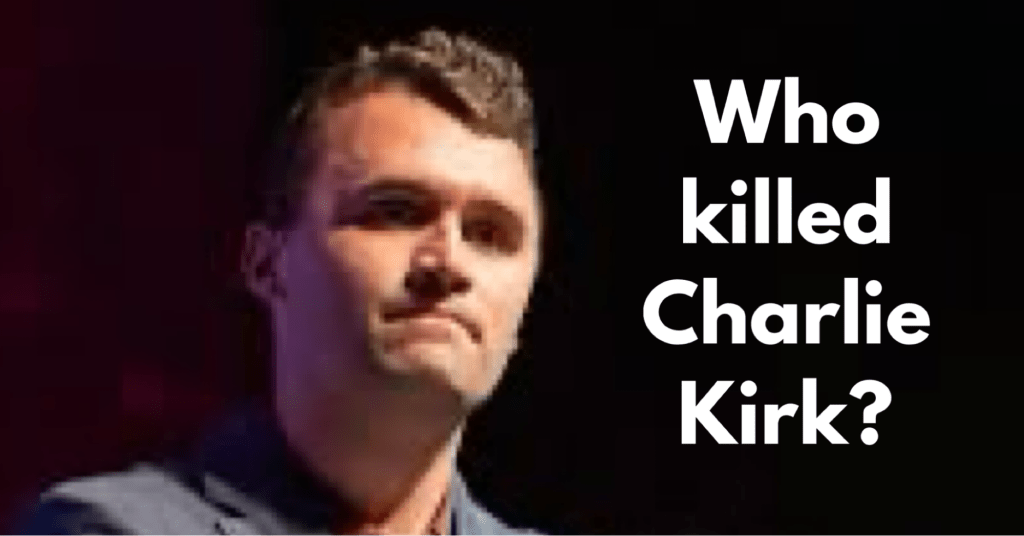


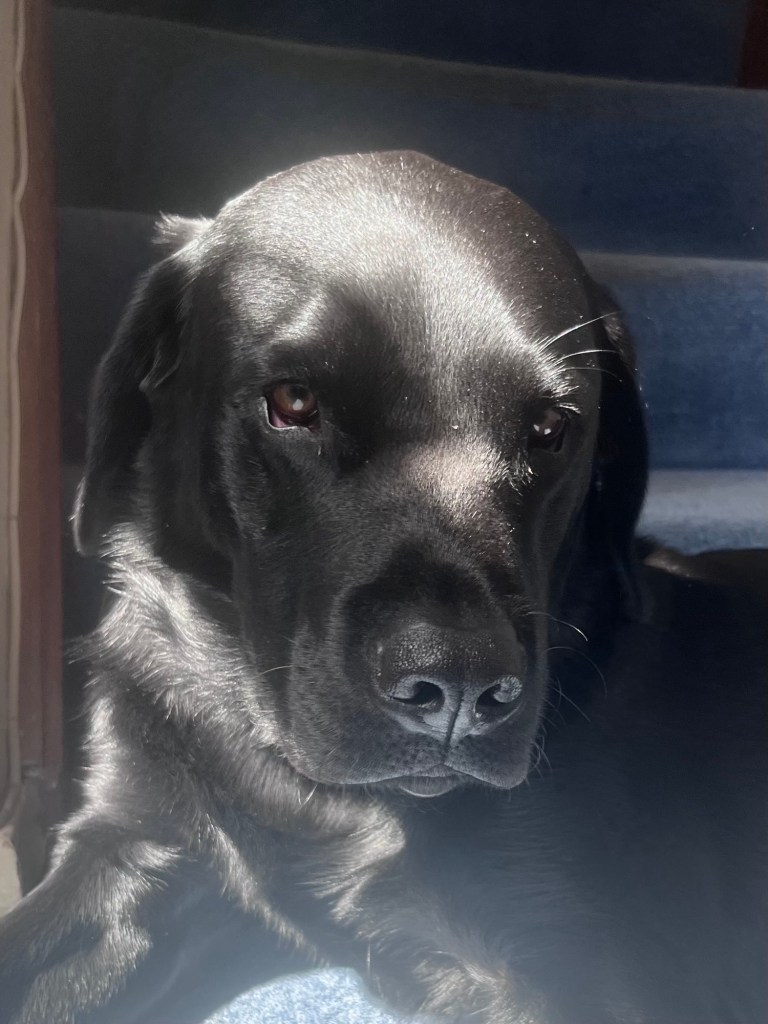





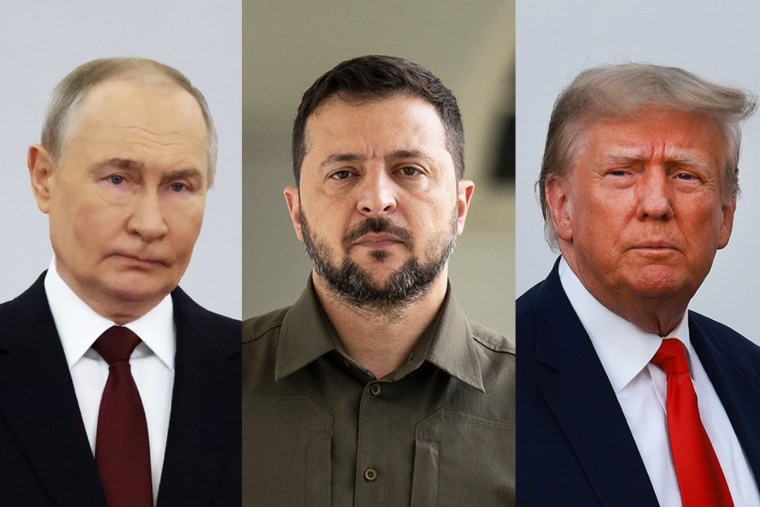


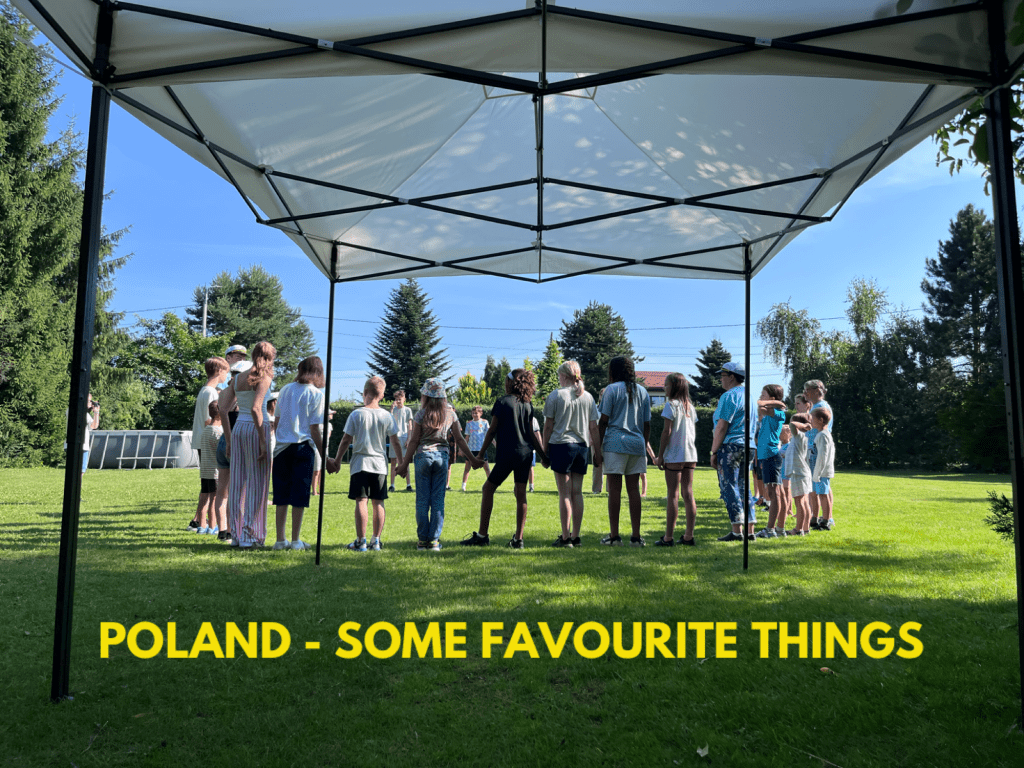

 Some musings