WWJD – What Would Jack Do?

‘I have found that attending to one’s own faults is seldom as entertaining as attending to those of others. But it is generally more profitable.’

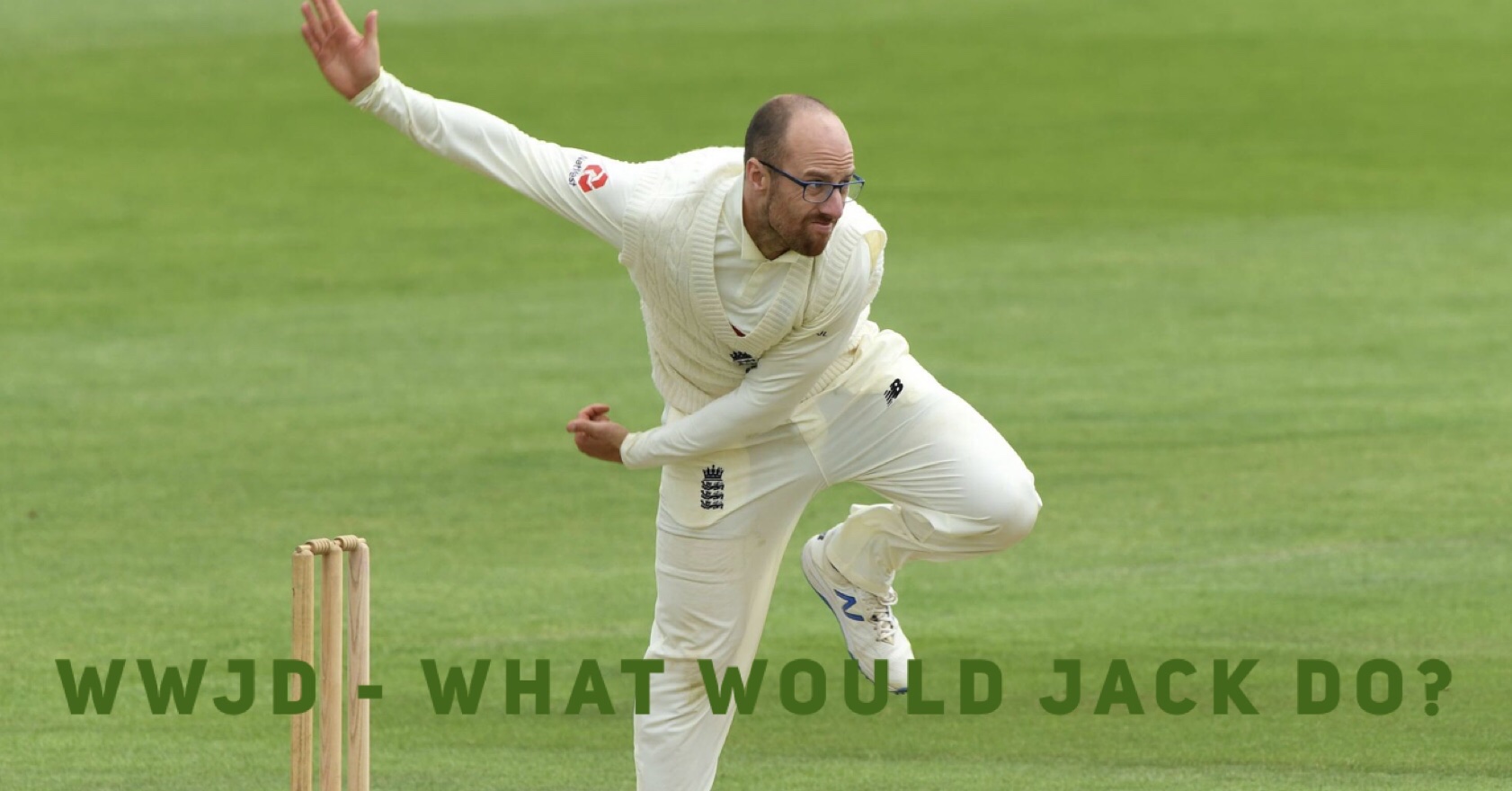
Jack Leach is a man I admire greatly, both for what I see of him on the cricket field and for what I read about him off it. Writing after England’s win over India in the first test at the MA Chidambaram Stadium in Chennai, the former England captain, Michael Vaughan, wrote this about the England and Somerset slow left arm bowler:

‘Sometimes there is one character who defines a team. For England it is Jack Leach. Yes Stokes, Anderson, Root and Archer are world class. But Leach stands out for me as someone who epitomises what this England team is about. He has got immense character and spirit. He has a lot of self-doubt but he keeps going. He bounced back from that pummelling by Rishabh Pant and the way he bats down the order with such courage proves his inner fight. It tells you the team are together. Every team needs a Leach…alongside world-class players. They are not necessarily the most talented players but they have the biggest strength of all, which is wanting to fight for the team’.

This weeks second test was not so enjoyable for England supporters with India comprehensively winning a one sided game. Leach still took half a dozen wickets but he was unable to recreate his batting heroics of a couple of years ago when his one not out proved vital in England’s win over Australia at Headingley in 2019. This week though, as England vainly attempted to save the match, Leach was out for a first ball duck.

Even so it’s still the case that, ‘every team needs a Leech’. And not just cricket teams. Primary Health Care Teams need one too.

Though, perhaps, it would be fun to be a GP version of a Ben Stokes or Joe Root, a world class doctor capable of great acts of medical heroism, the plain truth is that I’m not. The reality is that I’m not the greatest doctor in the world, nor am I the greatest doctor in my practice. And sometimes, I’m not even sure I’m the greatest doctor in the consulting room when the only people there are me and my patient. Like Jack Leach, I know what it is to experience self doubt and to sometimes fall short. Perhaps you do too. But even so, we who are not the most talented still remain important members of the teams we are a part, both inside and outside of work. Because ‘every team needs a Leach’.

The problem for many of us though is that we tend to compare ourselves with the most magnificent and often end up feeling, therefore, a poor second best. Perhaps then we would do well to stop imagining we could ever perform at the levels of those exceptional, seemingly superhuman, individuals we sometimes read about. Perhaps we need to accept a more modest, but no less important role. Perhaps, instead of wondering how we can magic up a degree of awesomeness that is beyond us, we would do well to sometimes simply ask ourselves ‘WWJD – What Would Jack Do?

If we do we may come up with a helpful answer, one which encourages us to keep going despite our weakness and failures, one which spurs us on to keep fighting for the team.

I don’t know about you but I sometimes find myself wanting nothing more from the working week than to get through it unscathed. But taking such an attitude never leaves me with any sense of satisfaction. I want and need to be part of a bigger cause than that, one that has me looking for more than to merely leave work promptly at the close of play, one that will stretch me beyond my abilities and which will mean that I therefore sometimes fail. Because to settle for a life in which all I want is for my reputation to remain intact and to have enough free time to make full use of my Netflix subscription will see me having settled for something that I will not find fulfilling.

So sometimes it’s good for me to be out of my depth, even if on occasions it means I start to drown, for it is then that I most feel my need of others, it is then I most feel my need of rescue.

Like England’s test players, even the best teams have bad days. But it’s important that we maintain the fighting spirit of a Jack Leach and seek to display something of his character and courage in order that we may continue to play our part, even on those bad days which are due to our own weaknesses. Though it will sometimes be painful we still need to bear that pain, alongside team mates who hopefully will be there for us just as we are there for them when they too inevitably make their mistakes. But it’ll be worth it because, regardless of how little credit we ourselves may receive, much that is achieved by the teams we are a part is genuinely worthwhile, whether that be Team GP, other working teams or the teams made up by the members of our own family. And it is frequently all on account of the seemingly small things.

Because, sometimes, even a modest ‘1 – not out’ makes all the difference.

Even so, there will be occasions, like it was for Jack Leach this week, when even the small things will be beyond us. The sad truth is that sometimes we simply will not possess the strength of character that we aspire to, our courage will leave us and we will let ourselves and others down. At such times, however long we spend asking ourselves ‘What would Jack do?’, we will nonetheless find ourselves unable to perform the way we would like. Because, let’s face it, we’re none of us as great as Jack Leach is portrayed in Micheal Vaughan description of him above. I doubt that even Jack Leach himself is always that perfect in his weakness. If, then, we hope to ease our burden by simply lowering our expectations, by contenting ourselves with being a Jack Leach rather than a Ben Stokes, we will find that we will not actually have eased our burden at all. Because however hard we try, and however modest our ambition, we simply won’t always be up to the task.

It won’t only be others then, that we disappoint, it will be we ourselves as well. So when we feel that weak, that powerless, when we find that all we have is nothing and it is no further use to keep on asking what it is that we should do, what then?

When unsure of what to do, there are some who walk in similar circles to me who ask themselves what another ‘J’ would do and seek then to act as he would. But whilst it is not wrong to do so, it is foolish to imagine that we will ever fully succeed since, if we can’t attain to the standards of a Jack Leach, how will we ever attain to the standards of one who really was perfect. For me then, whilst appreciating that on occasions it may be helpful to ask what that particular ‘J’ would do, realising full well that the answer might be to suffer and die for those who don’t deserve it, when I am conscious of having messed up, when I am at the end of myself and am finding life a struggle, I find it helpful to ask a different question. Rather than asking ‘WWJD’ I ask myself ‘WHJD – what has Jesus done?’ And what did he achieve as he hung there?. For it’s the answer to that particular question that gets me through the night when I am particularly conscious of my weakness and failure.

Because when my best is not good enough, it’s good to know that somebody else’s is.


To read ‘For when we can’t see why’, click here

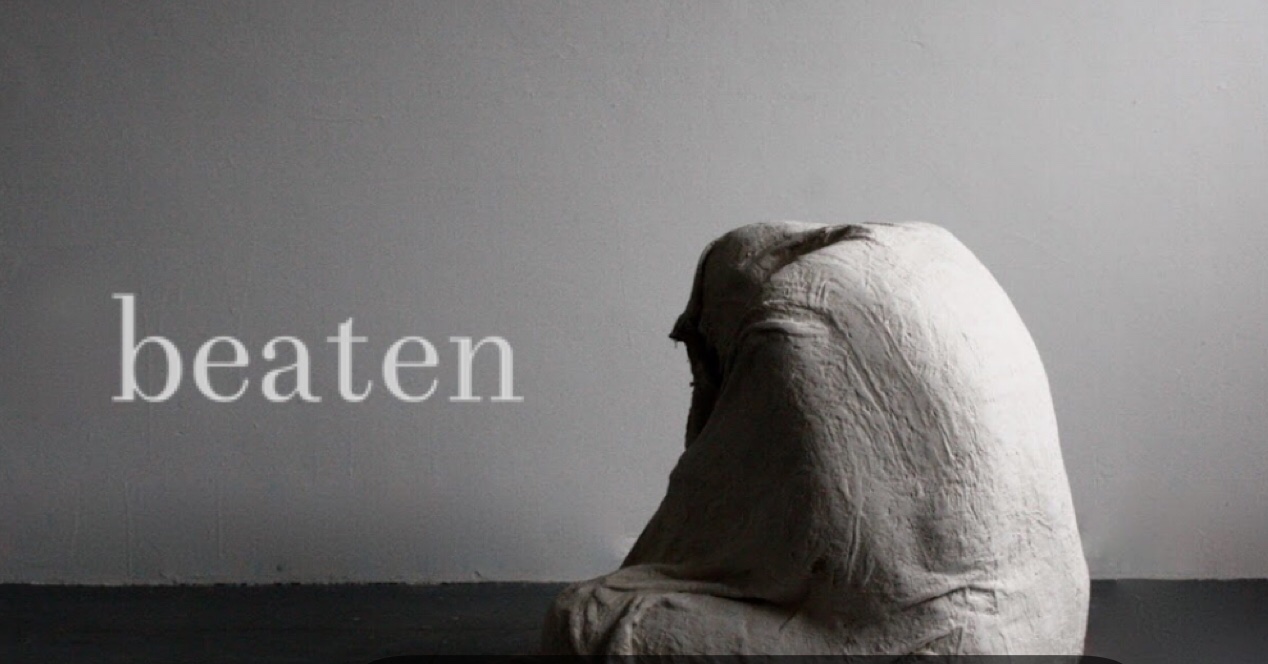
beaten

without understanding

the rules

to the game

in which she never wanted to compete,

she only knows that

she’s lost

.

defeated

by a system

too strong for her,

its victory, one

for which she herself

has unwittingly

worked

.

beaten,

she no longer wants

to play

.

[The title picture is of a sculpture by Grace Erskine Crum entitled ‘Hopelessness]


To read ‘She’s The Patient You Don’t Know You Have’, click here

To read ‘Resting in Pieces’, click here

To read ‘Crushed’, click here

To read ‘Masked’, click here

To read ‘Patient’, click here

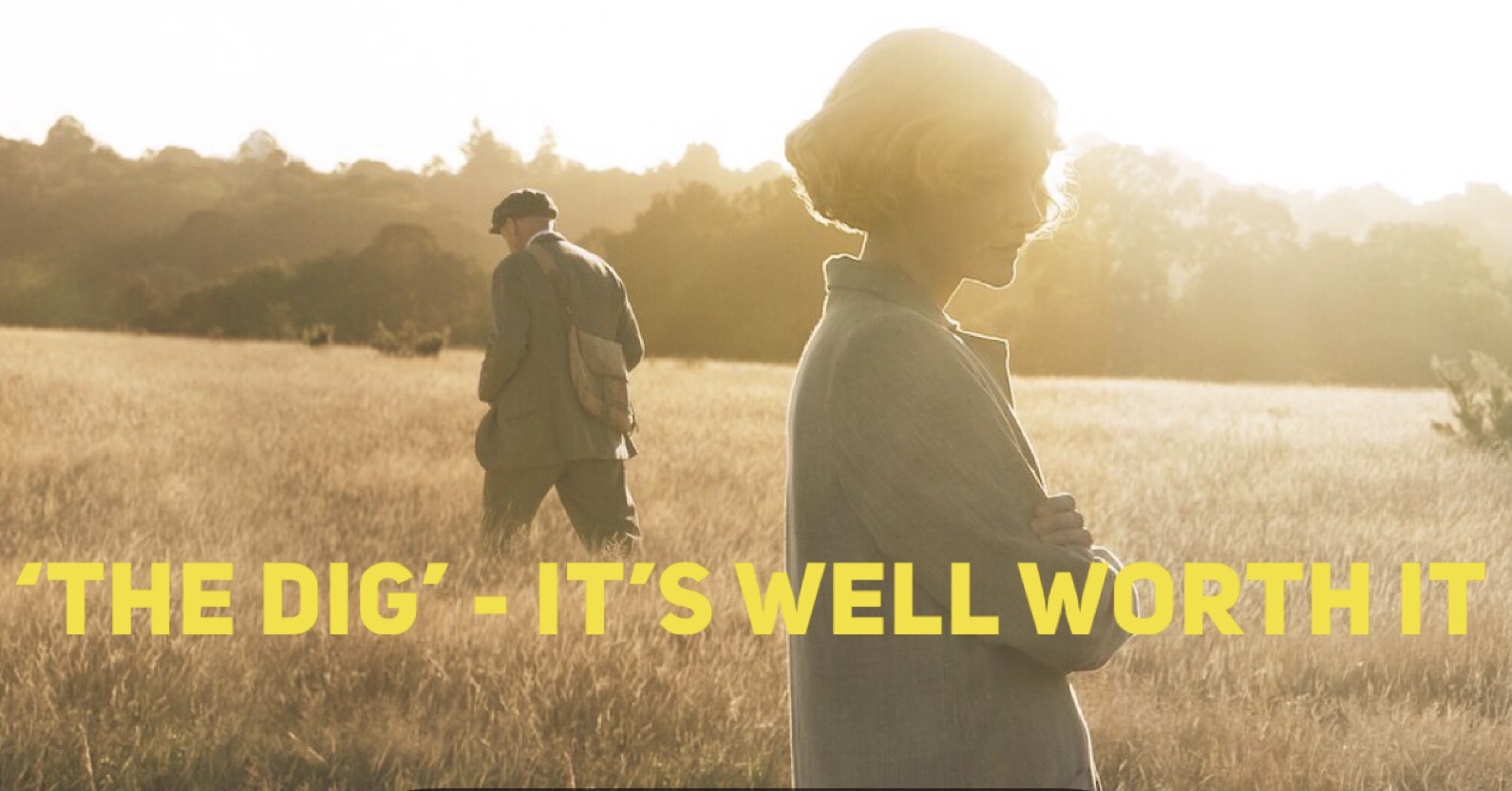
‘THE DIG’ – IT’S WELL WORTH IT

‘Raking is easy, but all you get is leaves; digging is hard, but you might find diamonds.’

John Piper

Recently I watched ‘The Dig’, the excellent new Netflix Film based on the Sutton Hoo archeological excavation. It is well worth a watch. Alongside the story of Basil Brown, the amateur archaeologist who, in 1938, began exploring what lay beneath a grassy mound near Woodbridge in Suffolk, the film explores the importance of trying to hold on to the transient by remembering the past.

I’ll not spoil the film for those who have yet to see it, but the character of Rory is at one point asked what it was that drew him to photography. He gives the answer, ‘It’s just a way of trying to fix things as they go past, to keep what’s vital from being lost’.

‘To keep what’s vital from being lost’. I suppose that’s what, in large measure, we who are doctors, along with all those in healthcare and, indeed, many other fields too, are trying to do in our work as, daily, we act to try to preserve the preciousness of life. But we are not up to the task. Like the character who is distressed by his failure to protect the one he had been charged to care for, and no matter how much, like him, it’s not what we want to hear, we too have to be sometimes reminded of the truth: ‘We all fail, every day. There are some things we just can’t succeed at, no matter how hard we try.’

A little later in the film Rory asks Peggy, one of the site archaeologists, what would be left of them both if a thousand years were to pass in and instant. Looking around her Peggy replies, ‘Parts of your watch, the torch, fragments of the mug’. Rory then adds what Peggy’s words have left unspoken, ‘But every last scrap of you and I would disappear’.

It’s a sobering thought, one which brings with it with an implication, expressed in the words of another character who reveals what she herself has come to realise, that ‘Life is very fleeting. There are moments you should seize’.

But if there are moments that we should seize, then there are moments that we should remember. Because the past is part of who we are, part of what makes us what we are today and part of what will determine our tomorrow. I’m not referring here merely to our own personal back story, on the contrary, as the film seeks to portray, we are all shaped to some extent by the whole of human history.

As Basil Brown has to be reminded, his work ‘isn’t about the past or even the present. It’s for the future. So that the next generations can know where they came from. The line that joins them to their forebears.’

Our past, it is suggested, will last longer than our future.

So, as we consult with our patients, perhaps we should sometimes cease from our constant striving to achieve those things which we can not hope to succeed at and seek instead to remember together what it is that we are all a part. As individuals ‘We die. We die and we decay. We don’t live on.’ But, as Basil Brown replies to the one who speaks these stark words, ‘From the first human handprint on a cave wall, we’re part of something continuous’. As a result, Brown claims, ‘We don’t really die’.

It’s a comforting notion but is it one that’s true? For, no matter how prettily we try to wrap it up, the ugly reality is that we do all die. Even so, perhaps there is something worth thinking about here. If we make our lives only about ourselves and what we can experience or achieve, all of what we are will indeed die with us. But if we are part of something bigger, something we gladly accept our being a part of, something vast that continues on beyond the few years of our existence, then there is a sense in which what we are does indeed continue after our death.

Sometimes we, as well as our patients would do well to be encouraged to appreciate this bigger picture. Because sometimes, rather than looking in, it is better to look out, rather than looking down, it’s better to look up, and rather than looking forward, it’s better to look back.

Without denying the ugliness of death, we all need to remember the beauty of life. There are moments that we do indeed need to fix as they go past, moments that ground us in something bigger than the here and now, moments that will stop us from being lost in our own individual present and, perhaps, enable us to muster some hope for our future. Maybe it is the inability to do this that contributes to the tragedy of dementia, that cruel disease that vividly displays for us the importance of our need to remember, that we are not meant to live merely in the moment, that we are not meant to live such lonely disconnected lives.

But if we would do well to see our lives as a small part of the whole of human history, might we not do even better by considering if we might not be part of something even greater still? I believe we would. And that’s why, unlike Alistair Campbell, who famously said that he didn’t, I do ‘do God’, both here and, yes, occasionally, with my patients too. For me it’s too important not to. It is dishonest to pretend that medicine has all the answers to the problems that we are presented with, not least that of our own inevitable demise. Our lives are about far more than merely attending to our clinical parameters in the vain hope of eking out a few short additional years of life. For, no matter how meticulous we are in adhering to clinical guidelines, all our lives will, in time, draw to an end.

Even so, it is my belief that my death will be but temporary, for I consider that my life really is a part of something far bigger than my own individual existence, that life really is all about someone who is far greater than me, and that that someone really will one day restore everything to how it was always meant to be. And it is all on account of what has happened in the past that, regardless of how difficult the present might be, I can remain confident that the future really will be as good as it has been promised to be.

Because the dig really is worth it in order that we might uncover what happened, not under a grassy mound in Suffolk but on top of a green hill far away. Like Basil Brown could say of Sutton Hoo, I can say of Calvary, that ‘a man could dig the earth his whole life through and not find anything like I’ve discovered here’. For there is found the greatest treasure of all, in amongst which is a future where every tear will have been wiped away and death shall be no more.

For me then, if we are to not really die, it’s that particular historical event that we all need to remember. It’s that which is truly vital, it’s that which must not be lost.


To read ‘Something to feast your eyes on’, click here

To read ‘Don’t forget to be ordinary, if you want to be happy’, click here

To read ‘Hope comes from believing the promises of God’, click here

To read ‘On being confronted by the law’, click here

To read ‘The Resurrection – is it just rhubarb?’, click here

To read ‘Easter Sunday’, click here

To read ‘Good Friday’, click here

SHOT OF LOVE

SHOT OF LOVE

This week brought the sad news of Captain Sir Tom Moore’s death with coronavirus. The last of his 100 years was certainly a remarkable one as he made the headlines, and many admirers, by lovingly walking around his garden a hundred times. As a result of his tremendous fundraising efforts, £33 million was donated to NHS charities. I, for one, am grateful for his efforts.

Another frail elderly man died this week. Also from Covid 19. Few will know his name, just those who loved him for who he was, many of whom won’t have been fully aware of the ‘heroics’ of his life, how he worked to provide for his family, how, year after difficult year, he was there for his children, and how it was his habit to show kindness to those he lived alongside in the community where he made his home.

His too was a remarkable yet ordinary life.

Last weekend I spent a day at a local vaccination centre. One patient stood out as she was wheeled to the station where I was working. Lost under a swathe of blankets, her bent body was curled up in one of those chairs which allowed her to lie out rather than insisting that she be sat up. With her chin on her chest and her eyes closed, she neither said, nor appeared to hear, anything. Hers seemed to be a life that it might have been easy to dismiss as without value but for the fact that she was clearly loved by the daughter who brought her. I did not know the story of her life but, as we tunnelled through the layers in order to find a small area or aged skin in which to plunge a needle, it felt good to live in a society that values the elderly enough to offer the vaccine to all, regardless of an individual’s achievements or current economic worth. It was a privilege and a genuine joy to vaccinate this particular elderly lady.

It is good to herald the exceptional achievements of individuals, but we do, I think, need to be a little careful that in doing so we don’t lose sight of the value of the ordinary. Most of us will not achieve greatness in the eyes of the world, but our everyday contributions still make a significant difference to those among whom we live and work. Furthermore, as my vaccinated elderly lady demonstrates, our value isn’t lost the moment we no longer contribute or achieve in the way we may once have done.

Life shouldn’t be competitive, a race to see who wins, rather it should be collaborative, ensuring we all get to the finish line in as fit a state as is possible. Constantly judging each other’s worth, on the basis of our achievements does none of us any good, burdening as it does the currently ‘successful’ with the need to maintain their lofty position whilst demonising and demoralising those deemed to have failed. We, and those with whom we live alongside, need to learn how to be kinder to one another, accepting each other and acknowledging our humanness. We need to stop insisting that we all must be more than we actually are and start, instead, to accept one another despite our being the flawed people we, inevitably, sometimes prove ourselves to be.

Because we would all feel a lot more loved if we all became a lot more loving.

Captain Tom is quoted as saying that he always believed that things would get better, that the sun would shine again and that we’d all have a lovely day tomorrow. He’s not the first to have said such a thing. Some of us will be familiar with the words of the psalmist who wrote how, ‘Weeping may tarry for the night but joy comes in the morning’. I don’t doubt the truth of these words written, as they were, thousands of years ago, but equally we must accept that, for some, the night has already been long and the day still seems an eternity away.

So until that better tomorrow, that wonderful day when all our tears will have been wiped away, we’ll do well to support the weak as well as celebrate the strong, to rejoice with those who rejoice whilst weeping with those who weep.

Because one day soon, we too may be glad to have somebody who loves us enough to wheel us to a vaccination centre under a sea of blankets and allow us to be the recipient of what is itself an expression of something we all need – a shot of love.


Related posts:

To read ‘Room Enough’ , please click here

To read ‘Vaccinating to remain susceptible’, please click here

To read ‘True Love?’, please click here

To read ‘Because sometimes not even chocolate is enough’, please click here

To read ‘Professor Ian Aird – A Time To Die’, please click here

To read ‘“The Medical Condition” or ‘Hannah Arendt is completely fine”’, please click here

To read ‘For when we can’t see’, please click here

To read ‘Don’t forget to be ordinary, if you want to be happy’, please click here

To read ‘Somewhere over the rainbow’, please click here

To read ‘When the jokes on you’, please click here

To read ‘With great power’, please click here

To read ‘Nikki Alexander – Dr Perfect?’, please click here

Room Enough

With her back bent, and her eyes closed,

she is lost in a sea of blankets.

She says, and hears, nothing.

.

But still, she is lovingly brought,

The wheels of her chair turn,

As she takes hers.

.

In silence

A small island of aged skin is found

Yet there’s room enough – for her

.

To finally, fully feel,

The point of it all –

In the jab of a needle.


To read ‘I knew a man’, click here

She’s the patient you don’t know you have

She’s the patient you don’t know you have
Sat all alone
Forgotten, unknown
She’ll not answer her phone
She’s the patient you don’t know you have

She prefers it that way

She’s the patient you don’t know you have
She’s given herself licence
To suffer in silence
Her pain and her violence
She’s the patient you don’t know you have

She prefers it that way

She’s the patient you don’t know you have
Her tears you’ll not see
They’re for her eyes only
She’ll just let them be
She’s the patient you don’t know you have

She prefers it that way

If only for today


To read ‘She’s the patient you still don’t know you have’, click here

A Not So Shaggy Dog Story

Two weeks ago I was faced with a clinical dilemma, a patient of mine who was repeatedly eating, yes eating, the dressings that his carer kept applying to his non healing leg lesion, so much so and that he’d worked his way steadily through a box of Elastoplast.

I sought the advice of my medical colleagues. What, I asked them, might I best do for my patient. Should I:

a) For fear of provoking an intestinal obstruction, counsel the carer to desist from applying the dressings and instead suffer the consequences of the lesion bleeding all over the carpet,

b) Seek a psychiatric opinion, or

c) Advise the carer to take a more authoritarian tone with the patient and threaten no further doggie chocs if the behaviour were to continue.

Their recommendations for action came back from all corners of the country. Had I considered pica, had I checked his ferritin levels and, from those more fully appreciating my patient’s four leggedness, had I tried a cone of shame. This last suggestion, however, despite its suitability and soundness, was not one that was possible for me to employ since all I had at my disposal was a cube of discontent and a cylinder of regret.

Of course the only real option open to me was to seek out a specialist opinion. But having done so and received the advice that a surgical solution was what the leg lesion required, the surgeon sought out my opinion as to whether the procedure should go ahead.

My initial reaction was an unqualified yes but, after reflecting on the matter, I realised that, in terms of quality adjusted life years, performing the operation on a nonagenarian patient made poor financial sense irrespective of how much the old fella was loved by those dear to him.

I sought the opinion of my esteemed colleagues once more in the hope that their collective wisdom would aid me in my ethical dilemma. I asked them whether, in these days of ever increasingly tight purse strings, I should

a) stick with my original advice and, as his allocated key worker, bear the cost of the surgery myself.

b) withdraw my support for the proposed intervention and advise instead that the patient be kept off the furniture for fear of him bleeding on the upholstery, or

c) remove, as it were, the patient from my list, and take on a younger, less arthritic patient who was likely to have better smelling breath.

The advice was universally in favour of proceeding with the proposed surgery, a decision which in truth was never in doubt.

And so, this morning, after a night during which the air was filled with the rancid smell of necrotic tissue, and the silence was disturbed only by the incessant sound of a wound being constantly licked and all too many Elastoplasts being declared lost, presumed missing in action, [does that still count as ‘nil by mouth’?], my elderly patient slipped into an acute confusional state on account of his carers refusing to give him his usual breakfast of cornflakes with milk. [I know, but I’m sorry, he really likes milky cornflakes!]

Transport was duly arranged and he was promptly conveyed to the surgical assessment unit from where he, soon after, was taken down to theatre.

A few hours later, after a brief spell in recovery, he was back home with nothing to show for his ordeal save for a bald patch on his leg, that long overdue cone of shame, and an anaesthetic induced propensity to stagger amusingly when he tried to walk. [Is it wrong to laugh at the afflicted?]

So today was a good day as a result of a job well done. Thank you to Eric, Glen, Jessie and everyone at The Mount Veterinary Hospital, Wellington for early diagnosis, prompt referral and timely surgical intervention all combining to ensure, for today at least, a happy outcome.

His breath still smells though!

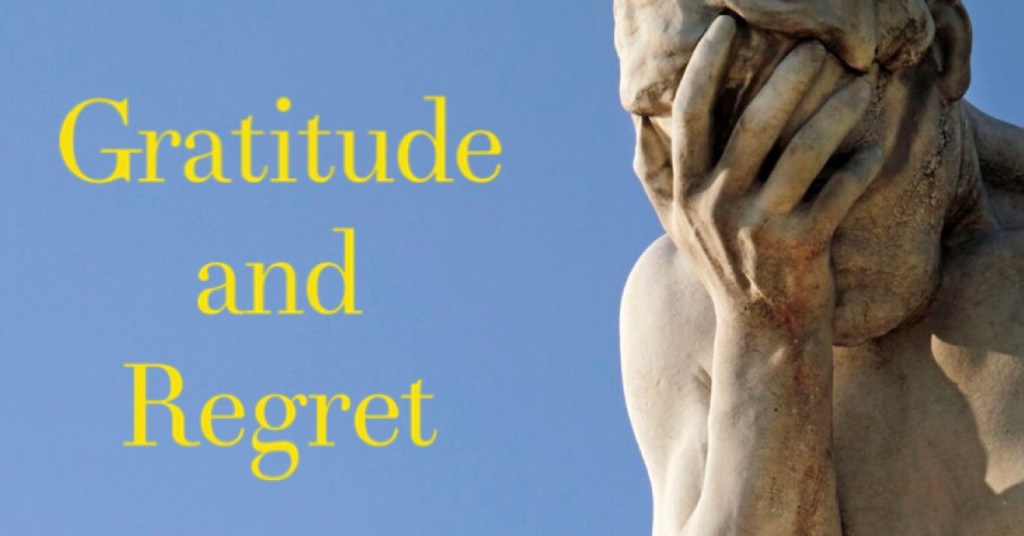
Gratitude and Regret

“Dead people receive more flowers than the living ones because regret is more powerful than gratitude”

Anne Frank

These words, written by the German-Dutch diarist Anne Frank were brought to my attention earlier this week. I found them arresting and started me wondering as to why, if true, such a thing might be so. Not many of us can honestly sing along with Frank Sinatra and claim that our regrets are ‘too few to mention’ and neither, surely, would anyone join with Edith Piaf and genuinely claim ‘Non, je ne regrette rien’. On the contrary, for there are things in all our lives that we wish were not, things we wish had never been, and things we wish we had never said or done. And there are things that have happened to us or to those we love, things that we continue to bitterly regret ever took place.

But why might it be then, as Anne Frank suggests, that regret is more powerful than gratitude in provoking a response from us when gratitude is something that surely we have all also experienced.

I wonder if the answer might lie in what we have come to expect from our lives. Might it be that we too easily take for granted the good things in our lives, considering them as our right? Might we have become less grateful for them, less appreciative of the kindnesses we have been shown, all as a result of coming to believe, perhaps, that they are all somehow deserved? If so, might that be the reason why we feel less gratitude than we should, and why we may express our thankfulness less forcefully than we could?

In contrast, it seems, we tend to be more easily moved by those things we regret, those things which upset our rosy view of the world. Promised as we have been that, if we believe in ourselves and listen to our hearts, all of our dreams will come true, we have come to expect good things in our lives, that health, wealth and prosperity are there for us all to enjoy. But we have been lied to. And when the reality of the difficulties that invade all our lives can be denied no longer, when it is all too plain that both our lives and we ourselves fall far short of that ideal, we are startled into a response.

Despite the existence of both good and bad, we have tried to airbrush our view of life in an attempt to maintain the illusion that all will be well. So adept have our efforts been that, when pain and suffering inevitably comes, we are shocked, when sadness fills our lives we are surprised, and when death rears its ugly head we are overwhelmed.

And so it is then that we buy flowers – a reminder of beauty, a reminder of love, a reminder of life.

Anne Frank of course knew how hard life could be, spending two years hidden away in a secret annex in an Amsterdam house before being arrested by the Gestapo and eventually dying in the Bergen-Belsen concentration camp in 1944. She was just 15. And yet her writing reveals that, despite the horrors that she undoubtedly experienced, she knew what it was to be grateful. Without denying the bad, she was able to appreciate the good.

‘As long as this exists’, she wrote, ‘this sunshine and this cloudless sky, and as long as I can enjoy it, how can I be sad?’

Perhaps it was because she had learned that the good things in life were not to be taken for granted that she was able to appreciate those good things when she had them to enjoy. Perhaps, instead of allowing anger and criticism of others to flow so readily from within us when things go wrong, we could too. Perhaps we could be a little more thankful and appreciative than we are.

In these days of pandemic nobody’s lot is a universally happy one. The truth is that life is difficult for everyone just now and it may well remain so for some considerable while yet. But ours is not the first generation to find it tough. And though the sky may well be full of dark clouds at the moment, they will, as they have before, one day part and the sun will shine once more. And when it does we will be grateful for its brightness and warmth, just as we can be grateful for all the many things, big and small, that we can take pleasure in today.

Despite, then, the universal nature of sadness, happiness can still be experienced alongside it. Perhaps it might even be true to say that we cannot fully know what happiness is without knowing the pain of sorrow and that sorrow itself requires the memory of the temporary nature of happiness for it to be fully experienced. If so then, if we are to be happy, it must be alongside our sadness. We dare not wait for the absence of sorrow before allowing ourselves to be happy. It is not that we can not be happy because we know sadness, nor that we can not be sad because there are things to be happy about. Paradoxically, we can be happy and sad at the same time.

Even so, as we wait for those infinitely better, brighter days that we all so long for, we would do well to take another leaf out of Anne Frank’s book where she quite rightly once wrote:

‘How wonderful it is that nobody need wait a single moment before starting to improve the world’


To read ‘I’ll miss this when we’re gone’, click here

To read ‘General Practice – A Sweet Sorrow’, click here

To read ‘The Life I Lead’, click here

To read ‘Monsters’, click here

Vaccinating to remain Susceptible

VACCINATING TO REMAIN SUSCEPTIBLE

‘Grey hair is a crown of glory’

Proverbs 16:31a

Last Saturday I spent the day at a local Covid Vaccination Centre jabbing octogenarians, not to mention one or two even older folk, with the Pfizer vaccine. And, after getting over my initial trepidation of adding 1.8 mls of saline to a glass vial, not something that would generally bring me out in a cold sweat, what a genuinely enjoyable day it was. In large measure, the pleasure I experienced came from working alongside lovely people, many of whom I’d never met before, to deliver something that, please let this be true, will make a real difference in the ongoing fight against coronavirus.

But every bit as enjoyable was meeting the warm hearted, good humoured and affable elderly folk who were being vaccinated. As I merrily stuck needles into their arms I was struck how, since it was they that we were vaccinating first on account of their greater vulnerability, it is in large measure similar folk to them who are being represented in numerical terms when each depressing day the number of deaths from coronavirus are announced.

It has frequently been remarked that there are three kinds of lies: lies, damned lies, and statistics. Mark Twain wrote of how statistics can beguile us into thinking things we shouldn’t and this is most certainly the case with regard to the figures we are currently being presented with daily. I am not referring here to whether or not the figures are an accurate reflection of the true number of coronavirus deaths, rather I am thinking of how they lie to us by distancing us from the personal tragedy behind the numbers, numbing us to the sadness associated with each of the deaths as they are marked down by another stroke of a statisticians pen.

Because however statistically significant it may be, it is all too easy to lose sight of a statistic’s significance.

For example, I wonder how many of us would find ourselves rejoicing next week if there were ‘only’ 500 deaths each day. Whilst we might understandably be pleased that the numbers were falling, might we also find ourselves forgetting how such a number would still represent considerable heart break and pain to those affected. And how many of us have guiltily allowed ourselves to be comforted by considering how a large percentage of those who die from Covid-19 are the frail and elderly who, we may be tempted to tell ourselves, are ‘dying anyway’. Sadly, of course, there may perhaps be some truth in this but we have unquestionably believed a lie if we take that to mean that it therefore doesn’t matter. Last Saturday, for me at least, was a reminder that thinking in such a way is to forget that the lives of the elderly that are being lost are the lives of warm hearted, good natured and affable folk like those I was vaccinating that day.

People aren’t statistics. Each individual who has succumbed to the coronavirus is more than merely one more of the approaching one hundred thousand who have thus far had to be counted. On the contrary, to those who loved them, they are those who were considered as one in a million.

This is not to dismiss as comparatively inconsequential the very real sacrifices being made by the younger generation in the battle against Covid-19, nor is it a call to pursue a particular course of action in the naive belief that every elderly life can be saved. Rather it is to acknowledge that behind the dispassionate statistics there are real people, in real pain, experiencing real grief and that, although, sadly, the deaths of many may be unavoidable, it is, nonetheless, not OK.

As the great vaccination effort continues, let us never become immune to the sadness surrounding those for whom it came too late, let us always stay susceptible to the reality of grief.

And may we mourn the loss of the frail elderly every bit as much as we do those who die early in their lives. Because to believe that the death of somebody who is old or clinically extremely vulnerable is one that should somehow be wept over less than that of someone who is young and fit is to value the strong over the weak and opens the door to a world where the aged and infirm can be forgotten and discarded.

And that’s not a world in which any of us want to grow old.


To read ‘I knew a man’, click here

To read ‘If’, click here

To read ‘Yesterday and Today’ click here

I knew a man

I knew a man of modest means,

Content to love his wife, his teens,

Who, ever hopeful, made the best

Of years constrained by heaving chest.

.

Till came the night for want of air,

His ceiling scored with ‘ward based care’,

Compelled by some he bore the cost,

His battle fought, his battle lost.

.

You smug-faced crowds who gather still

With scant regard for those who’re ill,

Stay home and pray you’ll never know

That hell where all too many go

.

[After Siegfried Sassoon]


To read ‘If’, click here

To read ‘patient’, click here

To read ‘crushed’, click here

To read ‘masked’, click here

To read ‘resting in pieces’, click here

A Pregnant Pause?

In these days of lockdown, there’s not much that’s fun

That’s something that everyone knows

The highlight of each of the weeks as they pass

Is sticking a swab up ones nose

.

Two evenings a week we all sit on our own

And watch a short film as it shows – a

Sequence of steps that we now must all take

To sample our nasal mucosa

.

The adding of saline to tubes, it is easy

But then comes the bit that one hates

The ticklish problem that has to be faced

Of brushing ones own turbinates

.

Once done though it’s then that we nervously sit

As pregnant with tension we wait

If two lines appear then the questions will come

Of who we’ve spent time with of late!

IF

If you can daily take a hundred calls from patients who are ill

And calmly treat their every need with kindness and with skill

.

If vaccines you must organise, when you receive the call

Despite just when they will arrive, you’ve no idea at all

.

If liable you’re asked to be for what you can’t control

And then are made to feel the guilt, when not your fault at all

.

If you can work long stress filled hours and then read in the press

That you’re a lazy ne’er do well who just could not care less

.

If you can fill each passing minute with an hours worth of work

Then you’re in primary care my dear where life is just berserk.

.

[after Rudyard Kipling]


To read ‘I knew a man’, click here

What price resilience?

But we’ve wander’d monie a weary fit

Sin’ auld lang syne…

Let’s tak a cup o’ kindness yet

For auld lang syne

In 2020 we wandered many a weary mile and now, at the start of 2021, here we go again.

At the end of one year and the beginning of another, when, having been doing this for months it feels like we’ve only just begun, perhaps, like me, you’re beginning to feel overwhelmed. Or perhaps you’ve felt overwhelmed for months, perhaps you don’t know how much longer you can carry on. Either way, I hope you’ll bear with me a little longer.

One Christmas a few years ago I watched the BBC adaptation of ‘Little Women’. Despite the fact that it wasn’t the kind of programme I would naturally be drawn to, I enjoyed it and found it genuinely moving. Let’s just say, on a number of occasions I found myself affected by what I can only assume was a speck of dust in my eye. Watching it I was struck by the ability that the characters had to bear great hardship. On several occasions in the story, there were those who spoke of the need to bear together the trials their were experiencing – trials that included the anxiety of having a relative away at war, the pain of experiencing a debilitating illness and the sorrow of having to look on powerlessly as a loved one died. Though it was only a story, this ability to accept suffering, and bear it together, has a place in real life too.

I wonder, however, if today we have lost our ability to bear with suffering, to sometimes simply endure what life throws at us. We have, perhaps, come to assume that we have a right to comfort and ease and, when that dream falters, we have become accustomed to the NHS, and others, always being there to rush to our aid. We may even have foolishly developed the notion that there is no limit to the help that can be provided – that no problem ever needs to be put up with.

If we have come to believe this however, we are deluded. If one thing in life is certain, it is that, to a greater or lesser extent, hard times will come to us all. And sometimes there is no earthly solution to the difficulties we face. Sometimes they simply have to be endured – maybe for weeks, maybe for months. Maybe even for years. Sometimes the pain just has to be borne.

With the current Coronavirus pandemic this has become all too evident.

Both those who are ill and those working in the health service and elsewhere to support them in their sickness need to have a healthy dose of realism. We aren’t always as tough as we would like to be and we can’t always assume that we’ll be able to always cope. Simply demanding that we, or others, be more resilient, is neither helpful nor realistic. Furthermore, demanding that we be more resilient can even add to our burden. When the problems really are too much, it’s OK to find ourselves broken and awash with tears. Sadly, on those occasions we may have to simply bear the pain. Only it won’t be simple. On the contrary, it will be terribly hard.

Sometimes the problems are too many for even the most capable

Sometimes the problems are too complex for even the most wise.

Sometimes the problems are too heavy for even the most strong.

And so, inevitably, days will come along which are just too much – when the demands put upon us exceed that which we are able to cope with. Our best efforts to meet the overwhelming need drains us of every ounce of energy we posses. Sometimes we can be so overwhelmed that it can feel that our inability to deliver the impossible reflects negatively on us, that our failure to solve every problem suggests some moral failure on our part. But we must try not to feel like this because there is no shame in being asked for more than we have and only being able to give all that we’ve got. We are, after all, only human.

Just as there have been in recent months, the coming weeks will continue to see some of those working within the NHS, in teaching, social care and a thousand other areas, being hailed as heroes. And I will be grateful for all their efforts. However, though heroics are often demanded of us, we’re none of us always heroic. Not all of us have superhuman levels of resilience. In fact none of us do. To make the mistake of thinking we can meet every need will only crush us more. We do not help ourselves by being that foolish.

So we need to be realistic. For many of us, the demands of our job, and indeed our lives, have long been overwhelming. But never more so perhaps than at present. Covid-19 has made all our lives harder and these difficult times seem set to remain for a significant while yet. And so, when the calls for help from those who are sick and suffering just keep on coming, those in the front line ought not be surprised when days come along when it is all too much.

Sometimes that is sadly just the way that it is, the nature of the job – the nature, perhaps, even of existence. Whilst we might bemoan the actions of others, and let’s face it we’re all good at that, it is not always somebody else’s fault that our day has been hard. We need to accept that sometimes, in the midst of a Coronavirus epidemic for example, the job of health care professionals, and others, will, as a consequence, be significantly harder. And whilst not encouraging a resigned fatalism, we need to accept that when it is, that harder time will have to be borne for a while, not only by those in the NHS but also by society as a whole. Complaining about it won’t help anyone, far from it. Instead what will help is if we bear the problem together. Blaming others only serves to isolate us still further, at the very time when, despite distancing ourselves from each other, we most need others alongside us.

Though it may cost us to do so, we need to support one another especially those who find the struggle hardest. That includes those who are sick but also those with whom we live and work alongside. We must not demand that they are superhuman. If we aren’t very careful, exalting NHS workers as heroes, will become a new way of doctors playing an old game – that of playing God.

The truth is that none of us are always as resilient as we’d like to be, and when we aren’t we may be the ones who struggle the hardest and need the most help. I am fortunate to work in a practice where that support is readily found and I am grateful to all those I work with that this is the case. I am grateful that there are those who help me: other doctors, nurses, HCA’s, optometrists and pharmacy staff; reception, clerical, cleaning and managerial staff – and patients too who, for the most part, appreciate the pressures we are under. Each and every week there are those who have urged me to look after myself. Cliched though it is to say it, we really are all in this together.

Sometimes I help others, sometimes others help me.

Medicine is a wonderful thing. It can ease many burdens – but not all. Like those who practice it, it has its limitations and will never bring about a world where sickness and death is no more. For that we will have to look elsewhere. I am not suggesting that medicine should therefore stop trying to find new ways of alleviating suffering, far from it, but none the less, it too must maintain that healthy dose of pessimism that reflects the reality that not every need can be met, and that nobody lives for ever. We all need that healthy dose of pessimism. Sometimes we should go the extra mile but we mustn’t lose sight of our limitations, our inability to meet impossible demand and that even despite our best efforts, some of those who get sick will have bad outcomes.

Sometimes, when there is no longer any earthly solution to sickness and disease, when medicine has reached its limit, we mustn’t be afraid to acknowledge our weakness and our inability to help as we would like. Sadly I fear this is going to be an all too common experience in the weeks ahead. Even so, as we look on and watch as others, even our friends and family, suffer and die, we will do well if we can still bear with them in their suffering, if we can share in their sadness and ‘weep with those who weep’.

So when the going gets tough, what about those who don’t feel tough enough to keep going? What about those who lack, for now at least, the necessary resilience? Do we demand they toughen up as we regale them of the superhuman efforts of the strong? No. Instead we pick them up and carry them just as far as we can because those who are overwhelmed by the avalanche of need are no less worth carrying than those who are sick.

I wasn’t born yesterday – but I may need to be borne tomorrow.

And when the day inevitably comes when I am too heavy to carry, when my needs become too great, beyond anyone’s ability to meet, lay me down and, if you can, remind me of my firm belief that, even in our greatest weakness there is still one whose strength we can rely on, a God who will carry us, not only ‘to our old age and gray hairs’ [Isaiah 46:6] but for ever after too.

Even then, if you can, I hope you’ll bear with me a little longer.

And I’ll try to do the same for you.

Because to bear things alone would be truly unbearable.

And so, if, or perhaps when, someone I love is dying from Covid-19, it is my hope that I’ll be able to go to them and be with them as they die. And I pray that by God’s grace I’ll have the strength and courage for that to be the case. Because love really is more important than life.

So let’s drink that cup of kindness yet ‘for auld Lang syne’.

Happy New Year.

This is an updated version of a blog written three years ago about a time which, though felt tough then, now seems like a walk in the park


For ‘Covid-19, does it suggest we really did have the experience but miss the meaning?’, click here

For ‘Some trust in chariots’, click here

For ‘But this I call to mind and therefore I have hope’, click here

It’s A Wonderful GP Life

This tale is Part Two of ‘Scrooge in the Time of Coronavirus’ which is Book Two of ‘The Dr Scrooge Chronicles’. Book One is entitled ‘A Primary Care Christmas Carol’.

To read ‘A Primary Care Christmas Carol ’, click here.

To read Part One of ‘ Scrooge in the Time of Coronavirus’ which is entitled ‘A Tale of Two Patients’, click here.

IT’S A WONDERFUL GP LIFE

in which Dr Scrooge has another Christmas encounter.

It was a little after 6.30pm on Christmas Eve and Dr Ebenezer Scrooge had just ended the final telephone consultation of the day. A receptionist appeared at his open door holding a plate on which sat a sorry looking mince pie. Careful to keep her distance, she placed it carefully on the end of the examination couch, positioned as it was, just inside Dr Scrooge’s room.

‘Is there anything else you need Dr Scrooge?’, she asked from behind her mask. ‘Only, if it’s OK with you, I’d like to get off promptly this evening. Will you be all right to lock up?’

‘Yes of course Alice, you head off’, Scrooge replied, ‘Thanks for all your help today. And have yourself a very Merry Christmas.’

Scrooge himself though was not much in the mood for merriment. It had been a long hard year during which much of the job he had loved for so long had changed beyond all recognition. So great had those changes been that at times he felt as if he was working in a glorified call centre. None the less the work had been difficult and intense with on call days being as busy as ever. Disappointingly though, as far as he could tell, there had been little recognition of this from members of the public, many of whom it seemed thought that GPs had shirked their responsibility during the pandemic, imagining perhaps that they’d spent the whole of the summer on the golf course.

This could not have been further from the truth. Apart from that incident involving a lemon, a stained glass window and the irate members of the parochial church council, Scrooge hadn’t picked up a golf club for many years. Even so the profession had been on the wrong end of much criticism and, on at least one occasion, had being branded as a national disgrace in the papers. Though he knew it wasn’t true, such allegations still hurt. But now at last he had a few days off though, with no family of his own, spending that time all alone wasn’t something he was particularly looking forward to. Furthermore a letter of complaint had arrived that morning that had served to dampen his spirits still further. He’d been expecting it for a while and, as someone who in recent years had found it easy to be self critical, he couldn’t help feeling the complaint was wholly justified.

‘I could have managed things better’ he thought to himself. ‘If only I was a better doctor – it just wouldn’t have happened if I’d done my job properly.’

‘Sometimes I don’t know why I bother’, he said aloud as he stood up from his desk and, ignoring the mince pie, made his way out of his consulting room. He stopped by the waiting area, empty now as it had been most of the year. He missed interacting with a full waiting room, greeting those he knew who were waiting for their appointments with either himself or others within the primary care team. On occasions, in the hope of lightening the mood a little, he used to like to share a joke with those who sat anxiously waiting their turn to be seen. It must have been at least nine months now since he’d bent down low to look under the chairs when the patient he’d called hadn’t been there, suggesting that they were hiding from him there. This had become something of a habit of his but it nonetheless usually made a few of those waiting smile, and it never failed to amuse Scrooge himself!

There were only two chairs left in the waiting room now. Scrooge walked over to one of them and sat down. He starred at the TV screen mounted on the wall. Used to convey information to those gathered, he mused to himself that regrettably it only ever showed repeats. Scrooge remained in a melancholy mood as he sat and considered the past year.

It had been one in which he had been urged, not without good reason, to distance himself from those who had sought to come to him for help. But, he feared, this had, as a consequence, resulted in his seeing the needs of his patients in isolation and that the care he offered them had inevitably become less personal as a result. This he felt had been as detrimental for him as it undoubtedly had been for his patients. Understandably focused on the coronavirus the world had sometimes failed to see the bigger picture. Lost in the woods that could could no longer be seen, and confused by the trees that had crowded its view, the world had, he sensed, in its desperation to keep on living, forgotten the meaning of what it was to be alive.

And it wasn’t only in the world of medicine that things had changed.

Last week he’d been shopping. First he’d parked in a multi-storey car park where, for reasons that were inconceivable to him, the top three storeys had been closed off. This had been justified as being ‘due to Covid restrictions’ but, to his mind at least, such action had only succeeded in ensuring people had to crowd into the two remaining lower levels. Then he’d heard a father outside a department store reassuring his little boy that his mother wasn’t dead but had simply popped into a shop. It’d have been funny if it hadn’t been so sad, evidence of the crippling and excessive anxiety some, including children, were experiencing. And then, to top it all, he’d visited his local branch of Waitrose and bought fennel, dill and some apparently ‘essential’ orzo, three items that a year or two previously he’d never heard of. What, he wondered, was the world, and he, coming to.

‘What’s the point? I’m a failing doctor, in a failing system in a failing world. Time for me to call it a day. If I write a letter of resignation and give in my notice now, by the summer I’ll be free of all of this. And the practice and the local community will be all the better for that!’

His mind made up, Scrooge started back to his room in search of some headed paper. But as he did so the TV screen burst to life and the figure of an elderly man appeared surrounded in swirling mist. He was dressed in a old duffel coat and he was sporting a trilby hat. From within its confines, he tapped on the TV screen in order to attract Scrooge’s attention. Not surprisingly, he was wholly successful in his endeavour.

Scrooge turned back to address the figure, less startled perhaps than some might have expected him to be on account of his previous experiences with ghostly yuletide apparitions.

‘Oh for goodness sake. Not again!’ he started. ‘Who is it this time? “The Ghost of The Christmas We Never Expected”, “The Spirit of the Times”, or, perhaps “The Spectre of The End of Civilisation as We Know It”!’

The elderly figure seemed a little taken aback but, nonetheless, began to make his way awkwardly out of the TV. Before long he was standing in front of Scrooge, smiling broadly.

‘None of the above!’, he replied. ‘My name’s Clarence, and I’m your guardian angel, allocated to you now that George has no further need of me.’

Scrooge was, momentarily, lost for words.

‘Clarence? What kind of a name is that for an angel, guardian or otherwise. And who’s George when he’s a home?’

By now Clarence was removing his coat and carefully placing it on the back of a chair in that rather irritating way that patients sometimes do at the start of consultations. He was clearly planning on staying a while.

‘I’m a little surprised you don’t recognise me’, Clarence replied, ‘but then you’ve probably only ever seen me in black and white. But surely you must remember George. His was a wonderful life.’

‘Well bully for George is all I can say. I hope he’s happy’

‘Indeed he is. Very happy. But from what I couldn’t help overhearing you saying just now, it would seem that you’re not feeling quite so positive yourself these days. Have you thought about chatting it over with your appraiser?’

‘And risk having a black mark made against my name? Not likely! I know they’re supposed to be supportive but I’d rather not share how I’m really feeling with an appraiser. Fortunately they’re not generally hard to fool. Like long haired sheep it’s easy to pull the wool over their eyes!’

‘Perhaps then I can help a little – I do have some experience in the area’.

‘How do you mean? You’re not going to suggest CBT or mindfulness are you? Only, if you are I’m not interested’.

‘Not as such. It’s just that…well it seems to me that you are questioning just how useful your life as a GP has been. You think you haven’t made a difference. But that’s not true. You’ve made a huge difference, in innumerable ways, often without you ever having realised it’.

Scrooge remained silent, though on this occasion it was not by way of employing a therapeutic tool. On the contrary, he was eager to hear what Clarence had to say but reluctant to appear in any way enthusiastic. The angel, sensing Scrooge’s predicament, continued.

‘Well let’s start with the obvious shall we? Take Mr Carton. Surely you remember him and how, after your telephone consultation with him regarding his low back pain, you agreed to review him face to face and were thus able to diagnose his abdominal aortic aneurysm. He’s alive this Christmas because of your actions that day. And then there was the kindness you showed to Mrs Gray as she died. That mattered too you know? Enormously’.

Scrooge grudgingly indicated his agreement. ‘But it’s no more than any GP would have done’.

‘Perhaps, but that’s not the point. The fact of the matter is that what you did made a difference. If only ‘The Ghost of General Practice Present’ were here we could take you and show you how happy so many people are right now because of what you have personally done over the years. I’d WhatsApp her but I know she’s very busy haunting a Covid vaccination centre this evening. It’s been a tough year for the members of BASIL too you know.’

‘BASIL?’, Scrooge interrupted, ‘I’ve heard of SAGE, but who the heck are BASIL?’

‘“Beings and Spirits in Limbo”’, Clarence replied. ‘Thank goodness for Zoom is all I can say, though it would help if ‘The Ghost of General Practice Past’ would learn how to unmute himself. And as for ‘The Ghost of General Practice Yet To Come’, the less said about him the better. He’s just so full of himself for his correctly predicting so much remote consulting and the wearing of face masks during face to face reviews.’

‘Enough of that though, back to what I was saying. In addition to those positive outcomes you know about, there are so many small actions that you have taken that have had similar wonderful consequences, many of which you know nothing about. Do you remember that time you were able to reassure a couple who were about to call an ambulance for their child as they were so worried about him having come out in a rash? Well, as a result of that ambulance not being called by them, a man who suffered a MI that evening was attended to promptly when he called 999 and so was stented within an hour of the onset of his chest pain. And then there’s Dr Cratchit of course.’

‘What about Bob?’

‘He really was desperate that Christmas a couple of years ago you know. He didn’t tell you the half of it at the time but he really was close to the edge back then. It was your support that pulled him through. And don’t forget that it was you who gave a job to the young lady that is now his wife, not to mention the mother of their child. You gave her a chance when many wouldn’t have, not with her previous poor employment record. If you hadn’t taken her on, she and Bob would never have met. Indirectly the happiness of that young family is down to you. And I could tell you a thousand similar stories of how you’ve influenced individual lives for good.’

‘Even so, that complaint I received today. It’s completely justified you know. I made a mistake. A big one. People are suffering because of the error I made’.

‘So you made a mistake. I agree that that is regrettable and hard to live with. But did you really ever imagine that you would go through your career as a doctor without ever making a mistake? Surely not even you are that stupid. Working as a doctor is a bit like pushing people out of the way of speeding trains. On occasions you’ll not be able to push someone out of harms way in time. And sometimes you might get hit yourself. But do try to remember all those you are able to help, all those who manage to avoid pain and distress because of what you do.’

As Clarence had been talking, Scrooge had been gazing at the ground but now he lifted his head and, addressing his companion, looked him in the eye.

‘But it’d be nice to be appreciated a little.’

‘Well of course it would. But the value of an action remains irrespective of any appreciation that might be shown for it. Pleasant though it undoubtedly is, is it really so important to be lauded for what you do? Happiness doesn’t come so much from being appreciated for ones acts of kindness, rather it comes from the happiness of performing the act of kindness itself. Besides if you really want to be appreciated, post an amusing video of a cat on Facebook. Only don’t expect that to satisfy you for very long.’

‘If Covid has taught us anything Ebenezer, surely it’s this. That it is possible to be content with less and that, rather than striving constantly to gain more in life, we would do well to be content and enjoy the gift of life we already have. Life is uncertain, it always has been. We are not the sole masters of our fate, nor that of those we love or those for whom we care. There is much that we do not know, much indeed that we cannot know. As such we need a little humility and acknowledge just how little we truly understand. We need to stop arrogantly pretending we invariably know best. Everyone makes mistakes sometimes. Even you GPs!’

Scrooge smiled and took a step towards Clarence who had got to his feet and was now putting his hat and coat back on. Scrooge hesitated as he once again became mindful of social distancing guidelines. Clarence though, didn’t seem too bothered as he too was taking a step forwards. The two men exchanged a firm handshake.

‘Thank you, Clarence’ said Scrooge. ‘It was good of you to come this evening’.

‘‘Not at all, Ebenezer, not at all. It was a pleasure. And thank you for all your hard work this year. You, and all your staff, are doing a grand job in difficult circumstances. Don’t think that it’s not appreciated. And trust me, it isn’t going unnoticed, not by those who count, not by those you’ve actually cared for. Now, you’ll forgive me if I don’t stand and applaud you, and I can’t give you a voucher entitling you to a free coffee or a discount bar of chocolate, so I’m afraid this will have to do!’

And with that, and before he could undertake a detailed risk assessment regarding the merits of such behaviour, Scrooge was experiencing something he’d never experienced before. He was being hugged by an angel.

‘Don’t worry about Covid-19, Dr Scrooge,’ said Clarance, laughing as he sensed Scrooge’s unease. ‘This duffel coat and trilby hat offer complete protection. Or at least as much as those flimsy plastic aprons you’ve all been wearing these past few months. And besides, what’s the worst that could happen. Only that you die and discover what has long been joyfully known by many, that there aren’t varying degrees of danger in the place where I come from.’

As they separated, Scrooge looked somewhat bemused by the strange comment of his unexpected visitor.

‘Haven’t you heard, Ebenezer?’, said Clarence, continuing to chuckle to himself. ‘There are no tiers in heaven!’

And with that a warm glow surrounded Ebenezer. As it did so a bright light filled the waiting room. In a moment it was gone, and so indeed was Clarence. Scrooge, finding himself alone once more, stood motionless for a few seconds, trying to collect his thought. Perhaps he’d need to rethink that letter of resignation.

He walked out of the waiting room and made his way to the back entrance. He switched off all the lights and set the alarm before finally leaving the building and locking the door behind him. As he walked to his car he felt a vibration in his pocket. Pulling out his phone he noticed that he’d received a text message. It was from Bob Cratchit.

‘Where are you? We’ve been waiting for you. I trust you’ve not forgotten you’re bubbling with us over the next few days. Get over here quick or you’ll miss all the fun of putting the little one to bed. Remember we’re expecting you to do the full Father Christmas routine for us. See you soon.’

As he gazed at its screen, the phone vibrated again and another message appeared.

‘And we’re a little short of mince pies. Do you know where you could lay a hand on a couple?’

Scrooge looked back at the surgery. ‘I rather think I do!’ he said to himself smiling. Perhaps, he thought, this might be a Merry Christmas after all.


To read ‘Bleak Practice’, Part 3 of ‘Scrooge in the time of Coronavirus’, click here


To read the full story of ‘A Primary Care Christmas Carol’, click here

And for a further story relating Dr Scrooge’s experiences during the coronavirus pandemic you will find ‘A Tale of Two Patients’ here

Other medically related Christmas themed blogs:

To read ‘How the Grinch and Covid stole General Practices Christmas’, click here

To read ‘Twas the night before Christmas – 2020’, click here

To read ‘A Merry, and Resilient, Christmas’, click here

Other GP related stories:

To read ‘A Grimm Tale’, click here

To read ‘The Happy Practice – A Cautionary Tale’, click here

To read ‘The Three Little GPs and the Big Bad Secretary of State for Health’, click here

To read ‘A Mission Impossible’, click here

To read ‘A Bear called Paddington’, click here

To read ‘Mr Benn – the GP’, click here

To read ‘Jeeves and the Hormone Deficiency’, click here

The Dr Scrooge Chronicles

THE DR SCROOGE CHRONICLES

BOOK ONE

A PRIMARY CARE CHRISTMAS CAROL

Stave Onein which Scrooge reveals how burnt out he is

Old Dr Marley was dead. As dead as the NHS would be within a couple of years if things didn’t start to improve soon. And, as far as Dr Ebenezer Scrooge was concerned, Jacob Marley was better off out of it. Scrooge and Marley had been long term partners and Scrooge greatly missed his former colleague who had died several years earlier. This was not the result of any affection he had had for the man, that was not in Scrooge’s nature, but rather on account of the fact that, due to the national shortage of GPs, he had been unable to find a replacement, and his workload had consequently increased beyond the point of being manageable.

It was Christmas Eve and Scrooge was sat at the desk in his consulting room. It was nearly three in the afternoon. Morning surgery had only just finished and this was now what was laughably called his ‘lunch break’. An email flashed up on his computer screen. It was from the CCG wishing him a merry Christmas.

‘Bah!’ muttered Scrooge to himself. ‘Humbug! If they really wanted my Christmas to be merry, then perhaps they and NHS England could have agreed that I didn’t have to make up the Advanced Access hours, lost from not opening the surgery on Christmas Day, later in the week. Every idiot’, he continued, ‘who goes about with ‘Merry Christmas’ on his lips should be submitted to unnecessary colonoscopic examination and be forced to reflect on the experience for the purposes of revalidation.’

Dr Scrooge was not one to enjoy Christmas, and being encouraged to be merry served only to darken his already black mood still further. The situation was not helped by the arrival of a receptionist who announced her presence with a knock on his already open door.

‘Sorry to trouble you Dr Scrooge, but the Salvation Army band are playing Christmas carols in the car park and are asking if you would like to make a donation.’ She handed him a leaflet informing him that this Christmas many people would not have anywhere to sleep due to the lack of hospital beds resulting from years of chronic NHS underfunding. Scrooge sighed – this was nothing he didn’t already know. Only that morning he had been asked to arrange a review over the holiday period of a patient that was about to be discharged, a little earlier than was ideal, from the local, desperately overworked, hospital. Though he regretted being unable to promise that level of care, his refusal then had been unequivocal and he was no more minded now, at his own personal expense, to start financially propping up a system left destitute by the establishment. As far as he was concerned, he was already paying quite enough tax and, given that he had just learnt that the security of his pension was now somewhat precarious, he felt it was unlikely that he would change his mind on the matter. He stood up and slammed the door in his informant’s face. Sensibly, the receptionist interpreted that as a ‘No’ and scuttled back to where her colleagues were celebrating Christmas with a box of mince pies and a tube of Prosecco and pink peppercorn Pringles – the latter, notwithstanding the alliteration, surely an ill advised flavour choice, regardless of the season.

Scrooge had been invited to share in the festivities but he had no desire to do so. Nor did he have time. Instead he returned to his computer screen and started the never ending task of clearing his inbox of lab results, hospital letters, and prescription requests. He’d barely started when there was another knock at the door. Scrooge barked out a ‘What is it?’ and the door swung open to reveal the ST3 who had been with the practice since August. Dr Robert Cratchit was a highly capable doctor though one who lacked confidence in his own ability. To Scooge’s dismay he was wearing a Christmas jumper.

‘What do you want? Can’t you see I’m busy?

These words were not unfamiliar to Dr Cratchit, who, over the previous five months, had heard them frequently from the man who purported to be his trainer. In fact, so frequently had he heard them that, for a time, he had used them to start all consultations with patients, imagining them to be the profession’s approved opening words for all doctor/patient interactions. A failed attempt at the CSA and the associated considerable expense of applying to sit the exam again had indeed taught him much. Familiarity however did not make it any easier for Dr Cratchit to approach a man who never offered advice without showing contempt for the one who asked for it. For although Scrooge had received training on giving feedback, he had, much to the dismay of his appraiser, consistently failed to demonstrate any change in his behaviour as a result of such practice improving activity.

‘I was j-just wondering if it would be convenient if I were to g-go’ Cratchit stammered. ‘I’m only supposed to do one clinical session today and, though the planned patch t-tutorial for this afternoon has been cancelled, I thought that, since you allocated me all the visits, you m-might let me skip off a little early this afternoon. It is Christmas after all and I would so appreciate having the extra time to be with m-my family.’

Scrooge glowered. ‘Of course it’s not convenient. And I don’t suppose you’ll be offering to work a couple of extra Saturday mornings in lieu of the day you’ll no doubt be taking off tomorrow. That’s the trouble with young doctors these days. No commitment’

The ST3 smiled faintly and waited nervously. ‘Go on then, leave’ Scrooge eventually conceded, ‘But if anything goes amiss this afternoon and I’m compelled to reflect on some significant event or another, I know where my reflections will lay the blame. Just make sure you’re in early on Thursday.’ Cratchit thanked Scrooge and slipped away, leaving the burnt out old clinician alone with his thoughts and the prospect of a three hour afternoon surgery.

As things turned out the rest of the day was mercifully quiet with Christmas Eve being the one afternoon of the year which provided the general population with something more interesting to do than seek medical advice regarding their minor health concerns. As a result, Scrooge locked up the practice early and arrived home before nine. He’d stopped on the way to pick up a bite to eat but, having consumed it en route, the only thing he had to look forward to on arriving back was, as most evenings, the prospect of going to bed.

As he got out of his car, a fog hung about the driveway of the old house, that he’d bought some years before. Scrooge approached the front door, the fog seeming to cling to him as he walked. It was then that he noticed, in place of the ancient door knocker, what was clearly the face of his old partner, Dr Marley. The apparition lasted but a moment before Scrooge, unsettled by the sighting, hurried on, unlocking the door and subsequently forcing a pile of unsolicited medical periodicals to one side as he entered the house. He locked the door behind him and climbed the stairs to his bedroom.

Scrooge undressed and put on his night attire. As he sat gazing into the middle distance, contemplating once more the strange appearance of the door knocker, there came an unexpected ringing sound that filled him with inexplicable dread. Scrooge scrambled in his pocket for his phone. However, as the caller’s number was withheld, he, as was his custom, ignored what was almost certainly a nuisance call and continued his preparations for bed. And then he saw it. A sight that caused him to be more horrified than he’d ever been before – even more horrified than that morning when his appointments had included seven heart sink patients and three more complaining of being ‘Tired all the time’. Before him, as unwelcome as critical emails from the head of Medicines Management, stood the ghost of Dr Jacob Marley.

Scrooge, nothing if not a man of reason, rose up and spoke to the spectre in an accusatory tone.

‘I don’t believe in you’ he said.

‘You don’t believe in most NICE guidelines and yet they exist’ countered the phantom.

‘That’s true’, Scrooge was forced to concede and with that he sat back down in his chair. He paused a moment then, looking the ghost full in the face and acknowledging his existence, asked the reason for his visit.

‘I have come to warn you Ebenezer. There is yet a chance that you may escape what has become my fate. I am condemned to walk the earth for all eternity burdened by these chains – chains composed of nonsensical bureaucratic demands imposed on me by those who understand nothing of medicine and seek to use the profession for their own political ends. You have forgotten, Ebenezer, what being a doctor is really all about. You have forgotten the joy that your work once brought you and now you practice as a mere shadow of the clinician you once longed to be. You’re burnt out Ebenezer. Something needs to change.’

‘Blimey!’ said Scrooge, ‘like that’s going to happen’.

‘You will be haunted by three spirits,’ continued the ghost, ignoring Scrooge’s cynicism. ‘They will teach you all that you need to know. Without them you cannot hope to shun the path I now tread. Expect the first when the clock strikes one’.

And with that the ghost of Jacob Marley departed, groaning incoherent sounds of lamentation and dragging the weight of his chains behind him. Scrooge stood motionless for he knew not how long. Then, mindful of his need for rest, he climbed into bed. Picking up a copy of the BJGP, he fell asleep upon an instant.

Stave Twoin which Scrooge fondly remembers

Dr Scrooge woke in a cold sweat and sat bolt upright in his bed. This was not unusual for, in recent weeks, the stress associated with an impending visit by the CQC had frequently disturbed his sleep. Moments later, however, his thoughts were diverted from the need to get on and write those mandatory protocols on the secure overnight storage of hand towels and the safe use of the stairs, when, at one o’clock precisely, his bedroom door creaked open and a strange looking fellow crept into the room. Over a woollen cardigan he wore a tweed jacket complete with leather patches on the elbows; on the end of his nose was perched a pair of pince nez glasses; and in his hand he carried a battered black Gladstone bag.

‘Are you the spirit, sir, whose coming was foretold me?” asked Scrooge.

‘Indeed I am’ the apparition replied. ‘I am the Ghost of General Practice Past. I’ve come straight from a meeting of my celestial Balint Group. And my, what catharsis we enjoyed there this evening. Your former partner, Jacob, was in attendance. He’s a good chap, a jolly fine fellow. But enough of that. Come along with me – he has sent me to show you what General Practice once was.’

The spirit held out his hand and Scrooge instinctively took it. As he did so, Scrooge felt himself being lifted, as if weightless, from his bed. The spirit led him to, and then through, the wall of the bedroom and out into the night air. They journeyed until they found themselves in the oak panelled surroundings of what appeared to be a gentleman’s club. A number of elderly men sat together in high backed leather chairs. All were doctors, enjoying a glass of port after a drug sponsored Christmas meal. With them was a medical student who was attached to one of their number.

‘Listen to these chaps’, the spirit said to Ebenezer, ‘Each and every one is a fine fellow – a jolly good chap. You could learn a thing or two from what decent sorts like these have to say.’

The men were taking it in turns in regaling the medical student with tales of their working life.

‘Of course, these days, the youngsters have it easy. They only work a mere seventy two hours a week you know. In my day it was eighty one’

‘Eighty one hours? You had it easy. It was all internal cover when I did my house jobs. In real terms, I did a hundred hours a week’

‘Only a hundred hours a week? Luxury. I was running a GP practice single handedly by the time I was 23.. On call every hour of every day.’

‘That’s right. We had it tough as GPs. One hundred and sixty eight hours a week we worked – and, of course, we had to provide all the obstetric care – home deliveries every day’

‘And most of those were C.Sections – we had do the operations with only kitchen utensils for surgical instruments and a bottle of brandy for an anaesthetic’

‘Aye – and if you tell that to the medical students of today, they’ll not believe you.’

The spirit indicated that it was time to move on and Ebenezer readily agreed. He’d heard it all before. The walls of the room blurred and faded and gradually, as things came back into focus, Scrooge realised that they were now high above rolling hills. Passing over snow covered fields and lanes, they travelled until they came at last to a small town and stopped by a house that Scrooge recognised as his childhood home. Outside the dwelling, a car pulled up. The familiar figure of his family GP clambered out of the vehicle and made her way up the garden path to the front door. A woman was waiting anxiously for her arrival. They exchanged a warm greeting after which the woman led the doctor up the stairs to a room in which a boy lay, pale and in obvious distress.

‘Thank you for coming doctor, I know you’re busy but I didn’t know what to do. Ebenezer’s usually such a healthy child but he seems now to be struggling with his breathing.’

‘It’s no trouble Mrs Scrooge – let’s take a look at him.’

The doctor knelt down by the bedside and smiled at the boy who managed to smile weakly back. Ebenezer liked the doctor. He’d visited her a number of times over the years but this was the first time she’d ever visited him. The doctor asked a few questions and then carefully examined the boy, paying particularly careful attention to his chest. When she was done, she turned back to his mother and gave her the diagnosis.

‘I’m afraid it looks like we’ve a case of pneumonia on our hands. He’s really quite poorly and will be needing the help of my colleagues at the hospital. We best get him there as soon as possible.’

Scrooge looked on and wondered how she could say such a thing without a computer and a pulse oximeter to enable her to assess the risk of sepsis. She hadn’t appeared to even consider a CURB-65 score. None the less, a few phone calls were made and the doctor, placing her hand on Mrs Scrooge’s shoulder as if to say that everything would be alright, made her goodbyes,having given an assurance that an ambulance would soon arrive, an expectation Scrooge thought fanciful in the extreme,

‘Do you remember that day Ebenezer?’ asked the Ghost of General Practice Past.

‘I do,’ Ebenezer whispered, taken aback at how emotional he was now feeling. The spirit smiled to himself as he sensed that Scrooge was close to tears. He loved catharsis – catharsis was good. ‘She was such a lovely doctor’, Scrooge continued. ‘Always so kind and reassuring. She’d become almost a part of the family having visited so frequently during the last days of my father’ final illness. She always seemed to have time. It was because of her that I decided to become a doctor. The way she practiced medicine caused me to realised that being a doctor was a wonderful job to have. She seemed to me to be a fortunate woman.”

‘A fortunate woman indeed’ agreed the spirit. ‘A fortunate women and…’ he paused, thrown for a moment, ‘…a good chap’. The spirit hesitated again and then added, as if to try and reassure himself, ‘She was a jolly fine fellow.’

With that the ghost again took Scrooge’s hand and soon they were once more travelling through the night sky. On and on they flew, until they came to a village hall decorated brightly with all manner of coloured lights. A Christmas tree strewn with tinsel and still more lights stood by the entrance. Inside, Scrooge recognised the staff of his GP training practice. Some talked, others laughed and a number danced enthusiastically to music provided by a band. All were clearly enjoying the opportunity to relax and have fun together. A portly man then stood up and called for a bit of hush. It was Dr Fezziwig, the senior partner of the practice and Ebenezer’s one time trainer.

‘A moment’s silence if you please everybody. If I might say a few words, thank you all so much for coming this evening. I hope you’re having a good time.’ He paused a moment and then, with a feigned suggestion of doubt in his voice, questioned the crowd, ‘You are having a good time, aren’t you?’ Those gathered gave the desired response with cheers and roars that left nobody in any doubt that indeed they were. Fezziwig continued. ‘I want to thank you all for your help this past year. The partners appreciate your hard work, doing what can be a very difficult job. We couldn’t manage without you.’ More cheers followed together with a few calls for a pay rise. Fezziwig then concluded by wishing everyone a very Merry Christmas and insisting that everyone took advantage of the free bar that he and the partners were glad to provide. ‘Only keep an eye on young Dr Scrooge. He’s a fine young doctor but Ebenezer’s not as experienced as we older GPs and I’m not sure he can take his drink! We don’t want a repeat of last months incident when he woke up naked on the delicatessen counter at Sainsbury’s!’

‘Now he does seem like a good chap – a jolly fine fellow’ declared the spirit, beaming as if the natural order had been restored to where chaos had once threatened to reign. ‘He’s a good, fine, decent, jolly chap of a fellowy sort if ever I saw one.’

The Ghost of General Practice Past turned to Scrooge and looked him straight in the eye. ‘But what of him?’ the spirit asked drawing his companion’s attention to a young man who was accepting the gentle ribbing at the hands of the senior colleague he respected so highly. He was sat laughing alongside various members of staff with whom he was sharing a table.

‘I was so happy then’ Scrooge told the ghost. ‘He was such a wise man and so willing to share what he had learnt. And we were such a great team, all so eager to support one another. Back then, there seemed to be so much more time. Why did everything change? And how did I become so resentful of the job I used to love?’

‘Something certainly changed – something that shouldn’t have’ replied the ghost. ‘At least, not in the way it has. Perhaps something needs to change again. Perhaps something needs to be recovered. But it is for you to decide what and how. As for me, my time is up. We must return. You have other guests to welcome tonight.’

And in less time than it takes for EMIS to crash on a busy Monday morning, Scrooge was back in his room, alone with his thoughts. It was nearly two in the morning.

Stave Threein which our tale takes (trigger warning) a darker turn

In the few minutes he had to think before the next ghostly visitor was due to arrive, Scrooge reflected on the events of the evening so far and wondered if he should try to claim a few hours of CPD. However, anxious as to how his appraiser might respond to such revelations and fearful that his reflections may be used against him, he concluded, as many before him, that it would be best not to put his thoughts down in writing.

He then realised that it was almost half past two. Was he not to be visited again tonight after all? But within a moment of his beginning to wonder this, he was woken from his reverie by the sound of his bedroom door bursting open and the arrival of a rather flustered looking figure entering the room. She was carrying a pile of papers in one hand whilst tapping into the mobile phone she held with the other.

‘I’m sorry to keep you waiting’, the spectre began. ‘I’ve been so busy tonight and the last chap I visited had several issues that he wanted me to provide spiritual insight on. Blow me if he didn’t have a list! Now what seems to be the problem? I am the Ghost of General Practice Present. Did you have any ideas, concerns or expectations as to how I might haunt you?’

Scrooge looked back at the apparition somewhat non-plussed. He hadn’t asked for the visit and, other than his previous encounters that night, had no experience of consulting with individuals from beyond the grave. Though highly concerned by the present turn of events and expecting to find the whole thing highly disagreeable, he had very little idea as to quite how the encounter should progress. Consequently, Scrooge said nothing.

‘Oh dear,’ said the ghost, unnerved by Scrooge’s silence, ‘This is awkward. I told Marley that there was little point in my visiting you without you being willing to see me. You see it’s so hard to help somebody unless they realise they have a problem and want to be helped.’ Still Scrooge found himself lost for words.

Rather than using the silence as a technique for therapeutic communication, the ghost laid the papers that she had been carrying down upon Scrooge’s bed and started flipping through the pages. ‘I’m sure there is a guideline for this situation somewhere. Give me a minute and I’ll be with you as soon as I find it. I don’t want to get this wrong.’ A few minutes passed, at the end of which the ghost seemed to have found what it was that she was looking for. ‘Ah yes, that’s it – come with me. I’m to show you how Christmas is being spent by others this year. Only I’m running short of time so we’ll have to make it quick’.

Once again, Scrooge was taken by the hand but, somewhat to his disappointment, she led him down the stairs in the conventional fashion before continuing through the front door and out into the night. ‘I’m afraid that these days we don’t employ the use of magic flight’, the spirit explained, ‘There’s no evidence for it, you see. It’s all evidence based hauntings these days’.

The fog had thickened making it difficult to see where they were going but the ghost still had hold of her phone and had entered the post code of their destination into Google maps. Before long they reached a block of flats and proceeded to climb the communal stairs. On the second floor, they passed through the wall into the home of a young family, the spirit assuring Scrooge as they did so, that the Celestial Institute for Ethereal Excellence had approved, in highly selected cases, what was known in the profession as quantum tunnelling, provided said cases met stringent eligibility criteria.

The flat bore witness to the fact that it was Christmas Day. The mantelpiece and sideboard were covered with Christmas cards and coloured paper chains were hanging from the ceiling. In the corner was a Christmas tree under which a three year old boy was happily making good use of the colouring set he had recently unwrapped. He stood up and walked into the kitchen where his parents were preparing dinner. They turned to him and noticed that he was covered in red spots. Immediately his mother emptied the pint glass of Prosecco she was drinking and used it to perform the ‘tumbler test’, her anxiety being heightened all the more when the rash failed to disappear. She pressed the speed dial button on her phone and called ‘111’.

‘I’m worried about my son – he’s covered in spots’ she exclaimed to the call handler. ‘No – he seems well in himself…No – no vomiting or fever…No – no headache or tummy pain…No – no catastrophic loss of blood and No – he has just the one head’. The list of negatives continued until the questioner focused in on the rash. ‘Well it’s almost as if he’s been marking himself with a red felt tip pen!’ The women listened to the call handler for a few moments longer before ending the call.

‘What did they say?’ her partner asked.

‘Something about a non-blanching rash being possible meningitis and that it’s better to be safe than sorry. They’re sending an ambulance.’

‘Bloomin’ right too. Now let me refill your glass, we can’t have you sober when it arrives!’

The Ghost of Christmas Present indicated to Scrooge that it was time to move on. Their next stop was just across the stairwell. Passing once more through the walls of the property, Scrooge recognised Mrs Gray, the frail elderly lady who lived there, as one of his patients. She was nearing the end of her life due to her having advanced metastatic disease. A single Christmas card lay face down on the dining room table, alongside of which was a box of chocolates she had bought for herself in an attempt to make Christmas Day, the fifth she’d have spent alone since the death of her husband, at least a little special. She knew it would probably be her last. As Scrooge looked on, the woman picked up the chocolates and shuffled slowly across the room and then, for want of anyone else to give them to, placed them in the kitchen bin.

‘What’s she doing?’ Scrooge asked the spirit.

‘She doesn’t think you’d approve if she ate them’ replied the ghost, who then proceeded to point to a letter held to the fridge door by a magnet commemorating the Queen’s Silver Jubilee. It was from Scrooge’s medical practice informing her that her recent routine blood tests had revealed that she had a slightly elevated HBA1c and that she was therefore classified as ‘pre diabetic’. Included with the letter was a leaflet giving helpful advice on healthy eating.

Scrooge stood staring at the woman. He realised that, though if asked to relay the ins and outs of all her most recent blood tests he would have been up to the task, in recent years at least, he’d not really known her at all.

The spirit had left the flat and Scrooge hurried to catch her up. They walked together without talking until they came to a house that Scrooge had never visited before. Here they stopped and stood outside the window of a dimly lit room. Peering in through the poorly drawn curtains they could see the figure of Bob Cratchit. He was sat, his head in his hands, surrounded by various medical text books. To his left was a half empty bottle of scotch and a packet of antidepressants. He was writing a note.

Scrooge turned to the Ghost of General Practice. ‘What’s he doing?’ he asked.

‘Struggling’ she replied.

‘But why? He’s such a good doctor’.

‘He is indeed. But he doesn’t know it. He has come to believe that he has to be perfect – that every guideline must be followed and a failure to do so will result in legal action being taken against him. He’s taken on the burden that comes from believing that medicine has the answer to every problem experienced by a broken society. He thinks it’s all down to him. He has been worn down by the constant demand from both society and the profession that he must perform better – that good enough is not good enough. He’s exhausted by the never ending assessment of his performance and crushed by the weight of the responsibility he feels. He lives in the constant fear that it’ll all be his fault if anything bad ever happens. He too feels all alone this Christmas.’

‘But this afternoon? He asked to leave early to spend some time with his family’

‘Indeed he did but the truth is that he hasn’t much in the way of a family – just a couple of friends he thinks of as family. In reality he had hoped to meet those friends for a drink but things didn’t quite work out the way they were planned. When he left the surgery late yesterday he went back to check on one of the patients he’d visited. Their condition had deteriorated and he arranged an admission but he was left feeling guilty and anxious. As a result he didn’t think he’d make very good company. And besides, he was worried about his CSA exam and thought the time would be better spent preparing for that.’

‘But he’ll pass the exam easily’ Scrooge exclaimed. ‘He’s come on leaps and bounds since that unfortunate misunderstanding the first time round. The patients love him – and the staff. He’ll make a great GP’.

‘Have you ever told him that?’

Scrooge fell silent. Perhaps he could have been a bit more supportive, encouraged a little more. Perhaps he could have helped him steer a course through the mass of expectation and enabled him to distinguish between what was genuinely important and what could appropriately be ignored. Perhaps he could have been the kind of trainer Fezziwig had been to him – one who, despite the changes enforced on the profession, could still see the joy of working in general practice and convey a little of that to the next generation – one who would fight for what was worth fighting for rather than retreating into cynicism, bitterness, and resentment.

‘I never knew he felt so alone. I never knew he was finding it so hard.’

‘Did you ever ask?’

Scrooge’s head fell. ‘Can I speak to him now?’

‘I’m afraid not. He won’t be able hear you, and what’s more our time is up. We must go.’

‘But I must do something’

‘That’s as maybe – but you have another appointment to keep. You must meet the Ghost of General Practice Yet To Come.’

The ghost started back towards Scrooge’s home. Scrooge himself lingered a little longer at the window in the hope that Cratchit would see him and appreciate his concern. Finally he turned his back on the scene and trudged slowly after the ghost who was now some yards ahead of him. Behind him, Cratchit slipped silently into the deepest of deep sleeps.

The spirit accompanied Scrooge back to his room but, before she left, she had one small request.

‘I’d be most grateful if you could fill in this form by way of giving feedback on my performance this evening. And it would be very helpful if you could indicate whether you’d feel able to recommend me to your friends and family…’

Regretting the choice of words even as she spoke them, an awkward silence arose between them. The spirit looked at Scrooge – Scrooge looked back

‘…or perhaps just an acquaintance…a passer by even?’

Sensing that now was clearly not the time, the Spirit said a hurried goodbye and left, leaving Scrooge alone with his thoughts. He couldn’t stop thinking about what he’d seen. He tried to convince himself it was all a dream, that none of it was real. Had things really become this bad? And could the future be worse? He had a feeling he was about to find out.

Stave Four – in which the future appears far from bright.

Alone again, Scrooge, out of force of habit, checked his phone for notifications. No red circle had appeared in the corner of the Facebook icon to indicate that someone, somewhere cared about what was on his mind. This was not unexpected as it had been a long time since anyone had ‘liked’ him – still longer since he’d been loved. It was a surprise to him, therefore, when the phone vibrated alerting him to the arrival of a text message.

‘This is to remind you that your appointment with the Ghost of General Practice Yet To Come is scheduled for now. Please access your Babylon Wealth account and prepare to speak to somebody with no soul’

Scrooge noticed a new app had appeared on his phone’s home screen. It glowed menacingly, demanding to be tapped. Scrooge couldn’t help thinking that ‘Babylon’ was a curious name for a company to chose to call itself, recalling, as he did from his days in Sunday School, how Babylon represented all that was evil, ‘the mother of earth’s abominations’ and a ‘dwelling place for demons’. Perhaps, he concluded, it was strangely fitting after all.

Against his better judgement, Scrooge opened the application and was greeted by a disclaimer making it clear that any advice given was only valid for minor, self limiting medical conditions and any harm that resulted from Babylon clinicians failing to appreciate a more serious underlying problem was not their responsibility. Those experiencing more complex health concerns were directed to approach less forward thinking health providers. Scrooge was requested to indicate his acceptance of these conditions and, having complied, the screen gave out a burst of light and there then appeared what looked for all the world to be a businessman dressed in an executive suit.

‘Welcome to Babylon Wealth,’ the man announced. ‘where your health needs are our business opportunity’. He smiled a self-satisfied smile, which Scrooge did not find reassuring.

‘Are you the Spirit of General Practice Yet To Come?’ Scrooge enquired.

The spirit’s smile wavered a little. ‘Is that what The Ghost of Christmas Present called me? She is so yesterday. I’ve been rebranded and, from now on, I am to be known simply as ‘The Future’. Exciting isn’t it? Now, how can I profit from you?’

‘I believe you’re supposed to show me my future’

‘Yes of course, but I don’t have time to talk to you about that in any depth. So, in the interests of efficiency, I’d like to request that you utilise this corporate video feed. If you’ve any further questions you’ll be required to make a further appointment. You will receive an invoice for the services I have provided today and your account will be automatically debited the requisite amount. Thank you for using Babylon Wealth. Have a nice day.’

Lost for words, Scrooge tapped the link that had appeared on his phone and continued to gaze at the screen at what seemed to be, if such a thing was possible, a broadcast from the future. It began with an aerial view of a huge featureless building over which an audio commentary played. “Welcome to the world’s first fast health outlet. – Where health is cheap and time is short”. A notice board at the entrance of the building came into focus revealing that ‘The National Wellbeing Centre’ was open 24 hours a day, 365 days of the year. Two enormous panels straddled the entrance bearing images of the Secretary of State for Health and the President of the National Pharmaceutical Board. They were pictured smiling benignly down upon the multitude who were milling around a large reception area.

As the camera roamed around, the audio commentary explained how no appointment was necessary but that, on arrival, patients were required to utilise electronic panels positioned in the foyer to answer a series of questions by way of ‘Yes’ or ‘No’ answers only. As a result of the responses that were given, each individual would then be assigned to a wellbeing advisor. If, and only if, it was deemed necessary that face to face contact should ensue, they would then wait outside one of the 666 consulting rooms housed within the complex until their allocated interaction was scheduled. Patients were advised that only objective quantifiable, symptoms could be dealt with and that treatment options would be determined solely on the basis of the medico-economic considerations pertinent to each individual case. Reassurances were offered that a number of payment options were available.

Around the foyer, electronic panels displayed information for consumers alongside a number of company disclaimers:

“Due to many drugs now being of limited availability, if medication is advised, the sourcing of that medication is entirely the responsibility of the customer.”

“Please be assured that we respect your anonymity and consider it of paramount importance to maintain the highest levels of confidentiality. In order to guarantee this, no wellbeing advisor will consult with the same client on more than one occasion and no personal communication is permitted between clinicians. At all times, to minimise any humanising of the clinical interaction, a mask must be worn over the face.”

“The National Wellbeing Centre cannot accept responsibility”

“Strict quality control measures are in place to guarantee the optimal outcome of each clinical interaction. Each consultation is electronically monitored and any deviation from company protocols will result in disciplinary action being taken against the clinician concerned.”

The announcements seemed endless, each, it appeared to Scrooge, alienating the individual in need still further from the connection they craved with somebody who just might care enough to show a little concern. Patients were managed without any warmth or compassion – processed by a system that existed solely for the benefit the state that had created it.

As Scrooge continued to watch, the announcements kept flashing across the screens, hypnotising those whose eyes were drawn lifelessly to their incessant messages. Dehumanised, everyone became the same – And that same was nothing more than a reservoir of data.

“Please be aware that displays of emotion are not encouraged in consultations and tissues are therefore not provided in the consultation rooms.”

“Customers will not be permitted to leave the centre until the requisite post interaction forms are completed. Not only does the filling of these forms provide the essential feedback necessary to identify suboptimal clinician performance, the personal data requested allows us to identify those agencies from whom we will profit most by our facilitating their communication with you.”

“Everybody here at the National Welfare Centre wishes you, and your purchases, a very merry Consumertide.”

And then, finally, before the cycle of messages started once more, one last announcement:

“Turmeric is available from the kiosk in the foyer”

The camera returned to a view of the outside of the building and Scrooge caught a glimpse of a small panel attached to the wall next to the main entrance. He paused the video and expanded the image to take a closer look. He could just make out the words that were inscribed on the ill maintained copper plate.

‘This facility was erected on the derelict site of what was once known as a GP medical centre. Drs J. Marley and E. Scrooge worked here for many years providing a form of medical provision which today is only of historical interest. The medical centre operated with the quaint intent to provide medical care that was responsive to patient needs. Dr Marley’s untimely death left Dr Scrooge struggling as he found it impossible to replace his former partner. He continued for a time supported by a series of doctors in training, but, after a personal tragedy struck the medical centre, it was no longer considered fit to remain a training practice. Dr Scrooge continued alone for a brief time, but the pressure of working in such an inefficient manner soon proved too much and he himself succumbed to a stress related illness. Happily, his demise proved the catalyst for the development of the progressive wellbeing centre that we benefit from today.’

Scrooge could not believe what he had witnessed. It struck him that there had at no point been any mention of there being any doctors present in the running of the well-being centre. It was almost as if there was now nobody providing a professional opinion, nobody making a judgement, nobody applying a bit of wisdom and that clinical algorithms were being used to make each and every decision. Were there, he wondered, any doctors still in existence at all? Perhaps, in the future, nobody wanted to be one. The questions kept coming. Was this really the future of the health service that once, years previously, he had been so proud to be a part? What about Cratchit? What did the ‘personal tragedy’ refer to? And what of his own future? Could any of this be changed?

Scrooge tapped frantically on his phone seeking a further appointment with the Ghost of General Practice Yet To Come. Fortunately, for all the faults of Babylon Wealth, having made the appropriate additional payment, an appointment was easy to come by, and soon, the business-like figure of the spectre, who had been so brusque with him earlier, appeared on the screen once more.

‘Good Spirit’ Scrooge implored, ‘Assure me that I may yet change these shadows you have shown me by an altered life’

The spirit laughed. ‘It’ll take more than one doctor changing to alter the future of the health service. That’s the trouble with you people. Too often you think it’s all down to you’. The spirit made a poor attempt at a Clint Eastwood impersonation, ‘A doctor’s got to know his limitations.’

‘And besides, what’s your problem? What we’re doing merely reflects the ideology of the nation – that everything comes down to money. We measure and record data because data sells. What we understand at Babylon Wealth is that people are commodities. For example, we record an elevated cholesterol solely because we know there is somebody out there who is selling a product to reduce lipid levels and is willing to pay for the information we collect. We don’t care about people, only the wealth that they generate for us.’

‘But it’s not all about money’, Scrooge insisted.

‘Isn’t it?’ countered the spirit. ‘It seems to me that everyone has a price Dr Scrooge. Are you really the exception?’

‘Well maybe I do have a price, but if I have, it’s at least partly because, in recent years, with so much of the joy having been sucked out of the job, the only way that I’ve been in any way rewarded for my efforts is financially. There’s no appreciation from those who call the tune, no recognition of how difficult the job has become and nothing but constant demands that I must do better. Take appraisal – if a requirement to show year on year improvement doesn’t amount to saying that we’re not good enough as we are, I don’t know what is. Something has to change’.

‘Well good luck to you with that, Scrooge. I concede that, as a profession, challenging the status quo rather than capitulating to the spirit of the age whilst all the while laudably endeavouring to deliver its impossible demands would be a step in the right direction. But I can’t see it ever happening – you’re all too busy just trying to keep your head above water to organise a concerted campaign for change.’

‘But let me try, spirit. Let us try. I have learned my lesson well this night. Perhaps things need not turn out the way you have shown me”.

And with that, Scrooge deleted the Babylon Wealth app from his phone, never to be installed again. He got back into bed. He’d seen and heard quite enough.

Stave Five in which we are given cause for hope

It was early morning when Scrooge woke. He sat up in bed and looked around the room. Everything appeared as normal and yet, within himself, he felt changed. Perhaps he was being naive but he felt a sense of optimism that he hadn’t known for years, daring to hope that things could get better.

It was then he remembered it was Christmas Day. ‘At least I think it is,’ he said to himself excitedly, ‘assuming that all three Spirits did indeed visit me last night and that I haven’t missed the great day completely’. He ran to the window and looked out. A light layer of snow coated the ground which heightened his excitement still further. And yes, a young lad was trying out a brand new bicycle, no doubt a freshly unwrapped Christmas present. Add to that the fact that one or two folk were making their way towards a church whose bells were ringing joyfully in the distance, it was, with the utmost certainty, Christmas morning.

But there was no time to lose. He had to check on Bob Cratchit. He dressed hurriedly and ran down the stairs and out into the crisp morning sunlight which reflected off the snow-covered ground. Scrooge got into his car and within a few minutes he was outside the house of his trainee. He knocked loudly on the door but there was no answer. He knocked again and, when there was no response, shouted through the letter box. Still there was only silence. Scrooge moved round to the side of the house and looked through the same window he had the previous evening, its curtains still only partly drawn. Cratchit was sat there, just as he had been when Scrooge and the Ghost of Christmas Present had left him earlier. Scrooge hammered on the window until, at last, he saw movement and a wave of relief surged through him. Slowly Cratchit stood up.

‘Open up Bob. Open up this instant. Do you hear?’ Scrooge shouted at him though the glass. ‘Open up. It’s Christmas Day!’

Cratchit, clearly half asleep and still the worse for the half bottle of whisky he’d drunk the night before, gradually stood up and made his way to the front door. Scrooge had never been one for outward displays of affection, but now, as Cratchit opened the door, Scrooge greeted him with a hug that was as welcome as it was unexpected.

‘How are you Bob? Are you alright?’

‘I’ve a bit of a headache if I’m honest. And not one that’s improved any by all your hollering. But why are you here? Has something happened? Have I done something wrong?’

‘On the contrary. If anyone is at fault it’s me, for not appreciating you more. And to show you that I mean it, what do you say to a partnership come August when you’ve completed your training? I’d be proud to call you my partner’

‘You must be desperate!’

‘Desperate? Of course I’m desperate! Have you seen the state of the health service? But that’s not the reason for my offering you a partnership. I would like you to help me change the way we do General Practice. It’s a conditional offer of course – conditional that is on you seeing some change. There’s no way I’d want you to commit to a lifetime of working the way we have of late.’

‘Well I guess I’ll have to think about it. But thank you. I didn’t realise that you thought I was up to the job’.

‘Of courses you’re up to the job. We all worry sometimes that we’re not though, so don’t be surprised if you find yourself questioning the fact – that’s normal! The trouble is that we’re all so anxious imaging that we have to be perfect. We’re not God you know – even though both the government and our patients sometimes expect us to act as though we were.’

‘Well I guess you’re right there’

‘Of course I’m right, I’m your trainer! Now, what’s with the whisky and the packet of antidepressants?’

Cratchit looked down at the ground. ‘I didn’t take any, just thought about it. I guess I was just feeling a little overwhelmed. I was being stupid”

‘It’s not stupid to feel overwhelmed. There’s no shame in being asked to do more than you can cope with. The only foolish thing is to not realise you need to say ‘No’ sometimes – that sometimes you need help and have to ask for it. I’ll try and make that easier for you from now on. Promise me though that you’ll not let your thoughts travel in such a dark direction again without letting me know.’

‘I’ll try not to – I promise.’

‘Excellent. Remember, we’re in this together.

Cratchit couldn’t quite believe what he was hearing and couldn’t stop himself voicing the question that was on his mind.’

‘Dr Scrooge,’ Cratchit began

‘It’s Ebenezer. Call me Ebenezer’.

Cratchit hesitated and then tried again. ‘Ebenezer.’ It seemed strange to hear the name spoken aloud, ‘I hope you don’t mind me saying this, but something seems different about you today. Has something happened?’

‘I rather think it has,’ said Scrooge. ‘As a profession we’re convinced everything’s wrong. A lot is of course, but I see now that if we can see what the problems are, then surely we stand a chance of making changes.’

‘But how?’

‘To be honest, I’m not quite sure. One thing would be our need to challenge the idea that medicine has all the answers. We need to say ‘No’ to the over medicalisation of life and be honest with both ourselves and our patients as to what we can and can’t do. Another thing would be that we have to be allowed to behave as the professionals we were trained to be. Once we were seen as people who could be trusted to make judgments in the best interests of patients. Now it seems we are seen as mere service providers, required to unquestionably follow guidelines regardless of how appropriate or otherwise that might be. It’s as if we’re not considered competent to try to decide what is best for our own individual patients. But one size doesn’t fit all. And so we need to fight to retain the doctor patient relationship that underpins good general practice and not allow it to be lost in the rush to conveyer belt medicine. We have to take back control over our work, make our own decisions as to how to apply medical knowledge to each individual situation and have the courage to resist the inappropriate demand to behave in ways that are imposed on us by government, pharmaceutical companies and society as a whole. That would mean better health for our patients and happier working lives for ourselves. That’s something I can aspire too, and knowing what it is I’m aiming for might just give me a chance of fathoming out how I might go about working towards it. At least, that’s my hope.”

Scrooge, in his excitement, had been pacing around the room. Now, pausing for breath, he sat down.

‘But that’s enough of all that for now. We can get together tomorrow and plan then just how exactly we’re going to do things differently. We’ll call it a practice away day. Just think of all the CPD hours we can claim! So, what are your plans for today?’

‘Well I had planned on a spot of revising for the CSA.’

‘Revising for the CSA. What nonsense – you’d pass that tomorrow with your eyes closed. Like it or not, you’re spending the day with me! We’ll have dinner at my house. I ordered a lorry load of food from Waitrose last week and there’s no way I can manage it all on my own. In fact there’s more than enough for two. Quick, go and get yourself sorted out. I’ve got an idea – one that might, for the first time in my career, satisfy my appraiser that my reflections have altered my practice!”

It wasn’t long before Cratchit was sat in the passenger seat of Scrooge’s car wondering where Scrooge might be taking him. A few minutes later they pulled up outside a block of flats and Scrooge led the way up the steps to the second floor. He knocked on a door.

“Who lives here?” asked Cratchit.

“Mrs Gray. She’s lived here alone since her husband, Timothy, died a few years ago. He was a short man. He had some kind of growth hormone deficiency I believe.’

Eventually, the door opened, and Mrs Gray stood there, evidently astonished to see her GP.

‘Good morning Mrs Gray. And a very merry Christmas to you.’

‘Well a very merry Christmas to you too Dr Scrooge. But what brings you here? Is it about the chocolates?’

‘Certainly not. We, that’s Dr Cratchit and I, have come to pick you up and take you off to my house for Christmas Day. What do you say? Will you come?’ Mrs Gray hesitated, uncertain if she should.

‘Please come, Mrs Gray. It would mean a lot to me’

‘But I’ve nothing to bring’.

Scrooge looked over her shoulder and saw the box of chocolates on the kitchen table. ‘What about those?’ Scrooge asked, ‘You don’t have to bring anything, but if you’d like to make a contribution…’

‘But I’m pre diabetic Dr Scrooge, I need to be careful what I eat’

‘Who told you that?’ said Scrooge, a broad grin forming on his face. ‘Not a doctor I hope. Believe me Mrs Gray, you shouldn’t believe everything we doctors tell you!’

With that, Mrs Gray tottered to the kitchen, picked up the chocolates and made her way back to the front door. Then, together with Scrooge and Cratchit, she made her way slowly down the stairs. Half way down, Scrooge stopped.

‘You go on Bob, I’ll catch you up in a moment. It’s just that I have a feeling that, as a GP, I am, for once, ideally positioned to reduce hospital admissions’

He ran back up the stairs and knocked on the door of the flat opposite that of Mrs Gray. A man opened the door.

‘I don’t want to appear interfering,’ Scrooge began, ‘but your son will develop a rash later this morning. When he does, try wiping it off with a damp cloth. Trust me, I’m a doctor!’

With that Scrooge turned and headed off back down the stairs leaving the man speechless behind him.

…………………………………

A couple of hours later, the two doctors and their elderly patient sat around a dining table enjoying Waitrose’s finest. As the meal drew to a close, Cratchit turned to Scrooge

‘I think I’ve made my decision’ he said.

‘What decision is that?’

‘I’d like to accept your offer of a partnership, if I pass the CSA that is’

‘That’s wonderful Bob, simply wonderful!’ Scrooge stood up and shook Crachit warmly by the hand and then, for the second time in the day, embraced him warmly. ‘This is excellent news – for me and for the practice. We should organise a party!’

Scrooge dashed out of the room and returned with a sheet of paper on which were listed all the practice staff, their names and telephone numbers.

‘And a party we shall have,’ declared Scrooge handing the list to Cratchit. ‘Start ringing round and invite anyone who’s free to join us here this evening. Perhaps someone will bring some of those Prosecco and pink peppercorn Pringles – are they really a thing? Only don’t let me drink too much. The last time I did that there was an incident at a local supermarket, the details of which you don’t want to know!’

‘Can I say something Dr Scrooge?’ Scrooge turned around and saw that Mrs Gray had got to her feet. With one hand she steadied herself by holding onto the table and with the other she was holding a glass of wine. ‘I’ve had a lovely time today and I want to thank you for all your kindness. I’d like to propose a toast, to both of you, the practice, and the NHS as a whole. It’s something my late husband used to say.’ She raised her glass higher. ‘God bless us, every one’, she said.

‘God bless us, every one’, repeated Scrooge and Cratchit, smiling as they raised and carefully tapped their glasses together.

…………………………………

In time, Cratchit passed his CSA and joined Scrooge in partnership. And for a while the practice prospered. Though their processes and procedures didn’t always meet with the full approval of the CQC, Scrooge and Cratchit always enjoyed the strong support of their patients. Scrooge’s experiences that night may not have changed the state of the NHS as a whole, but they did change how the NHS was manifested in one small corner of that great organisation. Scrooge became known as a doctor who cared for his patients more than he cared how he was thought of by those in power. He knew how to support others and recognised too how he himself needed the support of others. May that be truly said of us all.

And so, as Mr Gray observed, ‘God bless us, Every One!’

BOOK TWO – SCROOGE IN THE TIME OF CORONAVIRUS

PART ONE: A TALE OF TWO PATIENTS

In which Dr Ebenezer Scrooge finds some meaning in the seemingly meaningless and determines to keep on keeping on – at least for a little longer yet.

Almost three years have passed since Scrooge was visited by the three spirits and the world is in the grip of a global pandemic.

It was a little after eight in the morning and Dr Ebenezer Scrooge was sitting at his desk, looking at his computer screen. He watched as, with every passing minute, the list of patients he had to call lengthened. He was the only doctor in the practice that morning as his partner, Dr Robert Cratchit, had phoned in earlier to report that, since his six month old son had developed a fever overnight, he’d have to self isolate and work from home pending the result of the Covid swab that he’d organise to have taken later that day. Though frustrated, Scrooge didn’t blame Bob. He knew his colleague wasn’t one to avoid work and understood that the practice had to be seen to comply with government guidance on limiting the potential spread of the coronavirus, even if the actual risk from his partner coming in to work was small and, perhaps, less than that posed to patients as a result of their care being compromised by his not being at work.

Scrooge reflected on how he’d never been so dissatisfied with his working life as he was now, more dissatisfied even than he had been, three years previously, when the spirits of General Practice Past, Present and Yet to Come had made their life changing nocturnal visits to him. A lot had happened since then. Bob, who had been a registrar at the time, had completed his training, joined the practice as a partner and even found time to marry one of the admin staff and have a child. But then Covid-19 had arrived on the scene and, as well as all the suffering and death it had caused, it had also had a significant effect on the provision of primary care.

Scrooge was alarmed by how fast the vision brought to him by the Ghost of General Practice Yet to Come was becoming a reality. More and more consultations were being undertaken remotely, a trend that, though undoubtedly necessary for a time, had been welcomed by much of the profession and was one that now seemed destined to continue. Scrooge though, a man so old fashioned he’d yet to switch to a height adjustable desk, was less enthusiastic. Though, to some, this contactless life might be considered ‘the new normal’, in Scrooge’s eyes at least, whilst new, it was in no way normal.

Furthermore Scrooge also found himself constantly worrying about the long term harm the response to the coronavirus might have. He understood, of course, that steps had needed to be taken to control the spread of the virus and a tricky balance had to be struck.

In the early days of the pandemic he had been informed that, as a GP, he’d be responsible for providing end of life care to patients with the coronavirus. He’d been told it was likely he would have to explain to many of them that, due to a lack of ventilators, it would not be possible for them all to be admitted to hospital and that a good number would, instead, have no option but to take their chances at home.

Scrooge had found all this deeply concerning, but when he started being asked to contact all his vulnerable patients and discuss with them their end of life preferences he sensed something wasn’t quite right. This feeling grew when he did a few calculations and realised that, were there to be 50,000 deaths in the country, a figure the government had initially suggested was the worse case scenario, he himself could expect to lose just one or possibly two of the 1800 patients on his own list. Was it really appropriate then, he wondered, to have hundreds of inevitably distressing discussions with his patients on such a sensitive subject when the actual numbers of those likely to die was so small?

What Scrooge did know though was that nearly six months into the pandemic not one of his patients had actually died, and only a couple had been hospitalised. He knew that elsewhere in the country the experience of other GPs would, no doubt, have been very different but nonetheless Scrooge remained worried about the consequences of the measures that were being taken to tackle the pandemic: the tens of thousands of non-Covid related deaths due to patients not receiving sufficiently timely treatment for their conditions, the hundreds of thousands of additional deaths that were likely to occur over time as a consequence of the lockdown having so badly damaged the economy, and the millions of people who would find themselves joining the queue for NHS treatment.

Scrooge sighed. It just seemed impossible to know what was genuinely for the best. It was, he thought, the worst of times – an age of foolishness and an epoch of incredulity – with absolutely no positive side to it. Still, his was not to reason why, his was but to do and, hopefully not die. And with that Scrooge realised that he’d better stop wondering how long he could continue working as a doctor and start instead phoning the numerous patients who’d already requested urgent contact with him that morning.

He quickly dealt with the first couple of calls which involved patients seeking advice about minor upper respiratory tract infections. He hated himself both for prescribing antibiotics (‘just in case’ due to his not being able to see and assess them properly) to patients who almost certainly didn’t need them, and for then going on to advise them that the whole household would now have to self isolate pending the symptomatic family member having a Covid swab. He knew that the former went against all he had tried to teach patients regarding how antibiotics were unnecessary for self limiting viral infections and that the latter would threaten the livelihoods of families but was nonetheless deemed essential even though, ever since patients with possible Covid symptoms could have a swab taken, not one had come back showing a positive result.

The morning continued in similar fashion though soon, amongst the physical problems that were being presented, a number of cases relating to the mental health of patients required triaging. The isolation of lockdown was now getting a lot of people down and many more were experiencing high levels of anxiety. For many the concern was about catching the coronavirus, even amongst those for whom there was very little risk of their coming to any harm were they to do so – for others it was the threat to their livelihood that was causing them to lose sleep. Scrooge tried to support them as best he could but knew he’d be able to do it so much better if he could see a few of these folk face to face. Even then, however, the requisite plastic apron, latex gloves and face mask would make meaningful conversation on sensitive matters difficult.

At mid morning there was a knock on the door announcing the arrival of one of the reception staff with a cup of coffee and a selection of biscuits. Scrooge accepted them gratefully and munched on a custard cream whilst signing the prescription handed to him by the receptionist. It had been requested urgently by a patient who was currently waiting for it in reception.

Brushing the crumbs from his lips, Scrooge looked back at his computer screen and noticed another call had come in from an elderly man who’s problem had been flagged simply as ‘back pain’. Pleased to have such a straight forward call to deal with, Scrooge picked up the phone and dialled the patients number. Within a few rings the patient answered.

‘Hello, is that Mr Carton? It’s Dr Scrooge, how can I help?’

‘That was quick doctor, I hadn’t expected you to ring back so quickly, I know how busy you all are, what with this virus and all. But don’t worry about that with me, it’s just my back that’s the problem. It’s kept me awake all night it has – I’ve never before experienced anything like it.’

Scrooge asked a few more questions and didn’t sense that anything particularly concerning was going on other than the fact that Mr Carton, a man not prone to call for help unnecessarily, seemed quite agitated by the pain and that he’d not had any relief from even his wife’s reasonably strong painkillers. Scrooge decided that he had perhaps better see his elderly patient after all. He felt guilty for doing so since the guidance was so insistent that all patients should be managed remotely wherever possible.

‘I’d like to see you Mr Carton, but before I do I need to ask a few more questions. Have you developed a new persistent cough lately?’

‘No doctor, it’s just my back, it’s like …”

‘Or a fever?’

‘No doctor, as I was…’

‘And have you lost your sense of smell at all’

There was a pause on the end of the line as Mr Carton clearly struggled to understand the relevance of such a question to his clearly stated problem of back pain. Eventually he answered in the negative and Scrooge asked him to come down to the surgery but to wait in the car park until he was ready to see him. He’d ring in 15 minutes and say when it was safe for him to enter the building.

Whilst he was waiting Scrooge dealt with a few more telephone calls including one from Enid Gray. Mrs Gray was terminally ill and had been so for some while. She had survived longer than had been expected despite, on Scrooge’s advice, repeatedly ignoring the letters sent out under his name inviting her to have a repeat blood test to determine if she were still pre-diabetic. But now she was undoubtedly losing her battle with cancer and was very definitely going rapidly downhill. He picked up the phone and was soon speaking to the patient he’d become very fond of ever since he’d invited her to share Christmas Day with Cratchit and himself a few years previously.

‘Hello Mrs Gray, how are you? How can I help?’

‘Oh I am sorry to bother you Dr Scrooge. It’s just that I feel so tired at the moment. Since I came out of hospital I’ve simply no energy at all’.

Mrs Gray had been admitted the week before having taken a fall at home. She had been discharged precipitously under the guise of it being too dangerous for her to stay in hospital in the middle of a global pandemic. Little thought seemed to have been given, however, to the risk of her living alone without an adequate package of care. Mrs Gray did not have a smart phone so there was no possibility of Scrooge doing a video consultation with her. Despite this, and though he hated himself for even thinking it, were Mrs Gray to die, since she’d been seen so recently in hospital, Scrooge knew he wouldn’t have the unnecessary nuisance of having to liaise with the coroner about her death, not under the new guidance that had come out on the issuing of death certificates during the pandemic. Even so, Scrooge looked up the results of the tests taken during Mrs Gray’s hospital stay. He noticed that she’d been found to be a little anaemic and so Scrooge suggested that he write Mrs Gray a prescription for some iron tablets and arrange for the district nurses to check a further blood test later in the week. Mrs Gray seemed happy enough with this plan but Scrooge nonetheless stressed that, should she feel any worse, she could call him again at any time.

By the time he’d done this he noticed that it was time to see if Mr Carton had arrived. He called him on his mobile and learnt that he was indeed waiting in the carpark. Scrooge invited him in saying he’d meet him in the waiting room. He then donned his PPE being careful to tie the plastic apron about his waist before putting on his gloves, experience having taught him that with gloves on it was nigh on impossible to tie the apron effectively. Mask applied Scrooge then went to the empty waiting room pending Mr Carton’s arrival. As he sat there, perched on the radiator, he surveyed the carefully spaced seats that so few people these days sat on. It saddened him that this was no longer a place where people gathered waiting to be seen, somewhere one might bump into an old acquaintance that one hadn’t seen for years and with whom one might catch up on each other’s news.

A few minutes later Mr Carton arrived accompanied by an obviously very anxious Mrs Carton. It was becoming something of a trend now but once again Scrooge found himself hating what he was doing as he asked Mrs Carton if she wouldn’t mind waiting outside. ‘Because of the Coronavirus’, he added by way of explanation. Walking together toward his consulting room Scrooge paused by the waste bin in the corner of the waiting area and, by holding his apron close to the container, indicated to Mr Carton how that which was now supposedly protecting him from a deadly virus, was made of the the exact same material as that which now lined the bin. It always amused Scrooge to point this out to patients even if by doing so it served only to make him feel even more rubbish about himself.

Back in his consulting room, and having run over the symptoms again, Scrooge asked Mr Carton to pop up on the couch. Scrooge had noticed that the agitation that he had sensed in his patient on the phone was apparent speaking to him in the flesh, Mr Carton was finding it difficult to stay still. Up on the couch Scrooge noticed something else – a pulsatile mass in his abdomen which could be nothing other than an abdominal aortic aneurysm.

After explaining the seriousness of the situation and calling for an ambulance, it wasn’t long before Mr Carton was being led away by two paramedics to the emergency vehicle that was now parked outside the front doors of the medical centre. Scrooge walked out with them and caught site of his patient’s increasing worried wife. Stepping over towards her, Scrooge explained what was happening to the man she’d been married to for more than fifty years.

‘I’m afraid you won’t be allowed to go with him, Mrs Carton. The hospital aren’t allowing any visitors at the moment you see.’

‘But he will be OK?’, she asked, ‘I will see him again won’t I?

Scrooge wanted to look her the eye but found himself unable to meet her gaze. ‘I’m sure he’ll be fine’ he said, trying to sound confident before adding, more honestly, ‘At least, I hope he will’. With that Scrooge went back inside, removed his PPE and placed it in the bin. Along with all that was being used both by him and the rest of the practice staff, he pondered how long it would take for all of it to biodegrade. He thought how insignificant his previous use of the odd plastic straw now seemed in comparison to environmental impact of all this discarded PPE.

The day continued in similar vein and when he eventually finished the days work shortly after 7.30 he noted that he’d completed 86 individual patient contacts made up of telephone calls and face to face consultations. In addition there had been the day’s post to read and act on, blood results to deal with and many, many repeat prescriptions, requests for sick notes and sundry other administrative jobs. It hadn’t been the busiest of days but it was somewhere close to it. And yet he thought to himself, if the posts he had seen on social media were anything to go by, many people out there felt that GPs had reneged on their duty throughout the coronavirus crisis.

As he logged off from his computer he noticed the four cold cups of coffee sitting undrunk on his desk, together testifying to how busy his day had been. What he couldn’t understand however was why there was never an accompanying pile of uneaten biscuits! ‘Another medical mystery’ he said to himself as he stood up, ‘but one that will have to remain unsolved for the time being. I’m off home.’

Scrooge locked up the building, got into his car, and set off for home. He tried to turn his thoughts away from the day, but as he drove the radio was playing Solomon Burke’s ‘Cry to me’. Hearing of how loneliness was such a waste of time, of how it made you want to cry, Scrooge couldn’t help but think again of Mrs Gray and so, having deviated from his usual route home, he soon found himself parked up outside her home instead.

Walking to the door to the stairwell of the block of flats in which she lived, Scrooge noticed a now faded rainbow that someone had painted on the adjacent wall. Underneath were written the ubiquitous words ‘Thank you NHS’. Scrooge averted his eyes, uneasy at what seemed to him as yet another shrine erected to an organisation that, whilst wonderful, was being deified in ways that weren’t helpful, by a population that was putting all its hope in an NHS that could not possibly deliver all that was being asked of it. He didn’t consider himself a hero of the pandemic, that particular label he felt, would surely be better applied to those who would lose their jobs and livelihood over all of this.

Scrooge pulled opened the door and climbed the steps to Mrs Gray’s flat. As he donned yet more PPE he noticed the piles of bottles filling the recycling box of the flat opposite that of Mrs Gray. Somebody was clearly doing their bit to support the local off-licence in these difficult times. Scrooge wondered if the young Mum who lived there, and who had called him several times this week regarding various minor problems, might be better served by a face to face consultation. Perhaps she’d feel freer to talk when she wasn’t being overheard by her partner, given how he was known to have problems ‘managing his anger’. He made a mental note to call her in the morning before turning back to Mrs Gray’s flat and ringing her doorbell.

Nobody came to the door and so Scrooge rang it again. Again there was no response. Trying the door and finding it unlocked, he gently pushed it open and entered the flat.

‘Hello? Mrs Gray? It’s Dr Scrooge – is anybody here?’

Scrooge made his way in the direction of the feeble voice that called out from the back room and found there Mrs Gray, laid uncomfortably on her bed, desperately pale, weak and laboured in her breathing.

‘Dr Scrooge, what are you doing here?’ Mrs Gray asked, barely able to voice the words. ‘I wasn’t expecting you to call round, I know how busy you all are at the moment. And aren’t you supposed to avoid visiting people like me?’

Scrooge looked down at his feet and felt ashamed at the thoughts he’d had when he’d spoken to her earlier that day.

‘Some would say so, Mrs Gray, some would say so’, he replied and, realising that Mrs Gray’s time was near, Scrooge did something else that he wasn’t supposed to do. He pulled off his mask and apron and, after slipping off his gloves, took Mrs Gray’s hand as he sat down next to her on the chair that stood by her bed

‘Enid’, he added, thinking to himself how nobody should be allowed to die without a friend present, no matter what anyone says, ‘I suspect that what I am now doing is a far far better thing than I have ever done. Of course I should be visiting you.’

Mrs Gray smiled at Scrooge, and Scrooge smiled gently back.

Thirty five minutes later, after a call to the local funeral director, Scrooge was back in his car. Picking up his phone he dialed the number for the hospital and was informed that Mr Carton had had his aneurysm repaired and, all being well, would be allowed home the following day. The vascular team had apparently had little else to do and so had wasted no time in dealing with what was the most interesting case they had had in weeks.

Scrooge smiled again, this time to himself. Perhaps his actions today hadn’t changed the world, but they had made a world of difference to at least one or two people he’d had the privilege of helping. Perhaps he thought, he would continue in General Practice, at least for a little while longer. And that, he decided, was cause for celebration. After all, as one whose income had not been threatened by the events of the last six months, he had much to be grateful for, not to mention a civic duty to support the local economy.

And besides, he’d had nothing to drink all day.

PART TWO: IT’S A WONDERFUL GP LIFE

in which Dr Scrooge has another Christmas encounter.

It was a little after 6.30pm on Christmas Eve and Dr Ebenezer Scrooge had just finished the final telephone consultation of the day. A receptionist appeared at his open door holding a plate on which sat two sorry looking mince pies. Careful to keep her distance, she placed it carefully on the end of the examination couch that was positioned just inside Dr Scrooge’s room.

‘Is there anything else you need Dr Scrooge?’, she asked from behind her mask. ‘Only, if it’s OK with you, I’d like to get off promptly this evening. Will you be all right to lock up?’

‘Yes of course Alice, you head off’, Scrooge replied, ‘Thanks for all your help today. And have a very Merry Christmas.’

But Scrooge himself was in no mood for merriment. It had been a long hard year which had seen the job he loved change beyond all recognition. So great had those changes been that at times he felt as if he was working in a glorified call centre. And he wasn’t enjoying it. The work had remained just as difficult with on call days being busier than ever but, disappointingly, there had been little recognition of this from some quarters, with many seeming to think that GPs had shirked their responsibility during the pandemic, imagining perhaps that they’d spent the whole of the summer on the golf course.

This was certainly not the case for Dr Scrooge who, apart from that incident involving a lemon, a stained glass window and the irate members of the parochial church council, hadn’t picked up a golf club for many years. But still the profession had been on the wrong end of much criticism and had even, on at least one occasion, been branded a national disgrace in the papers. Though he knew it wasn’t true, such allegations hurt.

‘Sometimes’, Scrooge muttered to himself, ‘I don’t know why I bother.’

At least now he had a few days off work but, with no family of his own, spending that time alone wasn’t something he was particularly looking forward to. Furthermore a letter of complaint had arrived that morning that had only served to dampen his spirits still further. He’d been expecting it for a while and, as one who in recent years had found it easy to be overly self critical, he couldn’t help feeling the claims made against him were wholly justified.

‘I could have managed things better’ he thought to himself. ‘If only I was a better doctor. It just wouldn’t have happened if I’d done my job properly.’

Slowly he stood up from his desk and, ignoring the mince pies, made his way out of his consulting room. He stopped as he passed the waiting area, empty now as it had been most of the year. He missed interacting with a full waiting room. He liked to greet those he knew and, on occasions, in the hope of lightening the mood a little, sharing a joke with those anxiously waiting their turn to be seen. It must have been at least nine months now since he’d bent down low to look under the chairs when the person he was calling hadn’t been present, as if somehow they might be hiding from him there. He must have done this hundreds of times over the years but it always seemed to make someone smile, even if that someone was only Scrooge himself.

There were now only two chairs left in the waiting room. Scrooge walked over to one of them and sat down. He starred at the screen mounted on the wall. Used to convey information to those gathered, he mused to himself that, like the current TV schedules, it only ever showed repeats. Still in a melancholy mood, Scrooge sat down and considered the past year.

It had been one in which he had been urged, not without good reason, to distance himself from those who had sought to come to him for help. But, he feared, this had, as a consequence, resulted in his seeing the needs of his patients in isolation and that the care he offered them had inevitably become less personal as a result. This he felt had been as detrimental for him as it undoubtedly had been for his patients. Understandably focused on the coronavirus the world had sometimes failed to see the bigger picture. Lost in the woods that could could no longer be seen, and confused by the trees that had crowded its view, the world had, he sensed, in its desperation to keep on living, forgotten the meaning of what it was to be alive.

And it wasn’t only at work that things had changed.

Last week he’d been shopping. First he’d parked in a multi-storey car park where, ‘due to Covid restrictions’, the top three storeys had been closed off. But to his mind at least, such action had only succeeded in forcing people to crowd into the two remaining lower levels. Then, outside a department store, he’d heard a father reassuring his little boy that his mother wasn’t dead but had simply popped into a shop. It’d have been funny if it hadn’t been so sad, evidence of the crippling and excessive anxiety some, including children, were experiencing. And then, to top it all, he’d visited his local branch of Waitrose and bought fennel, dill and some apparently ‘essential’ orzo, three items that a few years previously he’d never heard of let alone considered buying. What, he wondered, was the world, and he, coming to.

‘What’s the point? I’m a failing doctor, in a failing system in a failing world. Time for me to call it a day. If I write a letter of resignation and give in my notice now, by the summer I’ll be free of all of this. And the practice and the local community will be all the better for that!’

His mind made up, Scrooge started back to his room in search of some headed paper. But as he did so the TV screen burst into life and the figure of an elderly man appeared surrounded in swirling mist. He was dressed in a old duffel coat and he was sporting a trilby hat. From within its confines, he tapped on the TV screen and called Scrooge’s name.

Scrooge turned back to address the figure, less startled perhaps than some might have expected him to be on account of his previous experiences with ghostly yuletide apparitions.

‘Oh for goodness sake. Not again!’ he started. ‘Must I be haunted every Christmas? Who are you this time? The Ghost of The Christmas We Never Expected?’

The elderly figure seemed a little taken aback but nonetheless began to make his way awkwardly out of the TV. Before long he was standing in front of Scrooge, smiling broadly.

‘Well a good evening to you too, Dr Scrooge’, he replied. ‘As it happens I’m not a ghost. Far from it. My name’s Clarence, and I’m your guardian angel – allocated to you now that George has no further need of me.’

Scrooge was, momentarily, lost for words.

‘Clarence? What kind of a name is that for an angel. And who’s George when he’s a home?’

By now Clarence was removing his coat and carefully placing it on the back of a chair in that rather irritating way that patients sometimes do at the start of consultations. He was clearly planning on staying a while.

‘I’m a little surprised you don’t recognise me’, Clarence replied, ‘but then you’ve probably only ever seen me in black and white. But surely you must remember George. His was a wonderful life.’

‘Well bully for George is all I can say. I hope he’s happy’

‘Indeed he is. Very happy. But from what I’ve been hearing, that can’t be said of you. Have you thought about chatting it over with your appraiser?’

‘Not likely! I know they’re supposed to be supportive but I prefer to pretend that everything’s fine with my appraiser. Fortunately they’re not generally hard to fool. Like long haired sheep it’s easy to pull the wool over their eyes!’

‘Then perhaps I can help a little – I do have some experience in the area’.

‘How do you mean? You’re not going to suggest CBT or mindfulness are you? Only, if you are I’m not interested’.

‘Not as such. It’s just that…well it seems to me that you are questioning just how useful your life as a GP has been. You think you haven’t made a difference. But that’s not true. You’ve made a huge difference, in innumerable ways, often without you ever having realised it’.

Scrooge remained silent, though on this occasion it was not by way of employing a therapeutic tool. The truth was that he was eager to hear what Clarence had to say but was reluctant to appear as such. The angel, sensing Scrooge’s predicament, continued.

‘Well let’s start with the obvious shall we? Take Mr Carton. Surely you remember how, after your telephone consultation with him you agreed to review him face to face and were thus able to diagnose that his back pain was due to an abdominal aortic aneurysm. He’s alive this Christmas because of your actions. And then there was the kindness you showed to Mrs Gray as she lay dying. That mattered too you know? Enormously’.

Scrooge grudgingly indicated his agreement. ‘But it’s no more than any GP would have done’.

‘Perhaps, but that’s not the point. The fact of the matter is that what you did made a difference. If only ‘The Ghost of General Practice Present’ were here we could have taken you and shown you how happy so many people are this evening because of your actions over the years. I’d WhatsApp her but I know that right now she’s very busy haunting a Covid vaccination centre. It’s been a tough year for the members of BASIL too you know.’

‘BASIL?’, Scrooge interrupted, ‘I’ve heard of SAGE, but who the heck are BASIL?’

‘“Beings and Spirits in Limbo”’, Clarence replied. ‘We’ve all been meeting on Zoom this year. It’s been awful. The Ghost of General Practice Past still hasn’t learnt how to unmute himself and the oh so smug Ghost of General Practice Yet To Come can’t stop telling everyone how he correctly predicted the increase in remote consulting and the wearing of face masks during face to face reviews.’

‘Enough of that though, back to what I was saying. In addition to those positive outcomes that you know about, there are so many small actions that you have taken that, unbeknown to you have had similar wonderful consequences. Take that occasion when you reassured a couple who were worried that their child’s rash was meningitis. Because of you they didn’t call the ambulance that they had been planning to and, as a result, a man who was suffering a MI at the time was attended to promptly when he called 999. Wonderfully he was stented within an hour of the onset of his chest pain. And then there’s Dr Cratchit of course.’

‘Bob? What about him?’

‘He really was desperate that Christmas a couple of years ago you know. He didn’t tell you the half of it at the time but, back then, he really was close to the edge. It was your support that pulled him through. And don’t forget that it was you who gave a job to the young lady that is now his wife, not to mention the mother of their child. You gave Emily a chance when many wouldn’t have, not with her previous poor employment record. If you hadn’t taken her on, she and Bob would never have met. Indirectly the happiness of that young family is down to you. And I could tell you a thousand other similar stories of how you’ve influenced individual lives for good.’

‘Even so, that complaint I received today. It’s completely justified you know. I made a mistake. A big one. And people are suffering because of the error I made’.

‘So you slipped up. And that is both regrettable and so very hard to live with. But did you really ever imagine that you would go through your whole career as a doctor without ever making a mistake? Surely not even you are that stupid. Working as a doctor is a bit like pushing people out of the way of speeding trains. On occasions you’ll not be able to push someone out of harms way in time. And sometimes you might just get hit yourself. Even so, you must still try to remember all those folk you have been able to help, all those who have avoided pain and distress because of what you were able to do for them.’

As Clarence had been talking, Scrooge had been gazing at the ground but now he lifted his head and, addressing his companion, looked him in the eye.

‘But it’d be nice to be appreciated a little.’

‘Well of course it would and the truth is many people do appreciate your efforts. But be that as it may, the value of an action remains irrespective of whether any appreciation is shown for it. Pleasant though it undoubtedly is, is it really so important to be lauded for what you do? Surely happiness comes more from performing an act of kindness than from the appreciation that might follow it. Besides if you really want to be appreciated, post an amusing video of a cat on Facebook. Only don’t expect that to satisfy you for very long.’

‘If Covid has taught us anything Ebenezer, surely it’s this. That it is possible to be content with less and that, rather than striving constantly to gain more in life, we would do well to be content with and enjoy the gift of life we already have. Life is uncertain, it always has been. We are not the sole masters of our fate, nor that of those we love or those for whom we care. There is much that we do not know, much indeed that we cannot know. As such we need to learn some humility and acknowledge just how little we truly understand. We need to stop arrogantly pretending we invariably know best. Everyone makes mistakes sometimes. Even you GPs!’

Scrooge smiled and took a step towards Clarence who had got to his feet and was now putting his hat and coat back on. Scrooge hesitated as he once again became mindful of social distancing guidelines. Clarence didn’t seem too bothered though as he too was taking a step forwards. The two men exchanged a firm handshake.

‘Thank you, Clarence’ said Scrooge. ‘It was good of you to come this evening’.

‘‘Not at all, Ebenezer, not at all. It was a pleasure. And thank you for all your hard work this year. You, and all your staff, are doing a grand job in difficult circumstances. Don’t think that it’s not appreciated. And trust me, it isn’t going unnoticed, not by those who count, not by those you’ve actually cared for. Now, you’ll forgive me if I don’t stand and applaud you, and since I can’t give you a voucher entitling you to a free coffee or a discount bar of chocolate, I’m afraid this will have to do!’

And with that, and before he could undertake a detailed risk assessment regarding the merits of such behaviour, Scrooge was experiencing something he’d never experienced before. He was being hugged by an angel.

‘Don’t worry about Covid-19, Dr Scrooge,’ said Clarence, laughing as he sensed Scrooge’s unease. ‘This duffel coat and trilby hat offer complete protection. Or at least as much as those flimsy plastic aprons you’ve all been wearing these past few months. And besides, what’s the worst that could happen. Only that you die and discover what has long been joyfully known by many, that there aren’t varying degrees of danger in the place where I come from.’

As they separated, Scrooge looked somewhat bemused by the strange comment of his unexpected visitor.

‘Haven’t you heard, Ebenezer?’, said Clarence, continuing to chuckle to himself. ‘There are no tiers in heaven!’

And with that a warm glow surrounded Ebenezer. As it did so a bright light filled the waiting room. In a moment though it was gone, as indeed was Clarence. Scrooge, alone once more, stood motionless for a few seconds, trying to collect his thought. Perhaps he’d need to rethink that letter of resignation.

He walked out of the waiting room and made his way to the back entrance. He switched off all the lights and set the alarm before finally leaving the building and locking the door behind him. As he walked to his car he felt a vibration in his pocket. Pulling out his phone he noticed that he’d received a text message. It was from Bob Cratchit.

‘Where are you? We’ve been waiting for you. I trust you’ve not forgotten you’re bubbling with us over the next few days. Get over here quick or you’ll miss all the fun of putting the little one to bed. Remember we’re expecting you to do the full Father Christmas routine for us. See you soon.’

As he gazed at its screen, the phone vibrated again and another message appeared.

‘And we’re a little short of mince pies. Do you know where you could lay a hand on a couple?’

Scrooge looked back at the surgery. ‘I rather think I do!’ he said to himself smiling. Perhaps, he thought, this might be a Merry Christmas after all.

PART THREE: BLEAK PRACTICE

in which Scrooge considers calling it a day.

Dr Scrooge was tired. All the time tired. He was more tired than a myxoedematous narcoleptic with sleep apnoea who’d just completed a week of nights. He was tired of Covid, he was tired of work, and increasingly he was tired of life.

It was just gone eight and he was alone in the practice catching up on paperwork at the end of a long day on call. Only it wasn’t the end as he was still left with a home visit to do. And to make matters worse he was supposed to be gathering with Dr Cratchit and a few other friends that evening to celebrate a friends eightieth birthday. ‘Looks like I’m going to be late for another social event’ he sighed to himself as he picked up his bag and the printout of the patient’s details that had been bought to him, along with a consolatory custard cream by the receptionist just before she’d left an hour or so previously.

As he left the building it was beginning to rain and the last light of the day was beginning to fade. Scrooge got into his car and drove out of the car park at the back of the surgery premises and began to make his way to the nursing home where the patient he was visiting lived. The staff there had insisted the man be seen on account of him just not seeming himself and Scrooge had been too worn down by the busyness of the day to do anything but agree to the visit even though he’d felt there would be little point in visiting somebody who he couldn’t help thinking, from his cursory scanning of the notes, was just a demented old man who’s life meant nothing now that all he did all day was sit in a chair.

Scrooge’s frustration increased still further as, barely having started out on his journey he was held up by traffic lights. The red light reflecting on the wet road seemed to goad him into thinking what he’d been considering for some little while. ‘Perhaps it really is now time for me to just stop’, he muttered to himself. ‘After all I could always make ends meet by exploiting the black market in blood sample bottles’.

The year had been a hard one. Though positive swab results of Covid tests continued to appear daily in his inbox, Scrooge hadn’t seen anyone ill with the disease for several months. Even so workload was higher than he’d ever known it to be and he no longer felt he was doing a good job. There just wasn’t the necessary time to give to patients. Earlier in the year he’d worked sessions at the local vaccination centre and had derived great pleasure from doing so, but now he found no satisfaction in rushing headlong through the seemingly endless list of patients that daily presented themselves to him only to later hear in the media how GPs were hiding away from their patients, supposedly behind locked doors. And it looked like it was all about to get a lot worse now that a neighbouring practice had collapsed and he and Bob had been forced to accept several hundred additional patients onto their practice list, including the man he was now on his way to see. With no additional staff to deal with what amounted to an overnight increase of 10% to the practice list, Scrooge wondered how he and all his clinical and non clinical colleagues would cope with the inevitable additional work. No wonder that even his excellent practice manager was now beginning to feel the strain.

It was the worst of times, it really was the worst of times. 

As the car idled Scrooge realised that he had long since given up any hope of his turning out to be the hero of his own life and remembered instead something he’d once read about how everybody eventually experiences the defeat of their lives. Perhaps that was what he was now recognising to be the case for himself. His appraisal was coming up soon and, rather than discussing with his appraiser how he might look to improve over the coming year, Scrooge thought that perhaps it was time to get real and instead take the opportunity to discuss how he might best manage his now inevitable decline.

As the traffic lights changed Scrooge continued on his way and within ten minutes he was pulling up outside the nursing home. The rain continued to fall as he climbed out of the car and hurried to the front door. He pressed the doorbell and, as he waited to be let in, he donned the mask, ridiculous plastic apron and blue surgical gloves that purported to be PPE but only managed to make him look like some sinister Smurf with a burgeoning interest in basic butchery.

Eventually he was let in and led to a small room on the second floor of the old building that, over the years he had visited countless times. The room was a barren affair, sparsely furnished with the only decoration being a few framed verses of scripture urging the reader to remember that there was always reasons for hope in even the darkest of days. ‘If only’ thought Scrooge as he turned his eyes towards the frail elderly man he had come to see who sat hunched in a chair with his eyes closed and his mouth wide open. He saw and said nothing. Scrooge walked over to him and, crouching by his side, attempted to make conversation though, even as he did so, he knew there was little prospect of any meaningful communication. Scrooge examined the man but found no specific cause to account for his increasingly frail condition other than the all too apparent dementia that had brought him to the home some years previously. The man was clearly coming to the end of his life.

Stepping back outside of the room, Scrooge explained his findings to the young nurse who had been accompanying him. She passed him the patients treatment escalation plan on which was stated that hospital transfer should be considered in the event of his becoming unwell.

‘Shall I get his things together whilst you call the ambulance?’ the nurse asked. ‘How long do you think it will be?’

Scrooge’s heart sank. He’d been in this situation before, where what was written on the TEP form seemed inappropriate and, rather than helping to make decisions, only succeeded in making things harder. Surely admission wasn’t in the man’s best interests and yet to go against what was clearly written down made Scrooge feel uncomfortable.

The pair walked back along the carpeted corridors to the office where he recognised the familiar face of one of the senior members of the nursing staff who had worked at the home for as long as Scrooge could remember.

‘What do you think Clare?’ he asked her, ‘It can’t be right that we admit the poor chap can it?’

Clare looked up from the desk where she was sat. ‘All I can say’, she replied, ‘is that I’ve known Harry for a very long time, ever since he arrived here I forget how many years ago. And I’d be sad if he died in hospital’.

That was enough for Scrooge. Even so he thought he would try to speak to a member of the elderly man’s family, just to make sure they felt the same way that he did.

‘Do you know who his next of kin is?’ Scrooge asked Clare. ‘Is there anybody at all I can talk to’.

‘There aren’t any children, Harry never married. But there is a younger brother who visits him regularly’. Clare flipped her way through Harry’s file and found the number and, passing it to Scrooge. added ‘Just press ‘9’ for an outside line’.

Scrooge picked up the phone and made the call. After a few rings it was answered and Scrooge introduced himself to somebody whose gentle elderly voice confirmed he was indeed Harry’s brother.

‘I’m sorry to bother you at this time in the evening’, Scrooge began, ‘but it’s about your brother. I’ve been called to see him and I’m afraid he’s not at all well.’

‘He’s not been well for a long time Doctor. It’s his age you see. That and the dementia. It’s been years since he was the man I once knew.’

Scrooge smiled to himself realising already that this conversation was not going to be as difficult as he had feared.

‘I understand’, Scrooge continued, ‘but Harry’s deteriorated rather a lot of late and if I’m honest I think he’s only likely to get worse over the next day or two. I thought you ought to know, just in case you wanted to pop over and see him. Unless of course you thought he ought to be admitted to hospital. The thing is I have a bit of paper here which suggests that some discussions were had previously and that it was felt then that, if he were he to become more unwell, Harry would want to be admitted. But I really don’t think the hospital would be able to do a great deal for Harry and I’m not sure that sending him in now would really be the best thing for your brother’.

‘Please don’t send him to hospital doctor – he wouldn’t want it. It’s like this you see. When you’re old, eventually it happens that the only thing you’re left with is your memories, and Harry, well he hasn’t even got those anymore. They’ll look after him well in the home. Leave him with those who know him best.’

The line went silent for a few seconds and then Harry’s brother spoke again, this time his voice wavering a little as he tried to control the tears.

‘Can I tell you something Doctor? You might look at Harry and think he’s just a demented old man, but I want you to know that that demented old man is still my hero. Always has been – always will be. When I was a boy he looked after me when there wasn’t anybody else who could. He was a good man. And he still is. Even now that his time has come’.

The two men chatted on a little longer before Scrooge eventually put down the phone. He relayed the nature of the conversation to Clare and it was agreed that Harry would stay where he was and the staff would continue to care for him just as they had for many years already. Scrooge updated the TEP form and, though he didn’t imagine they’d be necessary, wrote up some ‘just in case’ medications before saying his goodbyes.

Back in his car Scrooge thought about what had just happened. He remembered those words on the wall of Harry’s room, words that his brother had said both he and Harry still believed. Maybe there was cause for hope in dark days after all, even at that moment of apparent defeat. And perhaps, as was the case with Harry, even in the years of one’s inevitable decline, you could remain someone of worth, someone who was still both loved and valued. Scrooge’s mind went back to those sessions he’d worked in the vaccination clinic when the frail and elderly had been wheeled in by those who still loved them irrespective of how dependent they had become on others. It had been a joy to give them their vaccinations, vaccinations that had seemed at the time to be nothing less than a shot of love.

And he thought too of something else he’d recently heard, something about how ‘shiny and new’ was all very well but that things with no past somehow lacked any soul. Perhaps that was true of people too. Although in physical terms Harry and his brother were both past their best, they undoubtedly had soul, their experiences of brokenness producing in them a depth that only age can bring, the wisdom of experience allowing them to accept others despite their imperfections.

*******

It was gone 10 by the time Scrooge arrived at the party and people were already beginning to make their way home. Dr Bob Cratchit was still there though. He was on a weeks leave and had clearly been taking full advantage of the fact by enjoying the liquid refreshment that had been freely on offer. He was a little worse for wear as he handed Scrooge a glass containing what little remained of the celebratory bottles of champagne that had been opened over the course of the evening.

‘What the dickens are you doing turning up so late?’ Cratchit asked Scrooge before adding in a more concerned tone of voice, ‘Are you alright. Looks like it must have been a bad day for you today Ebenezer’. Cratchit felt the need to look out for the man who had once been his trainer but was now his senior partner at work.

‘Yes and no, Bob. Yes and no. The day was certainly busy, made busier still by a late visit request. But you know what? I wouldn’t have missed that visit for the world. And I’ll tell you something else. What with the influx of new patients, we’re going to need to try and recruit a new partner. But don’t get any ideas of you lording it over them as senior partner. I’m afraid you’re stuck with me for a little while longer yet.’

And with that Scrooge raised a half full, rather than half empty, glass of warm, flat champagne and drank to all that was good about General Practice.

PART FOUR: GRAVE EXPECTATIONS

in which Scrooge meets a red faced portly gentleman and finally calls for help.

It was Christmas Eve and Dr Scrooge was writing up the notes of his final consultation of the day. He looked up at the clock on the wall and noted that it was just before 7pm. It had been a long day. Through his open door he could hear Dr Cratchit singing a medley of Christmas songs. Clearly his colleague was looking forward to Christmas with his young family and his excitement had undoubtedly been heightened by the fact that during the afternoon it had begun to snow.

‘So here it is merry Christmas everybody’s having fun’, sang Dr Cratchit poking his head around the corner of Scrooge’s door. ‘Look to the future now it’s only just begun!’

‘Christmas it may be Bob, but I’m not sure that everyone is having fun,’ countered Scrooge suppressing a cough. ‘And I’m not so sure the future has just begun either. It rather seems to me that the future is on hold’.

Dr Cratchit however was not going to allow his spirits to be dampened. ‘I hope you’re not reverting to being a Christmas grump, Ebenezer. Why don’t you come round to our place for Christmas? You really would be most welcome’.

‘Thanks Bob, but I’d rather not. Maybe next year. You head off home. And do tell the receptionists that they can go home too. I’m nearly done – I won’t be here much longer.’

‘Well OK. As long as you’re sure. Have a good few days Ebenezer and I’ll see you on the other side!’. And with that Dr Cratchit left and a minute or two later Scrooge could hear him laughing with the receptionists as they braved the icy car park just outside his window. Soon all was quiet and Scrooge knew he was all alone in the building.

Scrooge had enjoyed spending last Christmas with Bob but this year his heart simply wasn’t it. It had been a hard year with his workload spiralling out of control. The weight of expectation on GPs had taken its toll with everybody seemingly wanting more and more from a profession that was already on its knees. Furthermore the constant criticism that had come from both the media and government had only made matters worse and the end result was that his mood had sunk lower and lower.

‘Right now,’ thought Scrooge to himself, ‘Christmas is the last thing I need. The days off, of course, are welcome, especially after the last couple of weeks but Christmas isn’t like it was when I was a child. Back then Christmas was a magical time, a time you could really enjoy. But now? Now it’s seems it’s just another opportunity to burden oneself with the thousands of things we are expected to do if we are to be deemed acceptable celebrants of what our consumerist society has made Christmas now to be. I’ve had enough. I just want it all to stop.’

Even Scrooge’s Facebook feed seemed now to be asking more of him. All those memes which appeared to be simply offering winsome advice were, to Scrooge’s mind at least, just more examples of others exhorting him to do more. Urging him to ‘Be kind’ was all very well, he thought, but they might as well simply have insisted he ‘Do better’. Nonetheless Scrooge had made every effort to be kind, but no matter how hard he had tried there always seemed to be someone whispering in his ear, telling him that he still wasn’t good enough. Even that frequently offered advice that he be kind to himself felt to Scrooge like one more demand that he’d not been able to fulfil.

For over and above all others, there was another reason why Scrooge had not wanted to spend Christmas with the Cratchit’s. All week he’d been feeling unwell. He’d been coughing too. A PCR test the previous weekend had come back negative so, despite not really feeling well up to it, he’d continued to work, unwilling as he was to leave Cratchit to manage the escalating workload by himself. That afternoon though he’d taken a significant turn for the worse. At one point he had been rigoring with a temperature of 38.7 and only by taking a couple of paracetamols had he been able to bring his fever down such that he felt sufficiently better to keep on seeing patients.

Feeling so unwell meant it took Scrooge rather longer than he had expected to complete his paperwork and it was nearly 8pm before he finished all that he needed to do. Sensing his temperature was once more on the climb Scrooge rummaged through his desk drawers till he found some doxycycline that a patient had handed back to him earlier in the week. Then, for reasons he wasn’t quite sure of, he stuffed his pulse oximetry into his pocket before finally leaving his room and making his way out of the building. Outside it was bitterly cold and the snow was falling more heavily such that it was now beginning to settle. Scrooge got into his car and tried to start the engine only to hear the ominous clicking sound that could mean nothing other than the battery was completely flat.

Scrooge allowed his head to slump forward and rest on the steering wheel. ‘Great’, he said to himself. ‘That’s all I need!’ With it being Christmas Eve and not wanting to risk spoiling somebody’s family celebrations, Scrooge couldn’t bring himself to call anybody out and and so he decided to walk home instead. ‘It seems that this year I won’t be driving home for Christmas’ he muttered to himself as he began to cough once more, this time rather more forcefully.

Once he’d stopped coughing Scrooge got back out of his car and started to make his way home. Initially he trudged along main roads but it wasn’t long before he came to where his route took a sharp right turn. Scrooge pushed open the iron gates of the cemetery and, passing through them, continued a few paces on before stopping to gaze upon the gravestone that was clearly illuminated by the nearby street lights. The inscription read ‘In loving memory of Enid Gray who fell asleep August 6th 2020’. Scrooge remembered the elderly lady who had once been his patient, one with whom he’d spent Christmas with only three years previously and whose hand he’d held as she had taken her final breath. The inscription on her headstone ended with the words ‘Now at rest’. Scrooge couldn’t help feeling momentarily envious of Mrs Gray. How he could do with a little rest too.

On the other side of the path was another grave. This one was freshly dug and had yet to have been dignified with a headstone. Scrooge though didn’t need informing just who it was that lay beneath the still raised turf. Mark Ashley had died just three weeks previously, having presented to Scrooge only a month earlier already in the advanced stages of a malignant disease. He left behind him a grieving wife and two teenage children. Like Mrs Gray, he had been overcome by a disease that had been far more effective than Covid 19 in removing individuals from Scrooge’s patient list.

Scrooge continued along the cobbled path that ran straight across the centre of the cemetery. The night closed in on him as he ventured ever further from the streetlights that lined the road he had now left behind. About a hundred yards ahead a solitary lamp was shining brightly, driving back the darkness that surrounded it. Beneath was a bench upon which sat a portly gentleman who appeared to be wearing a red suit and whose face, itself somewhat rosy, was endowed with a long white beard. As Scrooge approached him, the figure stood up and greeted Scrooge with a broad smile and a cheery wave.

‘Good evening Dr Scrooge.’ said the man who clearly knew who Scrooge was.

‘Good evening’, replied Scrooge. ‘But I’m afraid you have me at a disadvantage. I don’t recognise you in your costume’.

‘You don’t recognise me?’ questioned the man, clearly amused by Scrooge’s failure to know who it was that had addressed him. ‘That’s most unusual. I tend to get recognised by most people. So much so that’s it difficult sometimes to have a few quiet minutes to myself!’

‘I know the feeling’, Scrooge interrupted the man who then went on to explain that he had a number of names but that he was most commonly referred to as either Father Christmas or Santa Claus.

‘Very amusing I’m sure’, said Scrooge, but who are you really. ‘Are you one of my patients perhaps?’

‘No no,’ said the man, ‘I’m not local. I’m just passing through. But I’ll be sure to register as a temporary resident at your practice should I need any medical assistance. I do sometimes suffer with a touch of gout. I suspect it’s a consequence of all the port that I’m proffered at this time of year’

‘Oh come of it’ said Scrooge. ‘Father Christmas doesn’t exist’

‘Are you sure?’ the man replied. ‘I mean – haven’t you seen “Miracle on 34th Street?”’

‘Of course I’m sure. And some sentimental Christmas film isn’t going to persuade me otherwise. I’m a bit old to believe in Father Christmas!’

‘Nobody’s too old to believe in me. Next you’ll be saying that Christmas is for the children!’

‘Well isn’t it?’

‘Well yes – but it’s for adults too. However old we are, we all still need Christmas. What would life be without something as fantastic as Christmas to look forward to, something to lift our spirits and give us hope in even the hardest of hard times?. Don’t you believe the Christmas story?’

‘Of course I don’t. The Christmas story is no more true than your beard is real!’, Scrooge snapped back.

‘Well I’d have to agree with you there’, said the man in the red suit pulling on his beard firmly and surprising Scrooge somewhat when it failed to come off in his hand. ‘What about peace and goodwill to all men? Especially in these days of pandemic, couldn’t we all do with a little more of such things?’

‘Peace and goodwill – bah humbug!’ said Scrooge who was somewhat taken aback by hearing himself using an expression he’d not used for years. ‘Say what you like! I don’t believe in you or the Christmas story. The idea of there being someone so good and kind as to dispense gifts on everyone is ridiculous. The world is a tough place.’

‘Indeed it is – but there’s always hope.’

‘Not for the dead there isn’t’ said Scrooge indicating to the stranger as he did so the graves that lay scattered around them. The man in the red suit appeared to want to challenge Scrooge’s assertion but Scrooge wasn’t about to let a man he had decided was one bauble short of a fully decorated Christmas tree interrupt him now. ‘The truth is’, Scrooge continued, ‘that in the end the world defeats us all. And just now that most certainly includes me. That said, the idea of their being someone who is as kind as the person you’re claiming to be is, undoubtedly, quite appealing. Wouldn’t it just be heaven if there really was somebody who could bring some genuine joy into this miserable world, who could give us some hope for the future, who could put an end to all this death and disease?’

‘That’s quite a Christmas list you have there Dr Scrooge and you may have to look to someone other than myself for all that it contains. Nonetheless the less, I’ll see what I can do. In the meantime how about a yo-yo, a penny whistle and this half eaten satsuma that Rudolph mistook for a carrot?’

‘That’s very kind of you Santa’, smiled Scrooge resigning himself now to playing along with the peculiar man who was clearly set on staying in role. ‘I don’t suppose you could sort out the crises in General Practice too could you?’.

‘I’m not sure that I can I’m afraid, not this Christmas at least. But I’ll say this. When you have 55,000 GPs, all of whom are doing their best and it still isn’t good enough, then the problem isn’t with GPs. And here’s another thing. You are aware aren’t you that I know who’s been good and who’s been bad this year? Well you GPs, and all those who work alongside you, are most certainly not on my naughty list!’

And with that the man gave a whistle and from out of nowhere a sleigh appeared. It was laden down with presents and was pulled by eight reindeer one of whom had a particularly shiny nose. The man stepped on to the sleigh and took hold of the reigns. Then, with a hearty ‘Ho, ho, ho’, he gave them a sharp tug and a second later he had disappeared from sight leaving a bewildered Scrooge alone once more.

Scrooge stood motionless for a few minutes not knowing quite what to make of what had just happened. What was it about Christmas Eve that in recent years had resulted him repeatedly having such strange encounters? Soon though his thoughts turned to more pressing concerns when he suddenly developed a sharp pain in the side of his chest. He started coughing again and brought up some mucky green sputum which this time, Scrooge noticed, was flecked with blood. Keen to get home, he tried to quicken his pace but it was another twenty five minutes before he eventually found himself outside his house. As he turned the key in the lock and pushed open the front door Scrooge was really rather breathless from his exertions.

Inside it was dark and Scrooge stumbled his way to the lounge where he collapsed into his favourite armchair. He switched on the small lamp that stood on the table next to him and noticed the advent calendar that one of his patients had given him at the beginning of December. The last door was still closed as Scrooge hadn’t had time that morning to open it. He peeled it back now revealing a picture of a new born baby lying in a manger but Scrooge paid no attention to the scripture verse that was written on the inside of the door. Instead, conscious that his breathing had deteriorated still further, Scrooge reached into his pocket and pulled out the pulse oximeter that he’d placed there earlier and applied it to the index finger of his left hand.

Seeing it record a pulse rate of 128 and an oxygen concentration of just 86%, Scrooge realised that, Christmas Eve or not, now was the time to call for help. He took hold of his phone and tapped out 999 only to hear a message explaining that due to the volume of calls that were currently being received there was nobody immediately available to take his call but that it would be answered as soon as somebody was free. Several minutes went by before somebody eventually responded. After determining what the problem was the call handler assured Scrooge that an ambulance would be dispatched as soon as possible but cautioned him that, due to the unprecedented demand that they were currently experiencing, they may be some delay.

Scrooge sat quietly in the chair feeling himself becoming more and more tired. He looked down at the advent calendar and now noticed the words that were printed on the inside of the door he’d just opened. ‘The light shines in the darkness, and the darkness has not overcome it’. They were the last words Scrooge saw. He found them strangely comforting and, believing them to be true, he managed a smile even as his eyes grew ever more heavy until he eventually fell into a deep, and dreamless sleep.

Outside, up in the sky, the silent stars went by.

*********

Early in the new year the local newspaper reported Scrooge’s death and described how he’d been found by the ambulance crew when they eventually arrived at his home in the early hours of Christmas Day. It had been several hours after Scrooge had made his initial call for help.

His funeral was well attended and many there spoke of how much they had appreciated all that he had done for them. Had he been there it would have cheered Scrooge’s heart. But, of course, he wasn’t. Scrooge was somewhere far better, somewhere where he would spend his days resting a while with Mrs Gray or learning the art of encouragement by spiritual visitation from Clarence, the angel he’d met the Christmas before and with whom he had became firm friends.

In time Scrooge took on the role of ‘The Ghost of General Practice at it’s Best’. There was nothing he loved more than visiting GPs and reminding them that, however great their struggle, there was always something good to enjoy about their work, that there was always some light to be found in the darkness.

And so this Christmas, if something unaccountable happens, if perhaps a mince pie appears on your desk whilst you’ve been called away to a colleague’s consulting room as a result of their panic button going off for seemingly no reason whatsoever, ask yourself if you too may have been visited by Dr Scrooge, someone who now really is having fun and whose future, like yours, has ‘only just begun’.

THE END

‘The Dr Mungo Chronicles’ is a parallel set of stories which can be read by clicking here. And ‘Paddington and the ailing elderly relative’, which combines and concludes the Dr Scrooge and Dr Mungo tales, can be read here.


To read ‘A Cricketing Christmas Carol’, an unrelated yet strangely similar tale, click here

Other medically related Christmas themed blogs:

To read ‘How the Grinch and Covid stole General Practices Christmas’, click here

To read ‘Twas the night before Christmas – 2020’, click here

To read ‘A Merry, and Resilient, Christmas’, click here

Other GP related stories:

To read ‘Mr Benn – the GP’, click here

To read ‘A GP called Paddington’, click here

To read ‘Scooby Doo and the Deserted Medical Centre’, click here

To read ‘Paddington and the Ailing Elderly Relative’, click here

To read ‘Dr Jonathan Harker and the post evening surgery home visit’, click here

To read ‘Bagpuss and the NHS’, click here

To read ‘Jeeves and the Hormone Deficiency’, click here

To read ‘Jeepy Leepy and the NHS’, click here

To read ‘The Three Little GPs and the Big Bad Secretary of State for Health’, click here

To read ‘A Dream of an Antiques Roadshow’, click here

To read ‘The NHS Emporium’, click here

To read ‘Mr McGregor’s Revenge – A Tale of Peter Rabbit’, click here

To read ‘Dr Wordle and the Mystery Diagnosis’, click here

To read ‘The Happy Practice – A Cautionary Tale’, click here

To read ‘The Three General Practitioners Gruff’, click here

To read ‘General Practices are Go!’, click here

To read ‘A Mission Impossible’, click here

To read ‘The General Practitioner – Endangered’, click here

To read ‘The State of Disrepair Shop’, click here

To read ‘A Grimm Tale’, click here

Christmas – 2020


Yesterday evening, after hearing the government’s latest announcement, we in our household sat down and watched one of our favourite Christmas films – Gremlins. It is a ridiculously unlikely story about tiny creatures of Chinese origin that are hell bent on destroying everything they come into contact with, threatening to ruin everyone’s Christmas as they do so. It could never really happen of course but, even so, one line of dialogue stood out as particularly pertinent:

‘It’s Christmas – what the hell is going on’.

I imagine one or two of us may be thinking something similar at the moment.

It has, of course, been one hell of a year and, for some, the greater restrictions that are being imposed on our planned Christmas gatherings will feel like the final straw. There can be no doubt that Covid-19 has blighted the year for us all but, in the last 12 months, there have been other disasters too, the Australian bushfires, the devastating floods in Indonesia and the volcanic eruption in the Philippines to name but three.

Interestingly though, until I looked them up I had forgotten them all, too wrapped up, perhaps, thinking about myself and how the Coronavirus was affecting me personally.

Terrible events occur around the world every year, events that should truly shock us. But I wonder if sometimes they fail to do so to the extent that they really ought. Over the years we have heard of so many stories of suffering and hardship that it is possible, for me at least, to become too familiar with tragedy, numbed to the horror, and unable therefore to process the awfulness. I suspect I am not the only one who has previously managed to distance himself from the news, holding on to the lie that it couldn’t happen to me and imagining that it doesn’t really having anything to do with my life.

But not this year. Though most of us won’t have been affected to the extent that so many others have, suffering, to some degree, has come home to us all this Christmas.

What a contrast to previous years when, in the days running up to Christmas, many of us will have managed perhaps to simply pay lip service to how dreadful the years events have been for others whilst continuing on our merry way – unchanged, unmoved, unaffected. After all, we may have thought, what have those things got to do with Christmas?

And that’s the problem with Christmas, or rather the problem with the Christmas that we have created. As with life, we struggle to conceive that the realities of hate, pain and suffering sit alongside those of love, joy and peace, that these things, to a greater or lesser extent, are present in all our lives, present indeed, even in ourselves. We have marginalised the horror of the Christmas story, preferring the sanitised version that fits better with our over optimistic outlook on life, our over optimistic view of who we are. ‘It’s all good’ we try to tell ourselves but the truth is rather different – we exist in a world of both good and evil.

Life can be filled with overwhelming joy. And yet, life can be hard, for some impossibly hard, and for many the sadness is just too much.

The Christmas story reflects this – the joy of the birth of Jesus and the hope that the arrival of a saviour brought with it, is mixed with the abject poverty into which he was born, the rejection experienced by his parents and the murder of the innocents at the hands of Herod. And, of course, what began in ‘O little town of Bethlehem’ didn’t end there. The ‘little Lord Jesus’ who once ‘lay asleep in the hay’ grew up and, thirty or so years later ‘hung and suffered’ nailed to a cross on ‘a green hill far away.’

The Roman orator Cicero described crucifixion as ‘a most cruel and disgusting punishment’ and suggested that ‘the very mention of the cross should be far removed not only from a Roman citizen’s body, but from his mind, his eyes ,his ears.’

But such horrors none the less exist our world, a world of joy and sadness, of pleasure and pain. We cannot have one without the other. Indeed the two are mutually dependent. The existence of suffering is the very reason why we need a redeemer, and that redemption is secured through the suffering that that redeemer himself endured, a suffering that we all still share in.

Sorrowful yet always rejoicing. These were words of the apostle of Paul in his second letter to the church at Corinth and we would would do well to ponder them, to reflect on the fact that we cannot expect to live trouble free lives. Hardships and calamities will befall us and they will bring with them times of great sorrow. Yet despite those hardships, despite the awful suffering, there is, in Christ, still hope and a cause for rejoicing.

Leonard Cohen says it well:

‘There’s a lover in the story but the story’s still the same

There’s a lullaby for suffering and a paradox to blame

But it’s written in the scriptures, and it’s not some idle claim’

We live in the tension of ‘the already and the not yet’. Because of Jesus life death and resurrection and the redemption that he as secured, I believe the future is assured. So assured in fact that we can consider it a present reality. We can, ‘already’ live rejoicing in the confidence of its inevitability whilst at the same time, honestly acknowledging that it is ‘not yet’, that we still live in the very real pain of today, the heart breaking awfulness of now.

As we celebrate the joy of Christmas, we dare not tell ourselves, or indeed our children, differently. For to do so is to delude ourselves, and them, and ensure disillusionment and despair when eventually the truth can, like now, be denied no longer.

At the end of this most difficult of years, I continue to believe the news that the angels brought the shepherds all those centuries ago, news of great joy that is for all people. I believe that though weeping may tarry for the night, joy comes with the morning. For some the night has already been long and the day may still seem a long way off, but there is I believe a day coming when all our tears will be wiped away and death shall be no more. And therein lies the source of any resilience I may have, therein lies the hope that gives me the strength to keep on keeping on.

And so, though this Christmas Day may not be quite the one we had been looking forward to, I hope it is Gremlin free for all. And, regardless of wether or not you share my faith I pray that, alongside the sadness, you, and all whom you love, will know real joy this Christmas.


For “A Merry and Resilient Christmas – A Personal View” click here

For more on “The ‘Already’ and the ‘Not Yet’”, click here

For “Covid -19. Does it suggest we really did have the experience but miss the meaning?”, click here

For “Suffering- A Personal View}m click here.

How the Grinch, and Covid, stole General Practice’s Christmas

Every Doc

Down in Doc-Ville

Liked Christmas a lot…

But the Grinch, he was different

In short he did NOT!

.

Nor could he stand and he viewed with suspicion,

Anyone calling themselves a physician.

.

He did not like doctors who treated with pills,

He did not like doctors with surgical skills,

He did not like doctors who’d pessaries fit,

He did not like doctors not one little bit.

.

The Grinch made his home in an ivory tower,

From where he enjoyed a position of power

His aim it was simple, to make life more tricky

For those who took care of the folk who felt icky.

.

While seasonal sickness caused workloads to rocket

The Grinch paced the room with his hands in his pocket

And came up with schemes that would lessen staff joy,

Schemes that he knew he could happ’ly employ.

.

‘Repeat medication prescribing’s a bore,

Though not a particularly challenging chore.

And yet’, thought the Grinch, ‘were the pills to run short,

It might take them longer than that which it ought.’

.

So to the town chemist, the Grinch sneaked one night

(His fiendish design was to him a delight)

He emptied the shelves that he found out the back –

Of the drugs that folk needed, he took every pack!

.

Next day in the practices chaos it ensued,

Patients they hollered, and patients they booed

And doctors worked late as they took up their quest

For substitute drugs that might suit patients best.

.

Though hassle abounded, he did not rest yet, he

Came up with a diktat, one even more petty,

A rule he’d impose and for no other reason

Than it would suck joy from the holiday season.

.

‘Advanced Access sessions must not go undone,

Everyone knows that they offer such fun,

Christmas can not be allowed to impede

The late evening access we know patients need’.

.

Still one further burden he wished to impose

You’d expect nothing less from a Grinch I suppose

This most evil scheme would all others surpass

I guess you could call it his Grinch ‘coup de grâce’

.

‘One of the things of which Christmas comprises

Is the joy we all get from those festive surprises

What fun could be had then if on Christmas Eve

We schedule a call from the loathed CQC?

.

Whilst fretting ‘bout protocols of questionable worth

There’ll be no more time left for laughter or mirth –

All tinsel and trees will be faced with removal

Since they will not meet with inspector approval’.

.

His plans all enacted, a smile crossed his face

And he snuck back to town to see what would take place

He entered a practice hoping that he’d see there

A clinic in crisis and filled with despair.

.

But though he’d caused hassle, frustration and grief

The Grinch he had failed to deliver his brief

Cos all of the staff, they continued to show,

Patience and kindness, despite all the woe.

.

No matter how grinchy the Grinch kept on grinching,

No matter the pennies he could not stop pinching,

No matter the hurdles he put in the way,

Staff, they kept caring, e’en on Christmas Day.

.

The grinch, undeterred by this unhappy end,

He called on ‘The Covid’ his virally friend

‘To make Docs unhappy, seems I need a hand

Could you cause some trouble to spread cross the land?’

.

The Covid, he grinned, as he warmed to his task

‘I’ll make all the doctors consult in a mask.

They’ll wear plastic pinnies and gloves of bright blue

And visors of perspex that obscure their view

.

I’ll lessen the number of folk that they see,

Replace human contact with soulless IT

And just to ensure they’re all kept working busily

I’ll see that their patients all share in the misery’

.

Some folk he made poorly and some he made poor

Some he made think they could go on no more

Some he made anxious, yes some he made scared

Some he made feel that nobody else cared

.

But still the docs doctored, the nurses they nursed

The managers managed, even though a few cursed

The Admins administered, the cleaners they cleaned

And together they thwarted the plans of that fiend.

.

So if you want a moral to take from this rhyme,

An adage, a maxim, to last for all time,

It’s ‘Grinching the service will all of us cost.

But NHS spirit will never be lost.’

.

And despite all the sorrow that Covid has brought

One thing that at Christmas to remember we ought –

Those long ago angels, ‘Fear not,’ they still say

And soon all our tears will have been wiped away

.

With that I will leave you,

And wish you good cheer,

A most Merry Christmas,

And a Happy New Year.

A dramatic reading of this poem by Lenny the Lion will be available on my Facebook page from the evening of December 11th 2021. Ralph Fiennes was sadly unavailable!


Other Christmas themed blogs of a medical nature: 

For ‘Twas the week before Christmas 2020’ click here

For ‘A Primary Care Christmas Carol – Stave One’ click here

For ‘A Merry, and Resilient, Christmas – a Personal View’ click here

‘TWAS THE WEEK BEFORE CHRISTMAS – 2020

‘Twas the week before Christmas and all through the nation

People requested Covid vaccination

And everyone asked, ‘Will this all last for years?’

And ‘Just how much longer will we be in tiers?’

.

‘Turkeys’, they told us, ‘They are in short supply

And some, in the shops, will not find one to buy.

But please do not steal one, do not borrow or beg

For a substantial meal, just enjoy a Scotch egg!’

.

Everyone’s anxious to have granny stay


But perhaps it is best if she just stays away


It’s not that the virus might make her life shorter


It’s just that she drinks so much more than she oughta

.

The medical centres were all hard at work

And phones in reception were going berserk

With calls to be taken from those indicating,

The hue of what they had been expectorating.

.

With seasonal sickness at an all time high,

No wonder some duty docs started to cry

As calls kept on coming, they looked with alarm,

And wondered just how they would cope with demand.

.

For nobody wanted on this Christmas Eve, a

Nasty dry cough or the start of a fever

As everyone knew how the days would be hated

By those spending Christmas whilst self isolated

.

So many they contacted their health care providers

Knowing that they were the licensed prescribers

To getting appointments they showed dedication

‘Twas simply a must to have right medication

.

The clinical leads, they checked protocols twice

(Ensuring compliance with guidance from NICE)

Relaying their learning to practice clinicians

On management options for Christmas conditions

.

There’s a tablet for when you’re deficient in joy

A tablet for when you’re not given that toy

A tablet to counter the courage that’s Dutch

A tablet for when you have eaten too much

.

A tablet for all of the stress of the crackers

A tablet to give to the washing up slackers

A tablet to help you put up with Aunt Jean

A tablet to keep you awake for the Queen

.

Whilst sitting on sofas and watching TV

And longing for chocolates that hang on the tree

By taking these drugs, nobody need fear

You’re sure to stay healthy right through to New Year

.

On Codeine, on Senna, on Brufen, on Zantac

On Statin, on Zoton, on Calpol, on Prozac,

And so that the cooking, guilt free you can shirk

There’s a note can be given, to say you can’t work

.

The Medicine Management Advisor’s away

I don’t think he’s working on this Christmas Day

But I heard him exclaim, ‘ere he drove out of sight

HAPPY CHRISTMAS TO ALL AND TO ALL A GOODNIGHT

With Ralph Fiennes still not returning my calls, a dramatic reading of this poem given by Lenny the Lion will be available on my Facebook page from the morning of December 19th 2021.


Other Christmas themed blogs of a medical nature:

For ‘How the Grinch stole General Practice’s Christmas’ click here

For ‘A Primary Care Christmas Carol – Stave One’ click here

For ‘A Merry, and Resilient, Christmas – a Personal View’ click here

Resting in Pieces

torn in two

pulled apart

by the tug of

warring concerns

a directionless ribbon

tied around the persistent present

of the necessary now

trapped between

the long forgotten future

and the never ending past

.

motionless

directionless

.

with no give

the strain took

and by the tension

we were not taught

.

instead we hover above the dirt

the mud, the mire

from whence we came

the same, unchanging

wherewithal

.

when all is

said and done

completed silence

becomes our restless place

as discarded

and forgotten

still

shattered

we lie

.

‘till

broken

no more

we become

Water from a Rock

‘All the congregation of the people of Israel moved on from the wilderness of Sin by stages, according to the commandment of the LORD, and camped at Rephidim, but there was no water for the people to drink. Therefore the people quarreled with Moses and said, “Give us water to drink.” And Moses said to them, “Why do you quarrel with me? Why do you test the LORD?” But the people thirsted there for water, and the people grumbled against Moses and said, “Why did you bring us up out of Egypt, to kill us and our children and our livestock with thirst?” So Moses cried to the LORD, “What shall I do with this people? They are almost ready to stone me.” And the LORD said to Moses, “Pass on before the people, taking with you some of the elders of Israel, and take in your hand the staff with which you struck the Nile, and go. Behold, I will stand before you there on the rock at Horeb, and you shall strike the rock, and water shall come out of it, and the people will drink.” And Moses did so, in the sight of the elders of Israel. And he called the name of the place Massah and Meribah, because of the quarreling of the people of Israel, and because they tested the LORD by saying, “Is the LORD among us or not?’

Exodus 17:1-7

In Exodus 17:1-7 the people are faced with the difficulty of not having any water to drink and respond with grumbling and complaining. Since bringing his people out of Egypt, God has been leading them in the wilderness – he has been ever present and has always provided and protected them. Yet when tested the people have failed to trust him and in so doing they have sinned greatly. Surely they should justly face judgment.

In verse 2, the passage records that the people, faced with no water, rather than trusting God to provide for them, quarrelled with Moses.

The word ‘quarrel’ translates the Hebrew word ‘Rib’ which carries with it legal connotations. It is often used with the meaning of ‘to bring suit’ or ‘to plead ones case’. What is being described is a legal dispute. We should be astonished. Despite, over recent weeks, God miraculously providing for them time and again they grumble and complain at Moses out of concern for their physical needs. In v3, they even accuse Moses of bringing them out of Egypt to kill them, their children and livestock through thirst. What they are doing is putting Moses on trial. In verse 4 Moses says to God

‘What shall I do with this people? They are almost ready to stone me.’

And so it would seem that the people have already found Moses guilty as charged. The sentence of death has been passed and is on the point of being carried out.

Moses, though, has it right when, in v2, he says to the people

‘Why do you quarrel with me? Why do you test the Lord?’

Moses is God’s representative – a quarrel with him is a quarrel with God. The people are not really putting Moses on trial – rather they are putting God on trial. They are accusing him of failing to protect them by claiming that he brought them out of Egypt in order to kill them in the desert. Their demand for water is an accusation that God has failed to provide for them and, what’s more, from verse 7, we see they are even questioning whether God was with them at all.

‘They tested the Lord by saying, ‘Is the Lord among us or not?’

The audacity of the people is breathtaking. They are the guilty ones – ungrateful and untrusting. They are the ones who ought to be called to give an account of themselves, and yet, here they are, calling on God to give account of Himself. They accuse him of deserting them despite the fact that all the while his presence with them was manifested to them by the pillar of cloud by day and the pillar of fire by night. In truth the people display a hardness of heart similar to that displayed by Pharaoh and the Egyptians – which is exactly how the psalmist describes these events in Psalm 95:7-9 where the idea of God being on trial is confirmed

‘Today, if you hear his voice, do not harden your hearts, as at Meribah as on the day at Massah in the wilderness when your fathers put me to the test and put me to the proof, though they had seen my work’

So what will be God’s response? Moses must have been wondering just that. He cries out to the Lord: ‘What shall I do with this people?’ Perhaps he expected God to act in judgment on his people – we might expect God to at least show his displeasure – to have a few stern words for them. But instead something quite remarkable occurs. Prepared to be amazed!

Exodus 17:5-6 we read this

‘And the LORD said to Moses, “Pass on before the people, taking with you some of the elders of Israel, and take in your hand the staff with which you struck the Nile, and go. Behold, I will stand before you there on the rock at Horeb, and you shall strike the rock, and water shall come out of it, and the people will drink.”’

So what is going on here? Remember God is being accused by the people – he is being put on trial by them. What we are seeing here then is God submitting himself to trial. Rather than putting the people in the dock for their flagrant disobedience, God takes their place and puts himself on trial. Instead of judging his people he allows himself to be judged by his people.

He says nothing in his defence but simply tells Moses to pass before the people and go to the roc’ at Horeb and he is to take with him some of the elders of Israel and the staff with which he struck the Nile.

Horeb was not far from Mount Sinai, and was the place where God first appeared to Moses in the burning bush. The Elders are there to witness the judgment that was to be given – they serve, as it were, as the jury at the trial. The rod is the instrument of judgment – just as it was when it struck the Nile when it turned the water to blood back in Exodus 7. God now stands on the rock before Moses and commands Moses to strike the rock on which he stands.

Do you see what happened?

Moses strikes God!

The significance of this is huge. God is struck by the rod of judgment. Rather than the people being punished, God is punished – in their place, for their good. And the result was that water came out of the rock and the people were able to drink.

So what did all this prove? Well it proved everything about God that the people were calling into question. They were accusing him of being unable to provide for them or protect them and they doubted his presence. But here we see Him providing water for them and all the while protecting them from his own wrath by his submitting himself to judgment rather than them. And his presence could no longer be doubted as there He was – standing on the rock – right in front of them!

God was clearly then innocent of the charges against Him – but still commanded Moses to strike him with the rod of judgment  

Now you will remember how, after his resurrection, Jesus, on the road to Emmaus, said to the disciples he met that day how everything written about him in the Law of Moses and the Prophets and the psalms must be fulfilled. The Old Testament is all about Jesus.  It all points towards Jesus and specifically to the cross. Here we have seen an excellent example of this. At the rock of Horeb we have a picture of what would ultimately happen at Calvary where, God, in the person of his son Jesus Christ, would submit himself to judgment for the good of his people. Though innocent, Jesus bore the punishment that his people should rightfully have borne and thereby provide salvation for them. And less you think this is me being fanciful, seeing comparisons that aren’t really there let me take you to 1 Corinthians 10 where the apostle Paul wrote this:

‘…our fathers were all under the cloud and all passed through the sea, and all were baptised into Moses in the cloud and in the sea, and all ate the same spiritual food and all drank the same spiritual drink. For they drank from the spiritual rock that followed them, and the Rock was Christ’

 The rock was Christ because like the rock, Christ was struck with divine judgment. On the cross, Christ bore the curse for our sin – God struck him with the rod of his own justice. Isaiah 53:5 reads

‘But he was pierced for our transgressions; he was crushed for our iniquities; upon him was the chastisement that brought us peace, and with his wounds we are healed.

The punishment that Jesus bore on the cross is the proof of our protection, proving that we will not face eternal punishment for our sins. Because God has taken the judgment for our sins upon himself we are safe – eternally safe.

‘There is therefore now no condemnation for those who are in Christ Jesus’

[Romans 8:1]

The rock was also Christ because it flowed with water – the water of life. On the cross, John records how in order to confirm that Jesus was dead, one of the soldiers pierced Jesus’ side with a spear and at once there came out blood and water. The blood was the blood that he shed for our sins – without which there is no forgiveness of sins – but the water reminds us that by his death he also gives us life. Jesus himself said in John 4:14

‘Whoever drinks of the water that I will give him will never be thirsty again. The water that I will give him will become in him a spring of water welling up to eternal life.

And again in John 7:37

‘If anyone thirsts, let him come to me and drink.’

Jesus then not only protects us – he also provides for us.

And of course, as he assured the disciples in Matthew 28:20 just before his ascension, he is always present with us too.

‘And behold, I am with you always , to the end of the age’

‘For I am sure that neither death nor life, nor angels nor rulers, nor things present nor things to come, nor powers, nor height nor depth, nor anything else in all creation, will be able to separate us from the love of God in Christ Jesus our Lord.’

[Romans 8:38-39]

In Christ, God is for us what he was for Israel in the wilderness. Our provider, our protector and our ever present Lord. He is all we need. We may not be on the way to a geographical promised land but we are on the way to heaven. Right now we are as it were in the wilderness but, as we journey on in this life, God has provided for us, in Christ, all we need to guarantee our safe arrival in heaven – in God’s kingdom.

Jesus’ perfect life of righteousness, credited to us, makes us acceptable to God.

Jesus’ perfect death in our place satisfies Gods just anger at our sinfulness.

So let us trust him that his words are true. We will face trials of many kinds in our lives but through it all let us fix our eyes on Jesus – the founder and perfecter of our faith, who for the joy that was set before him endured the cross, despising the shame. Let us feed on him, let us come to him for water – and let us find him wholly sufficient for all our needs.

Oh come, let us sing to the LORD; let us make a joyful noise to the rock of our salvation! Let us come into his presence with thanksgiving; let us make a joyful noise to him with songs of praise! For the LORD is a great God, and a great King above all gods. In his hand are the depths of the earth; the heights of the mountains are his also. The sea is his, for he made it, and his hands formed the dry land. Oh come, let us worship and bow down; let us kneel before the LORD, our Maker! For he is our God, and we are the people of his pasture, and the sheep of his hand.’

Psalm 95:1-7a


I am indebted to a sermon on Exodus 17:1-7 that I heard preached some years ago by William Taylor which led me to see much of what is written here.

Waiting patiently for the Lord

Recently I have been reading the book of Habakkuk.

Like the Old Testament prophet we too live in confusing times. And like Habakkuk we too may be tempted to complain to God.

How long must we endure the current coronavirus pandemic and the restrictions placed upon us? How much longer must we continue to hear daily about death and disease? How many more must lose their jobs and suffer financial hardship?

We do not know the answer to these questions but we do know this.

Because of the utterly amazing salvation that was secured for us at the cross when Jesus bore there the punishment our sins deserved, we can have confidence that there is a day coming when we will all be utterly amazed. again. For there is a day coming when God ‘will wipe away every tear from [our] eyes, and death shall be no more, neither shall there be mourning, nor crying, nor pain anymore, for the former things [will] have passed away.’ [Revelation 21:2-4]

Covid-19 will not last forever. We may never fully understand what God is up to in these days but, just as as in the days of Habakkuk, God is working his purposes out.

As he does so may we continue to trust that the judge of all the earth will do what is just. Because that, as chapter 2 of the book makes plain, is what the righteous do. They live by faith [Habakkuk 2:4] and as they do so they wait [Habakkuk 2:3] hoping in a God who they know, though he may linger, will certainly keep his promises. They are convinced that, despite what they may currently be experiencing, God will come and he will act just as he has promised to. And so even as they wait they rejoice. As Habakkuk goes on to remind in Chapter 3, ‘though the fig tree should not blossom, nor fruit be on the vines, the produce of the olive fail and the fields yield no food, the flock be cut off from the fold and there be no herd in the stalls, yet [we can still] rejoice in the LORD; [we can still] take joy in the God of [our] salvation.’ [Habakkuk 3:17-18].

As these verses make clear though, it won’t be easy for people of faith – they rejoice in the midst of sorrow. But, though they may be weary with their crying out; though their throats may be parched and their eyes may have grown dim with waiting, [Psalm 69:3] even so, still they wait patiently. For they who wait for the LORD shall renew their strength; they shall mount up with wings like eagles; they shall run and not be weary; they shall walk and not faint. [Isaiah 40:31] For the LORD is good to those who wait for him, to the soul who seeks him. It is good to wait quietly for the salvation of the LORD. [Lamentations 3:25-26]

And that salvation will surely come, just when God knows that the time is best. For when we were still weak, at the right time Christ died for the ungodly. [Romans 5:6]. And Jesus is coming again. We do not know when that time will come for concerning that day or that hour, no one knows, not even the angels in heaven, nor the Son, but only the Father. [Mark 13:32]

And so we too must wait patiently for the LORD, and in his word we must hope. [Psalm 130:5] If we do we know that he will incline to us and hear our cry. [Psalm 40:1] Our souls then wait for the LORD; for he is our help and our shield. [Psalm 33:20]

Therefore be strong, and let your heart take courage, all you who wait for the LORD! [Psalm 31:24] None who wait for the LORD shall be put to shame. [Psalm 25:3] and we can be confident that, like Abraham, having patiently waited, we will obtain all the promises God has made to us. [Hebrews 6:15]

The Lord is my Portion

Many years ago, when I was a lad and used to queue up for school dinners, the approved method by which my classmates and I would indicate to the dinner ladies how large a portion of pudding we hoped to be served, was to express the desired quantity in terms of something of comparable size. The effectiveness of this technique was, however, questionable since, judging by the invariably uniform size of the pieces of Australian Crunch that were actually served, the kitchen staff of Beech Grove School didn’t appreciate the differing body mass of a Tyrannosaurus Rex and a flea!

I was reminded of this recently as I was considering how in the Bible, the psalmists, and others, not infrequently describe the LORD as their ‘portion’ [Psalm 16:5, 73:26, 119:57, 142:5]. ‘Portion’ refers literally to the portion of the territory in the promised land that was allocated to all the individual tribes of the people of Israel except the tribe of Levi. The Levites were not allocated any land but instead, it was said, that the Lord was their portion [Numbers 18:20].

And the same is true for us. Like the psalmists, we are sojourners on the earth [Psalm 119:19]. And just as the Levites were a reminder to the people of God that the promised land was not their final destination [Hebrews 4:1-11], so too we should remember that our eternal home is not in some geographical area of the world as we currently know it. Our God is not some tribal deity, sovereign over just a few square miles of the created order. On the contrary, as the God of the universe, he is bigger than that. Far bigger. When we finally enter our eternal rest we will fill the created order, dwelling with God as part of that ‘great multitude that no one [can] number, [drawn] from every nation, from all tribes and peoples and languages’ [Revelation 7:9].

For the Church is the bride of Christ [Ephesians 5:25-33] and when we see at last the new heaven and the new earth, we will be part of that holy city, the new Jerusalem, that will come down out of heaven from God, prepared as a bride adorned for her husband. And then a loud voice will be heard from the throne saying, “Behold, the dwelling place of God is with man. He will dwell with them, and they will be his people, and God himself will be with them as their God.’ [Revelation 21:1-3]

What a day that will be and what a thought it is to comfort us on our current journey, a journey that is, as it was for the Israelites in the wilderness, for many, very hard. Though frequently graciously bestowed upon us by our lovingly Heavenly Father from whom every good and perfect gift comes [James 1:17], the acquisition of material blessings is not what being a Christian is all about. Indeed, like Jesus himself, there is a sense in which we have nowhere to lay our head [Luke 9:59]. This is not to say we should not be concerned about the homeless and the increasing numbers who, as a result of the pandemic, are facing economic hardship. Far from it. Rather it is a reminder to us both that this world is not our home and that whatever our current circumstances we have much to rejoice over. As the prophet Habakkuk reminds us, ‘though the fig tree should not blossom, nor fruit be on the vines, the produce of the olive fail and the fields yield no food, the flock be cut off from the fold and there be no herd in the stalls, yet [we can still] rejoice in the LORD; [we can still] take joy in the God of [our] salvation.’ [Habakkuk 3:17-18].

For our ‘flesh and [our] heart[s] may fail, but God is the strength of [our] heart[s] and [our] portion forever.’ [Psalm 73:26]

So let us affirm today that the LORD really is our portion. And let us therefore hope in him [Lamentations 3:24] and endeavour therefore to keep his words [Psalm 119:57]. To do so is to affirm that we believe that God’s promises are true, that, in Christ, God will bring us into that eternal sabbath rest spoken of by the writer to the Hebrews, and that God really is enough.

Which, of course, he is.

Because there is no portion bigger than a God sized portion.

And not even the combined efforts of all the pupils in Class 2C could result in that much Australian Crunch ever being eaten!

Faith in the time of Coronavirus – 4

ON BEING BUSY

‘So teach us to number our days that we may get a heart of wisdom.’

Psalm 90:12

I won’t keep you, I know you’re busy, probably increasingly so. But busyness isn’t a new problem. Back in 1660 Blaise Pascal wrote:

‘I have often said that the sole cause of man’s unhappiness is that he does not know how to stay quietly in his room’.

Pascal says, we are all too busy to be happy. But interestingly he asked the question as to why we are busy and came up with the answer that we keep ourselves busy to distract ourselves from the fact that we are ultimately going to die. He writes:

‘Despite [his] afflictions man wants to be happy…But how shall he go about it? The best thing would be to make himself immortal, but as he cannot do that, he has decided to stop thinking about it.’

But if some are busy distracting themselves in an attempt to forget that they will someday die, others, just as foolishly, are busy spending their lives trying to avoid death at any cost. I see it in my work as a doctor and currently we are all now seeing it as we continue to try to cope with Covid- 19. And we are getting ourselves into all kinds of trouble as a result.

Because an unhealthy and excessive fear of death enslaves us. Whilst it is perhaps only human to be anxious at the prospect of death, only ever acting is ways that reduce our chance of dying serves only to make us less humane. Furthermore, slavishly submitting to a new set of rules, as well as failing to keep us safe forever, will succeed only in making the lives that we do have less worth living.

So if it is foolish to try to forget that we will die and detrimental to obsess over it constantly in the hope that it can be avoided, what should we do about death?

The answer is to listen to Psalm 90 and in particular hear verse 12 urging us to recognise the shortness of our lives – if we want to have a heart of wisdom that is. For the wise do not pretend that death doesn’t exist or that it can be avoided but look to the one who can save us, not from death, but through it.

Only by taking refuge in the one who has ‘been our dwelling place through all generations’ can we be free from the fear of death. Only by acknowledging the reality of God’s anger towards sinners and our need of the salvation that is found in Christ alone can we be made glad ‘for as many years as we have seen trouble’. Only by finding satisfaction in the ‘unfailing love’ of the one who is ‘from everlasting to everlasting’ may we ‘sing for joy and be glad all our days’.

Praise God that all these things are possible because of Jesus, the one in whom we have a certain hope. Jesus said “I am the resurrection and the life. Whoever believes in me, though he die, yet shall he live, and everyone who lives and believes in me shall never die. [John 11:25-26]. Jesus did not come back from the dead after a brief visit there only to have to return at some later date. Rather he defeated death by passing through it and emerging safely on the other side. Our hope then should be that though we die, yet shall we live, that we are, as I say, saved, not from death, but through death, by living and believing in the one who has gone before us.

Therein lies freedom that will last.

Therein lies life in all its fullness.

Therein lies the favour of the Lord our God that rests on us.

Therefore, in the light of these things, if we are busy may it be that we are busy ‘serving God, in the strength that he supplies’. May he thus establish the work of all our hands ‘in order that in everything God may be glorified through Jesus Christ.’ [1 Peter 4:11]


ON WHY WE SHOULD HAVE CONFIDENCE THA5 GOD WILL KEEP HIS PROMISES

God is working his purposes out as year succeeds to year – including this year despite how abnormal and unexpected 2020 it turning out to be.

God frequently works outside expected norms. What could be more unexpected, what could be more abnormal, than his saving of wretched sinners through the death of his son on a cruel Roman cross.

But Christ crucified, though seemingly foolishness to us is in fact the power of God and the wisdom of God. [1 Corinthians 1:14). We need to remember that we are surprised by God only to the extent that we have a wrong idea of what is normal. The problem lies with us. It is we who are abnormal, we who are, because of our sinfulness, prone to act in ways contrary to how we should be expected to live.

We too easily forget about grace and mercy. God never surprises himself by the way he acts. Thousands of years before it happened the death of the Messiah was prophesied as the means by which he would one day save sinners.

Though it frequently does, that a gracious and merciful God should keep his promises should not be something that surprises us. That he does is something only to be expected. Even so, there are those who will ask, ‘What evidence is there that God will, in the future, deliver on all his promises? How can we be sure?’

This is a valid question and one that is important for us to be able to answer since it asks why we should have faith in God. Christian faith is all about believing that what God says is true, trusting that, however improbable it may sometimes seem, God is in control and what he says will happen will one day come to pass. If we cannot answer how we can be sure that he will keep his promises, ours is a blind faith, one that is not based on solid foundations. Peter urges us to be ‘prepared to make a defense to anyone who asks [us] for a reason for the hope that is in [us]’ [1 Peter 3:15]. Since ‘faith is the assurance of things hoped for, the conviction of things not seen’ [Hebrews 11:1], if we are to have any assurance at all, it is all the more important that we have solid reasons for our faith when what we do see seems only to be that things are going badly wrong.

So, in no particular order, here are some of my reasons why we can trust God.

  1. Past record. When God has made promises in the past he has kept them. He promised as far back as the garden of Eden that one day a Messiah would come who would bruise Satan’s head even as his own heel was bruised [Genesis 3:15]. This promise was kept in the coming of Jesus Christ. And throughout the Old Testament there are countless other promises made in the form of prophecies about Jesus. These include that he would be born of a virgin in the town of Bethlehem, that he would be betrayed by a friend and sold for thirty pieces of silver, that he would be struck and spat upon, pierced through the hands, feet and side, that not one of his bones would be broken, that lots would be cast for his clothing and that he would be resurrected on the third day. The fact that all these promises were kept assures us that we can trust what God will keep all that he promises.
  2. God’s nature. Because God is by nature good and true, it is impossible to think of anything more certain than his word. It is not possible for the God who defines what is true to lie, or the God who defines what is good to break a promise. ‘For when God made a promise to Abraham, since he had no one greater by whom to swear, he swore by himself, saying, “Surely I will bless you and multiply you.” And thus Abraham, having patiently waited, obtained the promise. For people swear by something greater than themselves, and in all their disputes an oath is final for confirmation. So when God desired to show more convincingly to the heirs of the promise the unchangeable character of his purpose, he guaranteed it with an oath, so that by two unchangeable things, in which it is impossible for God to lie, we who have fled for refuge might have strong encouragement to hold fast to the hope set before us. We have this as a sure and steadfast anchor of the soul, a hope that enters into the inner place behind the curtain, where Jesus has gone as a forerunner on our behalf, having become a high priest forever after the order of Melchizedek.’ [Hebrews 6:13-20]
  3. God is omnipotent, all powerful, and as such, unlike us he never makes a promise he is unable to fulfil because of any limitation in himself. The answer to the rhetorical question of Genesis 18:14, ‘Is anything too hard for the LORD?’ is a categorical No!’
    Likewise God is omniscient, all knowing and so, unlike us, he never makes a promise without fully appreciating all that there is to know and thus is never surprised by circumstances which might prevent him acting in the way he has said he will.
  4. God is God and there is no other, He is God and there is is none like him. He declares ‘the end from the beginning and from ancient times things not yet done, saying, ‘My counsel shall stand, and I will accomplish all my purpose,’ [Isaiah 46:10]. There is therefore a sense in which, when he makes a promise he is declaring what will be, and he says these things from the position of someone who already knows what will be. As such his promises are declaring what he knows will be and are thus utterly dependable.
  5. God’s word creates what it commands. His word is powerful. When God said ‘Let there be light’ there was light. He spoke and what he spoke came into existence. When Jesus said to the storm ‘Be still’ the storm was stilled, when he said to Lazarus, ‘Come out’ the dead man came out. Creation has no option to obey what God demands. If God speaks it happens, therefore if God speaks his words are bound to come true.
  6. Ultimately we can trust God’s promises because of the resurrection of Jesus, the evidence for which is undeniable. The God who can raise from the dead the one whom he sent to die for us is revealed to be a powerful God of love, one who can be trusted to fulfil all the wonderful promises he has made to us because he is good enough and strong enough to do so. All God’s promises ‘find their “Yes” in Jesus Christ’ [1 Corinthians 1:20]. His promises are therefore sure for ‘the word of God is not bound’ [2 Timothy 2:8], not even by any limitations in us for even ‘if we are faithless, he remains faithful – for he cannot deny himself.’ [2 Timothy 2:13].

There are no doubt many other evidences that our God will deliver on all his promises but these are at least a few that can give us great confidence, even in the midst of a global pandemic, will not fail to bring about what he says he will.

We can indeed look forward with eager expectation to the time when the great promise of the gospel will be fulfilled. As the old hymn puts it well, ‘God is working his purposes out as year succeeds to year’, and were we to sing it now we could do so confidently for, since it is based on another of God’s promises [Habakkuk 2:14], it is undoubtedly true that ‘nearer and nearer draws the time, the time that shall surely be, when the earth shall be filled with the glory of God, as the waters cover the sea.’

Personally I can’t wait.


ON BATTLING SIN

And so the battle against Covid-19 goes on. But there is a still more important war that we must fight.

Recently I have been reading the book of Joshua and I have been challenged as to how we can understand the narrative as a picture of our own spiritual growth and fight against sin.

John Owen wrote:

‘Do you mortify; do you make it your daily work; be always at it whilst you live; cease not a day from this work; be killing sin or it will be killing you.’

We must take our battle with sin seriously. As we read in Joshua 11 it will not be easy. For us it will be a lifelong battle but, since ‘he who began a good work in [us] will bring it to completion on the day of Jesus Christ’ [Philippians 1:6], it is a battle that we know will surely be won.

So in one sense the battle goes on but in another it is already over because it was won for us at the cross. Just as the Israelites had to fight for the land that God said he had already given them, so too we fight for a righteousness that has already been provided for us is Christ.

‘And you, who were dead in your trespasses and the uncircumcision of your flesh, God made alive together with him, having forgiven us all our trespasses, by canceling the record of debt that stood against us with its legal demands. This he set aside, nailing it to the cross. He disarmed the rulers and authorities and put them to open shame, by triumphing over them in him.’ [Colossians 2:13-15]

I couldn’t help think of these verses when I read of how Joshua made a public spectacle of the kings he had triumphed over. After killing them he put them to open shame by putting their bodies on poles for all to see.

Paradoxically the death of Christ, the true King, secures the victory over all that opposes God. This king, however, does not stay dead. Three days later he rises again and then goes on to ascend, not just to heaven, but to a throne, one from which he still reigns today.

At the cross sin was utterly defeated and our forgiveness was secured – a forgiveness that brings us peace. That peace is not just a peaceful easy feeling that we experience in our spirits as a result of knowing that we are safe in our Saviour’s care – it is more than that. It is peace with God that means our warfare is over. As Isaiah prophesied,

‘Comfort, comfort my people, says your God. Speak tenderly to Jerusalem, and cry to her that her warfare is ended, that her iniquity is pardoned, that she has received from the LORD’s hand double for all her sins’ [Isaiah 40:1-2]

After Joshua took the whole land, according to all that the LORD had spoken to Moses, we read that ‘the land had rest from war’. – Joshua 11:23.

This is a rest we too can know in Christ. Because Jesus said:

‘Come to me, all who labor and are heavy laden, and I will give you rest. – Matthew 11:28

In Joshua 23:14, as Joshua nears the end of his life he makes this wonderful statement to the people of Israel.

‘Not one word has failed of all the good things that the LORD your God promised concerning you. All have come to pass for you; not one of them has failed (v14)’

It is a statement that will hold true for all God’s people forever.

It Joshua 23, the people are urged by their departing leader to behave well. This is ‘after the LORD had given rest to Israel from all their surrounding enemies’ (v1). The people have been given rest but there is much they must still do.

They must, Joshua tells them, be ‘very strong to keep and to do all that is written in the Book of the Law of Moses, turning aside from it neither to the right hand nor to the left’ (v8). They must be ‘very careful, therefore, to love the LORD [their) God’

So must we.

In Christ we have an assurance of salvation, at the cross the war has been won. But there are still battles to be fought and we have to fight them. Even so, as for the people of Israel, it is the LORD who fights for us.

‘You have seen all that the LORD your God has done to all these nations for your sake, for it is the LORD your God who has fought for you.’ (v3)

‘The LORD your God will push them back before you and drive them out of your sight. And you shall possess their land, just as the LORD your God promised you.’ (v5)

‘For the LORD has driven out before you great and strong nations. And as for you, no man has been able to stand before you to this day. One man of you puts to flight a thousand, since it is the LORD your God who fights for you, just as he promised you.’ (v9-10)

What an encouragement to keep on keeping on knowing that God is fighting for us and that ‘if God is for us, who can be against us? He who did not spare his own Son but gave him up for us all, how will he not also with him graciously give us all things?’ [Romans 8:31-32]. But far from generating in us an attitude of ‘let go and let God’, such confidence should stimulate us to renewed Holy Spirit inspired action and ever greater efforts at being ever more obedient to our loving Heavenly Father.

Confident that he will keep all of his promises, including the one that assures us that he will complete the good work he has begun in us [Philippians 1:16] we should ‘work out [our] own salvation with fear and trembling, for it is God who works in [us], both to will and to work for his good pleasure.’ [Philippians 2:12-13]

As one who, though safe in Christ, still has a long way to God before I am transformed into the image of Jesus, it is my prayer that this will be true of me.


For ‘Faith in the time of Coronavirus’, click https://peteaird.org/2020/04/06/faith-in-the-time-of-coronavirus/here

For ‘Faith in the time of Coronavirus – 2’, click https://peteaird.org/2020/05/19/faith-in-the-time-of-coronavirus-2/here

For ‘Faith in the time of Coronavirus – 3’ click here

Longing for the pavilion – whilst enjoying a good innings.

Recently I have been reading Psalm 84 and have been reminded how the psalmist longs, yes faints, for the courts of the LORD. Better, he says, is one day there than a thousand elsewhere.

As anybody who knows me will tell you, I am something of a cricket fan, one who is fortunate enough to live just a few short miles away from the county ground in Taunton where Somerset, the team I have supported since I was a boy, play their home games.

So, at the risk of boring the uninitiated, I’d like to tell you about a match I went to see there a few years ago. It was, quite simply, a fantastic game, played between Somerset and Surrey. The visitors batted first and scored 291 in their 50 overs. Somerset then started their innings but before very long they were in all kinds of trouble as a result of a batting collapse which left them 5 wickets down for just 22 runs. Now I don’t doubt that the eyes of those with no interest in cricket are already beginning to glaze over but, bear with me, all you really need to know is that Somerset looked to be down and out. But then Roelof van der Merwe joined Dean Elgar in the middle and the pair put on 213 for the 6th wicket leaving just 56 more runs to secure the win, a task that van der Merwe and Lewis Gregory managed with several overs to spare.

You can imagine the tension as that great stand progressed – one more wicket and surely any chance of an unlikely win would have gone. But gradually the crowd became more hopeful and the excitement built such that, when eventually the winning runs were scored, I was out of my seat, as were most of the crowd, celebrating in a way that could possibly have embarrassed my son had he been with me – which he was! It was a genuinely memorable victory. I was as high as a kite with excitement – the crowd cheered and applauded the players as they left the field. It was a great, great day!

The match left me thinking about how my emotions in church on a Sunday morning should be more like those I experienced that day in the early summer of 2017. On that occasions I was an unimportant member of a large crowd, one who, rather than thinking about myself or how significant I was, was instead content to rejoice in the greatness of the players and what they had done in bringing about the victory over the old enemy, Surrey. I had contributed nothing to Somerset’s victory. My faith in their ability to win varied during the course of the match but weather I believed in them had no effect on the outcome of the game. Nonetheless, they did win, and I rejoiced in praising Somerset CCC that evening. And I did so joyfully – not reluctantly. Nobody at the ground that evening was there out of duty. Every Somerset fan would have felt ‘better is one day at the county ground Taunton, than a thousand elsewhere’. There was a real sense of fellowship as we left the ground – everyone smiling and chatting about what they had just witnessed. I came home and just had to talk about it – I even posted a photo of the scoreboard on social media. I had seen the glory of Somerset Cricket – I was satisfied by it and just had to talk about it.

Of course not all of us are into cricket but I hope that we all have had experiences that have genuinely thrilled us, occasions that have taken us out of ourselves, times when we have been made to feel really alive. For some of us it may be music – perhaps we can remember a concert we once went to that wowed us. I don’t go to many but thoroughly enjoyed seeing Bob Dylan three years back and I recall a B.B.King concert I went to many years ago which was simply amazing. For you though it may be Adele or Albinoni, the Beatles or Acker Bilk. For others it may be a film or a trip to the theatre that took you out of yourself, ‘The Lord of the Rings’ maybe, or ‘The Phantom of the Opera’. For still others it may have been an experience of nature such as standing on the top of a mountain or on the edge of the Grand Canyon.

It’s not wrong to enjoy these things since they, along with all other good things, come from God. We are meant to enjoy them conscious of the fact that God is the author of all genuine pleasures. I thank God for the game of cricket and the pleasure it gives me.

But then I must remember this. Whilst I not infrequently get very excited by a game of cricket, the truth is, of course, that cricket isn’t ultimately as great as all that. Though it is still there in part, the joy I experienced that day at Taunton gradually faded, it is less than it once was. And, furthermore, Somerset’s heroics on that occasion was followed by some disappointing performances. Cricket, when all is said and done, is just a bunch of men or women hitting a ball about a field with a wooden stick.

But God – is better than cricket. Much better! After crossing the Red Sea the people of Israel celebrated their rescue from Egypt. We have an even greater rescue to celebrate. When Jesus was crucified on a Roman cross some two thousand or so years ago he received from God the punishment that was rightfully ours. Because of our sinfulness, we deserved the suffering that he endured at Calvary. God saved us that day from his wrath and, not only that, he also reconciled us to himself such that we might spend all eternity glorifying God and enjoying Him. We contributed nothing to that salvation other than our need to be saved. When it comes to our salvation we are not part of God’s team, but rather a part of the crowd of spectators. We are those who,look on, amazed by the victory he has secured for us and who, as a result, are filled with praise and left eager to tell others of what he has done.

Or at least we should be. My emotions in church each week should far surpass the excitement I felt at the cricket. I should leave church on a Sunday morning overflowing with excitement at what I’ve heard about God. I should leave with an overwhelming desire to tell others of what he has done. But the truth is that often I don’t – and I suspect I’m not the only one who sometimes feels that way.

The reason for this, or at least one of them is that I am still a sinner and, consequently, I continue to struggle with my sinful nature which means that I remain only partially sighted in regard to how great God really is. In short, sometimes I find other things preferable to Him.

But the good news is that Jesus also died for our sin of not enjoying him as we should. He died for those of us who are half-hearted Christians. One day we will see him as he really is – and we will praise him as we really should – and we’ll enjoy doing so too.

Just like I enjoyed praising Somerset that day in Taunton

Although, of course, it won’t be like that at all – it’ll be ten million times more enjoyable than that feeble pleasure. And what is more, unlike Somerset, who one week are amazing and the next are disappointing, God will always be great.

So it’s right that we enjoy sport and music and nature, and whatever else it is that gives us pleasure, but as we do so we should remember that, not only is God the source of all these pleasure, but he himself is, or at least should be, what we delight in most, our greatest pleasure of all.

Another way to think of this is to ask, ‘Where are our hearts?’ It is sometimes said, ‘Home is where the heart is’ and so we must ask ourselves whether we are content to make our home in the world, enjoying there its pleasures, or whether we long, as with the psalmist, to make our home with God, in ‘the courts of the LORD’ [Psalm 84:2]. The answer to that question reveals not what we may intellectually assent to but rather what we really desire. And our answer is important since our love for God should be a matter of the heart and not merely an intellectual acceptance of his beauty.

At the start of the book ‘God is the Gospel’, John Piper asks:

‘If you could have heaven, with no sickness, and with all the friends you ever had on earth, and all the food you ever liked, and all the leisure activities you ever enjoyed, and all the natural beauties you ever saw, all the physical pleasures you ever tasted and no human conflict or any natural disasters, could you be satisfied with heaven, if Christ was not there?’

It’s a searching question, one that, in my case at least, reveals that my heart is frequently all too comfortable here in this world. And even when I do find myself longing for heaven, it is too often out of a feeling of wanting to escape the trouble that this world brings rather than out of a desire to be closer to God.

We find then that our hearts are desperately sick and deceitful above all things . Though we may long to love God with all our heart, soul, strength and mind, we find ourselves unable to do so the way we should. Like Paul we ‘have the desire to do what is right but not the ability to carry it out’ and are left asking ‘Wretched man that I am! Who will deliver me from this body of death?’ [Romans 7:18,24]. Like Paul though we know the answer to our question is Jesus, who died for sinners such as ourselves. How blessed we are if we know of such a great salvation.

We all long to be blessed but it isn’t only in receiving God’s good gifts that we are blessed. I, at least, am one who needs to be reminded what it really means to be blessed. I far too easily forget what Psalm 84 teaches us, that the blessedness that is known by those who dwell in the house of the LORD is for those who praise God, and not for those who merely seek to enjoy his good gifts without any regard for the one from whom all good things come. [Psalm 84:4]

Blessedness isn’t, however, something we must wait until we are in heaven to enjoy. On the contrary it is something we can experience today. And, since it isn’t measured in terms of worldly pleasures, we can enjoy it regardless of our current circumstances. That means, and sometimes I need to remind myself of this, I don’t need to be watching cricket to be happy.

The writer of Psalm 84 says that the blessed are those in whose hearts are the highways to Zion. The blessed are, therefore, those who know that they are on their way to their eternal, heavenly home. They are the ones whose strength is in the LORD, the ones who go from strength to strength, the ones who rejoice, even as they travel through the ‘vale of tears’, because they know that they will one day, unquestionably appear before God. [Psalm 84:5-7]

And blessing comes to those who, as they travel, walk in the way of the Lord. Psalm 119 begins like this

‘Blessed are those whose way is blameless, who walk in the law of the LORD! Blessed are those who keep his testimonies, who seek him with their whole heart, who also do no wrong, but walk in his ways!’

[Psalm 119:1-3]

Here then is another challenge for me, one that is born out of a realisation that my salvation doesn’t stop with my justification, one that is born out of an appreciation that I need to be sanctified too. Whilst it is wonderfully true that I am blessed in knowing that I am now justified, counted righteous in Christ, there is also blessing in obedience. As I am sanctified there is blessing to be known in the keeping of God’s law, in the living of a holy life and in walking blamelessly on the journey home.

Inevitably I will, at best, be only partially successful, there will always remain a need, on my part, for an ongoing repentance and, on God’s part, his gracious forgiveness. But even so there is blessing in the struggle.

Psalm 84 closes by saying that the one who trusts in the LORD is blessed. [Psalm 84:12] As well as trusting him for our salvation, trusting God includes trusting that his commands are good. My life needs to hold these twin truths simultaneously such that, whilst I must never imagine that my works will save me, neither must I think that my good works don’t matter. After all ‘faith by itself, if it does not have works, is dead’. [James 2:17].

Therefore, as well as enjoying the blessing of being his people, may we all also know the blessing of walking in his ways – may we know the blessing of the journey every bit as much as we will one day enjoy the blessing of dwelling in his house, ever singing there his praise!

May our home be where our hearts are – and may our hearts be first and foremost with God. May we long for the courts of the Lord even as we seek to enjoy leading lives that are good, not only in terms of the gifts we receive from the giver of every good thing, but also in the way we try to be obedient to him.

May we then, long for the pavilion whilst endeavouring to enjoy a good innings.


Other related posts:

To read ‘The Resurrection – is it just rhubarb?’, click here

To read “Hope comes from believing the promises of God”, click here

To read ‘Faith and Doubt’, click here

To read ‘What becomes of the broken hearted? Sorrowful yet always rejoicing on Palm Sunday’, click here

To read ‘Why do bad things happen to good people? Sorrowful yet always rejoicing on Good Friday’, click here

To read ‘Was it not necessary that the Christ should suffer these things? Rejoicing, though temporarily sorrowful, on Easter Day’, click here.

To read ‘T.S. Eliot, Jesus and the Paradox of the Christian Life’, click here

To read “Why do bad things happen to good people – a tentative suggestion”, click here

To read “Suffering- A Personal View”, click here.

To read “Luther and the global pandemic – on becoming a theologian of the cross”, click here

To read ‘The Sacrifice of Isaac – Law or Gospel?’, click here

To read ‘Water from a Rock’, click here

To read ‘Real Power’, click here

To read ‘Foolishness – Law and Gospel’, click here

To read ‘The Promise Keeper’, click here

To read ‘The Rainbow’s End’, click here

To read ‘True Love?’, click here

To read, ‘But this I know’, click here

To read ‘I’ll miss this when I’m gone – extended theological version’, click here

To read ‘On being confronted by the law’, click here

To read ‘The “Already” and the “Not Yet”’, click here

To read ‘Rest Assured’, click here