For many this week, what there was, wasn’t enough.
For some, what they had in the bank wasn’t enough to pay for them to have sufficient heating. For some, the protection afforded by the law wasn’t enough to stop them from being brutally murdered. For some, the NHS wasn’t enough to cure them of their disease. For some, their own sense of self wasn’t enough to get them out of bed in the morning. For some, the combined force of NATO and the United Nations wasn’t enough to prevent them from becoming victims of the atrocities of war.
And for some, it was me who wasn’t enough. Not strong enough, not wise enough, not kind enough. Not for those who needed me to have been more of all these things, not for those who discovered that I too wasn’t good enough for them.
This week, in a world of grief, a world filled with so much sadness, so much pain, and so much suffering, there have been those for whom the whole world was not enough. And, for far too many, it won’t be enough next week either.
Life is hard – we are overwhelmed by what we can do, let alone by what we can’t. What is asked of us doesn’t just seem impossible – impossible is what it all too often really is. So then, let’s not be surprised when we are not enough because everyone sometimes needs more than the world has to give and there is no shame in being asked for more than we’ve got and only being able to give all that we have.
Even so, wouldn’t it be great if there was someone who was enough, someone who could do what we cannot?
Today is Palm Sunday, the beginning of Holy Week, the day on which we remember how Jesus rode into Jerusalem on the back of a donkey. As he travelled, cheered on by the people who welcomed him as their king, thousands of lambs were also being driven into the city in preparation for Passover, the Jewish festival that recalled how, back when they were enslaved in Egypt, the angel of death passed over those households where the blood of a lamb had been daubed on the doorposts of Jewish homes thus sparing the life of the eldest son within.
Like those lambs, Jesus too would soon be slaughtered. For five days later, on that first Good Friday, rejected by the people who had once rejoiced at his coming and now wearing only a crown of thorns, he would allow himself to be crucified. But unlike the blood of animals which was never enough to deal with sin and which was only ever meant to point towards this greater sacrifice, Jesus blood, shed for us on the cross, really is sufficient to take away our sin, secure God’s forgiveness and guarantee that, even though we all will one day die, those who trust him will, nonetheless, go on to live forever. And it is Jesus himself who assures us that this is true, the one who, as he raised Lazarus from the dead, declared himself to be the resurrection and the life [John 11:25], the one who, by his own resurrection, proved this was no idle claim. For as John the Baptist recognised some three years earlier, Jesus really is the true lamb of God, the one who really does take away the sin of the world [John 1:29].
This week, therefore, whatever your need, whatever the thorn in your flesh might be, know that God’s grace is sufficient for you [2 Corinthians 12:9]. Though the pain may yet linger, though the suffering may still continue on, there is a certain hope for a better tomorrow, a day when every tear will be wiped from our eyes and death shall be no more. [Revelation 21:4]
Because, for all those who, like me, know themselves not to be good enough, the good news is that, though we should all still try to make a positive difference in the lives of others, the final outcome does not ultimately depend on us. The genuinely good news, the gospel no less, is that Jesus is the one on whom we can depend. Being perfectly good, he alone is good enough.
And as we travel through Holy Week we can be sure that his cross, his blood, his mercy, grace, and deep deep love are more than good enough for us all.
A hymn for those who know how much they need to be held
Related blogs:
To read ‘The Sacrifice of Isaac – Law or Gospel?’ click here
‘At the end of the day you’re another day older And that’s all you can say for the life of the poor’
This week I went to see Wellington School’s production of Les Misérables. It was a genuinely magnificent show with some truly wonderful performances. All those involved are to be congratulated for their achievements.
But as I watched I couldn’t help thinking how those present were made up only of those who can and those who have. On stage there was no room for those who can not – for those who, never mind walking out to perform in front of a full house, find it difficult to leave their homes each morning and who struggle to make eye contact with their next door neighbour. And in the audience there was no room for those who have not, for those who, never mind the £10 ticket price, worry if they will be able to find another 50p for the electricity meter.
Les Misérables aren’t confined to 19th century France – they are very much part of 21st century Britain. They interact with us daily. Do you hear the people sing? I doubt it. And if you can, more than likely it’s a lament. For their distress isn’t a cue to pour out their souls by way of a plaintive melody. On the contrary, their genuine heartache, their real struggle and intense sadness is, at the end of the day, a prompt only for tears. And not theirs only.
One can’t help feeling that if we think we have it hard, others have it very much harder. And, with yesterday’s sharp rise in fuel prices and the rapidly increasing cost of living, one can only foresee that, for many, things are about to get very much worse.
Where I wonder will they turn?
If we think we are overwhelmed by the needs of others now, one can only imagine how much worse it’s soon going to become.
When tomorrow comes.
Even so, there is hope. Les Misérables is a story rich in Christian imagery and the musical finishes with these hopeful words:
‘Do you hear the people sing lost in the valley of the night? It is the music of a people who are climbing to the light. For the wretched of the earth there is a flame that never dies. Even the darkest night will end and the sun will rise.’
Because, at the end of the day, there is a day after tomorrow. And whilst, in the meantime, it doesn’t excuse a lack of compassion on our part, it is nonetheless good to know that there is a day coming when we ‘will live again in freedom in the garden of the Lord, we will walk behind the ploughshare, we will put away the sword. The chain will be broken and all men will have their reward.’
Somewhere beyond the barricade, there really is a better world – one that I too long to see.
Perhaps, then, there is cause for singing after all.
Related posts:
To read ‘Eleanor Rigby is not at all fine’, click here
We are now two years into the coronavirus pandemic and, although cases are increasing again currently, there is, perhaps, still a little light just about visible on the horizon. And perhaps there are some things we we can learn by looking back on the last 24 months.
1. It is possible to be content with less
Rather than constantly striving to gain more from this life, we would do well to be content to enjoy the gift of life we already have. We can eat drink and be merry, not merely because, with our death perhaps imminent, that is all there is, but rather because today we are alive, and there is food, drink and merriment to be enjoyed. We should be thankful for all that we have already been given and encourage our patients to be thankful too, especially those who seem unreasonably dissatisfied with their minor concerns. Discontent breeds unhappiness and causes us to waste too much time in pursuing the unattainable.
2. Much of this life is uncertain.
We do not know what tomorrow will bring, still less that which will occur next week, next month, next year. We are not the masters of our fate, nor that of those we love or indeed those for whom we care professionally. It is foolish to imagine or insist that we can control even our small corner of the world and, while not encouraging a careless disregard for the safety of others, it is foolish for us to try. Furthermore we should not be too surprised when the unexpected occurs, regardless of how unwelcome that occurrence might be.
3. There is much that we do not, and cannot, know.
And there is plenty that is not for us to ever know at all. With experts often in disagreement and governmental advice changing daily, it became clear that neither scientists nor politicians can be expected to guide us infallibly in how best to proceed. Since even science is not omniscient, wisdom dictates that we acknowledge how little we truly understand. We should neither arrogantly pretend that we invariably know best nor intolerantly criticise those who clearly don’t know either. Everyone makes mistakes and all of us are allowed to sometimes be wrong.
An unhealthy and excessive fear of death enslaves us. While it is perhaps only human to be anxious at the prospect of our death, only ever acting in ways that reduce our chances of dying serves only to make us less humane. Furthermore, submitting to another set of rules does not necessarily guarantee our safety, and there comes a point when our attempting to do so leaves us with no reason to remain alive, as we fail to live the life we have been given. Such a life would be nothing more than a living death.
4. Some people may be old but they’re no less human as a consequence.
In the early days of the vaccination programme, the joy of meeting and vaccinating those frail but affable and life-affirming individuals who found themselves most vulnerable to COVID-19, was a vivid reminder that older people count. They must not be disregarded, lost in the statistics which can too easily suggest that their death, on account of their multiple pathologies and advanced years, doesn’t matter. We mustn’t become immune to the sadness that surrounds death, no matter how inevitable it may be.
5. It’s not only the exceptional that are worthy of our care.
Remarkable though the achievements of Captain Tom were, the week he died another frail, older man died, also as a result of COVID-19. Few will know his name, only those who loved him for who he was. Many of them will, themselves, not have been fully aware of the ‘heroics’ of his life — how he worked to provide for his family, how, year after difficult year, he was there for his children, and how it was his habit to show kindness to those he lived alongside in the community where he made his home. His too, in its ordinariness, was a remarkable life. Similarly, the frail, older woman who, that same week, covered in a sea of blankets and confined to the chair in which she was wheeled to my vaccination station, was, despite her crumpled body, closed eyes and mute lips, no less worthy than her more able peers of her dose of vaccine, a shot of love.
It is good to herald the exceptional achievements of individuals, but we do, I think, need to be a little careful that in doing so we don’t lose sight of the value of the ordinary. Most of us will not achieve greatness in the eyes of the world, but our everyday contributions still make a significant difference to those among whom we live and work. Furthermore, as my vaccinated, older woman demonstrates, our value isn’t lost the moment we no longer contribute or achieve in the way we may once have done.
Life shouldn’t be competitive, a race to see who wins, rather it should be collaborative, ensuring we all get to the finish line in as fit a state as is possible. Constantly judging each other’s worth, on the basis of our achievements does none of us any good, burdening as it does the currently ‘successful’ with the need to maintain their lofty position while demonising and demoralising those who are deemed to have failed. We, and those with whom we live alongside, need to learn how to be kinder to one another, accepting each other and acknowledging our humanness. We need to stop insisting that we all must be more than we actually are and start, instead, to accept one another despite our being the flawed people we, inevitably, sometimes prove ourselves to be. Because we would all feel a lot more loved if we all became a lot more loving. [More on the nature of love from my own Christian perspective can be read here].
6. We must seek to keep what is vital from being lost.
As doctors, one way to think of our work is that of seeking to keep what is vital from being lost. But we are not up to such a task. We all fail, every day. There are some things we just can’t succeed at, no matter how hard we try. So, as we consult with our patients, perhaps we should sometimes cease from our constant striving to achieve those things which we cannot hope to succeed at and seek instead to remember together what it is that we are all a part of.
Leaving aside any religious convictions, there are those who believe that we live on after our death, as part of humankind’s continuous existence. It’s a comforting notion — but is it one that’s true? For, no matter how prettily we try to wrap it up, the ugly reality is that we do all die. Even so, perhaps there is something worth thinking about here. If we make our lives only about ourselves and what we can experience or achieve, all of what we are will indeed die with us. But if we are part of something bigger, something we gladly accept our being a part of, something vast that continues on beyond the few years of our existence, then there is a sense in which what we are does indeed continue after our death.
Sometimes we, as well as our patients, would do well to be encouraged to appreciate this bigger picture. Because sometimes, rather than looking in, it is better to look out, rather than looking down, it’s better to look up, and rather than looking forward, it’s better to look back.
Without denying the ugliness of death, we all need to remember the beauty of life. There are moments that we do indeed need to fix as they go past, moments that ground us in something bigger than the here and now, moments that will stop us from being lost in our own individual present and, perhaps, enable us to muster some hope for our future. Maybe it is the inability to do this that contributes to the tragedy of dementia, that cruel disease that vividly displays for us the importance of our need to remember. The fact is that we are not meant to live merely in the moment, we aren’t meant to live such lonely, disconnected lives.
7. We need to leave behind remote ways of consulting
Which brings me to my last point, our need to leave behind the remote way of consulting that has become our abnormally ‘new normal’. Back in the 1960, Stanley Milgram, a psychologist from the US, published the results of studies which showed an alarming willingness on the part of subjects to act against their conscience when told to do so by authority figures. Furthermore he demonstrated that individuals tended to act less compassionately towards those with whom they had less contact on account of them seemingly being less concerned about the welfare of those they could not see.
I wonder if this has something to say to those who have been encouraged to remain remote from our patients. Leaving aside the dangers of missing important diagnoses and the withholding of human contact from those who really would profit simply from sometimes seeing us, could it be that working remotely has adverse effects on us too? Might it be that the less contact we have with those for whom we are supposed to care leaves us less concerned about their welfare than we might otherwise have been? Might we too find ourselves just going through the motions? And if that is the case for us, might it also be the case for our patients who, on account of having less contact with us, end up less concerned about us and, as a result, less forgiving of us when things don’t go as well as they would like?
At the start of the pandemic we heard a lot about the so-called ‘new normal’ but there has been nothing normal about the virtual world we have been living and working in. We are all diminished by such a virtual existence. As restrictions continue to be lifted we mustn’t be tempted to hold on to our remote methods of consulting, or, at least, not too tightly. For though some problems may genuinely benefit from such an approach many do not. And even though some conditions can be managed perfectly safely over the phone, that doesn’t mean that they aren’t better dealt with face-to-face. I know for sure there have been occasions when I have made better, more humane, decisions as a result of seeing a patient I might otherwise have been tempted to manage from a distance.
Since, as Milgram’s experiments seem to suggest, remote care runs the risk of us not remotely caring, avoiding patient contact is detrimental for both patients and doctors alike. Furthermore, by working at arm’s length from our patients, we have allowed much of the satisfaction that the job once held to slip through our fingers. As restrictions begin to lift, rather than holding onto the remote consulting that some see as more efficient, I believe we should once again make face to face consultations with patients our normal working practice. By doing so, not only will we providing better care, but we also begin to grab back some of the job satisfaction that has been lost of late.
Three years ago, I wrote of my unease about how medicine was being encouraged to adopt more remote ways of delivering health care. [that article, entitled ‘Contactless’ can be read here.] I never imagined then that I would be practicing the way I have been forced to for much of the last two years, encouraged as I have been to avoid patient contact wherever possible. Such a remote existence must not be allowed to become the norm, not for medicine, nor, indeed, for any other area of our day-to-day lives. Because it’s simply not healthy.
Humans are social creatures. To fully live we need to have contact with one another, we need to touch. When lovers kiss, it’s more than just a sign of their love, it is an act of love too. And that’s important because more than simply knowing we’re loved, we need to feel it too.
We need to be present in each other’s lives. Life alone is hard and so, when it seems there is nothing one can do, to simply be there is of genuine value.
In ‘Out of Solitude’ Henri Nouwen wrote:
‘When we honestly ask ourselves which persons in our lives mean the most to us, we often find that it is those who, instead of giving advice, solutions, or cures, have chosen rather to share our pain and touch our wounds with a warm and tender hand. The friend who can be silent with us in a moment of despair or confusion, who can stay with us in an hour of grief and bereavement, who can tolerate not knowing, not curing, not healing and face with us the reality of our powerlessness, that is a friend who cares.’
Perhaps that is also the type of GP who cares. If Milgram’s experiments have anything at all to teach us, perhaps it is this: that it is not simply that those who care will draw close to those in difficulty but rather it is those who draw close to those in difficulty who will find themselves caring for others in ways that they wouldn’t otherwise have been able.
Over the coming months let’s look to leave social distancing behind — in all its forms. And let’s look to sit down with, and care for, each other once more. Because living a contactless life isn’t a remotely good idea. It would be shocking to think otherwise.
This article was published in the BJGP in March 2022 under the title ‘General Practice after Covid-19’. I have altered the title and the first paragraph in the light of the current increasing numbers of Covid-19 cases. It is an amalgam of blogs I’ve written over the last two years. The piece written three years ago and referred to above is entitled ‘Contactless’. It can be read here.
Posts from which the above is drawn:
To read ‘Vaccinating to remain susceptible’, click here
The sun sinks low on Cornwall’s cape The shadows shift and change their shape Then stealing up the rocky shore – What might the nighttime have in store?
Now far away ‘neath darker skies A parent weeps – a baby dies The unrelenting ursine plan Of inhumanity to man
All those whose bombs wreak such despair All those who kill with ne’er a care Believe me when I say it’s true There’ll be no victory for you
For if with tanks and guns you chose To fight a war – you’ll surely lose The weak who hate are not the kind To find that love wins heart and mind
Take Mariupol, Odessa, Kyiv Your aims you still will not achieve As shadows shrink and sun ascends We’ll see that this land never ends.
Sometimes the fun stops and life seems nothing short of impossible.
A week or so ago, hoping, in part, to find some respite from the dreadful news by which we are all currently being bombarded, I went to see ‘The Duke’, the new film starring Jim Broadbent and Helen Mirren. It tells the true story of Kempton Bunton, the 60 year old taxi driver who, in 1961, stole Goya’s portrait of the Duke of Wellington from the National Gallery in London. And what a wonderful escape it proved to be. Well almost – for, without spoiling anything for those yet to see it, the film didn’t entirely cause me to forget the events that, as I sat there in the darkness, tragically continued to unfold back outside in the real world. But although it didn’t go unnoticed, it wasn’t simply that the film portrayed a seemingly insignificant individual taking on the might of the establishment that got me thinking. What stood out for me was a single line of dialogue. From memory, it went something like this:
‘It’s hard to find an audience for plays that deal with grief’
The thing with grief is that too often we don’t want to hear about it. Sometimes, perhaps, we find it embarrassing, the awkwardness of not knowing what to say too uncomfortable. On other occasions it’s simply too painful to acknowledge just how awful things really are and we prefer instead to pretend that everything is totally fine and that the fun never stops. This is, to say the least, unfortunate because, for those who grieve, there is often a need to express the sadness that they are experiencing, to have it heard, and felt, by another. For those who mourn, to have their grief felt by someone other than themselves, reassures them that their pain is real, that their loss is important, that the events they have experienced matter, not just to them but also to the wider world.
But to express one’s sadness isn’t merely helpful for the one who grieves. To see the grief of another and share a little in their sadness helps we who, perhaps shedding a tear ourselves, are drawn a little closer to the one who suffers, making a connection with the one who grieves, a connection that, too often in this frequently contactless world, we fail to make. And this indication that we truly care is not only a sign of love, it is an act of love too – one that begins to change us inwardly such that we don’t simply feel the pain of another but are motivated to actually try and do something to help, something practical that might just make a difference.
Today then, perhaps more than ever before, we need to be an audience that deals with grief – the grief of others. We need to ‘weep with those who weep’. Rather than hiding away from what pains us, we need to expose ourselves to the genuinely awful reality of what pains others. We need to connect with those to whom we will never be introduced and allow ourselves to be moved to help, in whatever way we can, those who currently find themselves in such dire need. Ultimately it is that which will reveal us to be truly human, it is that which will ultimately distinguish us from those who, having no regard for others, are willing to destroy all that is beautiful, in pursuit of their own ugly agenda.
When life is nothing short of impossible, we need to somehow find the strength to carry on. When the fun stops, we must not. Because not everyone can escape from what they are currently being bombarded by – not, at least, by simply taking a trip to the cinema.
Our tears, of course, are not enough – they are but the start. It has been said that saving another’s life is rarely like it is in the movies, that rather than it being by pulling someone from a burning building, it can sometimes be achieved by a few kind words of support, a hug or a shoulder to cry on. Well I don’t doubt that that is true, but right now those things won’t be enough for the people of Ukraine. They need more, much more. More even than the money and essential items that are so wonderfully and so generously being donated by so many. Though we must all continue to show love and kindness by giving what we can, right now our fellow Europeans need someone who really can pull people out of burning buildings.
That said, it is not only those in the Ukraine that are suffering. Though Kyiv is only a mere 1500 miles from London, our work brings us daily into contact with those who struggle closer to home, those whose grief is not invalidated by the dreadful events elsewhere in the world. The young woman who, with no hope for the future, returns to her lonely flat with tears spilling down her cheeks, the man, suddenly and unexpectedly made a widower in his 50s who now can’t understand how it has all come to this, the parent anxious about the child who is sick in hospital and with whom she is not permitted to visit. Regardless of the immense suffering elsewhere in the world, these, and many like them, also need our care and concern. They too need their distress to be acknowledged, to be seen as real and significant. They too need our help. And so, having witnessed their suffering, having had it portrayed before us in our consulting rooms just as the suffering of those elsewhere has been portrayed before us on our TV screens, we must endeavour to share a little of their pain and, in so doing, allow ourselves to be moved to offer whatever help we can.
Our compassion must not be something deserved only by those who have lost the most.
Because grief is not a competition to be won.
This is an adapted version of a blog entitled ‘Weeping with those who weep’. To read the original, and more explicitly Christian, version, please click here
Some years ago, whilst out on a walk, one of my children announced that they were lost. This was on account of said child not having a clue as to where they were. But the individual in question was wrong – they weren’t lost because the one who held their hand, [me], knew exactly where they were.
I knew the way home.
Perhaps you can’t see a way through all that’s going on just now. But be assured – you’re not lost because the one who holds your hand knows exactly where you are and, even in these particularly difficult days, that same loving Heavenly Father will ensure that we will all eventually make it safely home.
The one who really does know the end from the beginning holds us still.
‘I am God, and there is no other; I am God, and there is none like me, declaring the end from the beginning and from ancient times things not yet done, saying, ‘My counsel shall stand, and I will accomplish all my purpose,’ [Isaiah 46:9-10]
‘Power corrupts and absolute power corrupts absolutely’.
So said Lord Acton and there is no doubt some truth in his words. But it’s not just those who, for example, have at their disposal the second largest military in the world who need to be careful – we all are sometimes prone to abuse the power we have even if that which we posses is considerably smaller. Likewise, though few of us will have reneged on assurances given that we would not invade a neighbouring country or failed to keep to previously agreed humanitarian ceasefires, we too are not always as good as we should be at keeping our promises. Perhaps then it is no surprise that lately we have grown all too accustomed to those in authority breaking their promises and we could, perhaps, be forgiven for wondering if we should ever trust anyone who holds a position of power.
I am confident though that there is at least one who we can take at his word.
God is working his purposes out as year succeeds to year – including this year, irrespective of how abnormal and unexpected the world is in increasingly becoming.
God frequently works outside expected norms. What could be more unexpected, what could be more abnormal, than his saving of wretched sinners through the death of his son on a cruel Roman cross?
But Christ crucified, though it appears, on the face of it, to be foolishness, it is in fact the power of God and the wisdom of God. [1 Corinthians 1:14). We need to remember that we are surprised by God only to the extent that we have a wrong idea of who he is. The problem lies with us. It is we who are abnormal, we who are, because of our sinfulness, prone to act in ways contrary to how we should.
We too easily forget about grace and mercy. God never surprises himself by the way he acts. Thousands of years before it happened the death of the Messiah was prophesied as the means by which he would one day save sinners.
That a gracious and merciful God should keep his promises should not be something that surprises us. Even so, there will be those who will ask, ‘What evidence is there that God will, in the future, deliver on all the promises he has made in the past? How can we be sure?’
This is a valid question and one that is important for us to be able to answer since it asks why we should have faith in God. Christian faith is all about believing that what God says is true, trusting that, however improbable it may sometimes seem, God is in control and what he says will happen will one day come to pass. If we cannot answer how we can be sure that he will keep his promises, ours is a blind faith, one that is not based on solid foundations.
Peter urges us to be ‘prepared to make a defence to anyone who asks [us] for a reason for the hope that is in [us]’ [1 Peter 3:15]. Since ‘faith is the assurance of things hoped for, the conviction of things not seen’ [Hebrews 11:1], if we are to have any assurance at all, it is important that we have solid reasons for our faith especially when what we can see seems only to be that things are going badly wrong.
So, in no particular order, here are some of my reasons why we can trust God.
1. Past record. When God has made promises in the past he has kept them. He promised as far back as the garden of Eden that one day a Messiah would come who would bruise Satan’s head even as his own heel was bruised [Genesis 3:15]. This promise was kept in the coming of Jesus Christ. And throughout the Old Testament there are countless other promises made in the form of prophecies about Jesus. These include that he would be born of a virgin in the town of Bethlehem, that he would be betrayed by a friend and sold for thirty pieces of silver, that he would be struck and spat upon, pierced through the hands, feet and side, that not one of his bones would be broken, that lots would be cast for his clothing and that he would be resurrected on the third day. The fact that all these promises were kept assures us that we have good reason to believe that we can trust that God will keep all of his many other promises.
2. God’s nature. Because God is by nature good and true, it is impossible to think of anything more certain than his word. It is not possible for the God who defines what is true to lie, or the God who defines what is good to break a promise. ‘For when God made a promise to Abraham, since he had no one greater by whom to swear, he swore by himself, saying, “Surely I will bless you and multiply you.” And thus Abraham, having patiently waited, obtained the promise. For people swear by something greater than themselves, and in all their disputes an oath is final for confirmation. So when God desired to show more convincingly to the heirs of the promise the unchangeable character of his purpose, he guaranteed it with an oath, so that by two unchangeable things, in which it is impossible for God to lie, we who have fled for refuge might have strong encouragement to hold fast to the hope set before us. We have this as a sure and steadfast anchor of the soul’ [Hebrews 6:13-19a]
3. God is omnipotent, all powerful, and as such, unlike us he never makes a promise he is unable to fulfil because of any limitation in himself. The answer to the rhetorical question of Genesis 18:14, ‘Is anything too hard for the LORD?’ is a categorical No!’. Likewise God is omniscient, all knowing, and so, unlike us, he never makes a promise without fully appreciating all that there is to know and thus is never surprised by circumstances which might prevent him acting in the way he has said he will.
4. God is God and there is no other, He is God and there is is none like him. He declares ‘the end from the beginning and from ancient times things not yet done, saying, ‘My counsel shall stand, and I will accomplish all my purpose,’ [Isaiah 46:10]. There is therefore a sense in which, when he makes a promise, God is declaring what will one day be and, since he says these things from the position of someone who already knows all that the future holds, his promises are utterly dependable.
5. God’s word creates what it commands. His word is powerful. When God said ‘Let there be light’ there was light. He spoke and what he spoke came into existence. When Jesus said to the storm ‘Be still’ the storm was stilled, when he said to Lazarus, ‘Come out’ the dead man came out. Creation has no option to obey what God demands. If God speaks it happens, therefore if God speaks his words are bound to come true.
6. Ultimately we can trust God’s promises because of the death and resurrection of Jesus. For ‘he who did not spare his own Son but gave him up for us all, how will he not also with him graciously give us all things?’ [Romans 8:32]. The God who can raise from the dead the one whom he sent to die for us is revealed to be a powerful God of love, one who can be trusted to fulfil all the wonderful promises he has made to us because he is good enough and strong enough to do so. All God’s promises ‘find their “Yes” in Jesus Christ’ [1 Corinthians 1:20]. His promises are therefore sure for ‘the word of God is not bound’ [2 Timothy 2:8], not even by any limitations in ourselves for even ‘if we are faithless, he remains faithful – for he cannot deny himself.’ [2 Timothy 2:13].
There are no doubt many other evidences that our God will deliver on his promises but these are at least a few that can give us great confidence, even in a time of war, that he will not fail to bring about what he says he will.
We can indeed look forward with eager expectation to the time when the great promise of the gospel will be fulfilled. As the old hymn puts it well, ‘God is working his purposes out as year succeeds to year’, and were we to sing it now we could do so confidently for, since it is based on another of God’s promises [Habakkuk 2:14]. For it is undoubtedly true that ‘nearer and nearer draws the time, the time that shall surely be, when the earth shall be filled with the glory of God, as the waters cover the sea.’
In the face of death, and in the midst of sadness, ‘Jesus wept’.
John 11:35 is famous for being the shortest verse in the Bible and yet the two words ‘Jesus wept’ contain so much that is helpful as daily we hear of far too many who are suffering so badly. Here are just three things we can learn.
1. Jesus is somebody who cares. He wept not only for the death of his friend Lazarus but also as a result of the sadness his loss had caused all those who loved him.
Jesus weeps with those who weep’ [Romans 12:15]. It’s good to know that our God is not a remote deity who lacks compassion but rather one who is a loving Heavenly Father who comes alongside us in our sadness, one who shares in our sorrow. I believe Jesus still weeps today. Whilst it may be that, in this time of war, he knows a particular grief for the people of Ukraine, Jesus’ tears remain every bit as much for all those who, regardless of where they find themselves, know what it is to experience deep sadness.
They are not a sign of his being weak. Rather they are a sign of the strength of his love.
2. And neither are our tears a sign of our being weak. Jesus’ tears reassure us that it’s right for us to weep, that real tears are an appropriate response to real sadness, that Christianity isn’t a religion of the stiff upper lip in which grief is dismissed with insensitive assertions that ‘all things work together for good’ [Romans 8:28] even though that remains gloriously true for those who love God and are called according to his purpose.
In 1 Thessalonians 4:13 Paul writes to his readers in order that they ‘may not grieve as others do who have no hope.’ With these words he makes it clear that we should indeed grieve but that we should remain hopeful even as we do so.
As Jesus stood outside the tomb in which Lazarus lay, his tears were no less real for knowing that he would soon raise his friend back to life. He still grieved – but not as one who had no hope. As the conflict in the Ukraine continues and the death toll climbs we too should weep, but we too can do so in hope, confident that there are better days ahead.
3. Jesus’ tears didn’t stop him loving those for whom he wept. As Jesus wept, not only did he know that he would raise Lazarus from the dead, he also knew that he too would himself soon die too. And he knew that his raising of Lazarus from the dead would be the act which would provoke those who opposed him so vehemently to start making their plans to put him to death. [John 11:53].
Their hardness of heart must surely have saddened Jesus further, adding to his tears. Even so, he didn’t flinch from his purpose, the reason for which he came into the world. Such is the strength of the man who was, and is, God, that he set his face towards Calvary in order that he might bear the punishment for our sin. For there on the cross, dying in our place, he dealt with the horror of sin and thereby secured our salvation and guaranteed that, in time, all death and all sadness would one day be brought to an end.
‘The saying is trustworthy and deserving of full acceptance, that Christ Jesus came into the world to save sinners.’ [1 Timothy 1:15].
Jesus knew that the cost of raising Lazarus to life would be his own death. But it wasn’t just the cost of raising Lazarus to life that was paid for on the day that Jesus was crucified. Jesus’ death was the price that was paid to guarantee our resurrection too.
Jesus said, “I am the resurrection and the life. Whoever believes in me, though he die, yet shall he live” [John 11:25]. This is wonderfully true, and it is believing this that will enable us to grieve hopefully, sustaining us, not only when those we love die but as we approach our own death too.
Regardless then of how we die, whether it be at the hand of a microbe or a man, whether it be the result of old age or an accident, the consequence of conflict or cancer, there will still be a place for tears – our own, those who love us and, if John 11:35 teaches us anything, those of Jesus too.
But those tears will come to an end – because Jesus wept that we might know eternal joy, because he died that we might have everlasting life.
Until then, however, we cannot allow ourselves to either wallow in our tears or be content that they are in themselves enough. Rather our sadness for the plight of others must motivate us to act, we must seek to do that to which we are called, namely to love our neighbour as ourselves.
The task is, of course, too great for any of us and at times we will no doubt find ourselves simply overwhelmed by the needs of others. But there is no shame in being asked for more than you have and only being able to give all that you can. As those pictures of pushchairs left for Ukrainian refugees at a Polish railway station remind us, though it’s unlikely that any of us will change the world today, we can still make a world of difference to somebody who needs our help whether they be Ukrainian or someone we know who is closer to home.
No act of kindness then is too small to be of value. Let’s not imagine otherwise. And let’s continue to cry out to the one whose help we all so baldly need, to the God who is able to do far more abundantly than all we can ask or think [Ephesians 3:20].
And let us take some comfort from the fact that, when it feels like the weight of the world is on our shoulders, it is God who still holds the whole world in his hands.
The title image uses a photo of a piece of street art seen on a street in Cardiff.
One evening this week we had a power cut. The lights went out and we were left in darkness. We hunted down a candle and lit it and, as the darkness immediately shrunk back from around it’s flickering flame, I was reminded once again of how differently light and darkness behave.
I love how, whilst darkness is dispelled by the switching on of a light, the opposite is not true – the light can’t be dispelled by the switching on of the dark. Though darkness may surround the light, the light is never snuffed out. Darkness, on the other hand, retreats from wherever the light shines.
Light always triumphs over darkness.
‘The light shines in the darkness, and the darkness has not overcome it.’ [John 1:5]
I think the same is true for love and hate. No matter how intense the hatred, love always triumphs over it. Though it is true that hatred may not simply flee from love in the way that darkness flees from light, and though hate may actually intensify its efforts in the face of love’s persistence, we can nonetheless remain confident that, come what may, love will always win.
Because love never dies.
Except perhaps once. When the Light was put out and darkness was over the whole land [Mark 15:33]. But even then, love didn’t stay dead.
The power came back on.
‘God raised [Jesus] up, loosing the pangs of death, because it was not possible for him to be held by it.’ [Acts 2:24].
No matter how dark it is today, there are brighter days ahead.
Amongst the many ways we can, and must, respond to the war in Ukraine, there is one we cannot afford to neglect. Irrespective of how long we might spend worrying about what Putin might do, we need to spend still more time considering what God might do – and, indeed, what he has already done. If we fail to do so we are liable to find our souls downcast, overwhelmed by fear and devoid of hope.
For we make a mistake if we imagine that it is Putin who has the power to ultimately determine the future.
Make no mistake, regardless of the forces that may be at his disposal, the one whose actions are motivated by hate is not strong. On the contrary, such a one is weak – pathetically so. It is those whose actions are motivated by love that are strong.
Shortly before he practiced what he preached, Jesus said, ‘Greater love has no one than this, that someone lay down his life for his friends.’ [John 15:13].
Already this past week, out of love for their country, their people and their families, too many have already made this ultimate sacrifice. They deserve our utmost respect and, those whom they loved and who now find themselves left behind, our utmost, support – tangible as well as emotional, practical as well as prayerful. Nonetheless, as we join those who mourn their loss, we can still hope in the infinite power of God, the greater power of his love and the paradoxical yet everlasting power of the cross.
‘Why are you cast down, O my soul, and why are you in turmoil within me? Hope in God; for I shall again praise him, my salvation and my God.’
[Psalm 43:5]
Related posts
To read, ‘Weeping with those who weep’, click here
To read “Why do bad things happen to good people – a tentative suggestion”, click here
To read “Luther and the global pandemic – on becoming a theologian of the cross”, click here
To read ‘Covid -19. Does it suggest we really did have the experience but miss the meaning?’, click here. This is a slightly adapted version of “T.S. Eliot, Jesus and the Paradox of the Christian Life’.
To read, ‘But this I call to mind and therefore I have hope’, click here
To read “Hope comes from believing the promises of God”, click here
To read “Waiting patiently for the Lord”, click here
Sometimes the fun stops and life seems nothing short of impossible.
So this week, hoping, in part, to find some respite from the dreadful news by which we are all currently being bombarded, I went to see ‘The Duke’, the new film starring Jim Broadbent and Helen Mirren. It tells the true story of Kempton Bunton, the 60 year old taxi driver who, in 1961, stole Goya’s portrait of the Duke of Wellington from the National Gallery in London. And what a wonderful escape it proved to be. Well almost – for, without spoiling anything for those yet to see it, the film didn’t entirely cause me to forget the events that, as I sat there in the darkness, tragically continued to unfold back outside in the real world. But although it didn’t go unnoticed, it wasn’t simply that the film portrayed a seemingly insignificant individual taking on the might of the establishment that got me thinking. What stood out for me was a single line of dialogue. From memory, it went something like this:
‘It’s hard to find an audience for plays that deal with grief’
The thing with grief is that too often we don’t want to hear about it. Sometimes, perhaps, we find it embarrassing, the awkwardness of not knowing what to say too uncomfortable. On other occasions it’s simply too painful to acknowledge just how awful things really are and we prefer instead to pretend that everything is totally fine and that the fun never stops. This is, to say the least, unfortunate because, for those who grieve, there is often a need to express the sadness that they are experiencing, to have it heard, and felt, by another. For those who mourn, to have their grief felt by someone other than themselves, reassures them that their pain is real, that their loss is important, that the events they have experienced matter, not just to them but also to the wider world.
But to express one’s sadness isn’t merely helpful for the one who grieves. To see the grief of another and share a little in their sadness helps we who, perhaps shedding a tear ourselves, are drawn a little closer to the one who suffers, making a connection with the one who grieves, a connection that, too often in this frequently contactless world, we fail to make. And this indication that we truly care is not only a sign of love, it is an act of love too – one that begins to change us inwardly such that we don’t simply feel the pain of another but are motivated to actually try and do something to help, something practical that might just make a difference.
This week then, perhaps more than ever before, we need to be an audience that deals with grief – the grief of others. We need to ‘weep with those who weep’ [Romans 12:15]. Rather than hiding away from what pains us, we need to expose ourselves to the genuinely awful reality of what pains others. We need to connect with those to whom we will never be introduced and allow ourselves to be moved to help, in whatever way we can, those who currently find themselves in such dire need. Ultimately it is that which will reveal us to be truly human, it is that which will ultimately distinguish us from those who, having no regard for others, are willing to destroy all that is beautiful, in pursuit of their own ugly agenda.
When life is nothing short of impossible, we need to somehow find the strength to carry on. When the fun stops, we must not. Because not everyone can escape from what they are currently being bombarded by – not, at least, by simply taking a trip to the cinema.
Our tears, of course, are not enough – they are but the start. It has been said that saving another’s life is rarely like it is in the movies, that rather than it being by pulling someone from a burning building, it can sometimes be achieved by a few kind words of support, a hug or a shoulder to cry on. Well I don’t doubt that that is true, but right now those things won’t be enough for the people of Ukraine. They need more, much more. More even than the money and essential items that are so wonderfully and so generously being donated by so many. Though we must all continue to show love and kindness by giving what we can, right now our fellow Europeans need someone who really can pull people out of burning buildings. More than even that, far too many already need someone who can raise them from the dead.
I believe there is such a one.
So, for the time being, even as we seek to love those we have never met and show kindness to those we do not know, as well as thus standing with the people of Ukraine, we will weep with them too – our own desperate and bitter tears. But as we grieve, I believe we need not do so as those who have no hope [1 Thessalonians 4:13]. For, because of Jesus Christ, the one who, having risen from the dead himself, really can raise others, because of the one who, sooner or later, we all will one day need, we can be confident that, though weeping may tarry for the night time, joy comes with the morning [Psalm 30:5]. Rest assured, a time is most surely on its way when all that now troubles us, both far away and closer to home, will be over – a day when our mourning will have turned to dancing, [Psalm 30:11], a day when we will rejoice with those who rejoice [Romans 12:15], and a day when every tear will have been wiped from our eyes and death shall be no more. [Revelation 21:4].
Oh that we might soon awake and salute that happy morn.
Here’s a link to another hymn I’ve been listening to of late. Perhaps you’ll find it as helpful to listen to its words as I have.
Dr Phil Hammond once said: ‘For 90% of symptoms you’re better of with a dog than a doctor’. He pointed out that dogs are an antidote to loneliness and a lack of exercise and that they give encouraging licks, which GPs are generally reluctant to do.
So, by way of experiment, and to see if the recruiting of a canine workforce might be the answer to the current shortage of General Practitioners, this week we employed Barney as a locum in our practice.
This may have been a mistake as it seems it’s true what they say. Now over 14 years old it has indeed proved impossible for him to learn any new tricks. Here he is seen insisting that my card was the Jack of Hearts when it was in fact the Queen of Spades.
And you should have seen the mess he made of cutting my wife in two!
Despite his unpromising interview however, such was our desperation to find somebody to help with the clinical workload, we nonetheless went ahead and offered him eight sessions a week. Here he is getting home after his first day on call – as you can see, he’s already cream crackered, just like the rest of us.
Unlike his previous job though, it turns out that a penchant for daytime torpidity, a propensity for covering the living room floor with unwanted hair, and a particularly appealing pair of dark brown eyes doesn’t make up the sufficiently broad skill set required for working as a GP.
Furthermore, the previously agreed remuneration of an additional Bonio and a handful of doggy chocs is no longer considered sufficient reward for his labours which, to be fair, isn’t too surprising seeing as we made him do Advanced Access.
He tells me he won’t be back in next week so the search for a solution to the shortfall in primary care clinicians goes on.
Anyone know if hamsters can take blood?
Related Canine Blogs:
To read ‘Scooby Doo and the Deserted Medical Centre’, click here
To read ‘Scooby Doo and the Mystery of the Deseted Cricket Ground’, click here
Yesterday, under clear blue skies, I went for walk. As I strolled across green fields all was quiet, the silence only broken by the sound of my footsteps, the birds singing in the trees and the hum of a light aircraft overhead. I was conscious of how different things were for so many of my fellow Europeans whose lives are so very different, characterised as they now are by the sound of explosions as Russian forces advance on cities throughout the country they have long called home. No wonder I cannot sleep tonight – It’s hard to lie comfortably in your bed when you know that others remain anxiously awake, terrified that they and their children will be dead by morning.
Most of you who know me will be aware that I am a Christian. Perhaps some of you are asking yourselves, if the God I say I believe in exists, why doesn’t He do something to stop the violence – why doesn’t He stay Putin’s hand? It is, of course, a fair question, one to which I have a simple answer: I don’t know. There will, no doubt, be those who say that this war is a sign that we are now living in the last days and there is a sense in which I believe that they are right since the Bible speaks of the last days beginning some 2000 years or so ago. But whether we are now seeing them drawing to an end or whether they will continue on for another 2000, 20,000 or 200,000 years, I for one, do not know.
It would seem then that there is much that I do not know. And there is. Furthermore there is much that I do not understand and much that I wish was different to how it is. Even so, there are some things that I do know, there are some things about which I believe we can be certain.
1. God is still in control. Nearly 3000 years ago King Uzziah died, and the future seemed very uncertain for the people of Israel. Isaiah, however, saw beyond the immediate political uncertainty. ‘In the year that King Uzziah [he] saw the Lord sitting upon a throne, high and lifted up; and the train of his robe filled the temple. [Isaiah 6:1]. Here is a picture of a God who is utterly in command. I believe he still is today. In the year that Vladimir Putin invaded Ukraine, God remains on the throne.
2. What Putin means for evil, God means for good – irrespective of how unable we are to see or even imagine what that good might be [Genesis 50:20]. God has a habit of working in mysterious ways and though it may sometimes grieve him to do so, we shouldn’t perhaps be too surprised if, on occasions, He is want to operate outside our way of thinking. It is after all He who is God, not us. ‘For as the heavens are higher than the earth so are [His] ways higher than [our] ways and [his] thoughts than [our] thoughts’ [Isaiah 55:9]. When Jesus was crucified most who looked on saw nothing but defeat. How, they thought, can a dead Messiah save anyone? And yet there was one, the second thief who hung on a neighbouring cross, who saw that the bleeding, dying man next to him remained a King, and what’s more, one who, far from defeated was, even through his death, securing a victory that would last for all time. Similarly then, God can, and will, bring something genuinely good out of what is currently, self evidently, so dreadfully bad.
3. ‘God opposes the proud but gives grace to the humble’ [James 4:6]. Make no mistake God is against all that Putin is currently trying to achieve even if he is currently allowing him to continue his violent assault on the Ukraine people. Further more, ‘The LORD is a stronghold for the oppressed, a stronghold in times of trouble’ [Psalm 9:9], ‘The LORD works righteousness and justice for all who are oppressed’ [Psalm 103:6]. Even if it takes longer than we would like, we can be sure that ultimately Putin will be defeated, righteousness will prevail and love will triumph over all that is evil.
4. God is with those who suffer. Even though there will be those who, even today, walk through the valley of the shadow of death, they need fear no evil, for God is with them, his rod and his staff will comfort them [Psalm 23:4]. God has promised to never leave us of forsake us and not even death can separate us from the love of God. [Romans 8:38-39].
Now don’t make a mistake. I am not offering here a platitudinous ‘Smile, Jesus loves you‘ to the people of Ukraine and suggesting that those facing such terrifying days should simply cheer up and not worry. On the contrary, Though it is most certainly true that Jesus does indeed love those caught up in the conflict, I fear that their suffering will be huge, their sorrow intense, and their anguish all too real. Even so I believe that there is yet hope, and a certain hope at that, because there is a God of love who cares for those who are currently being so dreadfully afflicted.
And neither am I suggesting that we in the West should simply ‘Let go and let God’. A high regard for God’s sovereignty does not mean we should stand back and look on from a distance, comforting ourselves by imagining we have no role to play ourselves. Just as my believing that God has set the day of my death does not mean that I no longer need to look both ways when I cross the road, so too my belief that God is in control of the situation in Ukraine does not mean that I should not act to help where I can. And help we all most certainly can. We can both petition and support world leaders as they seek to undertake the near impossible job of trying to decide what best can be done to help those being attacked. Many of us will be able to offer financial support for the huge humanitarian aid effort that will no doubt be made to help those in need and some of us may even be in a position to offer physical help to those refugees who will perhaps end up on our doorsteps. And all of us can pray, really pray – to the God who is really there and who really does care.
I am of course very well aware that it is easy to write this from a distance, that it is easier sometimes to believe things theoretically than it is to do so in practice. But I hope and pray that I will both believe and count on all this being true when my time comes to die, be that comfortably in my bed at a ripe old age, or as a violent consequence of an escalation of the war that we are now seeing in its infancy in Ukraine.
For tonight though my heart breaks for the people of Ukraine, the news reports coming out of that great nation move me to tears. And so until an opportunity affords itself for me to help in perhaps more tangible ways, my prayers are for the men, women and children whose future appears so uncertain tonight.
Please do join me.
Here is a link to a hymn I have been listening to of late. It is a comfort to me that its words remain as true today as they ever have been, both for the people of Ukraine and for me. Perhaps you might like to sing it along to it too.
To read “Why do bad things happen to good people – a tentative suggestion”, click here
To read “Luther and the global pandemic – on becoming a theologian of the cross”, click here
To read ‘Covid -19. Does it suggest we really did have the experience but miss the meaning?’, click here. This is a slightly adapted version of “T.S. Eliot, Jesus and the Paradox of the Christian Life’.
To read, ‘But this I call to mind and therefore I have hope’, click here
To read “Hope comes from believing the promises of God”, click here
To read “Waiting patiently for the Lord”, click here
At my GP practice this week we received another email from our local hospital asking that, if at all possible, we avoided admitting those patients that in normal circumstances we would consider needed inpatient care. Such communications are always somewhat irksome since they seem to suggest that sometimes, simply for the fun of it, we want to expose our patients to the dubious pleasure of hospital food. Even so, one could understand, on this occasion at least, why the email had been sent since it was clear that our hardworking hospital colleagues were clearly experiencing unprecedented demand for, as it was being sent, there were 30 patients in the A&E department requiring admission for whom no bed was available.
But it wasn’t just the hospital that was struggling because, as that email was being received at our practice, the on call Doctor was himself overwhelmed as he tried to single-handedly deal with over 80 urgent individual patient contacts on a single day, proving, as he did so, that, once again, it is not GP access that is the problem but GP capacity.
On Wednesday evening I took refuge in the comforting surroundings of ‘The Repair Shop’. Those of you who watch the BBC television series will know what a brilliant program it is, showcasing as it does, the wonderful skills of a number of master craftsmen and women as each week they restore to life various cherished possessions that have long since seen better days. As I watched it this week I couldn’t help but wonder how different things would be if ‘The Repair Shop’ was part of the NHS as it now is. Because, for all its fantastic efforts, the NHS is daily becoming a more and more frenetic place to work and, this week of all weeks, nobody working on its frontline is finding life a breeze.
So…
This week in the repair shop:
The owner of a treasured timepiece arrives at ‘The Repair Shop’ and is shocked to discover that, after waiting three years to see him, clock restorer Steve isn’t on hand to help. Informed that horological services are no longer available locally she is told that she will have to make a 200 mile round trip to have her chronometer looked at elsewhere.
An antique camera is restored by Brenton but, in order for its handle to be attended to, its disappointed owners are told that they will have to return home and see their local photographic dealer who, they are assured, will be happy to organise the necessary separate referral for them to see leather expert Susie.
Dom tries to repair an old battered bicycle but has to abandon the attempt when his sand blaster breaks down and he is therefore unable to remove its many years of accumulated rust. Ironically, Dom can’t tell the two-wheeler’s heartbroken owner when the sand blaster might be repaired and has to explain to him that he’ll simply have to wait a while longer.
Amanda is off with Covid and Julie, having been in close contact with her, is self isolating pending the result of her own PCR test. Consequently ceramic conservator Kirsten, despite her limited expertise in the area, takes over a soft toy repair and upsets a child when she inadvertently stitches back on the head of a thread bear teddy the wrong way round. Later, upset and distracted by what she’s done and swamped by her own escalating workload, Kirsten has to rush to get things done and consequently drops a priceless Ming vase.
Overwhelmed by unprecedented demand for his furniture repairs, Will is no longer able to cope. Not wanting his colleagues to witness his tears, he crawls under his workbench and is seen sat on the floor rocking back and forth with his head in his hands. Subsequently he joins Lucia who is already on long term sick leave as a result of work related stress. The two are heard considering taking early retirement.
As the queue of cars outside ‘The Repair Shop’ grows ever longer, with each vehicle containing another broken family heirloom in need of urgent care, Jay’s attention is drawn to a newspaper report suggesting that the craftspeople are themselves responsible for the the long waiting times currently being experienced by clients. Staff morale sinks lower still when BBC head office sends out an edict demanding that all employees in the barn reflect on their lackadaisical attitude towards their work. The diktat also inform them that from now on they will all be required to double their current levels of productivity .
But, of course, none of this would ever happen at ‘The Repair Shop’.
Perhaps that’s why I so enjoy watching it. Perhaps that’s why I find it so uplifting. Perhaps that’s why I would so love to work there.
Because everything at ‘The Repair Shop’ is just a little less painful.
Related Posts:
To read ‘The Repair Shop’, another, more positive, blog comparing Medicine with the television programme, click here
To read ‘Brian and Stumpy Visit the Repair Shop’, a episode of the TV programme with a cricket theme, click here
To read ‘The Dig – it’s well worth it’, click here
Dr Wordle picked up the phone and dialled the number of his next patient. After only a few rings his call was answered and a woman’s voice announced herself as Miss Tina Fied.
‘Hello Tina, it’s Dr Wordle here. I’m ringing with the results of your tests.’
‘Oh Dr Wordle, I was hoping you’d call. I haven’t been able to stop trying to work out what my symptoms could be caused by’.
‘Was there anything you were particularly concerned it might be?’
‘Well Doctor, I’m probably being silly but I was worried I might have cancer.’
‘Cancer!’, exclaimed Dr Wordle, ‘don’t be ridiculous Tina. How could you possibly have cancer? Cancer has six letters. Don’t you know I only deal with illnesses which have just five letters in their name. So try again – have a wild guess at what might be the problem.’
Tina was a little taken aback and took a few seconds to think of a condition with the requisite number of letters in its title.
‘Piles?’, she hesitantly offered as an answer, not with any real expectation of being right.
‘Well that was a wild guess’, laughed Dr Wordle. ‘You could hardly be more wrong. That said, and although haemorrhoids are rarely the cause of a new continuous cough, you have got one letter right. There is an ‘I’ in your diagnosis, but it’s not your condition’s second letter. Have another go.’
Miss Fied was beginning to get a little irritated by Dr Wordle and asked him if he couldn’t simply tell her what she was suffering from.
‘Simply tell you? Absolutely not! Where would be the fun in that? Do please have another guess.’
Tina racked her brain for what seemed like forever desperately trying to come up with any five lettered illness that might cause her to cough. Suddenly she had a flash of inspiration.
‘Croup’, she said excitedly, confident that the conundrum had finally been solved.
‘Obviously not’, replied Dr Wordle pointing out rather dismissively that there was no ‘I’ in ‘croup’. ‘But’, he added, sounding a little disappointed as he did so, you have nonetheless been somewhat lucky with your guess for I can reveal to you that your illness does indeed begin with a ‘C’ and that it also has an ‘O’ in it though it’s not its third letter’.
Tina scratched her head again and thought hard for a disease with five letters that began with ‘C’ and contained both an ‘O’ and an ‘I’. For a moment she considered Covid but she couldn’t see how her cough could possibly be Covid. And since she had tested negative on a lateral flow test that morning she quickly dismissed the idea.
‘Colic?’, she offered tentatively, knowing inwardly how unsatisfactory her answer was. Anxiously she awaited Dr Wordle’s response.
‘Close – but no cigar’ Dr Wordle countered. ‘In my book colic is more a symptom than a disease but even so I can tell you that, as well as the initial ‘C’ you now have the ‘O’ and the ‘I’ in the right place. But I’m afraid there is no ‘L’ and only the one ‘C’ in the disease you’re looking for’.
‘You really are most irritating Dr Wordle! Must we continue playing this silly game. Is this really how they teach you to break bad news these days?’
‘I’m afraid it is Miss Fied, I’m afraid it is. And if I have anything to do with it everything will soon be Wordle-fied!. It’s already begun of course. Take our world leaders. There’s Biden and Putin and of course there’s Boris. You see what I’m saying? So come on Tina, you must guess again.’
Now totally exasperated by the situation, and despite having previously discounted it as a possibility, Miss T. Fied found herself blurting out the only answer that remained open to her.
‘Covid’, she announced resignedly, ‘Have I got Covid?’
‘Congratulations, Tina, you have indeed. Now all that’s left for you to do is to tell all your friends and family that, despite it taking you a while, you’ve finally got it. After that you’ll find that none of them want anything to do with you for a while. Now, is there anything else I can do for you today?’.
‘No thank you, Dr Wordle, I don’t think there is. But if I ever find myself suffering from polio, mumps or worms I’ll be sure to get in touch.’
‘You make sure you do! Goodbye then Miss Fied. I’m sure we’ll speak again soon’
‘I don’t doubt it, Dr Wordle, perhaps even tomorrow. But until then ‘Goodbye’ to you too.’
Last weekend I spent a day in Topsham. Whilst sheltering from a heavy shower in a bird hide and watching the waterfowl that inhabit the salt marshes there, I was fortunate to witness a particularly spectacular rainbow and was reminded how, in the biblical account of the flood, the rainbow was given as a sign of God’s covenant promise to never flood the whole earth again. Interesting to me is the fact that the Hebrew word that the Bible uses for bow in Genesis 9 is ‘qešet’. The same word is used elsewhere in the Bible for that type of bow that is used as a weapon of war suggesting that the bow we are talking about here is a ‘bow’ as in ‘bow and arrow’. More interestingly still is that the bows we see in the sky after rain are ones that always point towards heaven.
The story of Noah and the Ark, as given to us in the book of Genesis, tells how the flood was an act of judgement on God’s part, ordained by him because he ‘saw that the wickedness of man was great in the earth, and that every intention of the thoughts of his heart was only evil continually.’ Scary stuff! And all the more so perhaps given that the world isn’t fairing any better today. But we should remember that the account of Noah and the Ark is first and foremost a picture of the salvation that is available to us through faith in Christ. For just as those who were hidden inside the Ark were brought safely through the flood, so too there is hope for us who, hidden in Christ, will surely be brought safely through death.
After the flood the earth was not cleansed of all sin and God remains angry therefore at our continued wrongdoing. Judgment will follow. But the rainbow reminds us, not only of God’s promise to never flood the whole earth again, but also of God’s willingness to fire the arrow of his judgment at himself. God himself is reminding us of his promise to take the punishment that his people deserve on account of their continuing to sin.
It is a feature of covenant promises that they are always accompanied by covenant signs. The Christian practice of taking communion is another such covenant sign. And a greater one too. When at the Last Supper, Jesus inaugurated the practice, he told the disciples to take the bread and wine ‘in remembrance of him’. And of the wine in particular he said, ‘this is my blood of the covenant, which is poured out for many for the forgiveness of sins’ [Matthew 26:28]. Like the rainbow, drinking the wine is a sign of God’s promise to be merciful to us. When we take the cup we are reminded that the blood shed by Jesus on the cross is sufficient to allow God to lovingly forgive us our sins without him having to compromise his justice. When we take the cup we are reminded that God has indeed let loose that arrow of judgment and that he himself has been pierced by it. For it was on the cross that Jesus paid the price for all our sin, it was there that he was ‘pierced for our transgressions’ [Isaiah 53:5], it was there that, as he suffered and died, he took the punishment we deserved.
But it’s not just we who are reminded of covenant promises by covenant signs. Remarkably perhaps, it reminds God too. Consider the rainbow again. When he first gave it as a covenant sign, God said:
This is the sign of the covenant that I make between me and you and every living creature that is with you, for all future generations: I have set my bow in the cloud and it shall be a sign of the covenant between me and the earth. When I bring clouds over the earth and the bow is seen in the clouds, I will remember my covenant that is between me and you and every living creature of all flesh. And the waters shall never again become a flood to destroy all flesh. When the bow is in the clouds, I will see it and remember the everlasting covenant between God and every living creature.
[Genesis 9:13 – 16]
The rainbow therefore reminds God, as well as us, of his promise. And so it is when we take Communion. It too is a covenant sign which reminds God of his covenant promise to us. When we take communion it isn’t just about us remembering what God has done for us in Jesus Christ. As we take the bread and wine “in remembrance of [Jesus]” we proclaim the Lord’s death, tangibly representing the gospel as a memorial, not only before ourselves and those who may be watching on, but also before God. And God, who sees the sign, remembers once again his promises to us.
It’s a wonderfully reassuring thing to remember God’s promises. But how much more reassuring to realise that God himself remembers them too, that his ongoing grace towards us is assured.
Family doctors were facing mounting criticism last night after it was revealed how consultations in primary care were spiralling out of control. Yesterday’s publication of the long awaited ‘Black and White’ report exposed how GPs have been contravening restrictions that had previously been laid down by government with the express purpose of ensuring that contact with patients was reduced.
Standing outside Downing Street with a glass of champagne in his hand, the Secretary of State for Health lambasted those working in primary care, laying on them the blame for what he described as another shameful example of the profession acting without any thought for what some politicians were going through.
Jajid Savid was responding to data that revealed that in December 2021 GP appointment figures were a staggering 20% (4.9 million) higher than the same month two years previously. before the pandemic.
‘What these people need to realise’, said Mr Savid, ‘is that last year, while they were booking more appointments than ever before, an eye watering 367 million, many in Whitehall were facing the distress of having to bring their own bottle to alcohol fuelled social events. It’s about time GPs took a long hard look at themselves and apologised for not acting in accordance with official government policy that seeks to portray them as lazy ne’er do wells.’
Pledging to do all that he could to bring locally responsive medical services to an end, the Health Minister closed by saying, ‘It is absolutely clear that GPs are responsible – it’s time they went’.
A number of GPs were asked to respond to Mr Savid’s comments but none were available, all claiming to be far too busy providing patient care.
Well I don’t know how I’ll get through today With all the patients that are headed my way If I’m to see all those who are sick My consults they had better be quick Phones to the left of me, Patients to the right Here I am – stuck in the middle with you.
Yes I’m stuck in the middle with you, And I’m wondering what it is I should do. It’s so hard to keep this smile on my face. I’m headless chicken like all o’er the place. Friends to the left of me Colleagues to the right! Here I am – stuck in the middle with you
And then there are the patients who with coughs and colds they do their best But no matter how they try they can not get a PCR test… Test…
So with ambulances in short supply To timely treatment now we must say goodbye Outside of A&E’s they all wait As staff inside must self isolate Queues to the left of me Delays to my right Here I am – stuck in the middle with you
And then there are the patients who are left with pain that just won’t stop Who none the less discover that they have to wait years for their op… Op…
I’ll see patients who no longer can cope I’ll see patients who have given up hope I’ll see patients who no longer know why I’ll see those who say they just want to die Sad to the left of me, desperate to my right Here I am – stuck in the middle with you
Stuck in the middle with you . . . Stuck in the middle with you . . . Stuck in the middle with you.
After Stealers Wheel
A musical rendition of this song can be found on my Facebook page on 7th January 2022. It is performed, in his own inimitable style by Lenny the Lion. But I wouldn’t bother if I were you.
And a hidden track, also recorded by Lenny and entitled ‘Who Do You Think You Are Kidding Mr Putin?’, can be found on my Facebook page on 12th March.
For more song adaptations please follow the links below:
Last weekend I was flipping through this year’s, supposedly ‘legendary’, double issue Christmas edition of the Radio Times. In it the editors wrote this:
‘We live in uncertain times, but that’s why Christmas is so important. It’s a glimpse of normality in an abnormal world; a glorious distraction from the sense that life is fragile, real and earnest. No one ever used to talk about saving Christmas, but now that’s seen as a pressing priority. No wonder. We all need a chance of escape’.
Which got me thinking.
Over the last couple of years it has frequently been said that we live in uncertain times and understandably so. In a week which began with us still not being absolutely sure if by it’s end we would be allowed to gather with family and friends for Christmas, we might indeed wonder if we can be sure of anything anymore. But are things really more uncertain now than they once were? Perhaps we are mistaken in thinking that we could previously have been more sure of what the future might bring. Because what we once imagined was certain was never as certain as we thought it was. In the New Testament James, never one to mince his words, tells us that we are arrogant and evil to ever imagine that we know what tomorrow will bring!
‘Come now, you who say, “Today or tomorrow we will go into such and such a town and spend a year there and trade and make a profit” – yet you do not know what tomorrow will bring. What is your life? For you are a mist that appears for a little time and then vanishes. Instead you ought to say, “If the Lord wills, we will live and do this or that.” As it is, you boast in your arrogance. All such boasting is evil.’ [James 4:13-16].
For James therefore, the only things that are seemingly more uncertain for us today than they once were, are those things we are told we should never have considered as certain in the first place!
But that’s not the only reason why we shouldn’t unquestionably accept the idea that everything is more uncertain these days. Because it is still true that the things that really matter, those things that relate to the unchanging character of God, are as sure now as they have always been.
God has always been in complete control – and he remains so today. As James implies in the verses above, whatever the Lord wills, will be. And though we may sometimes struggle to understand why He would allow some things to happen, knowing that a God of love is sovereign over our day to day lives is something we can still draw comfort from. Furthermore, the writer to the Hebrews reassures us that ‘Jesus Christ is the same yesterday and today and forever.’ [Hebrews 13:8] And his steadfast love is certain too. His is a love that will never cease. Likewise God’s mercy will never come to an end. It is new every morning. God’s faithfulness is as certain today as it proved to be yesterday, and will undoubtedly prove to be tomorrow. [Lamentations 3:22-23].
So, uncertain times? Well maybe, but then again, maybe not.
The Radio Times editorial continued by suggesting that Christmas is ‘a glorious distraction from the sense that life is fragile, real and earnest’. Well I wouldn’t disagree that life is fragile, nor that it is frequently filled with suffering and sadness. But Christmas, a ‘glorious distraction’? Is that all that Christmas has to offer us? If so it will do us no good at all come new year when we remove our heads from the holes in the sand in which we’ve stuck them for a fortnight and are forced to face the freight train of 2022 that will inevitably come bearing down on us.
But Christmas is not merely a distraction from the very real difficulties that to a greater or lesser extent we all have to face. Rather it is the answer to those difficulties. Those who are experiencing great sadness this Christmas, those who are anxious about what the New Year will bring, don’t need to be merely distracted from their troubles, rather they need something that is genuinely able to turn their tears to laughter, something that will give them a reason to no longer be afraid. And that is exactly what Christmas offers.
Do you remember what it was that the angel told those shepherds who were out in the fields keeping watch over their flocks that first Christmas night?
‘Fear not, for behold, I bring you good news of great joy that will be for all the people. For unto you is born this day in the city of David a Saviour who is Christ the Lord’ [Luke 2:10-11]
This news that the shepherds heard is just as true and just as good today as it was two thousand odd years ago. This is news that can bring us happiness in the midst of our presence sadness, a reason for confidence in our ever present anxiety. Because this is news that promises us a genuinely better tomorrow.
This last year has, for many, been a hard one. And not only as a result of the pandemic. This year many terrible events have occurred around the world as indeed they do every year. In addition to far away natural disasters and closer to home terrible tragedies that have made the headlines, there have also been our personal difficulties known only to ourselves and those close to us. It’s understandable that we might want to forget about all this suffering at Christmas, to pretend that Christmas, with all its tinsel and television is, as the Radio Times puts it, ‘a glimpse of normality in an abnormal world’.
But that’s the problem with Christmas, or rather the problem with the Christmas that we have created. As with life, we struggle to conceive that the realities of hate, pain and suffering sit alongside those of love, joy and peace, that these things, to a greater or lesser extent, are normal, present in all our lives, present indeed, even in ourselves. We have marginalised the horror of the Christmas story, preferring the sanitised version that fits better with our over optimistic outlook on life, our over optimistic view of who we are. But such a Christmas bears little relation to the world we actually inhabit, existing as we do in a world of both good and evil.
Life can be filled with overwhelming joy. And yet, life can be hard, for some impossibly hard, and for many the sadness is just too much.
The Christmas story reflects this – the joy of the birth of Jesus and the hope that the arrival of a saviour brought with it, is mixed with the abject poverty into which he was born, the rejection experienced by his parents and the murder of the innocents at the hands of Herod. And, of course, what began in ‘O little town of Bethlehem’ didn’t end there. The ‘little Lord Jesus’ who once ‘lay asleep in the hay’ grew up and, thirty or so years later ‘hung and suffered’ as he was nailed to a cross on ‘a green hill far away.’
The Roman orator Cicero described crucifixion as ‘a most cruel and disgusting punishment’ and suggested that ‘the very mention of the cross should be far removed not only from a Roman citizen’s body, but from his mind, his eyes, his ears.’
But such horrors still exist in our world, a world of joy and sadness, of pleasure and of pain. We cannot have one without the other. Indeed the two are mutually dependent. The existence of suffering is the very reason why we need a redeemer, and that redemption is secured through the suffering that that redeemer himself endured, a suffering that we all still share in.
Cicero, then, was wrong. We must consider the cross.
Sorrowful yet always rejoicing. These were words of the apostle of Paul in his second letter to the church at Corinth and we would do well to ponder them, to reflect on the fact that we cannot expect to live trouble free lives. Hardships and calamities will befall us and they will bring with them times of great sorrow. Yet despite those hardships, despite the awful suffering, there is, in Christ, still hope and a cause for rejoicing.
Leonard Cohen says it well in words from his song ‘You Want It Darker’:
‘There’s a lover in the story But the story’s still the same There’s a lullaby for suffering And a paradox to blame But it’s written in the scriptures And it’s not some idol claim’
We live in the tension of ‘the already and the not yet’. Because of Jesus’ life death and resurrection, and the redemption that he as secured, I believe the future is assured. So assured in fact that we can consider it a present reality. We can, ‘already’ live rejoicing in the confidence of its inevitability whilst at the same time, honestly acknowledging that it is still ‘not yet’, that we still live in the very real pain of today, the heart breaking awfulness of now.
As we celebrate the joy of Christmas, we dare not tell ourselves, or indeed our children, differently. For to do so is to delude ourselves, and them, and ensure disillusionment and despair when eventually the truth can, like now, be denied no longer.
So at the end of this most difficult of years, I continue to believe the news that was brought by the angels to the shepherds all those centuries ago, news of great joy that is for all people. I believe that though weeping may tarry for the night, joy comes with the morning. For some the night has already been long and the day may still seem a long way off, but there is I believe a day still coming when all our tears will be wiped away and death shall be no more. [Revelation 21:4]
So it’s not Christmas that needs saving, rather it’s us, by Jesus, so called for he would save his people from their sins. No matter then how difficult our lives might be, Christmas remains a time to rejoice that our rescue is in hand, that it began with the birth of a child who came into the world for the express purpose of saving sinners like you and me and was secured for us when, having grown up and lived a perfect life, the man who was, and is, God was crucified for us, dying in our place for the forgiveness of our sins, thereby redeeming, not only us but also the broken world in which we currently live, the guarantee of which being his resurrection from the dead three days latter.
And therein lies my hope. This Christmas therefore, despite everything that might cause me to doubt it, I remain absolutely confident that with God I am in safe hands.
Some years ago, whilst out on a walk, one of my children announced that they were lost. This was on account of said child not having a clue as to where they were. But the individual in question was wrong – they weren’t lost because the one who held their hand, me, knew exactly where they were.
I knew the way home.
Perhaps we can’t see a way through all that’s going on just now. But rest assured, with God by our side we’re not lost because the one who holds our hand knows exactly where we are and, even in these particularly difficult days, that same loving Heavenly Father will ensure that we will all eventually make it safely home.
For the one who knows the end from the beginning holds us still and of that you can be certain.
And so this year, regardless of whether or not you share my faith I pray that, alongside any sadness you may be experiencing, you, and all whom you love, may know real joy at Christmas.
Related Blogs:
To read “A Merry and Resilient Christmas – A Personal View” click here
To read “The ‘Already’ and the ‘Not Yet’”, click here
To read ‘Covid -19. Does it suggest we really did have the experience but miss the meaning?’, click here. This is a slightly adapted version of “T.S. Eliot, Jesus and the Paradox of the Christian Life’.
This is Book Two of ‘The Scrooge Chronicles’. To read Book One, ‘A Primary Care Christmas Carol’, click here.
PART ONE: A TALE OF TWO PATIENTS
In which Dr Ebenezer Scrooge finds some meaning in the seemingly meaningless and determines to keep on keeping on – at least for a little longer yet.
Almost three years have passed since Scrooge was visited by the three spirits and the world is in the grip of a global pandemic.
It was a little after eight in the morning and Dr Ebenezer Scrooge was sitting at his desk, looking at his computer screen. He watched as, with every passing minute, the list of patients he had to call lengthened. He was the only doctor in the practice that morning as his partner, Dr Robert Cratchit, had phoned in earlier to report that, since his six month old son had developed a fever overnight, he’d have to self isolate and work from home pending the result of the Covid swab that he’d organise to have taken later that day. Though frustrated, Scrooge didn’t blame Bob. He knew his colleague wasn’t one to avoid work and understood that the practice had to be seen to comply with government guidance on limiting the potential spread of the coronavirus, even if the actual risk from his partner coming in to work was small and, perhaps, less than that posed to patients as a result of their care being compromised by his not being at work.
Scrooge reflected on how he’d never been so dissatisfied with his working life as he was now, more dissatisfied even than he had been, three years previously, when the spirits of General Practice Past, Present and Yet to Come had made their life changing nocturnal visits to him. A lot had happened since then. Bob, who had been a registrar at the time, had completed his training, joined the practice as a partner and even found time to marry one of the admin staff and have a child. But then Covid-19 had arrived on the scene and, as well as all the suffering and death it had caused, it had also had a significant effect on the provision of primary care.
Scrooge was alarmed by how fast the vision brought to him by the Ghost of General Practice Yet to Come was becoming a reality. More and more consultations were being undertaken remotely, a trend that, though undoubtedly necessary for a time, had been welcomed by much of the profession and was one that now seemed destined to continue. Scrooge though, a man so old fashioned he’d yet to switch to a height adjustable desk, was less enthusiastic. Though, to some, this contactless life might be considered ‘the new normal’, in Scrooge’s eyes at least, whilst new, it was in no way normal.
Furthermore Scrooge also found himself constantly worrying about the long term harm the response to the coronavirus might have. He understood, of course, that steps had needed to be taken to control the spread of the virus and a tricky balance had to be struck.
In the early days of the pandemic he had been informed that, as a GP, he’d be responsible for providing end of life care to patients with the coronavirus. He’d been told it was likely he would have to explain to many of them that, due to a lack of ventilators, it would not be possible for them all to be admitted to hospital and that a good number would, instead, have no option but to take their chances at home.
Scrooge had found all this deeply concerning, but when he started being asked to contact all his vulnerable patients and discuss with them their end of life preferences he sensed something wasn’t quite right. This feeling grew when he did a few calculations and realised that, were there to be 50,000 deaths in the country, a figure the government had initially suggested was the worse case scenario, he himself could expect to lose just one or possibly two of the 1800 patients on his own list. Was it really appropriate then, he wondered, to have hundreds of inevitably distressing discussions with his patients on such a sensitive subject when the actual numbers of those likely to die was so small?
What Scrooge did know though was that nearly six months into the pandemic not one of his patients had actually died, and only a couple had been hospitalised. He knew that elsewhere in the country the experience of other GPs would, no doubt, have been very different but nonetheless Scrooge remained worried about the consequences of the measures that were being taken to tackle the pandemic: the tens of thousands of non-Covid related deaths due to patients not receiving sufficiently timely treatment for their conditions, the hundreds of thousands of additional deaths that were likely to occur over time as a consequence of the lockdown having so badly damaged the economy, and the millions of people who would find themselves joining the queue for NHS treatment.
Scrooge sighed. It just seemed impossible to know what was genuinely for the best. It was, he thought, the worst of times – an age of foolishness and an epoch of incredulity – with absolutely no positive side to it. Still, his was not to reason why, his was but to do and, hopefully not die. And with that Scrooge realised that he’d better stop wondering how long he could continue working as a doctor and start instead phoning the numerous patients who’d already requested urgent contact with him that morning.
He quickly dealt with the first couple of calls which involved patients seeking advice about minor upper respiratory tract infections. He hated himself both for prescribing antibiotics (‘just in case’ due to his not being able to see and assess them properly) to patients who almost certainly didn’t need them, and for then going on to advise them that the whole household would now have to self isolate pending the symptomatic family member having a Covid swab. He knew that the former went against all he had tried to teach patients regarding how antibiotics were unnecessary for self limiting viral infections and that the latter would threaten the livelihoods of families but was nonetheless deemed essential even though, ever since patients with possible Covid symptoms could have a swab taken, not one had come back showing a positive result.
The morning continued in similar fashion though soon, amongst the physical problems that were being presented, a number of cases relating to the mental health of patients required triaging. The isolation of lockdown was now getting a lot of people down and many more were experiencing high levels of anxiety. For many the concern was about catching the coronavirus, even amongst those for whom there was very little risk of their coming to any harm were they to do so – for others it was the threat to their livelihood that was causing them to lose sleep. Scrooge tried to support them as best he could but knew he’d be able to do it so much better if he could see a few of these folk face to face. Even then, however, the requisite plastic apron, latex gloves and face mask would make meaningful conversation on sensitive matters difficult.
At mid morning there was a knock on the door announcing the arrival of one of the reception staff with a cup of coffee and a selection of biscuits. Scrooge accepted them gratefully and munched on a custard cream whilst signing the prescription handed to him by the receptionist. It had been requested urgently by a patient who was currently waiting for it in reception.
Brushing the crumbs from his lips, Scrooge looked back at his computer screen and noticed another call had come in from an elderly man who’s problem had been flagged simply as ‘back pain’. Pleased to have such a straight forward call to deal with, Scrooge picked up the phone and dialled the patients number. Within a few rings the patient answered.
‘Hello, is that Mr Carton? It’s Dr Scrooge, how can I help?’
‘That was quick doctor, I hadn’t expected you to ring back so quickly, I know how busy you all are, what with this virus and all. But don’t worry about that with me, it’s just my back that’s the problem. It’s kept me awake all night it has – I’ve never before experienced anything like it.’
Scrooge asked a few more questions and didn’t sense that anything particularly concerning was going on other than the fact that Mr Carton, a man not prone to call for help unnecessarily, seemed quite agitated by the pain and that he’d not had any relief from even his wife’s reasonably strong painkillers. Scrooge decided that he had perhaps better see his elderly patient after all. He felt guilty for doing so since the guidance was so insistent that all patients should be managed remotely wherever possible.
‘I’d like to see you Mr Carton, but before I do I need to ask a few more questions. Have you developed a new persistent cough lately?’
‘No doctor, it’s just my back, it’s like …”
‘Or a fever?’
‘No doctor, as I was…’
‘And have you lost your sense of smell at all’
There was a pause on the end of the line as Mr Carton clearly struggled to understand the relevance of such a question to his clearly stated problem of back pain. Eventually he answered in the negative and Scrooge asked him to come down to the surgery but to wait in the car park until he was ready to see him. He’d ring in 15 minutes and say when it was safe for him to enter the building.
Whilst he was waiting Scrooge dealt with a few more telephone calls including one from Enid Gray. Mrs Gray was terminally ill and had been so for some while. She had survived longer than had been expected despite, on Scrooge’s advice, repeatedly ignoring the letters sent out under his name inviting her to have a repeat blood test to determine if she were still pre-diabetic. But now she was undoubtedly losing her battle with cancer and was very definitely going rapidly downhill. He picked up the phone and was soon speaking to the patient he’d become very fond of ever since he’d invited her to share Christmas Day with Cratchit and himself a few years previously.
‘Hello Mrs Gray, how are you? How can I help?’
‘Oh I am sorry to bother you Dr Scrooge. It’s just that I feel so tired at the moment. Since I came out of hospital I’ve simply no energy at all’.
Mrs Gray had been admitted the week before having taken a fall at home. She had been discharged precipitously under the guise of it being too dangerous for her to stay in hospital in the middle of a global pandemic. Little thought seemed to have been given, however, to the risk of her living alone without an adequate package of care. Mrs Gray did not have a smart phone so there was no possibility of Scrooge doing a video consultation with her. Despite this, and though he hated himself for even thinking it, were Mrs Gray to die, since she’d been seen so recently in hospital, Scrooge knew he wouldn’t have the unnecessary nuisance of having to liaise with the coroner about her death, not under the new guidance that had come out on the issuing of death certificates during the pandemic. Even so, Scrooge looked up the results of the tests taken during Mrs Gray’s hospital stay. He noticed that she’d been found to be a little anaemic and so Scrooge suggested that he write Mrs Gray a prescription for some iron tablets and arrange for the district nurses to check a further blood test later in the week. Mrs Gray seemed happy enough with this plan but Scrooge nonetheless stressed that, should she feel any worse, she could call him again at any time.
By the time he’d done this he noticed that it was time to see if Mr Carton had arrived. He called him on his mobile and learnt that he was indeed waiting in the carpark. Scrooge invited him in saying he’d meet him in the waiting room. He then donned his PPE being careful to tie the plastic apron about his waist before putting on his gloves, experience having taught him that with gloves on it was nigh on impossible to tie the apron effectively. Mask applied Scrooge then went to the empty waiting room pending Mr Carton’s arrival. As he sat there, perched on the radiator, he surveyed the carefully spaced seats that so few people these days sat on. It saddened him that this was no longer a place where people gathered waiting to be seen, somewhere one might bump into an old acquaintance that one hadn’t seen for years and with whom one might catch up on each other’s news.
A few minutes later Mr Carton arrived accompanied by an obviously very anxious Mrs Carton. It was becoming something of a trend now but once again Scrooge found himself hating what he was doing as he asked Mrs Carton if she wouldn’t mind waiting outside. ‘Because of the Coronavirus’, he added by way of explanation. Walking together toward his consulting room Scrooge paused by the waste bin in the corner of the waiting area and, by holding his apron close to the container, indicated to Mr Carton how that which was now supposedly protecting him from a deadly virus, was made of the the exact same material as that which now lined the bin. It always amused Scrooge to point this out to patients even if by doing so it served only to make him feel even more rubbish about himself.
Back in his consulting room, and having run over the symptoms again, Scrooge asked Mr Carton to pop up on the couch. Scrooge had noticed that the agitation that he had sensed in his patient on the phone was apparent speaking to him in the flesh, Mr Carton was finding it difficult to stay still. Up on the couch Scrooge noticed something else – a pulsatile mass in his abdomen which could be nothing other than an abdominal aortic aneurysm.
After explaining the seriousness of the situation and calling for an ambulance, it wasn’t long before Mr Carton was being led away by two paramedics to the emergency vehicle that was now parked outside the front doors of the medical centre. Scrooge walked out with them and caught site of his patient’s increasing worried wife. Stepping over towards her, Scrooge explained what was happening to the man she’d been married to for more than fifty years.
‘I’m afraid you won’t be allowed to go with him, Mrs Carton. The hospital aren’t allowing any visitors at the moment you see.’
‘But he will be OK?’, she asked, ‘I will see him again won’t I?
Scrooge wanted to look her the eye but found himself unable to meet her gaze. ‘I’m sure he’ll be fine’ he said, trying to sound confident before adding, more honestly, ‘At least, I hope he will’. With that Scrooge went back inside, removed his PPE and placed it in the bin. Along with all that was being used both by him and the rest of the practice staff, he pondered how long it would take for all of it to biodegrade. He thought how insignificant his previous use of the odd plastic straw now seemed in comparison to environmental impact of all this discarded PPE.
The day continued in similar vein and when he eventually finished the days work shortly after 7.30 he noted that he’d completed 86 individual patient contacts made up of telephone calls and face to face consultations. In addition there had been the day’s post to read and act on, blood results to deal with and many, many repeat prescriptions, requests for sick notes and sundry other administrative jobs. It hadn’t been the busiest of days but it was somewhere close to it. And yet he thought to himself, if the posts he had seen on social media were anything to go by, many people out there felt that GPs had reneged on their duty throughout the coronavirus crisis.
As he logged off from his computer he noticed the four cold cups of coffee sitting undrunk on his desk, together testifying to how busy his day had been. What he couldn’t understand however was why there was never an accompanying pile of uneaten biscuits! ‘Another medical mystery’ he said to himself as he stood up, ‘but one that will have to remain unsolved for the time being. I’m off home.’
Scrooge locked up the building, got into his car, and set off for home. He tried to turn his thoughts away from the day, but as he drove the radio was playing Solomon Burke’s ‘Cry to me’. Hearing of how loneliness was such a waste of time, of how it made you want to cry, Scrooge couldn’t help but think again of Mrs Gray and so, having deviated from his usual route home, he soon found himself parked up outside her home instead.
Walking to the door to the stairwell of the block of flats in which she lived, Scrooge noticed a now faded rainbow that someone had painted on the adjacent wall. Underneath were written the ubiquitous words ‘Thank you NHS’. Scrooge averted his eyes, uneasy at what seemed to him as yet another shrine erected to an organisation that, whilst wonderful, was being deified in ways that weren’t helpful, by a population that was putting all its hope in an NHS that could not possibly deliver all that was being asked of it. He didn’t consider himself a hero of the pandemic, that particular label he felt, would surely be better applied to those who would lose their jobs and livelihood over all of this.
Scrooge pulled opened the door and climbed the steps to Mrs Gray’s flat. As he donned yet more PPE he noticed the piles of bottles filling the recycling box of the flat opposite that of Mrs Gray. Somebody was clearly doing their bit to support the local off-licence in these difficult times. Scrooge wondered if the young Mum who lived there, and who had called him several times this week regarding various minor problems, might be better served by a face to face consultation. Perhaps she’d feel freer to talk when she wasn’t being overheard by her partner, given how he was known to have problems ‘managing his anger’. He made a mental note to call her in the morning before turning back to Mrs Gray’s flat and ringing her doorbell.
Nobody came to the door and so Scrooge rang it again. Again there was no response. Trying the door and finding it unlocked, he gently pushed it open and entered the flat.
‘Hello? Mrs Gray? It’s Dr Scrooge – is anybody here?’
Scrooge made his way in the direction of the feeble voice that called out from the back room and found there Mrs Gray, laid uncomfortably on her bed, desperately pale, weak and laboured in her breathing.
‘Dr Scrooge, what are you doing here?’ Mrs Gray asked, barely able to voice the words. ‘I wasn’t expecting you to call round, I know how busy you all are at the moment. And aren’t you supposed to avoid visiting people like me?’
Scrooge looked down at his feet and felt ashamed at the thoughts he’d had when he’d spoken to her earlier that day.
‘Some would say so, Mrs Gray, some would say so’, he replied and, realising that Mrs Gray’s time was near, Scrooge did something else that he wasn’t supposed to do. He pulled off his mask and apron and, after slipping off his gloves, took Mrs Gray’s hand as he sat down next to her on the chair that stood by her bed
‘Enid’, he added, thinking to himself how nobody should be allowed to die without a friend present, no matter what anyone says, ‘I suspect that what I am now doing is a far far better thing than I have ever done. Of course I should be visiting you.’
Mrs Gray smiled at Scrooge, and Scrooge smiled gently back.
Thirty five minutes later, after a call to the local funeral director, Scrooge was back in his car. Picking up his phone he dialed the number for the hospital and was informed that Mr Carton had had his aneurysm repaired and, all being well, would be allowed home the following day. The vascular team had apparently had little else to do and so had wasted no time in dealing with what was the most interesting case they had had in weeks.
Scrooge smiled again, this time to himself. Perhaps his actions today hadn’t changed the world, but they had made a world of difference to at least one or two people he’d had the privilege of helping. Perhaps he thought, he would continue in General Practice, at least for a little while longer. And that, he decided, was cause for celebration. After all, as one whose income had not been threatened by the events of the last six months, he had much to be grateful for, not to mention a civic duty to support the local economy.
And besides, he’d had nothing to drink all day.
PART TWO: IT’S A WONDERFUL GP LIFE
in which Dr Scrooge has another Christmas encounter.
It was a little after 6.30pm on Christmas Eve and Dr Ebenezer Scrooge had just finished the final telephone consultation of the day. A receptionist appeared at his open door holding a plate on which sat two sorry looking mince pies. Careful to keep her distance, she placed it carefully on the end of the examination couch that was positioned just inside Dr Scrooge’s room.
‘Is there anything else you need Dr Scrooge?’, she asked from behind her mask. ‘Only, if it’s OK with you, I’d like to get off promptly this evening. Will you be all right to lock up?’
‘Yes of course Alice, you head off’, Scrooge replied, ‘Thanks for all your help today. And have a very Merry Christmas.’
But Scrooge himself was in no mood for merriment. It had been a long hard year which had seen the job he loved change beyond all recognition. So great had those changes been that at times he felt as if he was working in a glorified call centre. And he wasn’t enjoying it. The work had remained just as difficult with on call days being busier than ever but, disappointingly, there had been little recognition of this from some quarters, with many seeming to think that GPs had shirked their responsibility during the pandemic, imagining perhaps that they’d spent the whole of the summer on the golf course.
This was certainly not the case for Dr Scrooge who, apart from that incident involving a lemon, a stained glass window and the irate members of the parochial church council, hadn’t picked up a golf club for many years. But still the profession had been on the wrong end of much criticism and had even, on at least one occasion, been branded a national disgrace in the papers. Though he knew it wasn’t true, such allegations hurt.
‘Sometimes’, Scrooge muttered to himself, ‘I don’t know why I bother.’
At least now he had a few days off work but, with no family of his own, spending that time alone wasn’t something he was particularly looking forward to. Furthermore a letter of complaint had arrived that morning that had only served to dampen his spirits still further. He’d been expecting it for a while and, as one who in recent years had found it easy to be overly self critical, he couldn’t help feeling the claims made against him were wholly justified.
‘I could have managed things better’ he thought to himself. ‘If only I was a better doctor. It just wouldn’t have happened if I’d done my job properly.’
Slowly he stood up from his desk and, ignoring the mince pies, made his way out of his consulting room. He stopped as he passed the waiting area, empty now as it had been most of the year. He missed interacting with a full waiting room. He liked to greet those he knew and, on occasions, in the hope of lightening the mood a little, sharing a joke with those anxiously waiting their turn to be seen. It must have been at least nine months now since he’d bent down low to look under the chairs when the person he was calling hadn’t been present, as if somehow they might be hiding from him there. He must have done this hundreds of times over the years but it always seemed to make someone smile, even if that someone was only Scrooge himself.
There were now only two chairs left in the waiting room. Scrooge walked over to one of them and sat down. He starred at the screen mounted on the wall. Used to convey information to those gathered, he mused to himself that, like the current TV schedules, it only ever showed repeats. Still in a melancholy mood, Scrooge sat down and considered the past year.
It had been one in which he had been urged, not without good reason, to distance himself from those who had sought to come to him for help. But, he feared, this had, as a consequence, resulted in his seeing the needs of his patients in isolation and that the care he offered them had inevitably become less personal as a result. This he felt had been as detrimental for him as it undoubtedly had been for his patients. Understandably focused on the coronavirus the world had sometimes failed to see the bigger picture. Lost in the woods that could could no longer be seen, and confused by the trees that had crowded its view, the world had, he sensed, in its desperation to keep on living, forgotten the meaning of what it was to be alive.
And it wasn’t only at work that things had changed.
Last week he’d been shopping. First he’d parked in a multi-storey car park where, ‘due to Covid restrictions’, the top three storeys had been closed off. But to his mind at least, such action had only succeeded in forcing people to crowd into the two remaining lower levels. Then, outside a department store, he’d heard a father reassuring his little boy that his mother wasn’t dead but had simply popped into a shop. It’d have been funny if it hadn’t been so sad, evidence of the crippling and excessive anxiety some, including children, were experiencing. And then, to top it all, he’d visited his local branch of Waitrose and bought fennel, dill and some apparently ‘essential’ orzo, three items that a few years previously he’d never heard of let alone considered buying. What, he wondered, was the world, and he, coming to.
‘What’s the point? I’m a failing doctor, in a failing system in a failing world. Time for me to call it a day. If I write a letter of resignation and give in my notice now, by the summer I’ll be free of all of this. And the practice and the local community will be all the better for that!’
His mind made up, Scrooge started back to his room in search of some headed paper. But as he did so the TV screen burst into life and the figure of an elderly man appeared surrounded in swirling mist. He was dressed in a old duffel coat and he was sporting a trilby hat. From within its confines, he tapped on the TV screen and called Scrooge’s name.
Scrooge turned back to address the figure, less startled perhaps than some might have expected him to be on account of his previous experiences with ghostly yuletide apparitions.
‘Oh for goodness sake. Not again!’ he started. ‘Must I be haunted every Christmas? Who are you this time? The Ghost of The Christmas We Never Expected?’
The elderly figure seemed a little taken aback but nonetheless began to make his way awkwardly out of the TV. Before long he was standing in front of Scrooge, smiling broadly.
‘Well a good evening to you too, Dr Scrooge’, he replied. ‘As it happens I’m not a ghost. Far from it. My name’s Clarence, and I’m your guardian angel – allocated to you now that George has no further need of me.’
Scrooge was, momentarily, lost for words.
‘Clarence? What kind of a name is that for an angel. And who’s George when he’s a home?’
By now Clarence was removing his coat and carefully placing it on the back of a chair in that rather irritating way that patients sometimes do at the start of consultations. He was clearly planning on staying a while.
‘I’m a little surprised you don’t recognise me’, Clarence replied, ‘but then you’ve probably only ever seen me in black and white. But surely you must remember George. His was a wonderful life.’
‘Well bully for George is all I can say. I hope he’s happy’
‘Indeed he is. Very happy. But from what I’ve been hearing, that can’t be said of you. Have you thought about chatting it over with your appraiser?’
‘Not likely! I know they’re supposed to be supportive but I prefer to pretend that everything’s fine with my appraiser. Fortunately they’re not generally hard to fool. Like long haired sheep it’s easy to pull the wool over their eyes!’
‘Then perhaps I can help a little – I do have some experience in the area’.
‘How do you mean? You’re not going to suggest CBT or mindfulness are you? Only, if you are I’m not interested’.
‘Not as such. It’s just that…well it seems to me that you are questioning just how useful your life as a GP has been. You think you haven’t made a difference. But that’s not true. You’ve made a huge difference, in innumerable ways, often without you ever having realised it’.
Scrooge remained silent, though on this occasion it was not by way of employing a therapeutic tool. The truth was that he was eager to hear what Clarence had to say but was reluctant to appear as such. The angel, sensing Scrooge’s predicament, continued.
‘Well let’s start with the obvious shall we? Take Mr Carton. Surely you remember how, after your telephone consultation with him you agreed to review him face to face and were thus able to diagnose that his back pain was due to an abdominal aortic aneurysm. He’s alive this Christmas because of your actions. And then there was the kindness you showed to Mrs Gray as she lay dying. That mattered too you know? Enormously’.
Scrooge grudgingly indicated his agreement. ‘But it’s no more than any GP would have done’.
‘Perhaps, but that’s not the point. The fact of the matter is that what you did made a difference. If only ‘The Ghost of General Practice Present’ were here we could have taken you and shown you how happy so many people are this evening because of your actions over the years. I’d WhatsApp her but I know that right now she’s very busy haunting a Covid vaccination centre. It’s been a tough year for the members of BASIL too you know.’
‘BASIL?’, Scrooge interrupted, ‘I’ve heard of SAGE, but who the heck are BASIL?’
‘“Beings and Spirits in Limbo”’, Clarence replied. ‘We’ve all been meeting on Zoom this year. It’s been awful. The Ghost of General Practice Past still hasn’t learnt how to unmute himself and the oh so smug Ghost of General Practice Yet To Come can’t stop telling everyone how he correctly predicted the increase in remote consulting and the wearing of face masks during face to face reviews.’
‘Enough of that though, back to what I was saying. In addition to those positive outcomes that you know about, there are so many small actions that you have taken that, unbeknown to you have had similar wonderful consequences. Take that occasion when you reassured a couple who were worried that their child’s rash was meningitis. Because of you they didn’t call the ambulance that they had been planning to and, as a result, a man who was suffering a MI at the time was attended to promptly when he called 999. Wonderfully he was stented within an hour of the onset of his chest pain. And then there’s Dr Cratchit of course.’
‘Bob? What about him?’
‘He really was desperate that Christmas a couple of years ago you know. He didn’t tell you the half of it at the time but, back then, he really was close to the edge. It was your support that pulled him through. And don’t forget that it was you who gave a job to the young lady that is now his wife, not to mention the mother of their child. You gave Emily a chance when many wouldn’t have, not with her previous poor employment record. If you hadn’t taken her on, she and Bob would never have met. Indirectly the happiness of that young family is down to you. And I could tell you a thousand other similar stories of how you’ve influenced individual lives for good.’
‘Even so, that complaint I received today. It’s completely justified you know. I made a mistake. A big one. And people are suffering because of the error I made’.
‘So you slipped up. And that is both regrettable and so very hard to live with. But did you really ever imagine that you would go through your whole career as a doctor without ever making a mistake? Surely not even you are that stupid. Working as a doctor is a bit like pushing people out of the way of speeding trains. On occasions you’ll not be able to push someone out of harms way in time. And sometimes you might just get hit yourself. Even so, you must still try to remember all those folk you have been able to help, all those who have avoided pain and distress because of what you were able to do for them.’
As Clarence had been talking, Scrooge had been gazing at the ground but now he lifted his head and, addressing his companion, looked him in the eye.
‘But it’d be nice to be appreciated a little.’
‘Well of course it would and the truth is many people do appreciate your efforts. But be that as it may, the value of an action remains irrespective of whether any appreciation is shown for it. Pleasant though it undoubtedly is, is it really so important to be lauded for what you do? Surely happiness comes more from performing an act of kindness than from the appreciation that might follow it. Besides if you really want to be appreciated, post an amusing video of a cat on Facebook. Only don’t expect that to satisfy you for very long.’
‘If Covid has taught us anything Ebenezer, surely it’s this. That it is possible to be content with less and that, rather than striving constantly to gain more in life, we would do well to be content with and enjoy the gift of life we already have. Life is uncertain, it always has been. We are not the sole masters of our fate, nor that of those we love or those for whom we care. There is much that we do not know, much indeed that we cannot know. As such we need to learn some humility and acknowledge just how little we truly understand. We need to stop arrogantly pretending we invariably know best. Everyone makes mistakes sometimes. Even you GPs!’
Scrooge smiled and took a step towards Clarence who had got to his feet and was now putting his hat and coat back on. Scrooge hesitated as he once again became mindful of social distancing guidelines. Clarence didn’t seem too bothered though as he too was taking a step forwards. The two men exchanged a firm handshake.
‘Thank you, Clarence’ said Scrooge. ‘It was good of you to come this evening’.
‘‘Not at all, Ebenezer, not at all. It was a pleasure. And thank you for all your hard work this year. You, and all your staff, are doing a grand job in difficult circumstances. Don’t think that it’s not appreciated. And trust me, it isn’t going unnoticed, not by those who count, not by those you’ve actually cared for. Now, you’ll forgive me if I don’t stand and applaud you, and since I can’t give you a voucher entitling you to a free coffee or a discount bar of chocolate, I’m afraid this will have to do!’
And with that, and before he could undertake a detailed risk assessment regarding the merits of such behaviour, Scrooge was experiencing something he’d never experienced before. He was being hugged by an angel.
‘Don’t worry about Covid-19, Dr Scrooge,’ said Clarence, laughing as he sensed Scrooge’s unease. ‘This duffel coat and trilby hat offer complete protection. Or at least as much as those flimsy plastic aprons you’ve all been wearing these past few months. And besides, what’s the worst that could happen. Only that you die and discover what has long been joyfully known by many, that there aren’t varying degrees of danger in the place where I come from.’
As they separated, Scrooge looked somewhat bemused by the strange comment of his unexpected visitor.
‘Haven’t you heard, Ebenezer?’, said Clarence, continuing to chuckle to himself. ‘There are no tiers in heaven!’
And with that a warm glow surrounded Ebenezer. As it did so a bright light filled the waiting room. In a moment though it was gone, as indeed was Clarence. Scrooge, alone once more, stood motionless for a few seconds, trying to collect his thought. Perhaps he’d need to rethink that letter of resignation.
He walked out of the waiting room and made his way to the back entrance. He switched off all the lights and set the alarm before finally leaving the building and locking the door behind him. As he walked to his car he felt a vibration in his pocket. Pulling out his phone he noticed that he’d received a text message. It was from Bob Cratchit.
‘Where are you? We’ve been waiting for you. I trust you’ve not forgotten you’re bubbling with us over the next few days. Get over here quick or you’ll miss all the fun of putting the little one to bed. Remember we’re expecting you to do the full Father Christmas routine for us. See you soon.’
As he gazed at its screen, the phone vibrated again and another message appeared.
‘And we’re a little short of mince pies. Do you know where you could lay a hand on a couple?’
Scrooge looked back at the surgery. ‘I rather think I do!’ he said to himself smiling. Perhaps, he thought, this might be a Merry Christmas after all.
BOOK THREE: BLEAK PRACTICE
in which Scrooge considers calling it a day.
Dr Scrooge was tired. All the time tired. He was more tired than a myxoedematous narcoleptic with sleep apnoea who’d just completed a week of nights. He was tired of Covid, he was tired of work, and increasingly he was tired of life.
It was just gone eight and he was alone in the practice catching up on paperwork at the end of a long day on call. Only it wasn’t the end as he was still left with a home visit to do. And to make matters worse he was supposed to be gathering with Dr Cratchit and a few other friends that evening to celebrate a friends eightieth birthday. ‘Looks like I’m going to be late for another social event’ he sighed to himself as he picked up his bag and the printout of the patient’s details that had been bought to him, along with a consolatory custard cream by the receptionist just before she’d left an hour or so previously.
As he left the building it was beginning to rain and the last light of the day was beginning to fade. Scrooge got into his car and drove out of the car park at the back of the surgery premises and began to make his way to the nursing home where the patient he was visiting lived. The staff there had insisted the man be seen on account of him just not seeming himself and Scrooge had been too worn down by the busyness of the day to do anything but agree to the visit even though he’d felt there would be little point in visiting somebody who he couldn’t help thinking, from his cursory scanning of the notes, was just a demented old man who’s life meant nothing now that all he did all day was sit in a chair.
Scrooge’s frustration increased still further as, barely having started out on his journey he was held up by traffic lights. The red light reflecting on the wet road seemed to goad him into thinking what he’d been considering for some little while. ‘Perhaps it really is now time for me to just stop’, he muttered to himself. ‘After all I could always make ends meet by exploiting the black market in blood sample bottles’.
The year had been a hard one. Though positive swab results of Covid tests continued to appear daily in his inbox, Scrooge hadn’t seen anyone ill with the disease for several months. Even so workload was higher than he’d ever known it to be and he no longer felt he was doing a good job. There just wasn’t the necessary time to give to patients. Earlier in the year he’d worked sessions at the local vaccination centre and had derived great pleasure from doing so, but now he found no satisfaction in rushing headlong through the seemingly endless list of patients that daily presented themselves to him only to later hear in the media how GPs were hiding away from their patients, supposedly behind locked doors. And it looked like it was all about to get a lot worse now that a neighbouring practice had collapsed and he and Bob had been forced to accept several hundred additional patients onto their practice list, including the man he was now on his way to see. With no additional staff to deal with what amounted to an overnight increase of 10% to the practice list, Scrooge wondered how he and all his clinical and non clinical colleagues would cope with the inevitable additional work. No wonder that even his excellent practice manager was now beginning to feel the strain.
It was the worst of times, it really was the worst of times.
As the car idled Scrooge realised that he had long since given up any hope of his turning out to be the hero of his own life and remembered instead something he’d once read about how everybody eventually experiences the defeat of their lives. Perhaps that was what he was now recognising to be the case for himself. His appraisal was coming up soon and, rather than discussing with his appraiser how he might look to improve over the coming year, Scrooge thought that perhaps it was time to get real and instead take the opportunity to discuss how he might best manage his now inevitable decline.
As the traffic lights changed Scrooge continued on his way and within ten minutes he was pulling up outside the nursing home. The rain continued to fall as he climbed out of the car and hurried to the front door. He pressed the doorbell and, as he waited to be let in, he donned the mask, ridiculous plastic apron and blue surgical gloves that purported to be PPE but only managed to make him look like some sinister Smurf with a burgeoning interest in basic butchery.
Eventually he was let in and led to a small room on the second floor of the old building that, over the years he had visited countless times. The room was a barren affair, sparsely furnished with the only decoration being a few framed verses of scripture urging the reader to remember that there was always reasons for hope in even the darkest of days. ‘If only’ thought Scrooge as he turned his eyes towards the frail elderly man he had come to see who sat hunched in a chair with his eyes closed and his mouth wide open. He saw and said nothing. Scrooge walked over to him and, crouching by his side, attempted to make conversation though, even as he did so, he knew there was little prospect of any meaningful communication. Scrooge examined the man but found no specific cause to account for his increasingly frail condition other than the all too apparent dementia that had brought him to the home some years previously. The man was clearly coming to the end of his life.
Stepping back outside of the room, Scrooge explained his findings to the young nurse who had been accompanying him. She passed him the patients treatment escalation plan on which was stated that hospital transfer should be considered in the event of his becoming unwell.
‘Shall I get his things together whilst you call the ambulance?’ the nurse asked. ‘How long do you think it will be?’
Scrooge’s heart sank. He’d been in this situation before, where what was written on the TEP form seemed inappropriate and, rather than helping to make decisions, only succeeded in making things harder. Surely admission wasn’t in the man’s best interests and yet to go against what was clearly written down made Scrooge feel uncomfortable.
The pair walked back along the carpeted corridors to the office where he recognised the familiar face of one of the senior members of the nursing staff who had worked at the home for as long as Scrooge could remember.
‘What do you think Clare?’ he asked her, ‘It can’t be right that we admit the poor chap can it?’
Clare looked up from the desk where she was sat. ‘All I can say’, she replied, ‘is that I’ve known Harry for a very long time, ever since he arrived here I forget how many years ago. And I’d be sad if he died in hospital’.
That was enough for Scrooge. Even so he thought he would try to speak to a member of the elderly man’s family, just to make sure they felt the same way that he did.
‘Do you know who his next of kin is?’ Scrooge asked Clare. ‘Is there anybody at all I can talk to’.
‘There aren’t any children, Harry never married. But there is a younger brother who visits him regularly’. Clare flipped her way through Harry’s file and found the number and, passing it to Scrooge. added ‘Just press ‘9’ for an outside line’.
Scrooge picked up the phone and made the call. After a few rings it was answered and Scrooge introduced himself to somebody whose gentle elderly voice confirmed he was indeed Harry’s brother.
‘I’m sorry to bother you at this time in the evening’, Scrooge began, ‘but it’s about your brother. I’ve been called to see him and I’m afraid he’s not at all well.’
‘He’s not been well for a long time Doctor. It’s his age you see. That and the dementia. It’s been years since he was the man I once knew.’
Scrooge smiled to himself realising already that this conversation was not going to be as difficult as he had feared.
‘I understand’, Scrooge continued, ‘but Harry’s deteriorated rather a lot of late and if I’m honest I think he’s only likely to get worse over the next day or two. I thought you ought to know, just in case you wanted to pop over and see him. Unless of course you thought he ought to be admitted to hospital. The thing is I have a bit of paper here which suggests that some discussions were had previously and that it was felt then that, if he were he to become more unwell, Harry would want to be admitted. But I really don’t think the hospital would be able to do a great deal for Harry and I’m not sure that sending him in now would really be the best thing for your brother’.
‘Please don’t send him to hospital doctor – he wouldn’t want it. It’s like this you see. When you’re old, eventually it happens that the only thing you’re left with is your memories, and Harry, well he hasn’t even got those anymore. They’ll look after him well in the home. Leave him with those who know him best.’
The line went silent for a few seconds and then Harry’s brother spoke again, this time his voice wavering a little as he tried to control the tears.
‘Can I tell you something Doctor? You might look at Harry and think he’s just a demented old man, but I want you to know that that demented old man is still my hero. Always has been – always will be. When I was a boy he looked after me when there wasn’t anybody else who could. He was a good man. And he still is. Even now that his time has come’.
The two men chatted on a little longer before Scrooge eventually put down the phone. He relayed the nature of the conversation to Clare and it was agreed that Harry would stay where he was and the staff would continue to care for him just as they had for many years already. Scrooge updated the TEP form and, though he didn’t imagine they’d be necessary, wrote up some ‘just in case’ medications before saying his goodbyes.
Back in his car Scrooge thought about what had just happened. He remembered those words on the wall of Harry’s room, words that his brother had said both he and Harry still believed. Maybe there was cause for hope in dark days after all, even at that moment of apparent defeat. And perhaps, as was the case with Harry, even in the years of one’s inevitable decline, you could remain someone of worth, someone who was still both loved and valued. Scrooge’s mind went back to those sessions he’d worked in the vaccination clinic when the frail and elderly had been wheeled in by those who still loved them irrespective of how dependent they had become on others. It had been a joy to give them their vaccinations, vaccinations that had seemed at the time to be nothing less than a shot of love.
And he thought too of something else he’d recently heard, something about how ‘shiny and new’ was all very well but that things with no past somehow lacked any soul. Perhaps that was true of people too. Although in physical terms Harry and his brother were both past their best, they undoubtedly had soul, their experiences of brokenness producing in them a depth that only age can bring, the wisdom of experience allowing them to accept others despite their imperfections.
*******
It was gone 10 by the time Scrooge arrived at the party and people were already beginning to make their way home. Dr Bob Cratchit was still there though. He was on a weeks leave and had clearly been taking full advantage of the fact by enjoying the liquid refreshment that had been freely on offer. He was a little worse for wear as he handed Scrooge a glass containing what little remained of the celebratory bottles of champagne that had been opened over the course of the evening.
‘What the dickens are you doing turning up so late?’ Cratchit asked Scrooge before adding in a more concerned tone of voice, ‘Are you alright. Looks like it must have been a bad day for you today Ebenezer’. Cratchit felt the need to look out for the man who had once been his trainer but was now his senior partner at work.
‘Yes and no, Bob. Yes and no. The day was certainly busy, made busier still by a late visit request. But you know what? I wouldn’t have missed that visit for the world. And I’ll tell you something else. What with the influx of new patients, we’re going to need to try and recruit a new partner. But don’t get any ideas of you lording it over them as senior partner. I’m afraid you’re stuck with me for a little while longer yet.’
And with that Scrooge raised a half full, rather than half empty, glass of warm, flat champagne and drank to all that was good about General Practice.
PART FOUR: GRAVE EXPECTATIONS.
in which Scrooge meets a red faced portly gentleman and finally calls for help.
It was Christmas Eve and Dr Scrooge was writing up the notes of the final consultation of his afternoon surgery. He looked up at the clock on the wall and noted that it was just before 7pm. It had been a long day. Through his open door he could hear Dr Cratchit singing a medley of Christmas songs. Clearly his colleague was looking forward to Christmas with his young family and his excitement had undoubtedly been heightened by the fact that during the afternoon it had begun to snow.
‘So here it is merry Christmas everybody’s having fun’, sang Dr Cratchit poking his head around the corner of Scrooge’s door. ‘Look to the future now it’s only just begun!’
‘Christmas it may be Bob, but I’m not sure that everyone is having fun,’ countered Scrooge suppressing a cough. ‘And I’m not so sure the future has just begun either. It rather seems to me that the future is on hold.’
Dr Cratchit however was not going to allow his spirits to be dampened. ‘I hope you’re not reverting to being a Christmas grump, Ebenezer. Why don’t you come round to our place for Christmas? You really would be most welcome’.
‘Thanks Bob, but I’d rather not. Maybe next year. You head off home. And do tell the receptionists that they can go home too. I’m nearly done – I won’t be here much longer.’
‘Well OK. As long as you’re sure. Have a good few days Ebenezer and I’ll see you on the other side!’. And with that Dr Cratchit left and a minute or two later Scrooge could hear him laughing with the receptionists as they braved the icy car park just outside his window. Soon all was quiet and Scrooge knew he was all alone in the building.
Scrooge had enjoyed spending last Christmas with Bob but this year his heart simply wasn’t it. It had been a hard year with his workload spiralling out of control. The weight of expectation on GPs had taken its toll with everybody seemingly wanting more and more from a profession that was already on its knees. Furthermore the constant criticism that had come from both the media and government had only made matters worse and the end result was that his mood had sunk ever lower.
‘Right now,’ thought Scrooge to himself, ‘Christmas is the last thing I need. The days off, of course, are welcome, especially after the last couple of weeks but Christmas isn’t like it was when I was a child. Back then Christmas was a magical time, a time you could really enjoy. But now? Now it’s seems it’s just another opportunity to burden oneself with the thousands of things we are expected to do if we are to be deemed acceptable celebrants of what our consumerist society has now made Christmas. I’ve had enough. I just want it all to stop.’
Even Scrooge’s Facebook feed seemed now to be asking more of him. All those memes which appeared to be simply offering winsome advice were, to Scrooge’s mind at least, just more examples of others exhorting him to do more. Urging him to ‘Be kind’ was all very well, he thought, but they might as well simply have insisted he ‘Do better’. Nonetheless Scrooge had made every effort to be kind, but no matter how hard he had tried there always seemed to be someone whispering in his ear, telling him that he still wasn’t good enough. Even that frequently offered advice that he be kind to himself felt to Scrooge like one more demand that he’d not been able to fulfil.
For over and above all others, there was another reason why Scrooge had not wanted to spend Christmas with the Cratchit’s. All week he’d been feeling unwell. He’d been coughing too. A PCR test the previous weekend had come back negative so, despite not really feeling up to it, he’d continued to work, unwilling as he was to leave Cratchit to manage the escalating workload by himself. That afternoon though he’d taken a significant turn for the worse. At one point he had been rigoring with a temperature of 38.7 and only by taking a couple of paracetamols had he been able to bring his fever down such that he felt well enough to keep on seeing patients.
Feeling so unwell meant it took Scrooge rather longer than he had expected to complete his paperwork and it was nearly 8pm before he finished all that he needed to do. Sensing his temperature was once more on the climb Scrooge rummaged through his desk drawers till he found some doxycycline that a patient had handed back to him earlier in the week. Then, for reasons he wasn’t quite sure of, he stuffed his pulse oximeter into his pocket before finally leaving his room and making his way out of the building. Outside it was bitterly cold and the snow was falling more heavily such that it was now beginning to settle. Scrooge got into his car and tried to start the engine only to hear the ominous clicking sound that could mean nothing other than the battery was completely flat.
Scrooge allowed his head to slump forward and rest on the steering wheel. ‘Great’, he said to himself. ‘That’s all I need!’ With it being Christmas Eve and not wanting to risk spoiling somebody’s family celebrations, Scrooge couldn’t bring himself to call anybody out and and so he decided to walk home instead. ‘It seems that this year I won’t be driving home for Christmas’ he muttered to himself as he began to cough once more, this time rather more forcefully.
Once he’d stopped coughing Scrooge got back out of his car and started to make his way home. Initially he trudged along main roads but it wasn’t long before he came to where his route took a sharp right turn. Scrooge pushed open the iron gates of the cemetery and, passing through them, continued a few paces on before stopping to gaze upon the gravestone that was clearly illuminated by the nearby street lights. The inscription read ‘In loving memory of Enid Gray who fell asleep August 6th 2020’. Scrooge remembered the elderly lady who had once been his patient, one with whom he’d spent Christmas with only three years previously and whose hand he’d held as she had taken her final breath. The inscription on her headstone ended with the words ‘Now at rest’. Scrooge couldn’t help feeling momentarily envious of Mrs Gray. How he could do with a little rest too.
On the other side of the path was another grave. This one was freshly dug and had yet to have been dignified with a headstone. Scrooge though didn’t need informing just who it was that lay beneath the still raised turf. Mark Ashley had died just three weeks previously, having presented to Scrooge only a month earlier already in the advanced stages of a malignant disease. He’d delayed attending because of concerns about catching Covid and now left behind him a grieving wife and two teenage children. Like Mrs Gray, he had been overcome by a disease that had been far more effective than Covid 19 in removing individuals from Scrooge’s patient list.
Scrooge continued along the cobbled path that ran straight across the centre of the cemetery. The night closed in on him as he ventured ever further from the streetlights that lined the road he had now left behind. About a hundred yards ahead a solitary lamp was shining brightly, driving back the darkness that surrounded it. Beneath was a bench upon which sat a portly gentleman who appeared to be wearing a red suit and whose face, itself somewhat rosy, was endowed with a long white beard. As Scrooge approached him, the figure stood up and greeted Scrooge with a broad smile and a cheery wave.
‘Good evening Dr Scrooge.’ said the man who clearly knew who Scrooge was.
‘Good evening’, replied Scrooge. ‘But I’m afraid you have me at a disadvantage. I don’t recognise you in your costume’.
‘You don’t recognise me?’ questioned the man, clearly amused by Scrooge’s failure to know who it was that had addressed him. ‘That’s most unusual. I tend to get recognised by most people. So much so that’s it difficult sometimes to have a few quiet minutes to myself!’
‘I know the feeling’, interrupted Scrooge before allowing the man to explain that he had a number of names but that he was most commonly referred to as either Father Christmas or Santa Claus.
‘Very amusing I’m sure’, said Scrooge, but who are you really. ‘Are you one of my patients perhaps?’
‘No no,’ said the man, ‘I’m not local. I’m just passing through. But I’ll be sure to register as a temporary resident at your practice should I need any medical assistance. I do sometimes suffer with a touch of gout. I suspect it’s a consequence of all the port that I’m proffered at this time of year’
‘Oh come of it’ said Scrooge. ‘Father Christmas doesn’t exist’
‘Are you sure?’ the man replied. ‘I mean – haven’t you seen “Miracle on 34th Street?”’
‘Of course I’m sure. And some sentimental Christmas film isn’t going to persuade me otherwise. I’m a bit old to believe in Father Christmas!’
‘Nobody’s too old to believe in me. Next you’ll be saying that Christmas is for the children!’
‘Well isn’t it?’
‘Well yes – but it’s for adults too. However old we are, we all still need Christmas. What would life be without something as fantastic as Christmas to look forward to, something to lift our spirits and give us hope in even the hardest of hard times?. Don’t you believe the Christmas story?’
‘Of course I don’t. The Christmas story is no more true than your beard is real!’, Scrooge snapped back.
‘Well I’d have to agree with you there’, said the man in the red suit pulling on his beard firmly and surprising Scrooge somewhat when it failed to come off in his hand. ‘What about peace and goodwill to all men? Especially in these days of pandemic, couldn’t we all do with a little more of such things?’
‘Peace and goodwill – bah humbug!’ said Scrooge who was somewhat taken aback by hearing himself using an expression he’d not used for years. ‘Say what you like! I don’t believe in you or the Christmas story. The idea of there being someone so good and kind as to dispense gifts on everyone is ridiculous. The world is a tough place.’
‘Indeed it is – but there’s always hope.’
‘Not for the dead there isn’t’ said Scrooge indicating to the stranger as he did so the graves that lay scattered around them. The man in the red suit appeared to want to challenge Scrooge’s assertion but Scrooge wasn’t about to let a man he had decided was one bauble short of a fully decorated Christmas tree interrupt him now. ‘The truth is’, Scrooge continued, ‘that in the end the world defeats us all. And just now that most certainly includes me. That said, the idea of their being someone who is as kind as the person you’re claiming to be is, undoubtedly, quite appealing. Wouldn’t it just be heaven if there really was somebody who could bring some genuine joy into this miserable world, who could give us some hope for the future, who could put an end to all this death and disease?’
‘That’s quite a Christmas list you have there Dr Scrooge and you may have to look to someone other than myself for all that it contains. Nonetheless the less, I’ll see what I can do. In the meantime how about a yo-yo, a penny whistle and this half eaten satsuma that Rudolph mistook for a carrot?’
‘That’s very kind of you Santa’, smiled Scrooge resigning himself now to playing along with the peculiar man who was clearly set on staying in role. ‘I don’t suppose you could sort out the crises in General Practice too could you?’.
‘I’m not sure that I can I’m afraid, not this Christmas at least. But I’ll say this. When you have 55,000 GPs, all of whom are doing their best in incredibly difficult circumstances and some are still saying that it still good enough, then the problem isn’t with GPs. And here’s another thing. You are aware aren’t you that I know who’s been good and who’s been bad this year? Well you GPs, and all those who work alongside you, are most certainly not on my naughty list!’
And with that the man gave a whistle and from out of nowhere a sleigh appeared. It was laden down with presents and was pulled by eight reindeer one of whom had a particularly shiny nose. The man stepped on to the sleigh and took hold of the reigns. Then, with a hearty ‘Ho, ho, ho’, he gave them a sharp tug and a second later he had disappeared from sight leaving a bewildered Scrooge alone once more.
Scrooge stood motionless for a few minutes not knowing quite what to make of what had just happened. What was it about Christmas Eve that in recent years had resulted him repeatedly having such strange encounters? Soon though his thoughts turned to more pressing concerns when he suddenly developed a sharp pain in the side of his chest. He started coughing again and brought up some mucky green sputum which this time, Scrooge noticed, was flecked with blood. Keen to get home, he tried to quicken his pace but it was another twenty five minutes before he eventually found himself outside his house. As he turned the key in the lock and pushed open the front door Scrooge was really rather breathless from his exertions.
Inside it was dark and Scrooge stumbled his way to the lounge where he collapsed into his favourite armchair. He switched on the small lamp that stood on the table next to him and noticed the advent calendar that one of his patients had given him at the beginning of December. The last door was still closed as Scrooge hadn’t had time that morning to open it. He peeled it back now revealing a picture of a new born baby lying in a manger but Scrooge paid no attention to the scripture verse that was written on the inside of the door. Instead, conscious that his breathing had deteriorated still further, Scrooge reached into his pocket and pulled out the pulse oximeter that he’d placed there earlier and applied it to the index finger of his left hand.
Seeing it record a pulse rate of 128 and an oxygen concentration of just 86%, Scrooge realised that, Christmas Eve or not, now was the time to call for help. He took hold of his phone and tapped out 999 only to hear a message explaining that due to the volume of calls that were currently being received there was nobody immediately available to take his call but that it would be answered as soon as somebody was free. Several minutes went by before somebody eventually responded. After determining what the problem was the call handler assured Scrooge that an ambulance would be dispatched as soon as possible but cautioned him that, due to the unprecedented demand that they were currently experiencing, they may be some delay.
Scrooge sat quietly in the chair feeling himself becoming more and more tired. He looked down at the advent calendar and now noticed the words that were printed on the inside of the door he’d just opened. ‘The light shines in the darkness, and the darkness has not overcome it’. They were the last words Scrooge saw. He found them strangely comforting and, believing them to be true, he managed a smile as, letting go of his hopes and fears, his eyes grew ever more heavy until he eventually fell into a deep, and dreamless sleep.
Outside, up in the sky, the silent stars went by.
*********
Early in the new year the local newspaper reported Scrooge’s death and described how he’d been found by the ambulance crew when they eventually arrived at his home in the early hours of Christmas Day. It had been several hours after Scrooge had made his initial call for help.
His funeral was well attended and many there spoke of how much they had appreciated all that he had done for them. Had he been there it would have cheered Scrooge’s heart. But, of course, he wasn’t. Scrooge was somewhere far better, somewhere where he enjoyed everlasting light and could spend his days resting a while with Mrs Gray or learning the art of encouragement by spiritual visitation from Clarence, the angel he’d met the Christmas before and with whom he had become firm friends.
In time Scrooge took on the role of ‘The Ghost of General Practice at it’s Best’. There was nothing he loved more than visiting GPs and reminding them that, however great their struggle, there was always hope, always something good to enjoy about their work, always some light to be found in the darkness.
So if one Christmas something unaccountable happens, if perhaps a mince pie appears on your desk whilst you’ve been called away to a colleague’s consulting room as a result of their panic button going off for seemingly no reason whatsoever, ask yourself if you too may have been visited by Dr Scrooge, someone who now really is having fun and whose future, like yours, has ‘only just begun’.
THE END.
To read the whole of ‘The Scrooge Chronicles’, click here
Other medically related Christmas themed blogs:
To read ‘How the Grinch and Covid stole General Practices Christmas’, click here
To read ‘Twas the night before Christmas – 2020’, click here
To read ‘A Merry, and Resilient, Christmas’, click here
This tale is Part Four of ‘Scrooge in the Time of Coronavirus’ which is itself Book Two of ‘The Dr Scrooge Chronicles’. Book One is entitled ‘A Primary Care Christmas Carol’.
To read ‘A Primary Care Christmas Carol ’, click here.
To read Part One of ‘ Scrooge in the Time of Coronavirus – A Tale of Two Patients’, click here.
To read Part Two of ‘Scrooge in the Time of Coronavirus – It’s A Wonderful GP Life’, click here.
To read Part Three of ‘Scrooge in the Time of Coronavirus – Bleak Practice’, click here
GRAVE EXPECTATIONS
in which Scrooge meets a red faced portly gentleman and finally calls for help.
It was Christmas Eve and Dr Scrooge was writing up the notes of the final consultation of his afternoon surgery. He looked up at the clock on the wall and noted that it was just before 7pm. It had been a long day. Through his open door he could hear Dr Cratchit singing a medley of Christmas songs. Clearly his colleague was looking forward to Christmas with his young family and his excitement had undoubtedly been heightened by the fact that during the afternoon it had begun to snow.
‘So here it is merry Christmas everybody’s having fun’, sang Dr Cratchit poking his head around the corner of Scrooge’s door. ‘Look to the future now it’s only just begun!’
‘Christmas it may be Bob, but I’m not sure that everyone is having fun,’ countered Scrooge suppressing a cough. ‘And I’m not so sure the future has just begun either. It rather seems to me that the future is on hold.’
Dr Cratchit however was not going to allow his spirits to be dampened. ‘I hope you’re not reverting to being a Christmas grump, Ebenezer. Why don’t you come round to our place for Christmas? You really would be most welcome’.
‘Thanks Bob, but I’d rather not. Maybe next year. You head off home. And do tell the receptionists that they can go home too. I’m nearly done – I won’t be here much longer.’
‘Well OK. As long as you’re sure. Have a good few days Ebenezer and I’ll see you on the other side!’. And with that Dr Cratchit left and a minute or two later Scrooge could hear him laughing with the receptionists as they braved the icy car park just outside his window. Soon all was quiet and Scrooge knew he was all alone in the building.
Scrooge had enjoyed spending last Christmas with Bob but this year his heart simply wasn’t it. It had been a hard year with his workload spiralling out of control. The weight of expectation on GPs had taken its toll with everybody seemingly wanting more and more from a profession that was already on its knees. Furthermore the constant criticism that had come from both the media and government had only made matters worse and the end result was that his mood had sunk ever lower.
‘Right now,’ thought Scrooge to himself, ‘Christmas is the last thing I need. The days off, of course, are welcome, especially after the last couple of weeks but Christmas isn’t like it was when I was a child. Back then Christmas was a magical time, a time you could really enjoy. But now? Now it’s seems it’s just another opportunity to burden oneself with the thousands of things we are expected to do if we are to be deemed acceptable celebrants of what our consumerist society has now made Christmas. I’ve had enough. I just want it all to stop.’
Even Scrooge’s Facebook feed seemed now to be asking more of him. All those memes which appeared to be simply offering winsome advice were, to Scrooge’s mind at least, just more examples of others exhorting him to do more. Urging him to ‘Be kind’ was all very well, he thought, but they might as well simply have insisted he ‘Do better’. Nonetheless Scrooge had made every effort to be kind, but no matter how hard he had tried there always seemed to be someone whispering in his ear, telling him that he still wasn’t good enough. Even that frequently offered advice that he be kind to himself felt to Scrooge like one more demand that he’d not been able to fulfil.
For over and above all others, there was another reason why Scrooge had not wanted to spend Christmas with the Cratchit’s. All week he’d been feeling unwell. He’d been coughing too. A PCR test the previous weekend had come back negative so, despite not really feeling up to it, he’d continued to work, unwilling as he was to leave Cratchit to manage the escalating workload by himself. That afternoon though he’d taken a significant turn for the worse. At one point he had been rigoring with a temperature of 38.7 and only by taking a couple of paracetamols had he been able to bring his fever down such that he felt well enough to keep on seeing patients.
Feeling so unwell meant it took Scrooge rather longer than he had expected to complete his paperwork and it was nearly 8pm before he finished all that he needed to do. Sensing his temperature was once more on the climb Scrooge rummaged through his desk drawers till he found some doxycycline that a patient had handed back to him earlier in the week. Then, for reasons he wasn’t quite sure of, he stuffed his pulse oximeter into his pocket before finally leaving his room and making his way out of the building. Outside it was bitterly cold and the snow was falling more heavily such that it was now beginning to settle. Scrooge got into his car and tried to start the engine only to hear the ominous clicking sound that could mean nothing other than the battery was completely flat.
Scrooge allowed his head to slump forward and rest on the steering wheel. ‘Great’, he said to himself. ‘That’s all I need!’ With it being Christmas Eve and not wanting to risk spoiling somebody’s family celebrations, Scrooge couldn’t bring himself to call anybody out and and so he decided to walk home instead. ‘It seems that this year I won’t be driving home for Christmas’ he muttered to himself as he began to cough once more, this time rather more forcefully.
Once he’d stopped coughing Scrooge got back out of his car and started to make his way home. Initially he trudged along main roads but it wasn’t long before he came to where his route took a sharp right turn. Scrooge pushed open the iron gates of the cemetery and, passing through them, continued a few paces on before stopping to gaze upon the gravestone that was clearly illuminated by the nearby street lights. The inscription read ‘In loving memory of Enid Gray who fell asleep August 6th 2020’. Scrooge remembered the elderly lady who had once been his patient, one with whom he’d spent Christmas with only three years previously and whose hand he’d held as she had taken her final breath. The inscription on her headstone ended with the words ‘Now at rest’. Scrooge couldn’t help feeling momentarily envious of Mrs Gray. How he could do with a little rest too.
On the other side of the path was another grave. This one was freshly dug and had yet to have been dignified with a headstone. Scrooge though didn’t need informing just who it was that lay beneath the still raised turf. Mark Ashley had died just three weeks previously, having presented to Scrooge only a month earlier already in the advanced stages of a malignant disease. He’d delayed attending because of concerns about catching Covid and now left behind him a grieving wife and two teenage children. Like Mrs Gray, he had been overcome by a disease that had been far more effective than Covid 19 in removing individuals from Scrooge’s patient list.
Scrooge continued along the cobbled path that ran straight across the centre of the cemetery. The night closed in on him as he ventured ever further from the streetlights that lined the road he had now left behind. About a hundred yards ahead a solitary lamp was shining brightly, driving back the darkness that surrounded it. Beneath was a bench upon which sat a portly gentleman who appeared to be wearing a red suit and whose face, itself somewhat rosy, was endowed with a long white beard. As Scrooge approached him, the figure stood up and greeted Scrooge with a broad smile and a cheery wave.
‘Good evening Dr Scrooge.’ said the man who clearly knew who Scrooge was.
‘Good evening’, replied Scrooge. ‘But I’m afraid you have me at a disadvantage. I don’t recognise you in your costume’.
‘You don’t recognise me?’ questioned the man, clearly amused by Scrooge’s failure to know who it was that had addressed him. ‘That’s most unusual. I tend to get recognised by most people. So much so that’s it difficult sometimes to have a few quiet minutes to myself!’
‘I know the feeling’, interrupted Scrooge before allowing the man to explain that he had a number of names but that he was most commonly referred to as either Father Christmas or Santa Claus.
‘Very amusing I’m sure’, said Scrooge, ‘but who are you really. Are you one of my patients perhaps?’
‘No no,’ said the man, ‘I’m not local. I’m just passing through. But I’ll be sure to register as a temporary resident at your practice should I need any medical assistance. I do sometimes suffer with a touch of gout. I suspect it’s a consequence of all the port that I’m proffered at this time of year’
‘Oh come of it’ said Scrooge. ‘Father Christmas doesn’t exist’
‘Are you sure?’ the man replied. ‘I mean – haven’t you seen “Miracle on 34th Street?”’
‘Of course I’m sure. And some sentimental Christmas film isn’t going to persuade me otherwise. I’m a bit old to believe in Father Christmas!’
‘Nobody’s too old to believe in me. Next you’ll be saying that Christmas is for the children!’
‘Well isn’t it?’
‘Well yes – but it’s for adults too. However old we are, we all still need Christmas. What would life be without something as fantastic as Christmas to look forward to, something to lift our spirits and give us hope in even the hardest of hard times?. Don’t you believe the Christmas story?’
‘Of course I don’t. The Christmas story is no more true than your beard is real!’, Scrooge snapped back.
‘Well I’d have to agree with you there’, said the man pulling on his beard firmly and surprising Scrooge somewhat when it failed to come off in his hand. ‘What about peace and goodwill to all men? Especially in these days of pandemic, couldn’t we all do with a little more of such things?’
‘Peace and goodwill – bah humbug!’ said Scrooge who was somewhat taken aback by hearing himself using an expression he’d not used for years. ‘Say what you like! I don’t believe in you or the Christmas story. The idea of there being someone so good and kind as to dispense gifts on everyone is ridiculous. The world is a tough place.’
‘Indeed it is – but there’s always hope.’
‘Not for the dead there isn’t’ said Scrooge indicating to the stranger as he did so the graves that lay scattered around them. The man in the red suit appeared to want to challenge Scrooge’s assertion but Scrooge wasn’t about to let a man he had decided was one bauble short of a fully decorated Christmas tree interrupt him now. ‘The truth is’, Scrooge continued, ‘that in the end the world defeats us all. And just now that most certainly includes me. That said, the idea of their being someone who is as kind as the person you’re claiming to be is, undoubtedly, quite appealing. Wouldn’t it just be heaven if there really was somebody who could bring some genuine joy into this miserable world, who could give us some hope for the future, who could put an end to all this death and disease?’
‘That’s quite a Christmas list you have there Dr Scrooge and you may have to look to someone other than myself for all that’s on it. Nonetheless the less, I’ll see what I can do. In the meantime how about a yo-yo, a penny whistle and this half eaten satsuma that Rudolph mistook for a carrot?’
‘That’s very kind of you Santa’, smiled Scrooge resigning himself now to playing along with the peculiar man who was clearly set on staying in role. ‘I don’t suppose you could sort out the crises in General Practice too could you?’.
‘I’m not sure that I can I’m afraid, not this Christmas at least. But I’ll say this. When you have 55,000 GPs, all of whom are doing their best in incredibly difficult circumstances and others are saying that it still isn’t good enough, then the problem isn’t with GPs. And here’s another thing. You are aware aren’t you that I know who’s been good and who’s been bad this year? Well you GPs, and all those who work alongside you, are most certainly not on my naughty list!’
And with that the man gave a whistle and from out of nowhere a sleigh appeared. It was laden down with presents and was pulled by eight reindeer one of whom had a particularly shiny nose. The man stepped on to the sleigh and took hold of the reigns. Then, with a hearty ‘Ho, ho, ho’, he gave them a sharp tug and a second later he had disappeared from sight leaving a bewildered Scrooge alone once more.
Scrooge stood motionless for a few minutes not knowing quite what to make of what had just happened. What was it about Christmas Eve that in recent years had resulted him repeatedly having such strange encounters? Soon though his thoughts turned to more pressing concerns when he suddenly developed a sharp pain in the side of his chest. He started coughing again and brought up some mucky green sputum which this time, Scrooge noticed, was flecked with blood. Keen to get home, he tried to quicken his pace but it was another twenty five minutes before he eventually found himself outside his house. As he turned the key in the lock and pushed open the front door Scrooge was really rather breathless from his exertions.
Inside it was dark and Scrooge stumbled his way to the lounge where he collapsed into his favourite armchair. He switched on the small lamp that stood on the table next to him and noticed the advent calendar that one of his patients had given him at the beginning of December. The last door was still closed as Scrooge hadn’t had time that morning to open it. He peeled it back now revealing a picture of a new born baby lying in a manger but Scrooge paid no attention to the scripture verse that was written on the inside of the door. Instead, conscious that his breathing had deteriorated still further, Scrooge reached into his pocket and pulled out the pulse oximeter that he’d placed there earlier and applied it to the index finger of his left hand.
Seeing it record a pulse rate of 128 and an oxygen concentration of just 86%, Scrooge realised that, Christmas Eve or not, now was the time to call for help. He took hold of his phone and tapped out 999 only to hear a message explaining that due to the volume of calls that were currently being received there was nobody immediately available to take his call but that it would be answered as soon as somebody was free. Several minutes went by before somebody eventually responded. After determining what the problem was the call handler assured Scrooge that an ambulance would be dispatched as soon as possible but cautioned him that, due to the unprecedented demand that they were currently experiencing, they may be some delay.
Scrooge sat quietly in the chair feeling himself becoming more and more tired. He looked down at the advent calendar and now noticed the words that were printed on the inside of the door he’d just opened. ‘The light shines in the darkness, and the darkness has not overcome it’. They were the last words Scrooge saw. He found them strangely comforting and, believing them to be true, he managed a smile as, letting go of his hopes and fears, his eyes grew ever more heavy until he eventually fell into a deep, and dreamless sleep.
Outside, up in the sky, the silent stars went by.
*********
Early in the new year the local newspaper reported Scrooge’s death and described how he’d been found by the ambulance crew when they eventually arrived at his home in the early hours of Christmas Day. It had been several hours after Scrooge had made his initial call for help.
His funeral was well attended and many there spoke of how much they had appreciated all that he had done for them. Had he been there it would have cheered Scrooge’s heart. But, of course, he wasn’t. Scrooge was somewhere far better, somewhere where he enjoyed everlasting light and could spend his days resting a while with Mrs Gray or learning the art of encouragement by spiritual visitation from Clarence, the angel he’d met the Christmas before and with whom he had become firm friends.
In time Scrooge took on the role of ‘The Ghost of General Practice at it’s Best’. There was nothing he loved more than visiting GPs and reminding them that, however great their struggle, there was always hope, always something good to enjoy about their work, always some light to be found in the darkness.
So if one Christmas something unaccountable happens, if perhaps a mince pie appears on your desk whilst you’ve been called away to a colleague’s consulting room as a result of their panic button going off for seemingly no reason whatsoever, ask yourself if you too may have been visited by Dr Scrooge, someone who now really is having fun and whose future, like yours, has ‘only just begun’.
THE END.
To read the whole of ‘The Scrooge Chronicles’, click here
Other medically related Christmas themed blogs:
To read ‘How the Grinch and Covid stole General Practices Christmas’, click here
To read ‘Twas the night before Christmas – 2020’, click here
To read ‘A Merry, and Resilient, Christmas’, click here
Ain’t it just like the night to play tricks when you’re tryin’ to be so quiet? We sit here stranded, though we’re all doin’ our best to deny it
Bob Dylan – Visions of Johanna
I’ll spare you the embarrassment of me breaking into song but, as has been made very clear of late, a GPs lot is not an entirely happy one.
The last year and a half has been difficult professionally. And especially so in recent months during which time our workload has rocketed. But although it hasn’t helped, for me at least, it hasn’t simply been the busyness of the job that has made it less enjoyable. Rather it has been how we have been made to work.
I know I’ve banged on about this before but working remotely isn’t a remotely good way to work. It’s not good for our patients and it’s not good for us either.
It’s not good for our patients because, as research has shown, the more distant we are from those we interact with, the less we care about them. And the less we care about them the less we will be inclined to help. I suspect that my concern for my patients has been less this past year than perhaps it once was, and I feel that I’ve not been as good a doctor as a result, not that for one minute I’m suggesting I was ever all that great a one in the first place.
It was Bette Midler who wrote the song ‘From a distance’. In it she suggests that ‘form a distance’ it appears that we all have enough and that no one is in need. ‘From a distance’, she continues, there are no guns, no bombs, and no disease. And it would seem that there are no hungry mouths to feed.
Which only goes to show that ‘from a distance’ we haven’t got a clue about what is really going on. To live our lives separated from what hurts has its appeal of course ‘A rock feels no pain’ sang Simon and Garfunkel, ‘and an island never cries’. Looking on ‘from a distance’ makes life simpler, tidier, less painful. Even so the reality remains that life is generally complicated, it is frequently messy and all too often it hurts.
But being close enough to care makes us better doctors. And being better doctors is ultimately what will make us happier in our work despite the sadness we will undoubtedly experience in the process. That’s not to say that as doctors we will always be able to help. Often we can’t, not, at least in any material way. Henri Nouwen once wrote:
‘When we honestly ask ourselves which persons in our lives mean the most to us, we often find that it is those who, instead of giving advice, solutions, or cures, have chosen rather to share our pain and touch our wounds with a warm and tender hand. The friend who can be silent with us in a moment of despair or confusion, who can stay with us in an hour of grief and bereavement, who can tolerate not knowing, not curing, not healing and face with us the reality of our powerlessness, that is a friend who cares.’
Perhaps that is also the type of GP who cares. One who is not satisfied to look on dispassionately from a distance but who instead is willing perhaps to take a leaf out of the Beatles songbook. One who realises that it is only by letting others into our heart that we can we start to make things better. One who well knows that ‘it’s a fool who plays it cool by making this world a little colder’.
A couple of years ago retirement seemed an age away for me. Now it seems a lot closer. A few weeks back, after chatting about the imminent retirement of one my colleagues, a patient said to me, ‘You’re not thinking of retiring too are you?’. I replied: ‘All the time!’. But my partners needn’t worry, I’ve no immediate plans to go. But it’s only my being able to be close to patients again that will keep me in the job.
Because that’s what I enjoy. I need to enjoy my job, and my patients need me to enjoy my job too. For it is better to be cared for by someone who enjoys their work than someone who is dutifully going through the motions.
So let me hang some of these ideas on an example or two. On things that have brought me pleasure this year.
Firstly there was helping out at the local Covid vaccination centre. Without a doubt the most rewarding work I’ve done this year. To be part of a team doing something so simple and yet so genuinely worthwhile was immensely satisfying. Back then the daily death rate was at its highest – peaking at 1820 in a single day if memory serves me right. At the time it was tempting to console oneself with the thought that it was only the frail and elderly that were actually dying in any numbers, and that as such it somehow didn’t really matter. But in those early days it was the self same frail and elderly that were attending the vaccination centres for their jabs, each a representative of the cohort of people who were largely making up those whose deaths were being reported daily on the news. And what a warm, friendly, appreciative bunch of people they were. ‘From a distance’, it was just old people who were dying. Up close they were a group made up of delightful men and women.
And secondly there was that time up at one of the local nursing homes. I admit to having been a little frustrated to be called to visit a demented old man late one evening at the end of what had already been a busy on call day. He was ninety if he was a day and clearly close to death. The junior nurse showed me his TEP form which suggested that I should be admitting him to hospital but to my mind that seemed a far from sensible course of action. The nurse manager who, incidentally, started working at the home the same year I first worked at my practice, was there that evening. She said how she’d be sad if the man she’d known for 15 years died in hospital. So I spoke to his only relative, a younger brother, who agreed that he should be left where he was and simply kept comfortable. But what I found hugely touching was what the brother said next. ‘I want you know something doctor. That man is my hero – for caring for me when nobody else would.’
He didn’t say ‘He WAS my hero’ – he said ‘He IS my hero’. From a distance the patient was a demented old man with no quality of life, but up close he remained somebody who was someone else’s hero. It was good for me to be at that nursing home that evening. I was glad I was there.
We need to get close to our patients if we are to care for them as people rather than merely manage them as problems. Furthermore getting close to our patients increases the chance of them caring about us. Keeping our distance diminishes our patients even as it dismisses us as doctors. I hope we never think a contactless existence is the goal to which we should aspire.
Because there are too many people living contactless lives already. And some of those lives are immensely sad as a result.
Leonard Cohen, sometimes known as the ‘Godfather of Gloom’ on account for his reputation for writing songs that some consider depressing once wrote: ‘We all love a sad song. Everybody has experienced the defeat of their lives. Nobody has a life that worked out the way they wanted it to. We all begin as the hero of our own dramas in centre stage and inevitably life moves us out of centre stage, defeats the hero, overturns the plot and the strategy and we’re left on the side-lines wondering why we no longer have a part – or want a part – in the whole damn thing. Everybody’s experienced this, and when it’s presented to us sweetly, the feeling moves from heart to heart and we feel less isolated and we feel part of the great human chain which is really involved with the recognition of defeat’.
Sometimes I feel that sense of defeat at work, and sometimes outside of work too. But that’s ok. At least it is in my saner moments. Because I am of course getting older. I’m way passed my best, finished with growing stronger, and done with constantly striving to get better. Mine is a ‘necessary fallibility’. At my next appraisal I hope to talk with my appraiser, not about what I need to improve nor even what I can do to simply maintain the position I now find myself in but rather how I might best manage my inevitable decline! But though being defeated may be painful at times, it is not without meaning. Like Leonard Cohen in his song ‘The Goal’, I need to be able to smile a ‘smile of defeat’. For me that will only come from understanding that it is OK for me to lose when the one by whom I am defeated is one to whom I can happily surrender, one who is able to rule my life far better than I could ever rule it myself and is the one whose own apparent defeat led to what I consider to be the greatest victory of all, that over even death itself.
‘Anthem’ is another of Leonard Cohen’s songs. In it he sings ‘Ring the bells that still can ring, forget your perfect offering. There’s a crack, a crack in everything, that’s how the light gets in.’. I take that to mean that we should be content to do what we can and stop imagining we can ever be perfect. We learn through our mistakes, and sometimes it’s our mistakes that enable us to better understand. Bob Dylan expresses something similar in lines reflecting the fact that he knows he’s getting older and will soon die. ‘It’s not dark yet’ he says, ‘but it’s getting there’. Even so ‘behind every beautiful thing there’s some kind of pain’. I love these songs. I find them helpful. And I think the reason for that is the one that Cohen suggested, the connection that they make between those who feel the same.
I am of course grateful too for all the support that I have received from those I work alongside, both my clinical and non clinical colleagues some of whom are themselves finding life difficult. I hope I am never so wrapped up in my own problems that I am not a support to others. Because I really do like them, they are amongst my best friends and I couldn’t wish for a better bunch of people to go through life with. Or perhaps I could. I wish the colleague who is soon to retire could hang around longer. I am going to miss him. When he’s not there. Hugely. Because not only is he the best doctor I have ever had the pleasure to work with but he has also been a genuine and generous friend, someone I have known I could ring anytime day or night if I had need. And over the last twenty five years there have been times when I have had just such a need. When we first met in 1996 he promised me that he’d make me a millionaire as a result of some scheme he had back then of exporting medicines to America. Well I’m still waiting for that but I’ll forgive him because his friendship has been worth vastly more than a mere million pounds. His replacement has big shoes to fill!
But before you imagine that my life is all doom and gloom, let me assure you it’s not. Somerset had quite a good season this year and I enjoyed introducing my sons girlfriend to the joys of singing ‘Sweet Caroline’ with thousands of others one memorable August evening at the county ground in Taunton. There was the evening of laughter with my wife watching Ed Byrne at a packed Bridgwater Art Centre. Hilarious! And Bob Dylan recently had a cracking new album out and, at the age of 80, 24 years after he first noted the light was fading, he has, perhaps optimistically, just announced a new three year world tour. Hopefully I’ll get to see him on stage once more before he dies – because everything is better done live. The Korean food beautifully cooked by my daughter is best experienced when tasted rather than when seen via a photo shared on messenger. Things done remotely don’t come close! Oh and I nearly forgot, I have become a grandad too and after a hairy start my grandson is doing just fine. He too can now smile as well as cry. I’ve some lovely photos I could show you but he’s even more gorgeous in the flesh. It feels good to hold him.
In what has been a difficult year, these are things that have brought me pleasure. I have long considered that we make a mistake if we wait until there is nothing in life that makes us sad before we allow ourselves to be happy. Because, as it seems to me, happiness and sadness sit constantly alongside one another, we must allow ourselves to be happy even though there are things that make us sad just as we must allow ourselves to be sad even though there are things that make us happy.
Finally back to that song by Bette Midler. For me the saddest lines of the song are the ones suggesting that God is watching us from a distance. I don’t believe that’s true. Rather, I believe that He is close, intimately involved in my life, in all our lives and indeed in the lives of those who are struggling in circumstances far, far greater than our own. And though I’m aware that not everyone will share my faith I nonetheless believe that God really does knows what we are all facing, that He is in absolute control of it all, and that He will ultimately make everything right.
Written shortly before his death, ‘You want it darker’ contains, for me, one of Leonard Cohen’s finest lines. It goes like this: ‘There is a lullaby for suffering and a paradox to blame. But it’s written in the scriptures and it’s not some idle claim’
And it’s in those scriptures that I read that though weeping may tarry for the night, joy will come with the morning, that though I may fall I will nonetheless one day rise and that a day is coming when God will wipe away every tear from our eyes, and death shall be no more.
It’s promises like these that provide me with the hope I need to enable me to keep on keeping on irrespective of how dark it sometimes still seems.
And, from where I’m standing, I reckon that we can all have good cause to believe that that hope, that ‘hope of hopes’, is one which is very well founded indeed.
And so, for me at least, for this and for many other reasons, a GPs lot is not an entirely unhappy one either.
Once upon a time there was a Miller and he lived in a house with his only daughter Nessie. Though her name was but a poor approximation to that of the well known healthcare organisation that she is meant to personify in the tale that follows, Nessie was renowned throughout the land for her great beauty. But hers was not just skin deep, rather hers was a beauty that ran deep, a beauty that was most clearly seen in the way she sought to tend to the sick who came to her for help – a help that was always free at the point of need.
Her father loved Nessie and enjoyed nothing more than to boast of her beauty. ‘My daughter’, he would say to any who cared to listen, ‘is the envy of the world. No matter what ails you, Nessie will make you well. She will solve all your problems, big and small’.
This though was not strictly true. But the Miller was so insistent that Nessie really could solve everybody’s every problem, that, in time, many began to believe that it really was so.
One day the King was visiting the village where the Miller and his daughter lived and heard Nessie’s father exalting his daughter’s charms. The King asked the Miller if what he was saying was true and the Miller, hoping that if he were to find favour with the King he might be richly rewarded, assured him that it was.
‘Then bring your daughter to me tomorrow’, said the King, ‘and if I find that what you say is indeed true I will give you half my kingdom.’
And so, early the next morning the Miller and his daughter made their way to the king’s castle where Nessie said goodbye to her father and promised him that, as far as she was able, she would do all that the King asked of her.
Nessie was then led to the great hall where the King was sat upon his throne. The King then showed her to a large room in which lay dozens of people each clearly suffering from some disease or another.
‘Do you see these poor souls?’, the King asked Nessie. ‘It is my wish that you would make them all well by morning. If you succeed I will show you kindness. But if you fail you will be locked in the highest tower of the castle and you will never see your father again’.
With that the King left the room and, locking the door behind him, left Nessie with the sick individuals who were coughing and vomiting in front of her.
Nessie did not know where to begin for in truth she had but a rudimentary knowledge of medicine. She looked around her in the hope of finding somebody who might be able to help but, finding no one, she fell to her knees and started to cry.
But she had not been crying long when she felt a tap on her shoulder and, looking up, saw behind her a wizened old imp like figure who was wearing a tunic, tight stockings and pointed leather boots.
‘Who are you?’ Nessie asked the stranger, ‘And why are you here?’
‘As it happens I’m the Professor of Medicine at the local university. And I have come to help you make all these people well. But it will cost you. If I help you fulfil the king’s wishes you must promise me that you will give up something that is important to you. Might I suggest your lunch break?’
Nessie readily agreed and so the peculiar fellow began to teach Nessie the basics of antibiotic prescribing and how to administer parenteral antiemetics. Nessie started to put into practice all that she had been taught and soon all those who had been unwell were beginning to feel very much better. When she had finished tending to the last patient Nessie looked around for the Professor of Medicine in order to thank him for all his help but he was nowhere to be found. He had disappeared as mysteriously as he’d appeared the evening before.
When at last morning came and the king returned to the room he was delighted to find that all those who had been unwell were now completely cured. He rewarded Nessie with the most marvellous breakfast before leading her to a luxurious bedroom. There Nessie climbed into the bed, the largest and most comfortable that she had ever seen, and fell instantly asleep.
That evening Nessie was once again brought before the King who once again showed her to a room. This one was several times larger than the one in which she’d spent the previous night. Within it were hundreds of people, each one clenching their chests, gasping for breath and turning a far from healthy shade of grey.
‘Do you see these poor souls?’, the King asked Nessie. ‘I command that you make them all well. If you succeed then I will not treat you harshly. But if by morning you have failed in your task then you will be locked in the highest tower of the castle and you will never see anyone ever again’.
Once again the King left Nessie in the room and locked the door behind him. Nessie looked around for someone to help but finding no one sank once more to her knees and started to cry.
But it wasn’t long before she again felt a tap on her shoulder and looking up saw once more the strange looking man who had visited her the night before.
‘If you like, I can help you again’, the strange looking figure said to Nessie, grinning at her in a way that made her feel a little uncomfortable. ‘But it will cost you. If I help you fulfil the King’s command you must promise me that you will give up something that is important to you. Might I suggest your evenings and weekends?’
Nessie had no choice but to agree and soon she was being taught how to insert cardiac stents into coronary arteries, all that is required for the secondary prevention of cardiovascular disease and, on at least a couple of occasions, the timely administration of CPR and the effective use of a defibrillator. By morning everyone was fit and well and in the corner of the room was a mountain of GTN sprays that the patients found they no longer required. Smiling contentedly to herself Nessie looked round for the Professor of Medicine but found once more that he had mysteriously disappeared.
Soon the King arrived and was again delighted to see all those who had seemed so close to death the night before now looking so hail and hearty. Nessie was looking forward to a hearty breakfast and a restful sleep but instead the King led her to a small pokey office and insisted she write up comprehensive case notes on all those she’d spent the night treating and then produce a report explaining why three patients still hadn’t had their cholesterol reduced to optimal levels.
At the end of the day Nessie felt more tired than she’d ever felt before but still there was no time for her to rest. Instead she was once more brought before the King who showed her to yet another room. This one was several times larger than even the one she had spent her second night in the castle. And the room was heaving, filled with thousands upon thousands of people, many of whom looked close to death.
‘Do you see these poor souls?’, the King asked Nessie. ‘I demand that you make them all well. If you succeed then I will know that I can ask even more of you tomorrow night. But if by morning you have failed in your task then you will be locked in the highest tower of the castle and you will never see the light of day again’.
Once more the King left Nessie in the room and locked the door behind him. Nessie looked at the people who filled every inch of floor space before her. As well as the many who looked extremely unwell, Nessie noticed that there were some who seemed only a little poorly and who she thought she could probably manage to treat with her current level of medical knowledge. Even so, Nessie knew that, even with help, she couldn’t hope to come close to curing everyone by morning.
In addition to those who were clearly in need of some medical attention, there were many others who Nessie thought could expect to get better without medical attention. As she talked to them, she discovered that they had come along because they were worried that their symptoms could be due to some more sinister underlying disorder. A wizened old imp like man, one with an undeniably curious way of dressing, had, it seemed, encouraged them to come, advising them that they really ought to be checked over because, as he had told them, ‘One really can’t be too careful’.
As Nessie chatted with the good folk who were gathered before her she also came across many who seemed to be completely well but who nonetheless had problems which, though genuine, didn’t seem to Nessie to require a medical solution at all. ‘Why’, Nessie wondered to herself ‘does the King expect me to be able to solve all these problems by myself. And why isn’t he here to help. Rather than simply burdening me, couldn’t he lend a hand. After all, as far as I can tell, many of the problems that these people are experiencing are down to how he’s choosing to run his kingdom.’
Nessie looked behind her hoping that the Professor of Medicine might once again be found there tapping her on the shoulder. But, alas, tonight he was nowhere to be seen. In the face of such demand not even medicine appeared to help.
Nessie realised then that she didn’t know the Professor of Medicine’s actual name. Mind you, she didn’t much care, she had plenty of names she could think of for the one who, having created such demand, had now abandoned her when she needed him most.
Tonight then, there was nothing for it. Nessie would have to go it alone. Even so, stretched as she was, she knew that good medicine would in large measure have to go out of the window. The room had but one and, looking through it, Nessie could see a long line of ambulances queuing far into the distance each one containing yet more individuals bringing with them their own unique and pressing needs.
Nessie’s heart sank. She’d already given up her lunch breaks, her evenings and her weekends. Now it seemed she would have to give up everything, trapped in a system she could not hope to ever escape.
And so Nessie fell to her knees for one final time. And she wondered if she’d ever get up off them again.
After ‘Rumplestiltskin’ by The Brothers Grimm.
Other GP related stories:
To read ‘The Happy Practice – A Cautionary Tale’, click here
To read ‘The Three Little GPs and the Big Bad Secretary of State for Health’, click here
Once upon a time, not so very long ago, in a town close to where you live, there was a medical centre. It was positioned at the top of a hill where the people of the town could look up and see it as they went daily about their business. The people loved the medical centre and even those who rarely made use of it were glad to know that it was there. Even the Mayor spoke of how much it was valued and loved nothing more than to court popularity by praising its beauty. In time the medical centre became known as ‘The Happy Practice’ and the people would, on occasions, show their appreciation for all that it stood for by stepping outside of their homes and applauding all those who worked there.
But the ‘The Happy Practice’ was not really so happy because it was all too aware of how great the suffering was of so many of the people who lived in the town. One day, aware of the medical centre’s sadness and conscious of his own, having himself been disappointed by love, Dr Swallow, joined the practice in the hope that he might find some consolation for what might have been in his life by being a help in the lives of others.
The work was hard and Dr Swallow found that he was invariably tired by the end of the day. Even so, such was the sense of satisfaction that he gained from serving others that he found that he was always contentedly looking forward to the following day’s work when each night he at last came to rest his head on his pillow before slipping into a deep and peaceful sleep,
But no matter how hard he worked the suffering of the people never ended. And so the time inevitably cane when the medical centre asked Dr Swallow and all the others who worked there with him if they would do just a little more. And because they all wanted to help if they possibly could, Dr Sparrow and all his colleagues agreed.
So the doctors, the nurses, and the HCAs, the receptionists, the admin staff and the practice managers, they all worked a little harder. And as they did so they all grew a little more tired. The joy of the job began to wane a little as the time available to spend with friends began to be cut short and family occasions were not always made.
But despite their efforts the suffering of the people still continued. And soon the Mayor told the medical centre that it had to try and do more. And so, as well as working longer hours, Dr Swallow and those he worked with began to provide ever more complex care, care that once had only been given in hospitals. Everybody tried to do their very best but, with more to do but no more time to do it, sometimes things could not be done as quickly or as well as would have been like. In time a few of the people in the town started to become a little frustrated by ‘The Happy Practice’ and the Mayor began to say that he now thought the medical centre was not such a thing of beauty after all.
Meanwhile Dr Swallow and his colleagues just kept on – working ever more hard and growing ever more tired. So tired, in fact, that sometimes they couldn’t sleep at all.
But no matter how much the medical centre tried to meet the needs of those who came to them for help, the suffering of the people continued. The requests for help kept on coming, not only from the people but also from those who courted the favour of those who suffered despite they themselves being the cause of that suffering.
And soon the requests became demands with the Mayor warning the medical centre that it would ‘suffer the consequences’ if it didn’t work harder, if it didn’t do better.
So the medical centre strived all the more to provide all that was being asked of it even though, without the necessary additional sources, it became increasingly difficult to do so. Waiting times steadily increased until, in time, the delays which once were merely inconvenient for the people became unacceptable. Seriously unacceptable. Soon even ambulances were unavailable to attend the critically unwell.
But rather than being supported to do the job that was being asked of it, the medical centre was merely blamed for anything that went wrong. Even the local press joined the clamour insisting that the practice should deliver the impossible. A long letter was written claiming that the problem was simply the sheer laziness of those who worked there. Everyone quoted it so full was it of arguments that nobody understood.
And so in time, more and more of those who worked at what now could no longer truthfully be called ‘The Happy Practice’ became so tired that they were no longer able to work at all. Soon, understandably, they began to give notice, leaving behind an ever more struggling healthcare team.
And ‘The Happy Practice’ became less happy still. So unhappy that to many it became unsightly, something that many no longer seemed proud to have situated at the top of the hill in their town. The people no longer applauded and, though many, even most, remained quietly appreciative, not infrequently the sound now heard on the doorsteps of the people’s homes was that of criticism. And from a few, there came a hostility that would not even have been imagined possible only a few years previously.
And slowly the heart of ‘The Happy Practice’ was broken. And Dr Swallow decided one night to finally call it a day.
Soon after the Mayor, declaring that it was nothing but a disgrace, decreed that ‘The Happy Practice’ be pulled down. He insisted it was for the best. But he was wrong – it wasn’t for the best at all. For what had once been admired and appreciated soon came to be greatly missed by the people of the town. For, though their still suffered, and in time increasingly so, they no longer had anywhere to go for help.
Not now that Dr Swallow and the ‘The Happy Practice’ were gone.
Forever.
After Oscar Wilde’s ‘The Happy Prince’
But with the Guardian reporting that 23% of GPs are set to retire in the next few years this is not a fairy tale. And, as with Wilde’s original, not all stories can be guaranteed to have a wholly happy ending. If General Practice falls, the NHS falls too
Other GP related stories:
To read ‘The Three Little GPs and the Big Bad Secretary of State for Health’, click here



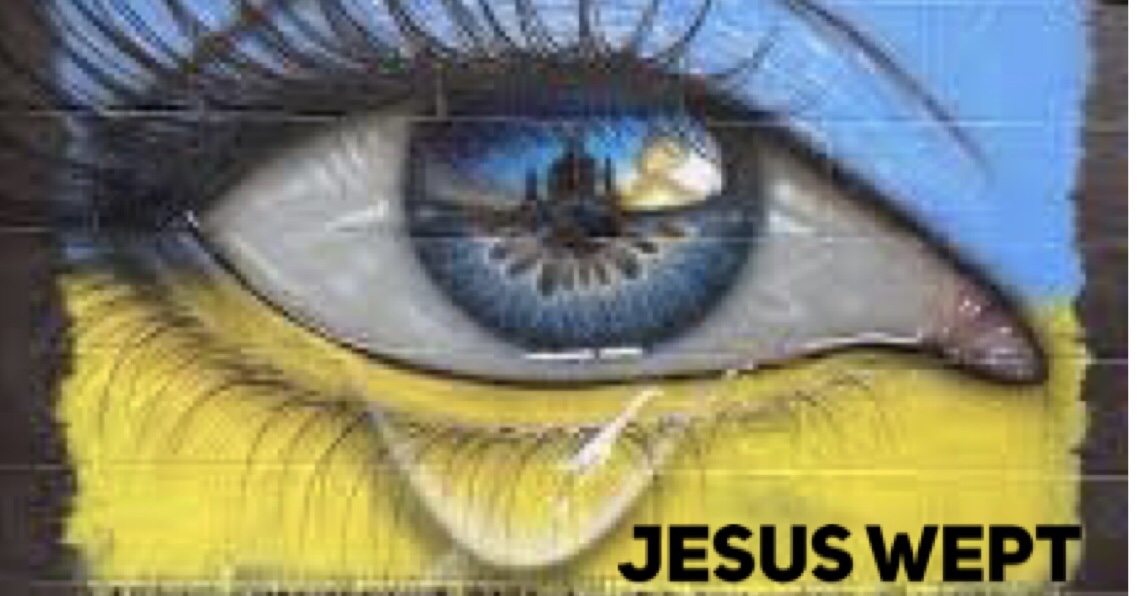


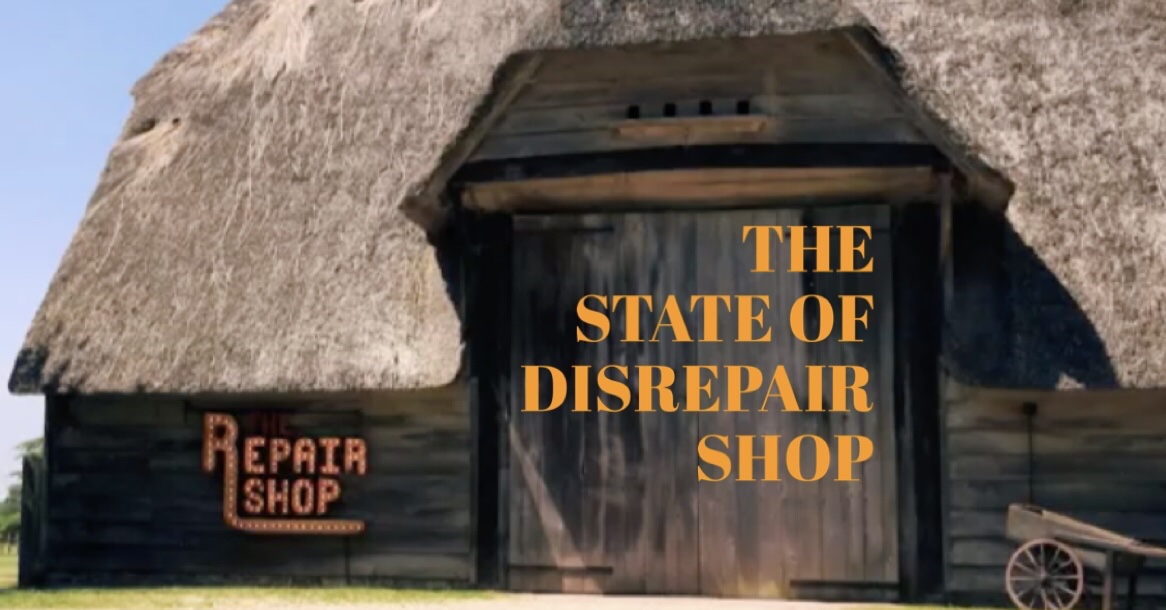


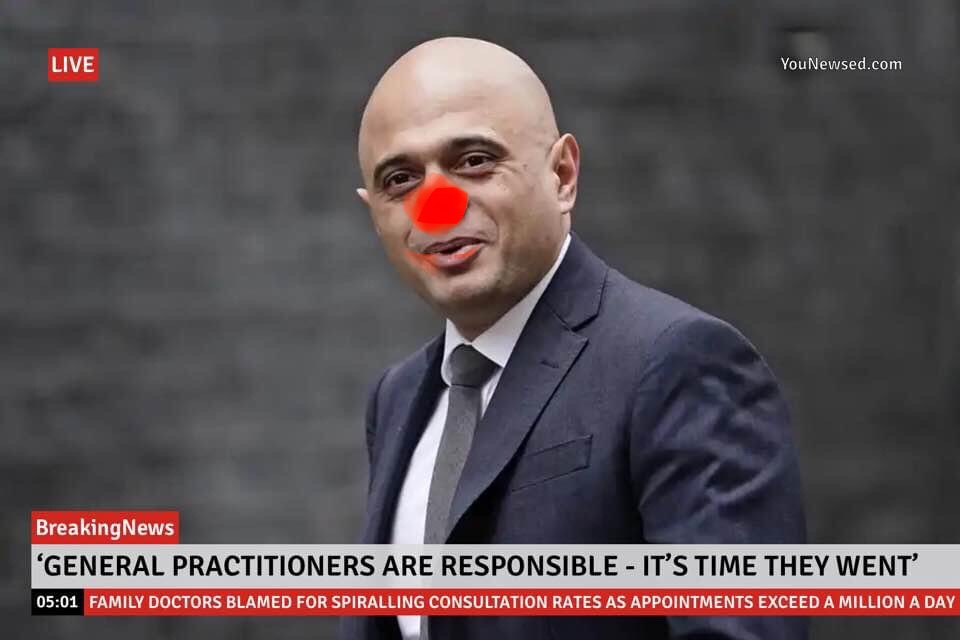



 Some musings