Scrooge had not been asleep long before he was woken once more. The old Grandfather clock that stood on the landing struck two and as it did so, his bedroom door opened once again and a woman entered. Like the Ghost of Cricket Past, she too was carrying a cricket back but, unlike her predecessor, she was dressed in brightly coloured clothing and was sporting a cricket helmet.
‘Well hello there!’ the spectre said cheerfully ‘You must be Mr Scrooge!’
‘And you, I presume, must be the Ghost of Cricket Present’, replied Scrooge,
‘I am indeed’ the Ghost confirmed before proceeding to explain to Scrooge that she didn’t have a great deal of time to spend haunting as she was keen to get back home to watch the cricket highlights which were being shown that evening on terrestrial television although not until three o’clock in the morning. ‘But beggars can’t be choosers’ she continued, ‘what with the spiralling cost of dying, a Ghost’s wages, especially one of the female persuasion, are no longer sufficient to justify a subscription to that satellite sports channel which has a virtual monopoly on the broadcast rights for live test cricket. So chop, chop let’s get going!‘
Scrooge had been looking forward to more spectral flight and was a little disappointed when the Ghost of Cricket Present pointed out that such activity was something she was no longer able to offer.
‘As with much of modern life, there is no time now for such romantic notions. It’s all too expensive you see and one must always have an eye on the bottom line’.
And with that the Ghost of Cricket Present pulled out a mobile phone and called for an Uber. It was though, no ordinary Uber, for not only did it arrive immediately it was also able to transport them instantly to a cricket ground where a T20 game was being played.
Scrooge and the spirit got out of the car and made their way to a pair of seats that had been reserved for them at the back of a packed stand. Sat next to them was a family made up of Mum, Dad and a couple of young children. In the row in front were six or seven lads all of whom had clearly been drinking heavily for some time. And the more they drank the more fruity their language became. Soon the parents of the young family, who had paid a not inconsiderable sum of money to be there, felt they could no longer stay seated where they were.
On the other side of where Scrooge and his ghostly companion were sat, a couple were discussing the match and commenting on how the game, though entertaining enough, was like almost every game in the shortest format, characterised as it was by a relentless pursuit for runs from the very first ball of the innings.
‘It’s ironic when you think of it’ said one of the pair, ‘in trying to make the game more exciting, they have succeeded in making it only more boring.’
The man who was speaking was interrupted when a T-shirt, emblazoned with the name of one of the match sponsors, struck him smack in the face. After taking a moment to recover, the man continued. ‘And is it because of an inherent lack of confidence in the format itself that the organisers of these games feel they have to try and maintain our interest by blasting out loud music, sticking a camera in our faces in the hope we’ll want to perform, or imagining we are somehow excited at the prospect of wearing a T-shirt promoting a company we’ve never heard of?’ Unrolling the t-shirt which had fallen into his lap, the spectator held it up for his companion to see. ‘I mean, who on earth wants to walk around advertising ‘KP Lavatorial Cleaning Services?’
As the game proceeded in a way that few would recall with any clarity in years to come, Scrooge and his spirit guide made their way back to the Uber and were transported to another game. This time the crowd, that was healthy but far from packed, was gathered to watch a match played over 50 overs. As he took his seat Scrooge noticed the same young family he’d seen at the T20 game and noticed now that the Father was none other than his personal assistant Bob Cratchit. The children were asking where all their favourite players were and Bob and his wife were having to explain that none of them were playing as they’d all been picked to play for other made up teams that nobody really cared about in a competition that no one really wanted.
Scrooge enjoyed watching a few overs of the game before the Ghost of Cricket Present ushered Scrooge back to the car and the driver sped them away to yet another game. This time the crowd was smaller but, as the four day game that was being played proceeded, Scrooge noticed how spectators who had previously been strangers struck up conversations with one another and expressed both real interest and real knowledge in the game. The home team players were held in high affection by the crowd but those on the opposing team were greatly appreciated too. Everyone watching seemed content to let the game evolve over time and, though to the casual observer the game may sometimes have appeared slow, Scrooge recognised that as the game ebbed and flowed, it did so in ways that made it infinitely more interesting than anything else he’d seen during his time with the spirit who was herself also watching the match intently by his side.
It was almost time the Ghost of Cricket Present to draw stumps on her time with Scrooge but before she did so, there was something else that she wanted to show him.
‘Follow me’, she said and headed away from the boundary edge towards a building situated behind all the stands. Scrooge followed her as she made her way through the glass doors of what was clearly a cricket museum. ‘You see, Mr Scrooge, I may be the Ghost of Cricket Present, but who I am is made up of those who have gone before. Cricket has a history, a history that is important and needs to be preserved, in part by preserving the traditions of the past.’
Scrooge looked around him and saw bats and balls employed by former cricketing stars, scorecards of famous victories the club had enjoyed in years gone by and no end of cricketing memorabilia that made the past almost tangible. Scrooge went to pick up a framed shirt once worn by one of his own heroes, back in the days when he was at school, but as he did so his surroundings began to blur and he found himself back in his bedroom once more.
Too caught up in thinking about what he’d seen thus far and not a little anxious about what still might befall him before the night was through, Scrooge sat on his bed and waited for the final visitor of the night. He hoped the Ghost of Cricket Present had made it home in time for the highlight package she’d wanted to watch and imagined that it would be more enjoyable than what he would soon have to endure. He wouldn’t have long to wait for it was nearly 3 am.
To be continued…
To read ‘A Cricket Christmas Carol: Part One’, click here
To read ‘A Cricket Christmas Carol: Part Two’, click here
Scrooge woke in a cold sweat and sat bolt upright in his bed. This was not unusual for, in recent weeks, the intense criticism that had been consistently levelled at him for his insensitive attempts to reorganise county cricket had frequently disturbed his sleep. However, his thoughts of how he might best silence his critics, were soon diverted when, at one o’clock precisely, the door to his bedchamber creaked open and a strange looking fellow crept into the room. He was wearing white flannel trousers and a bright white shirt, over which he sported a cream coloured, hand knitted, Arran sweater complete with coloured stripes around the cuffs and V- shaped neck. On his head was a floppy sun hat and In his hand he held a willow bat that had clearly seen many years of heavy use.
‘Are you the spirit, sir, whose coming was foretold me?’ asked Scrooge.
‘Indeed I am,’ the apparition replied. ‘I am the Ghost of Cricket Past and I am here to show you what cricket once was. But we must fly, we haven’t got long’
The spirit held out his hand and Scrooge took it instinctively.
‘I warn you though Ebenezer,’ the spirit began, his eyes twinkling as he spoke. ‘generally I’m asked to field down at Third Man on account of my propensity to drop things. So please, do make sure you take a good hold of me!’
The spirit chuckled to himself and Scrooge was left unsure as to whether or not his new acquaintance was joking. Even so, Scrooge tightened his grip and, as he did so, felt himself being lifted, as if weightless, from his bed. The spirit led him to, and then through, the wall of the bedroom and out into the night air. As they flew over hills and dales the sky grew gradually lighter and the air temperature became steadily warmer until eventually they arrived at a cricket ground situated in the park of a seaside town.
‘Where are we?’ Scrooge asked the spirit as they landed and sat down on two of the many deckchairs that were scattered around much of the boundary edge.
‘This is Clarence Park in Weston-super-Mare.’ said the spirit, ‘and that, Ebenezer, is none other than Mr David Steele’.
The Spirit was pointing to a grey haired man who was patrolling the cover boundary just in front of where they were sitting. The hero of the previous year’s Test matches against the West Indies turned to smile at Scrooge before focusing intently on his Northamptonshire team mate Sarfraz Nawaz who, even now, was running in to bowl to the Somerset captain Brian Rose.
And suddenly Scrooge remembered. This was the first game of cricket he’d ever attended. It had been played back in 1977 and the day of his attendance had been particularly notable as it had been the one in which Rose had made his highest first class score, a magnificent 205. But the day had been special for so much more than a single players personal achievement. Scrooge remembered how excited he’d been to see so many international players, back in the days when they play for their counties between Test matches, even turning out on the day after such an international match had concluded. Other Test players that had been on show the day that Scrooge had first experienced the joys of county cricket included Peter Wiley, Wayne Larkins and Brian Close, not to mention, of course, Viv Richards and Ian Botham.
‘That was a wonderful introduction to cricket,’ Scrooge said wistfully to the Spirit who was now indicating to him that it was time they moved on. ‘Those were such happy times’.
The Spirit took hold of Scrooge’s hand again and before long they were flying through the sky once more. Soon though they touched back down again, this time on the outfield of the county ground in Taunton. It was during the tea interval and sat on a chair that had been placed in the middle of the pitch was a man for whom scores of people were queuing to meet, each hoping to exchange a few words or, by proffering before him their autograph books, becoming the proud owner of his much prized autograph.
As Scrooge looked on he thought they was something familiar about one of the children who was waiting in line. In his hand the boy held a book authored by the man who was sitting in the chair. Scrooge then recognised that the boy he was looking at was himself and he remembered how he had been a little embarrassed when, having been asked by Mike Brearley if he’d enjoyed the book, the young Scrooge had said that his favourite chapter was the only one in the book not actually to have been written by the then England captain.
‘Those were the days’, said Scrooge. ‘Back then you felt so much more connected to the England team than you do now. It was such a privilege to be able to see the likes of David Gower, Bob Willis and Derrick Randall play for their counties. It’s such a shame the youngsters don’t get those same opportunities today’.
Yet again Scrooge felt his hand being taken by the Spirit and soon the scene of his idyllic childhood was fading from sight. Moments later Scrooge became aware that he had been transported back to his home and was once again confined within the four walls of his dreary bedroom.
The time had come for Ghost of Cricket Past to leave. The spirit tried to explain to Scrooge that he’d soon be visited by a second spirit but Scrooge was too excited to pay him any attention. Instead he was busy looking for the autograph book he had had as a child and which he was sure was now gathering dust under his bed. Eventually he found it, hidden in a box along with old Playfair Annuals and an A4 file of cricketing photographs culled from the sports pages of newspapers back when they used to have full reports of every county game. Many of the faded photographs had equally faded autographs scrawled upon them. Re-emerging from beneath his bed, Scrooge stood back up and brushed the dust off his pyjama bottoms. He turned round hoping to show off his signature of Graham Gooch and only then realised that the Ghost of Cricket Past had left. Scrooge was alone again, save that is for his memories. But oh what marvellous memories they were.
Scrooge slipped happily back into bed and fell swiftly asleep hoping to dream of summers long past. But he was to be disappointed, for soon he would have to experience a less pleasant but much more present reality.
To be continued…
To read ‘A Cricket Christmas Carol: Part One’, click here
To read ‘A Cricket Christmas Carol: Part Two’, click here
‘All you need is love, All you need is love, All you need is love, Love Love is all you need’
So the Beatles sang, and so the theory goes. But what exactly do we mean when we say ‘All you need is love’? Do we mean that we simply need to show love, or is it just that we need to be the recipients of love? The answer of course is both, we need to love and be loved which begs the question as to how successful we actually are in these twin endeavours.
On one famous occasion Jesus summarised God’s law with these words: ‘You shall love the Lord your God with all your heart and with all your soul and with all your mind. This is the great and first commandment. And a second is like it: You shall love your neighbour as yourself.’ [Matthew 22:37-39]. We could, perhaps, paraphrase Jesus’ words like this: All you need to do is love. Whilst some may question our need to love God, most perhaps would agree that we should, ideally ‘Do unto others as [we] would have them do unto [us]’. The problem however is that , however much we might like to agree with such a notion, nobody is wholly successful in living in such a way. If then we want to get into God’s good books we had better not rely on how well we love others, for not even the kindest person that ever there was measures up to the standard of love that God demands of us. As such we have all failed to keep God’s law.
So what is the answer if the love we show to others is not enough? What if we need more than the love we have to give? The answer I would suggest is this: that all we need is love to be shown to us by one who is truly loving.
The focus of the third Sunday in Advent is love. but what is love and where is it found?
When we talk of love, more often than not we tend to focus our thinking on the one who is being loved rather than on the one who is doing the loving. That is, when we say that somebody is well loved, we tend to be making a comment about how wonderful that person is perceived to be rather than how wonderful it is that such an individual is shown love in the way that they are by another.
This is largely because we live in a world where love and acceptance have to be earned and, as a result, too many of us feel burdened with a need to promote ourselves in an attempt to be constantly admired by others. The truth though is that, in a world where there are far too many who do not know what it is to be loved at all, none of us need universal adoration. Neither are we happier or healthier when we are constantly striving to convince others that we are somehow worthy of their love.
We need to learn that, rather than being admired by strangers on account of our striving to be somebody we’re not, it is better to be loved by somebody who knows what we’re really like and continues to love us just the same. Because love that is conditional on performance is not real love at all and having to constantly portray ourselves as better than we really are gets in the way of receiving the unconditional love that we all so long for and thus deprives us of the joy of knowing true love and acceptance.
For us to be truly loved, therefore, we need someone who is truly loving, one who, by loving us enables us to become more lovely. We do not improve by being constantly criticised for what we fail to achieve and having acceptance denied us until we perform better. On the contrary, it is only by being accepted that we are motivated to grow into the human beings that we would like to be.
So we and those with whom we live alongside, need to be kinder to one another. We need to stop insisting that we must all be more than we actually are. But as I have already suggested none of us are up to the task of giving such unconditional love.
If then we can not find such a love in ourselves, where might we find it? 1 Corinthians 13, a passage frequently read at weddings, gives us some pointers:
‘Love is patient and kind; love does not envy or boast; it is not arrogant or rude. It does not insist on its own way; it is not irritable or resentful; it does not rejoice at wrongdoing, but rejoices with the truth. Love bears all things, believes all things, hopes all things, endures all things. [1 Corinthians 13:4-7]
True love, then, is patient towards those whose behaviour requires patience to be shown and is kind towards those who do not deserve kindness. True love bears what is uncomfortable to carry, hopes for what is not currently present and endures what has to be endured.
Only Jesus loves like this. And his perfect love was such that it endured even a cross. [Hebrews 12:2]
As somebody who is far from perfect, Jesus’ love is the kind of love I need. I believe that God loves me, not because I am lovely but because he is loving. I believe the glorious truth that, in Christ, I am accepted by God and, as a result of the indwelling Holy Spirit, I consider that there is hope that I might yet become the person that I am called by him to be, someone who is a lot more like Jesus than I currently am. Only then will I be fully able to love as God demands.
Because, whilst it is true that we all, created as we are in the image of God, have some capacity to love as God does, we are nonetheless, because of our fallen nature, unable to love as fully as we ought. My selfishness and pride invariably creep in and spoil anything of merit that I may achieve. I am grateful therefore to be married to a wife who graciously puts up with me the way she does.
Now don’t get me wrong, I believe that, just as a good Father is pleased with his child’s efforts to please him, so God delights in my efforts to try to please him. Furthermore, as the good Father I consider him to be, I believe he withholds none of his love when my efforts fall short of the mark. Even so, this does not change the fact that I ought to be more loving than I actually am. But if I am to have a perfect love for anyone else, a love that is not in the least dependent on the merits of the one I show love towards, a love that bears, hopes and endures as God has had to bear, hope and endure with me, it will require a love that originates from somewhere other than within myself. It will need a love that originates from the source of all love, namely from God himself, the one who IS love. [1 John 4:16].
The scriptures remind us, ‘In this is love, not that we have loved God but that he loved us and sent his Son to be the propitiation for our sins.’ [1 John 4:10-11]. That is, Christ died for me, not because of my merits but because of my need, not because of his obligation but because of his kindness. Only by understanding this and realising my dependence on the one who showed me the love, the one who, though perfect, died in my place for my imperfections, can I hope to show genuine love towards others.
Even so, I ought to love, because, as the scriptures go on to say, ‘beloved, if God so loved us, we also ought to love one another’. [1 John 4:10-11]. Not in order that I might be loved, but rather on account of my being loved already. This is, of course, something that I sadly still fail to do the way I should but, even so, the promise remains ‘that he who began a good work in [me] will bring it to completion at the day of Jesus Christ’ [Philippians 1:6]
How then can we love others more? By first resting in the love that God has shown to us. ‘When I am weak, then I am strong’, [2 Corinthians 12:10]. Just as those who realise how much God has forgiven them know what it is to love him more, [Luke 7:47], so too those who recognise the depths to which God has loved them can begin to truly love others, not on account of their merits, but on account of their need.
Earlier I said that not even the kindest person that ever there was measures up to the standard of love that God asks of them. Of course there was one – and his name was Jesus. So I am grateful that ‘love came down at Christmas’, that Christ Jesus, came into the world to save, not those who deserved to be saved, but sinners – like me. I am grateful that I am well loved by Jesus. I am grateful that God’s love is patient and kind, that his love does not envy or boast. I am thankful that his love bears all things, believes all things, hopes all things, and endures all things.
And above all I am grateful that God’s love will continue, throughout Advent, on through Christmas and the New Year. I am grateful that, come what may, God’s love never ends. [1 Corinthians 13:8].
All I need is his love – and his love is all I need.
To read “Why do bad things happen to good people – a tentative suggestion”, click here
To read “Luther and the global pandemic – on becoming a theologian of the cross”, click here
To read ‘Covid -19. Does it suggest we really did have the experience but miss the meaning?’, click here. This is a slightly adapted version of “T.S. Eliot, Jesus and the Paradox of the Christian Life’.
To read ‘The “Already” and the “Not Yet”’, click here
To read ‘The Sacrifice of Isaac – Law or Gospel?’, click here
To read ‘on being confronted by the law’, click here
To read, ‘The Resurrection – is it Rhubarb?’, click here
To read “Waiting patiently for the Lord”, click here
A CRICKET CHRISTMAS CAROL: A GHOST STORY Part One: in which Scrooge plans the demise of county cricket
Old Marley was dead. As dead as Old Father Time’s great grandfather and, if Ebenezer Scrooge had anything to do with it, as dead as county cricket would be in just a few short years.
It was late afternoon on Christmas Eve and Scrooge was sat at his desk in a large office, one of many in the building that housed the ECB. Ordinarily he was not one to find any pleasure from the festive season but a smile was now beginning to spread across his face as he typed the concluding sentence to his manifesto for the future of domestic game. His work finished for the afternoon, he printed the completed document and placed it in his brief case.
Scrooge was the one who had been responsible for introducing ‘The Hundred’, the pernicious competition that had had sickened so many genuine cricket supporters. It had been injurious to the health of many county cricket clubs too and Scrooge hoped that his latest suggestions would be the final nail in their coffin. For a brief moment he thought about his predecessor who had died several years previously. Jacob Marley had been someone who had always delighted in the longer formats of the game and Scrooge knew that, if it was possible for one already dead to be described as such, Marley would be mortified by what he was now proposing.
At that moment there was a knock on the door and Scrooge looked up to see Mr Robert Cratchit, his personal assistant, standing in the open doorway. He was wearing a novelty Christmas jumper which only served to darken Scrooge’s already black mood.
‘What is it Cratchit?’, Scrooge snapped. ‘Can’t you see I’m busy?’
‘It was just that I noticed that you didn’t join us for a drink to celebrate the festive season so I brought you a little of what was left over’, Cratchit replied, offering Scrooge as he did so what he had been holding in his hands, namely a box of mince pies and a tube of Prosecco and pink peppercorn Pringles – the latter, notwithstanding the impressive alliteration, surely an ill advised flavour choice regardless of the time of year. ‘Merry Christmas, Mr Scrooge!’
‘Bah, humbug!’ muttered Scrooge to himself as he got to his feet. ‘Every idiot’, he continued, ‘who goes about with ‘Merry Christmas’ on his lips should be forced to explain the Duckworth Lewis Method to a group of disgruntled Yorkshire fans who can’t understand how they have just lost to Lancashire despite having scored more runs than them in less overs!’.
And with that Scrooge grabbed his coat and brief case and, without so much as a by your leave, strode past Cratchit and out of the office.
***
Scrooge made his way to the car park and from there drove the few miles to his home, an old house that he’d bought some years before. Enveloped by fog, Scrooge approached the front door. And then, as he fumbled in his pocket for his key, Scrooge watched as the door knocker, usually a golden yellow colour not dissimilar to that of a Wisden Cricketer’s Almanack, transformed into a garish mix of pink and green, a colour combination so unpleasant that Scrooge was compelled to look away. After a few moments, the nausea he had felt having abated, Scrooge managed to summon the courage to gaze once more upon the marred entrance to his home and was relieved to find that the door knocker had reverted to its normal hue. Scrooge thought he must have imagined the whole affair, reasoning that nobody in their right mind would come up with such an atrocious colour mix.
Scrooge entered the house and made his way to the kitchen. Never one to spend longer on something than was strictly necessary, Scrooge took a minute or two to heat up the ready meal he had bought for his evening repast. Once cooked he took it with him to the lounge and got ready to eat it in front of the television. He briefly considered watching a film but, recognising the shortness of his attention span, chose instead to flip through the TV channels, until he eventually came across a festive edition of ‘Pointless’ and thus found himself trying to think of the name of any England batsmen who had scored an Ashes century in a Boxing Day test.
And it was then that Scrooge heard something the like of which he’d never heard before, a strange ethereal voice that seemed to Scrooge to be emanating from a world that was not the one to which he was accustomed.
‘Well, for a start’, the voice was saying, ‘there’s Chris Broad’s 112 at the MCG in 1986’.
Scrooge turned his head and froze in fear as he noticed the ghostly yet unmistakable figure of Jacob Marley.
‘Though why anyone should think such essential information ‘pointless’ is simply beyond me!’ the spirit continued, moving slowly out of the shadowy corner of Scrooge’s lounge dragging behind him as he did so, what appeared to be cumbersome segments of boundary rope.
As Marley drew closer to Scrooge he noticed a look of utter bewilderment on Scrooge’s face and explained how, whilst it was more traditional for those in the afterlife to be burdened with heavy metal chains, an exception had been made in Marley’s case in view of his lifetime commitment to the game of cricket. Marley paused a moment and took on an air of contemplation. ‘Death would be so much easier’, he remarked wistfully, ‘if only they could be replaced with those triangular foam wedges they use today.’
Scrooge, nothing if not a man of reason, rose up from his chair and spoke to the spectre in an accusatory tone.
‘I don’t believe in you!’, he said, refusing to accept what his senses were making all too plain.
‘Well as you should well know, Mr Scrooge, truth isn’t determined by what you believe, as is all too apparent given your seeming lack of belief in that most fundamental of realities – specifically the importance of cherishing those long observed cricket traditions that you hold in contempt. But the importance of such things is real, as I am too. And to convince you of this you will be haunted by three spirits that will teach you all you need to know to save the game of cricket. Expect the first when the clock strikes one.’
And with that the ghost of Jacob Markey departed, groaning incoherent sounds of lamentation and dragging with the boundary ropes with him. For a few minutes Scrooge stood motionless not knowing what to make of what he’d just experienced but eventually concluded that the only possible explanation was that he’d been suffering from a severe case of indigestion on account of the ready meal he’d eaten being past its sell by date.
And so, convinced that the night would pass uneventfully, Scrooge changed into his pyjamas, slipped under his duvet and drifted off to sleep.
It was back in the 1970’s that John Lennon first urged us all to imagine that there was no heaven. It would be easy, he said, if only we’d try. In the week that it has been reported that, in England and Wales, those who identify as Christian are now in the minority, it would seem that many have followed the former Beatle’s advice.
But for me, despite it’s pleasant melody, ‘Imagine’ is a deeply depressing song for, with no heaven to look forward to, all that we are left with is what we have at present. Now don’t get me wrong, we all need to try to be kinder to one another. This week I watched Mark Gatiss’ superb stage adaptation of Charles Dickens’ ‘A Christmas Carol’ and was reminded again of how the weakest in society need the kindness of the strongest if they’re to survive in what is often a hostile world. But I suspect that all of us are weaker than we would sometimes care to admit, and none of us are always as kind as we need to be to make the world a genuinely safe place to live. And so, left to our own devices, any philosophy that encourages us to believe that we can bring about a perfect society by our own efforts, ultimately becomes, not only another in a very long list of ‘just try harder’ religions, but also an experiment in altruism that is simply bound to fail. I don’t know about you but, when I look at the current state of the world in which we live, I can’t help thinking that it’s time to give up trying to go it alone – I for one need the hope of outside help and the prospect of a place to live better than I’ve ever known before.
Of course my hoping for heaven doesn’t mean that heaven exists. Nothing becomes true simply because it is imagined to be so, no matter how strongly some claim the contrary. Likewise, whether something is true or not is not determined by how many people believe it. Rather than being determined by what is currently most popular, truth is determined by the facts.
And so it is with Christianity. The truth of Christianity depends, not on any warm feelings that I may get from considering a God of love but rather on the veracity of Christianity’s historical truth claims. To be specific, Christianity stands or falls on whether or not Jesus Christ died on a cross, was buried, and, three days later, rose again from the dead. If these things did not take place then I am deluding myself and, irrespective of how comforting I may find my Christian beliefs, I am wasting my time attending church each Sunday morning. On the other hand however, if the resurrection is true, then it really does change everything and gives us all good reason to confidently hope for that brighter future we all so long for.
Christianity is unique amongst the worlds religions in that it makes such historical truth claims, claims which not only can be tested but which stand up to intense scrutiny*. For me, therefore, the death and subsequent resurrection of Jesus is not so much a matter of faith but more a matter of historical record, attested to by reliable eye witnesses who were present at the time. Faith then comes in when we believe as true what God says about the meaning of those events and, as a result, entrust our lives to Him.
So what is the meaning of the death and resurrection of Jesus Christ? Last Sunday was the first Sunday in Advent when Christians traditionally remember the hope that they have in Christ. Today, the second Sunday in Advent, is a day when Peace is the traditional focus. And Peace is one of the many benefits that the death and resurrection of Jesus brings about.
As we are all too well aware, war is very much part of life, with numerous conflicts currently taking place right across the world. Jesus himself said that in these days there would be ‘wars and rumours of wars’ [Matthew 24:6]. But the Bible also speaks of a time when all conflicts will end, when nations will ‘beat their swords into ploughshares and their spears into pruning hooks’. Furthermore we are assured that a day is coming when ‘nation shall not lift up sword against nation, neither shall they learn war anymore’, [Isaiah 2:4]. One day there really will be peace on earth.
But this isn’t the only peace that the Bible speaks of. More significantly we are all offered individual peace terms with God, terms by which all hostilities between ourselves and God come to an end. And amazingly, despite it being our rebellion which has soured the relationship between ourselves and our creator, rather than something being asked of us to put things right, it is God himself who fulfils all the requirements of the peace treaty.
For on the cross, our sins were paid for when Jesus took there the punishment we deserved. As the prophet Isaiah makes plain
‘…he was pierced for our transgressions; he was crushed for our iniquities; upon him was the chastisement that brought us peace, and with his wounds we are healed.’ [Isaiah 53:5]
Because of the cross, all the causes of enmity between God and man have been dealt with. Because of the cross the war that raged between us is over. Because of the cross we really can know peace with God.
What Jesus suffered for us was truly awful. Even before being nailed to piece of wood and left to die he suffered horrendously at the hands of those whose true nature was being given free reign. As Matthew records
‘…the governors soldiers took Jesus…They stripped him and put a scarlet robe on him, and then twisted together a crown of thorns and set it on his head. They put a staff in his right hand. Then they knelt in front of him and mocked him. “Hail, King of the Jews!” they said. They spat on him and took the staff and struck him on the head again and again. After they had mocked him, they took off the robe and put his own clothes on him. Then they led him away to crucify him’ [Matthew 27:27-31]
Paradoxical though it undoubtedly is, that such violence should be the path to peace is nothing short of astonishing. Even so, that is what it took. Furthermore it was even for those who inflicted such suffering on Jesus that that peace was secured. For even as he hung on the cross and yielded up his life, Jesus prayed for those who were treating him with such disdain. ‘Father, forgive them’, he said, ‘for they do not know what they are doing’. [Luke 23:32-34].
And we too can be included in his prayer. Hear God’s words spoken to you through the Old Testament prophet Isaiah:
Comfort, comfort my people, says your God. Speak tenderly to Jerusalem, and cry to her that her warfare is ended, that her iniquity is pardoned. [Isaiah 40:1-2a]
These are indeed comforting words, spoken by ‘the Father of mercies and the God of all comfort’ 2 Corinthians 1:3]. And they are words that were later reinforced by the apostle Paul when he wrote that
‘there is now no condemnation for those who are in Christ Jesus’. [Romans 8:1].
No matter the depth of their wrongdoing, those who accept God’s terms of peace, those who surrender to the one who overwhelms them with love, those who are gladly conquered by one so much greater than they are themselves, they are the ones who, because of the cross, are completely forgiven, they are the ones who really can know ‘the peace of God that passes all understanding’. [Philippians 4:7]. And what a peace it is – one that will never ends and one that sustains in even the most unsettling of times.
And so, as Christmas draws nearer on this, the second Sunday in Advent, all I am saying is, like John Lennon before me, ‘Give peace a chance’.
*The evidence for the resurrection is well documented and a couple of links follow for those interested can be found below:
To read “Why do bad things happen to good people – a tentative suggestion”, click here
To read “Luther and the global pandemic – on becoming a theologian of the cross”, click here
To read ‘Covid -19. Does it suggest we really did have the experience but miss the meaning?’, click here. This is a slightly adapted version of “T.S. Eliot, Jesus and the Paradox of the Christian Life’.
To read ‘The “Already” and the “Not Yet”’, click here
To read ‘The Sacrifice of Isaac – Law or Gospel?’, click here
To read ‘on being confronted by the law’, click here
To read, ‘The Resurrection – is it Rhubarb?’, click here
To read “Waiting patiently for the Lord”, click here
Now the cricket season’s over, And the football’s on our tellies, And with outfield’s under water Any fielders, they’d need wellies So there’ll be no pitch inspections No the umpires won’t be seen Cos light meters they’re not needed When it’s dark by four fifteen
The weather’s too inclement now For games played dressed in white And players playing in the snow They’d simply fade from sight And cricket grounds that do not have, For covers, enough riches Will face, come spring, what Boycott loves, Those tough uncovered pitches
When Christmas comes the days are short And temperatures grow colder But I’ve decided that this year With Santa I’ll be bolder So when on Christmas Eve he asks What gift I’d most adore I’ll answer him politely ‘Please… …just scrap the sixteen-four!’
[The photo above is of Plush Cricket Club in Dorset]
Other cricket related posts, starting with ill advised attempts at poetry!
To read ‘How the Grinch Stole from County Cricket – or at least tried to’, click here
To read ‘How Covid-19 stole the the cricket season’, click here
Conscious of having written too many negative blogs of late, here is a desperate attempt to be more positive! Just after midnight on New Year’s Day 2019, I posted a blog in which I stated that the job was becoming harder by the year, that bad times were unquestionably ahead and that during the next 12 months life would sometimes be difficult. I also predicted there would be times when, in the face of overwhelming demand, some of us would hold our head in our hands and wonder if we could keep on going. But the point of that blog was to suggest that, amidst all the very real problems, there would be good times too, some of which I listed. I thought it would be good, if even for just one day, to look forward to all those good things that the year would bring.
Nearly four years on, my prediction of how things would get worse was right but I hadn’t expected them to have worsened to the degree they have. But in an attempt to remind myself that there are still positive moments in general practice, here is my list of things that I was looking forward to on January 1st 2019, with a tick next to those that I have experienced this past year. I hope you can tick a good number too!
Here’s to the young couple who, consulted together, excited about their expecting a baby for the first time. ✅
Here’s to the anxious parent we were able to reassure that their child hasn’t got meningitis and is going to be just fine. ✅
Here’s to the depressed patient, who after months of support, we saw begin to smile again. ✅
Here’s to the early diagnosis we made in a patient who went on to make a full recovery. ✅
Here’s to that restorative cup of tea the receptionist brought when we were running an hour behind.✅
Here’s to the laughs we shared with colleagues – and to those we shared with patients.✅
Here’s to the advice and support we received from our secondary care colleagues.✅
Here’s to the blood sample which, allegedly, no one was able to get as well as we could. ✅
Here’s to the ‘thank you’ we received from a genuinely appreciative patient.✅
Here’s to the empty waiting room we were pleased to see at the end of the day.✅
Here’s to the practice nurse who managed our patients with chronic disease better than we ever could and who reapplied a dressing we’d just undone, and here’s to the HCA who squeezed in an ECG because they were only too happy to help.✅
Here’s to the patient we reassured wasn’t ias mad as they thought they were. ✅
Here’s to the prescription we wrote that the pharmacy had in stock and which actually did make our patient better.✅
Here’s to the patient we encouraged back to work.✅
Here’s to the couple who, for want of knowing where else to go, did us the honour of coming to see us because they thought we might just be able to help them sort out their differences.[Not this year for me]
Here’s to the practice manager who solved problems before we even knew they existed. Here’s to the patient who will not have a stroke because of our urging them to stop smoking twenty years ago. [Not possible to say for sure – but perhaps ✅ ✅ ✅
Here’s to the patient who we were able to tell that the scan that they were so concerned about was normal. ✅
Here’s to the lonely who found in us a friend.✅
Here’s to the colleague who helped us out when we were struggling.✅✅✅
Here’s to the terminal patient we enabled to stay at home to die.✅
Here’s to the secretary who transformed our mumbled dictation into a letter that made sense and who understood referral pathways however many times they changed. ✅
Here’s to the prompt emergency treatment we gave ensuring a patient arrived safely at hospital. [Can’t recall a particular instance of this for me this year]
Here’s to the one with whom we simply sat and listened – the one whom we were privileged to be allowed, just a little, into their sadness.✅
Here’s to those who passed their CSA and welcomed welcomed into the practice with open arms.
Here’s to those who, at the end of a hugely worthwhile career characterised by care and compassion, reached retirement and were sorely missed.✅ ✅
Here’s to those times when we somehow found ourselves bringing comfort, offering hope, and sharing joy.✅
Here’s to the times we will knew that, against all the odds, we really made a positive difference.✅
Here’s to when we were glad we did a little more than was required of us just because we could.✅
Here’s to the job that is unlike any other and still has the capacity to be among the best in the world. [Sadly I fear this may no longer be the case]
I’m well aware there is a much longer list that could also be written of what is bad in general practice, but, as we approach what is likely to be a very hard winter, perhaps it’s still worth reflecting that there are still positives
I at least need to be reminded of this. Because not absolutely everything about General Practice is bad.
To read my original post, ‘Here’s to 2019’, click here
Related blogs regarding the difficulties with the NHS:
Life is full of ups and downs, happinesses and sadnesses, good times and bad. In each passing year there is ‘a time to weep and time to laugh’ [Ecclesiastes 3:4] and this year has been no exception, a truth epitomised by the way it has included both the Queen’s Platinum Jubilee, complete with that joyous film of her taking tea with Paddington Bear, and then, just a few weeks later, a period of national morning culminating in the solemn state funeral that followed her death.
The Queen and Paddington taking tea together The Queen’s coffin lying in state at Westminster Hall
We can not deny the existence of sadness but even in the sadness we cannot deny the existence of things that make us happy. Perhaps it’s true to say that we need the pain of sorrow to enable us to know what happiness really is, just as sorrow itself, if it is to be fully felt, requires the memory of the temporary nature of happiness. If, then, we are to be happy, it must be alongside our sadness and we dare not wait for the absence of sorrow before allowing ourselves to be happy. It is not that we can not be happy because we know sadness, nor that we can not be sad because there are things to be happy about. Paradoxically, we can be happy and sad at the same time. We can smile – even as we cry.
Today marks the start of the church calendar and as has been the case in recent years, the beginning of Advent offers the opportunity to look back on 12 months that, whilst no doubt containing moments of happiness, have nonetheless been far from easy, characterised as they have been for many by sadness, suffering and death. This year, amongst many other tragic events, there have been earthquakes in Indonesia, China and Afghanistan, floods in Pakistan and Bangladesh and bush fires in Australia. Add to this the war in Ukraine, the current breakdown of public services and the worldwide economic downturn and the subsequent spiralling cost of living, and one can understand why, for some this year, Christmas feels more like an ordeal that has to be endured than an enjoyable celebration that is to be looked forward to with excited anticipation.
The aftermath of the Indonesian Earthquake Scenes of flooding in Pakistan
Even so, despite the genuine concerns of many, Christmas will soon be here and its true meaning remains unchanged. And so, despite the very early sadness, Christmas can still be celebrated this year no matter the circumstances that we will find ourselves in come December 25th.
Because at Christmas we recall the ‘good news of great joy’ that the angels brought to the shepherds concerning the birth of Jesus.
Traditionally the focus for the first Sunday in Advent is Hope. Many today will be hoping for a better future, for a time when their current sorrow will be over. The Christmas message brings with it that hope, hope of a joy that will last, not just for tomorrow but for all eternity. For, as we all so long for someone who can rescue us from the current chaos, the good news heralded by those angels that first Christmas is that Jesus is that someone, the saviour we all need, the one who ‘came into the world to save sinners’.
Because Jesus didn’t remain a baby lying in a manger. What began in the little town of Bethlehem led to a green hill far away where Jesus, having grown up and lived a perfect life, was crucified. And when he died on the cross he did so in our place, paying the penalty for all that we have done, and will ever do, wrong. And with our sins paid for, we can joyfully stand in the presence of the God who loves us so much that he allowed his own dear son to suffer and die on our behalf.
The Cross – from where all hope derives
And because of his subsequent resurrection, we can be certain that Jesus’ atoning sacrifice really does secure for us peace with God. And, as a result, despite the difficulties that 2023 will still no doubt throw up, we nonetheless can look confidently forward to that promised time when God will wipe away every tear from our eyes and death shall be no more.
Today is Advent Sunday, the beginning of advent and on Thursday many will start the countdown to Christmas by opening the first door of their advent calendars. But Advent is a time when we look forward to more than just Christmas. It’s a time when we look forward to celebrating not only Jesus’ birth but also his coming again, when those better days that we all so long for will finally fully arrive.
So in this season of Advent, let’s not give up hope. Let’s celebrate despite the sadness, because, for those who hope in Christ, better days really are on their way!
Other related posts:
To read ‘I’ll miss this when I’m gone’, click here
To read “Why do bad things happen to good people – a tentative suggestion”, click here
To read “Luther and the global pandemic – on becoming a theologian of the cross”, click here
To read ‘Covid -19. Does it suggest we really did have the experience but miss the meaning?’, click here. This is a slightly adapted version of “T.S. Eliot, Jesus and the Paradox of the Christian Life’.
To read ‘The “Already” and the “Not Yet”’, click here
To read ‘The Sacrifice of Isaac – Law or Gospel?’, click here
To read ‘on being confronted by the law’, click here
If there is one thing that is common to all patients that consult me, it is that they want things to be better for them than they currently are. They would like me to do or say something that would ease their pain, relieve their anxiety, alleviate their distress. They want me to change their future because their present is not to their liking. If on leaving my room they already feel better, it is simply because they have been given some hope that things will improve.
Hope. Patients need it – doctors and nurses need it – I need it. Hope keeps us going in the face of problems which seem insurmountable. Like Seligman’s dogs, who in his experiments on ‘learned helplessness’ were put in adverse situations they couldn’t change, without hope we become resigned to never ending difficulty and tend towards depression and passivity.
Jurgen Moltmann writes, “Present and future, experience and hope, stand in contradiction to each other”. He suggests that “hope is directed to what is not yet visible… and brands the visible realm of present experience…as a transient reality that is to be left behind”.
Some are uncomfortable with our constantly living in the hope of a better tomorrow. They suggest we spend either too much time living in the past, remembering what was, but is no longer; or too much time living in the future, hoping for that which is not yet. Bemoaning such behaviour, Blaise Pascal wrote “We do not rest satisfied with the present. We anticipate the future as too slow coming, as if in order to hasten its course; or recall the past, to stop its too rapid flight…We scarcely ever think of the present; and if we think of it, it is only to take light from it to arrange the future…So we never live, but we hope to live; and as we are always preparing to be happy, it is inevitable we should never be so.”
Pascal would, I think, have approved of mindfulness, the psychological process of bringing ones attention to experiences occurring in the present moment. Now, whilst mindfulness may have its place when we are overwhelmed by unnecessary anxiety concerning the future, grounding us, as it does, in the here and now and helping us appreciate what we have and can currently enjoy, if we imagine we can sort our very real problems by considering the intricacies of a tree, then surely we are mistaken. T.S.Eliot penned, “The knowledge derived from experience…imposes a pattern, and falsifies”. What we know from what we encounter is not enough to understand fully. We need to draw from outside of ourselves if we are not to be misled. The present requires the context given it by the past and is tempered by what is expected in the future. A powerful illustration of this is provided by John Piper. He asks us to imagine that, whilst walking through a hospital, we hear the screams of somebody in pain. He suggests that how we feel about what we hear will differ greatly depending on whether we are on an oncology ward or a labour ward. The future matters – it changes our present.
As a doctor, I am in the business of changing the future for our patients – offering a promise of a better tomorrow for those with whom I consult. I seek to envisage what currently can’t be seen and then endeavour to bring it into reality for them. Moltmann again: “Hope’s statements of promise…stand in contradiction to the reality which can at present be experienced. They do not result from experiences, but are the condition for the possibility of new experiences. They do not seek to illuminate the reality which exists, but the reality that is coming.” So, for example, when I issue a prescription for an antibiotic, it is the proffering of a hope, that the cystitis will come to an end. It’s a promise that what is not true now, will shortly be so.
But changing the future is an act worthy of the divine. Nonetheless, having too often in the past arrogantly acted as if we were God, increasingly, it seems, it’s now being demanded of those working in healthcare. And our attempts to satisfy that overwhelming demand is dragging us under because, of course, not all hopes can be so simply realised by the prescribing of a course of antibiotics. Furthermore, we can strive all we like to live in the moment but, as temporal creatures, we cannot escape the future. Not least, we cannot deny that we are cognisant of our own mortality. Death is a problem we all have to face and one which medicine, despite its best efforts, still can’t solve. To quote Moltmann once more, “The pain of despair surely lies in the fact that a hope is there – but no way opens up towards its fulfilment”. What then can we do when faced with the problem of death. Must we, if we are to carry on at all, agree with L.M. Montgomery that ‘life is a perfect graveyard of buried hopes’? Should we, with Dylan Thomas, “rage, rage against the dying of the light” or comfort ourselves with mere mindfulness as we “go gentle into that good night”.
Death is the one thing we can be certain of and yet, desperate that that were not so, too often we mindfully focus our attention on the detail of the here and now of our patients’ clinical parameters in an attempt to pursue and push eternal life. Not only is this unhelpful for patients weighed down by a medical profession too scared to address its own limitations, it’s also bad for doctors who are burdened with the Sisyphean task of delivering the undeliverable.
Regardless of what we may or may not believe about what happens after death, what is certain is that everlasting life is not a gift that is medicine’s to give. I and my patients, need to stop pretending otherwise.. If my colleagues and I are not to make an almighty mistake, we need to stop playing God and instead acknowledge our remarkable ordinariness, the ocean of our ignorance and, what Atul Gawande calls, our ‘necessary fallibility’. We are not the answer our patients are ultimately looking for.
But death is not the only future problem my patients face that medicine cannot solve. Many of my patients have lost hope of things ever being better – the future is something only to be feared. We live in an increasingly anxiety ridden society. Henry Thoreau wrote “The mass of men lead lives of quiet desperation, and go to the grave with the song still in them.” But Thoreau was wrong – the desperation is deafening.
Many of us will also know what it is to have a difficulty which appears beyond us, which wears us down and threatens both our present happiness and the happiness we desire for tomorrow. If then we are to solve the problem of the future, we must either limit its’ importance and be content to be satisfied by the joy of the present, or struggle to find the antidote to despair that is the hope of something better. There is much that medicine can do but we must not imagine that it is the only thing in which we should place our hope. Often that hope would be better placed elsewhere – after all, a misplaced hope is a false hope, and a false hope is no hope at all. We all need to be directed towards a real hope that can lift us above the suffering of the here and now, something we can look forward to and which, despite everything, will keep us going; something which, even if it can’t get us to the top of the mountain we face, manages to draw us up a little higher and puts us in a place where we are able to at least imagine what the view from the top might look like.
When life is hard, whether at work or elsewhere, we all want things to be better – it’s then, more than ever, that we need a hope for the future to keep us keeping on, The exact nature of that hope will be different for each one of us. For some, the hope will sometimes be but modest – indeed when life is at its hardest, modest may be all we can muster. For others, or at other times, the hope may be more extravagant – transcendent even. But big or small, dependent on us or others, we need a hope that sustains us.
Despite our difficulties, we must make room for hope
We need to search it out knowing that, though we may not find it medicine or ourselves, there is always hope to be found.
And when it seems there isn’t, we need to hope against hope, that hope somehow finds us. Because, even then, though not, perhaps, in a form we once expected, a hope that does not give up still remains.
Related blogs:
To read ‘Hope comes from believing the promises of God’, click here.
Once upon a time there were three General Practitioners Gruff. They all worked together in a pleasant little practice situated on the side of a valley. Every day they worked hard trying to meet the needs of an increasingly demanding practice population with their ever more complex medical problems and every evening, when all the patients had been seen, the last blood tests filed and the final medical reports completed, they would stand together outside their own medical centre and gaze across the valley to the hillside opposite and imagine how much greener the grass must be at the practice that was located there.
One day, after a particularly stressful on call day which had seen him deal with so many sick and anxious individuals that he felt he could no longer continue the way he was, the youngest of the the three partners decided to move to the neighbouring practice.
But no sooner had he started to make his way across the old wooden bridge that spanned the river that separated the two health centres, than an ugly old troll appeared in the water beneath him.
‘Who’s that trip trapping over my bridge’, said the troll as he hauled himself on to the bridge to block the young GPs path,
‘I’m a GP who has not long ago started as a partner and I’m off to join the practice on the other side of this bridge.’
‘What’ asked the troll menacingly, ‘and abandon all those patients at your current practice? Have you no compassion? Is it perhaps because you know how badly you’ve managed those you have seen, how far short you’ve fallen from treating them in strict accordance with the latest NICE guidelines. Turn back at once and carry out a detailed review of every consultation you’ve carried out these past six months.’
And with that the young GP returned from whence he’d come and the very next day, so overwhelmed by the anxiety he experienced at perhaps not having done as good a job as he felt he ought to have, he began a period of extended sick leave due to work related stress.
A week later, having been unable to find a locum to cover for her absent younger colleague, the second General Practitioner Gruff decided to try her luck at the practice on the other side of the valley.
But no sooner had she started to make her way across the old wooden bridge than the ugly old troll once again emerged from the river beneath.
‘Who’s that trip trapping over my bridge’, said the troll as he clambered again onto the bridge and proceeded once more to block the path of anyone wishing to cross it.
‘I am a GP who is mid-way through my career and I’m off to join the practice on the other side of this bridge’
‘What’, growled the troll once more, ‘and renege on your responsibility to undertake an extended hours session this evening? And don’t forget you’ve promised to review your prescribing habits in for the medicine management advisor, not to mention the fact that the CQC could schedule a visit at any time and you’re far from sure that your protocol for the safe overnight storage of prescription pads is up to date.’
And with that, the middle aged GP forlornly returned from whence she’d come. Feeling completely bogged down by all the red tape that was now associated with her work, she decided to go part time and so, at the earliest opportunity, she happily took a drop in pay and reduced the number of days she worked each week.
A month later, and with no cover for either his colleague who had reduced her hours or his junior partner who was still off sick, the third General Practitioner Gruff made his way to the old wooden bridge that crossed the river at the bottom of the valley.
But once again, no sooner had he started to make his way across, than the ugly old troll made yet another unwelcome appearance.
‘Who’s that trip trapping over my bridge’, said the troll as he dragged himself out of the water and took up a position that barred the way forward of the one approaching.
‘I’m a GP approaching the end of my career and I’m considering my options’, said the oldest General Practitioner Gruff.
‘Considering your options eh’, snarled the troll as he himself considered what options he might have to dissuade this latest visitor from continuing on their journey. But before any words came to the hideous creatures mind, the GP himself had some things to say.
‘I’ve been a GP now long enough to realise’, the last of the General Practitioners Gruff began, ‘that being made to feel guilty for things I can’t control is not fair. There is no shame in being asked to do more than one is capable of and only being able to do what one can. And, as well as much of what we are now asked to do having absolutely no value, too much of what we do that is important can’t be done properly on account of how little time we have to do it.’
‘So you’re off to join the practice on the other side of this river because you think things will be better there I suppose’, sneered the troll.
‘On the contrary’, replied the oldest General Practitioner Gruff. ‘Things will be no better there than they are at my current practice, they may even be worse. Rather, because the job has become so intolerable, and because older GPs are not being encouraged to remain in practice by a system that seems set on destroying what once was considered the jewel in the crown of the NHS, I, like many of my older colleagues, am heading off to find something genuinely worthwhile that I can spend my few remaining years trying to do well’.
And with that the oldest General Practitioner Gruff ran towards the troll and, swinging the latest missive form NHS England like a cricket bat, struck the troll smack between the eyes sending him soaring into the sky until he finally disappeared from view beyond the brow of the hill on the far side of the valley.
And then, with the trolls jibes never to be heard again, the oldest General Practitioner Gruff continued on his way, across the bridge, past the neighbouring practice (which had in fact been forced to close down for want of staff) and on into early retirement where he lived happily ever after, until of course he became ill himself and there was no NHS left to treat him and a complete lack of social care to look after him.
Because not every story can have a happy ending.
Sadly, this is no fairy tale. According to The Health Foundation REAL Centre, the NHS in England is facing a crippling shortage of GPs and general practice nurses over the coming decade with projections showing that the shortage of qualified, permanent GPs is set to get substantially worse over this decade.
There is currently a shortage of around 4,200 full-time equivalent [FTE] GPs, which is projected to rise to around 8,900 FTE GPs in 2030/31, relative to the number needed to meet the rising need for care. This means that without a change to current workforce trends and policies, close to 1 in 4 of the 37,800 general practitioner posts needed to deliver pre-pandemic standards of care would be vacant.
However, if an increasing number of GPs leave the profession due to burnout and if newer roles are not successfully integrated in multidisciplinary general practice teams, the projected shortfall could increase to 18,900 FTE GPs, or around half of posts being vacant, in 2030/31.
To read some more unlikely stories:
To read ‘The Three Little GPs and the Big Bad Secretary of State for Health’, click here
Matt Hancock finally met his match in the latest episode of the popular reality TV programme, ‘I’m a Government Minister…hold me accountable for my actions!’
Having impressed many viewers with his ability to cope with spiders, snakes and scorpions, the one time Secretary of State for Creepy Crawlies, was last night once again selected to undertake one of the show’s famous challenges. But charged with running a government department proved just too terrifying for Matt. After just a couple of minutes, during which time those watching his performance looked on in abject horror, he could take it no longer and he chose to abandon the task. CCTV footage subsequently revealed him being consoled by a former aide.
The public are expected to vote him off the show at the next available opportunity.
Other tales of The Secretary of State for Health:
To read ‘I’m a GP…get me out of here!’, click here
To read ‘GPs are responsible – it’s time they went’, lick here
‘Show me the place, help me roll away the stone Show me the place, I can’t move this thing alone Show me the place, where the Word became a man Show me the place, where the suffering began’
from ‘Show me the Place’ by Leonard Cohen
Today is Remembrance Sunday a day which, like Remembrance Day itself, offers us the opportunity to together remember those who have died, not only in the Great War but also the many subsequent conflicts that have been, and indeed, continue to be waged until this very day.
It is of course good to remember. More than that it’s important that we recall all those who paid the ultimate price in securing the freedoms we enjoy. But, I wonder, is simply remembering enough? Is it sufficient to merely bring to mind the suffering experienced by others and to say to those that we know are facing unimaginable difficulty that we are thinking of them? Because more than wanting to remember those who have suffered, don’t we long for the suffering to finally come to an end?
I’d like to think there was more that could be said. And, for what it’s worth, I believe that there is, for the Bible, far from denying its existence, has a great deal to say about suffering and offers us hope even when we find ourselves in its midst.
Life really can be hard sometimes and, contrary to what some believe, this is the case for Christian believers every bit as much as those who have no faith. In his second letter to the Corinthians, the apostle Paul writes that he was so utterly burdened beyond his strength that he despaired of life itself [2 Corinthians 1:8] and similarly, so overwhelmed was Job by his own pain and loss, that he expressed the wish that he’d never been born when, in Job 3.1, he curses the day of his birth. Jesus himself wept [John 11:35] and is described as a ‘man of sorrows’ who was ‘acquainted with grief’ [Isaiah 53:3], and the Psalms too are full of examples of those who acknowledge that their souls are sometimes down cast within them. [Psalm 42:5].
So if you are facing trials the like of which you have never known and feel totally unable to carry on, know you are not alone in feeling the way that you do. And know too what the psalmist knew, that ‘the LORD is near to the brokenhearted and saves the crushed in spirit.’ [Psalm 34:8]
At the risk of repeating myself can I say how I love the honesty of the psalms? I love the way they reflect the reality of how we sometimes feel. But even as they do so the scriptures assure us that the current unsatisfactory state of affairs is but temporary. The day is coming when our tears will be wiped away and death shall be no more. [Revelation 21:4]. Soon the former things will have passed away.
I do not know your current circumstances. Nor do I know how long you have experienced your present sadness. Perhaps far from seeming ‘light and momentary’, your suffering has felt to you both intense and prolonged. Maybe having already suffered for such a long time, you question how the psalmist can speak of all being well ‘in just a little while’. [Psalm 37:10]. I can only suggest that the answer comes when we step back and consider the future and recognise that the sufferings of this present time are not worth comparing with the glory that is to be revealed to us. [Romans 8:18] Furthermore that glory that will one day be fully realised will be one that lasts for all eternity. [2 Corinthians 4:17]. And just as our future glory will be immeasurably greater than our current suffering, and our future joy will be immeasurably greater than our current sadness, so too will eternity be immeasurably longer than the time we now spend in this vale of tears.
So whilst weeping may tarry for the night time joy really will come in the morning [Psalm 30:5] even if for you the night has already been long and the day still seems a long way off. In just a little while, the sun will rise.
So do not lose heart. Though our outer self is wasting away, our inner self is being renewed day by day. For this light and momentary affliction is preparing for us an eternal weight of glory beyond all comparison, as we look not to the things that are seen but to the things that are unseen. For the things that are seen are transient, but the things that are unseen are eternal.’ [2 Corinthians 4:16-18]
Jesus himself says, ‘Surely I am coming soon.’ [Revelation 22:20] and when he returns we will see, and feel, what currently we can not. And whether his return is in our life time, not for another thousand years, or so far into the future that we can’t begin to imagine such a length of time, what we will see and feel on that great and glorious day will be infinitely worth our ‘momentary’ wait. For the ‘little while’ we have waited will not be worth comparing with the time we have to enjoy being home at last in the presence of our loving Heavenly Father.
Another Christian believer who experienced overwhelming sorrow, so great that he frequently knew the anguish of suicidal thoughts, was the renowned English poet and hymn writer William Cowper. Perhaps the words of one of his own most famous hymns will be as great a help to you as they have been to me in my own times of sorrow.
God moves in a mysterious way His wonders to perform; He plants His footsteps in the sea And rides upon the storm.
Deep in unfathomable mines Of never failing skill He treasures up His bright designs And works His sov’reign will.
Ye fearful saints, fresh courage take; The clouds ye so much dread Are big with mercy and shall break In blessings on your head.
Judge not the Lord by feeble sense, But trust Him for His grace; Behind a frowning providence He hides a smiling face.
His purposes will ripen fast, Unfolding every hour; The bud may have a bitter taste, But sweet will be the flow’r.
Blind unbelief is sure to err And scan His work in vain; God is His own interpreter, And He will make it plain.
So, as well as looking back and remembering what is past, it’s important too to look forward to the future, to a day that is surely coming, guaranteed as it is by another sacrifice that was also made to secure our freedom. That sacrifice is one that Christian’s remember, not annually, but weekly as they share the bread and wine. This they do in remembrance of the death by crucifixion of Jesus Christ, a death that paid the penalty for all our sins and ensures that, not only we, but the whole of creation will one day be redeemed.
For as Christians celebrate the Lord’s supper they proclaim the Lord’s death until he comes again. [1 Corinthians 11.26]. Jesus is coming back and when he does absolutely everything will be made right. Then there will be no more pain, no more death, and no more sorrow. Even wars will come to an end for on that day swords and spears will be beaten into plowshares and pruning hooks, nations shall not lift swords up against nations and nor shall they learn war anymore. [Isaiah 2:4]. Of this we can be certain, because this is what God has promised.
Today then we rightly look back and remember with genuine gratitude all those individual sacrifices that have been made on our behalf. But as we do so let’s also look forward with confidence to a wonderfully bright future as we hope in the God who makes all things new, the God whose promises are sure.
So then, irrespective of the trials we may currently be experiencing, may we all know the joy of the salvation that is surely ours in Christ Jesus. May the LORD bless us and keep us; may the LORD make his face to shine upon us and be gracious to us; and may the LORD lift up his countenance upon us and give us peace. [Numbers 6:24-26].
To read “Why do bad things happen to good people – a tentative suggestion”, click here
To read “Luther and the global pandemic – on becoming a theologian of the cross”, click here
To read ‘Covid -19. Does it suggest we really did have the experience but miss the meaning?’, click here. This is a slightly adapted version of “T.S. Eliot, Jesus and the Paradox of the Christian Life’.
To read ‘The “Already” and the “Not Yet”’, click here
To read ‘The Sacrifice of Isaac – Law or Gospel?’, click here
To read ‘on being confronted by the law’, click here
This week it’s Halloween, a contraction of All Hallows’ Eve which itself proceeds All Hallows’ or All Saints’ Day, an annual Christian celebration dating back to the first millennia when loved ones who have died in the faith are remembered and comfort is drawn by those who remain from recognising that, because of the sure and certain hope of the resurrection, death holds no fear for those who believe the Christian gospel and put their trust in Jesus Christ.
Over time this solemn remembrance of the dearly departed extended to include the night before and children would dress up as ghosts and such like in order to take part in a ‘Dance macabre’ to celebrate the victory Christ won over the forces of darkness. Far then from celebrating evil, the original point of Halloween was, for some at least, to poke a little fun at death in much the same way that the apostle Paul does in 1 Corinthians 15:55 when he taunts that last great enemy with the words ‘O death, where is your victory? O death, where is your sting?’.
And this is why I am not as entirely negative about Halloween as some of my Christian friends. Admittedly, whether it is by wandering the streets dressed as zombies or by attending parties in the guise of vampires, most people who mark Halloween these days do so without giving any thought to Jesus’ wonderful victory over death. But just because it has been so commercialised that it is now the third highest grossing festival of the year, that doesn’t mean that Christians should have nothing to do with Halloween. Far from it! For if that were the case, then surely Christians should also refrain from celebrating those other great Christian festivals which have been similarly secularised and today are enjoyed by many who do not find time to reflect on the glorious fact that ‘the word became flesh’ at Christmas and, having been crucified on Good Friday, rose to life again on Easter Day.
But of course, just as Christmas can become all about acquiring everything on your Amazon wish list and Easter nothing more than an opportunity to eat too many chocolate eggs, not everything about Halloween is to be commended. Evil should not be celebrated and the intimidation of vulnerable people by those who go trick or treating in such a way that some are forced to switch off all the lights in their house and pretend they’re not at home is, of course, totally unacceptable. Even so, it is nonetheless true that, done in the right spirit and remembering what Halloween is really all about, trick or treating can actually help bring communities together.
Furthermore, just as fairy tales serve the very useful function of allowing children to face up to the darker aspects of their lives and, through those stories, see that the things they are frightened of can be overcome, so too some appropriate recognition of the existence of evil can help children see that, with Jesus a reality in their lives, they have nothing to fear. Pretending that evil does not exist does not help our children. Rather then than being concerned about how Halloween may adversely affect our children, perhaps we should be more concerned about the very real harm Disney films can do them with their insistence that everyone is awesome and their dishonest assurances that we can all be whatever we want to be whilst minimising the very real existence of pain and disappointment.
So, whilst I understand why some Christians are uneasy about Halloween, concerned as they are that it may encourage an unhealthy interest in occult practices such as endeavouring to communicate with the dead, something which, incidentally, the Bible expressly forbids, for me Halloween is an opportunity to talk about Jesus’ sacrificial death on the cross, a death that paid the penalty for all our sin, and assures us that when we die, rather than it being the end, it will be but a gateway to eternal life with God, a never ending existence in a new heaven and a new earth where our loving Heavenly Father will wipe away our every tear and ensure that death and evil will no longer have any place in our lives.
And so until then I will, on occasions, enjoy poking a little fun at death whilst never forgetting that my confidence for so doing comes only from knowing that ‘He who is in me is greater than he who is in the world’ [1 John 4:4].
And likewise I will not be afraid to die confident as I am that at the cross Satan was so completely defeated that we can all be absolutely sure that ‘Death [really has been] swallowed up in victory’ [1 Corinthians 15:54].
And with that in mind I hope you all have a very happy Halloween!
For anyone interested here’s how I enjoyed myself last Monday evening…we’ll it amused me!
Related spooky posts:
To read ‘Dr Jonathan Harker and the post evening surgery home visit’, click here
To read ‘Scooby Doo and the Deserted Medical Centre’, click here
To read ‘Scooby Doo and the Mystery of the Deserted Cricket Ground’, click here
To read “Why do bad things happen to good people – a tentative suggestion”, click here
To read “Luther and the global pandemic – on becoming a theologian of the cross”, click here
To read ‘Covid -19. Does it suggest we really did have the experience but miss the meaning?’, click here. This is a slightly adapted version of “T.S. Eliot, Jesus and the Paradox of the Christian Life’.
To read ‘The “Already” and the “Not Yet”’, click here
To read ‘The Sacrifice of Isaac – Law or Gospel?’, click here
To read ‘on being confronted by the law’, click here
Having heard how a certain former Secretary of State for Health has given up his work responsibilities in order to take part in a TV programme, I thought I’d bring to your attention something I saw being advertised in the most recent edition of my television listings magazine. Here’s what was written:
‘This week sees the start of a new series of the long running survival reality show, ‘I’m a GP…Get me out of here!’ in which a group of family doctors are taken out of their comfort zone and dumped in the middle of a sometimes dangerous NHS where, in order to survive, they are forced to undertake a number of unpleasant tasks many of which leave an unpleasant taste in the mouth.
‘It’s a jungle out there’, said one of this years contestants after being asked to manage the ever more complex medical needs of an ailing population without the usual support of a fully functional health service. Other tasks the contestants will have to face include coping with the vagaries of ambulance response times, negotiating with those in political power, some of whom bite, and fending off the all too frequent attacks of a hostile press.
Each week will see a number of doctors leaving the profession until eventually there’ll be just one left to provide primary health care services for the whole nation.
This series, which is set to be the last, is expected to run until the middle of next month. The show airs daily and can be watched at medical centres up and down the country.’
Anyone interested? I thought not.
Related blogs regarding the difficulties with the NHS:
A boy has died. Without telling anyone why, his mother sets off to visit Elisha, the man of God. As she does so she tells her puzzled husband, who hasn’t yet learned that his son’s headache has had fatal consequences, that ‘it’s all right’. [2 Kings 4: 23]. Later when she reaches the home of the man of God and is asked if everything is alright, asked specifically even if her son is alright, the woman insists that he is. ‘Everything is alright’, she says [2 Kings 4:26]
What is going on here? How can she say that ‘everything is alright’ when it so self evidently is not? In her distress has the dead child’s mother lost her mind?
Far from it. In her distress she has done the most rational thing possible. She has turned in faith to God and has continued to believe that the Judge of the whole earth will do what is just. [Genesis 18:25]
Where God is sovereign everything is alright because everything is alright where God is sovereign.
Or at least it will be. Weeping may tarry for the night time but joy comes with the morning. [Psalm 30:5] The current distress is real but the prospect of a bright tomorrow is so certain that, no matter how dark the night is, or how far off the day may still seem, we can still say that everything is alright because God is in control. The sun will rise.
Because God has promised a day when all our tears will be wiped away, a day when death will be no more [Revelation 21:4], there is a sense in which ‘everything is alright’ even as our tears continue to flow and daily we are surrounded by death and disease.
When the woman reached the man of God she took hold of his feet. The man of God’s servant tried to push her away but the man of God was content to let her come to him in her distress. [2 Kings 4:27]. This reminded me of that time when a woman caused something of a scene when Jesus went to dinner with a Pharisee. The woman, brought an alabaster jar of oil and anointed Jesus’s feet with it. As she did so she wept, wetting Jesus’ feet with her tears and wiping them with her hair. [Luke 7:38]
The woman, we are told was a sinner. [Luke 7:37]. As such everything was not alright. But in her distress she did the most rational thing possible. She turned to the true man of God, to Jesus, the one who, as God, always does what is just. She believed what is absolutely certain – that ‘if we confess our sins, he is faithful and just to forgive us our sins and to cleanse us from all unrighteousness.’ [1 John 1:9].
And so, as it was for the mother who clung to Elisha’s feet and had her son restored to life, so it was for the sinful woman who anointed Jesus’s feet with her tears. She was forgiven – her sins were washed away as surely as her tears turned to joy.
And so it will be for us. No matter the difficulties we currently face, no matter the sadness that daily fills our lives, we can be sure, that God is in control. As the psalmist remind us, God has promised that if we call upon him in the day of trouble, he will deliver us. [Psalm 50:15]. It’s as certain as that!
Because at the cross our sins were atoned for, because of the cross we are reconciled to God, because of the cross nothing can separate us from the love of Christ. Not tribulation, or distress, or persecution, or famine, or nakedness, or danger, or sword. [Romans 8:35]. Furthermore we know that ‘for those who love God all things work together for good’ [Romans 8:28]
Because the Son has risen, we can be sure that God is for us. And if God is for us then ‘everything is alright’.
To read “Why do bad things happen to good people – a tentative suggestion”, click here
To read “Luther and the global pandemic – on becoming a theologian of the cross”, click here
To read ‘Covid -19. Does it suggest we really did have the experience but miss the meaning?’, click here. This is a slightly adapted version of “T.S. Eliot, Jesus and the Paradox of the Christian Life’.
To read ‘The “Already” and the “Not Yet”’, click here
To read ‘The Sacrifice of Isaac – Law or Gospel?’, click here
To read ‘on being confronted by the law’, click here
It has been another long hard day at the practice and one made harder still but my colleague Dr Mina Seward not arriving for work this morning. As yet I have not heard from her and so can only imagine what dreadful fate may have befallen her. I can’t help but wonder if the cause of her non attendance is the same that as has resulted in the mysterious disappearance of so many GPs and practice nurses from medical centres up and down the country these past few years.
I long now to go home but I still have work to do. As has always been the case, many of my patients have been presenting lately saying that they feel persistently tired but, unlike times past when blood tests were almost always normal, latterly I have seen more and more results indicating iron deficient anaemia as a cause for their malaise. I was just dealing with two such results and hoping that 6.30 would arrive without any further calls when Lucy, one of our wonderful receptionists, appeared at my door.
‘I’m sorry to disturb you Dr Harker’, she said, grimacing a little as she watched me grab a clumsy bite from the chicken and garlic mayo sandwich I’d brought for my lunch but had, up until now, been too busy to eat. ‘But there’s a Mr Renfield on the phone asking for a home visit for the elderly man he cares for. The gentleman is question has only this week registered with the practice having moved here from Eastern Europe. From Romania I believe.’
I sighed heavily and asked Lucy to put the call through to me. She hurried off and a moment later the phone on my desk was ringing. I picked up the receiver and asked the caller how I might help.
‘You must come at once’, came the reply, ‘my master is in need of a doctor.’
Somewhat unsettled by the guttural tones of the voice on the end of the line and the unusual title he had given the man for whom he was seeking help, I asked the man to give a reason for why I should attend.
‘He is so dreadfully pale’, the man explained. ‘And he has been unrousable all day.’
‘All day?’ I replied, my tone of voice failing to conceal how irritated I felt that he’d waited until now, just minutes before we were due to close, to request a visit. ‘Why didn’t you call earlier?’
‘My master is sometimes a little batty and he doesn’t like to be disturbed in the day on account of his severe dislike of bright lights’ the man explained. ‘So, please, come quickly. I will see you in my master’s ancestral home shortly’ he added before abruptly ending the call without affording me the chance to ask anything more.
And so, resigning myself to a late end to the working day, I phoned reception and asked Lucy to bring me a printout of the patients details. She was trembling when she arrived back at my room.
‘You will be careful won’t you Dr Harker?’ she quivered as she handed me the single sheet of paper, marking herself with the sign of the cross as she did so. Her behaviour unsettled me still further, but when I looked at the details of where I was to go, my sense of unease turned to one of dread for the address which Lucy had circled with a bright green marker pen was nowhere other than Castle Dracula.
And so it is that I complete this entry in my journal not knowing when I will write in it again.
JONATHAN HARKER’S JOURNAL (continued) – OCTOBER 29th 2022 – 2am
The details of my visit to Castle Dracula are such that I can barely bring myself to put them down on paper. I long for my bed and the refuge of sleep but, recognising the importance of having contemporaneous records should this nights events ever be questioned, I make this entry in my journal and hope that those who read it do not doubt my sanity.
After wishing Lucy a good night and promising her I’d see her on Monday, I made my way to my car. I entered the postcode of Castle Dracula into the sat nav and set off at the mercy of that ubiquitous electronic device. It wasn’t long before the streets with which I was familiar were far behind me and I found myself directed along a road I’d never frequented before. Trees loomed over me, the moonlight casting sinister shadows as it shone through their gnarled and twisted branches, and I thought I could hear the baying of wolves in the distance. Later I passed through a tunnel and, emerging on the other side, was on a drive bordered by great frowning rocks. And then, all too soon, Castle Dracula emerged through the mist and the inappropriately upbeat voice of the sat nav confirmed that I had indeed reached my destination. I left my car and, with my medical bag in my hand, made my way across the courtyard to a large wooden door. There was no response to my knock but the ever efficient Lucy had provided me with the number of the property’s key safe and so I was able to unlock the door and swing it wide open.
Passing through the thick stone doorway I found myself in a cavernous hall. Though I was clearly completely alone, I nonetheless felt that I was being scrutinised by one more intent on causing me harm than even the most officious of CQC inspectors.
I tried to call out a greeting but my words, so laced with fear, seemed hesitant to leave my mouth. ‘Is anyone there?’ I murmured, ‘It’s the doctor’.
The sound of footsteps caused me to turn and then I saw him, slowly descending the great stone staircase that dominated the space in which I stood. He was a tall man, clean shaven and, save for the blood red lining of the cape he wore, clad all in black from head to foot.
‘Good evening, Dr Harker. I am Count Dracula – I’ve been dying to meet you. Welcome to my home. It is good of you to have come.’
‘Not at all’ I replied, endeavouring to hide the frustration I felt having seen the man appear so well and, therefore, not someone who was in need of a home visit. ‘How can I help?’
By now Dracula had made it down to the bottom of the stairs and had positioned himself alongside me. He put his arm around my shoulder and ushered me to an armchair and indicated that I should take a seat. He picked up a decanter of red wine that stood on the sideboard.
‘Would you like a drink Dr Harker?’ he asked, before adding ‘I never drink wine myself but you would be most welcome to a glass’
I thanked him for his kindness but declined his offer and expressed instead my eagerness to get on with the work in hand. Dracula sat in a chair opposite me and smiled. And it was then that I first saw them – his set of teeth dominated as they were by oversized and sharply pointed canines.
‘I don’t mean to be rude’, I said, indicating by way of waving my finger in the general direction of my own mouth that I had noticed his distinctive dental disposition. ‘But have you seen a dentist about those?’
‘Are you kidding me’, Dracula replied, stifling a laugh. ‘You can’t get to see a dentist on the NHS these days, not for love nor money. I’ve tried the dental helpline no end of times and they’re no help either. And not even I can afford to go private. Have you seen how much they charge to just see the hygienist?’
‘I can sympathise with you there. But I trust it’s not dental advice that you are looking for from me because I’m not a dentist and those who think I’m able to help with dental problems leave me climbing the walls’
‘You climb the walls too Dr Harker? You surprise me, I thought that was something only I could do. Even so, do not fear. My concerns are not of a dental nature. Rather I am concerned that I may be anaemic and in need of another transfusion.’
‘Another transfusion you say. Is that something you need frequently?’
‘Almost daily’ Dracula replied. ‘Can I ask you something Dr Harker? Are you diabetic? And do you by any chance take statins?’
‘Why do you ask?’ I replied, unnerved by the way the consultation was progressing.
‘Oh no reason’ Dracula replied. ‘It’s just that I’ve something of a sweet tooth and, for a while now, have been trying to follow a low fat diet. One’s got to try and maintain one’s figure’. The strange man muttered something about hoping that I didn’t have high blood pressure because he’d only just had the ceiling redecorated before smiling at me again though, this time, there was a sinisterness to his way he curled his lips and I thought I noticed, albeit for only a moment, a look of malevolence in his eyes.
Seeming to want to restore the former conviviality, Dracula then asked me how things were going in General Practice and I indicated to him how some days it felt as though one was banging one’s head against the wall. Dracula’s eyes lit up as if seeing the opportunity he’d been waiting for to shoe horn into the narrative a line he’d had planned for some time.
‘Ah yes’, he said. ‘I once went to see a doctor who was as frustrated as you indicate you are. When I arrived he’d banged his head against the wall so hard that he had knocked himself out. Ironically, because he was on anticoagulants, the very thing that made him such a pleasure for me to visit, he had been taken to casualty for a precautionary head scan and so wasn’t in the surgery that day to see me’
‘You mean…’
‘Yes, that’s right. He was out for the Count!’
Dracula laughed rather more than his attempt at humour warranted before, suddenly no longer amused, he fixed me with his steely eyes.
‘But enough of this idle chit chat, Dr Harker. It is time that you gave me what I need. It is time that you gave me your blood’,
With that he rose from his chair and took a step toward me. Then, bearing his teeth, he stooped forward and brought his mouth ever closer to my neck as I sat there, motionless, too terrified to move. But just as I began to feel his breath on my skin he suddenly recoiled from me and took two paces back.
‘What is that on your lapel Dr Harker. It’s disgusting’ he hissed.
I looked down at the gloopy mess that had congealed there and recognised it as a dollop of the garlic mayonnaise that had once been an integral component of my long delayed lunch. I made my apologies for my unprofessional appearance as Dracula, regaining his composure, sat back in his chair once more.
‘Never mind, Dr Harker. The life may be in the blood but there are other ways to suck the life out of you, just as I have from countless other medial professionals before you.’
‘What do you mean?’ I asked incredulous now of what I was hearing.
‘Oh it is so simple. First I like to suggest that everyone is awesome and that they can all be exactly what they want to be. Then I encourage the medicalisation of normality and make those who deliver health care responsible for solving problems which aren’t theirs to fix. This propagates the notion that every ill can be fixed by a visit to the doctor and soon the burden on those working in healthcare who come to believe that the happiness of the whole world depends on them, becomes intolerable. Throw in the consequences of a worldwide pandemic, insufficient social care and and ever longer waits for ambulances, outpatient appointments and surgical procedures, and it is only a matter of time before medial personnel are falling by the wayside and not being replaced. And don’t forget a hostile media. Did you hear my very own press pack baying at you as you arrived here tonight?’
‘But why would you do such a thing?’ I asked Dracula, the life ebbing from me and my thoughts turning to early retirement as his words began to do their devilish work within me’
‘Quite simply – because I’m evil’, he replied. ‘I can’t help it Dr Harker. After all, I’m only inhuman’
Dracula laughed again, a wicked, gleeful laugh the like of which I’d never heard before.
‘You fiend! It’s about time you took a long hard look at yourself in the mirror’
‘That’s not going to happen’, the Count replied. ‘It’s simply not possible. Reflection never was my thing! Rest assured though, Dr Harker, I will bleed the NHS dry, on that you have my word. I’ve already destabilised the system by working my way through no end of Health Secretaries. Recently I’ve been particularly successful and have caused the demise of several in a matter of just a few weeks. Like so many healthcare professionals, most have gone forever and will never be seen again. That said, one Health Secretary has returned to his post after I preyed on him some weeks ago. But no matter – it’s good to have one of the undead stalking the corridors of power!’
By now Dracula was pacing around the hall ever more exhilarated by what he was telling me. In his excitement, however, he hadn’t noticed that, though desperately weakened by all that was being described, I had managed to get back onto my feet and make my way to the door where I had left my medical bag when I had first entered the castle. Realising what it was I needed to do, I pulled from it a sharp wooden object and made my way slowly towards the man I now recognised to be nothing less than a vampire.
‘There is one thing though that you have forgotten Dracula’, I shouted. ‘I am a stakeholder!’
Dracula turned to look at me. Horrified by my words his eyes were now wide open and filled with unbridled rage
‘And I’m not on my own’, I continued. ‘All those who work alongside me, and every patient too, we’re all stakeholders in the NHS and we will overcome your evil plan.’
Mustering every ounce of the energy I possessed I threw myself at Dracula and knocked him to the ground whereupon I drove the wooden peg straight through the monster’s soon to be no longer beating heart. Were he still able to feel such irritation, the upshot of my actions would have particularly irked the Count because, as a result of his recent poor compliance with antihypertensive medication, the ceiling was now, once again, in need of a clean.
The deed done, I collapsed into the armchair in which I’d previously sat. Despite the horror of all that had taken place I was left with a deliciously sanguine feeling as it dawned on me how, by single handedly vanquishing a great evil, I had simultaneously secured the long term future of the NHS. I looked over towards the sideboard and, noticing that the decanter of wine was still there. thought to myself that I would, perhaps, have a drop of the red stuff after all.
EXTRACT OF THE MINUTES OF A PRACTICE SIGNIFICANT EVENT MEETING – OCTOBER 31st 2022
Dr Harker presented the case of Count Dracula who had requested an inappropriate home visit claiming the need for blood products when in fact his desire had been nothing short of bringing down the whole of the NHS. Despite a complaint having been received from Mr Renfield regarding Dr Harker’s behaviour on the evening in question, all those present at the SEA agreed that Dr Harker had acted entirely appropriately throughout. Though it was understandable why he hadn’t, it was however noted that Dr Harker had failed to sever the head from the body of his patient and stuffed its mouth with garlic as per the most recent NICE guidelines on the management of vampiric manifestation. Dr Harker promised to reflect on his error of omission and assured everyone that he would discuss it formally at his upcoming appraisal.
Anyone wishing to apply for the vacancy created by the disappearance of Dr Mina Seward will find the job advertisement by clicking on the link below. Please be assured that local vampiric activity is now in decline!
As you’re all probably aware, on Thursday lunchtime Liz Truss resigned! In the speech she gave outside 10 Downing Street she said the reason she was leaving was her recognising that, given the situation, she could not deliver the mandate on which she was elected by the Conservative party.
I know how she feels. I too recognise that, given the situation, I can not deliver the mandate that I have been given as a GP, namely that of providing good medical care to my patients.
Despite the strenuous efforts being made by those I work alongside in primary care as well as those of my colleagues who work in hospitals, social care settings and the emergency services, I daily see an NHS that is on its knees. Much like all GPs, this year I have experienced:
social services ringing me to inform me of their regret that they are unable to provide care for frail elderly patients who live alone and are unable to look after themselves
occasions when patients I have referred into hospital for urgent medical attention have had to wait for up to 19 hours for an ambulance
on call days which have been frankly unsafe during which I have personally had to manage over a hundred separate patient interactions without a break
excessively long waits for my patients to be offered outpatient appointments including somebody whom I suspected of having a progressive neurological disease who had to wait months to see a consultant and then wait months more for a letter telling me that my suspicions were probably correct and that I should treat her myself despite in times past that treatment being within the realm of the specialist
countless situations when alternative drugs have had to be issued because the medications patients’ need, including on occasions such basic medicines as penicillin, have not been available in local pharmacies
patients who, after approaching two years, are still waiting to be seen by those delivering speciality services to those with complex mental health needs
a GP practice within the town where I work collapse and 1500 of their patients being reallocated to my practice with just two weeks notice. Months later we have not had a single application in response to the job advertising for the additional doctor we require to adequately provide care for these patients.
hospitals repeatedly failing to meet the target set to ensure that patients with possible cancer diagnoses are seen in a timely fashion
hospital labs not being able to provide certain specific blood tests for want of the required resources for that test to be done
Now don’t get me wrong, the NHS continues to do sterling work, but all the above reflect the degree to which it is now struggling. I could of course go on, as I am sure could all my colleagues, but the above is sufficient to make clear that the many high profile cases that have been reported in the media really are just the tip of a very large iceberg. And with an already understaffed NHS being made up by doctors and nurses who are leaving their respective professions in droves, the situation seems certain to only get worse.
The day before she resigned, the soon to be former Prime Minister said that she was a fighter, and not a quitter. I like to think that, for today at least, the same is true for me. But like Liz Truss, somebody who perhaps believed her words were true even though, a mere twenty-fours hours later, circumstances proved that they weren’t, I too must recognise that circumstances may yet dictate that my capacity to fight may not last as long as I would like. My time as a doctor is inevitably limited, perhaps more limited than even I currently realise. Even so, despite being told to try harder and do better by those who seem to have little understanding of the pressure the NHS is already under, I do intend to carry on for at least a little longer.
I am though no fool. I am not the answer. Nor is any individual GP. And that is something we must hope that the press, the public and our political leaders recognise too.
Because if they don’t, time might be running out, not just for this government, but for General Practice too.
Related blogs regarding the difficulties with the NHS:
This blog is an adapted version of a blog written yesterday entitled ‘Friday Bloody Friday’. Unlike the above version which was intended for a specifically medical readership, the original concluded with a specific Christian viewpoint. That original blog can be read here.
I can’t believe the news today Oh, I can’t close my eyes and make it go away
This post is not a rebel post. This post is ‘Friday Bloody Friday’.
As you’re all probably aware, on Wednesday lunchtime Liz Truss resigned! In the speech she gave outside 10 Downing Street she said the reason she was leaving was her recognising that, given the situation, she could not deliver the mandate on which she was elected by the Conservative party.
I know how she feels. I too recognise that, given the situation, I can not deliver the mandate that I have been given as a GP, namely that of providing good medical care to my patients.
Despite the strenuous efforts being made by those I work alongside in primary care as well as those of my colleagues who work in hospitals, social care settings and the emergency services, I daily see an NHS that is on its knees. This year I have experienced:
social services ringing me to inform me of their regret that they are unable to provide care for frail elderly patients who live alone and are unable to look after themselves
occasions when patients I have referred into hospital for urgent medical attention have had to wait for up to 19 hours for an ambulance
on call days which have been frankly unsafe during which I have personally had to manage over a hundred separate patient interactions without a break
excessively long waits for my patients to be offered outpatient appointments including somebody whom I suspected of having a progressive neurological disease who had to wait months to see a consultant and then wait months more for a letter telling me that my suspicions were probably correct and that I should treat her myself despite in times past that treatment being within the realm of the specialist
countless situations when alternative drugs have had to be issued because the medications patients’ need, including on occasions such basic medicines as penicillin, have not been available in local pharmacies
patients who, after approaching two years, are still waiting to be seen by those delivering speciality services to those with complex mental health needs
a GP practice within the town where I work collapse and 1500 of their patients being reallocated to my practice with just two weeks notice. Months later we have not had a single application in response to the job advertising for the additional doctor we require to adequately provide care for these patients.
hospitals repeatedly failing to meet the target set to ensure that patients with possible cancer diagnoses are seen in a timely fashion
hospital labs not being able to provide certain specific blood tests for want of the required resources for that test to be done
Now don’t get me wrong, the NHS continues to do sterling work, but all the above reflect the degree to which it is now struggling. I could of course go on, as I am sure you could too, but the above is sufficient to make clear that the many high profile cases that have been reported in the media really are just the tip of a very large iceberg. And with an already understaffed NHS being made up by doctors and nurses who are leaving their respective professions in droves, the situation seems certain to only get worse.
‘How long, how long must we sing this song? How long? How long?’
The day before she resigned, the soon to be former Prime Minister said that she was a fighter, and not a quitter. I like to think that, for today at least, the same is true for me. But like Liz Truss, somebody who perhaps believed her words were true even though, a mere twenty-fours hours later, circumstances proved that they weren’t, I too must recognise that circumstances may yet dictate that my capacity to fight may not last as long as I would like. My time as a doctor is inevitably limited, perhaps more limited than even I currently realise. Even so, despite being told to try harder and do better by those who seem to have little understanding of the pressure the NHS is already under, I do intend to carry on for at least a little longer.
I am though no fool. I am not the answer. And that is something we must hope that the press, the public and our political leaders recognise too.
Furthermore, welcome though all these things may be, it will take more than a new government, an adequately resourced health service and a revitalised workforce to meet the needs of those who struggle most within our society, still less those further afield who live in war torn Eastern Europe or famine threatened East Africa.
In order to find answers to these problems I believe we will need to look away from ourselves and towards a bloody cross on which one Friday, roughly two thousand years ago, a man was crucified. For what took place on that green hill far away, together with what was subsequently seen to have occurred when, three days later, the stone was rolled away from the tomb where his dead body had been lain, offers us the hope we all now need.
Because though Liz Truss has failed, and I will surely fail too, the death and resurrection of Jesus Christ assures us that God will not. I am convinced that he really will deliver all that he has promised namely a day when our tears will have been wiped away and death will be no more.
Salvation comes from the LORD and so the chaos will eventually end. And though weeping may tarry for the nighttime, joy will come with the morning. In these days of uncertainty, we can at least be sure of that.
‘The real battle’s just begun To claim the victory Jesus won’
[All italicised quotes are taken from the song ‘Sunday Bloody Sunday’ by U2 which you can hear below]
Related blogs regarding the difficulties with the NHS:
To read “Why do bad things happen to good people – a tentative suggestion”, click here
To read “Luther and the global pandemic – on becoming a theologian of the cross”, click here
To read ‘Covid -19. Does it suggest we really did have the experience but miss the meaning?’, click here. This is a slightly adapted version of “T.S. Eliot, Jesus and the Paradox of the Christian Life’.
To read ‘The Sacrifice of Isaac – Law or Gospel?’, click here
To read ‘on being confronted by the law’, click here
Yesterday it was reported that plans were afoot to allow patients to obtain antibiotics from pharmacies without the need to see a doctor. But it wasn’t this that I found most concerning in the article published by The Times for perhaps there is evidence that, in certain well prescribed circumstances at least, they can be safely and appropriately issued by pharmacists.
Nor indeed was it the news per se that Thérèse Coffey had on occasions given antibiotics to friends and family members as she is surely not the first person to ever pass on such medicines to others.
What does bother me though is the fact that she so freely admits to having done so and, seemingly, uses her behaviour to imply, that any old fool can dish out antibiotics to anyone who is ‘feeling unwell’. When my patients confess to taking drugs issued to members of their family they do at least recognise that their actions are unwise and are embarrassed enough to apologise for what they have done. The comments of Thérèse Coffey suggest that we have a Secretary of State for Health who has less understanding of the issues around antibiotic prescribing than our patients do and that should be something that worries us all.
Of course having said all that we must ask the question as to whether it is just antibiotics that’s she’s been handing out. For there are one or two other drugs that, if she’s been supplying them to some of her colleagues, it would go some way to explaining some of their recent poor decision making and increasingly erratic behaviour.
Other tales of The Secretary of State for Health’
To read ‘GPs are responsible – it’s time they went’, lick here
To read ‘The Three Little GPs and the Big Bad Secretary of State for Health’, click here
Three stories of GP Life – but be warned, they’re far too disturbing for children.
PART ONE: MR BENN – THE GP
It was early morning and Festive Road was quiet. Most of the residents were indoors reading the newspaper reports of how GPs were hiding behind locked doors and still refusing to see patients. Some others though, having found themselves put on hold after phoning for an emergency ambulance, were discovering that it wasn’t just primary care that was currently facing unprecedented demand.
At number 52 Mr Benn was sitting in his chair and thinking to himself how it seemed that some people had forgotten that the ‘S’ in NHS was for ‘service’ and not for ‘slave’, that the NHS was intended to be free at the point of need, rather than at the point of whim, and that healthcare can’t be simultaneously quick, cheap and good. ‘You can only have two of those three ideals at any one time’, he said to himself getting up from his chair. ‘But never mind that, what I need is to get away from all of this negativity’. And with that Mr Benn put on his black bowler hat, left his house and started to make his way to the special costume shop from which he knew adventures could start.
On the way he saw a man trying to lift a large box out of the back of his car. Though it was far too heavy for him to carry himself, the man refused to accept the help being offered by his friends who were standing nearby and who were being forced therefore to watch him as he struggled.
It wasn’t long before Mr Benn arrived at the costume shop. He went in and started looking at all the costumes, wondering which one to try on. He saw one costume hanging up that he’d not noticed before. It consisted simply of a cardigan and a tweed jacket complete with leather elbow pads.
‘Who wears a costume like that?’ Mr Benn thought to himself.
Just then, as if by magic, the shopkeeper appeared.
‘Good morning, sir’, said the shopkeeper.
‘Good morning’, said Mr Benn. ‘What uniform is this?’ he asked pointing to the costume he’d just been looking at.
‘Why don’t you try it on and see for yourself?’ the shopkeeper replied. ‘But’ he added, ‘you’ll be needing these accessories’. And he passed Mr Benn a flimsy plastic apron, a surgical face mask and a pair of blue latex gloves.
Mr Benn took the costume into the fitting room and, once inside, he quickly changed. He looked at himself in the mirror and then walked through the door that he knew could lead to an adventure.
On the other side Mr Benn found himself outside a GP surgery. There was a long line of people queuing to enter the building. Mr Benn noticed that the doors were unlocked and that there was no electrified concertina wire fence surrounding the building. Neither was there a sniper gunning down anybody who approached the practice seeking to gain entrance.
Mr Benn made his way past the people, the vast majority of whom were waiting patiently to be dealt with. At the front of the queue, however, a man was shouting at the receptionist and complaining that GPs were lazy, work shy cowards who were overpaid and ought therefore to be ashamed of themselves. He insisted that he knew all this was true as he’d read about it in the paper that morning. When he finally finished shouting, the receptionist calmly explained that, if he’d just like to wait outside for a few minutes, the GP would call him on his mobile and see him for the appointment that had been agreed the previous evening when he’d rung in about his medical concerns.
Inside the building Mr Benn made his way through to the waiting room where a few chairs were appropriately spaced to allow social distancing. On one was sat a frail elderly man. He rose unsteadily to his feet when a smiling young doctor came out of her consulting room and called his name. As she did so, the doctor noticed Mr Benn.
‘Hello’, she said, ‘Are you the locum? It’s so good to see you. We’re snowed under here today as we’re short on doctors, what with one partner self isolating and working from home and another on long term sick leave due to some personal difficulties. Pop yourself in that room over there. All the passwords you’ll need should be in an envelope that you’ll find on the desk. If you need anything, give me a shout’
Mr Benn made his way to the room the doctor had been pointing to as she’d been speaking and within a few minutes, Mr Benn was sat gazing at a computer screen on which a long list of patient names was growing ever longer. As he picked up the phone to make the first call, Mr Benn looked at the clock and noticed that it was only just gone eight o’clock in the morning. The working day had begun. All morning Mr Benn consulted patients either on the telephone or, whenever necessary, face to face. When he had finally completed the morning’s work it was gone half past one.
Having spent the whole morning in his consulting room, Mr Benn felt the need to stretch his legs so he decided to tour the building and see what else was going on. Reception was still busy dealing with a huge numbers of telephone calls and one of the office staff was checking how many blood bottles were left in the building so as to determine whether or not there would be enough for the blood tests that were booked to take place over the coming weeks. The practice nurse was squeezing in an extra leg ulcer dressing at the end of her morning clinic and the HCA was seeing a patient for whom a doctor had requested an urgent ECG.
Upstairs, as if her day was’t busy enough already, the practice manager was now having to have an urgent discussion with the CCG regarding the growing crises over the impending collapse of a neighbouring practice and the admin team were rebooking all the flu clinic appointments that they had spent hours arranging the week before as they had just been informed that the vaccines would be arriving two weeks later than had previously been promised. Back downstairs most of the doctors were still in their rooms either still consulting or working through the mountain of results, letters and reports that still had to be dealt with.
In the final room that Mr Benn came to a doctor was slowly rocking in his chair with his head in his hands. He looked close to tears. Mr Benn stepped into the room and closed the door behind him. The nameplate on the door read Dr Mungo.
‘Are you OK?’ Mr Benn asked. ‘How’s your morning been?’
‘Not the greatest’, the doctor replied. ‘But then, there haven’t been many days that have been all that great recently. One wonders how long it can carry on like this with just too much being asked of us. And I wonder too how long I can carry on. Sometimes I feel like a cardboard cutout of myself, going through the motions like a two dimensional character in a poorly animated children’s cartoon from the late 1960’s or early 1970’s!’
‘Nobody can do it all’, said Mr Benn. ‘And there’s no shame in being asked for more than you’ve got and only being able to give all that you have. Is there anything I can do to lighten your load? I’d be happy to help’.
Dr Mungo asked if Mr Benn would mind doing a home visit and Mr Benn said he’d be glad to and so, within a few minutes, he was heading off to see a man in late middle age who was suffering from a neurodegenerative disease. His wife, Mary, had phoned that morning as she was becoming increasingly concerned about his frame of mind.
When he arrived at the house Mary was waiting for him on the doorstep. She ushered Mr Benn upstairs adding the words ‘You’ll find Midge in the front bedroom’. A cachectic looking man who appeared much older than his years was laid on the bed. He was reluctant to make eye contact and more reluctant still to speak. Mr Benn sat on the edge of the bed and looked around the room. The contents revealed that the occupant had a keen interest in cricket and Mr Benn noticed a photograph of the man he’d come to see batting for the local village team. It had clearly been taken in happier times. Mr Benn allowed the silence to remain for a minute or two before asking in a quiet voice ‘What’s up?’
The man looked at Mr Benn and began to speak.
‘It’s just that I’m such a burden to everyone. And especially to my wife. I can’t do anything for myself now that I’m so weak and so she has to do everything for me. It’s ruining her life. She’d be better off if I was no longer around. I just wish I was dead’.
Mr Benn wasn’t sure what to say and so, for a short time, he said nothing. But then he gently spoke to the man.
‘I’m saddened to hear how difficult your life is at the moment. It must be so very hard for you. I don’t know why this is happening to you and it’s hard for me to know quite what to say. But can I say simply this? You’re not a burden. Just now you need to be carried, but a burden is something that is unwilling borne. Your illness is a burden – but you are not. Though she would no doubt rather that things were different, though your condition is no doubt something that causes her great sadness, it’s clear that Mary loves you. And so, though your condition weighs you both down, she is glad to help carry the load. You are not a burden because she carries you gladly, and a burden gladly carried is not really a burden at all. Please try and take some comfort that you’ve somebody who cares for you as she does. You really are so well loved by her’
Mr Benn paused for a few seconds before adding. ‘And, for what it’s worth, I care about you as well.’
After a few more minutes of silence, Mr Benn stood up. He didn’t know if he’d been of any help but, as he turned to leave, he saw Mary standing at the bedroom door. She smiled at him and whispered ‘Thank you’ as he passed her. Mr Benn, started down the stairs but, as he did so, he glanced behind him and noticed that Mary had entered the bedroom and she and Midge were embracing. And that made Mr Benn smile too.
He arrived back at the surgery just in time to start a busy afternoon consisting of still more phone calls and numerous face to face consultations. Eventually, shortly before 7pm, the work for the day was complete.
Just then a man appeared, sporting a moustache, a pair of circular framed glasses and a purple fez.
‘Excuse me Doctor’, he said ‘Would you mind seeing just one last patient? Given his symptoms, you’ll need to see him in the isolation room’.
Mr Benn followed the man along a corridor until they reached the room situated at its end. The man opened the door and Mr Benn stepped though it. As he had expected, Mr Benn found himself back in the fitting room of the costume shop. He took one last look at himself in the mirror before changing back into his own clothes. In the shop he returned the costume to the shopkeeper before starting the walk home to Festive Road.
As he approached number 52, Mr Benn noticed that the man he’d seen that morning was now being helped by his friends to carry the heavy box into his house. And as he passed a group of people who were chatting happily to one another Mr Benn was able to overhear the topic of their conversation. It was about how much they all appreciated the efforts of those working at the local health centre. It seemed that not everybody believed what they had been reading in the papers.
As he reached his front door Mr Benn thought about the days events. He’d enjoyed spending some time with Midge and Mary and hoped he’d been at least a little help to them. He didn’t want to ever forget that there would always be some things that were genuinely worth doing.
He reached into his pocket for his house key but found there instead an old cigarette card. On it was a picture of a cricketer and Mr Benn recognised it as Midge as he had been in his younger days.
‘How on Earth did that get there?’ Mr Benn said to himself. ‘I guess I’ll never know, but I’ll keep it just the same. It’s just what I need to remember’.
PART TWO: A GP CALLED PADDINGTON
Paddington woke up. He stretched out his arms and yawned the yawn of a bear that had grown accustomed to the comfort of sleeping in a soft bed in a warm house in Notting Hill rather than in a leafy tree in the rainforests of Peru. He emitted a contented growl as he slid his legs over the edge of the bed and made his way to the bathroom. Having washed his hairy face and attended to his impressive teeth, being a bear who was always careful to obey instructions, Paddington left the cotton buds in their packet and, as had become his custom, proceeded to clean his ears out with an electric toothbrush. Then, with a couple of puffs of Otomize, sprayed into each of his auditory canals to treat his unaccountably persistent otitis externa, he finally completed his morning ablutions.
Downstairs breakfast was almost over and Mrs Bird was already beginning to clear the table. Mr Brown however was still sat there reading the morning paper. Paddington noticed the headline on the front page. Once again it was being reported that GPs were irresponsibly refusing to see patients in their surgeries for face to face appointments.
‘I don’t know’, Mr Brown said to Paddington, noticing him as he clambered onto a chair and began to help himself to a bowl of cereal. ‘Who’d be a doctor these days, what with all the bad press they seem to be getting? Sometimes I worry about whether Judy has done the right thing by going to medical school. Surely there must be better ways for her to make a living’.
Paddington continued to eat his breakfast. He was making something of a mess of things and it wasn’t long before Mrs Bird was fussing around him, mopping up the milk that was dripping off the table and collecting in small pools on the floor.
‘I hope you’re not planning on spending the whole day at home’, she said to Paddington. ‘I’ve already got plenty enough to do today without you making more work for me.’
Paddington thanked Mrs Bird for the breakfast and assured her that he had other plans for the day.
‘I thought I might go and see my friend Mr Gruber’, he said to her. ‘There’s something rather important I’d like to talk to him about’.
Paddington made himself a packed lunch made up solely of marmalade sandwiches which he then proceeded to balance on his head before covering them with his hat. Then he put on his old blue duffel coat and bright red Wellington boots and stepped out of the front door of number 32 Windsor Gardens. As he began to make his way down the steps to the street below he heard an angry voice coming from his neighbour’s house. Mr Curry was leaning out of the front window holding a phone to his ear.
‘Oi bear’, he shouted at Paddington ‘I need you to make yourself useful for once and post a letter for me. It needs to be in the post box at the end of the road before 10 o’clock. I can’t do it as I’m stuck here on the phone trying to get through to the GP surgery. I’ve already been kept waiting for 15 minutes and apparently there are still 37 other callers in front of me in the queue. What kind of service do you call that?’
‘I’m sure they’re all doing their very best’, replied Paddington, ‘I hear they are exceptionally busy at the moment and are struggling to cope with…’
Mr Curry was having none of it and interrupted Paddington mid sentence. ‘Don’t you start with all that rubbish about GPs being busy. The truth is that GPs are overpaid and lazy. They’re just scared of a hard days work and are taking advantage of all this nonsense about Covid-19 to make excuses as to why they can’t do their jobs properly. It’s not good enough. Some of us have urgent medical problems that need sorting. I’ve had a nasty wart on my finger for nearly a week now and I’m going to absolutely insist that somebody sees me about today.’
With that Mr Curry threw an envelope out of the window which landed at Paddington feet. Paddington picked it up and waved it cheerfully at Mr Curry. He then carefully slipped it under his hat explaining that that was where he kept everything that was important. He assured Mr Curry that he’d be sure to post it promptly.
‘Just be sure that you do’ Mr Curry growled at Paddington before slamming his window shut with such force that the glass rattled in the frame and Paddington thought for a moment that it might break.
Paddington continued on his way and before too long he was stood on the Portobello Road, outside the antique shop owned by Mr Gruber. Paddington pushed open the door, and as he did so a small bell chimed to announce his arrival.
‘Ah Mr Brown!’ Mr Gruber exclaimed emerging from the room at the back of the shop, ‘How very lovely it is for me to see you. Come in, come in. You are just in time for elevenses. I was just making some tea. Please join me and tell me what it is that I have done to deserve the honour of your company’.
Paddington sat down on an old chair. Mr Gruber poured them both a small cup of a tea from an old China tea pot and then, noticing that Paddington had a troubled expression on his face, asked his dear friend if anything was the matter.
‘Well it’s like this, Mr Gruber. Everyone seems to be blaming GPs for everything. Almost every day the newspapers have something unpleasant to say about them. Are they really the cause of all the problems in the NHS? And what about Judy? She seems such a kind young lady. Will she become mean and uncaring too after she’s been studying medicine for a few years?’
Mr Gruber walked over to where Paddington was sitting and sat down next to him. He smiled to himself as he placed the cups of tea on the small table that was positioned between them.
‘GPs aren’t the problem’, Mr Gruber began in his strong Hungarian accident. ‘And most of the people know it. But there are those who like to have somebody to blame and though it’s only really a very small number who have it in for GPs at the moment, they are making such a lot of noise just now. So you see Paddington, you shouldn’t believe everything that you read in the papers. If there’s one I know for sure it’s that not everything that’s reported there is strictly true. And something else I know for sure is this. You absolutely needn’t worry about Judy. She’ll always be as lovely as she is today.’
‘But why would reporters not want to tell the truth?’ asked Paddington.
‘Why indeed, Mr Brown Why indeed? Now drink your tea and l’ll see if I can’t find us something nice to eat’.
Paddington and Mr Gruber sat and chatted about how busy the NHS was and discussed what, if anything, could be done to make things easier for those who worked in what was, they both agreed, an organisation that needed to be supported rather than constantly criticised. After a while, Paddington stood up.
‘I think, Mr Gruber, that I had better get going. I think I’ll pop along to the doctors surgery that the Brown’s are registered at and see for myself just how busy they really are. Perhaps I could even lend a helping paw.’
And with that Paddington said ‘Goodbye’. He left Mr Gruber’s shop and made his way to the medical centre. It was about a twenty minute walk away and when he arrived it was approaching midday. Outside the front door of the building was a long queue of people. Paddington made his way to the front where a man was shouting at a receptionist and insisting that he be allowed to speak to the practice manager.
Paddington didn’t like the way the man was speaking to the lady behind the desk who was clearly close to tears. He gave a couple of firm tugs on the man’s sleeve in order to gain the man’s attention. The man duly stopped his tirade towards the poor receptionist and turned to look at the furry faced figure that was standing by his side.
‘Excuse me, sir,’ Paddington began. ‘I’m sorry to interrupt what I am sure is a very important conversation but I thought you might like to hear something that my Great Aunt Lucy used to say. She lives in a home for retired bears in Lima now but she always told me that ‘If we are kind and polite, the world will be alright’.
And with that Paddington wandered on into the main body of the medical centre, the man looking incredulously on as he did so. Slowly the man turned back to the receptionist, seemingly lost for words.
‘Was there anything else’, the receptionist asked him, her mouth now breaking out into a broad smile.
‘No, No, Nothing at all. thank you’, said the man. ‘Other than…’ He paused turning to watch as Paddington slipped out of sight. ‘Are you aware that you have bear in your health centre?’
Paddington, meanwhile, was making his way along a quiet corridor. At the end was a door. He pushed it open and found himself in what appeared to be a small store room. In front of him was a cupboard labelled with the words ‘Blood Bottles’. Paddington was a little concerned as to what might lie within so it was with some relief that, when he eventually summoned up the courage to open the door, he found that the shelves were all empty.
To his right was a trolly on which lay a strange looking machine, the like of which Paddington had never seen before. He looked at it closely and saw written over what appeared to be two handles, the words ‘Lift here’. Doing only what he was instructed, Paddington took hold of the handles noticing as he did so their shiny undersides. As he picked them up a light appeared on the machine and a voice that seemed to come from within the machine announced that a shock was advised. Paddington wasn’t quite sure what that meant but as he was pondering what he should do next the voice in the machine spoke again helpfully suggesting that he should press the button that had now started flashing insistently. Paddington clasped the two paddles to his chest with one hand and in so doing freed up the other hand to press the button as he had been directed.
Paddington wasn’t entirely certain what happened to him at that point but the next thing he knew he was he was lying on the floor looking up at the ceiling. Amazingly his hat was still on his head but the fur on his chest was badly singed, his body was covered with a soot like material and he noticed that wisps of smoke were spiralling out of both his ears.
‘Well that was a shock’, Paddington said to himself getting to his feet and brushing himself down. ‘Perhaps it would be better if I moved on and see if I might be able to offer my help more fruitfully elsewhere.’
Paddington made his way back down the corridor passing the reception area again and continuing on until he eventually came to a large room in which were a number of chairs placed in pairs, each pair a couple of metres away from any others. Only one chair was occupied. A young woman sat with her head down staring at the ground. She was fidgeting with her hands and she was having difficulty keeping her feet still. Paddington thought she looked sad and he went over to her seating himself in the chair next to hers.
‘What’s the problem’, he said to the woman who looked up at him, seemingly not registering the fact that she was being talked to by a bear.
‘Oh just everything’, she answered and with that she began to cry and proceeded to tell Paddington so many things that she was concerned about that Paddington didn’t know what to say. He thought it would be best therefore if he said nothing at all and decided instead to gently place his paw on the woman’s hand.
‘I’m sorry you’re sad’ he said, and as he did so a tear began to trickle down his cheek. As he sat there he remembered something else his Aunt Lucy had once told him, something she’d once read about how a real friend, a friend who truly cares, is someone who knows how to share the pain of another, who can stay with that person in their hour of grief and can face with them the reality of their powerlessness.
After a few minutes of silence, the woman looked up and smiled at Paddington, ‘Thank you’, she said. ‘It’s been lovely having you sat with me for a while. You’re a very kind bear.’
Just then a man stumbled into the waiting room. He staggered around until eventually he collapsed onto one of the chairs on the other side of the room to where Paddington and the young woman were sitting. He looked unwell. Very unwell. His skin was sweaty and he appeared confused. Paddington walked over to man and tried to make conversation but Paddington couldn’t make any sense of what the man was saying.
Paddington looked at the clock on the waiting room wall and noticing that the time was a little after one o’clock, had an idea. Perhaps, he thought, the problem was simply that the man was hungry. And with that Paddington lifted his hat and took the marmalade sandwiches that he’d made earlier down from off his head.
“Would you like to share my lunch?’ Paddington asked the man, ‘I never feel my best if I go without something to eat around this time of the day.’
The man didn’t appear to understand what Paddington was saying. He only seemed to be getting more and more unwell. Paddington, confident now that he’d diagnosed the problem correctly, forced open the man’s lips and pushed a little of one of the sandwiches into the man’s mouth. At first nothing happened but slowly the man’s colour returned and his speech became more coherent. Within a minute or two he’d stopped sweating and was sat upright in the chair smiling.
At that moment a doctor rushed into the room having been called by a receptionist who had noticed the sick man when he had first lurched into the building a few minutes previously.
‘What’s up?’ gasped the doctor, catching his breath after running as fast he could from his room on the other side of the building. He’d been busy all morning seeing other folk who were unwell and had just been admitting a patient who was acutely short of breath with what he suspected was a pulmonary embolus.
‘Nothing now, doc!’ smiled the man. ‘thanks to this ‘ere bear! I’d given myself too much insulin this morning and I was having another one of my hypos. But this young bear’s marmalade sandwich has put me right good and proper so it has!’
Paddington didn’t really understand what the man was saying but was glad he was clearly feeling very much better. A number of other people were now gathering in the waiting room and every single one of them was looking at Paddington. Paddington smiled back at them, taking a mouthful of what was left of the half eaten sandwich. ‘Would anyone else like I bite?, he asked. ‘I find that most things seem better after eating a small amount of marmalade’.
It was then that another receptionist walked into the room. She was looking somewhat alarmed. ‘Dr Mungo’, she said nervously. ‘There are some people here to see you. They say they are from the CQC’.
The receptionist stepped to one side revealing the two men and one women who were stood there behind her. They were all wearing smarts suits and clutching clipboards. None of them were smiling. The woman, who seemed to be the leader of the group, stepped forward.
‘We’ve come as a result of reports we’ve received that there is a bear on your premises. As you’ll be aware this is entirely unacceptable and if true will undoubtedly lead to the practice being rated as inadequate and having to shut down immediately’.
The room fell deathly silent. But then the man who had until recently been so unwell, stood up and approached the group of officials. ‘I’ll have you know this young bear just about saved my life’.
‘That’s as maybe sir. But how well a bear may or may not have managed your particular condition doesn’t change anything. The presence of a bear within the walls of a GP practice is a clear contravention of the guidelines that have been laid down to ensure the safe running of medical centres and I am afraid that I therefore have no option but…’
At this point the CQC inspector stopped talking, her eyes drawn to Paddington who had also stood up and was now looking at the woman intently. In fact, so intently was he looking at her, he might even be said to have been staring, one of those hard stares that Aunt Lucy had taught him to give to those who were acting in ways of which they should be ashamed. The inspector flushed, obviously embarrassed by her behaviour.
‘…but perhaps’ the woman continued slowly, ‘we can make an exception in this case. In fact, it will be my recommendation that this practice be rated as ‘Outstanding’, and I will see to it that you won’t face any further inspection for at least three years’.
With that the team of inspectors turned and left the building and everybody started clapping in delight. Somebody shouted ‘Three cheers for Paddington’ and before long a song started up, the gist of which seemed to be that everyone was happy to agree that Paddington was ‘a jolly good fellow’. Paddington however was feeling uneasy and his ursine features could not conceal the fact. Dr Mungo, noticing something was up, stepped over to where Paddington was sat and asked him what the matter was.
‘It’s this letter’, said Paddington, holding out the envelope that Mr Curry had thrown at him earlier. ‘I promised my neighbour that I’d post it by 10 o’clock but I completely forgot. It was only when I went to get my sandwich out from under my hat coat and it fell on the floor that I remembered. And now it’s too late and I won’t be able to post it on time’.
Dr Mungo took the letter form Paddington and laughed. ‘It’s OK, Paddington’, he said. ‘look at the address. It’s a letter for here! And if I’m not very mistaken I recognise the handwriting. It’s that of somebody who is always writing letters of complaint to the practice. I’ll file it with the others!’
Paddington was delighted by the news that Mr Curry’s letter had safely arrived at it’s intended destination. ‘Oh I am glad’, he said, ‘because it is so important one keeps one’s promises’. He paused for a moment. ‘Dr Mungo, try not to be too hard on Mr Curry. I don’t think he means to be unpleasant, it’s just that he doesn’t seem to have much that makes him happy. I think perhaps his life may have been rather hard’.
‘Don’t worry Paddington‘ said Dr Mungo smiling, ‘I’ll do my best to follow the advice of an old Peruvian bear who I believe once said that, ‘If you look for the good in people, you’ll generally find it’.
Paddington smiled. ‘Oh that’s so true, Dr Mungo. Aunt Lucy certainly is a wise old bear. But before I leave you to get on with your work, here’s something else she used to say. ‘However busy you are – always stop for lunch’.
And with that Paddington removed his hat and held out to Dr Mungo what was left of his lunch. ‘How do you fancy a marmalade sandwich?’ he said.
PART THREE: SCOOBY DOO AND THE DESERTED MEDICAL CENTRE
‘Here we are gang!’ announced Fred as he turned off the road and parked the Mystery Mobile in what he was surprised to find was an empty carpark. It was late afternoon and the light was already beginning to fade. Up above dark, imposing clouds were heavy with rain suggesting that the forecasters were correct in their prediction that a storm was on the way. ‘This is the GP practice I attended as a boy’, Fred explained to the other members of Mystery Incorporated. ‘I’ll just pop in and see if I can make an appointment about my haemorrhoids? Why don’t you all get out and stretch your legs?’
‘It looks like we’re the only ones here’, said Daphne stepping out of the vehicle and making her way over to the entrance of the building. To the left of the door there was a solitary metal plate bearing the name and qualifications of a doctor who presumably worked there. From the marks on the wall it was clear that there had once been many more but, assumed Daphne, those to whom they had referred had all now long since gone.
Inside the building all was dark save for the faint glow of a solitary light that partially illuminated a large empty room, the chairs that had one been spread across the carpeted floor now stacked neatly in one of its corners. Velma, who by now had joined Daphne outside the building, tried to open the front door but discovered it was locked. Peering through the glass window she noticed that a whiteboard had been positioned in the foyer on which she could just about make out the words:
PORTSIDE MEDICAL CENTRE IS NOW CLOSED WE APOLOGISE FOR ANY INCONVENIENCE FOR MEDICAL ADVICE PLEASE CALL 111
‘I’m sorry Fred’, said Velma, ‘it looks like you’re going to have to put up with your piles a while longer. The place looks like it’s completely deserted’.
But no sooner had she finished speaking a small man appeared around the side of the building. Carrying what seemed to be a medical bag he walked with heavy steps and a head held low which together gave him the appearance of one with the weight of the world on his shoulders. Looking up he was surprised to see four youths and, if he wasn’t mistaken, a large Great Dane standing in front of him.
‘Good evening’, he said. ‘What can I do for you?’
Fred stepped forward and, recognising the man as the doctor his mother had once been in the habit of taking him to see regarding his chronic constipation, went to shake the GPs hand.
‘It’s Dr Mungo isn’t it? I’m Fred, Fred Jones. I used to see you regularly. I was hoping to make an appointment to see you’.
‘It is indeed’, replied the man. ‘Is it the old trouble again?’ Dr Mungo smiled as he surprised himself by how well he could recall the medical histories of former patients despite not having seen then for years. ‘I’m afraid you won’t be able to make that appointment though. The practice has had to shut down. With all the strange things that have been going on here, we haven’t been able to attract the necessary doctors to work here and, as a result, we have been forced to permanently close our doors’.
‘All manner of extraordinary things’, began Dr Mungo. ‘And I don’t just mean the unfathomable actions of the practice nurses who manage the care of diabetic patients in ways that are beyond the comprehension of even the most up to date of GPs. No we’ve witnessed things far more bizarre than that. At first it all seemed innocent enough. The usual reports of vampiric activity from patients following their appointments with our health care assistant. We laughed them off at first but when last year there weren’t enough blood bottles to go round, one couldn’t help wondering if the national shortage might actually be the result of some concerted effort by the undead to accumulate blood products in preparation for one of their unspeakably depraved nocturnal activities. I mean, is that really any less credible than a health service that is supposedly the envy of the world running out of the containers required to run a functional venesection service?’
Fred looked at Daphne and smiled, his eyes suggesting that he thought Dr Mungo might just be one consultation short of a full surgery, his friend indicating her agreement with an almost imperceptible nod of the head and the tapping of her temple with her finger. Dr Mungo, however, oblivious of this exchange, continued undaunted.
‘And then there was all the poltergeist activity,’ he went on. ‘Our digital thermometers started to go missing and then the telephones began to ring constantly throughout the day, frequently for no apparent reason. And then most peculiarly of all, when our senior partner retired and we advertised for a new doctor to take her place, all the many applications we had expected to receive unaccountably never arrived. Not a single one made it to the practice’.
‘How then did you cope without sufficient doctors to do the work?’ asked Fred, doing his best to humour the man who now seemed but a shell of the one who had once so majestically set up a repeat prescription for Movicol paediatric plain.
‘At first we managed by employing locums. For a while we were fortunate to have a Dr Benn working regular for us. But it wasn’t long before he left saying that he wanted to try his hand at other jobs. I believe he spent time as a submariner and then a chef before finally settling down as a zookeeper. Unable to get any other locums the workload of the remaining doctors increased and it was then that the doctors started disappearing.’
‘Jinkies!’, exclaimed Velma. ‘How could doctors just start disappearing?’
‘One was signed off with stress and soon after that another took early retirement. But it wasn’t just doctors that went missing. Drugs were often absent from the pharmacy such that patients frequently had to go without their usual medication. Then came a lack of ambulances and finally there was a dearth of professional carers such that the needs of vulnerable individuals in the community could no longer be met. Slowly but surely public services were vanishing, eroded by what we could only presume was some malevolent force intent on pursuing its wicked plan to undermine all that underpins a civilised society.’
‘That sounds absolutely horrifying’, whispered Fred, feeling some sympathy now for what Dr Mungo had had to endure. But Dr Mungo still wasn’t finished.
‘And then things started to get genuinely scary’. Dr Mungo looked down at the ground and went silent, temporarily unable to say what he knew he must. After a few seconds he lifted his head again and, fixing Fred with fear-filled eyes, told him what he’d vowed he’d never tell anyone outside the circle of those with whom he worked. ‘That’s when they came,’ he said. ‘That’s when the visitations began.’
‘V-v-visitations?’, stammered Shaggy, his teeth chattering in nervous unison with his knocking knees. ‘Who w-w-was it that c-c-came?’
‘Decerebrated CQC inspectors!’
‘Decerebrated? You mean…’ Fred stopped mid sentence unwilling to speak the word he feared would somehow make a reality of what surely was nothing more than the fevered imagination of a physician who had undertaken one too many sessions of extended hours.
‘That’s right Fred they were absolutely brainless’ continued Dr Mungo, completing Fred’s sentence for him. ‘They would appear out of nowhere with clipboards in hand and terrify us by asking us to account for every paper clip that the practice ever used and how we might cope in the event of a alien invasion. They never smiled Fred, they never smiled, contenting themselves instead by making detailed notes of everything we said as slowly and surely they drew their plans against us. And when they did eventually leave, seemingly disappointed by the satisfactory answers we had given, they promised that one day they would return with even more stringent conditions with which we would have to comply’.
With this final terrifying revelation Dr Mungo had clearly had enough. Falling to his knees he took his head in his hands and began to gently sob.
‘Follow me everyone’ said Fred taking the keys that Dr Mungo had been holding and unlocking the front door of the medical centre. ‘Let’s go inside and see if we can catch ourselves a ghost!’
Scooby Doo repeated the word ‘Ghost’ in that questioning tone of his that he often employed to indicate reluctance but when Velma offered him a Scooby snack he gave up his hesitation and gladly followed on behind the rest of the gang.
‘Let’s split up and look for clues’, suggested Fred. ‘Daphne and I will head upstairs whilst the rest of you see what you can find down here.’ And with that Fred and Daphne headed off in the direction of the stairwell.
Velma, Shaggy and Scooby made their way cautiously across the waiting room and towards the corridors off which doors opened onto a number of consulting rooms. They stopped at the first of these and Velma slowly eased open the door which creaked on its hinges in a way that only served to heighten their anxiety further. Inside they were struck by how cold the room was. It seemed to contain an unnatural chill, one that managed somehow to permeate their bones in a way they none of them had ever previously experienced.
‘Loike that’s some weird phenomenon of temperature regulation’ said Shaggy, voicing what he knew he Scooby was thinking too.
‘Don’t be ridiculous Shaggy’, replied Velma. ‘It’s just that the heating’s off. What with energy prices being what they are I imagine the practice would struggle to heat a building the size of this. But look, what’s that?’
Velma was pointing towards a dark corner of the room where there was a pile of putrid smelling material the exact nature of which was as yet unclear. Velma leaned forward to get a closer look and then recoiled in horror as she realised exactly what it was she was staring at.
‘What is it?’ asked Shaggy. ‘Ectoplasm?’.
‘Not ectoplasm Shaggy, but some equally vile substance exuded from an inhuman source. It’s a pile of Daily Mail newspapers, each denigrating those working in primary care and blaming them for the pressures the NHS is now experiencing.’
‘Zoinks!’ shouted Shaggy. A petrified Scooby jumped into Shaggy’s arms and the two of them trembled together for a minute like animated characters in a Hanna-Barbera cartoon of the late 1960s and early1970s. Eventually Shaggy lowered the quivering Scooby back down to the ground and expressed his desire to leave.
‘Let’s get out of here’ he yelled.
Scooby indicated his approval of the plan and, with that, both his and Shaggy’s legs began to move at great speed even though it was several seconds before they themselves started to actually move towards the door through which they had entered. Soon they were safe again, back in the corridor outside where they were shortly joined by Velma who had wasted no time in following on behind them.
*******
Meanwhile Fred and Daphne had arrived upstairs. As their made their way across what they took to be the general office they were stopped in their tracks by the sound of someone or something moaning hideously. The unearthly noise was interspersed by a thumping sound which grew louder with each successive thud.
‘Jeepers Fred. What’s that?’ whispered Daphne.
‘I don’t know’, replied Fred, breaking out into a cold sweat as he did so. ‘But whatever it is, it sounds like it’s coming from behind that door’
Fred was indicating a door off to the side of the office space. They made their way over to it and slowly pushed it open to see what might be on the other side of its wooden panels. Sat at a desk was a young woman who was banging her head repeatedly on her computer keyboard, groaning in anguish as she did so. Looking up she saw the two intruders and, composing herself, stood up and tried to convey an air of professionalism.
‘Hello there, I’m Rebecca and I’m the practice manager here. ‘How can I help you?’
‘We were rather wondering if we could help you!’ Daphne replied. ‘What’s the matter?’
‘Oh it’s just that the goalposts keep moving’, the practice manager replied.
‘What do you mean?’, said Fred. ‘Are you experiencing more poltergeist phenomenon?’
‘No, no. Nothing like that. It’s just that I’ve just had another call about this years flu vaccinations. It seems that the procedures that we are being asked to follow in delivering them have been changed yet again. It’s the devil’s own job to keep up with it all.’
‘Well then, we’re sorry to have disturbed you Rebecca.’ said Daphne motioning to Fred that they should leave. Exiting the room they looked back and saw the young woman trying to replace the hair she had recently pulled from her scalp.
*******
Back downstairs Velma, Shaggy and Scooby were exploring the area behind the reception area where patients had for many years been welcomed to the practice. To one side there was a rest area which Shaggy noticed doubled as a kitchenette.
‘Hey Scoob’, he said, ‘Fancy looking for something to eat?’
Scooby, by way of endorsing the suggestion, laughed in that way that he does, a way far too difficult to convey in words. Closely followed by Velma, they entered the area known as ‘The Chill Zone’ whereupon Shaggy and Scooby proceeded to look for anything that might be edible. All they found though was an all but empty jar of coffee granules and a tin that had once contained biscuits, evidenced by the broken remains of a single custard cream that they found within it.
Turning to the fridge Shaggy stopped as he noticed on its metal door a message that had been spelt out in magnetic letters and left as a warning to any who might later come across it.
BEWARE THE COFFE
Though incomplete, the meaning appeared plain. Someone had clearly fallen foul of the caffeinated refreshment that had been offered them, contaminated as it had been, perhaps, by some inhuman fiend.
As they stared at the words Shaggy became aware that Velma was on her hands and knees and was crawling around on the floor beneath him. As she had entered the room she had slipped on a laminated sheet of paper that detailed the protocol to be adhered to when using the chairs. Ironically it had been dropped by a health and safety inspector who had visited the practice the previous week and had now become a trip hazard. As she’d stumbled, Velma’s glasses had fallen from her face and now, temporarily blind, she was trying to relocate her optical aids. Eventually she stumbled upon them but not before she had also come across five more magnetic letters made up of two E’s, an R, an S and a Y. Standing back up up she stuck them back on the fridge door and so revealed the intended, far more chilling counsel that the unknown advisor had meant to convey.
‘Beware Therese Coffey’, Velma said, nodding as she did so. ‘I think that is guidance we would all do well to take firmly on board’.
Just then Daphne and Fred arrived and together the gang concluded that there was no more for them to do. They made there way back to the front entrance and went outside where it had now begun to rain. Dr Mungo was still there. He was seated on the floor, rocking back and forth, and dribbling into his newly acquired beard, the result of his not having been home for three days on account of how tied up he’d been at work. His lips were moving silently, repeatedly mouthing the words ‘Please come and work for us’ to non existent passers by, offering them as he did so, one of the sheaf of job adverts he had pulled from his bag earlier.
Fred sat down on the cold and increasingly damp floor and was immediately reminded of why he had originally wanted to visit the medical centre of his youth. He put his arm around Dr Mungo who, clearly having lost the plot, was now insisting that the practice had once had a visit from Paddington Bear.
‘I’m afraid, Dr Mungo, that we’ve meddled as much as we can but not even we can stop whatever is behind the current demise in general practice from getting away with it. But rather than anything supernatural going on, I think what we are seeing is the inevitable effect of a system that is being asked too much of and not being valued the way that it should. I’m sorry Dr Mungo but please understand this – your inability to keep a sinking ship afloat is no reflection on you’.
Fred tried to stand up but was prevented from doing so by Dr Mungo who, grabbing hold of his arm, proceeded to reach into his medical bag and pull out a tube of Anusol HC. He pressed it into the palm of Fred’s hand. ‘Take this’ he said, staring intently into Fred’s eyes. ‘For old times sake
Holding back a tear, Fred finally managed to get to his feet and indicated to the gang that it was now time to make their way back into the Mystery Mobile. Scooby held back a moment before approaching the once competent GP and affectionately licking him squarely on the face. ‘Scooby Dooby Doo’ he said in an uncharacteristically forlorn tone but one, nonetheless, that seemed befitting the occasion. Scooby then rejoined the others and Fred started the engine of the motorhome which slowly pulled away leaving the bereft Dr Mungo alone with his fears.
Overhead the storm that had been expected had finally arrived and claps of thunder rumbled repeatedly across the sky. Only it wasn’t just the sound of clouds colliding that could be heard that night for, beneath that most dreadful of noises, there was another, yet more ominous, sound – that of an evil laugh, more sinister than any other, a muahahaha to end all muahahaha’s before it.
Overhead the storm that had been expected was now raging and claps of thunder rumbled repeatedly across the sky. Only it wasn’t just the sound of clouds colliding that could be heard for, beneath that most dreadful of noises, there was another yet more ominous sound – that of an evil laugh, more sinister than any other, a muahahaha to end all muahahaha’s before it.
Getting to his feet, Dr Mungo looked across the car park hoping to see that the members of Mystery Incorporated hadn’t really left. He’d meant to ask Fred if he was still in need of some Desmotabs. But it was too late, they were all long gone, far away and out of sight.
‘Scooby Dolby Doo’, he murmured despondently to himself, ‘Where are you? We need some help from you now!’
THE END
‘The Scrooge Chronicles’ are a parallel set of stories to the ‘Dr Mungo Chronicles’ and can be read by clicking here. ‘Paddington and the ailing elderly relative’, combines and concludes both series of stories and can be read by clicking here.
‘Here we are gang!’ announced Fred as he turned off the road and parked the Mystery Mobile in what he was surprised to find was an empty carpark. It was late afternoon and the light was already beginning to fade. Up above dark, imposing clouds were heavy with rain suggesting that the forecasters were correct in their prediction that a storm was on the way. ‘This is the GP practice I attended as a boy’, Fred explained to the other members of Mystery Incorporated. ‘I’ll just pop in and see if I can make an appointment about my haemorrhoids? Why don’t you all get out and stretch your legs?’
‘It looks like we’re the only ones here’, said Daphne stepping out of the vehicle and making her way over to the entrance of the building. To the left of the door there was a solitary metal plate bearing the name and qualifications of a doctor who presumably worked there. From the marks on the wall it was clear that there had once been many more but, assumed Daphne, those to whom they had referred had all now long since gone.
Inside the building all was dark save for the faint glow of a solitary light that partially illuminated a large empty room, the chairs that had one been spread across the carpeted floor now stacked neatly in one of its corners. Velma, who by now had joined Daphne outside the building, tried to open the front door but discovered it was locked. Peering through the glass window she noticed that a whiteboard had been positioned in the foyer on which she could just about make out the words:
PORTSIDE MEDICAL CENTRE IS NOW CLOSED WE APOLOGISE FOR ANY INCONVENIENCE FOR MEDICAL ADVICE PLEASE CALL 111
‘I’m sorry Fred’, said Velma, ‘it looks like you’re going to have to put up with your piles a while longer. The place looks like it’s completely deserted’.
But no sooner had she finished speaking a small man appeared around the side of the building. Carrying what seemed to be a medical bag he walked with heavy steps and a head held low which together gave him the appearance of one with the weight of the world on his shoulders. Looking up he was surprised to see four youths and, if he wasn’t mistaken, a large Great Dane standing in front of him.
‘Good evening’, he said. ‘What can I do for you?’
Fred stepped forward and, recognising the man as the doctor his mother had once been in the habit of taking him to see regarding his chronic constipation, went to shake the GPs hand.
‘It’s Dr Mungo isn’t it? I’m Fred, Fred Jones. I used to see you regularly. I was hoping to make an appointment to see you’.
‘It is indeed’, replied the man. ‘Is it the old trouble again?’ Dr Mungo smiled as he surprised himself by how well he could recall the medical histories of former patients despite not having seen then for years. ‘I’m afraid you won’t be able to make that appointment though. The practice has had to shut down. With all the strange things that have been going on here, we haven’t been able to attract the necessary doctors to work here and, as a result, we have been forced to permanently close our doors’.
‘All manner of extraordinary things’, began Dr Mungo. ‘And I don’t just mean the unfathomable actions of the practice nurses who manage the care of diabetic patients in ways that are beyond the comprehension of even the most up to date of GPs. No we’ve witnessed things far more bizarre than that. At first it all seemed innocent enough. The usual reports of vampiric activity from patients following their appointments with our health care assistant. We laughed them off at first but when last year there weren’t enough blood bottles to go round, one couldn’t help wondering if the national shortage might actually be the result of some concerted effort by the undead to accumulate blood products in preparation for one of their unspeakably depraved nocturnal activities. I mean, is that really any less credible than a health service that is supposedly the envy of the world running out of the containers required to run a functional venesection service?’
Fred looked at Daphne and smiled, his eyes suggesting that he thought Dr Mungo might just be one consultation short of a full surgery, his friend indicating her agreement with an almost imperceptible nod of the head and the tapping of her temple with her finger. Dr Mungo, however, oblivious of this exchange, continued undaunted.
‘And then there was all the poltergeist activity,’ he went on. ‘Our digital thermometers started to go missing and then the telephones began to ring constantly throughout the day, frequently for no apparent reason. And then most peculiarly of all, when our senior partner retired and we advertised for a new doctor to take her place, all the many applications we had expected to receive unaccountably never arrived. Not a single one made it to the practice’.
‘How then did you cope without sufficient doctors to do the work?’ asked Fred, doing his best to humour the man who now seemed but a shell of the one who had once so majestically set up a repeat prescription for Movicol paediatric plain.
‘At first we managed by employing locums. For a while we were fortunate to have a Dr Benn working regular for us. But it wasn’t long before he left saying that he wanted to try his hand at other jobs. I believe he spent time as a submariner and then a chef before finally settling down as a zookeeper. Unable to get any other locums the workload of the remaining doctors increased and it was then that the doctors started disappearing.’
‘Jinkies!’, exclaimed Velma. ‘How could doctors just start disappearing?’
‘One was signed off with stress and soon after that another took early retirement. But it wasn’t just doctors that went missing. Drugs were often absent from the pharmacy such that patients frequently had to go without their usual medication. Then came a lack of ambulances and finally there was a dearth of professional carers such that the needs of vulnerable individuals in the community could no longer be met. Slowly but surely public services were vanishing, eroded by what we could only presume was some malevolent force intent on pursuing its wicked plan to undermine all that underpins a civilised society.’
‘That sounds absolutely horrifying’, whispered Fred, feeling some sympathy now for what Dr Mungo had had to endure. But Dr Mungo still wasn’t finished.
‘And then things started to get genuinely scary’. Dr Mungo looked down at the ground and went silent, temporarily unable to say what he knew he must. After a few seconds he lifted his head again and, fixing Fred with fear-filled eyes, told him what he’d vowed he’d never tell anyone outside the circle of those with whom he worked. ‘That’s when they came,’ he said. ‘That’s when the visitations began.’
‘V-v-visitations?’, stammered Shaggy, his teeth chattering in nervous unison with his knocking knees. ‘Who w-w-was it that c-c-came?’
‘Decerebrated CQC inspectors!’
‘Decerebrated? You mean…’ Fred stopped mid sentence unwilling to speak the word he feared would somehow make a reality of what surely was nothing more than the fevered imagination of a physician who had undertaken one too many sessions of extended hours.
‘That’s right Fred they were absolutely brainless’ continued Dr Mungo, completing Fred’s sentence for him. ‘They would appear out of nowhere with clipboards in hand and terrify us by asking us to account for every paper clip that the practice ever used and how we might cope in the event of a alien invasion. They never smiled Fred, they never smiled, contenting themselves instead by making detailed notes of everything we said as slowly and surely they drew their plans against us. And when they did eventually leave, seemingly disappointed by the satisfactory answers we had given, they promised that one day they would return with even more stringent conditions with which we would have to comply’.
With this final terrifying revelation Dr Mungo had clearly had enough. Falling to his knees he took his head in his hands and began to gently sob.
‘Follow me everyone’ said Fred taking the keys that Dr Mungo had been holding and unlocking the front door of the medical centre. ‘Let’s go inside and see if we can catch ourselves a ghost!’
Scooby Doo repeated the word ‘Ghost’ in that questioning tone of his that he often employed to indicate reluctance but when Velma offered him a Scooby snack he gave up his hesitation and gladly followed on behind the rest of the gang.
‘Let’s split up and look for clues’, suggested Fred. ‘Daphne and I will head upstairs whilst the rest of you see what you can find down here.’ And with that Fred and Daphne headed off in the direction of the stairwell.
Velma, Shaggy and Scooby made their way cautiously across the waiting room and towards the corridors off which doors opened onto a number of consulting rooms. They stopped at the first of these and Velma slowly eased open the door which creaked on its hinges in a way that only served to heighten their anxiety further. Inside they were struck by how cold the room was. It seemed to contain an unnatural chill, one that managed somehow to permeate their bones in a way they none of them had ever previously experienced.
‘Loike that’s some weird phenomenon of temperature regulation’ said Shaggy, voicing what he knew he Scooby was thinking too.
‘Don’t be ridiculous Shaggy’, replied Velma. ‘It’s just that the heating’s off. What with energy prices being what they are I imagine the practice would struggle to heat a building the size of this. But look, what’s that?’
Velma was pointing towards a dark corner of the room where there was a pile of putrid smelling material the exact nature of which was as yet unclear. Velma leaned forward to get a closer look and then recoiled in horror as she realised exactly what it was she was staring at.
‘What is it?’ asked Shaggy. ‘Ectoplasm?’.
‘Not ectoplasm Shaggy, but some equally vile substance exuded from an inhuman source. It’s a pile of Daily Mail newspapers, each denigrating those working in primary care and blaming them for the pressures the NHS is now experiencing.’
‘Zoinks!’ shouted Shaggy. A petrified Scooby jumped into Shaggy’s arms and the two of them trembled together for a minute like animated characters in a Hanna-Barbera cartoon of the late 1960s and early1970s. Eventually Shaggy lowered the quivering Scooby back down to the ground and expressed his desire to leave.
‘Let’s get out of here’ he yelled.
Scooby indicated his approval of the plan and, with that, both his and Shaggy’s legs began to move at great speed even though it was several seconds before they themselves started to actually move towards the door through which they had entered. Soon they were safe again, back in the corridor outside where they were shortly joined by Velma who had wasted no time in following on behind them.
*******
Meanwhile Fred and Daphne had arrived upstairs. As their made their way across what they took to be the general office they were stopped in their tracks by the sound of someone or something moaning hideously. The unearthly noise was interspersed by a thumping sound which grew louder with each successive thud.
‘Jeepers Fred. What’s that?’ whispered Daphne,
‘I don’t know’, replied Fred, breaking out into a cold sweat as he did so. ‘But whatever it is, it sounds like it’s coming from behind that door’
Fred was indicating a door off to the side of the office space. They made their way over to it and slowly pushed it open to see what might be on the other side of its wooden panels. Sat at a desk was a young woman who was banging her head repeatedly on her computer keyboard, groaning in anguish as she did so. Looking up she saw the two intruders and, composing herself, stood up and tried to convey an air of professionalism.
‘Hello there, I’m Rebecca and I’m the practice manager here. ‘How can I help you?’
‘We were rather wondering if we could help you!’ Daphne replied. ‘What’s the matter?’
‘Oh it’s just that the goalposts keep moving’, the practice manager replied.
‘What do you mean?’, said Fred. ‘Are you experiencing more poltergeist phenomenon?’
‘No, no. Nothing like that. It’s just that I’ve just had another call about this years flu vaccinations. It seems that the procedures that we are being asked to follow in delivering them have been changed yet again. It’s the devil’s own job to keep up with it all.’
‘Well then, we’re sorry to have disturbed you Rebecca.’ said Daphne motioning to Fred that they should leave. Exiting the room they looked back and saw the young woman trying to replace the hair she had recently pulled from her scalp.
*******
Back downstairs Velma, Shaggy and Scooby were exploring the area behind the reception area where patients had for many years been welcomed to the practice. To one side there was a rest area which Shaggy noticed doubled as a kitchenette.
‘Hey Scoob’, he said, ‘Fancy looking for something to eat?’
Scooby, by way of endorsing the suggestion, laughed in that way that he does, a way far too difficult to convey in words. Closely followed by Velma, they entered the area known as ‘The Chill Zone’ whereupon Shaggy and Scooby proceeded to look for anything that might be edible. All they found though was an all but empty jar of coffee granules and a tin that had once contained biscuits, evidenced by the broken remains of a single custard cream that they found within it.
Turning to the fridge Shaggy stopped as he noticed on its metal door a message that had been spelt out in magnetic letters and left as a warning to any who might later come across it.
BEWARE THE COFFE
Though incomplete, the meaning appeared plain. Someone had clearly fallen foul of the caffeinated refreshment that had been offered them, contaminated as it had been, perhaps, by some inhuman fiend.
As they stared at the words Shaggy became aware that Velma was on her hands and knees and was crawling around on the floor beneath him. As she had entered the room she had slipped on a laminated sheet of paper that detailed the protocol to be adhered to when using the chairs. Ironically it had been dropped by a health and safety inspector who had visited the practice the previous week and had now become a trip hazard. As she’d stumbled, Velma’s glasses had fallen from her face and now, temporarily blind, she was trying to relocate her optical aids. Eventually she stumbled upon them but not before she had also come across five more magnetic letters made up of two E’s, an R, an S and a Y. Standing back up up she stuck them back on the fridge door and so revealed the intended, far more chilling counsel that the unknown advisor had meant to convey.
‘Beware Therese Coffey’, Velma said, nodding as she did so. ‘I think that is guidance we would all do well to take firmly on board’.
Just then Daphne and Fred arrived and together the gang concluded that there was no more for them to do. They made there way back to the front entrance and went outside where it had now begun to rain. Dr Mungo was still there. He was seated on the floor, rocking back and forth, and dribbling into his newly acquired beard, the result of his not having been home for three days on account of how tied up he’d been at work. His lips were moving silently, repeatedly mouthing the words ‘Please come and work for us’ to non existent passers by, offering them as he did so, one of the sheaf of job adverts he had pulled from his bag earlier.*
Fred sat down on the cold and increasingly damp floor and was immediately reminded of why he had originally wanted to visit the medical centre of his youth. He put his arm around Dr Mungo who, clearly having lost the plot, was now insisting that the practice had once had a visit from Paddington Bear.
‘I’m afraid, Dr Mungo, that we’ve meddled as much as we can but not even we can stop whatever is behind the current demise in general practice from getting away with it. But rather than anything supernatural going on, I think what we are seeing is the inevitable effect of a system that is being asked too much of and not being valued the way that it should. I’m sorry Dr Mungo but please understand this – your inability to keep a sinking ship afloat is no reflection on you’.
Fred tried to stand up but was prevented from doing so by Dr Mungo who, grabbing hold of his arm, proceeded to reach into his medical bag and pull out a tube of Anusol HC. He pressed it into the palm of Fred’s hand. ‘Take this’ he said, staring intently into Fred’s eyes. ‘For old times sake
Holding back a tear, Fred finally managed to get to his feet and indicated to the gang that it was now time to make their way back into the Mystery Mobile. Scooby held back a moment before approaching the once competent GP and affectionately licking him squarely on the face. ‘Scooby Dooby Doo’ he said in an uncharacteristically forlorn tone but one, nonetheless, that seemed befitting the occasion. Scooby then rejoined the others and Fred started the engine of the motorhome which slowly pulled away leaving the bereft Dr Mungo alone with his fears.
Overhead the storm that had been expected had finally arrived and claps of thunder rumbled repeatedly across the sky. Only it wasn’t just the sound of clouds colliding that could be heard that night for, beneath that most dreadful of noises, there was another, yet more ominous, sound – that of an evil laugh, more sinister than any other, a muahahaha to end all muahahaha’s before it.
Overhead the storm that had been expected was now raging and claps of thunder rumbled repeatedly across the sky. Only it wasn’t just the sound of clouds colliding that could be heard for, beneath that most dreadful of noises, there was another yet more ominous sound – that of an evil laugh, more sinister than any other, a muahahaha to end all muahahaha’s before it.
Getting to his feet, Dr Mungo looked across the car park hoping to see that the members of Mystery Incorporated hadn’t really left. He’d meant to ask Fred if he was still in need of some Desmotabs. But it was too late, they were all long gone, far away and out of sight.
‘Scooby Dolby Doo’, he murmured despondently to himself, ‘Where are you? We need some help from you now!’
THE END
* For anyone interested in joining Dr Mungo’s practice, a copy of the job advert is reproduced after the links to other stories that you will find below.
Below are two previous stories featuring Dr Mungo:
The advert for a job at Portside Medical Centre, otherwise known as East Quay Medical Centre in Bridgwater , Somerset. For anyone interested in applying I can confirm the complete absence of any paranormal activity!
Well it’s not getting any easier. A few years ago I wrote about how a then recently announced new GP contract had been met with some enthusiasm as a result of it promising to fund the additional support which, it was said, would lighten the load of primary care. What is all too clear today is that this aim has not been realised and GP workload has risen exponentially. And it’s not just primary care that’s struggling. All public services are facing a crises where there simply aren’t the number of people needed to provide the care that is required and so we find ourselves in a situation where I can be phoned up by social services to regretfully inform me that they do not have the capacity to offer any care to a frail man in his 90’s who is lives alone and is bed-bound.
Furthermore, one can’t help believing that it’s all going to get a darn sight worse. As the current financial crises lethally combines with a huge surge in energy prices, many are understandably concerned about how they will be able to heat their homes and so, with winter fast approaching, there will it seems, inevitably be many who will not be able to afford to maintain their already fragile health.
Likewise In primary care, there is simply not the capacity to provide the care that is required. And this too seems certain to only get worse as the overwhelming demand coupled with a growing sense of work dissatisfaction results in GPs leaving the profession at an alarming rate with the BMJ earlier this year reporting that a third of GPs intended to no longer be involved with direct patient within five years. Those left behind are more unhappy than ever evidenced, not only by surveys that say as much, but also by social media forums seeing an alarming increase of anonymous posts from those detailing the struggles that as health care professional they are experiencing.
Whilst the offer of additional support that was offered by the aforementioned new GP contract was not unwelcome, I wrote at the time of how I couldn’t help thinking that something important was being missed. Because, for my money, rather than employing additional support staff to give us the time to continue to pretend to be able to do what many insist General Practice must, the real problem remained was that there was not enough GPs. Only greater numbers of GPs would give us the time to properly do what GPs do best – tread the thin line between on the one hand delivering a healthy dose of medicine whilst, on the other, resisting the medicalisation of normality and easing us instead toward an understanding that we will inevitably fail to do that thing that everyone would like us to – namely to make everything OK.
But even if there were more GPs, making everything OK, is simply not something that primary care services could ever hope to bring about. Even so, encouraged by an all too often toxic press, the public has been led to believe that we are failing when we cannot bring about this impossible goal and so it is, perhaps, little wonder that patient satisfaction with general practice is currently so low. And nor is it surprising that so many GPs are disillusioned too. This week, out of interest, I calculated my PHQ-9. I scored 20. But, contrary to what many would suggest, this does not indicate that I am severely depressed but rather that I am saddened by the sadness that I see all around me and by the fact that I am powerless to do anything about so much of it.
The problem then, or so it seems to me, is the same now as it was when I wrote previously, only more so. We continue to try to practice medicine in a world that does not exist – one in which health can be indefinitely preserved, sadness can be successfully avoided and suffering can be permanently diverted. If such a world did exist, all we would need is sufficient experts, each working in their respective fields, doing what was required to deliver the desired utopia. But the truth is that we live in a world where death is inevitable, suffering is widespread and sadness is ubiquitous. Rather than specialists to steer us away from what can’t be avoided, we need generalists to be with us as we walk through the mess of the everyday.
‘There are two kinds of pity: difference perceived – which is the beginning of pride; or fellowship recognised – which is the beginning of love’.
So said J.R.R. Tolkien and, if he is right, to really care, we are going to need a kinship with our patients which will require us to live, grow old and, perhaps, die alongside them as we experience something of all that they are going through. We need to be like them, if we are to understand them. Many of them are more realistic of what they can expect to get out of life than we are. Rather than always being offered spurious solutions to the problems that can’t be solved, they are often content with the knowledge that someone simply understands them and can accompany them as they face their difficulties. Such was my experience this week. Just as joy can be found in sadness, and strength can be found in weakness, so then General Practice’s greatness is found in its lowliness – a lowliness that we must not lose.
I have a confession to make. I like the music of Leonard Cohen and was saddened a couple of years ago to learn of his death. I understand that he is not everybody’s cup of tea, it wasn’t without reason that he was known as ‘the godfather of gloom’, but, for all that he seemed to me, in his later years at least, a gentle person with a wry, self-deprecating sense of humour, who thought deeply about the big issues of life. I would have been interested to have met him and would certainly have liked to have heard him play live and see first-hand the obvious pleasure he experienced from the audience’s ironic cheer as he growled out the line ‘I was born like this, I had no choice. I was born with the gift of a golden voice.’ Some years before his death he was asked a question regarding the fact that much of his music is melancholic in tone. His answer was, for me, illuminating. He said:
‘We all love a sad song. Everybody has experienced the defeat of their lives. Nobody has a life that worked out the way they wanted it to. We all begin as the hero of our own dreams in centre stage and inevitably life moves us out of centre stage, defeats the hero, overturns the plot and the strategy and we’re left on the sidelines wondering why we no longer have a part – or want a part – in the whole damn thing. Everybody’s experienced this, and when it’s presented to us sweetly, the feeling moves from heart to heart and we feel less isolated and we feel part of the great human chain which is really involved with the recognition of defeat.’
I like this quote – its honesty about the reality of what life is really like – an honesty that we too often lack. If a melancholic song can connect singer and the one listening, and make us feel less isolated, how much more can a genuine sharing of our defeat help us feel part of the ‘great human chain’?
To be that kind of a doctor, despite all the good we can genuinely do, we need to acknowledge and share our own failures, our own ordinariness, our own inadequacy. Rather than consider some tasks beneath us, we need to deal with the dull, because, out in the sidelines, the mundane is every bit as meaningful as that which allows us to pretend we’re still the hero in centre stage. We really aren’t any different from our patients – the more we realise that and stay close to them, the better General Practice will be for it.
Take sadness. Despite the joys that are undoubtedly present, this is often a sad world, frequently a vale of tears. And regardless of the cause, the sorrow of sadness hurts. Frequently that pain, for want of anywhere else to take it, is brought to the GP. Without doubt, there is a lot of it about, and it cannot easily be dismissed with the psychological equivalent of ‘it’s probably a virus’ and a facile assurance that the feeling will soon pass. What then are we to do?
First we need to make the right diagnosis – distinguish normal sadness from pathological depression, if such a thing exists at all. Certainly the former is by far the most common. In almost every presentation the cause for the sadness is all too apparent with no need to suppose a pathological biochemical imbalance to account for it.
Be that as it may, having made our diagnosis we need to resist the temptation to medicalise normality, even if by presenting to the GP, the person in front of us has themselves sought out a medical solution to their distress. It’s then that we need to be truly general practitioners, super generalists even. In fact we need to be so general that we are not medical at all since it is then that the labels of ‘doctor’ and ‘patient’ become barriers to what we really need to be – simply human.
Of course we all want to help and we may understandably want to offer what only we as medics can, namely medication. But whilst the pills may help to numb the pain, they don’t take fix the problem any more than morphine may alleviate the agony of a broken leg that is still made up of fractured bones. Furthermore an undue reliance on medication, as well as potentially leading to dependence, risks telling the patient they are wrong to feel the way they do, that their sadness is inappropriate when, in truth, as we have all surely known ourselves, it is nothing of the sort.
There is, perhaps, a better, though less comfortable remedy. We need to understand the sadness – even if we cannot fully explain it. Having recognised the normality of the sorrow ourselves, the sad patient in front of us needs to be helped to see the normality of their feelings. To those who are new to sadness this may come as a shock, especially in the entertainment rich and superficially upbeat culture we inhabit. Abraham Lincoln once commented that, ‘In this sad world of ours, sorrow comes to all; and, to the young, it comes with bitterest agony, because it takes them unawares.’ Rather depressingly, but perhaps accurately for some at least, Lincoln continued with, ‘The older have learned to ever expect it.’
To acknowledge the normality of sadness is not to deny the intensity of the suffering – because it’s normal doesn’t make it any less awful. But only having acknowledged its normality can we truly accept the sadness, and allow the grief to be expressed without trying to explain it away. After all, you can’t rationalise away that which is not irrational.
We like to solve problems – to ease suffering – and sometimes, wonderfully, we can. But sometimes there is no pill to take away the distress, no wise insight that will alleviate the pain of sadness, no remedy to stem the flow of tears. To pretend otherwise is untruthful, unhelpful and unkind. As physical pain alerts us to something being wrong and indicates action must be taken, so too emotional pain can serve a similar purpose. Denying its normality, its usefulness, removes all hope of the cause ever being addressed.
But sometimes, of course, the cause can’t be addressed – there is no earthly solution, there is no going back, no doing things differently next time. Sometimes not even time will help. Sometimes the pain of sadness may go on and on.
In such circumstances we may well feel useless, but that’s not necessarily so. Knowing our inadequacy allows us to stop being doctors who can’t help and allows us to become people who can – by entering a little into the grief of those with whom we sit. There is a sweetness in sharing sorrow because being alone in one’s sadness is too great a burden for anyone to bear.
In ‘Out of Solitude’, Henri Nouwen wrote,
‘When we honestly ask ourselves which persons in our lives mean the most to us, we often find that it is those who, instead of giving advice, solutions, or cures, have chosen rather to share our pain and touch our wounds with a warm and tender hand. The friend who can be silent with us in a moment of despair or confusion, who can stay with us in an hour of grief and bereavement, who can tolerate not knowing, not curing, not healing and face with us the reality of our powerlessness, that is a friend who cares.’
And sometimes at least, that is also the way GPs care. The question then becomes, at a time when it is, perhaps, more necessary than ever that they do, will those working in primary care be allowed to practice in such a way. Or will it be the case they will be just too busy to care.
We must surely hope not.
[This is an updated version of a blog first published in February 2019]
Related blogs, starting with one about the dangers of perfectionism:
To read ‘Professor Ian Aird’ – A Time to Die?’, click here
Last night I went to see ‘Noises Off’ at the Bath Theatre Royal. Written in 1982, Michael Frayn’s wonderful farce was brilliantly performed by, amongst others, Felicity Kendal and Matthew Kelly. It provided a couple of hours of hilarious entertainment as we watched the chaotic backstage goings on of an inept bunch of actors whose final woeful performance was the inevitable consequence of theIr inadequate preparation. It was laugh out loud, belly achingly funny.
What a contrast to the world outside. Those older than me will no doubt be able to recall other, equally troubling times, but, as one in his 50’s (the details aren’t important!), it seems to me that we are currently living through the most uncertain period of my lifetime. If the effects of climate change, Brexit, and a global pandemic weren’t enough to have to cope with we now have to face the small matters of a war in Eastern Europe, a worldwide economic downturn and a breakdown in the provision of public services that seems likely to only get worse. And to top it all our much loved Queen has died. Everything about the future now appears uncertain, not that many are in any position to think all that far ahead, so focussed must they be on the more immediate concerns of how they are going to be able to heat their homes and feed their children.
We are surrounded by difficulty, disease and death and, as the world becomes seemingly ever more chaotic, desperation is, for many, the order of the day. And, unlike the scripted farce of a theatrical play, the chaos of real life is not something to laugh at. There is nothing remotely humorous about not knowing where your next meal is coming from, or worrying about whether an elderly relative will make it through the cold winter months ahead. Chaos is bad for us, uncertainty makes us all at least a little anxious, and without hope we are all prone to despair.
So what is the answer to our present upheaval? In all the chaos, where might we find order?
‘In the beginning, God created the heavens and the earth. The earth was without form and void, and darkness was over the face of the deep. And the Spirit of God was hovering over the face of the waters’ [Genesis 1:1-2]
The Bible begins with these words which speak of a world in chaos, a world that was without order. But then God spoke. God said, ‘Let there be light’, and there was light and so began the organisation of the universe beginning with the separation of night from day. But that wasn’t the end. God kept on speaking, ordering all that he had created such that everything was in its proper place until finally declaring that what he had done was good.
The idea of God creating order by speaking it into existence is a recurring theme in the Bible. Take for example that time when Jesus was with his disciples in a boat on the Sea of Galilee. As Jesus lay sleeping a storm arose and the seasoned fisherman he was with began to fear for their lives. In their distress, and unable to understand why they find themselves in such danger, they woke Jesus who then rebuked the wind and spoke to the sea. ‘Peace, be still’, he said, and immediately the wind ceased and the sea became calm. God’s word had created what it had commanded and once again brought order out of chaos. [Mark 4:35-41]
If, then, we are to find our way out of the chaos that we now find ourselves in, perhaps we too should learn to listen to what God says. For his words still have the power to bring about order, and in so doing they offer us the hope of a future we can look forward to with confidence.
The Old Testament records for us a time of uncertainty for the people of Israel. In the year King Uzziah died, the people, like us perhaps, were unsettled but the prophet Isaiah was reminded then that, irrespective of how uncertain the future seemed, God was still in control. Rather than anxiously pacing around the temple not knowing what to do, Isaiah was given to see that God remained firmly sat on his throne in absolute command of all that was taking place. [Isaiah 6:1]. Likewise, in the year Queen Elizabeth died, God has lost none of his authority and if we are wise enough to listen to his words of both comfort and command, we too can be confident that he will one day make all things well. For no matter how difficult our circumstances may be at present, there is surely a day coming when God will wipe away every tear from our eyes, and death shall be no more, neither shall there be mourning, nor crying, nor pain anymore, for the former things will have passed away. Secure on his throne, God continues to make all things new. [Revelation 21: 4-5]
None of this is meant to minimise the current difficulties that so many are facing nor is it meant to absolve those in power from their responsibility to act wisely and endeavour to find sensible solutions to ameliorate the effects of the problems that now beset us. In my work I am all too well aware of the lack of care that is available for those who are in genuine need of it, the fragile mental state of so many who wonder if they will be able to make through even one more day, and the pain and suffering of those who find themselves on long waiting lists for the treatment that they so desperately require. Something really does need to be done.
But it’s not just the government that must act. We too need to live courageously, reject the preposterous lie that we’re all OK as we are, and accept that each of us has a moral obligation to be and do better as together we seek to help others in whatever way we can. But even as we try to do our very best, we must not be so naive as to imagine that we will ever be more than modesty successful in our endeavours. We need to recognise that we are not the answer and that we will not find any genuine security, any real peace, if we fail to seek the help of the one who is outside of ourselves, the one who is so much greater and so much more able than we will ever be.
And neither do I mean to suggest that those who trust in God will not themselves experience both heartache and hardship of the most extreme kind. On the contrary, they almost certainly will. Even so, like the wind and waves on the Sea of Galilee, we all need to cease our frantic and disorganised existence, we all need to be still and know that God is God, and, having fallen silent ourselves, we all need to listen out for his still small voice of calm.
For God is most certainly still speaking, not only through the created order that has long since made plain his eternal power and divine nature, but also through the pages of scripture. And it is there in the Bible that we find the very good news of the God who rescues us from the chaos of our sin filled lives, the God who brings order into our every day as he lifts us from the miry bog and sets our feet firmly on a rock, and the God who, loving us as we are, refuses to leave us broken, choosing instead to suffer on the cross the punishment we deserved so that he could forgive our rebellious ways, adopt us into his family, and go about the process of transforming us into his sons and daughters that we were always meant to be. Such is the gospel, the power of God for salvation for everyone who believes.
And so, despite all that now troubles us, I remain confident that, however long and dark the hours might be, though weeping may tarry for the night, joy will come in the morning.
To whom then should we listen? Surely only the one whose word creates what it commands. To whom then should we go? Surely only the one who has the words of eternal life. To whom then should we trust? Surely only the one whose promises are sure.
Because as God has promised so will it be. Order will be restored, chaos will be brought to an end and even death shall be no more.
And then, at last, we really will have something to truly laugh about.
To read “Hope comes from believing the promises of God”, click here
To read “Why do bad things happen to good people – a tentative suggestion”, click here
To read “Luther and the global pandemic – on becoming a theologian of the cross”, click here
To read ‘Covid -19. Does it suggest we really did have the experience but miss the meaning?’, click here. This is a slightly adapted version of “T.S. Eliot, Jesus and the Paradox of the Christian Life’.
To read ‘The Sacrifice of Isaac – Law or Gospel?’, click here
To read ‘on being confronted by the law’, click here
The Marcus Trescothick Pavilion at the County Ground in Taunton
So it’s over. The season has ebbed and flowed like all the best four day games do, and has now ended, for Somerset, with a disappointing performance, one made all the more so after what was such an encouraging win over Northants last week.
But that’s cricket! Yes there have been a few downs this season, too many perhaps, but remember, alongside the lows of that 69 all out against Hampshire and the perhaps inevitable poor run in the RLODC given the unavailability of so many players, there have been numerous highs too. There have been many excellent individual performances – Tom Abell’s 1000 first class runs, Jack Leach’s man of the match award in a Test Match, the emergence of, amongst others, James Rew and Kasey Aldridge, several strong bowling performances and a number of notable centuries not least that once in a lifetime innings by Ben Green. And as well as the record breaking domestic T20 score that took us to finals day of the Vitality Blast, we have, let’s not forget, survived to fight another season in Division One.
Cricket then, like life, is not always about winning. Sometimes it’s about survival.
Cricket for me is somewhere to escape the rat race where everyone has to kill themselves trying to be first. Personally speaking, the burden of having to be awesome is too much for me and I will not, therefore, demand perfection of others. I am grateful for the grace shown to me by those who have not discarded me when my performance has been disappointing, to others as well as myself, and so I will endeavour to show that same grace to those who also have not always been at their best. For one only has to watch ‘The Edge’, the 2019 film of how England become the world’s number one test team, to realise what absolutely having to be top does to the mental health of players under such a weight of expectation.
Cricket is in many ways like life. Those of us who have any experience at all realise that our lives are not made up of one victory after another. Rather our lives are a journey made up of many ups and downs and they too are sometimes more about survival than success. The journey itself and those with whom you make it are perhaps the things that most determine how satisfied one is with one’s lot. To sometimes win is, obviously, hugely enjoyable, but being in the race with the hope of future success is valuable too.
In 45 years of supporting Somerset, the number of trophies the team have won have been few, but the ride has nonetheless been exhilarating at times. And even this season, though disappointing in terms of success, there has been joy in the struggle. Sadly there are some who do not seem to understand this, including some who, occupying positions of influence, insist that nothing is more important than being the best.
But they are wrong, it’s absolutely not all about winning.
So at the end of the season, a few thank you’s to the good folk at Somerset CCC:
To Tom Abell and the whole team for providing such great entertainment in what has still been an enjoyable season. To all those who work behind the scenes to keep the club running smoothly To the technical team and commentators on the livestream who have provided such brilliant service all season for those of us unable to get to as many games as we would like. To those whose match reports and podcasts about the club they have made freely available on social media. To those who curate the Somerset Cricket Museum – a great place to while away the lunch and tea intervals To those who I have met and enjoyed chatting to as we we’ve watched together from the boundary And to Stumpy and Brian the club cat for reminding us to never take things too seriously – cricket is after all just a game.
There will be some who will accuse me of being a naïve Somerset supporter who sees things through maroon tinted spectacles. Well they can say what they like but it’ll not stop me supporting the team I love and you can rest assured I’ll be back again next season to do it all again.


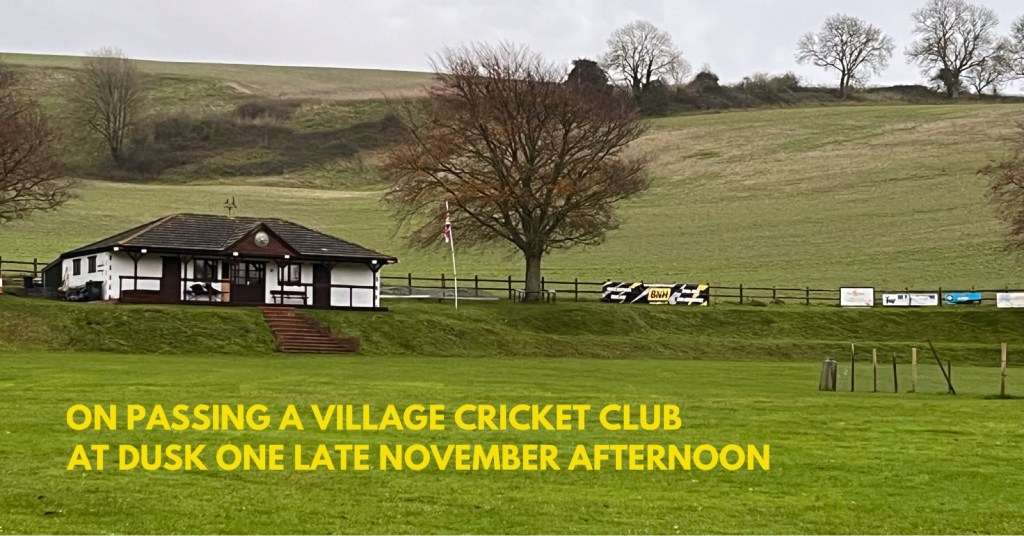
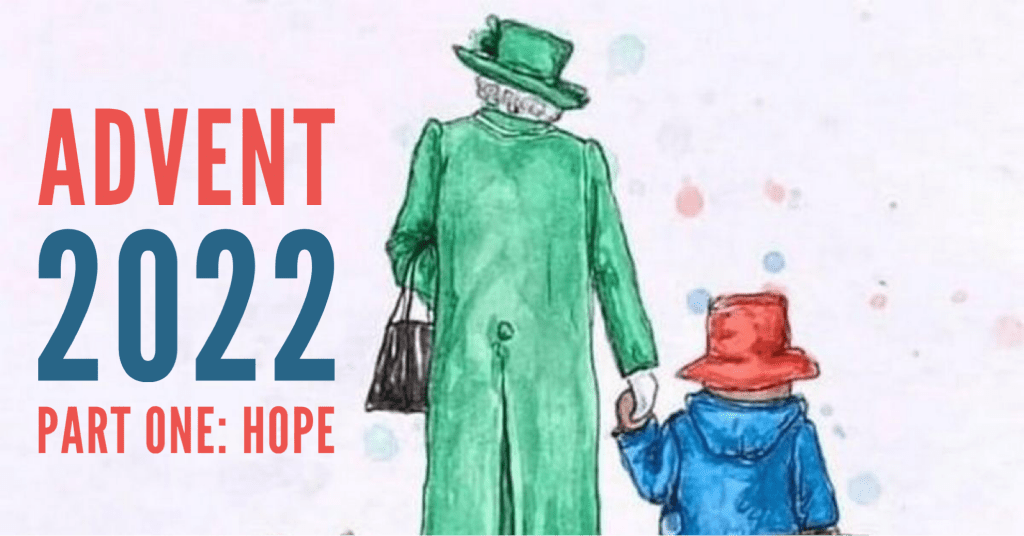

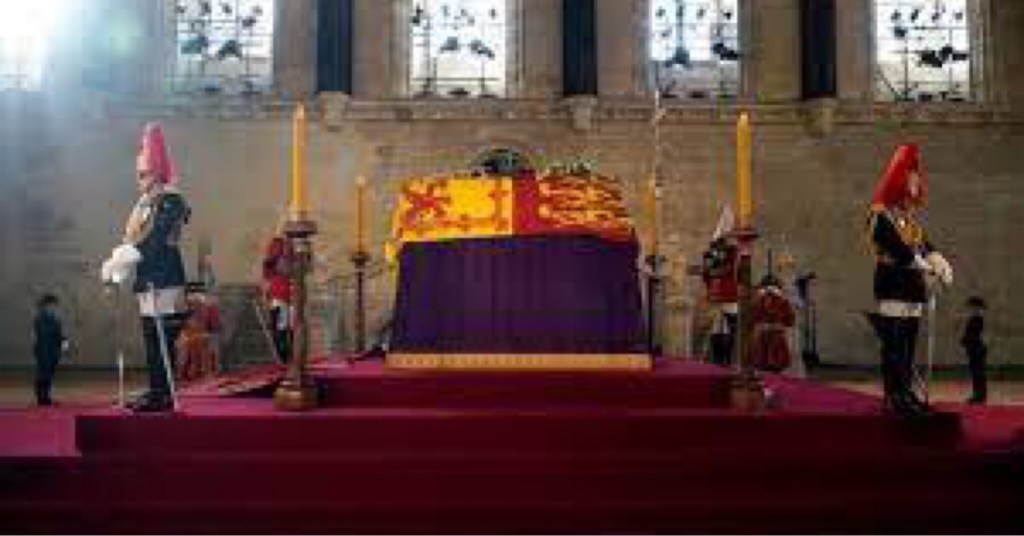



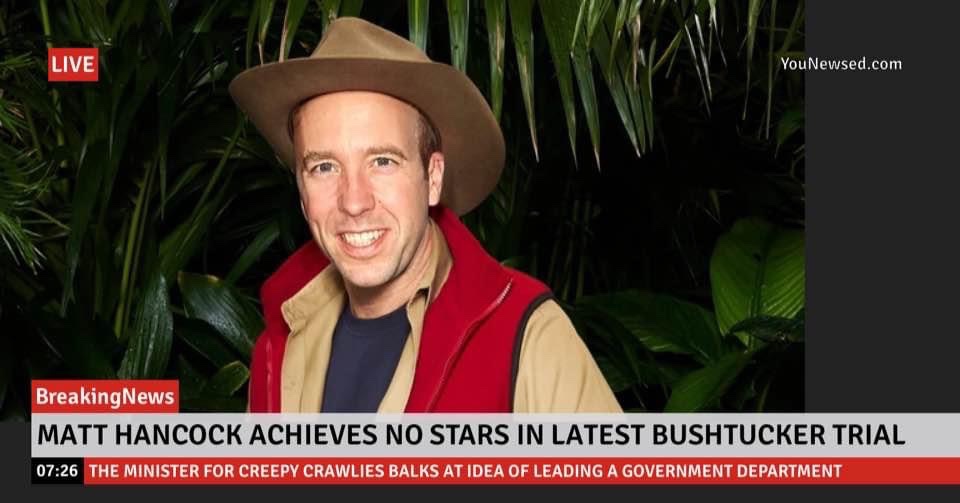



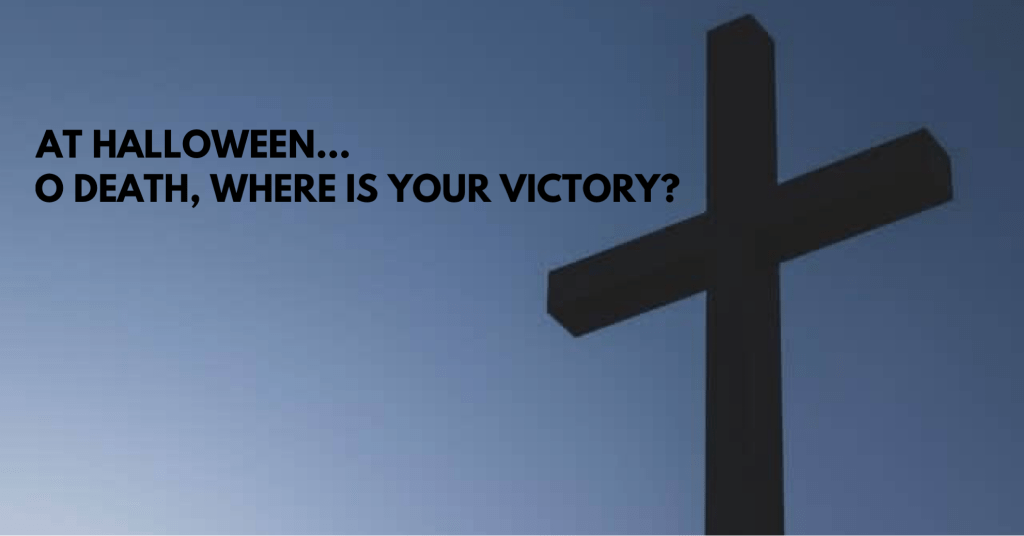


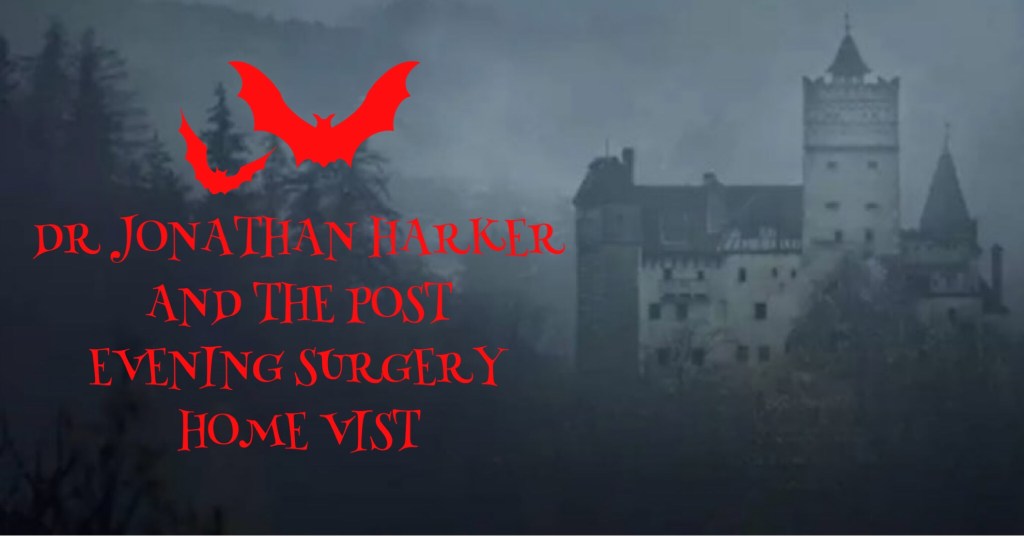







 Some musings