I wonder if I might make a recommendation: ‘Sam and Ade Go Birding’. I have thoroughly enjoyed the Channel 5 series which is clearly hoping to piggyback on the success of the BBC’s ‘Gone Fishing’ but instead of Paul Whitehouse and Bob Mortimer messing about on riverbanks we have here Sam West and Ade Edmondson being friends whilst hiding away in Cornwall, North Norfolk and, best of all, the Somerset Levels.
Personally speaking, my interest in birds is only marginally more than it is for fish and, like Ade Edmondson, I can no more tell apart a lesser spotted woodpecker from those that I imagine are forever on all of the nation’s bird tables. But as with Gone Fishing, it’s not the hobby that’s being engaged in that matters, but the warmth of the evident friendship that the shared interest provides a setting in which it can be enjoyed.
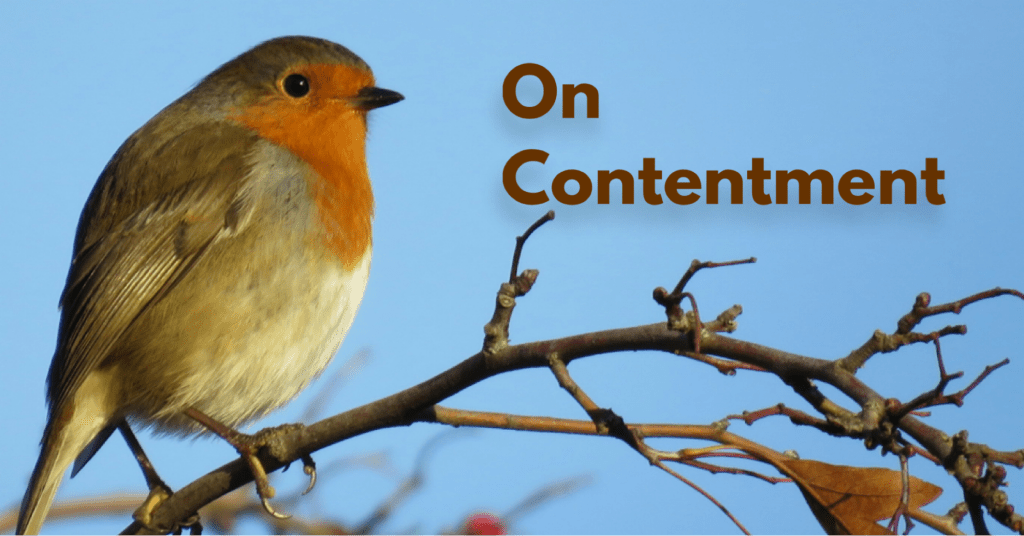
But as well as enjoying eavesdropping on their sometimes deeply personal conversations and being genuinely impressed by Sam West’s knowledge of all things ornithological, what struck me most was Ade Edmondson’s obvious delight in robins – how he would be content to take pleasure in this common, but nonetheless always welcome, garden visitor whilst his companion went anxiously and often disappointingly in pursuit of more elusive avian encounters.
Which reflects, I think, a tendency of too many of us to no longer be content with the commonplace – those of us who, having believed what we were all too often told, that everything is awesome and we ourselves are special, can no longer delight in the ordinary, now that the every day everyday always disappoints.
And it’s a problem that’s becoming ever more pervasive. Recently I’ve become aware of an educational establishment whose tagline boasts that ‘Excellence is only the beginning.’ Which, whilst sounding aspirational, is in fact one more instance of the toxic positivity that only succeeds in placing excessive demands on those who, it would seem, can no longer be content to even excel – but must remain in the relentless rat race until, presumably, they eventually collapse having still failed to achieve the potential imposed on them by somebody other than themselves.
And that, as well as being unrealistic and unfair, is unhelpful. More than that, it’s cruel. Because to be extraordinary is by definition unusual, to be exceptional is to be an outlier, and to be excellent is to exceed what’s generally expected.
Having undue pressure put on people is, of course, nothing new. What might be, however, is how we go about coping with it. Because whereas once we would, if we were wise, recognise the foolishness of what was being asked of us or, if we weren’t, become bitter and burnt out, now we are encouraged to lie. Or as it’s framed these days, curate reality and hold to the alternative truth that we create by writing a better story than the one that we’re actually living.
Because it’s not just the exaggerated narratives that we are sold by politicians and media outlets that we can no longer believe – we can no longer trust the stories that we now tell each other. Furthermore, so discontent have we become with how things actually are for us, we now willingly suspend disbelief and wholeheartedly accept the misinformation we tell ourselves – or allow our so-called artificially intelligent companions to.
And so, cocooned within our own private world, defined by our own personal truth, we become ever more alone. And as well as feeling lonely, we feel sad – because the stories we tell ourselves, no matter how idealised we make them, are false and, lacking any substance, cannot provide the one thing we all desire most.
And that’s a happy ending.
No wonder then that so many of us feel disconnected. No wonder we hanker after authenticity. And no wonder programmes that are principally about friendship are as popular as they are.
And no wonder too that ancient wisdom tells us that ‘godliness with contentment is great gain.’ [1 Timothy 6:6]
So then, rather than our ever more frantic attempts to create a world that doesn’t exist, one that, not being real, can never fully satisfy, perhaps we should open our eyes and step out into the world that is already out there, waiting for us to discover. The world described in the greatest story ever told, which, though not ours, were we to accept our invitation and become a part of it, would guarantee us the future we long for – one that’s both genuinely happy and never ending.
And with that, I’m off to say ‘Hello’ to the friendly little robin that daily frequents my back garden.
Related blogs:
To read ‘Contactless’, click here
To read ‘On not remotely caring’, click here
To read ‘Me, myself and AI – interacting with the ghost in the machine’, click here
To read ‘Keeping it real’, click here

 Some musings