Nothing particularly interesting to say about myself other than after 27 years working as a GP, I was delighted, at the start of December 2023, to start work as the South West Regional Representative of the Slavic Gospel Association (SGA). You can read about what they do at sga.org.uk.
I am also an avid Somerset County Cricket Club supporter and a poor example of a Christian who likes to put finger to keyboard from time to time and who is foolish enough to think that someone out there might be interested enough to read what I've written.
Some of these blogs have grown over time and some portions of earlier blogs reappear in slightly different forms in later blogs. I apologise for the repetition.
If you are involved in a church in the southwest of England and would like to hear more of SGA’s work, do get in touch. I’d love to come and talk a little, or even a lot, about what they get up to!.
Having been away for a while, it’s always good to be welcomed home. I for one enjoy being greeted enthusiastically – even if it is by a four-legged furry fiend who tends to make a lot of noise as he does so.
But then I guess he’s just excited to have his master home, no doubt anticipating how I will provide him with everything he wants – which, thankfully, is rarely anything more than a daily walk, never-ending attention, and something to fill his empty stomach – such as it is after devouring most of the plant life in our back garden.
Today, though, his actions remind me how Jesus was welcomed by those who made a good deal of noise when He entered Jerusalem on Palm Sunday.
In ancient times, when a homecoming King approached a city, the people would go out to meet him. And they would celebrate his arrival while escorting him along the final stretch of his journey.
So then, as the people waved palm branches and shouted their joyful hosannas, they too were welcoming the one they saw as the long-promised King – the Messiah they hoped would provide them with everything they wanted – specifically their liberation from the Romans who at that time occupied their land. [Matthew 21:1-11]
But what followed was not what the people anticipated. Because much like He sometimes still does with us, God often works in unexpected ways – and not infrequently in a manner that is not, initially at least, to our liking.
Which is why Jesus, a King like no other, rode into Jerusalem, not on a warhorse, but on a donkey. And why He made his way alongside the great many Passover lambs that would also have been entering the city that day.
For He too would be a sacrificial lamb – one that by His death would accomplish the liberation the people most needed – not from the Romans, but from sin and death instead.
And that’s why, five days later, those who had once cried out to Him for salvation would cry out for Him to be crucified. [Mark 15:13] A clamour to which, had we been there, we might well have added our voice.
But by submitting to what they thought they wanted, Jesus gave them – and us – what we did not even know we needed.
Because by allowing Himself to be nailed to a cross, by suffering and dying there in our place, He bore the full punishment that our sin deserves – in order that death would no longer have the final word.
For that final word belongs to Jesus.
As was proved on the third day, when God once again subverted all our expectations by raising Him back to life. [Acts 13:30]
And then, just a few weeks later, Jesus ascended, not just to heaven but to a throne. One from which He has continued to reign ever since – and will continue to do so for evermore.
For Jesus Christ is King – and God’s chosen King at that.
All of which means that when, as the Bible promises, He returns, He will come, not only as the Lord of lords, but the King of kings as well.
And, we are told, those who are His will meet Him ‘in the air’ [1 Thessalonians 4:17], not to be whisked away to some distant place, leaving the earth empty of believers, but to warmly welcome Him, and then, as with conquering kings of old, to escort Him to the place where His kingdom will be fully established – not in some small corner of the globe, but throughout the whole of the created order.
When we will all sing again – not Hosanna, but Hallelujah. Because the salvation once longed for will at last have been secured.
As the Lord our God, the Almighty, reigns. [Revelation 19:6]
Related posts:
To read ‘Visions of Blue: Echoes of Grace’, click here
Today I did something pointless. And all the more so perhaps, given how cold it was, and with the grey skies overhead constantly threatening rain.
But whilst the match at the County Ground in Taunton, being a pre-season friendly, had no points resting on it, my spending a couple of hours watching wasn’t in the least bit senseless.
Because I, and the other couple of hundred who were there, experienced a shared reality – as we watched the game, quite literally, play out in real time. We saw what really happened – and not some version of events presented to us by someone with a particular story to sell.
Which these days, it seems to me, is increasingly rare.
I can’t trust everything that I see in the news because, no matter how truthful the reporter, whatever they say can only ever be a portion of the truth. And I can’t trust certain public figures who have a relationship with the truth that is, at best, flexible. But I can trust what my own eyes saw: that Lewis Gregory struck a cracking boundary from the 20th delivery he faced, only to be caught, just three balls later, by Norton off the bowling of Gorvin.
And in a world where far too much is fake, it’s good to experience something real once in a while.
And then there was the opportunity to see Jack Leach and Craig Overton batting – neither of whom, as far as I could tell, threatened to ‘unleash hell’ on the opposition or become their ‘worst nightmare’ if they weren’t offered up gentle full tosses.
Instead they just played cricket, putting on 93 together, whilst I watched. And we all forgot, for an hour or two at least, about the absolutely senseless things that continue elsewhere in the world. And remembered that some good things remain.
Which, on reflection, didn’t seem pointless at all.
Other cricket related posts:
Cricketing blogs from 2025:
To read ‘The Untold Story of Finals’ Day’, click here
So having already bared my soul in regard to previous encounters with the police, I thought I’d continue in confessional fashion and tell the tale of another occasion when I fell foul of local law enforcement agencies – not this time as a result of their eagerness to take a photo of me as I, quite literally, sped by, but one during which I came face to face with one of their number.
The incident took place one Father’s Day as I was travelling, along with the family, to visit my Dad. And it was as I was driving along the North Devon Relief Road, happily minding my own business that I suddenly noticed a police car following along behind me.
‘So what?’ you might ask. Well, the thing is, not only was it following along behind me, it also saw fit to flash its lights at me. You know the ones – those rather striking blue ones!
And so, I thought to myself, I’d better stop – and see if the policeman wants any help with his enquiries.
And do you know what? He did. In fact, so keen was he to have me lend my assistance, that he invited me to step out of my car, and join him in his.
Now I should point out that I had absolutely no idea what it was he wanted to talk to me about. Miraculously, I hadn’t been speeding, the car was taxed and Insured, and, as far as I was aware, it was in an entirely roadworthy condition.
And so, I thought to myself, perhaps it was simply because, proud of his own car, he wanted to show me just how much better it was than mine!
Once I was seated comfortably in his admittedly impressive vehicle, the police officer began. He started by asking me some rather easy warm-up questions: my name, where had I come from, and where was I heading. All of which I answered without any great difficulty.
And then he told me two things:
The first thing that he told me was the law – and how I was guilty of breaking it. He told me that I had been driving too close to the car in front of me and that I had been doing so for all of the previous four miles. He told me that ‘only a fool, breaks the two second rule’ and, in so doing – though I hadn’t realised it at the time – I now appreciate that he was implying that a fool was exactly what I was!
And then he went on to tell me that my crime of ‘driving without due care and attention’ was worthy of a court appearance and six points on my licence.
Gulp!
Now the law is the law, and recognising I’d broken it, I acknowledged that it was the proverbial fair cop. Besides, there was no point my trying to argue otherwise since my actions had been recorded and were now preserved on film. His rather fancy car, you see, really was better than mine – it even had a built-in camera!
And so the truth could not be denied: I was guilty.
I was, of course, sorry for what I’d done – but being sorry, didn’t change the fact that he had me, as they say, bang to rights.
And so I found myself hoping that he’d show me leniency, that he’d spare me the punishment the law required, and treat me instead as one who’d been driving perfectly safely.
That is to say, I hoped that he’d be gracious, that he’d show me mercy, and not treat me in the way the law demanded.
Or, for that matter, in the way that I deserved.
But before I had the chance to beg…or cry…he went on. And my soon-to-be new best friend told me the second thing.
He told me the news – the very good news – that he’d decided to let me off!
I don’t know why he chose not to punish me that day – only that it was most assuredly not because of anything I had done.
It wasn’t because there were other drivers who were driving even more dangerously than me, it wasn’t a result of a promise on my part to never do it again, and it wasn’t even because I’d expressed sufficient remorse.
It was simply because, though I was guilty, he had chosen to be forgiving.
And so it was that, as a result of the policeman’s kindness, I kept a clean driving licence that day. Not because I wasn’t guilty of a driving offence but because I wasn’t counted as having committed one.
And no record was therefore kept!
Which is, it seems to me, a pretty good illustration of the difference between the Law and the Gospel.
Within the pages of the Bible, there are many laws, the most famous of which are the Ten Commandments that can be summarised by saying that we should love God with all our heart, soul, strength, and mind – and our neighbour as ourselves.
However, like the Highway Code that I have also failed to keep, these are commands that I have similarly broken. And so, just as I was that Sunday afternoon, I am conscious of my need for God’s mercy too.
But, like that announced to me by the police officer, God also has some good news for me to hear.
Namely the gospel – that announces to me that I am similarly acquitted – and again, not because of any good in me.
It’s not because there may be those who have done worse things than I have, not because I’ve promised to do better in the future, not even because I’ve been sufficiently contrite.
Rather I am forgiven simply because, despite my guilt, God has chosen to be gracious to me.
Because that’s what God is like. He’s gracious – and treats us infinitely better than we could ever deserve. Rather than punishing us as the law demands, He chooses, by way of Jesus’ bearing on the cross the penalty that we deserved, to pay our debt on our behalf.
But more than just choosing to treat us as those who’ve never done anything wrong – God also chooses to treat us as if we were those who’ve always done everything right. That is to say, He counts us righteous – as righteous even as His own beloved son – before adopting us into His family as His fully forgiven and much loved children.
The law then tells us how we would need to behave if we wanted to earn God’s acceptance. And crushes us with its unmanageable demands.
Whilst the gospel tells us what God has done to make us acceptable to Him. And fills us with joy by lifting the law’s heavy burden.
Which is not to suggest that the law isn’t good – on the contrary, everything about it is right. But just as the excellent rule that tells us we shouldn’t drive too close to the car in front of us is one that, however much I may agree with it, can’t, in and of itself, stop me from breaking it – so too the even more excellent command to ‘Love God’ doesn’t, in and of itself enable us to do so either.
But here’s the funny thing. Since that encounter with the policeman my driving has improved a little. And though, admittedly, it still isn’t as good as it ought to be, I nonetheless, find myself wanting to drive better. Not because of the law – but because of the policeman’s kindness.
And so it is with the gospel. God’s law does not have the power to change us, but the kindness of God, revealed to us in the gospel, can.
And so I’ll finish with a lovely little rhyme, said by some to be written by John Bunyan, that makes the distinction between law and gospel clear.
‘Run and work the law commands But gives us neither feet nor hands Far better news the gospel brings It bids us fly and gives us wings’
Last weekend I travelled to London and, of all the lively places in the capital that I could have visited, I opted for a tour of Highgate Cemetery – an undertaking that might have had grave consequences, given I was with my wife and the following day was Mothering Sunday.
But the atmosphere among those who gathered at the entrance of the cemetery, one of seven built in the 1830s to solve the problem of London’s overcrowded churchyards, was far from funereal. And as the stories of those in the tombs – to whom we were, in a sense, introduced – were brought vividly to life by our very able guide, my interest in death was instantly resurrected.
Among the more famous long-term inhabitants of Highgate was Douglas Adams, whose grave was marked by pens stuck into the ground by those wishing to say ‘so long’ and ‘thanks for all the finished novels’ he’d written. The gravestone of Michael Faraday, the ‘Father of Electricity,’ was a simple affair – a distinct contrast to that of Karl Marx, which included a larger-than-life representation of the long dead author of ‘Das Kapital’. And one of the most visited graves is that of the singer and philanthropist George Michael who lies alongside his mother and sister in a secluded area of the cemetery known as ‘Comfort Corner,’ and still commands such respect from local people that they won’t hear a bad word said against him.
And then there is Alexander Litvinenko, the former Russian spy who was assassinated in London in 2006 when polonium-210 was slipped into his cup of tea. The memorial that marks his grave contains a deliberately broken stone column that is meant to symbolise his untimely death – one that Litvinenko had long expected. Indeed, when he realised what had happened to him, he phoned the police and said he wanted to report a murder – his own – three full weeks before the poison took its inevitable effect.
Later we had pointed out to us the coffin of a once-eminent surgeon who, concerned about becoming the target of the grave robbers he might once have owed a debt to, had chosen to be laid to rest on the top shelf of the vault we were allowed to enter.
But, to me at least, the most intriguing of all was the final resting place of one who lay in a vault marked only by his name – one familiar to me, as it was the same as that of my uncle. This John Aird must have been wealthy, since his grave was in one of the most select parts of the cemetery. But of him I could discover nothing more – despite my extensive digging around in the hope of discovering more about his life. Not literally, you understand, as doing so, as well as being prohibited by law, drew unaccountably disapproving looks from our guide the moment I made even the most cursory attempt to unearth something of interest.
So while I learned about a once-famous bare-knuckle boxer and his devoted dog, a horse slaughterer who once boasted that he served by appointment to the royal family, and the desecration of tombs carried out by a mob following the imagined sighting of the Highgate Vampire in the 1970s, I failed even to discover the years in which my perhaps well-to-do ancestor lived.
Perhaps, I thought, as I wandered amidst the ivy-clad memorials, his reluctance to reveal the secrets of his past suggested an unholy preference for the darkness – one that hinted that, as that fearsome creature of the night, he might be, and evermore remain, undead!
And so, resigned to the fact that I’d never have a stake in his estate, when our time eventually came to an end, we made our exit through the cemetery gates, shuffled off to Hampstead Heath, and finally came to rest over a piece of cake in a bijou – or, dare I say it, fey – coffee shop just off Perrin Street.
And there, where the prices were mortifying, we drew down the curtain on what had been a dead good day.
So far this Lent, we’ve faced the grim reality of our indwelling sin, the weight of our guilt, and the gap between who we are now and who we were meant to be.
But the Bible tells us that the person we are meant to be is the very person we will one day become. And understanding how that transformation comes about helps us live with the disparity we experience today.
Take Gideon, for example. His story begins in Chapter 6 of the Book of Judges where we find him hiding from the marauding Midianites – cowering in a winepress no less – when the Angel of the Lord appears and greets him as ‘a mighty man of valour’. [Judges 6:12]
Which is a great comfort to me as one who, like Gideon, knows just how weak I am. Because if God could see Gideon as someone who is strong, perhaps he can see me that way too – despite all the evidence to the contrary.
But here’s the thing: God’s word is powerful — so powerful that he creates simply by speaking. And because God cannot lie, whatever he says is true — of us as well as of Gideon — irrespective of appearances.
Which means that when God speaks reality must change.
Think about it. By a word of command, God created the universe. And by a word of command he spoke Lazarus back from the dead.
When God said ‘Let there be light’, there was light. And when Jesus said ‘Lazarus, come out’, Lazarus walked out of the tomb he’d been laid in having died four days previously.
God’s word is so powerful that all his promises are guaranteed to come about. Which means that in a real sense God’s promises belong to the present, even before they are fully realised.
Or, put another way, they are both ‘already’…and ‘not yet’ fulfilled.
This is a pattern that is repeatedly seen in scripture. After God declares something to be so, there follows a process by which what is true by God’s decree becomes true in actuality.
So for example, God declared Gideon to be a mighty warrior.
And if God says you are a mighty warrior, then a mighty warrior is what you are – even if, at the time, you are quivering in a wine press.
But there then followed a process by which Gideon became just what God had told him he was at the outset – so that, by Judges 7, he is leading an unlikely band of just 300 men whom God then used to defeat the Midianites.
At the time of God’s decree, Gideon was both ‘already’ and ‘not yet’ a mighty warrior. And in time he became what he already was.
Similarly God renamed Abram as Abraham saying ‘I have made you the father of a multitude of nations.’ The only problem being that when God said it, Abraham had no children at all.
But once again there followed a process by which Abraham became what God had already declared him to be.
Abraham too became what he already was. And the same is true for us.
God declares us to be a chosen race, a royal priesthood, and a holy nation. And so we are. The only problem being that, as we’ve been confessing throughout this Lenten series, we all continue to sin.
If, like me, then, all too aware of your indwelling sin, you sometimes find yourself asking, ‘Can I really be a Christian?’, you too can take heart.
Because, whilst not for one minute encouraging complacency, we need to remember that we too are ‘not yet’ what we ‘already’ are!
God has declared us to be right with him. We are ‘justified’ solely because of what Jesus has done for us. And if God says we are ‘Not guilty,’ then ‘Not guilty’ is most certainly what we are in Christ. Having already been counted righteous, we are now in the process of becoming what God has declared us to be.
That is, we are being sanctified as, by his Spirit and through his word, he makes us more like Jesus – the mighty warrior we have always needed.
So make no mistake, every single one of us will die as a sinner – still imperfect, still the author of our sin, and still in need of forgiveness.
But if our faith is not in ourselves but in Christ who has defeated sin and death on the cross, we will die as justified sinners – those who, though we still sin, have nonetheless begun the long and sometimes painful process of sanctification by which we become more and more like Jesus.
And, what’s more, God will complete the good work he has begun in us because that is what he has promised to do. And one day, on the day of Jesus Christ, we will rise again – perfectly righteous in our new resurrection body.
Then, and only then, we will become in actuality what today we are already declared to be.
The gap we currently experience – between what we are and what we should be – will finally be gone.
And I for one can’t wait!
So then, ‘there is therefore now no condemnation for those who are in Christ.’ [Romans 8:1]
‘Beloved, we are God’s children now and what we will be has not yet appeared. But we know that when he appears we will be like him because we shall see him as he is. And everyone who thus hopes in him purifies himself as he is pure’ [1 John 3:2-3]
Which is very good news indeed!
Related posts:
To read ‘And not just because baked beans get in the way’, click here
To read ‘The Kindness We Don’t Needand the Truth We Do’, click here
As a young boy it was drummed into me that you’ll never go to heaven in a baked bean tin – for the very simple reason that a baked bean tin has baked beans in. And, to the delight of my fellow cub scouts who gleefully sang of the fact on the way to summer camp, neither will we get to our celestial home in a Playtex bra – for, it seems, this branded item of feminine attire lacks the requisite elasticity necessary to propel an individual all the way to what is surely everyone’s preferred eternal home.
Now, whilst neither of these assertions will come as any surprise to many, what may be less well known to some is that we will never get to heaven by giving up chocolate for Lent. Or anything else for that matter – irrespective of whether our determined abstinence involves social media, mobile phone usage, or the pandering to black Labradors who, when indulged, are liable to leave fur all over the settee.
But leaving all that to one side for a moment, for those who have opted to give something up during these weeks preceding Easter, how’s it going?
Are you remaining resolute despite that Yorkie bar in the top drawer of your desk, or have you caved in and found yourself now relying on the same excuses you made on January 2nd when your plan to run this year’s London Marathon ended in tatters, having failed to keep up with the couch-to-5k app’s suggested schedule?
Of course there is nothing wrong in abstaining from less than helpful habits in Lent. Such endeavours can be helpful. But we shouldn’t pretend they have any spiritual value unless they free up more time for us to ponder the things of God. For many, however, the decision to give something up is less about drawing near to God and more about feeling better about ourselves. And even then the self-sacrifice is only ever intended to be temporary as, come Easter, all our hard work is undone when we consume more confectionery in one day than we would normally eat in the six weeks we have gone without.
But even if we are successful in continuing to go without, our better behaviour will prove no more effective in getting us to heaven than vessels containing pre-cooked, nutrient-dense seeds derived from plants in the Fabaceae family. Because being good has as much to do with the state of our hearts as the actions they generate.
For while I may succeed in cutting down on the number of people I murder, Jesus tells me that I must not harbour hatred toward anyone – or indeed be inappropriately angry or even speak unkindly about them. And whilst we may resist the temptation of falling into an adulterous relationship, Jesus says that to even look at another with lustful thoughts is, in effect, to climb into bed with that person. [Matthew 5:21-28]
Though it has been many years since I attended one regularly, I was brought up in the Church of England. So something else that I learnt as a boy, far more useful than the childish songs we sang on coaches, was the prayer of General Confession that I would say each Sunday morning whilst kneeling in front of a hard wooden pew. It goes like this:
‘Almighty God, our Heavenly Father, we have sinned against you… in thought and word and deed, through ignorance, through weakness, and through our own deliberate fault. We are truly sorry and repent of all our sins. For the sake of your Son Jesus Christ.’
I still use these words today as they helpfully dismantle every imagined get-out clause that I’m tempted to employ in the hope of somehow justifying my own wrongdoing. That is to say, they stop me pretending that I’m not a sinner.
Which is the only thing we really need to be giving up during Lent. That and our foolish pride that tells us that we’re not in need of forgiveness.
As has been rightly said, ‘the only thing we contribute to our salvation is the sin that made it necessary’. And so our journey begins by recognising our need of rescue, and crying out to God for help.
The help he is only too willing to give.
Because if we say we have no sin, we deceive ourselves, and the truth is not in us. But if we confess our sins, he is faithful and just to forgive us our sins and to cleanse us from all unrighteousness. [1 John 1:8-9]
And so the question becomes, not what we are giving up this Lent, but whether we’re prepared to confess who we truly are – and then throw ourselves on the mercy of the God who is ready to wash us clean.
For if we are, we’ll find that we’re warmly welcomed – into heaven, which, not to stretch a point, is never so full that room can’t be found for just one more.
Related posts:
To read ‘The Kindness We Don’t Needand the Truth We Do’, click here
As we move deeper into Lent, I want to consider another way that we sometimes try to absolve ourselves of our very real guilt – by normalising our faults and claiming that the wrong we do is, in fact, absolutely right.
Recently I read of someone who spoke with regret of how he, like some of us perhaps, had consistently acted selfishly towards those he said he loved. Until, that is, he came across an article about a condition he came to think he was born with. Believing it explained everything he ever did wrong, he diagnosed himself with the condition and thus absolved himself of all responsibility for his behaviour.
Furthermore, by claiming that God had made him the way he was, he reevaluated his behaviour as not only ‘not wrong’, but rather ‘beautifully right’.
Now don’t hear me wrong here – I am not saying that such conditions aren’t real, nor that they can’t profoundly affect an individual’s behaviour.
But even when they do, explanation is not the same as exoneration. While the line between what is and isn’t avoidable may be fine, what may well be a factor must not be used as an excuse.
And nor is the growing tendency to describe every difficulty as a gift, and every limitation a superpower, helpful.
Which isn’t to say that some conditions – typically those causing less severe problems – don’t come with certain limited benefits.
But I can’t help but notice that the parents of those with more severe developmental difficulties don’t romanticise their condition in this way. Which is not to say that they don’t enjoy being with their children – for how could they not when they love them so much. But their difficulties are a cause of great sadness too – for exactly the same reasons. And knowing how horribly hard life can be for those suffering with such disabilities – and for those who care so wonderfully for them – they don’t need the additional burden of being told they should be happy about the situation that they find themselves in.
Which is why framing real difficulties as benefits, whilst sometimes sounding kind, is in fact, often cruel.
That said, those born with such conditions are no less precious, no less loved by God, and no less His image-bearers as a result. Our value does not depend on what we can or cannot do, on what we have or should not have done, but on the worth bestowed on us by the one who created us. And since He is unchanging, it remains the same – irrespective of whether the care we need comes from novice parents, advanced palliative care experts, or those supporting individuals with the severest special needs.
Or, indeed, since nobody is beyond redemption, prison wardens in high-security detention centres.
Because the truth is that we are all born into a world that is not as it should be – and we all bear the marks of that brokenness at birth – at the very least the moral ones, and not infrequently the physical and psychological ones as well. And we make a mistake if we pretend that the faults we are all born with are, in and of themselves, part of God’s original design.
So then, we must not think that being born with a sinful disposition makes that disposition beautiful – any more than we would call beautiful a genetic condition that promises nothing more than a tragically short life marked only by pain and sadness.
Because if we do, not only will we risk romanticising disability, which, as Jesus himself made plain, has no bearing on our moral status [John 9:1-3], we will risk romanticising our sin, which does.
And seeing sin as beautiful will leave us blind to our need of repentance and, as a result, prevent us from experiencing the salvation we will no longer recognise we need.
Accepting then that we are all broken, we honour those with life-long difficulties most by loving them – and not by pretending that the disability causing them such heartache is in fact something that they are fortunate to possess.
For not all that God sovereignly permits is necessarily good – even if He can, and does, bring good out of it. Because not being part of God’s original design doesn’t mean that what we providentially experience today is somehow outside of His loving purpose.
And neither should those who are able to overcome significant hardship, often in remarkable and inspirational ways, be used to shame those who cannot.
Life isn’t that simple. God often works in ways that we cannot comfortably comprehend, and things are frequently very different from how they may appear.
Like, for example the crucifixion of Jesus Christ – that looked like ugly defeat but was, in fact, glorious victory.
So then, during Lent, we don’t need to be told we’re perfectly okay – because we’re not. And whether our faults are carefully concealed or on display for all the world to see, we are all sick and need to be offered a cure.
Because our sin and our guilt are real – we are all in need of a Saviour – one that is as real as the rescue He secures.
And his name is Jesus – the innocent Son of God who, suffering in the place of the guilty, provides the perfect sacrifice required to fully guarantee both our future physical and emotional wholeness, and atone for all our sin.
Mine as well as yours.
Even so, there’s nothing pleasant about crucifixion, nothing beautiful about being nailed to a cross, and nothing romantic about substitutionary death – it was simply the remedy that was necessary.
If, that is, we are not to remain horribly broken forever.
In a world where we’re constantly urged to shout about how awesome we are, the Lenten tradition of sober introspection seems strangely anachronistic. After all, if we’re all so amazing, why would we look inside and discover something far less flattering?
Some years ago, a patient consulted with me having been sacked. But despite their dismissal being wholly justified, given their criminal misconduct in the workplace, they nonetheless felt that they had been unfairly treated.
And so I spoke to them about two types of guilt. Firstly the self-pitying guilt of those who are only concerned by how their wrongdoing has adversely affected themselves. And secondly, the healthy ‘gutsy guilt’ that admits one’s wrongdoing, accepts the responsibility for it, and seeks, where possible, to make amends. The guilt felt by those who say ‘sorry’ without adding a clause to their apology beginning with either an ‘if’ or a ‘but’ so as to either excuse the behaviour or suggest it was never really wrong in the first place.
I urged them to adopt the latter approach, but I’m not sure my advice was accepted, given that I subsequently had a complaint made against me for not being affirming enough of my patient’s behaviour.
And therein lies a problem.
Because whilst it is of course possible to feel guilty for things that aren’t our fault, it remains the case that sometimes our guilt is real. And when it is, our rehabilitation has to begin with an acceptance that we are to blame. Because only then is there a chance of genuine repentance – and with that the chance of genuine forgiveness.
That said, the one who inappropriately feels guilty for everything needs to be taken gently to one side to have it explained that their insistence that they are responsible for every evil in the world is, in fact, a form of arrogance. Because to believe that one is to blame for everything is to imply, albeit unknowingly, that one has god-like sovereignty over the universe such that there needs to be confession of pride and repentance of imagined superior significance.
But to return to genuine guilt, let’s now consider how gutsy guilt can prove beneficial, firstly by considering another story from my days as a doctor.
One Sunday morning, I visited a patient at home. He was significantly unwell and undoubtedly warranted hospital admission. But thinking a blue light ambulance wasn’t required, I requested one within the hour.
Unfortunately the paramedics arrived about an hour and a half later and, to cut a long story short, the patient died en route to hospital. Inevitably I felt bad about the decision I had made and the following day I discussed the case with my colleagues.
Most of them kindly reassured me that I’d acted appropriately, that the late arrival of the ambulance was to blame, or that the outcome would have been the same even if I had called for a more urgent response.
But the response that helped most was from my senior partner who shared of a mistake he had once made which had tragic consequences and spoke of how hard it is to live with our mistakes.
But here’s the thing – it’s always better to apologise for our mistakes rather than pretend they didn’t happen. I’ve messed up and had to say sorry to patients. And I was always glad when I did – such was the gracious forgiveness I received.
I am reminded of the day a Jehovah’s Witness came knocking at my door.
After engaging me in conversation they asked me if I wanted to go to heaven. I said I did and was told that all I needed to do was to become a Jehovah’s Witness and live a good life as defined by their own set of rules. And so I asked them what difference it would make if I was a bad person. To which they replied by trying to reassure me that I wasn’t bad.
That was all they had to offer me – denial – urging me not to accept what I know is true.
What a contrast that is to the gospel – that offers full salvation to the one who confesses their sins, repents of their wrongdoing, and asks God for forgiveness.
Only Christianity offers a solution to the problem that we cannot deny – that we are guilty. Because on the cross, Jesus paid the penalty for all our sin – He took our place, bearing the punishment that our wrongdoing deserved.
And so we are forgiven – with no ifs or buts.
Because, ‘if we confess our sins, he is faithful and just to forgive us our sins and to cleanse us from all unrighteousness. If we say we have not sinned, we make him a liar, and his word is not in us.’ [1 John 1:9-10]
Related posts:
To read ‘Hope in the Ashes: Why Sin Remains But Does Not Reign’, click here
Today is Ash Wednesday, the beginning of Lent – a season traditionally set aside for self-examination and repentance in the run-up to Easter.
Whether you would label it that way or not, I think we can all agree that we live in what I would call a sin-sick world. We only have to hear the news of mass shootings, knife crime, and sex trafficking to realise that there is something deeply wrong going on.
That said, it’s not just those nasty people over there who spoil it for everyone else – it’s all of us as well, both inside and outside religious organisations. Because together we contribute, albeit perhaps in less obvious ways, to the pervasive nature of the world’s collective wrongdoing.
But since I’m a Christian myself, it is of the ongoing sinfulness of those within the church that I want to consider here. And, evil though they no doubt are, I don’t mean those who infiltrate faith communities with the express purpose of taking advantage of the vulnerable that they find there. Rather, I want to speak of genuine believers who, like me, continue to be troubled by their indwelling sin – even if it goes unnoticed by those they sit alongside each Sunday morning, as well as those who write the headlines in either the local or national newspapers.
Because, sad to say, we’re all still sinners – despite our perhaps largely successful attempts to maintain a clean-cut image.
And not wishing to pretend otherwise raises some pretty important questions. Or at least it does me, as I continue to be deeply disappointed by the way I think, speak and act – not least as a result of my inherent pride that all too often causes me to think far too highly of myself, believe I deserve far more than I already have, even to the point of looking to benefit from the suffering of others.
So what are those questions that I – and perhaps you – need to ask this Lent? Well here are just a few.
Why, if we’re Christians, do we still not love the Lord our God with all our heart, soul, strength, and mind – or indeed our neighbour as ourselves? [Luke 10:27]
Why do we not consider others more highly than ourselves? [Philippians 2:3]
And why do we continue to do things that we don’t want to, whilst failing to do the things that we ought? [Romans 7:19]
Which brings me to the Apostle Paul, to the author of half of the New Testament, who described himself as the chief of sinners – not because of who he once was, but because of who he continued to be. [1 Timothy 1:15] For whilst it doesn’t for one minute excuse my ongoing sin, the fact that such a ‘great’ Christian as Paul struggled in ways not dissimilar to myself would suggest that my problem, far from being an aberration, is part of what makes up, for some at least, the normal Christian life.
But while this is indeed comforting to know, it doesn’t answer my earlier question: why do Christians still sin? And why doesn’t God press fast-forward on the process of sanctification and make me more like Jesus far more quickly than He currently seems willing to?
The answer may not, of course, be fully ours to know, but there may at least be a clue in another of Paul’s letters.
In 2 Corinthians 12:7-9, Paul writes of a ‘thorn in the flesh’ – ‘a messenger of Satan’ – given to keep him from becoming conceited. He also says how, despite pleading for the Lord to take the thing that ‘harassed’ him away, the Lord declined to do so – the only explanation given by God being His rather enigmatic words, ‘My grace is sufficient for you, for my power is made perfect in weakness.’
Paul did not give details of what exactly the nature of the thorn was, and great has been the resulting speculation. But whereas some have suggested a physical ailment – perhaps poor eyesight – and others have suggested a persistent opponent of his ministry, some, myself included, have wondered if Paul might have struggled with some persistent sin, the inevitable consequence of the sinful nature we all inherit from the fall.
But while that last suggestion is believed by few and therefore probably wrong, it’s true that my own indwelling sin produces in me something of what Paul experienced through his thorn. For what humbles us more than our perpetual wrongdoing? What better highlights the wonder of grace than a fresh awareness of our need for it? And what acts more readily as a messenger of Satan than that voice that whispers of our guilt and unworthiness?
So here, irrespective of what Paul’s thorn might have been, is the thing – without sin there would be no need for forgiveness, and without forgiveness there would be no need for the cross. And without the cross, the glory of which shines all the more brightly against the backdrop of sin, we could not begin to recognise the magnitude of God’s power, the marvel of His mercy, and the depth of His love. And so we would be left unable to enjoy God as deeply as we do once we have grasped the glory of His grace.
Even so, we must be careful, because God does not need sin to be glorious. Not at all – His glory is part of who He is and not dependent on anything else. We should not think that when we sin it’s okay because in so doing we magnify God’s grace. Paul himself warned against such foolishness. [Romans 6:1] And nor should we imagine that by not preventing us from behaving badly, God is Himself responsible for our sin.
Far from it. For God is holy even as He rules over a world whose wickedness is all too apparent. And our sin, which in no way is necessary for our salvation, is used by God in ways that we cannot possibly understand.
Just as was the case when Jesus, delivered up according to the definite plan and foreknowledge of God, was crucified and killed by the hands of lawless men. [Acts 2:23]
There is then a paradox at the heart of the Christian faith, one that we must learn to live with: that what man means for evil, God can work for both His glory and our good. [Genesis 50:20]
Which is why I, for one, will not pretend that I am not still a sinner. On the contrary, like Paul, I will boast all the more gladly of my weaknesses – not because I delight in them but because they drive me back to Jesus, bearing witness to my ongoing spiritual life.
And because His grace continues to be sufficient even for me, I find fresh cause for hope: one day I will become what I am both ‘not yet’ and ‘already’ declared to be in Christ.
Sin then remains – but because of the cross, it doesn’t reign.
And just as Lent gives way to Easter Day, so too will we who die in dishonour be raised in glory as we who have borne the image of the man of dust will one day bear the image of the man of heaven. [1 Corinthians 15:43,49]
One day we will be what we are not.
Perfect.
But in the meantime, we must work out our salvation with fear and trembling – for it is God who works in us, to will and to work for His good pleasure. And He who has begun a good work in us will bring it to completion on the day of Christ. [Philippians 1:6; 2:12-13]
It means that no conditions need to be met before the love is expressed.
It means that it doesn’t matter what condition you are in – you can be a physical wreck, an emotional wreck, a moral wreck, or a spiritual wreck and still the love is there for you.
And it means that irrespective of your prevailing conditions, whether they be comfortable or characterised by overwhelming difficulty, the love remains the same.
But what does unconditional love look like?
It looks like a man hanging on a cross and bearing there the punishment for everything that we have done that would otherwise have prevented us from knowing the never-ending love of God.
Because what does it feel like to be unconditionally loved?
It feels like being home with a loving Heavenly Father who has adopted us into his family as his much-loved children. And finding oneself wanting to take on the family likeness.
‘See what kind of love the Father has given to us, that we should be called children of God; and so we are.’ [1 John 3:1a]
Related posts:
To read ‘Valentine’s Day in the light of the cross’, click here
To read ‘A good heart these days is hard to find’, click here
Recently, after three incidents that occurred within the space of a few days, I’ve been thinking about how the world encourages us to believe that the unpredictable can be adequately anticipated, the average is in fact awesome, and each and every one of us is strong enough to overcome our own inherent weakness.
The first incident took place when I took my car in for a service. I had previously arranged to be supplied with a courtesy vehicle, but before I was able to take possession of it, the young woman who was dealing with the paperwork asked me if I was a professional entertainer.
But given the pitying look she gave me when I assured her that she wasn’t the first to mistake me for Brad Pitt, this wasn’t even remotely the reason for her questioning my occupation. Instead, it seems, when it comes to driving, professional entertainers are considered a greater risk to those wishing to insure them. This is something I find somewhat hard to believe – unless of course we’re talking about circus clowns who, as we all know, rarely check for square wheels or inadequately secured doors before taking to the roads.
Secondly, there was the shop that I’d visited with the sole purpose of purchasing some dried bananas – a singularly unremarkable endeavour, I’m sure you will agree. But as I paid for the aforementioned desiccated fruity comestible, I noticed a sign asking me whether my in-store experience had been out of this world and urging me to follow a QR code where I would be able to leave a favourable review.
I politely declined, however, because my experience had been no more remarkable than I’d anticipated. I’d found the once elongated botanical berries, now reduced to short, shrivelled shells of their former selves, exactly where I’d expected to: on a shelf, alongside a label noting the not unreasonable sum I would be required to part with in order to buy them.
And thirdly, there was the book I spent a few minutes glancing through in Waterstones whilst looking for something to read. It contained 365 daily readings, each one sharing the thoughts of a Stoic philosopher which, it was claimed, would provide me with a pathway leading to inner peace.
But the advice offered – to worry only about what can be controlled whilst accepting the rest – seemed somewhat unrealistic. Because not everyone is together enough to be that together. Not when they’re falling apart just as much as their lives are disintegrating around them.
And it’s rest that the heavy-laden need, not demands to work ever harder at being somebody they’re not.
And finally there was one more incident – the exception, perhaps, that proved the rule. I was in a coffee shop, waiting to be served, when I couldn’t help but overhear the conversation that was taking place between the barista and the woman behind me in the queue. The customer was asking what the honeycomb iced matcha was like – to which the reply given was ‘Pretty disgusting if you ask me.’
I found her honesty to be wonderfully refreshing – even if, by all accounts, the cold caffeinated drink on sale was anything but.
So here’s what I’m getting at – the thing I think we all need to grasp together.
Life is frequently unpredictable, our day to day lives are often mundane, and pain and suffering are very much a part of what it is to be human. And we, like the barista’s less than rave review of the coffee, are sometimes sadly lacking.
We need to stop pretending otherwise. Because only then will we cease relying on the self-help that we simply aren’t able to provide, and turn instead to the one who can – the one who is absolutely in control, genuinely praiseworthy, and strong enough to carry us – no matter how heavy the burdens we have to bear.
And honestly…that would do us all a world of good.
Some say that the only thing a narcissist can be sure of is their absolute love for themselves. And that the problem such people have is that the more they promote themselves, the more those they hope to impress tend to turn away.
But before we pour too much disdain on those who act in such a manner, perhaps we should look at ourselves – and at a world that constantly encourages us to be proud of who we are, insisting as it does that we’re all awesome.
Until of course we’re not.
Because unless we recognise the trap we’re being lured into, we’re all going to get caught – snared by our own supposed self-importance and thus confined to a lifetime of unhappiness.
There are, I think, at least three ways in which this inherent longing to be someone of significance can manifest itself.
The first is to drive ourselves into the ground trying to be good enough. Day after day we strive ever harder to meet the expectations of others whilst never being prepared to tell the truth – that, today at least, what’s being asked of us is more than we can provide. Instead we struggle on, momentarily enjoying the appreciation of others when, on occasions perhaps, we have managed to measure up, before crashing back down again only to be left with our ongoing self-doubt and self-loathing.
And when we finally crack, when we can’t go on any longer and the sympathy finally arrives from those who seem surprised that the one who seemed so nice, so reliable, wasn’t quite what they thought, it’s all too late. Because the damage has already been done.
And then there are those who despite their striving, have never once known the approval of others. As those who don’t seem to fit in, they are simply ignored – if that is, they were ever noticed in the first place. And so, having learnt that they’ll never be loved for who they are, they stop bothering to try – and begin to hate others. And as they do they resort to behaviour that is sometimes antisocial, sometimes inhumane, and always self-destructive.
Finally, there are the narcissists who are caught between the other two expressions of what is at heart the same fear – that of being ordinary. And so, unloved by others and with nobody offering them the praise they crave, they try to love themselves – by proclaiming their greatness to any who will listen and, by shouting ever louder, to those who don’t want to hear as well.
But in the end it’s only themselves who take note of what they say. And to counter their own growing doubts, about what they only ever tried to believe about who they were, they end up screaming at themselves.
But haven’t we all, on occasions, fallen into each of these three patterns of behaviour?
Haven’t we all sometimes pretended we were somebody we’re not in order to please someone else – gone the extra mile, not because we wanted to help, but because we wanted to be admired?
Haven’t we all said ‘stuff it’ – and indulged in unhelpful behaviour, be that one too many chocolates or an uncharitable comment made about someone we like to think we’re better than, so as to feel less uneasy about ourselves?
And haven’t we all promoted ourselves in the hope of being noticed favourably by others?
I know I have, and not only by writing this opinion piece – that I’ve now shared on social media platforms in the hope that it’d be liked.
So then because none of us can be universally loved by pleasing everyone all of the time, because we dare not descend into hatred and self-loathing, and because narcissists don’t love themselves but only ever endeavour to do so, we’re all in need of a solution.
And so the question becomes: what is it? What do we need to know or, perhaps be reminded of, that might make a real difference? What might enable us to love as we ought – not for what we can get, but for what we can give?
Well perhaps it is simply this: to be loved in such a way ourselves.
Because there is, I think, something wrong with all of us – something that curves us in on ourselves so that we seek satisfaction within rather than without. As a result of which we become blind to the glory that really is out there – most specifically in the one who, as well as being awesome enough to be worthy of our admiration, loves us in the way we have always longed to be – not because of what we do, but because of who we are.
Not because we’re lovely – but because He is loving.
Yesterday I went to see ‘H is for Hawk’ – the recently released film starring the excellent Claire Foy. Whether I enjoyed it is perhaps questionable, but I am without doubt very glad I sat through it.
The film is based on real life and charts the grief of Helen MacDonald following the death of her photographer father, whom she at one point described as the only person who ever really understood her.
It comes across as an honest portrayal of the inevitable sadness experienced by those who love somebody that loved them every bit as much as they were loved. I for one appreciated the way the film didn’t manipulate the audience’s emotions so that, when the tears eventually came, they felt genuine rather than manufactured.
Two scenes in particular stood out for me.
The first is when Helen MacDonald gave a talk about the hawk that, having taken up falconry, has become the centre of her life. A member of the audience expressed disapproval that it is allowed to kill rabbits. She responded that to watch the hawk in action is to have an honest encounter with death – something that, all too aware of how impossible it has been for her to deny her own father’s passing, she maintains, is too often hidden from view.
When criticised further, that she is introducing death into the environment, she rightly points out that death was already there: that the rabbit has to die, just as the hawk will one day – and indeed each and every one of us as well.
Because death is not the exception – it is the inevitable rule.
As she said these words, I was reminded of the genealogy found in Genesis 5 that lists the descendants of Adam, through the line of Seth, all of whom, despite their very long lives, ultimately died.
Eight times the monotonous refrain is repeated: ‘… and he died … and he died … and he died.’
It’s a terrifying passage, reinforcing as it does how the story of all our lives will one day end. And not all follow what could even remotely be considered a good innings.
As a doctor I had patients who lost children during childbirth, in the first six months of their life as a result of cot death, and when only a little older, due to the congenital condition that they were born with. I have had patients lose both their parents before they were out of their teens. I have been first at a road traffic accident and seen a young person bleed to death in front of me. I have had to confirm the death of a child who’d taken their own life.
And then, of course, there were all the so-called ‘normal’ deaths as well – those less unexpected perhaps, but no less tragic for that.
Death then, is an everyday occurrence, and rather than imagining that, when unseen, it somehow no longer exists, we should recognise it as such – no matter how sad it may make us feel.
Which brings me to the second scene in the film that stood out for me. It was when MacDonald is seen consulting with her GP and is asked a series of questions supposedly designed to help diagnose depression. She is asked how often she struggles to concentrate, how often she fails to find anything enjoyable, and how often she fails to feel anything but a failure – and every time she gives the same sad answer: more than half of the days.
And so, despite her very valid suggestion that how she is feeling might just be a normal response to the difficulties she’s facing, she’s diagnosed as depressed – and thereby told that there is something wrong about her feeling the way she does.
And so it seems that, having first been encouraged to deny death, we are now being urged to deny the emotions that appropriately come with it. The sadness that is every bit as real as it is unwelcome.
So then, with death being universal, we shouldn’t be surprised that what happens to more than half of us will, in time, happen to us all — or that the sadness it brings is present on more than half of our days.
And though we may not enjoy the experience, perhaps we should be glad to sit through it with those who have no choice but to feel such sorrow.
Just as one day we may be glad to have someone sit through it with us.
Recently I had cause to recall a study day I attended a few years ago. Suitably interactive, involving a variety of teaching styles, and fully addressing a personally relevant learning need, it was the best educational event that I’ve ever attended.
But not one that I claimed any CPD points for.
And the reason for my seemingly schoolboy error? Well, simply this – it was a speed-awareness course.
The day began with the leader asking who amongst those present had told friends and family that they were attending the course.
Most hands went up – as did the corners of many people’s mouths, their smiles suggesting that few, if any, were particularly ashamed of the reason that had prompted their attendance.
Next the leader pointed out that breaking the speed limit was no less likely to cause a road traffic accident than driving whilst over the legal blood alcohol limit. And then asked how many people would have told others they were on the course had it been run for those who had committed a drink driving offence.
You’ll not be surprised to learn that no hands went up.
Later in the day, we were asked to suggest reasons why we might, on occasions, drive faster than the law permitted. A comprehensive list was generated – after which a short recording was played of a man describing how his child had been killed by a speeding motorist.
The leader then commented how our list, made up of what we had previously felt were potentially justifiable reasons for speeding, now seemed like nothing but a collection of weak excuses.
It was a highly effective learning experience.
And it prompted me to think about how we respond when we fail in other ways.
By which I mean, how we respond when we sin.
Because having experienced uncomfortable feelings myself, as a consequence of doing something wrong, I know how easy it is for me to try and relativise my misdemeanours by claiming they aren’t as bad as something somebody else may have done or, alternatively, try to justify my actions by insisting that what I did was understandable given the prevailing conditions.
But as the speed awareness taught me with regard to traffic offences, such attempts to cover my shame are as futile and foolish as those employed by Adam and Eve in the Garden of Eden.
You remember how they approached the problem.
They tried to cover their nakedness with fig leaves – which clearly proved woefully inadequate, given how they then attempted to hide from God by concealing themselves among the trees.
So having fallen, what might be a better strategy when an infinitely holy God, who cannot look on sin without hating what He sees, graciously comes to look for us?
For He will find us – as surely as His omnipresence means that He’s already present wherever we try to hide.
Well it would surely be to follow the example of the tax collector who, despite being so conscious of his sinfulness that he could not lift his eyes to heaven, cried out to God for mercy. [Luke 18:9-14]
We should then confess our sin – to the God who knows all about it as surely as His omniscience means that He already knows everything that we ever did. [John 4:39]
Because if we do, God will do all that is necessary to forgive us, as surely as His omnipotence means that He can do anything He wants to.
Including declaring us righteous, as He did the tax collector – and covering our shame, as He did both Adam and Eve.
Not with the fur of an animal – but with the righteousness of Christ.
Because unlike the UK’s Speed Enforcement Units, whose grace, apparently, is limited to 10% of the existing speed limit plus an additional 2 miles per hour, God’s grace is sufficient for even the foremost of sinners. [2Corinthians 12:9, 1 Timothy 1:15]
And so, because of Christ’s substitutionary death on the cross, if we confess our sins, God is faithful and just to forgive us our sins and to cleanse us from all unrighteousness. [1 John 1:9-10]
Now I could stop there but to do so would, I think, be to leave everything a little too tidy.
Because sin matters and has serious consequences.
Furthermore, life is messy, sin is messy, and we are messy too. And few, if any, are left spotless after just the one encounter with the one who seeks to make us clean.
Like an eight-year-old boy who’s told he needs a bath, we all sometimes resist the efforts that are made to wash us – with tears often accompanying the struggle that ensues.
Many of us know what it is to mourn over our indwelling sin, even as we rejoice in the complete justification that was ours the moment we first believed. Because the normal Christian life is not straightforward, with the road to sanctification frequently a long and winding one.
As is painfully apparent from the all too frequent real life experiences recorded for us in Scripture.
So in closing let me highlight just a few verses that help me at least when I’m conscious of my own sin.
Firstly, and perhaps most predictably, there’s Psalm 51 which contains the words of King David after he was confronted about his having committed adultery with Bathsheba.
Have mercy on me, O God, according to your steadfast love; according to your abundant mercy blot out my transgressions. Wash me thoroughly from my iniquity, and cleanse me from my sin!
For I know my transgressions, and my sin is ever before me. Against you, you only, have I sinned and done what is evil in your sight, so that you may be justified in your words and blameless in your judgement. Behold, I was brought forth in iniquity, and in sin did my mother conceive me. Behold, you delight in truth in the inward being, and you teach me wisdom in the secret heart.
Purge me with hyssop, and I shall be clean; wash me, and I shall be whiter than snow. Let me hear joy and gladness; let the bones that you have broken rejoice. Hide your face from my sins, and blot out all my iniquities. Create in me a clean heart, O God, and renew a right spirit within me. [Psalm 51:1-10]
David’s response is an example of gutsy guilt. He knows he has no excuse, and so acknowledges his behaviour for what it is – sinful – without for one moment trying to rationalise his behaviour.
And his grief is godly too.
His sadness isn’t because he’s been caught – but because of what he’s done. Which is, after all, what being sorry is – feeling genuine sorrow for the wrong that was done. And in response it prompts genuine repentance – the earnest desire to be different to how you are.
But even as David expresses that wish, far more than the determination to change, he knows that he needs the clean heart and right spirit that only God can bring about.
And the same is true for us.
Because more than good intentions, we too need God to change us. More than self-help advice, we need His intervention.
Secondly, there’s Psalm 32, whose first five verses confirm that confession really is good for the soul.
Blessed is the one whose transgression is forgiven, whose sin is covered. Blessed is the man against whom the LORD counts no iniquity, and in whose spirit there is no deceit.
For when I kept silent, my bones wasted away through my groaning all day long. For day and night your hand was heavy upon me; my strength was dried up as by the heat of summer.
I acknowledged my sin to you, and I did not cover my iniquity; I said, “I will confess my transgressions to the LORD,” and you forgave the iniquity of my sin. [Psalm 32:1-5]
To deny our sin then is not only stupid, it’s also unhealthy – both physically and psychologically. When we keep quiet about it, we sicken ourselves and are left emotionally wasted.
All of which is a far cry from the peace we derive when, having admitted our transgressions, we receive the Lord’s forgiveness.
And finally there are verses, written by the prophet Micah, that I at least find particularly helpful when feelings of guilt sometimes continue to linger.
Rejoice not over me, O my enemy; when I fall, I shall rise; when I sit in darkness, the LORD will be a light to me. I will bear the indignation of the LORD because I have sinned against him, until he pleads my cause and executes judgement for me. He will bring me out to the light; I shall look upon his vindication. [Micah 7:8-9]
These then are precious words. Words that can comfort us when we know we’ve fallen, when we find ourselves sitting in darkness, and when it is us that the beast who’s prowling around, is looking to devour. [1Peter 5:8]
Because whilst the deceiver gloats over our failure, and delights to see us bearing the painful indignation that the Lord sometimes requires us to carry, our hope nonetheless remains in the promise that, despite our guilt, the Lord will plead our cause.
This is good news indeed. That the sinless Son of God is on our side. That He is our advocate in heaven – our defence attorney – who presents His own precious blood, shed for us on the cross, as the cast-iron proof of our innocence. And that, as a result, God will execute judgement – not against us, but for us.
Though never condemned for our sin, Christians are, however, sometimes disciplined for it. Which is not infrequently painful. [Hebrews 12:5-6]
But the fact that our Father loves us enough to do so is ultimately good news – because it is the gospel that sustains us in this sinful and often very sad world in which we live.
For knowing that it’s sin that causes us sorrow, and knowing that sin has been fully dealt with, we can now look forward with absolute assurance to the day that is undoubtedly drawing closer – when every tear will be wiped away and death will be no more. [Revelation 21:4]
So then, let’s not deny our sin, or our culpability. Let’s not try to explain it all away. And let’s not keep silent about it either.
Instead let’s confess to our loving Heavenly Father. And so know His forgiveness.
And yes, I will be attending another speed-awareness course in the not too far distant future. And not because there’s been a grave miscarriage of justice, not because it was stupid to place a speed camera where 36mph is perfectly reasonable on a Sunday morning when the roads are quiet, and not because I was momentarily distracted by concerns far more pressing than the presence or otherwise of a speed limit sign.
But because I’m still not as good a driver as I ought to be – or as good as the one that God will eventually make me. [Philippians 1:6]
As you probably realise by now, I’m not a great fan of Donald Trump. Because as I hope I’ve made obvious enough to risk a U.S. travel ban, I think he’s dangerous, that what he’s doing is dangerous, and that the consequences of what he’s doing are likely to be dangerous too.
But leaving aside how he’s altering the geopolitical landscape, there are, I think, at least four other aspects of Donald Trump’s presidency that are, perhaps, even more dangerous.
Here’s what I think they are.
Firstly there is the rise of so-called Christian nationalism, and with it the danger that people will be fooled into thinking that making America so-called great again is the same as making the U.S. a Christian country.
Which it categorically isn’t.
Which isn’t to say that Christians shouldn’t be engaged in politics. On the contrary – it’s absolutely right for believers to try to make the world a better place. But as Jesus himself said, His Kingdom is not of this world. And so it follows that whatever it is that Trump is building, it’s got precious little to do with Christianity.
The Kingdom of God is sometimes described as being wherever God’s people are under God’s rule. Which means that, until Christ returns as King and his Kingdom is fully established worldwide, it is physically located in the church, and not in the mind of an individual – irrespective of how powerful that individual might be.
Secondly there is the danger that those of us who like to think that Trump’s public failures are many and varied, begin to think that our failures don’t matter as much as his do.
But that’s simply not true.
So let’s first make a distinction here – between what we do in our public lives and what we do in private.
As the President of the United States of America, Donald Trump holds a very high-profile public position. And in exactly the same way that when I had a public role as a doctor, I was subject to public scrutiny, so too should he. And just as when I failed in my public role, I could rightly expect to be exposed to public criticism, so too, when he fails in his role as President, must he. That’s what it means to hold someone accountable.
But when we criticise a person in the public square we ought, I think, limit our comments to that individual’s public role. Which is something that many, including myself, have failed to do. And I for one am sorry for that.
Because the truth is that being a bad president doesn’t necessarily make Trump a bad person, any more than me being a bad doctor made me a bad person. And whilst I think his failings in his public role do relate to some personal failings, so did some of my failings as a doctor too.
Sadly they weren’t always down to just my ignorance. Sometimes they were down to laziness on my part, or a lack of concern for others, a consequence of my own selfishness and my desiring to do only what was best for me
And whilst I like to think that, to some extent at least, I curtailed my own inherent weakness, I can’t pretend I was wholly successful. Because I never am. And neither must I, by imagining that Trump’s failures might conceivably be greater than my own, come to the conclusion that I am therefore okay.
Because the truth is that, irrespective how guilty Trump may or may not prove to have been in his private life, I have to acknowledge that, living with it as I do, I know far more about my own shortcomings than his – making me a far greater sinner than him.
And so you see the danger of demonising Trump. It can all too easily make us think that we are acceptable to God because there is at least somebody out there that we consider to be worse than we are. And we end up putting our confidence in that, rather than the one thing that we should put our hope in – that Christ Jesus came into the world to save sinners, that we are saved by his life of perfect righteousness being credited to us, and that his death on the cross paid the penalty for all the wrong things we have ever done.
To forget this would be very dangerous indeed – and not just in these troubled times. For it would threaten our eternal safety too.
The third danger with our obsession with Donald Trump is that it leads us to spend more time thinking about Trump than we do about God. Constantly scrolling through social media platforms, or overdosing on the daily news, we end up worrying about what he will do next and forget who it is who is ultimately in control.
We need to remember that it is God who has the final authority – not world leaders.
And he will use them all, no matter which country they represent, as a means of grace, or a means of judgment, as He, and He alone, sees fit.
And what he sees fit to do is always the best.
Forget this and we risk constant anxiety. We end up fearfully watching as history unfolds having lost sight of who holds the whole of history in His hands.
And lastly, and perhaps most concerning of all, our constant calling out what we think Trump is doing wrong, risks making us judgemental rather than gracious, proud rather than humble, and driven by outrage rather than love.
They said there’d be snow this Christmas. They said there’d be peace on earth.
But I’m not seeing it.
Not when the good guys – who aren’t the good guys anymore – can’t be trusted any more than you can throw their crumbling credibility. Because like the tinsel on last years tree, there’s none of it left.
Some of course have had snow on snow on snow. But for others it was the authorities that they received – standing hard as iron. But that’s what’s to be expected with ICE that’s never welcome, always slippy, and not infrequently lethal.
Maybe war is over – if you want it. But not everyone does. Because there are those who seemingly prefer to let it linger on, endeavouring as they do so, to initiate new ones of their own – perhaps even in their own country.
So that was Christmas – only it wasn’t. Well not entirely. Because there was somebody else, unnoticed by many, who was also involved.
And I believe in that Israelite.
Not the one indicted for war crimes in the Middle East, but the one found guilty of something far more shocking – a love that’s strong enough to die and powerful enough to give us a Christmas better than any of us deserve.
The world seems to be a dangerous place just now. Those with the greatest power are positioning themselves, taking counsel together, and preparing their plans. And all with the same end in mind – to acquire more. Not for those they represent, but for themselves.
It’s only ever for themselves.
But ancient wisdom suggests that we should ask ourselves a question. And that question is ‘Why?’
Not because we can’t understand their evil intentions, for they are surely all too obvious. Not least because, if we’re honest enough to admit it, we harbour similar desires in the darkest recesses of our own hearts too. And it is only because we lack the opportunity to express them in the way that some are able to, that we manage to persuade others – and perhaps ourselves – that we are better on the inside than we really are.
No – the real reason we should be asking why the nations are scheming is simply this: it’s pointless for them to do so, because they plot in vain.
And the reason I am so confident of this is that ancient wisdom tells me it is so. This is not to suggest that the situation we appear to be heading towards isn’t frightening. Not at all – but as those with influence throw their not inconsiderable weight around we need only to look to heaven for all the reassurance we need. For if we do, the one who we will see there isn’t anxiously pacing around the room wondering what to do. On the contrary He is seated on a throne, high and lifted up; and the train of His robe, a symbol of His supreme authority, fills the temple [Isaiah 6:1] And, what’s more, He is laughing – holding those who ultimately are opposing Him in derision.
But He won’t be laughing for ever.
Because He is angry at their posturing and will speak to them in His wrath. And tell them what is beyond any doubt. That Jesus, His son, is King – to whom He has given all authority, both in heaven and on the earth [Matthew 28:18] And He will have the final word as the sovereign Lord of the Universe.
But whilst those who are currently making all the noise should indeed be terrified of the risen Lord Jesus they oppose – whose wrath is justly kindled by their global arrogance – those who gladly take refuge in Him are blessed, and will find that He will never break a bruised reed or quench a faintly burning wick. More than that they will watch as He establishes justice on the earth. [Isaiah 42:3]
So have no regard for those who scoff and speak with malice, those who loftily threaten oppression [Psalm 73:8] and those, in whose nostrils, is only breath – for of what account are they? [Isaiah 2:22] Look instead to the Lord who reigns – for He is robed in majesty, He has put on strength as His belt, and His everlasting throne is firmly established [Psalm 93:1-2].
And when He eventually comes in His glory, and all the angels with Him, He will sit on His glorious throne forever [Matthew 25:31].
And so, last night, while the leader of the so-called free world boasted of the military assault that he had commanded, I chose to watch a little television. And the programme that drew my attention away from what can be seen as a massive throwing of his toys out of his pram – as a result of not being awarded the Nobel Peace prize that he presumably no longer harbours any desire for – was the Christmas special of ‘Gone Fishing.’
Because watching two friends messing about on the water, drinking tea on the riverbank, and talking good-natured nonsense seemed to me infinitely more worthwhile than listening to somebody justify actions that implicitly support Russia’s invasion of Ukraine and make his claim to have ended eight wars even more laughable than it already was.
And though my saying so may in the future prevent me from visiting the country he says he wants to make great again, one that I increasingly want nothing whatsoever to do with, it made me remember that there are still reasons to smile in this all too often vale of tears – none of which have anything to do with greed, hypocrisy, or the glorification of violence.
Furthermore, Bob’s humorously self-determined winning this year’s ‘Employee of the Year’ award clearly trumps the far less significant honour bestowed by an international football association.
All of which speaks of a slower and simpler way to be – and one that is, as a result, more sensible and civilised too.
With the new year just three days old, how are you getting on keeping the resolutions you made earlier this week. Better than Hector I’d wager. Here’s how he’s faring…
I will not insist on being walked in the pouring rain ❌ Neither will I insist on being walked in the freezing cold ❌ I will come promptly every time I’m called ❌ I will show genuine appreciation to the one who feeds me and never bite his hand ❌ And I will definitely not ever eat anything so disgusting that sheep poo subsequently serves as an effective breath freshener ❌
January 7th
THE SOUND OF HECTOR – HIS FAVOURITE THINGS
Biting the hand, even those that might feed me, Following not where my master might lead me, Never retrieving the ball that he flings, These are a few of my favourite things.
Lying on sofas that I’m not supposed to, Wrecking all plant life that I’ve been exposed to, Rolling in fox poo – it’s scent to me clings, These are a few of my favourite things.
Spending all day having my tummy tickled, Consuming food if it’s not yet been pickled, Barking whenever the doorbell it rings, These are a few of my favourite things.
My dirty paw prints all over the kitchen, Using my hind leg to scratch what is itchin’, Being attended to as should all kings, These are a few of my favourite things.
Zooming round gardens as if I’m delirious, Staring at folk with a look supercilious, Making a mess of what the postman brings, These are a few of my favourite things,
Whining when ignored, when I won’t be muted, Eating what’s smelly, what’s rotten and putrid, Crazily jumping as if I’m on springs, These are a few of my favourite things,
When I’m all wet, Or at the vet, And the days are tough, I simply remember my favourite things And then I don’t feel so ruff!
January 18th
And there was I thinking Hector was a pedigree – turns out he’s half lemur!
February 10th
The world is a safer place this evening with Hector the canine criminal facing his first night behind bars.
Charged with offences too numerous to mention, the heinous hound heard the jury deliver their guilty verdict whilst sprawled out in the dock and seemingly showing stark disregard to the judge who, handing down a custodial sentence, urged the lamentable Lab to forget any plans to dig, or chew, his way out of prison, and instead spend his time there learning how to ‘stay’ and ‘wait’.
Dragged defiantly from the court by the German Shepherd to whom he was paw-cuffed, Hector vowed that his beagle team would appeal what he claimed was his unlawful detention.
February 14th
My love he is a black, black Lab, Despite how he’s forgotten, That eating dead things found on walks, Is why his breath smells rotten.
I love him though he advocates For canine orthodoxy, And like all self respecting hounds, He rolls in poo that’s foxy.
When muddy pawed he walks across, Clean kitchen floors he shouldn’t, His big brown eyes, apologise So love him not, I couldn’t.
Still on those days, when for his crimes, I somehow take the blame, And in the dog house I reside, I love him just the same.
And though, ‘tis true, he tends to drool, ‘Ere breakfast, lunch and tea, And belches once he’s had his fill, He’s still the one for me.
If he’s not paid attention too, He’ll whimper and he’ll whine, He is then quite high maintenance, But he’s my Valentine!
February 26th
BREAKING NEWS:
Hector has been chosen as the face of the new advertising campaign for Marmite.
Contrary to some reports, this is due to his silky black fur and natty yellow hat, and not because people either love him or hate him.
February 28th
In springtime, a young dog’s fancy turns to thoughts…probably as inconsequential as those he harbours the rest of the year!
March 14th
Few are the folk who’d accept-a Church with a dog as its rector, So please take care lest he, Appears in your vestry, Claiming to be the Rev Hector!
Introducing the new Bishop of Bark and Smells.
March 20th
Spring is here, sp-ring is here Life ‘twill be cricket, the season is near, I think the loveliest time of the year is the spring, I do. Don’t you? Course you do!
But there’s one thing that makes spring complete for me, That makes every Thursday a treat for me…
All the world seems in tune on a spring afternoon, As we lie on the lawn with a Lab, Every Thursday you’ll see, my sweetheart and me, As we lie on the lawn with a Lab
When he sees us coming, he’ll greet us delightedly, And then he’ll attack us and oh so excitedly.
The sun’s shining bright, Everything seems all right, When we lie on the lawn with a Lab
He’s gained notoriety, And caused insobriety, And untold anxiety, With his larks. And polite society, Insists that he quietly, Behaves with propriety whenever he barks.
But no one says that we should all pay a fine, For wanting to rest with a…canine.
So if Thursday you’re free, Why don’t you come with me, And we’ll lay on the lawn with a Lab. And maybe we’ll chew up a big stick or two, As we lay on the lawn with a Lab,
You’ll see how we love him right up to the minute he Releases an odour into our vicinity.
Our bodies we’ll stretch em out, As his lunch he retches out, And whilst yawning lazily, Forlornly and crazily, We’ll lay on the lawn with a Lab
[with apologies to Tom Lehrer]
March 25th
Never having fully understood the command, Hector couldn’t understand why Rose would ever want to!
And so, in store tonight…Black Labrador!
Only with him already eyeing up the loose carrots, I didn’t have time to take a photo!
April 10th
Dear canine agony aunt…or uncle.
In recent months I have made it my habit to consume three times my body weight in the form of bits of wood that I come across on my daily walk. This is easily accomplished when I am exercised in woodland but no less possible when strolling around more suburban areas as it is amazing how much one can find there to munch on if one puts one’s half a mind to it.
As a result of my endeavours, I now find that what I egest is generally entirely suitable for disposal in the garden waste, something that is, I would have thought, a good thing since it should surely mean that it saves my owner the inconvenience and, let’s face it, humiliation of carrying it to the nearest of those generally red bins that are scattered around all our neighbourhoods these days.
But despite the obvious benefits, he seems less than grateful for my gargantuan ‘efforts’ and keeps on at me to change what, given its high fibre content, is undoubtedly an extremely healthy diet.
I would be grateful for your advice on how I should manage what is becoming an increasingly thorny problem – in more ways than one.
Yours faithfully,
Hector.
April 17th
Your breath smells liyesterday’s kippers You walk like an ungainly frog, You eat all the things that you shouldn’t, And you say you know Deputy Dawg – yes you do. Your paw prints you leave on the carpet, And you don’t come no matter who calls, You steal what’s not yours from the cupboards, In fact your behaviour appalls, yes it does, ha, ha, ha.
But where do you go to, my lovely, When you’re are cold in your bed? Tell me the thoughts that surround you, I want to look inside your head, yes, I do.
You’ve munched your way through half our garden, The lawn’s in a terrible state, And whilst you maintain you’re not guilty, That’s something that’s up for debate, yes it is Our hoover it struggles to cope with, The hair that you leave on the floor, And daily you seem to endeavour, To leave your mark on the back door, yes you do.
But I know where you go to, my lovely When you’re too cold in your bed – You seek out a windowsill sunny. Where nowt goes on inside your head!
With apologies to Peter Sarstedt
April 21st
Flowers safely planted – for the time being at least…
April 25th
SPOT THE DIFFERENCE:
One is mercilessly violent, not great on stairs and best viewed whilst hiding behind the settee – and the other is a Dalek.
April 29th
The CAGE questionnaire is used to assess whether someone has a problem with substance misuse? Well today I asked Hector its four, highly pertinent questions.
C: Have you ever felt you should Cut down on the number of sticks you eat?
No.
A: Have people Annoyed you by criticizing your stick eating?
No.
G: Have you ever felt bad or Guilty about eating sticks?
Definitely not!
E: Have you ever, as an Eye-opener, had a stick first thing in the morning to steady your nerves.
Almost every day.
So Hector scores 1 – meaning we needn’t be concerned.
May 1st
He told the vet that he’s trying to give them up – that he only ever chews outside, and even then, never in front of the children.
Liar!
Mind you, he’d tell you of a dog he once knew who chewed six bones a day…and how he lived to 15!
May 2nd
I know he’s not a chocolate Lab, but there’s something of the Green and Black’s about Hector today!
What’s more, I think he’s beginning to melt!
May 3rd
Well would you credit it?
Shortly after this photo was taken, Hector made a dash for it and pulled the sword of Arthurian legend from the stone thus proving himself to be the once and future King of Britain.
Which is nice!
May 5th
Dyfed-Powys police were inundated today by reports of a black, dog-like creature that had been seen terrorising the local neighbourhood.
So it was a little surprising that, despite being in the general vicinity of the supposed sightings, we did not witness the so called Beast of Brecon ourselves.
Meanwhile, as Hector prowled the banks of the beautiful River Usk, several sticks threw themselves despairingly into the water in the vain hope of avoiding his nefarious canine machinations.
But to no avail, as the big hearted hound endeavoured to save every one of them from their aqueous end by diving in to rescue them.
Which was nice.
May 6th
A rhino with a Labrador, You surely would not cross Cos if you did, you’d end up with A fierce Hectoseros
May 7th
I have long believed that Hector would make a useless guard dog – but now I know it for sure.
Because yesterday, having been employed as one by the Brecon Mountain Railway, as well as failing to check my ticket, he insisted that, according to his supposedly extensive knowledge of the 1993 Railways Act, my apparent crime of rewarding him with only half a dog treat, left him with no other option but to call the British Transport Police and have me thrown off the train.
My protestations fell on deaf ears as the train pulled out of the station and I was left with a two hour hike back to where we’d left the car.
I managed to console myself however with the knowledge that, unbeknownst to Hector, I had the car keys – until that is, on reaching the now vacated parking space, I remembered he had his own set!
I’m glad he found it funny!
May 10th
So it seems that you can spend too long in a bookshop after all!
May 14th
Does he like butter? Yes of course he does! And as it turns out, he likes buttercups too!
May 23rd
I’m not saying he’s stupid but…
Every morning when I walk Hector, I open the garden gate and allow him to walk off the lead to the back of the car where he waits patiently for me to open the boot.
But the morning after the night before, when I parked the car the other way round, he showed me just how intelligent he really is by walking to the front of the car and waiting patiently for me to open the bonnet!
Doh!
May 24
Sometimes I worry about myself.
These days it takes me longer to clean the kitchen floor than it once did. Because now, as well as it getting somehow dirtier than it used to, when I’m on my hands and knees, and attending to the filthy surface, I am invariably accosted by a big black hairy thing that seems to think his clambering all over me will prove helpful.
Which it doesn’t.
And then there are the unaccountable, and not infrequent, disappearances of the scrubbing brush.
And therein lies the principle cause of my concern – because this weekend, it wasn’t until I’d searched for it in countless other places, that I eventually found it where I should obviously have looked first!
May 26th
Problems encountered when the grandchildren come to stay – Number 275
GWR* services were temporarily disrupted today on account of what Network Rail blamed on ‘the wrong kind of Labrador’
*Great Wellington Railway
May 31st
At the summit of Crook Peak, an aptly named hill to find himself atop, Hector is alarmed to discover that his tongue has outgrown his mouth!
June 16th
When you’ve forgotten what ‘get in the car’ means…
June 22nd
As you can see, Hector’s pretty excited.
That’s because today, at the start of the South West Coast Path in Minehead, the salty old sea dog had a brilliant idea – to walk the 630 mile route to Poole, write a best selling account of his exploits, and then sell the film rights to the highest bidder.
He says he can’t understand why somebody hasn’t thought to do it before!
ne 28th
He celebrates a birthday, Today he’s two years old, That big, black, beast called Hector, Who won’t do what he’s told. So will he now, I wonder, A grown up dog, play ball, Desist from doing what he does, And come each time I call.
Or will he still continue, As I suspect he might, To do the things he’s prone to, That cause him such delight? Consuming what he shouldn’t, And drooling ere he feeds, Whilst plotting as he does so, Dim dark disturbing deeds.
The gooseberries he’s gobbled, Rhubarb remains at risk, Like Pavlov’s dogs, he can’t resist, His reflexes are brisk. But in the scorching sunshine, This canine cat keeps cool, With jam packed gut he ruminates, On fruity, flavoured, fool.
A furry, fiendish fellow, He daily causes grief, Some ask me why I love him, It beggars their belief. But though he is a monster, With very little brain, His driving me around the bend, Is all that keeps me sane!
‘Cos as we walk together, Along life’s shady paths, Each day it’s surely safe to say, He brings me lots of laughs. So Happy Birthday Hector, You goofy, gorgeous, goon, I hope you have a smashing time, This twenty-eighth of June!
June 30th
Confirming the truth of what the great philosopher Noel Coward once said – that it’s not just Englishman who go out in the midday sun!
2nd July
Being the excitable fellow he is, I have often had cause to tell Hector that he doesn’t know when to stop.
It seems, however, that I was wrong.
Because today, having familiarised himself with the time it takes for a vehicle to become stationary, when its brakes are applied at varying speeds and in differing weather conditions, he has finally passed his theory test and is now insisting that I give him driving lessons!
July 3rd
He’s stuck on 8 Across: Trojan hero heard to criticise verbally(6)
Any ideas anyone?
July 4th
Today Hector starred in an advert for an exciting new shampoo that promises to invigorate even the most lacklustre head of hair.
So if as you’re showering, you too find yourself longing for a scalp covering as thick and luxuriant as his, do as Hector does, and never settle for anything less than this l-absolutely fabulous product.
Because it’s not called Hairy Beast™ for nothing.
July 7th
Less cumbersome than those employed by the world’s first flying elephant, Hector today donned his own, self-styled, state of the art, micro-auricular, flight enablers and took off from Foel Wryr for a spectacular airborne tour of the Preseli Hills.
Said one stunned observer of Hector’s ariel adventure, ‘I’ve been, done, seen about everything, now I’ve seen a Labrador fly!’
July 8th
THE PINCH OF SALT PATH
Today, I thought I’d write an account of the life affirming walk I took along the Pembrokeshire Coast Path – one that is every bit as true as the plethora of similar narratives that are so in vogue at present.
But before I do, you need to understand the circumstances under which I embarked on my trek. Firstly I was somewhat strapped for cash, the state of my finances all the more perilous for want of the 40p I was charged to use the public conveniences, and secondly, I’d just been diagnosed with terminal hay fever.
But desperate though my plight was, these were challenges that prompted me to don my walking boots and start my epic journey – one that I very much hoped would result in my finding myself.
Which I did, not long after, in Saundersfoot, the town where I’d decided to commence my hike.
But no sooner had I alighted from the bus that had taken me there, I suffered one of my blackouts. For what other explanation could there be, for why one second I was biting into an individually wrapped biscotti covered caramel flavoured sponge cake, and the next I was staring at the floor where Hector was devouring what little now remained of it?
After which, things went from bad to worse when I and my canine companion were accosted by an octogenarian member of the Pontypool Women’s Institute, who forced us to give up the bench which we’d just been about to vacate, by fiendishly appearing to be a thoroughly delightful individual who wished only to engage us in friendly conversation.
Despite such an unsettling start to the day, we nonetheless made our way to the seafront and started along the coastal path to Tenby. Soon we were strolling along, high above the beach and I noticed a black Labrador, not dissimilar in appearance to Hector, splashing happily in the waves. Eager to point out the fun his double was having, I looked around to see where Hector was – only to realise that it was he who was now wreaking havoc two hundred yards away to my left. Amazingly though, having called the hapless hound, he responded immediately, and made his way back to me, choosing a route that involved him clambering over rocks and leaping off one that must have been at least eight feet high.
Unscathed he rejoined me on the footpath and we continued on our way. After walking what seemed like days, but was in fact just an hour and a quarter, we stumbled upon a private beach where, mistaken for John Noakes and Shep, we were invited to join the celebrities who were relaxing there. And so we spent a pleasant hour playing French cricket with Bryn Terfel, the Andrews Sisters, and the Marquis de Carabas.
After experiencing such a high, it was perhaps inevitable that I would soon come crashing back to earth. And so it was, at the foot of an exceptional steep hill which seemed to stretch endlessly up to the heavens, I began to ask myself life’s biggest questions – the greatest of all being why so many passers-by seemed drawn to comment on how handsome Hector was, whilst so few seemed inclined to comment similarly regarding my own facial appearance.
Managing somehow to put such concerns to one side, we managed to struggle on until eventually Ye Olde Vape Shop came into view, the establishment famously frequented by Henry VII when he visited Tenby back in the 1400s, marking the end of our walk
And so we reached our journey’s end – tired but somehow better for what, man and dog, we’d experienced together.
And amazingly, I’d not sneezed once.
July 9th
Continuing our Welsh adventure, today we set off early for Whitesands Bay only to find that the authorities had got wind of Hector’s arrival and imposed a blanket ban on all dogs from setting foot on the beach. But no matter, we went for a walk around St David’s head and Hector enjoyed frolicking in the waves at Porthmelgan
The afternoon saw us in St David’s hoping to see the world’s first Welsh Bible that is currently on display in the cathedral there. Sadly, despite desperately wanting to see the ancient tome himself, Hector wasn’t allowed into the building and, when we asked why, we were simply told that ‘that would be an ecumenical matter!’
We ended the day at Newgale where, unlike those who pay good money to swim with dolphins, I got to swim with a Labrador for free.
I know that you’ll be disappointed that no footage exists of me striding across the beach in my wetsuit, complete with ‘Atom’ emblazoned across my chest like some modern day superhero…but unfortunately I’d left my camera in the car.
So you’ll have to make do with Hector belly flopping/swimming yesterday at Tenby instead!
July 28th
Given how disappointed he was not to have travelled to Poland with me these past 10 days, it was sweet of Hector to spend our time apart learning the language so as to be able to greet me on my return today with an immaculately pronounced ‘Cześć’
So it’s a pity I forgot the Pierogi Ruskie I had promised to bring back for him.
‘Przepraszam Hectorze!’
July 30th
But, lo! What lies on yonder grassy bank? It is the beast, and Hector is his name. Arise, fair hound, and crunch thy heinous stick. That is already sick and pale with grief, That thou its foe art far more dark than it. He is my canine, O, he is my dog! O, that he knew he were! He barks, yet he says nothing: what of that? His tail keeps wagging, I will answer it. But disregarding me he goes his way, And careth not the things I daily say. See how he lies his back upon the ground His legs each one now stretching all around O that he would come when bidest I And never deign to ask the reason why.
August 1st
Once a hardened corn on the cob addict, Hector had done well to give up his twenty a day habit. But this afternoon, whilst walking through a field of maize, the temptation proved too much!
August 20th
Before and after the Valium…
August 24th
I’m not saying he’s stupid but, he was crying to be let out of the shed because he didn’t have the wherewithal to push the door open any wider than it already was!
30th October
He’s embarrassed because he did something good!
14th November
Not sure whether it was the rain, or the prospect of seeing the vet, but for one reason or another, Hector wasn’t keen on getting out of the car!
17th November
The nights are getting longer and The days are growing cold, And dogs they like to be kept warm, Or so I’m often told, By one, who in his thick black coat, As this pic indicates, Loves to laze, and spend his days, Where heat now radiates.
10th December
LOST AND FOUND [ODE TO THE ONE WITH A NOSE FOR ROTTEN APPLES]
Hector is from Somerset, As some of you will know, And so when he goes missing, There’s just one place I go, To find the dog, it must be said, Who’s not the world’s best hider, ‘Cos he’ll be found, where on the ground, Lie apples fit for cider!
But now that he is safely home, And not at least perturbed Despite the fact that he has had His morning nap disturbed He stares at me and then adopts A look that’s quite pathetic His lame attempt, I guess that’s meant To look apologetic!
19th December
Maybe it’s because I’m not Hugh Bonneville, and I don’t live in Downton Abbey, but can anyone explain to me this…
Why is it that, in those glossy magazines that showcase the homes of the rich and famous, whilst a black Labrador may well make an appearance in their perfect kitchens, the floors of them are never ever strewn with muddy towels?
Unlike mine, that almost always is!
24th December
‘Twas the night before Christmas and Hector decided, He’d sleep on the sofa (so kindly provided), And, as he dozed there, all the dreams in his head, They focused on fine festive food he’d be fed
For inside a turkey, giblets can be found, A feast fit for favoured black Labrador hounds, Though, once they are eaten, there come consequences, For those blessed with heightened olfactory senses!
But as now his owners know only too well, This canine companion he sometimes can smell, But it is a problem at Christmas they handle, By lighting a seasonal, sweet-scented candle.
Given how Hector, he can’t keep his eyes – Off Christmas cake, chocolate and fruit-filled mince pies – To visit the vet, he may ‘ere long insist, Though he’s never been on his Christmas Card list.
The nights they are long now, they’re cold and they’re wet, Much like his nose is – which it’s a fair bet, Will lead him to places where he shouldn’t go, And cause us to holler at him, ‘Hector – No!’
But whilst he’s asleep and is snoring away, There’s just one more thing he would want me to say, And that is to wish all the folk he holds dear, A most Merry Christmas and a Happy New Year.
31st December
It isn’t only British-Egyptian dissidents who have been embarrassed this week by historic social media posts – for I too have been reminded of how it’s now three years since I foolishly expressed surprise that my wife considered me to have more in common with a pregnant kangaroo than Hollywood heartthrob, Tom Cruise.
Even so, astonishing though her claim may have been, all is now well since, as I’m sure you’re very aware, the average gestation of even those most parabolic of marsupials is no more than 38 days and so any ongoing increase in my girth can therefore only be attributed to one, or possibly three, too many mince pies over the festive period.
Which brings me, inevitably, to Christmas.
It was a largely quiet affair in the Aird household this year, with only the one unfortunate incident taking place. That said, the circumstances surrounding that occasion did risk a major diplomatic incident in our cul-de-sac. For it is with deep regret that I have to report that Hector recklessly invaded our neighbours airspace, not to mention kitchen, when his being let out of the back of the car coincided with the front door of the house in question being opened.
Thankfully I managed to persuade my boarder-breaching canine companion to retreat before his unwarranted incursion caused too much damage. It’s not the first time he’s violated long-held territory agreements and so, given the many other potential international conflicts I’ve avoided by curtailing his brazen behaviour over the last two years, I can’t help but feel I’d be a worthy winner of next year’s Nobel Peace Prize!
So here’s a picture of Hector taken whilst he was fully entering into the Christmas spirit. I just worry though that his wearing a crown has only encouraged his plans for global domination.
But irrespective of whether my efforts are recognised in the way they surely should be, or if I instead have to settle for the newly created ‘Winalot Award for making a Dog’s Dinner of De-escalation’, as 2025 totters towards the finishing line and 2026 anxiously awaits the starters gun, here’s wishing you all a very Happy New Year!
Back at the end of November, I began these Advent devotions with a prologue that I entitled ‘In Search of Hope’. And in it I spoke of how I’d been prompted to write them after hosting a series of meetings entitled ‘10,000 Reasons for Hope in a War Zone’ with Igor Bandura, the Vice President of the Baptist Union in Ukraine.
A month on, the war in that beleaguered country continues. How desperately must those who live there long to wake up on this Christmas morning and be presented with the just and lasting peace that they, and we, all so desire.
But whilst the wait for them, and us, goes on, there is nonetheless a ‘peace on earth’ that we can all know, one that the angels referred to as they sung to the shepherds that first Christmas night [Luke 2:14], one that is present despite the hostility that continues to exist both in the world and the turmoil of our own hearts and minds.
Because whilst the Bible does speak of a time when all conflicts will come to an end, when God will cause wars to cease [Psalm 46:9] and swords will be beaten into plowshares [Isaiah 2:4], it also tells of an end to the enmity that, because of sin, exists between God and man.
And it comes about solely because of the peace treaty that was signed in the blood of the Lord Jesus Christ who, through his sacrifice on the cross, has reconciled to God all those who put their trust in Him. [Colossians 1:21-23]
And what a peace his death for us has secured – one that, because it preserves God’s righteousness and will continue on for all eternity, really is both just and lasting.
This is the gospel – the good news that, being true, is as worthy of being believed as it is worthy to be proclaimed – that Christ Jesus came into the world to save sinners. [1 Timothy 1:15]
Which brings me to my final point. Because as well as referring to the absence of hostility, peace can also refer to the absence of noise. And that is what God means when, calling us to ‘be still’, he urges us to quieten our souls and pay attention to what He has to tell us.
‘Be still and know that I am God’ he says [Psalm 46:10] – because there is a time for us to cease our constant chatter and listen carefully to Him instead. For if we hear His Word, the Word that in Jesus ‘became flesh and dwelt among us’ [John 1:14], He will surely comfort us with the objective truth of who He really is.
All of which means that I made a mistake in the title of my opening prologue. For rather than going in pursuit of hope, hope comes to us, as a gift – wrapped up, not just in ‘swaddling cloths’ [Luke 2:7], but in the promises contained in scripture too.
So with that I’m going to stop and leave you with His Word – for you to ponder in your heart, just as Mary did the things that she heard the shepherds say. And as you do, I hope and pray that like them, you too will spend the rest of your life glorifying and praising God for all that He has done. [Luke 2:19-20]
And now may the God of Hope fill you with all joy and peace in believing, so that by the power of the Holy Spirit you may abound in hope. [Romans 15:13] And may the peace of God, which surpasses all understanding, guard your hearts and your minds in Christ Jesus. [Philippians 4:7]
Amen.
LET US HEAR THE TRUE WORD OF OUR GOD
The Lord God said to the serpent…”I will put enmity between you and the woman, and between your offspring and her offspring; he shall bruise your head, and you shall bruise his heel.”
Genesis 3:15
Therefore the Lord himself will give you a sign: The virgin will conceive and give birth to a son, and will call him Immanuel
Isaiah 7:14
For to us a child is born, to us a son is given; and the government shall be upon his shoulder, and his name shall be called Wonderful Counselor, Mighty God, Everlasting Father, Prince of Peace.
Isaiah 9:6
And the Word became flesh and dwelt among us.
John 1:14
In those days a decree went out from Caesar Augustus that all the world should be registered. This was the first registration before Quirinius was governor of Syria. And all went to be registered, each to his own town. And Joseph also went up from Galilee, from the town of Nazareth, to Judea, to the city of David, which is called Bethlehem, because he was of the house and lineage of David, to be registered with Mary, his betrothed, who was with child. And while they were there, the time came for her to give birth. And she gave birth to her firstborn son and wrapped him in swaddling cloths and laid him in a manger, because there was no place for them in the inn.
And in the same region there were shepherds out in the field, keeping watch over their flock by night. And an angel of the Lord appeared to them, and the glory of the Lord shone around them, and they were filled with great fear. And the angel said to them, “Fear not, for behold, I bring you good news of great joy that will be for all the people. For unto you is born this day in the city of David a Savior, who is Christ the Lord. And this will be a sign for you: you will find a baby wrapped in swaddling cloths and lying in a manger.” And suddenly there was with the angel a multitude of the heavenly host praising God and saying,
“Glory to God in the highest, and on earth peace among those with whom he is pleased!”
When the angels went away from them into heaven, the shepherds said to one another, “Let us go over to Bethlehem and see this thing that has happened, which the Lord has made known to us.” And they went with haste and found Mary and Joseph, and the baby lying in a manger. And when they saw it, they made known the saying that had been told them concerning this child. And all who heard it wondered at what the shepherds told them.
But Mary treasured up all these things, pondering them in her heart. And the shepherds returned, glorifying and praising God for all they had heard and seen, as it had been told them
Luke 2:1-20
Christ Jesus…though he was in the form of God, did not count equality with God a thing to be grasped, but emptied himself, by taking the form of a servant, being born in the likeness of men. And being found in human form, he humbled himself by becoming obedient to the point of death, even death on a cross.
Philippians 2:5-8
And when the sixth hour had come, there was darkness over the whole land until the ninth hour. And at the ninth hour Jesus cried with a loud voice, “Eloi, Eloi, lema sabachthani?” which means, “My God, my God, why have you forsaken me?” And some of the bystanders hearing it said, “Behold, he is calling Elijah.” And someone ran and filled a sponge with sour wine, put it on a reed and gave it to him to drink, saying, “Wait, let us see whether Elijah will come to take him down.” And Jesus uttered a loud cry and breathed his last. And the curtain of the temple was torn in two, from top to bottom. And when the centurion, who stood facing him, saw that in this way he breathed his last, he said, “Truly this man was the Son of God!”
Mark 15:33-39
Surely he has borne our griefs and carried our sorrows; yet we esteemed him stricken, smitten by God, and afflicted. But he was pierced for our transgressions; he was crushed for our iniquities; upon him was the chastisement that brought us peace, and with his wounds we are healed. All we like sheep have gone astray; we have turned—every one—to his own way; and the Lord has laid on him the iniquity of us all.
Isaiah 53:4-6
For our sake he made him to be sin who knew no sin, so that in him we might become the righteousness of God.
2 Corinthians 5:21
God raised him up, loosing the pangs of death, because it was not possible for him to be held by it.
Acts 2:24
Therefore God has highly exalted him and bestowed on him the name that is above every name, so that at the name of Jesus every knee should bow, in heaven and on earth and under the earth, and every tongue confess that Jesus Christ is Lord, to the glory of God the Father.
Philippians 2:9-11
For I delivered to you as of first importance what I also received: that Christ died for our sins in accordance with the Scriptures, that he was buried, that he was raised on the third day in accordance with the Scriptures, and that he appeared to Cephas, then to the twelve. Then he appeared to more than five hundred brothers at one time, most of whom are still alive, though some have fallen asleep.
1 Corinthians 15:3-6
For the wages of sin is death, but the free gift of God is eternal life in Christ Jesus our Lord.
Romans 6:23
In this is love, not that we have loved God but that he loved us and sent his Son to be the propitiation for our sins.
1 John 4:10
But now the righteousness of God has been manifested apart from the law, although the Law and the Prophets bear witness to it— the righteousness of God through faith in Jesus Christ for all who believe. For there is no distinction: for all have sinned and fall short of the glory of God, and are justified by his grace as a gift, through the redemption that is in Christ Jesus, whom God put forward as a propitiation by his blood, to be received by faith. This was to show God’s righteousness, because in his divine forbearance he had passed over former sins. It was to show his righteousness at the present time, so that he might be just and the justifier of the one who has faith in Jesus.
Romans 3:21-26
All this is from God, who through Christ reconciled us to himself and gave us the ministry of reconciliation; that is, in Christ God was reconciling the world to himself, not counting their trespasses against them, and entrusting to us the message of reconciliation. Therefore, we are ambassadors for Christ, God making his appeal through us. We implore you on behalf of Christ, be reconciled to God.
2 Corinthians 5:18-20
For “everyone who calls on the name of the Lord will be saved.”
Romans 10:13
And you, who were dead in your trespasses …God made alive together with him, having forgiven us all our trespasses, by canceling the record of debt that stood against us with its legal demands. This he set aside, nailing it to the cross.
Colossians 2:13-14
There is therefore now no condemnation for those who are in Christ Jesus.
Romans 8:1
For I am sure that neither death nor life, nor angels nor rulers, nor things present nor things to come, nor powers, nor height nor depth, nor anything else in all creation, will be able to separate us from the love of God in Christ Jesus our Lord.
Romans 8:38-39
But when the fullness of time had come, God sent forth his Son, born of woman, born under the law, to redeem those who were under the law, so that we might receive adoption as sons.
Galatians 4:4-5
For you did not receive the spirit of slavery to fall back into fear, but you have received the Spirit of adoption as sons, by whom we cry, “Abba! Father!”
Romans 8:15
Then I saw a new heaven and a new earth, for the first heaven and the first earth had passed away, and the sea was no more. And I saw the holy city, new Jerusalem, coming down out of heaven from God, prepared as a bride adorned for her husband. And I heard a loud voice from the throne saying, “Behold, the dwelling place of God is with man. He will dwell with them, and they will be his people, and God himself will be with them as their God. He will wipe away every tear from their eyes, and death shall be no more, neither shall there be mourning, nor crying, nor pain anymore, for the former things have passed away.
Revelation 21:1-4
He who testifies to these things says, “Surely I am coming soon.” Amen. Come, Lord Jesus!.
Revelation 22:20
To read the complete ‘Twenty-four reasons for hope this Christmas’, click here
To read the complete Advent devotional from 2023, click here
To read the complete Advent devotional from 2024, click here
To read a selection of other Christmas writing, click here
Earlier this month, I hosted a series of meetings entitled ‘10,000 Reasons for Hope in a War Zone’.
Igor Bandura, the Vice-President of the Baptist Union in Ukraine, spoke of how the hope found only in the gospel of Jesus Christ continues to be a very real one in his conflict-ridden land, and mention was made of the 10,000 baptisms of new believers that have taken place there since Russia’s full-scale invasion of Ukraine in March 2022.
All this gave me the idea to write an Advent devotional using the Christmas story to focus on that same hope.
Now you will undoubtedly be relieved to hear that I haven’t attempted to find 10,000 reasons for hope in the Nativity – for were I to have done so, we would all have been here till April 29th 2053 and some of us at least would have given up the will to live, literally as well as literarily!
So instead, there will be just twenty-four short pieces this Advent, each of which I hope will offer a daily reason for hope, to any who may be interested, all the way up to Christmas Day itself.
And whether those who read them are many, or no more than just the one or two, the reasons I find will remain here for any who, like me, are in need of a little hope in their lives.
So as we head towards Christmas, my prayer is that the God of hope would fill you with all joy and peace in believing, so that by the power of the Holy Spirit you may abound in hope [Romans 15:13] – that together we might all enjoy a very Merry Christmas, whatever our personal circumstances might be.
We’ll begin tomorrow with Day 1: Hope in the Silence.
DAY 1 – HOPE IN THE SILENCE
Sometimes life seems empty and devoid of hope – but even then, God is, by His Spirit, with us.
Because just as He was there before the creation of the world, so He remains when our day-to-day lives seem meaningless and absent of anything of worth.
And He was there too in the 400 years that took place between the Old and New Testaments, between the prophet Malachi and Matthew’s account of the Christmas story, during which time He said nothing.
But the long dark days of His silence shouldn’t be taken to mean that the one who had once spoken the universe into existence was no longer there – nor that He wasn’t active.
On the contrary, He was waiting – for just the right moment to do what He always said He would, and send into the world the one who would save His people.
Which is exactly what He did on that first Christmas Day. God then hadn’t been absent – rather He’d been biding His time.
Because when the fullness of time had come, God sent forth His Son, born of woman, born under the law, to redeem those who were under the law, so that we might receive adoption as sons. [Galatians 4:4-5]
So then, because God is, and because He always keeps His promises, we need not be devoid of hope. Even in the emptiness we may feel today – in the unanswered prayer, the ongoing illness, or the perpetual loneliness – we need only to believe, we need only to trust, and we need only to wait patiently.
For at just the right time, when we need Him most, the Lord will surely come again – just as He surely came on that first Christmas Day.
DAY 2 – HOPE FOR THOSE WHO WANT A REASON TO BELIEVE
Biblical faith is defined as ‘the assurance of things hoped for and the conviction of things not seen.’ [Hebrews 11:1] But contrary to popular belief, that doesn’t mean that faith is blind. As one definition in the Oxford English Dictionary puts it, faith is belief based on evidence, testimony, or authority.
This means that, whilst wholly dependent on the Holy Spirit, Christian faith is at the same time rational. It is built on compelling evidence for the historicity of the empty tomb, credible eyewitness testimony of those who saw all that Jesus did, both before and after his death and resurrection, and the authoritative word of the one who still speaks to us today, as His Holy Spirit illuminates what He has already revealed of Himself, through both the created order and the readily available pages of Holy Scripture.
But what I want to consider here is the credibility of the eyewitness testimony, beginning with Luke who gives us the most detailed account of the Christmas story, and begins his Gospel with a statement of great significance. In writing what he calls an ‘orderly account’ of the events that he had followed closely as they unfolded, he states that he has also enquired of those who were eyewitnesses of what he hadn’t seen for himself. This, he says, was in order that his readers ‘may have certainty’ about what they have heard [Luke 1:1-4] – a certainty available to all of us who can read his account now, in the first quarter of the twenty-first century.
What’s more, Luke was no fool. He was a physician, a man of principle, no more likely to believe things like virgin births or people coming back from the dead without good reason than you or I. Nor, I might add, was he any more likely to be so intellectually dishonest as to disbelieve such things when those he trusted affirmed so strongly that they had indeed taken place.
But if Luke wrote so that we might have certainty, John, another of the gospel writers, wrote so that we might believe – for that is what he explicitly stated was his reason for writing what, he freely admitted, was just a fraction of what he himself had witnessed. This is what he said:
‘Now Jesus did many other signs in the presence of the disciples, which are not written in this book; but these are written so that you may believe that Jesus is the Christ, the Son of God, and that by believing you may have life in His name.’ [John 20:30-31]
So rather than somewhat foolishly imagining that we know so much better than those who were there at the time, or mistakenly claim that eyewitness testimony is a poor arbiter of truth, let’s read the gospel accounts of the Christmas story with ears to hear what is being revealed.
Because if we do, we may just find ourselves believing what, deep down, we have always wanted to be true – that there really is more to our lives than a few short, meaningless years spent distracting ourselves from the inevitability of death.
And that we have every reason to hope that, though we die, yet shall we live – and the years that follow will not only never end, but will be infinitely better than those we experience today.
DAY 3 – HOPE WHEN IT SEEMS THERE ISN’T ANY
Like her husband, Zechariah, Elizabeth was advanced in years. Any hope that the couple had harboured for a child had long since passed. And this despite them both having lived righteous lives, obeying all the commandments of the Lord. One can only imagine their disappointment at their failure to become parents, and how their sadness only deepened as the families of those around them continued to grow.
But in their deep and lasting sorrow, characteristic of so many others who today bear similar burdens, they were visited by an angel who brought, for Zechariah at least, unbelievable news – that God had heard their prayers and that Elizabeth, in her old age, would give birth to a son whom they were to call John [Luke 1:13]. And even more remarkably, out of their years of waiting would come one who would play a significant role in God’s eternal plan of redemption. For not only would John one day baptise Jesus, he would also declare Him to be the Lamb of God who had come to take away the sins of the world. [John 1:29]
So then, without suggesting for one second that He will always answer our prayers in the way that we would like – as many still childless couples will testify – it remains the case that His plans for us are always so much better than our own. And because nothing is impossible for God, there is hope in our hopelessness, and all is not lost, no matter how difficult our situation might be. [Mark 10:27]
The God of hope can be trusted. As we believe in Him, He will, by His Spirit, fill us with all joy and peace – even in the chaos of a sadness that perhaps continues to linger.
And we can have genuine confidence in the future. Because for those who love God, and are called according to His purposes, He will work even the most distressing of circumstances for both their good and His glory. [Romans 8:28]
DAY 4 – HOPE WHEN FAITH IS WEAK
There are those who say that it’s all about faith – and that for those without it, nothing good can possibly happen. But such dogmatic assertions are not wholly true, because whilst faith is, of course, important, God’s grace is far greater than even our biggest doubts.
Take Zechariah for example, for whom the news the angel brought wasn’t enough. As a messenger from God, the angel’s words were completely trustworthy and should therefore have been believed. But Zechariah wanted more than the news he had already graciously been given. He wanted some further assurance that what he’d been told was true. [Luke 1:18]
But such a response, whilst perhaps understandable – for haven’t we all sometimes doubted God – is not the one that should be made.
But God, in His absolute sovereignty, is not hindered by our lack of belief — quite the opposite in fact, because rather than a prerequisite for God to bless us, our faith originates in Him. Far then from being something of our own doing, it is a gift of God, bestowed on us solely according to His sovereign grace. [Ephesians 2:8]
Which is why, though he was temporarily rendered mute for his all too apparent lack of faith, Zechariah still received the fulfilment of God’s promise to him. And despite not initially accepting the angel’s announcement, in time Zechariah still saw the child that he and his wife Elizabeth had been promised.
What’s more, given how he eventually gave his son the name he had been told to give him, and how he rejoiced in doing so, it seems clear from the text that Zechariah’s faith was one that subsequently increased – again a wonderful gift from the loving God who disciplines those he loves. [Hebrews 12:6]
Indeed, one might even regard his temporary muteness as the very sign Zechariah had asked for—albeit not in the form he expected—and therefore a loving act of discipline by the God whose grace is always more than sufficient, even for those whose faith is weak. [2 Corinthians 12:9]
Our hope then is found, not in our faith, but in God’s grace – a place where, because it is absolutely certain, it is altogether more sure.
As indeed is His Word – which, because it’s always true, can always be believed.
DAY 5 – HOPE WHEN YOU DON’T UNDERSTAND
It’s one thing not to believe what God says – but quite another not to understand the things He tells you.
For whilst Zechariah was guilty of not accepting what the angel had told him, and lovingly disciplined as a result, Mary was not.
It must have been incredibly difficult for Mary – to be pregnant and unmarried in a culture that deplored those in that situation. Even so, though she was still a virgin, and though she couldn’t see how it would come about, she believed the angel’s words. And rather than railing against what was happening to her, which would have been a wholly understandable response, she instead, bravely and entirely appropriately, requested further explanation of what would happen to her from the one who had brought her the earth-shattering news that she would bear a child out of wedlock.
And so she asked ‘How will this be?’ For hers was a faith in search of understanding. [Luke 1:34] One that then enabled her, in all humility, to say, ‘Behold, I am the servant of the Lord; let it be to me according to your word.’ [Luke 1:38]
And just as it wasn’t wrong for Mary, neither is it wrong for us to ask God to reveal more of himself. Because He understands our perplexity and delights in our honest enquiry.
And whilst His response may raise more questions than it answers, it is – in part at least – through our seeking to know more of him that our faith slowly grows. And as it does, we gradually come to appreciate that it does all make sense, even if we may not, for the time being at least, see how.
And so there is hope for the bemused and the bewildered, for the muddled and the mystified – because whilst ‘the secret things belong to the LORD our God, the things that are revealed belong to us.’ [Deuteronomy 29:29]
And these are more than sufficient for now.
DAY 6 – HOPE WHEN IT ALL FEELS WRONG
You’ve got to feel for Joseph. First he had to cope with the news that his fiancée was pregnant whilst knowing that the unborn child wasn’t his, and then he had to listen to Mary’s explanation that her future offspring was supernaturally conceived by the Holy Spirit – one that must have seemed as fanciful to him initially, as it surely continued to do so to those he was acquainted with.
No wonder he briefly considered breaking off his engagement, for at least that might have silenced the jibes he must have received from friends and foes alike. But reassured by an angel that what seemed oh so wrong was in fact oh so right, he remained faithful to both Mary and to God – and so endured the suffering that was ordained for him. [Matthew 1:18-21]
Joseph, of course, is not the only Christian to have been dismayed by what life threw at him. And he’s not alone in being mocked for his faith. The psalmist similarly had to endure those who, seeing him weeping both day and night, added to his distress with their mocking question: ‘Where is your God?’ [Psalm 42:3]
And such experiences are not uncommon today. Many faithful believers experience things that are the very opposite of what they expected God to bring into their lives, and a Christian’s faith is sometimes seen as foolishness – especially when their lives are characterised, as they often are, more by sickness, sorrow, and suffering, than health, wealth, and prosperity.
But remember that Jesus also suffered. And that as he hung on the cross, He too was mocked by those who didn’t understand what they were witnessing. [Mark 15:29]
Because they didn’t recognise how God’s often unfathomable ways are higher than ours, [Isaiah 55:9], that Christ’s suffering wasn’t without life-saving purpose, and that His death was not only for God’s glory but our eternal good too.
And so we can be confident that when we experience what similarly seems unacceptable, God is no less in control. And knowing He can, and does, work through even the most difficult of circumstances, to bring about His always good purposes, our hope in Him remains appropriately intact.
Because whilst weeping may tarry for the nighttime, joy really will come in the morning. [Psalm 30:5]
And though understanding may still elude us — trust will surely not.
DAY 7 – HOPE IN THE SOVEREIGNTY OF GOD
When the world keeps spinning in directions we wish it wouldn’t, and those in power act in ways that cause nothing but misery for those who want only to get on with their lives, it’s good to know that it is God who is in ultimate control.
Because whilst it couldn’t have been easy for Joseph and his pregnant wife Mary to make the four-day trek to Bethlehem to satisfy the whim of a Roman Emperor, it was still a journey that had been ordained by the God who had foretold centuries before that His only begotten Son would be born there. [Micah 5:2]
And it’s the same today.
Whilst world leaders like to think that they’re the ones who are in control, they’re not. God is. And we should not therefore make the mistake of putting our hope in those who imagine they have power any more than we should despair of those who attempt to wield it. Because irrespective of the country they represent, God will use all world leaders as a means of grace, or a means of judgment, as He, and He alone, sees fit.
So remember, ‘the king’s heart is a stream of water in the hand of the LORD; he turns it wherever he will’. [Proverbs 21:1]
We are not in the hands of weak men who cannot be trusted – rather we belong to an almighty and ever faithful God who can. And whilst ‘some trust in horses and some in chariots, we trust in the name of the LORD our God’. [Psalm 20:7]
But the one who humbled Himself so completely is the one God has highly exalted, on whom He has bestowed the name that is above every name – so that at the name of Jesus every knee should bow, in heaven and on earth and under the earth, and every tongue confess that Jesus Christ is Lord, to the glory of God the Father. [Philippians 2:9-11]
And can confidently continue to do so all the days of our life, no matter where He leads.
DAY 8 – HOPE WHEN FACING REJECTION
Everyone wants to be accepted. Everyone longs to be loved. But just as none of us can please everyone all of the time, so too some of us find that sometimes we can’t please anyone.
That was certainly the experience of Jesus’ parents when they arrived in Bethlehem. Because despite being described by the angel as highly favoured, Mary and her husband, who had himself been blessed by an angelic visitation, found themselves being turned away from who knows how many places that could have offered them a bed for the night. And so they ended up, having their firstborn in accommodation more suited to a beast of burden than the sovereign Lord of the universe. [Luke 2:7]
But despite being rejected by society, Mary and Joseph fulfilled the purpose that God had ordained for them – one that, despite their faithfulness, caused them to be spurned in the way that they were.
And so we should not be too surprised if followers of Jesus sometimes find themselves similarly marginalised. Not, perhaps, for doing the good works that God continues to prepare for them to do [Ephesians 2:10], for such acts are generally still appreciated – but for the things that they can’t help but believe and express.
Because there are in this world those who will not tolerate such things being considered true or conveyed to others as such – neither in the public square, nor, increasingly, in the privacy of one’s own home.
There are then some who, tragically, are unwilling to hear good news — and some, sadly, who even try to prevent others from hearing it.
And Christians can expect to be persecuted – as Jesus himself predicted they would be. [John 15:20] Which, given His own experience, is perhaps not surprising.
For neither was Jesus despised for healing the sick or bringing the dead back to life. Rather, willing as he was to forgive sins, it was for saying that, as God, He had the authority to do so, that He ended up being nailed to a cross.
Where then is the hope in the face of such persecution?
Well, simply in the fact that, just as Jesus endured the cross for the joy set before Him, so too can His persevering disciples look forward to entering into the joy of their master where they will hear Him say, as both Mary and Joseph surely already have, ‘Well done, good and faithful servant.’ [Matthew 25:21]
For those who are rejected by the world, it will of course be painful. But to be forever accepted, in Christ, and comforted by the God of all comfort, will be more than adequate compensation.
For He is the one who will never leave us or forsake us. [Hebrews 13:5]
DAY 9 – HOPE IN THE DARKEST OF DAYS
Perhaps what characterises the darkest of days is when diabolical deeds are carried out in plain sight – for it is then that the darkness encroaches on the daylight.
If so, then these are dark days indeed.
So dark in fact that children are beaten to death by their parents and the overwhelmed social services are unable to intervene, kindergartens are targeted by weapons of war that world leaders seem powerless to stop, and violence abounds with such extensive loss of life that the bloodstained ground is visible from space.
Where then lies our hope in times such as these? Not in better funded social services, more intensive peace efforts, or stronger international justice systems, for though these are absolutely necessary, they will always be hopelessly inadequate to dispel the darkness on their own.
Because what’s really needed is light.
And in this season of Advent we remember that Jesus – ‘the true light that gives light to everyone” – came into the world as a baby boy. [John 1:9] And we look forward to the day when he comes again, as Judge of all, when justice will be done and righteousness will reign as the everlasting Kingdom of God comes in all its fullness.
This is our hope – of a light that even now shines in the darkness that has not, and will not, overcome it [John 1:5]; of brighter tomorrows that can sustain us in our all too gloomy todays; of a King who, though he died, rose again and will rule for evermore.
So we can be assured that all that takes place in this ‘vale of tears’ [Psalm 84:6] that we call home is seen by the God who transcends both time and space.
And not from a distance – for His name is Emmanuel – and He is with us.
And it is to this sure and certain hope that we can cling – as indeed can the ill-treated child, the beleaguered nation, and all who are oppressed.
Jesus is coming, and the God of all comfort reigns.
DAY 10 – HOPE FOR THOSE LOOKED DOWN ON
In a world where we’re encouraged to believe that our dreams will all come true, it’s hard for those for whom that’s all too obviously not the case. In a world where we’re encouraged to follow our hearts, it’s hard for those whose hearts are broken. In a world where we’re all supposed to be awesome, it’s hard for those who know just how ordinary they are.
Which, if we’re honest, is painfully true for us all.
And it’s hard to live in a world where you’re looked down on, considered insignificant, and of very little worth – something that was no less true in New Testament times.
Back then, shepherds were seen in just such a negative light. Economically poor and lacking in education, they were considered the lowest of the low. Often despised, they were thought so unreliable that they were rarely allowed to testify in court.
Yet it was to shepherds that God chose to announce the birth of His Son – the Saviour who had come to save His people from their sins. [Luke 2:10] And in making those held in low regard the first witnesses of the incarnation, God makes plain that salvation is for everyone, irrespective of social standing.
Furthermore He reverses the world’s expectations – something Jesus Himself would teach some thirty years later when He spoke of how, in the Kingdom of God, ‘the last will be first, and the first last.’ [Matthew 20:16]
But Jesus didn’t just say these things – He practiced what He preached. His life of sacrifice embodied His words, as He gave Himself for us.
For despite being the King of kings and Lord of lords, Jesus came not to be served but to serve – and give His life as a ransom for many. [Mark 10:45]. More than that, being found in human form, He humbled Himself by becoming obedient to the point of death, even death on a cross. [Philippians 2:8]
There is, therefore, real and rock solid hope for us all – if we confess our sins and gladly submit to the one who is above all things. For no matter how far we’ve sunk – or indeed been dragged under – and no matter how lowly our station in life, the God who opposes the proud and gives grace to the humble will surely lift us up too. [James 4:6]
For like Jesus, we too will be raised from the dead.
And so we can look forward with absolute confidence to the day when, having waited for the LORD, we shall renew our strength; we shall mount up with wings like eagles; we shall run and not grow weary; we shall walk and not faint. [Isaiah 40:31]
The day when, just as the shepherds glorified and praised God for all that they had heard and seen, so too will we [Luke 2:20] – for all hope will have been fulfilled, and everything will be just as we’ve been promised.
DAY 11 – HOPE IN OUR DEEPEST FEARS
Some things are genuinely frightening. All of us know what it is to experience fear, and whilst Christianity does offer a peace that passes understanding, it never promises to rid believers of all that rightly alarms us.
What it does promise, however, is that the God who stands over all that terrifies us is for us. [Romans 8:31] More than that, He is with us, sustaining us even as He sovereignly restrains those things that threaten us, so that – no matter how it may sometimes seem – they cannot harm us more than He lovingly allows.
And that includes death – the greatest of all our fears.
For when our time comes – as it surely will – we are assured that, like Jesus, we will be brought safely through death. And just as He endured the cross for the joy set before Him, so too will we one day experience eternal joy in God’s presence.
Because it is to that great fear of death that Christianity uniquely speaks. And the reason it gives for why we need not be afraid is the same one given to the terrified shepherds by the angel that announced to them the birth of Jesus in the little town of Bethlehem.
This is what he said:
‘Fear not, for behold, I bring you good news of great joy that will be for all the people. For unto you is born this day in the city of David a Saviour, who is Christ the Lord’. [Luke 2:10-11]
Given his heavenly nature, when the angel made his dramatic appearance, the shepherds would undoubtedly have needed some immediate reassurance. But the deeper reason as to why they needn’t have feared was tied up in the fact that a Saviour had been born – one who had come to save them from their sins.
Scripture tells us that ‘it is a fearful thing to fall into the hands of the living God.’ [Hebrews 10:31] But as a result of Christ’s substitutionary death on the cross, bearing there the righteous judgment that we all deserve, we can be forgiven. Which means that we can, as a consequence of being pardoned, stand before God – not as those facing condemnation, but those who have been adopted into His family as his much-loved children.
Death then, for Christians, holds no fear. For not only are we accompanied on that always difficult path by the one who conquered it [Psalm 23:4], by trusting, not in ourselves, but the God who raises the dead, ours has also become the sure and certain hope of the resurrection to eternal life.
Death, therefore, is not the end. Far from it. For when Christ returns and the trumpet sounds the dead will be raised. And the saying that is written shall come to pass:
“Death is swallowed up in victory.” “O death, where is your victory? O death, where is your sting?” [1 Corinthians 15:52,55]
DAY 12: HOPE FOR THOSE WITH LITTLE TO OFFER
Let’s face it, contrary to what we’re always being told, we’re not all awesome – on the contrary, most of us are pretty ordinary. Most of us don’t have superpowers, most of us don’t have untold riches, and most of us don’t have much influence on the global stage.
As such, we may not feel that we have much to offer – and in some ways, maybe we’d be right.
But remember Mary and Joseph who, finding themselves in economic poverty, were only able to offer ‘a pair of turtledoves or two young pigeons’ when they presented Jesus at the temple shortly after His birth. [Luke 2:24] In the world’s eyes, they may not have seemed of any significance but, over the years that they cared for Jesus, they must have, in countless small ways, done more for Him than anyone else who has ever lived.
But there is another reason why not having much to offer is of little importance. And it’s not because, as the popular Christmas carol puts it, we can give Him our hearts. For, beautiful though that sentiment is, scripture tells us that our hearts are ‘deceitful and desperately sick’. [Jeremiah 17:9] They are, therefore, nothing to boast about, and our love for God is certainly not enough to atone for our sins.
Instead we should remember that our hope lies, not in how much we have sacrificed for Christ, but in how much He has sacrificed for us. And rather than imagining that our love for Him is sufficient to save us, we need to rejoice in realising that it is His love for us that brings about that wonderful achievement. And then, having recognised the extent of His forgiveness, see how it causes us to love Him more. [Luke 7:47]
‘What shall I render to the LORD, for all his benefits to me?’ asks the Psalmist, by which he means, ‘How can I ever repay God for all that He has done for me?’ And the answer he comes up with is this: ‘I will lift up the cup of salvation and call on the name of the LORD’ [Psalm 116:12-13]
So then, being a Christian should result in a lifetime of devotion to God, characterised by small, perhaps, but no less significant acts of service. But as He Himself goes about the lifelong process of creating clean hearts within us [Psalm 51:10], our hope remains always in Christ and our confidence is never in ourselves or the degree of change that He has brought about in us. And in return, we show our appreciation for His love, by continually receiving His forgiveness and gladly offering a ‘sacrifice of thanksgiving’.
Mary and Joseph were too economically poor to offer a sacrificial lamb at the temple and so brought the simpler offering God had graciously provided for people in their situation. And we, similarly, because of our sinfulness, are too spiritually poor to offer an acceptable sacrifice. But poverty of any kind is no barrier to receiving from the One who is rich in mercy and grace.
And so, like Jesus’s parents, we too must rely on Jesus, the one who has already brought that wholly sufficient sacrifice. For He alone is the Lamb of God who takes away the sins of the world.
And it is in Him, therefore, the one who really is awesome, that all our hope resides.
DAY 13 – HOPE FOR THOSE APPROACHING DEATH
It’s just over two years since I last worked as a doctor, but I still recall something my very last patient once said to me. With regard to his material possessions, and his ever-advancing years, these were his words:
‘They say you can’t take it with you…so I’m not going’.
Now I don’t doubt that he was speaking with his tongue very firmly in his cheek, but his words nonetheless reflect what many of us like to try and deny – the inevitability of our own death. Which is, of course, something that we all, without exception, will one day have to face. For some, our end will come in advanced old age, perhaps allowing those we leave behind some comfort in knowing that we’d enjoyed a ‘good innings’; but for others our death will appear unannounced and unanticipated, at a time that feels far too early.
But irrespective of when it might take place, our eventual demise is something that we would do well to be prepared for. Just like Simeon, the righteous and devout man who Luke tells us was waiting for ‘the consolation of Israel’ when he met Jesus on the day Mary and Joseph presented Him at the temple, just a few days after His birth. [Luke 2:25]
So what was Luke referring to when he spoke of ‘the consolation of Israel’? Well, it’s a phrase that speaks of the promised restoration of the people of God, as foretold centuries beforehand by Old Testament prophets like Isaiah when he said these words.
‘Comfort, comfort my people, says your God. Speak tenderly to Jerusalem, and cry to her that her warfare is ended, that her iniquity is pardoned, that she has received from the LORD’s hand double for all her sins.’ [Isaiah 40:1-2]
Isaiah was looking forward to a time when the people of God would be totally forgiven and, from what he writes elsewhere, this would be on account of God’s Messiah, the suffering servant, who would be ‘pierced for our transgressions and crushed for our iniquities’. [Isaiah 53:5] His sacrifice would perfectly match the punishment their sins deserved and so, by bearing it for them, secure their peace with God.
And now, hundreds of years later, Simeon had had it revealed to him, by the Holy Spirit, that he would not see death before he had seen the Lord’s Christ that Isaiah had spoken of. [Luke 2:26]
And so we understand, not only that Jesus is the Messiah, God’s long-promised chosen King, but also the one who would bring an end to all suffering, establish God’s Kingdom, and rule over it forever with justice and righteousness. [Isaiah 9:7]
For Simeon, the result of recognising this was that he was able to face death with confidence, knowing that, with his sins forgiven, he would ‘depart in peace’, no longer at enmity with God. [Luke 2:29]
And if we similarly come to see in Jesus the one who brings about the salvation that God has so graciously prepared – for both Jews and non-Jews alike – we will know the same consolation that Simeon did as we too approach our death. [Luke 2:32]
And when we do die, we will depart in peace as well.
DAY 14 – HOPE FOR THOSE WHO, DESPITE EVERYTHING, KEEP ON PRAYING
Some people, despite life’s many trials, never stop hoping in God. People like Anna, an elderly prophetess described in Luke’s account of the nativity as one whose life, though long, had not been easy. [Luke 2:36-38]
Almost certainly married when still a young woman, her husband had died after only seven years of marriage, meaning that, by the time we meet Anna, now aged eighty-four, she may well have been a widow for very nearly half a century.
And yet, despite having lived what must have been an extraordinarily difficult life, she nonetheless continued to worship the God to whom she prayed both day and night. And because of her constant devotion – which kept her always in the place of praise – she, like Simeon, was at the temple when Jesus was presented there by his parents, Mary and Joseph, just forty days after his birth. [Leviticus 12; Luke 2:22-24]
And on seeing the one for whom she had long been praying, the Messiah who had been promised hundreds of years previously, she gave thanks to God.
But more than merely expressing her gratitude, Anna did what all good prophets and prophetesses do – she pointed others to Jesus – the one who deserves, not only her thanks and praise, but ours as well.
And so Anna spoke of the child for whom all who sought redemption were waiting. And she spoke so that others could look forward with the same certainty that she did – to the day when not only will we be fully redeemed, but, because of Christ’s atoning sacrifice on the cross, the whole of creation will be too. [Romans 8:18-22]
For that day that we all so long for is surely coming: when widows and those who mourn will be a thing of the past; when all the wrong that has gone before – and still sadly continues on today – will be forgotten; when every tear is wiped away, death will be no more, and the inexpressible joy that we currently glimpse only a little of will finally be fully realised.
In this time of waiting there is, therefore, every reason for us, like Anna, to persevere in prayer.
For the God who heard her prayers will surely hear ours as well. And though we may not always know quite what to pray, the Holy Spirit will take our sometimes anguished inner groans and present them to our Heavenly Father who does know – not just what’s best to do, but just how best to do it. [Romans 8:26]
Furthermore, because the sufferings of today aren’t worth comparing with the glory that will one day be revealed [Romans 8:18], we can, like Anna, wait, not only with confidence in the future – but with patience too. [Romans 8:24–25]
For just as long – or as short – as it takes.
DAY 15 – HOPE FOR THOSE WHO FEEL FAR FROM GOD
There may be some who are reading these Advent reflections who, though not yet believers, would like to be – those who currently feel far from God, but would like to be drawn closer.
Well if that is you, let me encourage you. Because there are in the Christmas story some who, despite starting off a long way away from God, ended up standing in His immediate presence.
And I’m thinking here of the Magi, those wise men who travelled from ‘the East’ – a journey of around a thousand miles that must have taken them several months to complete. [Matthew 2:1]
So what was it that prompted them to make their extraordinary trek?
Well, given that the Old Testament prophet Daniel had once been made ‘chief of the magicians’ by the Babylonian King, Nebuchadnezzar [Daniel 5:11], it seems more than likely that the Magi would have been familiar with other prophetic writings of that era – including those of Micah who, hundreds of years previously, had foretold that a ruler would one day arise from Bethlehem, in the land of Judah, and lead the people of God. [Micah 5:2]
And so it was through the reading of God’s Word – guided, no doubt, by the Holy Spirit – that the Magi were brought near to Jesus.
Just as we are today.
That Word is near us, accessible to all who hear it. [Romans 10:8] And the faith by which we draw near to God is the faith that comes by hearing His Word – whenever or wherever it is preached. [Romans 10:17] All of which means that, if we are longing to draw near to God, then we would do well to open our Bibles and read His Word – breathed out by Him and sufficient for all our needs. [2 Timothy 3:16-17]
But it’s good to remember that, as we draw near to God, so He draws near to us – His Holy Spirit opening our eyes to the truth His word contains, and enabling us to see Him for who He really is. [Psalm 119:18]
For even when we are far off, God sees us and moves in our direction. And in so doing He shows His love for us [Luke 15:20] – a love so great that it caused Him to send His only Son, all the way from heaven, so that whoever believes in Him shall not perish but have everlasting life. [John 3:16]
And it is this – His coming to earth – that we particularly remember at Christmas – when God Himself became a man and dwelt among us. So it isn’t any wonder that Jesus was given the name ‘Emmanuel’ – because it’s a name that reminds us that God is with us – both now and for all eternity. [Matthew 1:23]
So if you have ears to hear, hear His voice today. Please don’t harden your heart to what He says. Instead draw near to Him, the God of hope, who fills you with all joy and peace as He draws near to you. [Romans 15:13]
Until the day when you stand in His immediate presence too.
DAY 16 – HOPE FOR THOSE IN NEED OF GUIDANCE
Yesterday we pondered what it was that prompted the Magi to set out on their long journey to Bethlehem and saw how it was God’s Word that first drew them in the right direction. And I suggested that something very similar could be said for all those who hear His call today.
But what was it that kept the Magi on course? What was it that drew them ever nearer? And how might the answer to such questions help those who want to know how to faithfully follow Him in the 21st century?
Those who know the Christmas story well will tell you that the Magi were led by a star in a way that no-one is guided today. [Matthew 2:2,9] Even so, there are some real parallels that can be made between those ancient astronomers and modern-day believers.
For the point of the guidance in both cases is identical: to bring the one being led to Christ.
And irrespective of whether the star was a burning ball of gas or, as some argue, a manifestation of the glory of God, it no more dictated the Magi’s every step than God’s guidance today determines each and every decision made by His chosen people now.
God doesn’t prescribe for us what we should have for breakfast, which sports teams we should support or what career path we should follow. And nor does He dictate to us on more important issues, such as who exactly we should marry or what political party we should vote for. Because whilst there are guidelines for most if not all of these issues, God doesn’t give specific answers to any of these questions.
At least He doesn’t in my Bible.
Nonetheless, God’s word does tell us all that we need to know in order to be united with Christ, and what’s more, all that’s required to make us, slowly but surely, more like Him.
Which is, ultimately, God’s wonderful plan for all His children. [Romans 8:29]
But we must not forget the role of the Holy Spirit, who applies God’s Word to our hearts and minds – convicting us when we wander from the narrow path we are meant to follow, opening our eyes to see in Scripture what, without Him, we would never perceive, and bringing about the attitudinal and behavioural changes that I, for one, so desperately need to make. [John 16:13; Galatians 5:16]
So then, like the Magi of old, today’s believers have a guiding light – the Scriptures that are a lamp to our feet, a light to our path, and the means by which we are made wise unto salvation. [Psalm 119:105, 2 Timothy 3:15]
For as well as the Law – that tells us how we should live, and warns us of the consequences should we disobey – the Word of God also contains the Gospel – the good news of what Jesus accomplished on the cross, that promises forgiveness for everyone who calls on the name of the Lord.
And for those who do, there is the sure and certain hope, that they will be saved and led, by Christ, into the welcoming arms of a loving Heavenly Father, who has been walking with us every step of our long journey home.
All of which assures us that, like the Magi, we too will one day see him face to face. But not as a small child, as they did, but as He is today – the sovereign Lord of the Universe.
And when we do we will, if we are wise, like them, fall down and worship Him too. [Matthew 2:11]
DAY 17 – HOPE FOR THOSE SEEKING TO BE WISE
Some of us know only too well that we lack wisdom — that we don’t always know what to do, be that in our own lives or in the lives of those we love.
And so we seek wisdom.
One way to do this is to follow the example of those who have often been described as wise, such as the Magi who travelled from the East to see Jesus. In particular we would do well to emulate how they revered Jesus and went out of their way to worship Him as the King they believed Him to be. [Matthew 2:11]
Their gift of gold would have been entirely appropriate for one they considered to have royal credentials. But the frankincense and myrrh they also brought to Jesus similarly point us to who Jesus subsequently proved to be.
Because of its use in temple worship, the frankincense anticipates how, as our great high priest, Jesus would one day offer a sacrifice, the like of which had never been seen before. [Hebrews 4:14] And the myrrh, used as it subsequently was as an embalming fluid at His burial [John 19:39], points us forward to Jesus’ sacrificial death that atoned for the sins of all God’s children.
To us, therefore, the gifts the Magi brought indicate that Christ was not only our Prophet, Priest, and King but also the only mediator between God and man [1 Timothy 2:5] the one who, through his crucifixion, would reconcile us to our loving Heavenly Father. [Romans 5:10]
But such allusions to later events would not have been known to the Magi. What really made them wise was not their unwittingly prophetic gifts, but the fact that they were humble. Because in coming to Jesus they came face to face with one much wiser than they – the one who was, and is, the personification of wisdom itself.
The Bible frequently speaks of wisdom as being a person – one who was there at the creation of the World. [Proverbs 8:22-31] As Jesus was Himself. [John 1:1] And given how His life shows us what wisdom looks like, it is no surprise that Paul describes Jesus as the wisdom of God. [1 Corinthians 1:24]
So if we are to be serious about becoming wise, we must first recognise God’s awesome holiness and come to Him in reverent fear. [Psalm 111:10] And, having done so, we need to accept the apparent foolishness of the cross [1 Corinthians 1:18] and, like the Magi, bow before the one who suffered and died there in our place.
Because in so doing we will be coming to the one who knows all things, [Colossians 2:3], the one who can make us wise unto salvation [2 Timothy 3:15], and the one who really is with us and is able to help both us, and all those we love. [Isaiah 41:10]
For He who did not spare His own Son but gave Him up for us all, how will He not also with Him graciously give us all things? [Romans 8:32]
Including, if we ask for it, wisdom. [James 1:5]
DAY 18 – HOPE IN THE FACE OF EVIL
Some suffer as a result of circumstances beyond anyone’s control – from cancer or catastrophic weather conditions. Some suffer as a result of another’s recklessness, be it the drunk driver or the negligent medic. And some suffer because of the deliberate intentions of those wishing to inflict harm.
While the first might be thought of as unavoidable and the second considered tragic, the third must surely be seen as evil.
We don’t like to think too much about the existence of evil, especially at this time of year, preferring instead to see Christmas only as a time of peace and goodwill to all. But there it is, right at the heart of the Nativity, when Herod, determined to eliminate the one he considered a threat to his throne, ordered the massacre of every male child under the age of two. [Matthew 2:16]
Behind Herod’s action, however, lurked one who was, and is, more malevolent still – someone whom we don’t like to think about at all – namely the devil himself. But as a key figure in the Christmas story, he cannot be ignored – not if we want one day to be rid of all that he continues to bring about.
Because he knew that the Magi were right when they spoke of a new King being born. [Matthew 2:2] And he recognised that his dark realm was under threat by Jesus who had come to usher in the Kingdom of God. [Mark 1:15]
And so, having failed to have him slaughtered as a baby, the devil then repeatedly tried to tempt Jesus to abandon His path to Calvary. But whether in the wilderness [Matthew 4:1-11] or through the well-meaning words of his disciples [Matthew 16:23], Jesus always resisted. And so the day came when eventually he was crucified. And though it was carried out by wicked men, Jesus’ death on the cross was also according to the definite plan and foreknowledge of God. [Acts 2:23]
So then, what others meant for evil, God meant for good. [Genesis 50:20] And the evil that sought to destroy Him became the means by which evil itself was destroyed.
For through His perfect sacrifice, Christ disarmed the rulers and authorities and put them to open shame. [Colossians 2:15] And through the shedding of His blood, He has delivered us from the domain of darkness and transferred us into the kingdom of light. [Colossians 1:13] Furthermore, having been raised to life and subsequently ascending – not just to heaven, but to a throne – that kingdom is one He rules Himself, and will continue to rule, unchallenged, for all eternity. [Isaiah 9:7]
Therefore, though for the time being evil continues to have an effect, and though as a consequence we still grieve its consequences, we do not do so as those who have no hope.
For Christ is building his church – and our sure and certain hope remains that the gates of hell will not prevail against it. [Matthew 16:18]
Not now – not ever.
DAY 19 – HOPE FOR THE INCONSOLABLE
Life, for many, is just so sad.
For some, so incredibly so, that the sadness is impossible to bear.
And whilst I could try to list the things that cause such unhappiness, to do so would have no value – as the things that break your heart are as unique to you as they are, perhaps, unknown to anyone else.
Because life, for many, is just sad.
But despite how you may feel, it does not go unnoticed to the one whose birth we are supposed to be celebrating amidst the forced jollity, so characteristic of this time of year, that makes Christmas something that many have to endure rather than enjoy. Because the Christmas of the Bible speaks specifically to just such sadness.
For just as evil was there at its centre, so too is sorrow of the most extreme kind.
After describing the slaughter of the innocents, Matthew quotes an Old Testament verse that was first written by the ‘weeping prophet’ Jeremiah:
A voice was heard in Ramah, weeping and loud lamentation, Rachel weeping for her children; she refused to be comforted, because they are no more.’ [Matthew 2:18]
Rachel was the wife of Jacob who gave birth to Ephraim from whom Bethlehem takes its ancient name of Ephrath. [Micah 5:2] And just as Jeremiah uses her to symbolically represent the mother of all the children of Israel who were lost at the time of the Jewish exile to Babylon, Matthew now uses her to represent the mothers who weep over the sons Herod took from them and had put to death in Bethlehem following Jesus’ birth there. [Matthew 2:16]
But contrary to how it may seem, Matthew’s intention is not to leave his readers in despair. Far from it, because he wants to offer them real hope. For in the Old Testament book that bears his name, Jeremiah continues with these words:
‘Thus says the LORD: “Keep your voice from weeping, and your eyes from tears, for there is a reward for your work, declares the LORD, and they shall come back from the land of the enemy. There is hope for your future, declares the LORD, and your children shall come back to their own country.’ [Jeremiah 31:16-17]
Matthew, therefore, is saying that the children that were murdered as a result of Christ’s birth will, because of Christ’s birth, be those that one day will be brought safely home.
And therein lies our hope – that what causes us to weep will one day, not just come to an end, but put right, as our every tear is wiped away and death becomes a thing of the past.
So yes, life is sad, but we need not grieve as those who have no hope.
Because if we trust, not in ourselves, but in the God who raises the dead, we will know the sure and certain hope of the resurrection that will undoubtedly come about when one day Christ returns.
DAY 20 – HOPE FOR THOSE LOOKING FOR A HOME
DAY 20 – HOPE FOR THOSE LOOKING FOR A HOME
There’s more than one way to be homeless.
We see it in the plastic bag of possessions positioned outside a shop doorway. We see it in bombed out apartments of war torn countries. We see it in the frightened eyes of those fleeing their own countries in the not unreasonable hope of finding refuge in ours.
We see it in the bruises of those who know they’re not safe behind their own front doors. We see it in the averted gazes of those who never feel understood. We see it in the tears of those who, for reasons that perhaps they don’t quite understand, feel that they somehow don’t fit in.
There are many, then, who today are looking for somewhere they can call home.
But the Christmas story is not insensitive to those who find themselves in that position. For as well as being denied an appropriate bed on the night that He was born [Luke 2:7], Jesus Himself was taken, by His parents, from Bethlehem to Egypt – to escape the persecution that would likely have cost Him His life had He remained at home. [Matthew 2:13-15]
And whilst, when Herod died, and the immediate danger was over, Jesus was able to return to Israel, He still knew what it was to be homeless. For as He Himself said:
‘Foxes have holes, and birds of the air have nests, but the Son of Man has nowhere to lay his head.’ [Luke 9:58]
And so it is significant that when Jesus calls those who would be His disciples to take up their cross and follow Him, He is calling them to a life that makes them no longer at home in this world. [Hebrews 13:14]
Christians then are ‘foreigners and exiles’ in a distant land. [1 Peter 2:11] – those who, together with their brothers and sisters in Christ who travel with them, have a God-given longing to be home with Him, and are waiting for the day when they will make it there safely. Not, paradoxically perhaps, by avoiding death, but by passing through it, safe in the everlasting arms of God – with Jesus who walks alongside them through that long dark valley. [Psalm 23:4]
Which is why Jesus encouraged His disciples with these words:
‘Let not your hearts be troubled. Believe in God; believe also in me. In my Father’s house are many rooms. If it were not so, would I have told you that I go to prepare a place for you? And if I go and prepare a place for you, I will come again and will take you to myself, that where I am you may be also.’ [John 14:1-3]
So then, without for a moment minimising our responsibility to help those who are struggling with homelessness today, these are deeply reassuring words for all those who do indeed believe.
For the one who was born in the little town of Bethlehem grew up, and His substitutionary death on a green hill far away paid the debt that was rightly ours to pay. Which means that, with our sins forgiven, we can look forward with absolute confidence, not only to our own resurrection from the dead but an eternity spent in the presence of our loving Heavenly Father, who has already adopted us into His family as His much-loved children.
And there, in that heavenly home, we will rest – safe and secure – accepted, loved and understood – never more to roam.
DAY 21 – HOPE FOR THOSE ANXIOUS ABOUT THE FUTURE
Many today are worried about the future – and understandably so – given the state of the world, the country, and in many cases their own personal circumstances. And it would be good, therefore, to know what was going to happen tomorrow, so as to plan accordingly.
But we can’t.
And neither would we be able to solve the problems that we face today, even if we did know what we were going to face tomorrow.
Which is why it makes absolute sense to trust the one who is referred to in the Bible as the Alpha and the Omega, the beginning and the end. [Revelation 21:6]
For He is the one who stands at the start of history just as surely as He stands at its conclusion – and therefore knows both its beginning and its end.
Furthermore, we can be confident that such a one exists, not least because of the Christmas story. Because it confirms the fact, fulfilling as it does, countless predictions that could only have been made by someone who, standing outside of time, knows from ancient days the things that have not yet taken place. [Isaiah 46:10]
So to mention just three that relate to Jesus’ birth, it was predicted, through the Old Testament prophets of Isaiah,
Micah, and Hosea that He would be born of a virgin, in the town of Bethlehem, and subsequently be taken to Egypt. [Isaiah 7:14, Micah 5:2, Hosea 11:1]
I could go on about the many other prophecies that were later fulfilled, including those that foresaw Him being betrayed for thirty pieces of silver [Zechariah 11:12-13], put to death on a cross [Psalm 22], and subsequently being raised back to life [Psalm 16:10], but my point here is to make plain that there is indeed someone who knows the future and can therefore be trusted as the one who is in absolute control.
Consequently, whilst we are not guaranteed a trouble free existence, because He is a loving and all powerful God, one who wonderfully cares for us as His children, we do not need to be as fretful about the future as we so often find that we are.
Instead we can do what Jesus Himself did in the Garden of Gethsemane, when He was so fearful of what would happen to Him the following day that He sweated blood – a rare medical phenomenon known as haematohidrosis that can be experienced by those under extreme physical or emotional distress. [Luke 22:44]
We too can take our anxieties to God.
And as we do so, though the things causing them may not be taken away, we will find ourselves able to face them, recognising that they remain, albeit unfathomably at times, part of His good and perfect will for our lives.
Because the God who plans the end, plans the means.
We are on our way home. And with our final destination certain, we can be confident of our safe arrival, no matter how frightening or difficult the route He has chosen for us to get there.
And confident too of His presence with us as we travel. [Hebrews 13:5]
And so, thankful for yesterday, and content with today, we can look forward to tomorrow, confident that He will carry us through all the fearful experiences we may yet have to face.
Because not only is He able to help us far more than we can ever ask or imagine, He is absolutely guaranteed to do so too – though not necessarily in the way we would like. [Ephesians 3:20]
For that is the unchanging nature of our all knowing God. [Hebrews 13:8]
DAY 22 – HOPE FOR THE GUILTY
There are those who know they have done terrible things in their lives – things that have caused horrible harm to others, including those they love the most. And sometimes they may try to justify their actions, and so absolve themselves of blame. But just as Macbeth found himself unable to wash away his guilt after murdering Banquo, so too do they – and are therefore left to forever carry the dreadful burden of it themselves.
And so, when a God of love is mentioned they feel wretched and excluded – sensing that their great sin makes them unworthy of His love.
And understandably so, because our sin does indeed make us all unworthy before a Holy God.
The truth is that none of us are without fault. And though our misdemeanours may be considered understandable and acceptable to some, they remain contrary to the standards of a patient but no less perfectly Holy God, and are subject to His righteous and, therefore, wholly appropriate anger.
So then, what hope do we have?
Well, simply and wonderfully, this – the same good news of the Gospel that was once heralded by the angels that gathered over the fields near Bethlehem. For the message that was brought first to the shepherds, now brings hope to us all – no matter how dreadful the things we may have done in the past.
So let’s hear again what they said:
‘Fear not, for behold, I bring you good news of great joy that will be for all the people. For unto you is born this day in the city of David a Saviour, who is Christ the Lord.’ [Luke 2:10-11]
Jesus, the baby born in Bethlehem, was therefore a Saviour. One who had come to rescue those in peril.
From what?
Well from the judgment of God that should rightfully fall on us.
And just as it’s not the healthy who need a doctor, but the sick, so too had Jesus come, not for the good, but the bad. [Luke 5:31-32] Furthermore, given the news that the angels brought was for ALL people – there was nobody to whom their announcement did not apply.
And that’s still true today.
Because whilst the consequences of our sins may remain – and so, whenever possible, we are still required to do what we can to put things right – it remains the case that no matter how wicked you or I may be, and however heinous our sinful acts might have been, God’s grace extends to all who will receive it.
Because God loves us despite our sin. And Jesus did indeed come, sent by His Father, not for the righteous, but for sinners like you and me. To both save us and call us to repentance. [Luke 5:32]
So then, let’s hear that gracious call ourselves. Let’s cease our vain attempts to justify ourselves and instead confess our wrongdoing, acknowledge our guilt, and express our eagerness to change. And knowing how, on the cross, He bore the punishment we deserved, let’s repent of our sin, turn in faith to Christ, and gladly seek to follow Him for the rest of our lives.
For such are the people of God.
Let’s stand with them – wonderfully forgiven – and all because Jesus’ blood has washed us white as snow. [Isaiah 1:18]
DAY 23 – HOPE FOR THOSE IN SEARCH OF GLORY
This week, some of us may have attended services of nine lessons and carols
and, if they have followed the traditional format, we will have heard the prologue to John’s Gospel as the final reading.
It’s a wonderful passage that refers to Jesus as ‘the Word’ and encourages us to worship Him as God. For that is who John tells us He is when he explains how, in the beginning, as the creator of the world, Jesus was not only with God, but God Himself as well. [John 1:1-3]
That God is both one and, at the same time, made up of three distinct persons – the Father, the Son and the Holy Spirit – is, of course, a great mystery – one that reaches far beyond what our finite minds can comprehend. But what is stunningly clear is that, by stating how ‘the Word became flesh and dwelt amongst us’ [John 1:14], John is revealing something every bit as unfathomable – that Jesus was God in human form – simultaneously both fully God and fully man.
John then goes on to say that, along with many others, he has seen Christ’s glory. [John 1:14] But what exactly is God’s glory, why might we want to see it, and what is John referring to when he says he has seen Christ’s glory?
Well, it has been said that God’s glory is His holiness on display. Just as the glory of a beautiful sunset is measured by how much it causes us to hold our breath in wonder, so too might the glory of God be considered to be what causes us to stand in awe before Him.
As John himself did, by witnessing both the things Jesus did and the way in which He did them.
And not just when He was transfigured [Matthew 17:2] or when he performed many of His miraculous signs [John 2:11]. For His glory would also have been seen in the authoritative way He spoke, the love He showed to those who met Him, and the gracious way He treated even the most undeserving.
But paradoxically perhaps, His glory was most on display when He was crucified. [John 12:23-24]
For it was then, as the skies darkened and the Lord of life gave His own life up [John 19:30], that God’s great mercy for sinners was seen alongside His wholly appropriate anger at their sin.
Through Jesus’ substitutionary death on the cross, God showed His righteousness by fully paying the penalty for our sin. In so doing, the perfect judge paradoxically declares sinners righteous in Christ, making them innocent in His sight. And so He becomes both ‘just and the justifier’ of those who put their faith in Jesus. [Romans 3:26]
All of which should give us pause for thought. At the start of His ‘Sermon on the Mount’, Jesus said, ‘Blessed are the pure in heart, for they shall see God.’ [Matthew 5:8]. But beautiful though this expression of divine truth is, scripture also reminds us that our hearts ‘are deceitful above all things and desperately sick’ [Jeremiah 17:9].
What hope, then, do we have of ever seeing God?
Well the answer lies in the fact that having been declared ‘not guilty’ by God He then begins, by His Holy Spirit, to sanctify us. That is to say, He goes about the slow, and not infrequently painful process of making us more and more like Jesus.
And in so doing, He fulfils His promise to create in us a new heart [Ezekiel 36:26] – one that loves Him in the way it ought, desires only what is right, and, being perfectly in tune with God’s will, leads us to act as we should.
That transformation is, however, one that takes a lifetime – and, for me at least, there is still a very long way to go. Even so we who put our trust in Jesus are promised that He who began a good work in us will complete it on the day of Christ. [Philippians 1:6]
Which means that when Christ returns, as He surely will, we will be changed. And when we see Him we will be like Him. [1 John 3:2] For then, just as John did, we too, really will see His glory – and find that we are glorified ourselves. [2 Corinthians 3:18]
And what a truly wonderful hope that is!
DAY 24 – HOPE FOR ETERNITY
The waiting is nearly over, the day is almost here, and after just one more sleep we will all wake up on Christmas morning, when the rejoicing can begin in earnest.
Christmas, they say, is the most wonderful time of the year – and for many it is. But for a great many others it isn’t – not when so many continue to hurt, and be hurt, in far too many ways.
There is then a tension between all that we already have, and all that we continue to long for – all that gives us cause to celebrate, and all that makes us mourn. And it’s a tension that is also there in the biblical account of the Christmas story. For whilst our hearts rejoice at the birth of Jesus, we cannot ignore the abject poverty into which He was born, the rejection experienced by His parents, or the murder of the innocents at the tyrannical hands of King Herod.
But just as Jesus’ birth brought hope back then, so it remains today – even for those who find themselves in the most difficult of circumstances. Because Advent is not just a time of looking back that culminates in celebrating Christ’s first coming – it is also a time of looking forward, in hope-filled anticipation of His second coming too.
And when that day finally does come, as it surely will, all that is currently wrong with the world is going to be made right. And what’s more, it will remain so forever. [Isaiah 9:7]
For on that day, heaven will be here on earth. All our tears will be wiped from our eyes, and death shall be no more. And neither shall there be mourning, nor crying, nor pain anymore – for all those former things will have passed away. [Revelation 21:1-4]
All this has been promised to us by God himself. And because His promise is so certain, we can be absolutely sure that, one day, it really will come about. That’s not to say that this sure and certain hope of a better tomorrow takes away all our sadness today – because it doesn’t – but it does sustain us while the very difficult days keep on coming.
So make no mistake, for the time being at least, hard times will continue – and maybe all the more so. But the sufferings of this present time are not worth comparing with the glory that is to be revealed to us [Romans 8:18] – they are both light and momentary when compared to the eternal weight of glory which they themselves are preparing for us. [2 Corinthians 4:17]
And bitter though they may be, we can nonetheless rejoice in our sufferings, knowing that suffering produces endurance, and endurance produces character, and character produces hope. And hope does not put us to shame, because through it, paradoxically, we come to know the love of God for us, even as we come to love Him too. [Romans 5:3-5]
And so we wait for the day when Emmanuel, the God who is with us now, will be with us in a way we have never experienced before – the day He dwells with us as our God, even as we dwell with Him as His people. [Revelation 21:3]
Nobody knows when that will be, other than God the Father himself. But we do know that we are currently living in the last days, a period that began when Jesus ascended, not only to heaven, but to a throne – the one from which He currently reigns. All of which means that the next great event in God’s redemptive plan is Christ’s triumphant return on the day when the whole of creation will finally be restored.
So the waiting is nearly over, the day is almost here, and when our time does come to die, we can look forward to going into the immediate presence of the Lord. Moreover, we can be confident that our death will be nothing more than a final sleep from which we will wake up on the greatest morning of them all.
And what a day that will be – one when, untinged by sadness, the rejoicing will begin in earnest.
And will never, ever end. [Isaiah 65:18]
EPILOGUE: THE ARRIVAL OF HOPE
Back at the end of November, I began these Advent devotions with a prologue that I entitled ‘In Search of Hope’. And in it I spoke of how I’d been prompted to write them after hosting a series of meetings entitled ‘10,000 Reasons for Hope in a War Zone’ with Igor Bandura, the Vice President of the Baptist Union in Ukraine.
A month on, the war in that beleaguered country continues. How desperately must those who live there long to wake up on this Christmas morning and be presented with the just and lasting peace that they, and we, all so desire.
But whilst the wait for them, and us, goes on, there is nonetheless a ‘peace on earth’ that we can all know, one that the angels referred to as they sung to the shepherds that first Christmas night [Luke 2:14], one that is present despite the hostility that continues to exist both in the world and the turmoil of our own hearts and minds.
Because whilst the Bible does speak of a time when all conflicts will come to an end, when God will cause wars to cease [Psalm 46:9] and swords will be beaten into plowshares [Isaiah 2:4], it also tells of an end to the enmity that, because of sin, exists between God and man.
And it comes about solely because of the peace treaty that was signed in the blood of the Lord Jesus Christ who, through his sacrifice on the cross, has reconciled to God all those who put their trust in Him. [Colossians 1:21-23]
And what a peace his death for us has secured – one that, because it preserves God’s righteousness and will continue on for all eternity, really is both just and lasting.
This is the gospel – the good news that, being true, is as worthy of being believed as it is worthy to be proclaimed – that Christ Jesus came into the world to save sinners. [1 Timothy 1:15]
Which brings me to my final point. Because as well as referring to the absence of hostility, peace can also refer to the absence of noise. And that is what God means when, calling us to ‘be still’, he urges us to quieten our souls and pay attention to what He has to tell us.
‘Be still and know that I am God’ he says [Psalm 46:10] – because there is a time for us to cease our constant chatter and listen carefully to Him instead. For if we hear His Word, the Word that in Jesus ‘became flesh and dwelt among us’ [John 1:14], He will surely comfort us with the objective truth of who He really is.
All of which means that I made a mistake in the title of my opening prologue. For rather than going in pursuit of hope, hope comes to us, as a gift – wrapped up, not just in ‘swaddling cloths’ [Luke 2:7], but in the promises contained in scripture too.
So with that I’m going to stop and leave you with His Word – for you to ponder in your heart, just as Mary did the things that she heard the shepherds say. And as you do, I hope and pray that like them, you too will spend the rest of your life glorifying and praising God for all that He has done. [Luke 2:19-20]
And now may the God of Hope fill you with all joy and peace in believing, so that by the power of the Holy Spirit you may abound in hope. [Romans 15:13] And may the peace of God, which surpasses all understanding, guard your hearts and your minds in Christ Jesus. [Philippians 4:7]
Amen.
LET US HEAR THE TRUE WORD OF OUR GOD
The Lord God said to the serpent…”I will put enmity between you and the woman, and between your offspring and her offspring; he shall bruise your head, and you shall bruise his heel.”
Genesis 3:15
Therefore the Lord himself will give you a sign: The virgin will conceive and give birth to a son, and will call him Immanuel
Isaiah 7:14
For to us a child is born, to us a son is given; and the government shall be upon his shoulder, and his name shall be called Wonderful Counselor, Mighty God, Everlasting Father, Prince of Peace.
Isaiah 9:6
And the Word became flesh and dwelt among us.
John 1:14
In those days a decree went out from Caesar Augustus that all the world should be registered. This was the first registration before Quirinius was governor of Syria. And all went to be registered, each to his own town. And Joseph also went up from Galilee, from the town of Nazareth, to Judea, to the city of David, which is called Bethlehem, because he was of the house and lineage of David, to be registered with Mary, his betrothed, who was with child. And while they were there, the time came for her to give birth. And she gave birth to her firstborn son and wrapped him in swaddling cloths and laid him in a manger, because there was no place for them in the inn.
And in the same region there were shepherds out in the field, keeping watch over their flock by night. And an angel of the Lord appeared to them, and the glory of the Lord shone around them, and they were filled with great fear. And the angel said to them, “Fear not, for behold, I bring you good news of great joy that will be for all the people. For unto you is born this day in the city of David a Savior, who is Christ the Lord. And this will be a sign for you: you will find a baby wrapped in swaddling cloths and lying in a manger.” And suddenly there was with the angel a multitude of the heavenly host praising God and saying,
“Glory to God in the highest, and on earth peace among those with whom he is pleased!”
When the angels went away from them into heaven, the shepherds said to one another, “Let us go over to Bethlehem and see this thing that has happened, which the Lord has made known to us.” And they went with haste and found Mary and Joseph, and the baby lying in a manger. And when they saw it, they made known the saying that had been told them concerning this child. And all who heard it wondered at what the shepherds told them.
But Mary treasured up all these things, pondering them in her heart. And the shepherds returned, glorifying and praising God for all they had heard and seen, as it had been told them
Luke 2:1-20
Christ Jesus…though he was in the form of God, did not count equality with God a thing to be grasped, but emptied himself, by taking the form of a servant, being born in the likeness of men. And being found in human form, he humbled himself by becoming obedient to the point of death, even death on a cross.
Philippians 2:5-8
And when the sixth hour had come, there was darkness over the whole land until the ninth hour. And at the ninth hour Jesus cried with a loud voice, “Eloi, Eloi, lema sabachthani?” which means, “My God, my God, why have you forsaken me?” And some of the bystanders hearing it said, “Behold, he is calling Elijah.” And someone ran and filled a sponge with sour wine, put it on a reed and gave it to him to drink, saying, “Wait, let us see whether Elijah will come to take him down.” And Jesus uttered a loud cry and breathed his last. And the curtain of the temple was torn in two, from top to bottom. And when the centurion, who stood facing him, saw that in this way he breathed his last, he said, “Truly this man was the Son of God!”
Mark 15:33-39
Surely he has borne our griefs and carried our sorrows; yet we esteemed him stricken, smitten by God, and afflicted. But he was pierced for our transgressions; he was crushed for our iniquities; upon him was the chastisement that brought us peace, and with his wounds we are healed. All we like sheep have gone astray; we have turned—every one—to his own way; and the Lord has laid on him the iniquity of us all.
Isaiah 53:4-6
For our sake he made him to be sin who knew no sin, so that in him we might become the righteousness of God.
2 Corinthians 5:21
God raised him up, loosing the pangs of death, because it was not possible for him to be held by it.
Acts 2:24
Therefore God has highly exalted him and bestowed on him the name that is above every name, so that at the name of Jesus every knee should bow, in heaven and on earth and under the earth, and every tongue confess that Jesus Christ is Lord, to the glory of God the Father.
Philippians 2:9-11
For I delivered to you as of first importance what I also received: that Christ died for our sins in accordance with the Scriptures, that he was buried, that he was raised on the third day in accordance with the Scriptures, and that he appeared to Cephas, then to the twelve. Then he appeared to more than five hundred brothers at one time, most of whom are still alive, though some have fallen asleep.
1 Corinthians 15:3-6
For the wages of sin is death, but the free gift of God is eternal life in Christ Jesus our Lord.
Romans 6:23
In this is love, not that we have loved God but that he loved us and sent his Son to be the propitiation for our sins.
1 John 4:10
But now the righteousness of God has been manifested apart from the law, although the Law and the Prophets bear witness to it— the righteousness of God through faith in Jesus Christ for all who believe. For there is no distinction: for all have sinned and fall short of the glory of God, and are justified by his grace as a gift, through the redemption that is in Christ Jesus, whom God put forward as a propitiation by his blood, to be received by faith. This was to show God’s righteousness, because in his divine forbearance he had passed over former sins. It was to show his righteousness at the present time, so that he might be just and the justifier of the one who has faith in Jesus.
Romans 3:21-26
All this is from God, who through Christ reconciled us to himself and gave us the ministry of reconciliation; that is, in Christ God was reconciling the world to himself, not counting their trespasses against them, and entrusting to us the message of reconciliation. Therefore, we are ambassadors for Christ, God making his appeal through us. We implore you on behalf of Christ, be reconciled to God.
2 Corinthians 5:18-20
For “everyone who calls on the name of the Lord will be saved.”
Romans 10:13
And you, who were dead in your trespasses …God made alive together with him, having forgiven us all our trespasses, by canceling the record of debt that stood against us with its legal demands. This he set aside, nailing it to the cross.
Colossians 2:13-14
There is therefore now no condemnation for those who are in Christ Jesus.
Romans 8:1
For I am sure that neither death nor life, nor angels nor rulers, nor things present nor things to come, nor powers, nor height nor depth, nor anything else in all creation, will be able to separate us from the love of God in Christ Jesus our Lord.
Romans 8:38-39
But when the fullness of time had come, God sent forth his Son, born of woman, born under the law, to redeem those who were under the law, so that we might receive adoption as sons.
Galatians 4:4-5
For you did not receive the spirit of slavery to fall back into fear, but you have received the Spirit of adoption as sons, by whom we cry, “Abba! Father!”
Romans 8:15
Then I saw a new heaven and a new earth, for the first heaven and the first earth had passed away, and the sea was no more. And I saw the holy city, new Jerusalem, coming down out of heaven from God, prepared as a bride adorned for her husband. And I heard a loud voice from the throne saying, “Behold, the dwelling place of God is with man. He will dwell with them, and they will be his people, and God himself will be with them as their God. He will wipe away every tear from their eyes, and death shall be no more, neither shall there be mourning, nor crying, nor pain anymore, for the former things have passed away.
Revelation 21:1-4
He who testifies to these things says, “Surely I am coming soon.” Amen. Come, Lord Jesus!.
Revelation 22:20
To read the complete Advent devotional from 2023, click here
To read the complete Advent devotional from 2024, click here
To read a selection of other Christmas writing, click here
The waiting is nearly over, the day is almost here, and after just one more sleep we will all wake up on Christmas morning, when the rejoicing can begin in earnest.
Christmas, they say, is the most wonderful time of the year – and for many it is. But for a great many others it isn’t – not when so many continue to hurt, and be hurt, in far too many ways.
There is then a tension between all that we already have, and all that we continue to long for – all that gives us cause to celebrate, and all that makes us mourn. And it’s a tension that is also there in the biblical account of the Christmas story. For whilst our hearts rejoice at the birth of Jesus, we cannot ignore the abject poverty into which He was born, the rejection experienced by His parents, or the murder of the innocents at the tyrannical hands of King Herod.
But just as Jesus’ birth brought hope back then, so it remains today – even for those who find themselves in the most difficult of circumstances. Because Advent is not just a time of looking back that culminates in celebrating Christ’s first coming – it is also a time of looking forward, in hope-filled anticipation of His second coming too.
And when that day finally does come, as it surely will, all that is currently wrong with the world is going to be made right. And what’s more, it will remain so forever. [Isaiah 9:7]
For on that day, heaven will be here on earth. All our tears will be wiped from our eyes, and death shall be no more. And neither shall there be mourning, nor crying, nor pain anymore – for all those former things will have passed away. [Revelation 21:1-4]
All this has been promised to us by God himself. And because His promise is so certain, we can be absolutely sure that, one day, it really will come about. That’s not to say that this sure and certain hope of a better tomorrow takes away all our sadness today – because it doesn’t – but it does sustain us while the very difficult days keep on coming.
So make no mistake, for the time being at least, hard times will continue – and maybe all the more so. But the sufferings of this present time are not worth comparing with the glory that is to be revealed to us [Romans 8:18] – they are both light and momentary when compared to the eternal weight of glory which they themselves are preparing for us. [2 Corinthians 4:17]
And bitter though they may be, we can nonetheless rejoice in our sufferings, knowing that suffering produces endurance, and endurance produces character, and character produces hope. And hope does not put us to shame, because through it, paradoxically, we come to know the love of God for us, even as we come to love Him too. [Romans 5:3-5]
And so we wait for the day when Emmanuel, the God who is with us now, will be with us in a way we have never experienced before – the day He dwells with us as our God, even as we dwell with Him as His people. [Revelation 21:3]
Nobody knows when that will be, other than God the Father himself. But we do know that we are currently living in the last days, a period that began when Jesus ascended, not only to heaven, but to a throne – the one from which He currently reigns. All of which means that the next great event in God’s redemptive plan is Christ’s triumphant return on the day when the whole of creation will be restored.
So the waiting is nearly over, the day is almost here, and when our time does come to die, we can look forward to going into the immediate presence of the Lord. Moreover, we can be confident that our death will be nothing more than a final sleep from which we will wake up on the greatest morning of them all.
And what a day that will be – one when, untinged by sadness, the rejoicing will begin in earnest.
This week, some of us may have attended services of nine lessons and carols
and, if they have followed the traditional format, we will have heard the prologue to John’s Gospel as the final reading.
It’s a wonderful passage that refers to Jesus as ‘the Word’ and encourages us to worship Him as God. For that is who John tells us He is when he explains how, in the beginning, as the creator of the world, Jesus was not only with God, but God Himself as well. [John 1:1-3]
That God is both one and, at the same time, made up of three distinct persons – the Father, the Son and the Holy Spirit – is, of course, a great mystery – one that reaches far beyond what our finite minds can comprehend. But what is stunningly clear is that, by stating how ‘the Word became flesh and dwelt amongst us’ [John 1:14], John is revealing something every bit as unfathomable – that Jesus was God in human form – simultaneously both fully God and fully man.
John then goes on to say that, along with many others, he has seen Christ’s glory. [John 1:14] But what exactly is God’s glory, why might we want to see it, and what is John referring to when he says he has seen Christ’s glory?
Well, it has been said that God’s glory is His holiness on display. Just as the glory of a beautiful sunset is measured by how much it causes us to hold our breath in wonder, so too might the glory of God be considered to be what causes us to stand in awe before Him.
As John himself did, by witnessing both the things Jesus did and the way in which He did them.
And not just when He was transfigured [Matthew 17:2] or when he performed many of His miraculous signs [John 2:11]. For His glory would also have been seen in the authoritative way He spoke, the love He showed to those who met Him, and the gracious way He treated even the most undeserving.
But paradoxically perhaps, His glory was most on display when He was crucified. [John 12:23-24]
For it was then, as the skies darkened and the Lord of life gave His own life up [John 19:30], that God’s great mercy for sinners was seen alongside His wholly appropriate anger at their sin.
Through Jesus’ substitutionary death on the cross, God showed His righteousness by fully paying the penalty for our sin. In so doing, the perfect judge paradoxically declares sinners righteous in Christ, making them innocent in His sight. And so He becomes both ‘just and the justifier’ of those who put their faith in Jesus. [Romans 3:26]
All of which should give us pause for thought. At the start of His ‘Sermon on the Mount’, Jesus said, ‘Blessed are the pure in heart, for they shall see God.’ [Matthew 5:8]. But beautiful though this expression of divine truth is, scripture also reminds us that our hearts ‘are deceitful above all things and desperately sick’ [Jeremiah 17:9].
What hope, then, do we have of ever seeing God?
Well the answer lies in the fact that having been declared ‘not guilty’ by God He then begins, by His Holy Spirit, to sanctify us. That is to say, He goes about the slow, and not infrequently painful process of making us more and more like Jesus.
And in so doing, He fulfils His promise to create in us a new heart [Ezekiel 36:26] – one that loves Him in the way it ought, desires only what is right, and, being perfectly in tune with God’s will, leads us to act as we should.
That transformation is, however, one that takes a lifetime – and, for me at least, there is still a very long way to go. Even so we who put our trust in Jesus are promised that He who began a good work in us will complete it on the day of Christ. [Philippians 1:6]
Which means that when Christ returns, as He surely will, we will be changed. And when we see Him we will be like Him. [1 John 3:2] For then, just as John did, we too, really will see His glory – and find that we are glorified ourselves. [2 Corinthians 3:18]
There are those who know they have done terrible things in their lives – things that have caused horrible harm to others, including those they love the most. And sometimes they may try to justify their actions, and so absolve themselves of blame. But just as Macbeth found himself unable to wash away his guilt after murdering Banquo, so too do they – and are therefore left to forever carry the dreadful burden of it themselves.
And so, when a God of love is mentioned they feel wretched and excluded – sensing that their great sin makes them unworthy of His love.
And understandably so, because our sin does indeed make us all unworthy before a Holy God.
The truth is that none of us are without fault. And though our misdemeanours may be considered understandable and acceptable to some, they remain contrary to the standards of a patient but no less perfectly Holy God, and are subject to His righteous and, therefore, wholly appropriate anger.
So then, what hope do we have?
Well, simply and wonderfully, this – the same good news of the Gospel that was once heralded by the angels that gathered over the fields near Bethlehem. For the message that was brought first to the shepherds, now brings hope to us all – no matter how dreadful the things we may have done in the past.
So let’s hear again what they said:
‘Fear not, for behold, I bring you good news of great joy that will be for all the people. For unto you is born this day in the city of David a Saviour, who is Christ the Lord.’ [Luke 2:10-11]
Jesus, the baby born in Bethlehem, was therefore a Saviour. One who had come to rescue those in peril.
From what?
Well from the judgment of God that should rightfully fall on us.
And just as it’s not the healthy who need a doctor, but the sick, so too had Jesus come, not for the good, but the bad. [Luke 5:31-32] Furthermore, given the news that the angels brought was for ALL people – there was nobody to whom their announcement did not apply.
And that’s still true today.
Because whilst the consequences of our sins may remain – and so, whenever possible, we are still required to do what we can to put things right – it remains the case that no matter how wicked you or I may be, and however heinous our sinful acts might have been, God’s grace extends to all who will receive it.
Because God loves us despite our sin. And Jesus did indeed come, sent by His Father, not for the righteous, but for sinners like you and me. To both save us and call us to repentance. [Luke 5:32]
So then, let’s hear that gracious call ourselves. Let’s cease our vain attempts to justify ourselves and instead confess our wrongdoing, acknowledge our guilt, and express our eagerness to change. And knowing how, on the cross, He bore the punishment we deserved, let’s repent of our sin, turn in faith to Christ, and gladly seek to follow Him for the rest of our lives.
For such are the people of God.
Let’s stand with them – wonderfully forgiven – and all because Jesus’ blood has washed us white as snow. [Isaiah 1:18]
Many today are worried about the future – and understandably so – given the state of the world, the country, and in many cases their own personal circumstances. And it would be good, therefore, to know what was going to happen tomorrow, so as to plan accordingly.
But we can’t.
And neither would we be able to solve the problems that we face today, even if we did know what we were going to face tomorrow.
Which is why it makes absolute sense to trust the one who is referred to in the Bible as the Alpha and the Omega, the beginning and the end. [Revelation 21:6]
For He is the one who stands at the start of history just as surely as He stands at its conclusion – and therefore knows both its beginning and its end.
Furthermore, we can be confident that such a one exists, not least because of the Christmas story. Because it confirms the fact, fulfilling as it does, countless predictions that could only have been made by someone who, standing outside of time, knows from ancient days the things that have not yet taken place. [Isaiah 46:10]
So to mention just three that relate to Jesus’ birth, it was predicted, through the Old Testament prophets of Isaiah,
Micah, and Hosea that He would be born of a virgin, in the town of Bethlehem, and subsequently be taken to Egypt. [Isaiah 7:14, Micah 5:2, Hosea 11:1]
I could go on about the many other prophecies that were later fulfilled, including those that foresaw Him being betrayed for thirty pieces of silver [Zechariah 11:12-13], put to death on a cross [Psalm 22], and subsequently being raised back to life [Psalm 16:10], but my point here is to make plain that there is indeed someone who knows the future and can therefore be trusted as the one who is in absolute control.
Consequently, whilst we are not guaranteed a trouble free existence, because He is a loving and all powerful God, one who wonderfully cares for us as His children, we do not need to be as fretful about the future as we so often find that we are.
Instead we can do what Jesus Himself did in the Garden of Gethsemane, when He was so fearful of what would happen to Him the following day that He sweated blood – a rare medical phenomenon known as haematohidrosis that can be experienced by those under extreme physical or emotional distress. [Luke 22:44]
We too can take our anxieties to God.
And as we do so, though the things causing them may not be taken away, we will find ourselves able to face them, recognising that they remain, albeit unfathomably at times, part of His good and perfect will for our lives.
Because the God who plans the end, plans the means.
We are on our way home. And with our final destination certain, we can be confident of our safe arrival, no matter how frightening or difficult the route He has chosen for us to get there.
And confident too of His presence with us as we travel. [Hebrews 13:5]
And so, thankful for yesterday, and content with today, we can look forward to tomorrow, confident that He will carry us through all the fearful experiences we may yet have to face.
Because not only is He able to help us far more than we can ever ask or imagine, He is absolutely guaranteed to do so too – though not necessarily in the way we would like. [Ephesians 3:20]
For that is the unchanging nature of our all knowing God. [Hebrews 13:8]



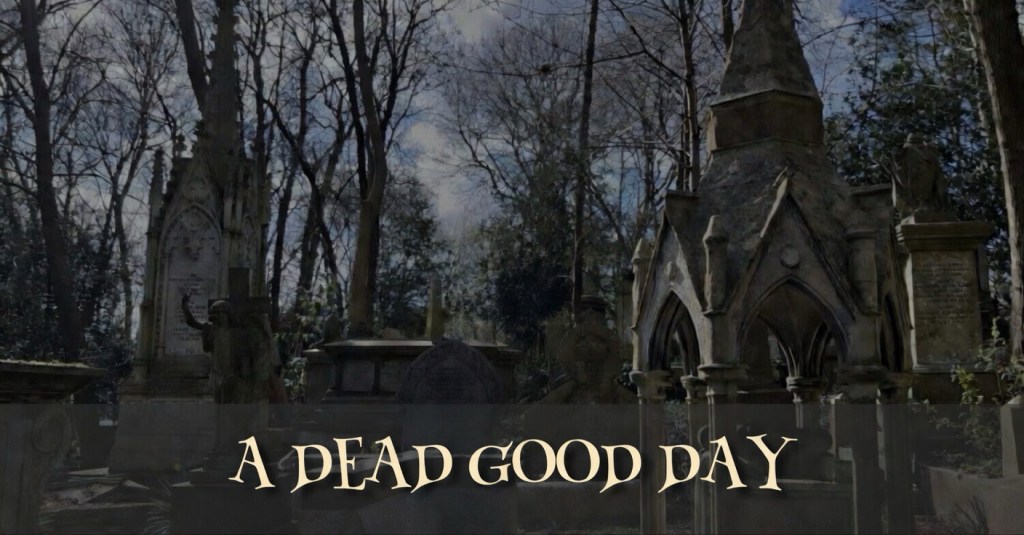






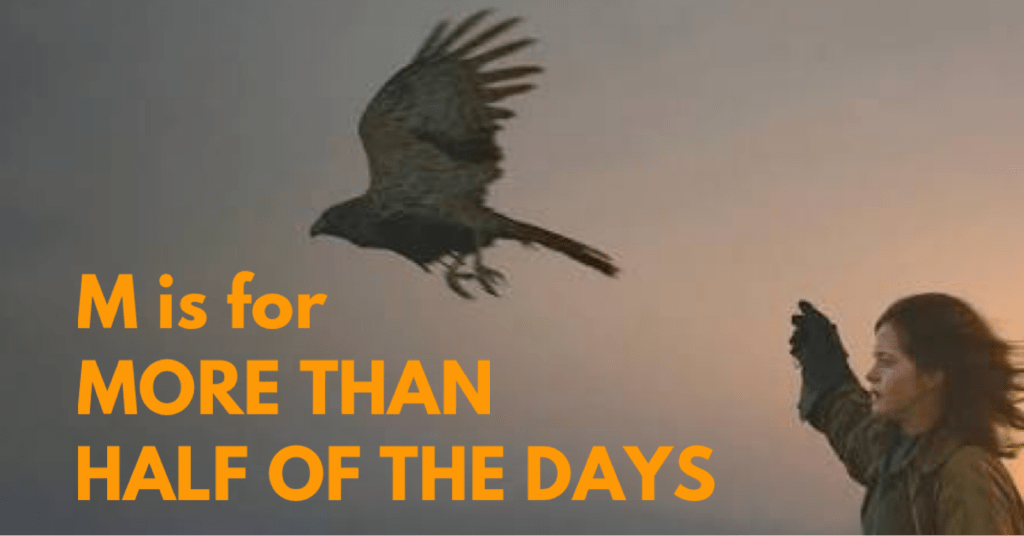




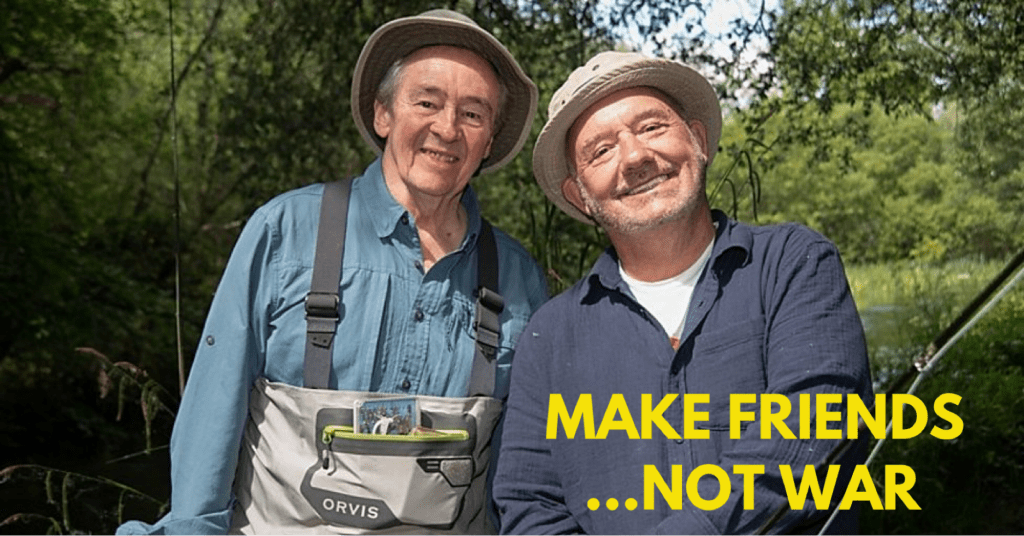
















































 Some musings